Huawei's "No. 1 employee" starts a business, replicating DJI's model to build robots
The "No. 1 employee" in Huawei's embodied intelligence field has started a business, and within just two months, has raised hundreds of millions of yuan.
Recently, Euler Vientiane, a home embodied intelligence company founded just two months ago, announced the completion of a Pre-A round of financing worth hundreds of millions of yuan. The investment was led by China Merchants Group Venture Capital, with participation from Softbank China Venture Capital, Jihe Ventures, Zhuopu Investment, BV Baidu Ventures, Juhe Investment and other institutions.
On April 22nd, the company just completed a seed round of financing worth tens of millions of yuan, with Hillhouse Capital and Matrix Partners as the investors.
From Hillhouse Capital and Matrix Partners to China Merchants Group Venture Capital, Softbank China Venture Capital, Jihe Ventures, and Baidu Ventures, a number of institutions have quickly entered the game. Euler Vientiane has almost secured a very eye - catching ticket in the embodied intelligence track right from the start.
But after getting this ticket, the first product they plan to make is actually an "unintelligent" robot.
All companies are competing to prove that their robots are more intelligent, more versatile, and more human - like. Euler Vientiane's choice is obviously an alternative in this track.
Why can an alternative attract so many top - tier institutions to place bets within two months?
What the capital is buying is not just the "Huawei" halo
To explain this question, we first need to look at the founding team of Euler Vientiane.
Public information shows that Zhou Shunbo, the founder of Euler Vientiane, was once a "genius youth" in Huawei's robot direction and the only "genius youth" in Huawei selected with "intelligent robots" as the research topic.
During his time at Huawei, he had a more crucial identity: the "No. 1 employee" in Huawei's embodied intelligence field.
As the "No. 1 employee", he participated in the construction of Huawei's embodied intelligence system from the early stage - deeply involved in team building, technical routes, platform products, and scenario implementation.
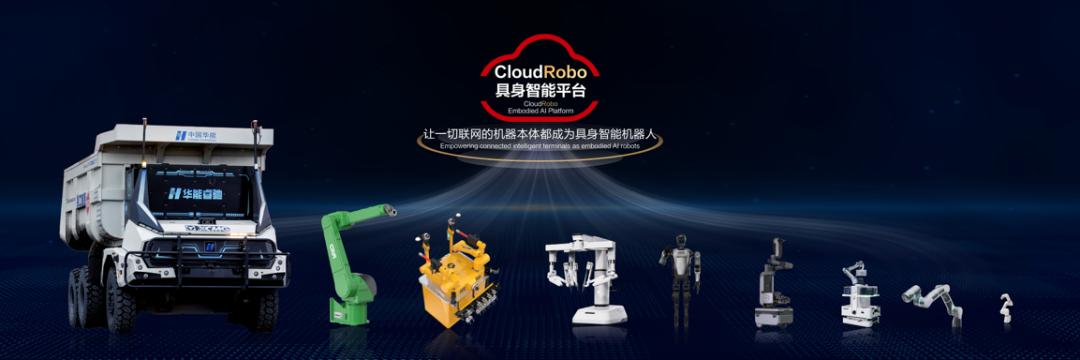
In addition, Zhou Shunbo also served as the head and chief technical expert of Huawei Cloud's Physical Intelligence Innovation Lab. He was in charge of Huawei Cloud's embodied intelligence strategic planning for many consecutive years and led the research and development of Huawei Cloud's embodied platform CloudRobo.
However, the value of this experience is not just limited to the "Huawei background".
For a home embodied intelligence company, it is more difficult to handle data collection, model training, simulation verification, and task deployment behind the robot, and finally form a closed - loop in the real scenario than to build a robot.
What Zhou Shunbo did at Huawei in the past was exactly this - pushing embodied intelligence from technical solutions to platform products, and then promoting platform products into real scenarios, connecting the entire chain.
This also explains why Euler Vientiane has attracted the attention of so many institutions shortly after its establishment.
It is worth mentioning that Zhang Jing, another co - founder of Euler Vientiane, fills in the gaps in product and commercialization.
Zhang Jing graduated from Tsinghua University with a bachelor's degree and later obtained an MBA from Dartmouth College. She once served as a product manager at Amazon AWS and as the product director of innovative cloud services at Huawei, participating in the incubation of products such as CloudRobo and Talk2Video.
Public information shows that she once led the definition of the first domestically controllable embodied intelligence cloud platform in China and achieved a commercial result of over 100 million yuan in annual revenue for a single product.
Therefore, although Euler Vientiane has been established for a short time, its entire executive team is quite mature.
Zhou Shunbo is in charge of the technical system, engineering path, and underlying judgment of embodied intelligence; Zhang Jing fills in the gaps in product definition, business rhythm, and customer understanding. For an early - stage embodied intelligence company, these two aspects are indispensable.
It is this corporate background that lays the groundwork for Euler Vientiane's subsequent product choices.
It didn't promise an all - around, ready - to - use robot right from the start, but focused on "learning" and "cultivation". This route choice is more like a basic judgment accumulated by Zhou Shunbo in the engineering of embodied intelligence over the past few years:
For a robot to truly become intelligent, it must continuously enter the real environment, continuously obtain data, and continuously iterate its capabilities.
In other words, what Euler Vientiane really wants to sell is not an "unintelligent" robot.
What it wants to create first is a path to make robots intelligent.
Is it aiming to be the next DJI?
On the surface, Euler Vientiane's product route is likely to cause confusion.
The home robot is a track that highly depends on imagination. Users expect robots to serve tea, clean the room, take care of the elderly and children, and ideally, they can start working right after being brought home.
Under such expectations, a company voluntarily saying that it will first make a "not - so - intelligent" robot doesn't seem appealing.
Moreover, the first product launched by Euler Vientiane is not directly targeted at the general public's households.
According to the current public information, Euler Vientiane's first product adopts the form of a "mobile chassis + dual robotic arms", with autonomous movement and operation capabilities, and is equipped with a toolchain , targeting the Maker and developer communities, a group of people who are more willing to tinker, more willing to train, and more accepting of early - stage product forms.
The core of this path is that the first - generation robot doesn't need to immediately become a mature household tool. Instead, it should first enter the real environment, and let early users help the robot learn new skills and complete deployment through data collection, simple interaction, and task demonstration.
In other words, the first batch of "customers" of Euler Vientiane are actually "co - creators" who are willing to grow with the robot.
This path sounds novel, but it is not the first time it has appeared in hard - tech consumer products.
DJI, the leader in the current drone field, has gone through such a stage.
When DJI was starting its business, it didn't choose to build a consumer - grade drone that could fly right after being brought home. Instead, it focused more on flight control systems and more professional products, and its customer base consisted of model airplane enthusiasts, professional players, and geeks.
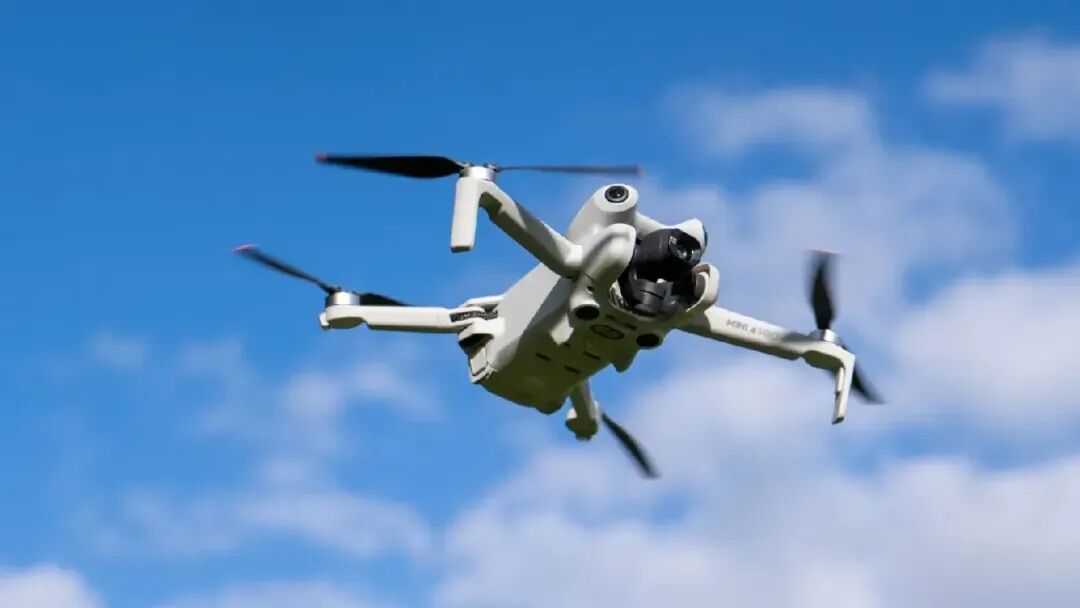
The value of this group of early users is not only to contribute to the initial sales volume. More importantly, they are willing to tinker and can continuously expose problems in real - world use.
It was in this process that DJI continuously polished its flight control, stability, and user experience, and finally turned the originally high - threshold model airplane product into a consumer - grade drone that can fly right out of the box.
Generally speaking, Euler Vientiane's route is similar to DJI's:
Neither of them rushed into the largest mass market at the beginning. Instead, they chose to enter a smaller, more tech - savvy, and more willing - to - participate - in - iteration group first.
The Maker version product of Euler Vientiane serves as the first test field before entering the home scenario. After serving high - threshold users and polishing core capabilities in a small circle, it will be natural to package complex capabilities into simpler products and promote them to a wider audience.
However, DJI's success does not mean that this path can be directly replicated in the home robot track.
The core tasks of drones are relatively clear: fly stably, shoot clearly, and be easy to use; while home robots face a more complex and open world.
They not only need to handle task understanding in scenarios such as recognition, movement, grasping, and interaction but also adapt to a large number of long - tail changes in different home environments.
This also poses the biggest question for Euler Vientiane's current path.
Is it a "shortcut to overtake" or a "detour"?
For Euler Vientiane's "cultivatable robot" to truly succeed, it needs to answer a more fundamental question:
How much irreplaceable value can a group of Makers and developers bring by training robots in real homes?
The complexity of the home scenario is both the starting point and the biggest difficulty of this route.
Since each home is a non - standard environment, different house layouts, lighting, furniture, table heights, item placements, and living habits will affect the robot's judgment and actions. Can a developer teaching a robot to complete a certain task or acquire a certain ability in their own home be naturally transferred to more homes?
This also means that what Euler Vientiane needs to prove is not only "someone is willing to train the robot" but also whether the training scattered in real homes can be precipitated into more general capabilities.
Otherwise, the cultivatable robot is likely to remain in single - point scenarios: it works effectively in a certain developer's home but needs to be re - adapted in another home.
The number of Makers is also a real - world variable.
The home scenario is complex enough, which means that data coverage needs to be rich enough. The amount of real - home environments, types of tasks, and long - tail situations that Makers and developers can provide determines how far this route can go.
But the more core question is what advantages it has compared with the more common robot training methods in the past.
In the past, robot training often relied on simulation environments, world models, and large - scale data, allowing robots to complete a large number of trials and errors in the virtual world first and then migrate to the real world.
Euler Vientiane now chooses to enter real homes earlier and obtain real physical interaction data through the Maker version product and the developer community. In essence, it is trying an alternative data source.
The most important thing for this new path to answer is whether it has unique value compared with the traditional training paradigm:
What can the training by developers in real homes provide that is difficult to provide by world models and simulation environments?
Does it obtain truly transferable home task capabilities or a batch of local experiences scattered in different developers' homes?
Can these real - world data be further precipitated into model capabilities that "benefit more homes" from "working in a certain home"?
The answers to these questions are the key to determining how far Euler Vientiane can go in the future.
This is also the real proposition that needs to be verified behind the "unintelligent but cultivatable" concept.
This article is from the WeChat official account "Blue Word Plan", author: Blue Word Plan. Republished by 36Kr with permission.