All-solid-state batteries are going crazy. After a thorough analysis of seven important research papers and patents, it is found that the three major challenges for mass production are being overcome.
Solid-state batteries have once again stepped into the spotlight of the power battery industry!
Recently, Sun Huajun, the CTO of BYD's Battery Business Group, revealed that BYD plans to start the batch demonstration application of all-solid-state batteries in vehicles around 2027 and achieve large-scale installation after 2030.
As a leading battery enterprise, BYD has once again brought solid-state batteries into the public view. In fact, other players in the industry are also making layouts for solid-state batteries.
Coincidentally, just over the weekend, Guoxuan High-tech, a domestic power battery player, also presented its answer sheet for solid-state batteries.
The energy density of Guoxuan High-tech's "Jinshi" all-solid-state battery has exceeded 400Wh/kg, and it has passed extreme safety tests such as needle penetration and high-temperature hot box tests, with no smoke or fire throughout the process. All indicators point to mass production, but it still takes time to achieve large-scale mass production.
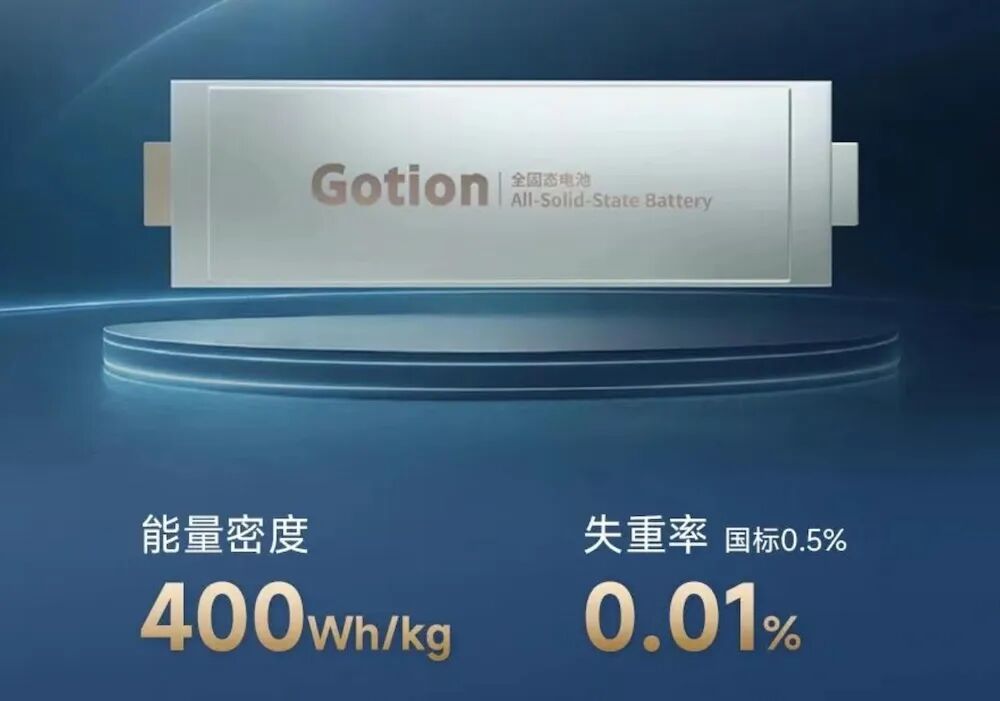
Guoxuan High-tech's "Jinshi" all-solid-state battery
In addition, CATL's judgment is also clear. The scientific problems in the solid-state battery industry have been basically solved, but there are still engineering problems, and there is still a distance to commercialization, including the supply chain.
This actually points out the most core contradiction in the current solid-state battery industry: people are no longer just discussing "whether solid-state batteries have a future", but rather discussing whether they can be stably and inexpensively manufactured and safely installed in vehicles for a long time.
Overall, the industry timeline for solid-state batteries is gradually becoming clear: around 2026, it will enter the intensive period of pilot testing and vehicle verification; around 2027, small-scale demonstrations will start; and around 2030, it may enter a larger-scale application stage.
So, how can these problems be truly solved through technological innovation?
To this end, CheDongXi delved into the latest industry developments. Through four representative papers from teams such as the Institute of Physics of the Chinese Academy of Sciences, Tsinghua University, and the University of Science and Technology of China, as well as three industrial patents from CATL and BYD, the three key elements for the mass production of solid-state batteries were identified - whether the internal materials can adhere to each other for a long time, whether the production line can stably manufacture at low cost, and whether it can withstand the tests of real roads, safety, and lifespan after being installed in vehicles.
01. To install solid-state batteries in vehicles, the internal contact problem must be solved first
The first problem before the mass production of all-solid-state batteries is not "whether the electrolyte can be replaced with a solid electrolyte", but whether the solid materials inside the battery can adhere to each other stably for a long time after the replacement.
In traditional liquid lithium batteries, there is an electrolyte, which is like water and can seep into the tiny pores of the positive and negative electrode materials, filling many small gaps.
However, in all-solid-state batteries, the positive electrode, negative electrode, and electrolyte all become solids, and they are more like "hard materials sticking to hard materials" to each other.
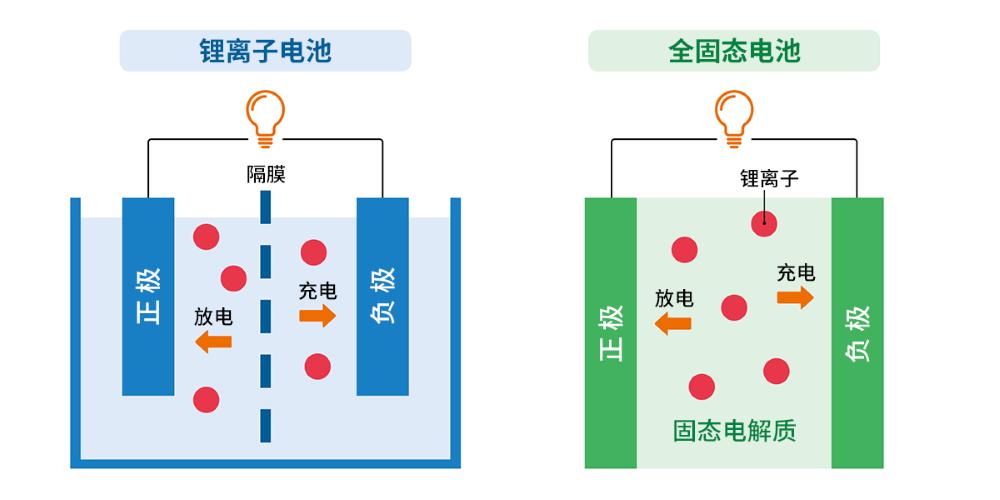
Working principles of lithium-ion batteries and all-solid-state batteries
The problem is that every time the battery is charged and discharged, the materials will slightly expand and contract. Over time, tiny gaps may appear in the originally adhered places.
This gap is invisible to the naked eye, but it has a great impact on the battery: ion transmission will slow down, internal resistance will increase, and the battery capacity and lifespan will also decrease.
This is why many solid-state batteries in laboratories need to apply external pressure to the battery. Simply put, it is to use external force to compress the internal materials and prevent them from loosening.
However, this method is not suitable for direct application in vehicles because the battery packs in vehicles need to be light, compact, and safe. If high pressure is applied to the battery cells for a long time, it will increase the structural complexity and also affect the vehicle's energy density.
Therefore, the real problem that the industry needs to solve now is: Can solid-state batteries maintain good contact by themselves without relying on "brute force"?
Currently, several new academic studies are answering this question.
First, the Huang Xuejie team from the Institute of Physics of the Chinese Academy of Sciences, the Yao Xiayin team from the Ningbo Institute of Materials Technology and Engineering, and the Zhang Heng team from Huazhong University of Science and Technology proposed a "dynamic adaptive interface". Although this name sounds complicated, it can be understood as: creating a self-adjusting buffer layer between the electrode and the electrolyte.
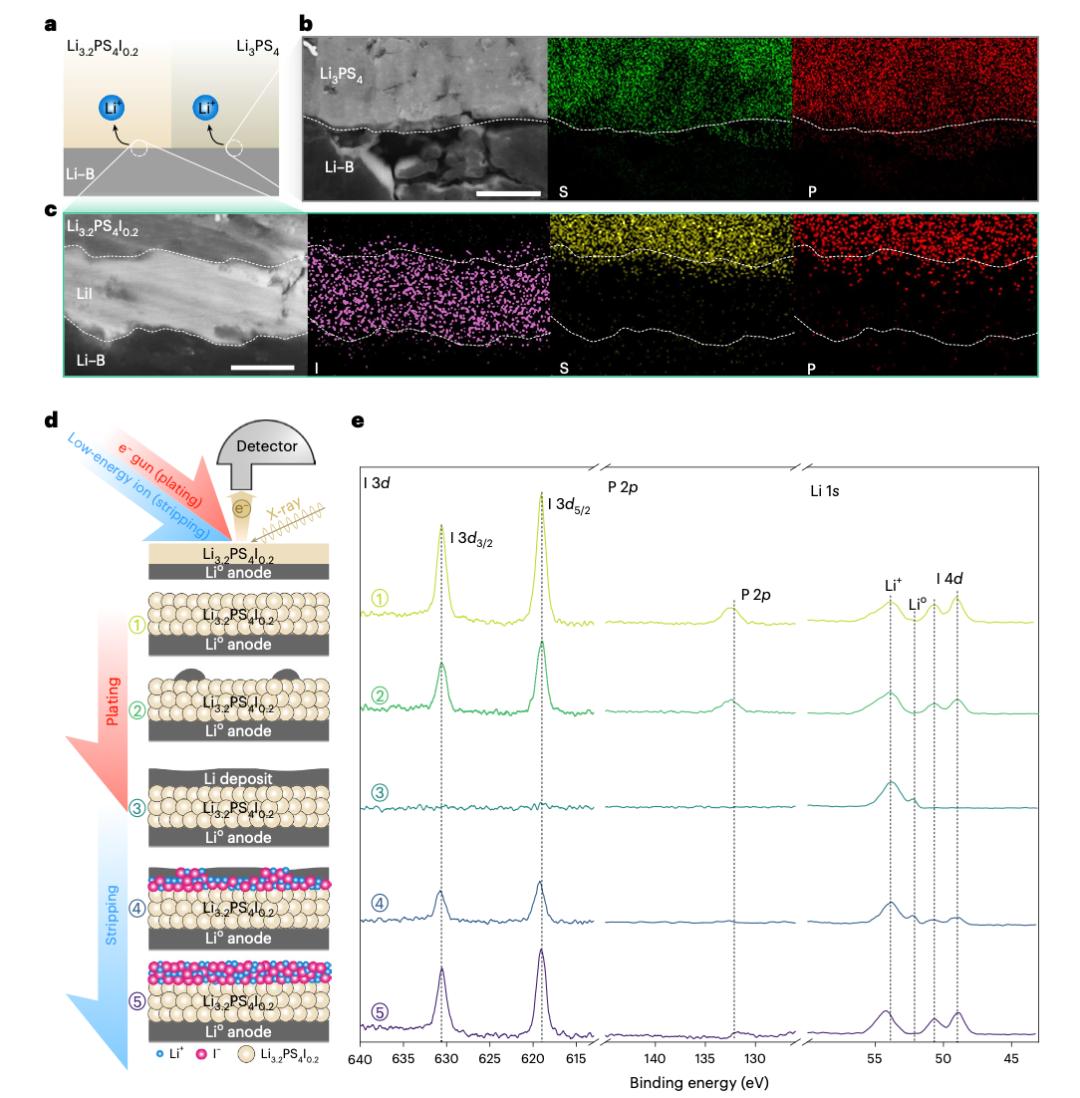
Electric field-driven iodide ion migration forms iodine-rich DAI
This buffer layer is not a simple protective film attached to the surface, but a more flexible and easily adherent interface layer formed by the gradual migration of specific ions in the material to the interface position during the battery cycle.
Its function is a bit like adding a "soft cushion" between two hard materials. When the volume of the lithium metal negative electrode changes during charging and discharging, this "soft cushion" can adjust accordingly, reducing the risk of separation between the materials.
The paper results show that this design can allow the lithium metal full battery to maintain a high capacity after a long cycle, and the pouch battery has also achieved zero external pressure cycle verification. Here, "zero external pressure" is crucial, which means that the battery no longer needs to rely on continuous external pressure to maintain operation, which is very important for future vehicle installation.
In addition to ensuring that the interface adheres well, the solid electrolyte itself also needs to solve another problem: Can it be stably manufactured like existing battery materials?
Many inorganic solid electrolytes have good performance, but they are often hard and brittle. They can be made into samples in the laboratory, but on the production line, they will encounter problems: it is difficult to make them thin, difficult to roll, and not easy to fully adhere to the electrode particles.
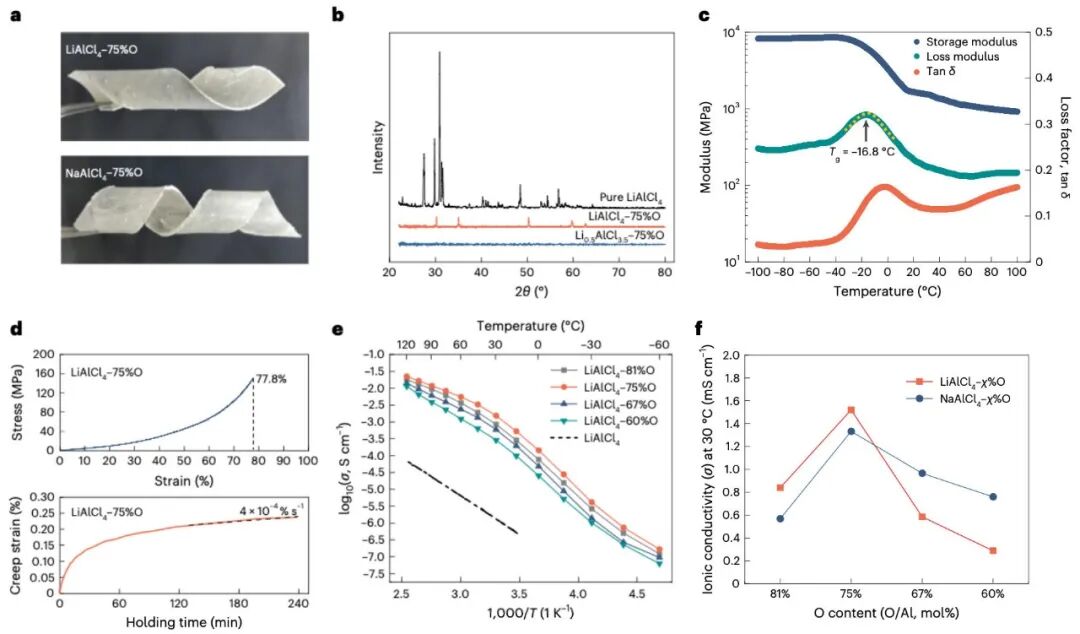
Performance of the medium in different states
The VIGLAS viscoelastic inorganic glass electrolyte proposed by the Hu Yongsheng team from the Institute of Physics of the Chinese Academy of Sciences aims to solve this contradiction.
Simply put, it aims to make the inorganic electrolyte retain stability while having a certain degree of flexibility. That is, it is no longer like a brittle glass, but more like a "deformable and adherent" film material. In this way, it is easier to adhere to the electrode and has a greater chance of entering continuous manufacturing processes such as rolling and film formation.
Finally, the problem on the negative electrode side of the solid-state battery is also crucial.
In solid-state lithium metal batteries, the lithium metal negative electrode will be repeatedly deposited and stripped during the charging and discharging process. It can be understood as: lithium "grows" and "recedes" on the surface of the negative electrode continuously. If this process is unstable, it is easy to cause the interface to crack, and even bring safety and lifespan problems such as lithium dendrites.
The "ductile SEI" proposed by the Kang Feiyu and He Yanbing teams from Tsinghua University in collaboration with the Yang Quanhong team from Tianjin University solves this problem.
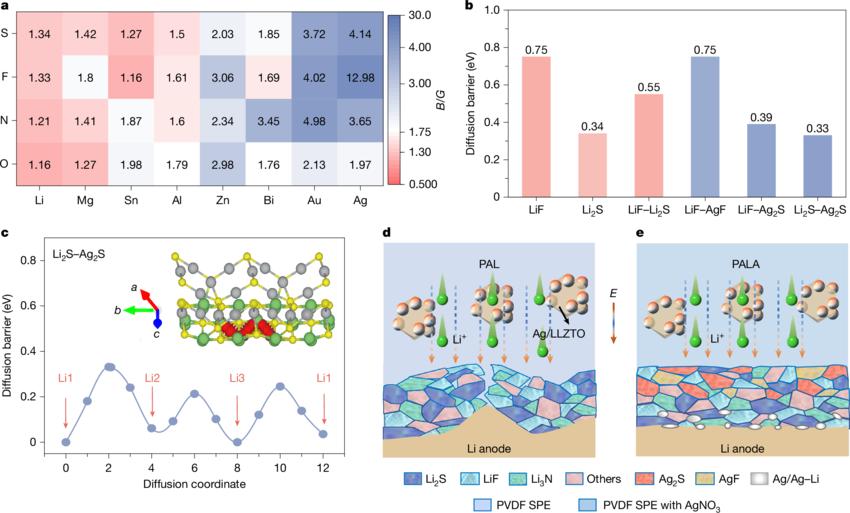
Schematic diagram of the material structure of this study
SEI can be simply understood as a protective film on the surface of the negative electrode. If the traditional protective film is too hard, it is easy to crack during repeated charging and discharging; while they hope to create a more flexible protective film that can "stretch" with the changes of the lithium metal and is not easy to break.
This is like adding a more durable protective layer on the surface of the negative electrode. It is not a hard shell that cracks under pressure, but a flexible protective film that can withstand repeated changes, thereby improving the battery's cycle stability.
Looking at these studies together, the research direction for solid-state batteries is very clear.
In the past, the industry was more concerned about the performance of the solid electrolyte itself, such as the speed of ion transmission.
Now, people are more concerned about whether it can be truly installed in the battery and work stably for a long time.
In other words, before the mass production of solid-state batteries, it is not only necessary to solve the problem of "whether the materials are advanced enough", but also three more practical problems.
First, whether the electrode and the electrolyte can adhere to each other for a long time; second, whether the battery can rely less on external pressure; third, whether the materials can enter the continuous manufacturing process.
For automobile manufacturers and battery enterprises, these problems really determine whether solid-state batteries can move from papers and samples to stable mass production and vehicle installation applications.
02. The second hurdle for solid-state batteries: Can the production line stably manufacture them after samples are made?
After solving the problem of "whether the materials can adhere to each other", solid-state batteries still have to face the second hurdle: it is not difficult to make a sample in the laboratory, but it is difficult to stably manufacture a batch of battery cells on the production line.
For battery enterprises, mass production does not depend on the best performance of a single battery cell, but on whether hundreds of thousands of battery cells can maintain consistency. The performance should be stable, the yield should be stable, and the cost should also be kept down. Otherwise, even if the laboratory data is very good, it is difficult to be truly installed in vehicles.
As mentioned earlier, there is no liquid electrolyte in all-solid-state batteries to fill the gaps, and the positive electrode, negative electrode, and solid electrolyte all need to work through close contact. On the production line, this becomes a very practical problem: the battery cells need to be compressed tightly enough, but not too hard.
If the compression is not enough, there will be gaps between the materials, which will affect the battery's cycle life; if the compression is too hard, the packaging film, the edges of the electrode sheets, and the internal structure may be damaged, and the yield will decrease.
The solution proposed by BYD in the patent CN118748295A addresses this problem. This patent sets a ceramic layer on the outermost negative electrode sheet of the all-solid-state battery. By utilizing the harder and more stable characteristics of the ceramic layer, the battery cells can be more evenly stressed during the isostatic pressing process, thereby reducing the risk of rupture of the outer packaging film and tearing during the subsequent pressing process.
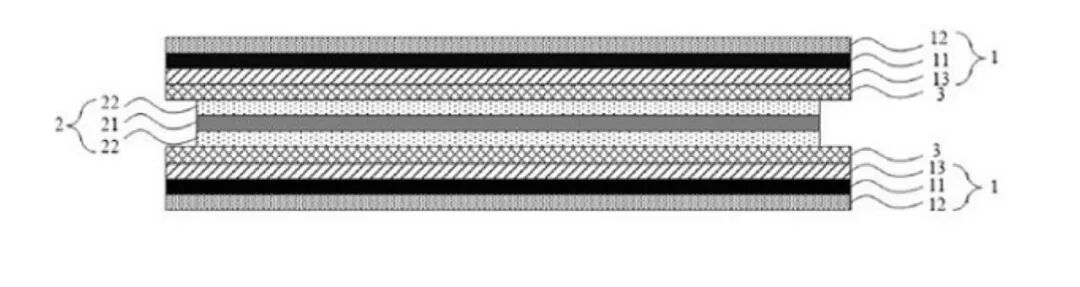
Schematic diagram of BYD's patent structure
This may sound like a minor issue, but it reflects a core problem in the mass production of solid-state batteries: the battery cells are not compressed tighter the better, but need to be compressed evenly and controllably, and the packaging and electrode sheets cannot be damaged.
In addition to "how to compress", enterprises are also trying to solve another problem: whether there will be problems on the negative electrode side after the battery has been cycled for a long time.
In solid-state batteries, the interface between the negative electrode and the solid electrolyte is one of the most prone to problems. Here, lithium ions need to pass smoothly, side reactions need to be minimized, and lithium dendrites need to be prevented from piercing the structure. If not well controlled, it will affect the lifespan and even bring safety risks.
The idea of two solid-state battery patents recently announced by CATL is to add a "functional layer" on the surface of the negative electrode. This functional layer can be understood as a "buffer pad" or a "filter layer" inside the battery: it needs to allow lithium ions to pass through, enhance the interface strength, and reduce cracking and side reactions.
Among them, the patent with the application publication number CN121238027A proposes to set a functional layer on the surface of the negative electrode layer. This layer of material is composed of polymer electrolytes and a small amount of graphene-like materials. The mass proportion of the graphene-like materials is controlled between 0.3% and 2%, and the average sheet diameter is between 30μm and 220μm. The patent abstract shows that this design can improve the cycle stability of solid-state batteries.
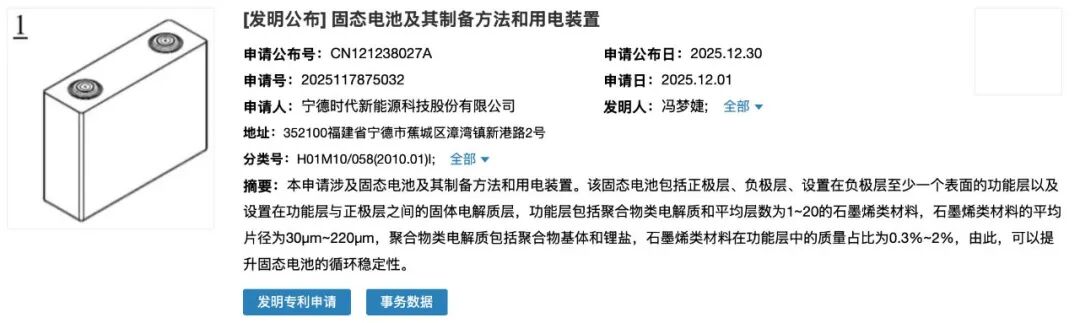
CATL's patent CN121238027A
The focus of this design is not "using graphene" itself, but to solve a more specific problem: the functional layer should not be too soft or too hard.
If it is too soft, it cannot prevent cracking and dendrites; if it is too hard, it may affect the passage of lithium ions.
Therefore, CATL chooses to let the polymer electrolyte be responsible for conducting lithium ions, and a small amount of graphene-like materials be responsible for enhancing the structural strength. Simply put, it is to make this "buffer pad" both passable and more robust.
Another patent with the application publication number CN121076266A designs the functional layer as a porous graphene-like material. The patent stipulates that the porosity of a single piece of porous graphene-like material is between 3% and 9%, and the average pore diameter is between 0.2nm and 15nm; under the condition that the battery SOC is less than or equal to 10%, the mass content of the porous graphene-like material in the functional layer is between 91% and 100%, which is used to improve the cycle performance of solid-state batteries.
