Swiss engineering and technology company ZuriQ develops a new Penning ion trap processor to enhance quantum computing capabilities | Top 100 Swiss Innovators
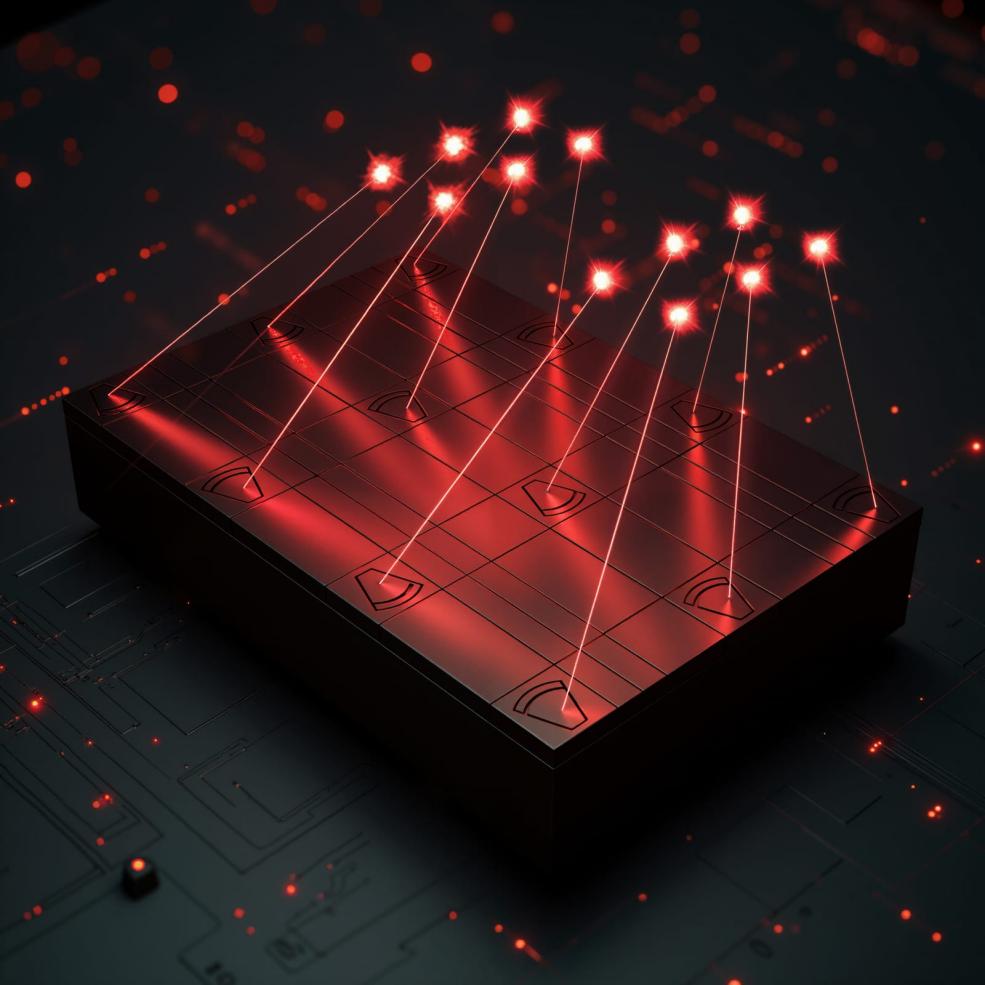
Image source: ZuriQ
ZuriQ, a Swiss engineering and technology company, was founded in 2024. The company is committed to developing a new type of Penning ion trap processor. This processor uses electrostatic fields and uniform magnetic fields to confine ions, enabling the free movement and three - dimensional reconstruction of qubits above the chip. It can significantly increase the number of qubits that an ion trap quantum computer can process and greatly enhance its computing power.
ZuriQ is a spin - off company from the Swiss Federal Institute of Technology in Zurich. It was co - founded by Pavel Hrmo, Tobias Sägesser, and Shreyans Jain. Pavel Hrmo is the CEO of the company. He holds a doctorate in Controlled Quantum Dynamics from Imperial College London and has served as a postdoctoral researcher at the Swiss Federal Institute of Technology in Zurich and the University of Innsbruck. He has more than 10 years of experience in ion traps, advanced quantum control, and extended computing. Tobias Sägesser is the CTO of the company. He holds a doctorate from the Swiss Federal Institute of Technology in Zurich and has worked in R & D at Sensirion. Shreyans Jain is the Chief Science Officer of the company and holds a doctorate from the Swiss Federal Institute of Technology in Zurich.
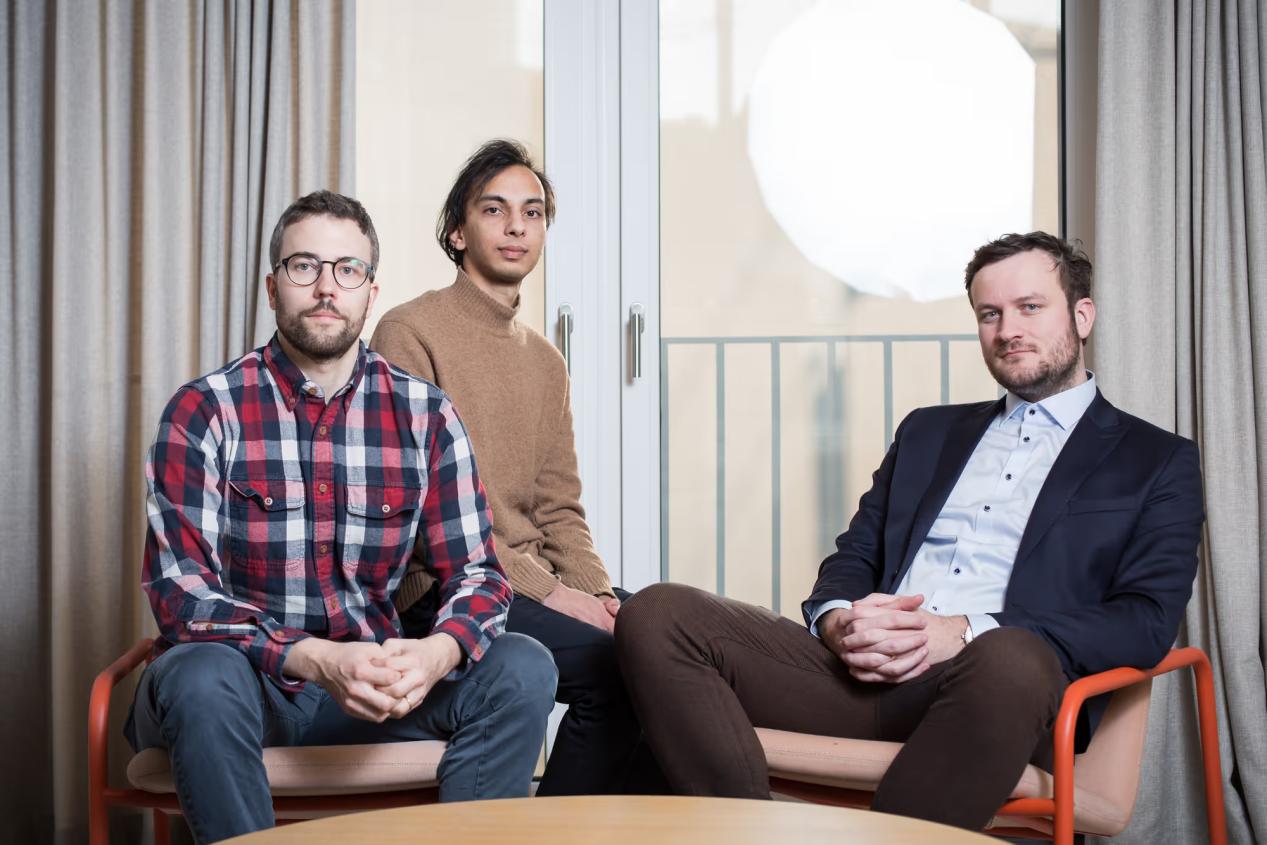
Image source: ZuriQ
Ion trap technology has always been one of the most effective technologies in the field of quantum computing. Ion trap quantum computers use charged atoms (ions) as qubits (the basic units of quantum information). Ions are confined in specific positions by electric and magnetic fields, and calculations are performed by controlling the ions with lasers. Ion trap technology has the advantages of high - quality qubits, long coherence time, and high gate fidelity, with stable and accurate computing performance. However, ion trap technology relies on ion chains with a one - dimensional structure to store qubits, and it is difficult to expand the one - dimensional chains, making it impossible to scale the number of qubits to the thousands level.
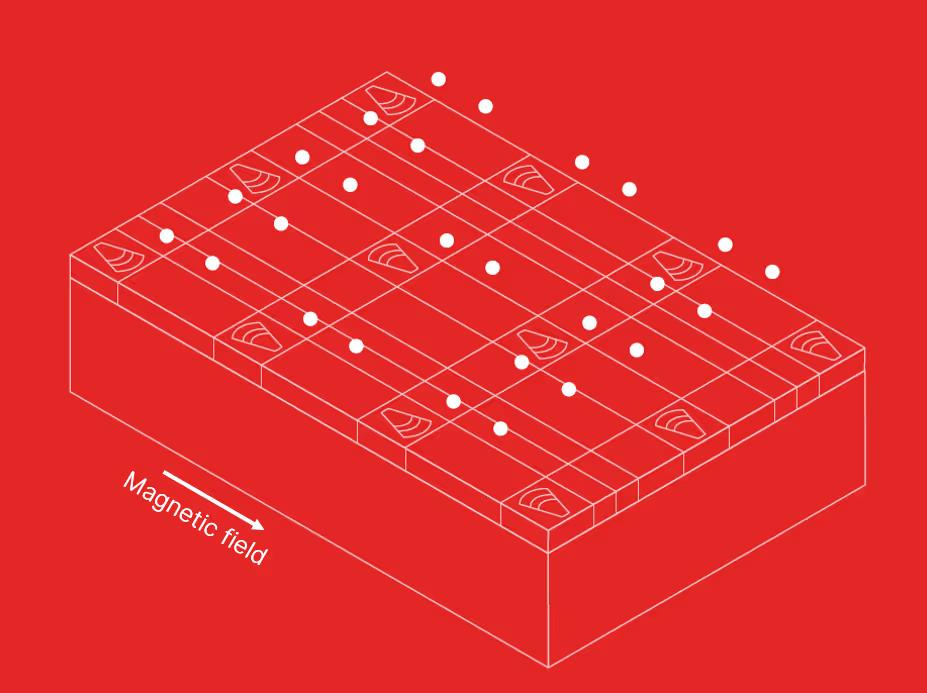
Image source: ZuriQ
ZuriQ has developed a new type of Penning ion trap processor. This processor uses electrostatic fields and uniform magnetic fields to confine ions above the chip and allows them to be freely reconstructed and moved in two - dimensional and three - dimensional spaces, thereby greatly enhancing the computing power of ion trap quantum computers.
Qubits are the information units in quantum computing. They use the quantum states of quantum systems to store and process information. Quantum states that can be stably controlled can be used as qubits. Currently, radio - frequency oscillating fields are mainly used in the market for ion trapping, confining ions in a one - dimensional chain structure.
ZuriQ uses a uniform magnetic field and a direct - current quadrupole electric field (called a Penning trap) instead of radio - frequency fields, allowing ions to be arranged in two - dimensional and three - dimensional structures and enabling more flexible exchange of quantum information between ions. To trap ions, ZuriQ places electrodes on the chip to apply an electrostatic field and places the entire chip in a uniform magnetic field parallel to the electrode plane. In this way, ions are trapped in a stable potential well formed by the combined action of the electric and magnetic fields, where the electric field strength becomes zero. By controlling the electric field, the position of the potential well can be moved arbitrarily in three - dimensional space. Since ions are charged, they interact with each other through Coulomb forces to exchange quantum information. To perform two - qubit gate operations between any two qubits, ZuriQ shortens the distance between ions to enhance and better control the Coulomb interaction, reducing the execution time of gate operations and decoherence. Then, lasers are used to irradiate the potential well to perform gate operations, thereby achieving flexible arrangement of qubits.
Based on existing technologies, ZuriQ plans to build a processing module with approximately 10,000 qubits and extremely high fidelity for some preliminary applications, such as drug design, finding better catalysts, or industries with extremely high requirements for data privacy.
In July 2025, ZuriQ and Infineon Technologies AG announced a partnership. The two parties will jointly develop a new type of ion trap chip for quantum computing and will cooperate to demonstrate a three - dimensional ion grid with dynamic reconfigurability and low - noise performance. In addition, ZuriQ also reached a cooperation with QC Design in September of the same year. The company will use QC Design's Plaquette software to design, simulate, and optimize quantum computing architectures.
In January 2025, ZuriQ completed a $4.2 million seed - round financing, led by Founderful, with SquareOne, First Momentum Ventures, OnSight Ventures, and QAI Ventures participating. The funds will be used to promote the commercialization of the company's architecture and the development of product prototypes.
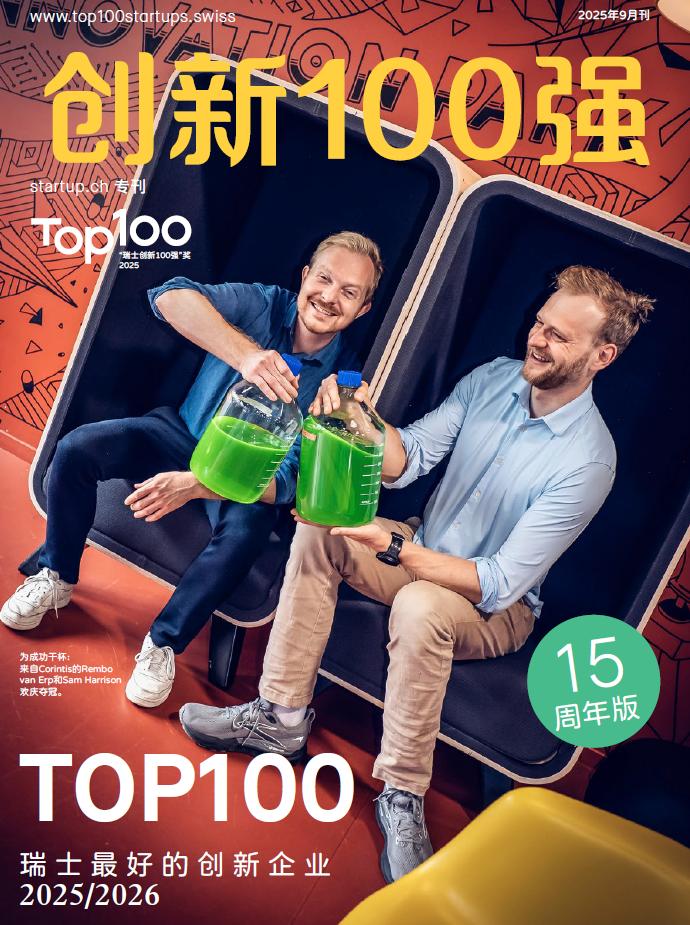
ZuriQ is one of the companies on the "TOP100 Swiss Startups" list in 2025. The "TOP100 Swiss Startups" list brings together the best Swiss - made startups and growing technology innovation companies. It is the most internationally influential benchmark list in the Swiss technology innovation field. Since 2011, this list has selected 100 of the most innovative and market - promising Swiss innovation companies and 25 Swiss growing companies with the greatest unicorn potential across Switzerland every year, covering fields such as life sciences, engineering machinery, robotics, information and communication, low - carbon technology, and food technology. The "TOP100 Swiss Startups" and related brand activities are iconic events in the Swiss innovation ecosystem, representing the highest level of Swiss innovation and the forefront of international investment and financing.
The Chinese version of the "TOP100 Swiss Startups" in 2025 was honorably released by Insight Tech. Insight Tech is the Chinese authorized partner of the "TOP100 Swiss Startups", responsible for the operation and promotion of the "TOP100 Swiss Startups" in China and assisting the list projects in business cooperation with China. Insight Tech is a service provider for China - Europe (Switzerland) industrial innovation cooperation, committed to promoting the localization of Swiss innovation in China and the internationalization of Chinese industries through ecological construction and cross - border empowerment.
To obtain the full list and industry lists of the "TOP100 Swiss Startups", please visit the official account or website of Insight Tech.