A Comprehensive Review of Google I/O: Two New Models Launched, Audio Glasses Debuted, and Gemini Takes Over Everything
After much anticipation, at the early hours of May 20, 2026, Beijing time, Google I/O 2026 finally kicked off. Since Google had previously "diverted" the new features of Android 17 through The Android Show, AI has finally become the protagonist of Google I/O 2026.
However, different from other AI companies, Google has control over multiple different Internet ecosystem entry points such as Gemini, YouTube, Google web search, and Android. Therefore, "how to use AI to 'empower' these ecosystems" has also become the focus of this Google I/O.
Gemini Omni, Gemini 3.5: New models make Google AI more versatile
In terms of the Gemini model, Google officially released the latest and most versatile Gemini Omni at Google I/O. How versatile is it? To sum it up in one sentence, it is that "Gemini Omni can obtain any form of output from any form of input", and Gemini Omni can also be modified in a conversational form directly during the generation process.
Image source: Google
Taking MV generation as an example, as long as you "feed" music, video, picture materials, and general requirements for the picture to Gemini Omni, it can directly output the corresponding short video. At the event, Google also demonstrated a very exaggerated AIGC case:
Draw a circle on a piece of white paper by hand and add a text description, and Gemini Omni can directly output a complete special - effect video. But it doesn't stop there. If you are not satisfied with the picture elements or style, you can precisely modify the specified elements with just one sentence without changing other picture elements. For example, "replace the glass building with soap bubbles", and the latter even has its own physical collision effect.
Image source: Google
In Google's own words, "Gemini Omni is like the Nano Banana in the video field."
According to Google's introduction, the Google Omni Flash model will be launched on platforms such as the Gemini App, Google Flow, and YouTube Shorts from now on, and the corresponding API will be opened later.
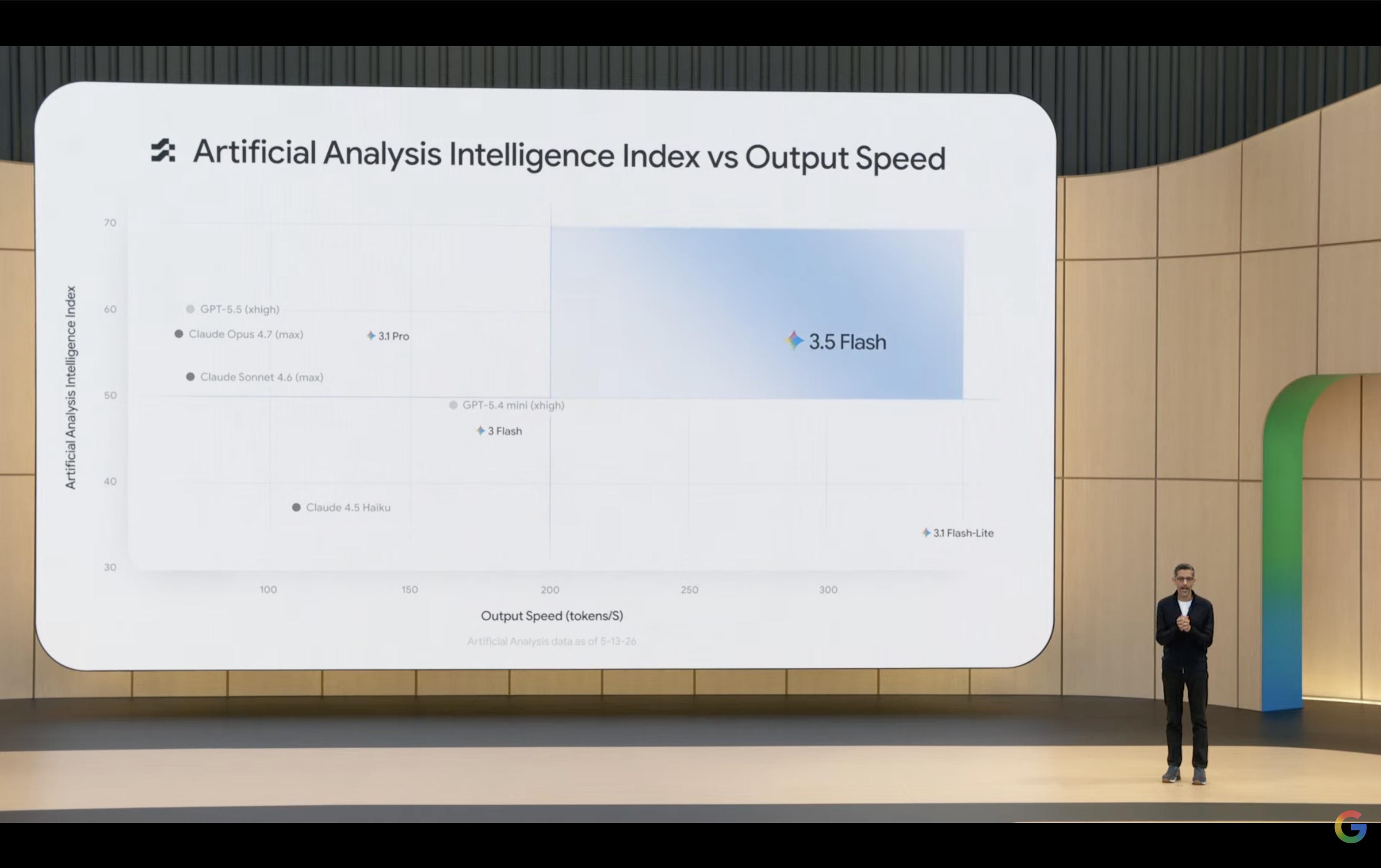
Image source: Google
In addition to the "versatile model" Google Omni, Gemini has also been upgraded to the Gemini 3.5 version (Gemini 3.5 Flash) at Google I/O. Compared with Gemini 3.1 Pro, Gemini 3.5 Flash has improvements in tests such as programming, real - world agents, and large - scale tool invocation.
Of course, for AI models, "where there is a lightweight Flash, there must be a professional - grade Pro." At the event, Google also announced that Gemini 3.5 Pro will debut next month, but no other information was disclosed.
To sum it up in one sentence, Google has achieved all the four aspects of 'more, faster, better, and more economical' this time.
Google Antigravity, Gemini Spark: Faster and stronger agents
As the underlying model capabilities have become stronger, the AI agents based on Gemini have naturally been upgraded.
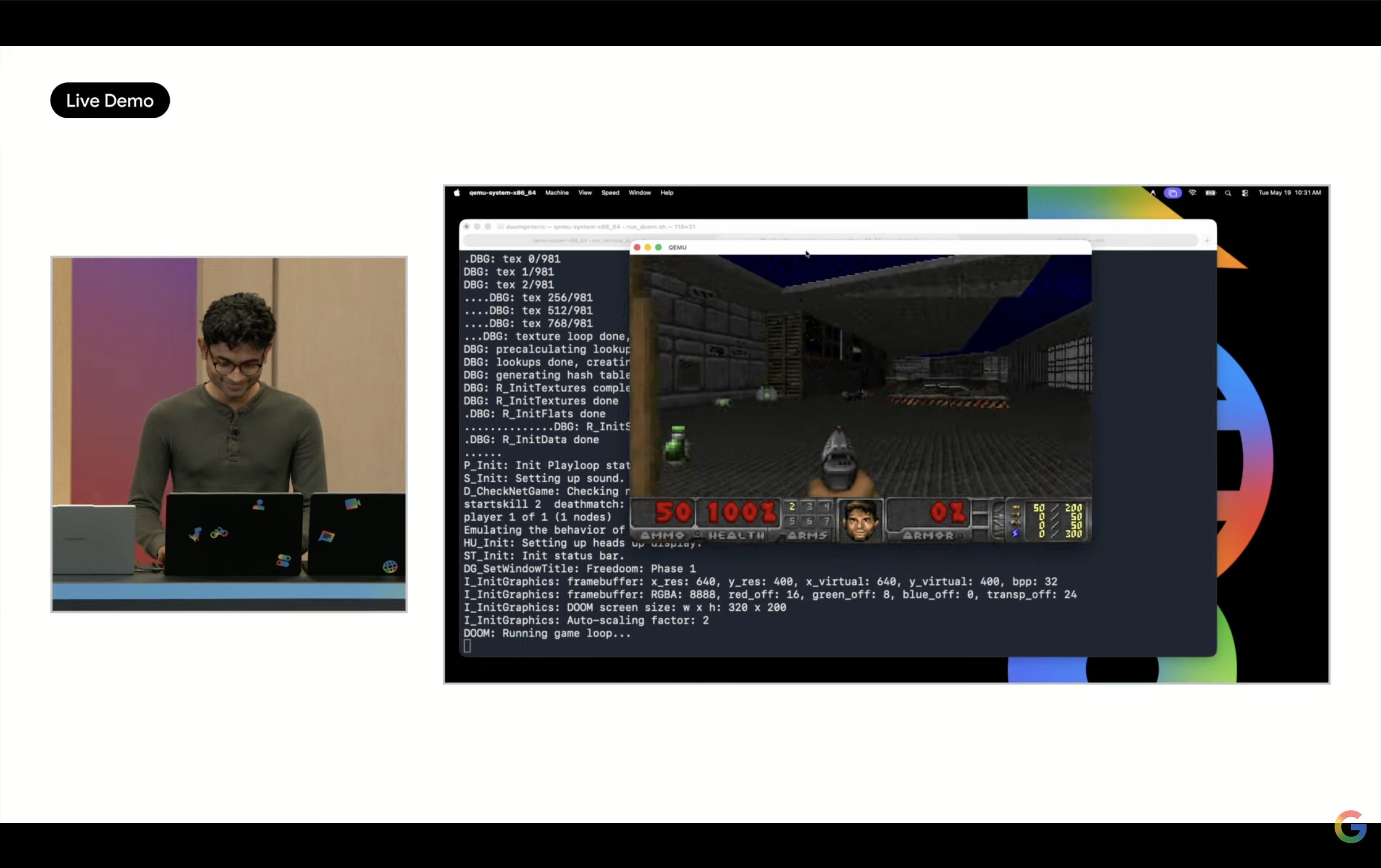
Image source: Google
On the developer side, Google's AI development environment, Antigravity, also uses Gemini 3.5 Flash. According to Google's introduction, with the support of Gemini 3.5 Flash, Antigravity only took 12 hours to build an operating system kernel, and the cost of the AI API in the entire development process was less than a thousand dollars.
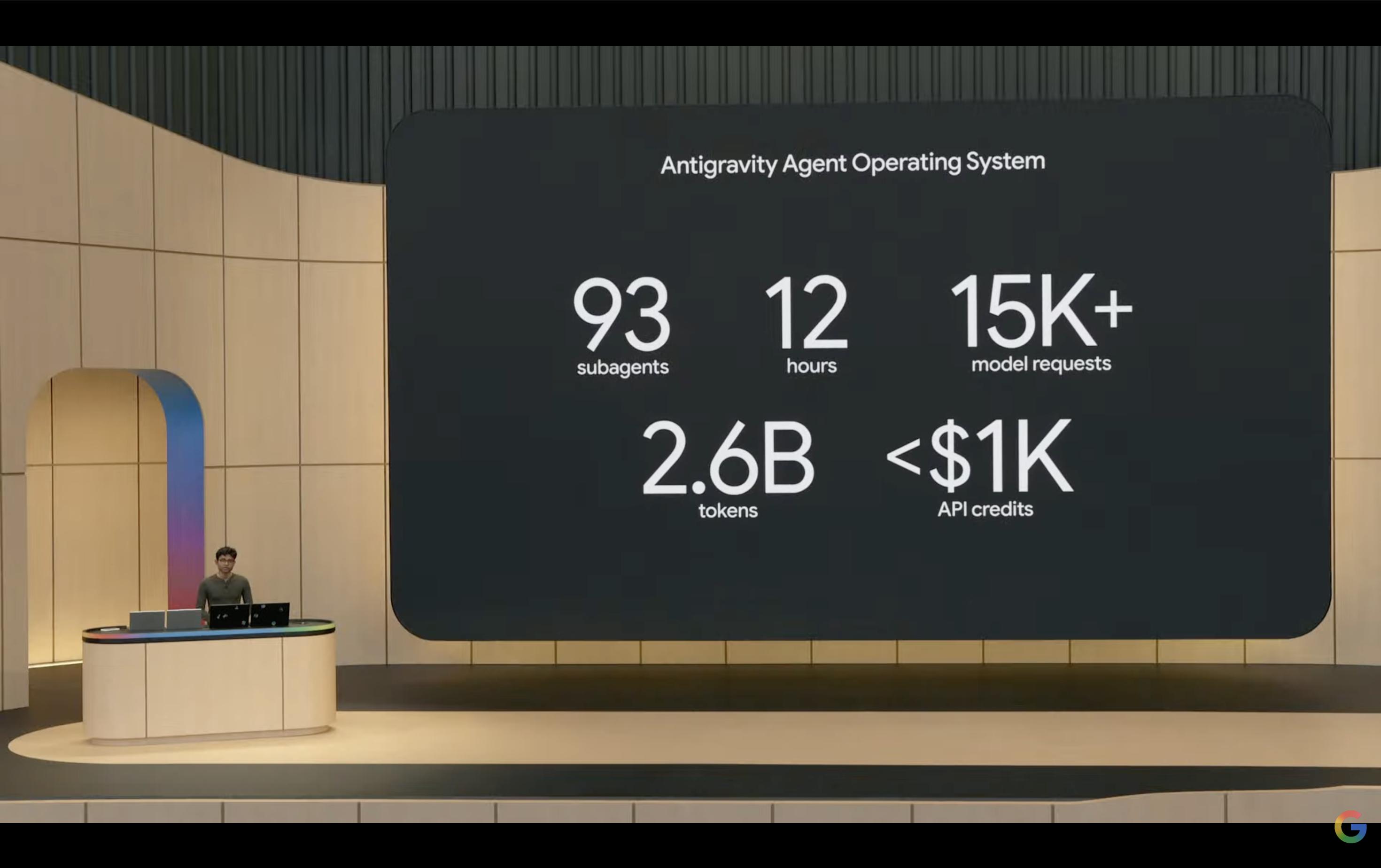
Image source: Google
Google even used Antigravity and Gemini 3.5 Flash to reconstruct the interactive interface of Google Search and proposed a new concept of 'generative UI'. Friends who often use Google or other AI search engines should know that even when the AI mode is enabled on the search page (here it does not refer to the knowledge - base search achieved by 'asking' in the AI App), this AI mode still outputs results in the form of a dialog box (ChatBox).
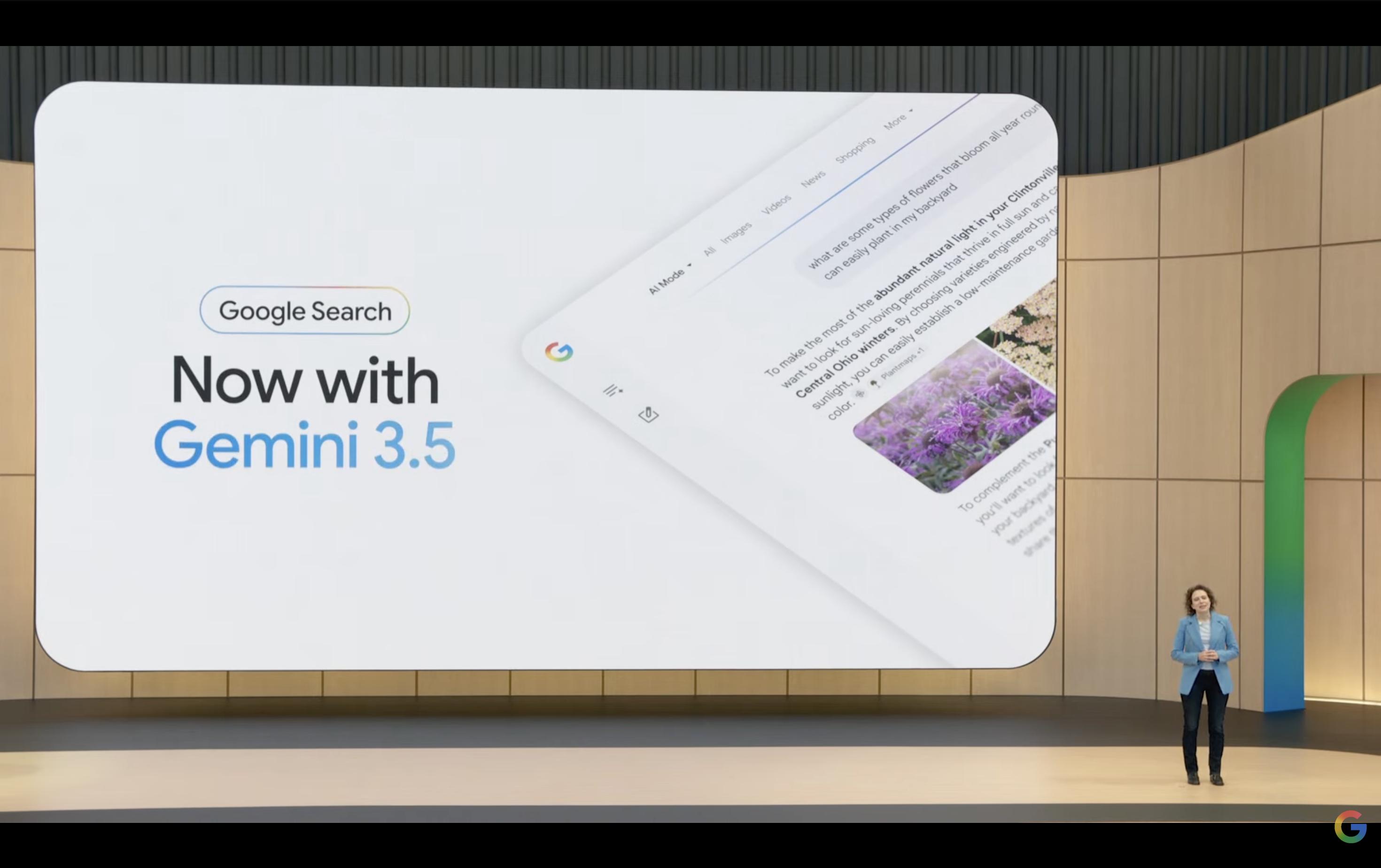
Image source: Google
For general AI searches, the dialog - box interaction mode is indeed sufficient. However, if a user asks a question that requires some intuitive demonstrations, such as "how does a tourbillon work?", the text - box mode is useless. In response, Google has created an 'adaptive and self - generating' AI search UI based on Antigravity's programming capabilities.
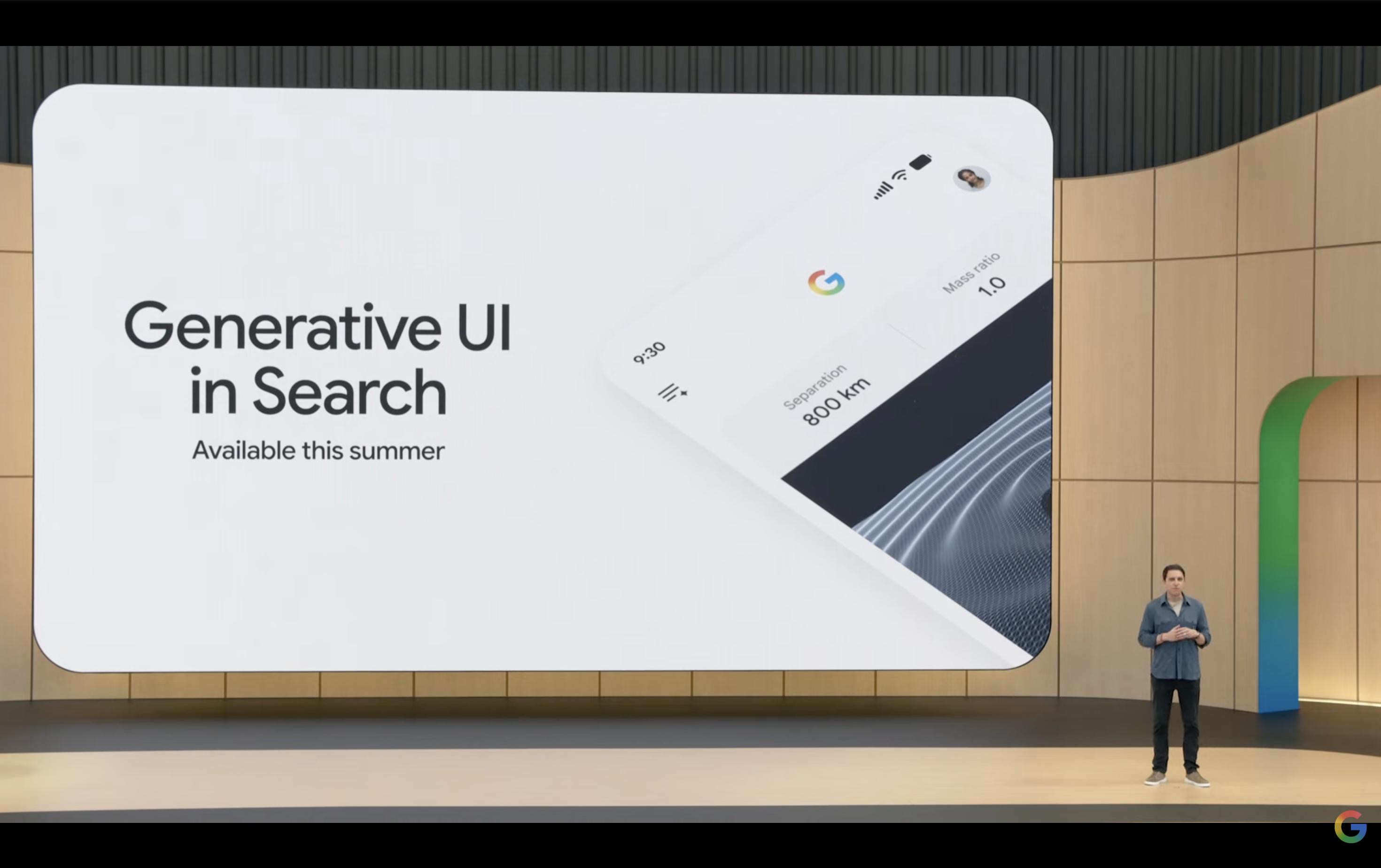
Image source: Google
To put it simply, when facing complex questions, Google Search will use 'Vibe Coding' to directly write an interactive front - end web page and answer the user's questions in an interactive way.
Unfortunately, this function will not be available to users until the summer of 2026. But the good news is that this function is an update to Google Search, and users don't need to subscribe to Gemini at a cost to use it. In addition, the UI of the Gemini App itself has also been upgraded to be more consistent with the new Android visual elements.
Thanks to the multimodal capabilities of Gemini 3.5 Flash, the AI prediction and multimodal capabilities of Google Search have also been improved. In addition to text and image - based search, the new Google Search can also directly input videos or documents; the search recommendations that were previously sorted by big - data intelligence have now been upgraded to AI search completion based on Gemini 3.5 Flash.
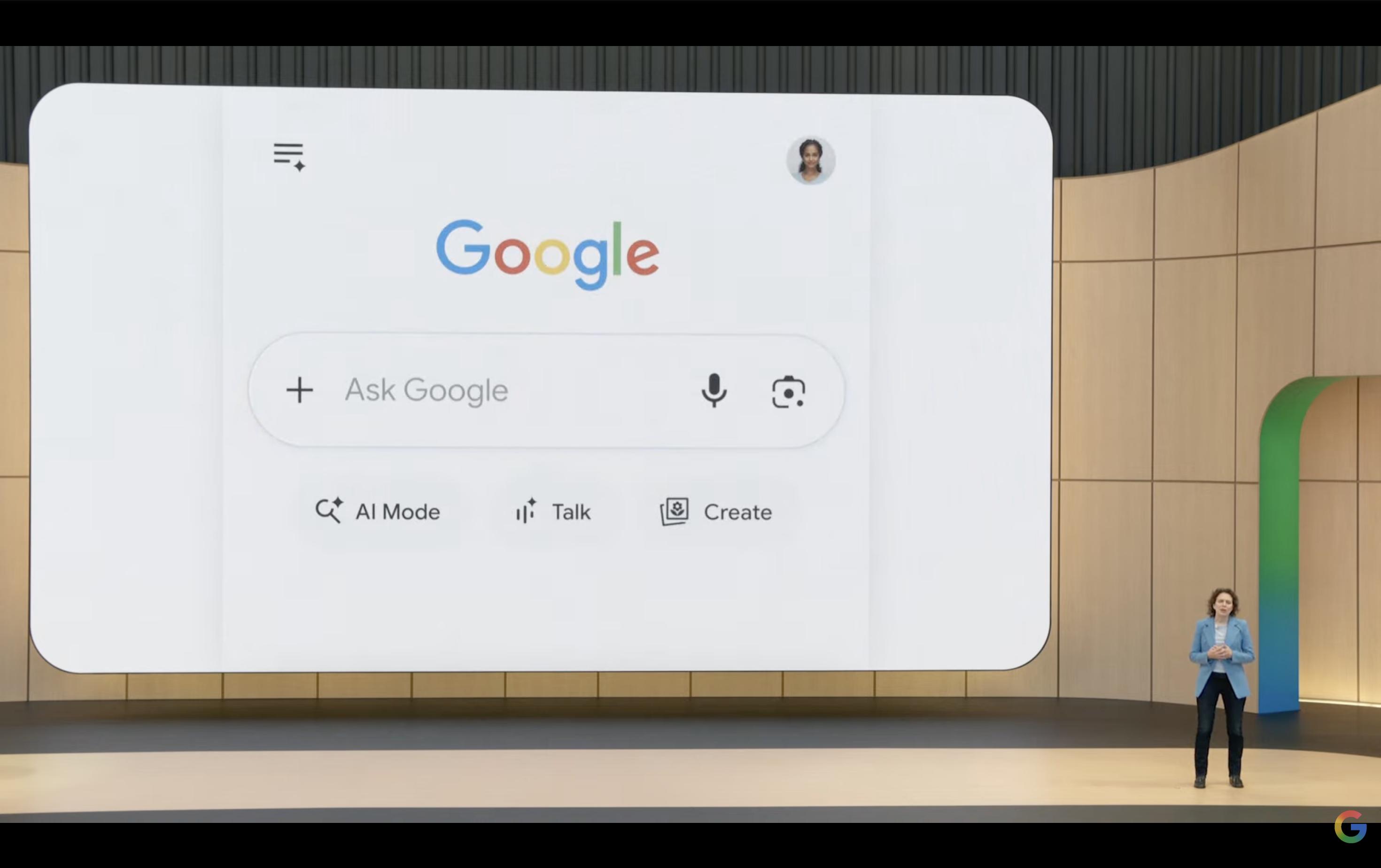
Image source: Google
In addition to the visible upgrades on the front - end, Google has also comprehensively improved the 'back - end capabilities' of the search agent: The new search agent can run in the background all day and continuously monitor specific information according to the user's requirements. For example, before going to bed, I can ask the search agent to keep an eye on AI news from AI companies such as OpenAI, Anthropic, Grok, Perplexity, and on X. When there are hot topics that cannot be missed, it can directly flood my phone with emails to wake me up to write an article.
Speaking of agents, Google also officially released a new agent for individual users, Gemini Spark, at the event. Like other AI agents, Gemini Spark can also take over the user's phone and browser 24/7. However, different from the current mainstream hosted - type agents, Gemini Spark will run in a dedicated virtualized environment.
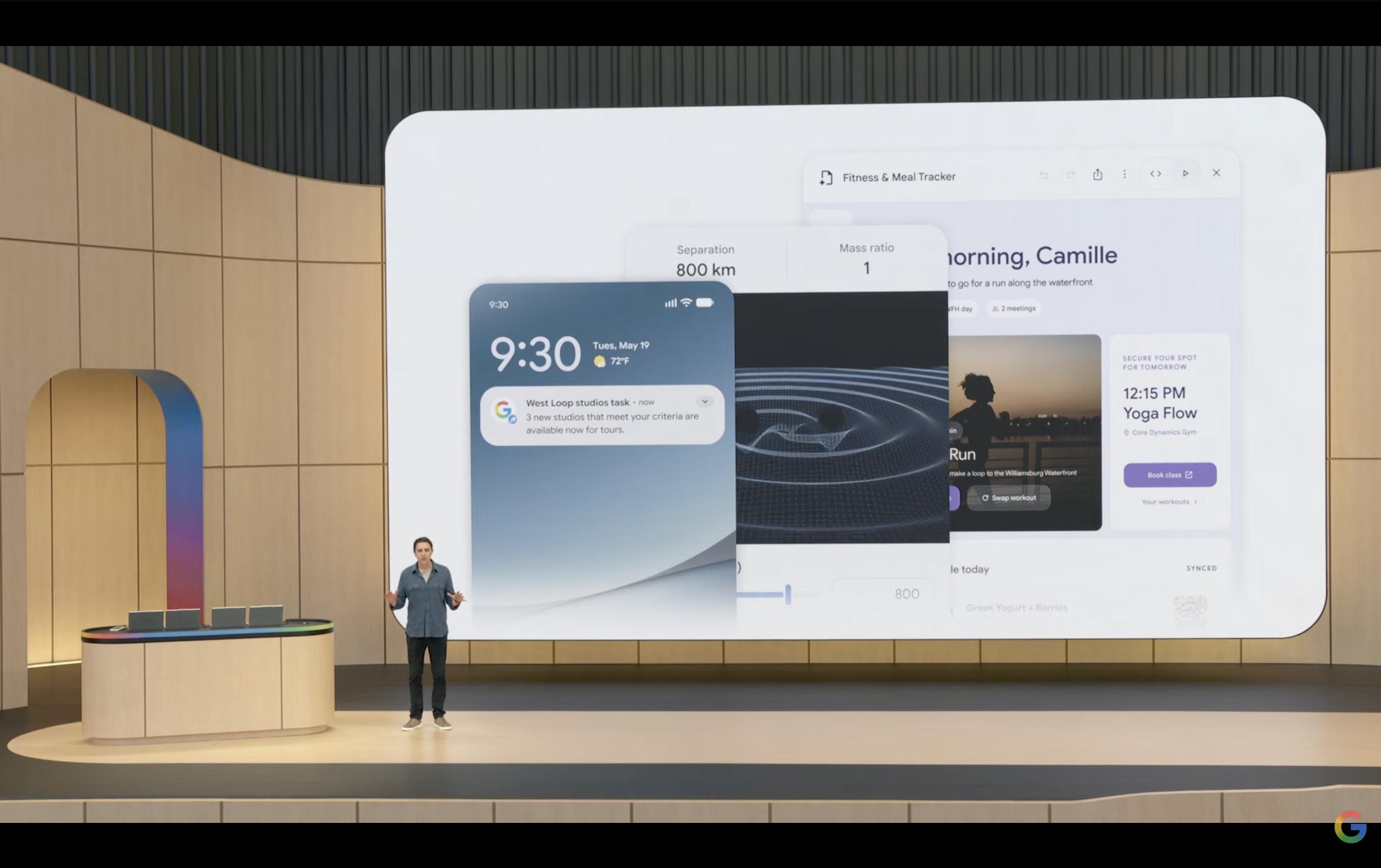
Image source: Google
Obviously, Gemini Spark is also driven by Gemini 3.5 Flash and Antigravity, and naturally supports voice interaction and background response. In terms of external linkage, Gemini Spark can not only directly link with other components of the Google ecosystem (Google Docs, Google Calendar, Gmail, etc.), but also communicate with external apps through the MCP protocol to achieve more comprehensive task hosting.
Google did not announce the platform compatibility of Gemini Spark at the event. Lei Technology expects that Gemini Spark will be launched on mobile phones in the form of the Gemini App (iOS) and the Google Search component (Android).
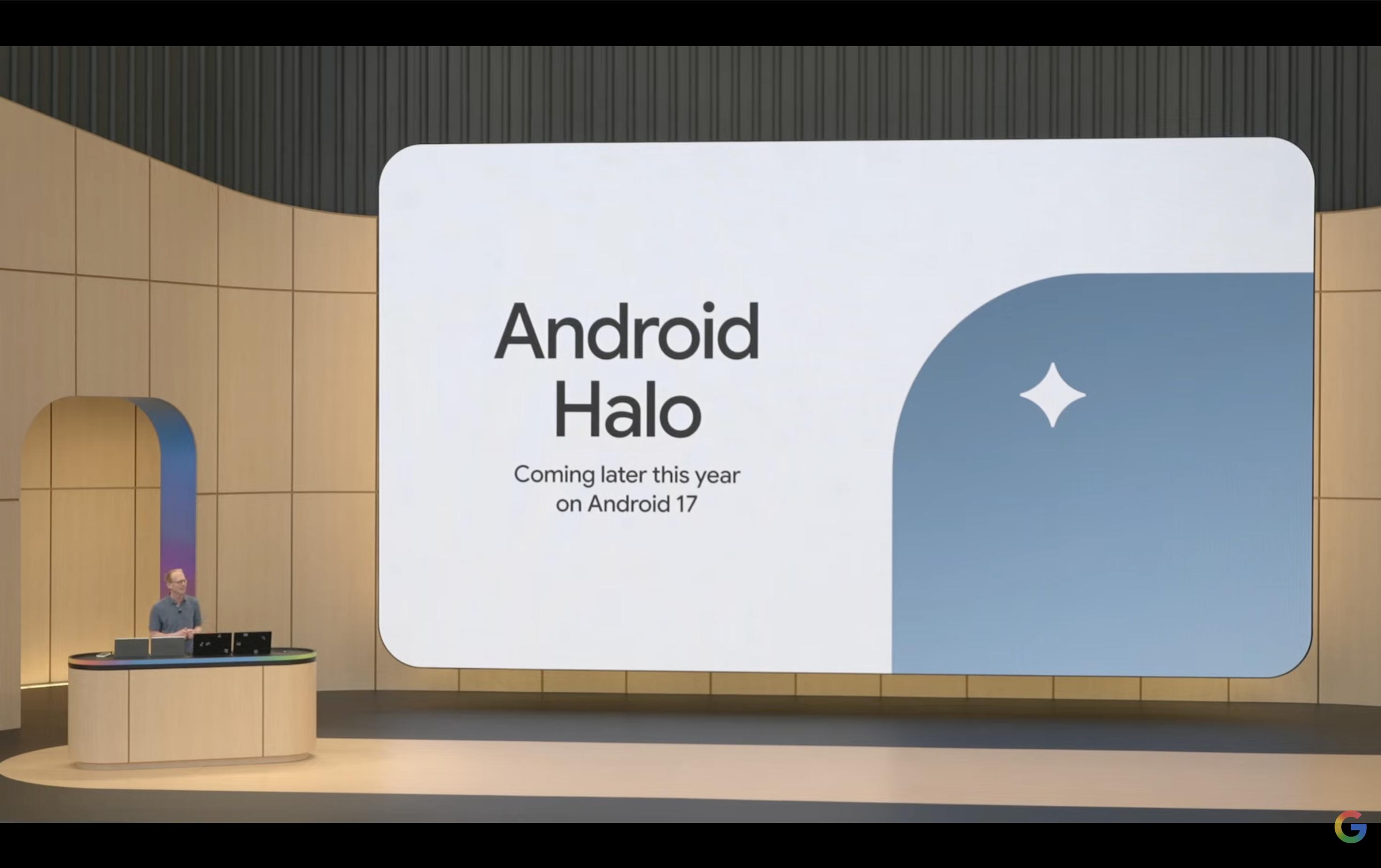
Image source: Google
When the AI agent is running (whether in the foreground or background), the newly added Android Halo function will permanently display an agent status indicator in the upper - left corner of the Android phone screen, making it convenient for users to jump to the agent interface at any time, which is similar to the current 'camera prompt' and'microphone prompt' on mobile phones.
In Lei Technology's view, the emergence of Android Halo actually emphasizes the importance of the agent from another perspective: although technically, Gemini Spark is just a'software function', its status is already as indispensable as the camera and microphone, and it is a core component of the mobile phone.
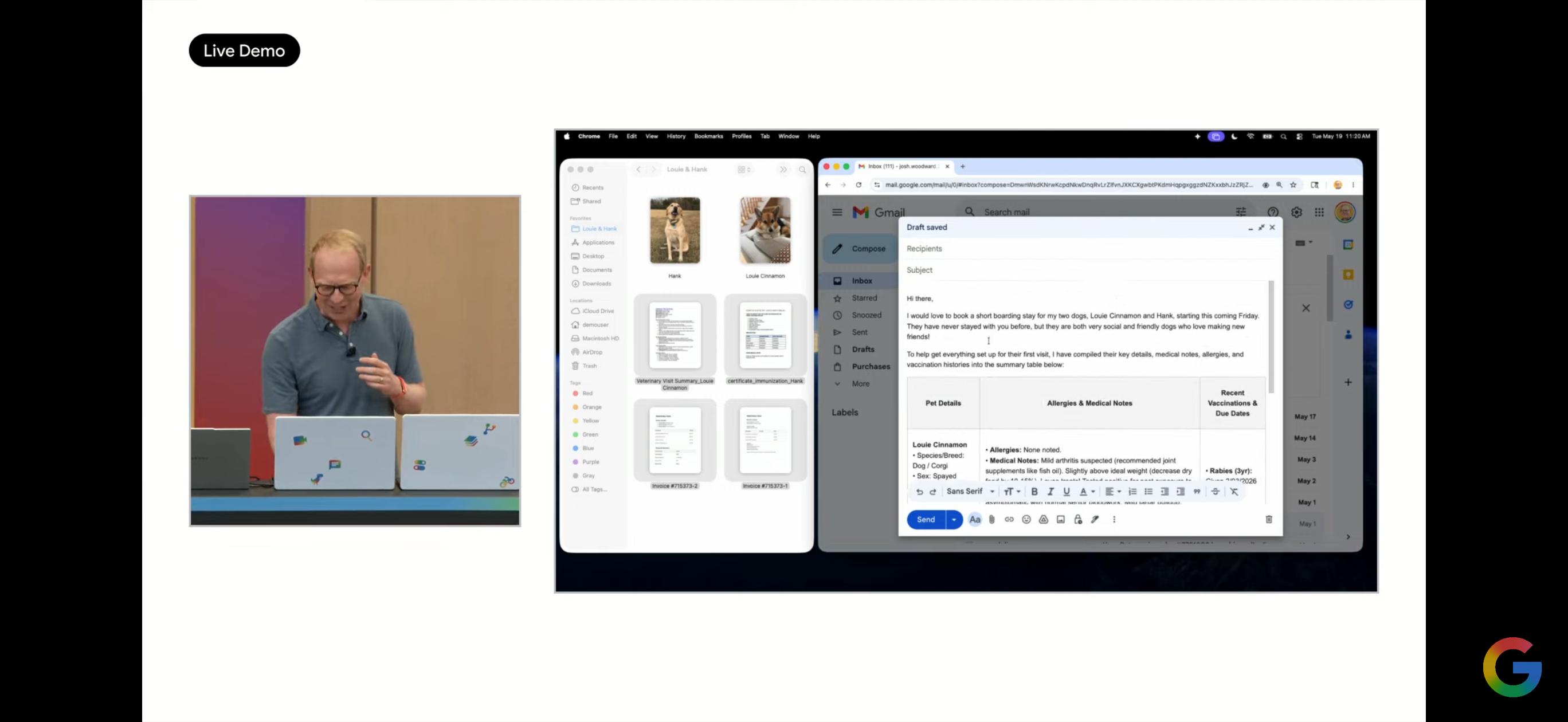
Image source: Google
Regarding computers, Google mentioned that Gemini Spark will be launched on the Chrome browser in the summer of 2026.
However, different from some domestic AI agents that require payment, such as Doubao, Gemini Spark is a full - subscription function and will be available to Google AI Ultra subscribers next week.
It is worth mentioning that in order to distinguish between enterprise users and high - usage individual users, Google has added an additional 'youth version' AI Ultra level (at $100 per month) between the original AI Pro ($20 per month) and AI Ultra ($250 per month, with a limited - time price reduction to $200 per month).
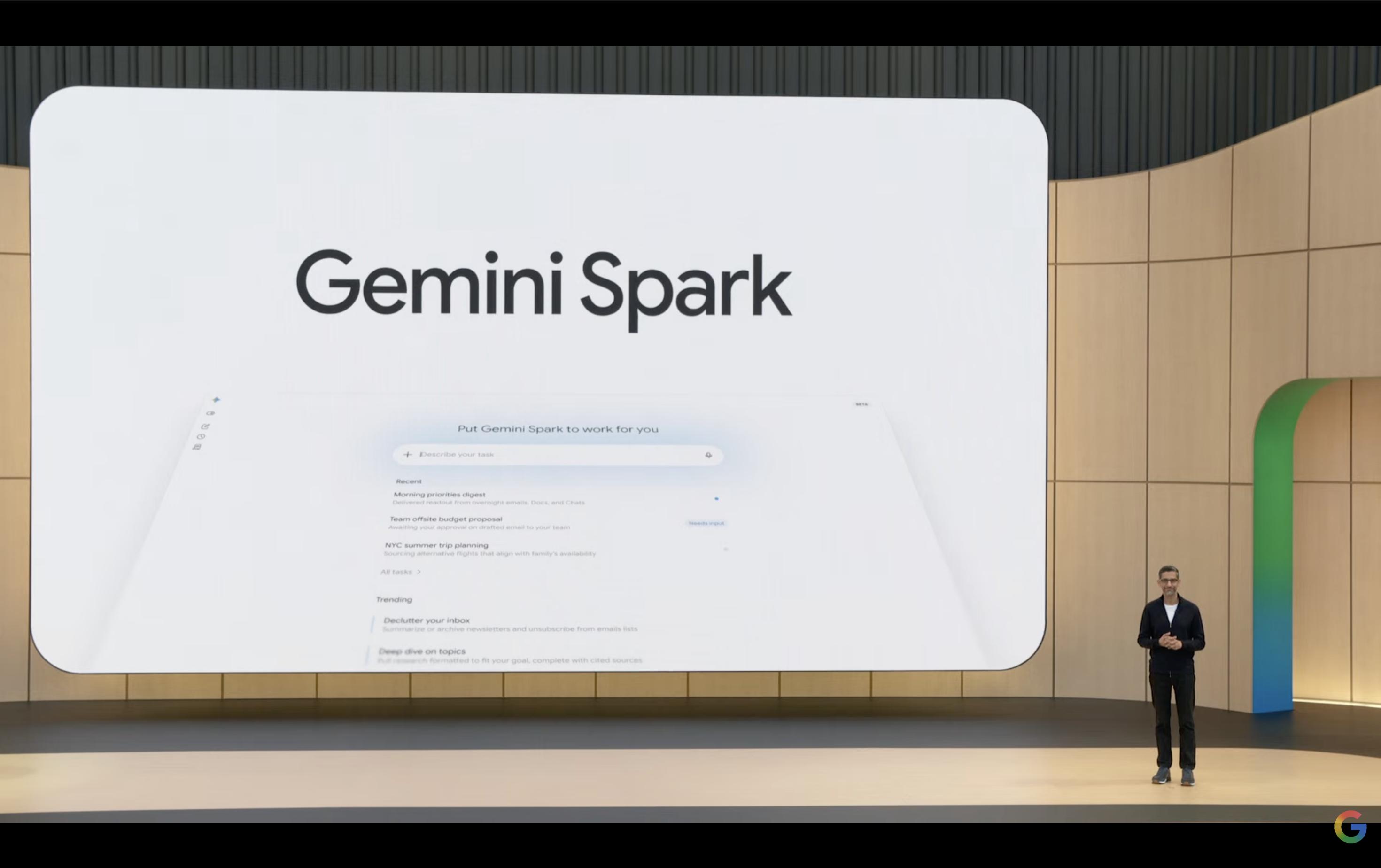
Image source: Google
It can be seen that even Google, which is 'deep - pocketed', has difficulty maintaining the huge computing power costs brought by this comprehensive AI with a free model. After all, the end of AI is computing power, the end of computing power is hardware, and the end of hardware is money. In the AI era, Internet giants can no longer rely on hardware sales and service subscriptions to cover the costs of AI.
Exaggerating a bit, as the capabilities of AI agents are further expanded, paid AI services are likely to become as necessary as mobile phone packages and become part of our 'rigid consumption'.
Audio glasses make their debut, and the Gemini ecosystem is becoming more perfect
Last year, Google demonstrated AI glasses with display functions. At this year's Google I/O, Google also presented a preview of the 'audio version' smart glasses. First of all, although they are called 'audio smart glasses', these Gemini glasses are not pure audio glasses like the Ring. Instead, they are audio glasses equipped with a camera and have AI vision and multimodal input capabilities.
Since the glasses will not be released until the autumn of 2026 (most likely in conjunction with the new chips at the Qualcomm Snapdragon Summit), Google did not announce specific product information such as weight, sensor model, and battery life at Google I/O, but only showed the product appearance and general functions.
