"Naotheater" Aqiu: A Tongji civil engineering student changed careers and wants to turn comedy into a scientifically replicable model | Exclusive interview

Image source: WeChat official account "Workplace Bonus" (ID: ZhiChangHongLi)
"On the day I broke my bone, I went to rehearsal on crutches."
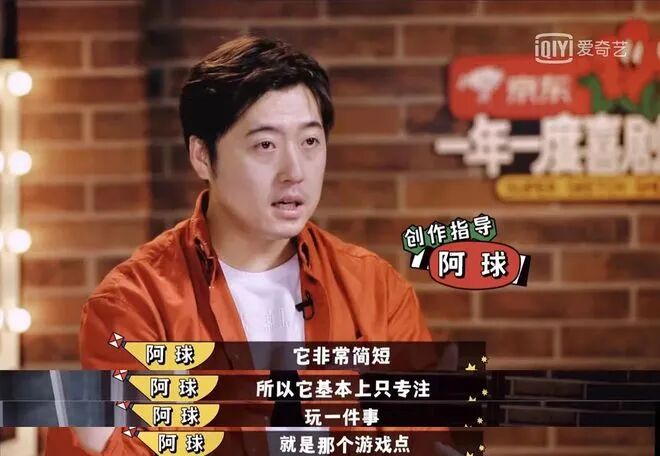
Image source: WeChat official account "Workplace Bonus" (ID: ZhiChangHongLi)
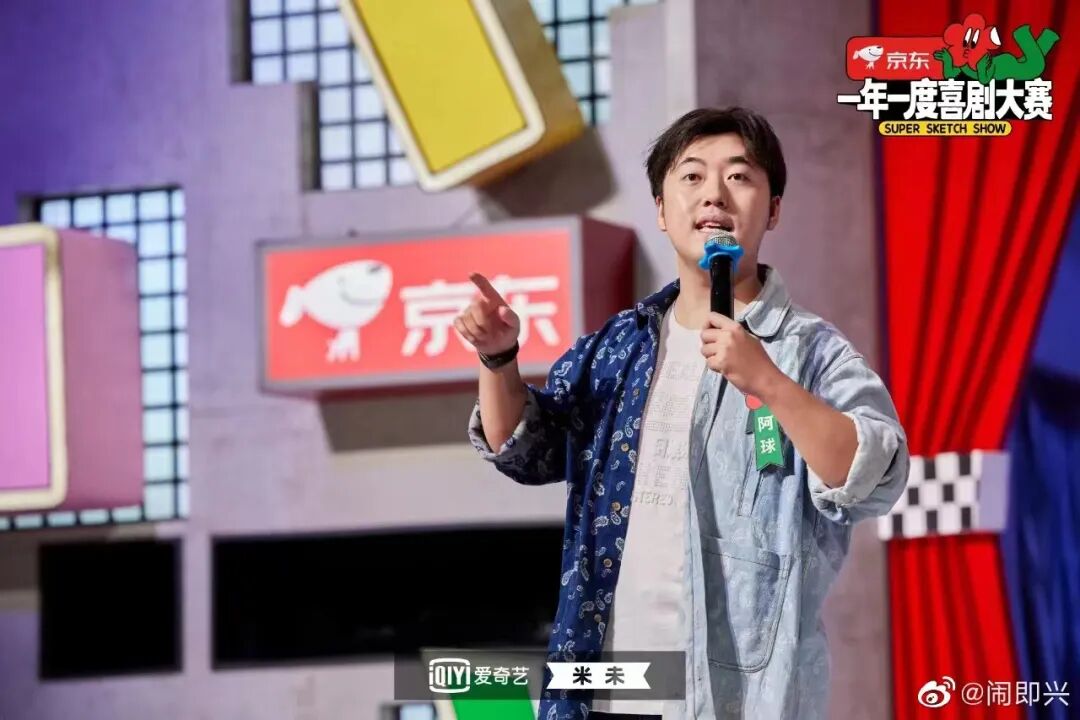
The laughter from "The Wonderful Night of Funny People" hadn't faded yet when I met A Qiu, the chief creative director of this program and the founder of the Naughty Theater.
He was wearing the blue shirt he wore on TV. His long - term busyness made him look a bit tired. When talking about comedy, a glint of concentration suddenly appeared in his eyes.
It's hard to imagine that this comedy teacher, who uses the methodology of "using technology in comedy" to help many actors step from behind the scenes to the front stage, was once a real - estate person who graduated from Tongji University with a major in civil engineering. In the summer of 2012, an improvised comedy event on Douban's local activities accidentally opened up a new world for him: without a script or preset, the instant joy burst out by the actors through their tacit understanding and reactions made him instantly realize that "life can actually have another way to unfold".
From being a regular actor on "Tonight's Cabaret" to taking on multiple positions such as a rotating director, producer, and creative at Miwei, and then to being the creative director of "The Wonderful Night of Funny People" and "The Annual Comedy Contest", A Qiu has walked a solid and clear path in comedy. He never believes in "talent". This science student with a background in structure breaks down comedy into a learnable and practicable methodology, and sorts out the creative logic of improvised performances and sketch comedies into a clear teaching system.
After just finishing the work on "The Wonderful Night of Funny People", A Qiu immediately plunged into the curriculum development of the Naughty Theater. For him, making more people experience comedy, just as naturally as many people go to the gym, is the industry landscape he hopes to see.
Maji has three considerations, dedicated to helping you find your personal career coordinates in the trend 👇🏻
The following is the transcript of the interview. Some wordings have been adjusted by the editors of "Workplace Bonus".
Make "funny" a replicable science / One
Don't want to go to work, want to rehearse / Two
Now doing comedy is still like manually "picking mushrooms" / Three
When comedy is no longer the stage for a few people / Four
Make "funny" a replicable science
Maji: Does comedy rely on talent or hard work?
A Qiu : Making the audience find it funny is actually a muscle reaction trained by comedians.
Our slogan is "Do comedy scientifically and become happy seriously". For most things that seem to have no method, there are actually methods behind them. It's just that either we don't understand them deeply enough, or they are well - camouflaged.
After all, talent is the accumulation of a person's deliberate practice. Those people who, as soon as you hear them speak, you think "Wow, this person has such a great comedic talent and everything he says is so funny" - when you didn't know them, they were constantly thinking about and recording jokes. They developed their abilities through continuous accumulation and practice.
Maji: Then why is the core of comedy "emotion" rather than "technique"?
A Qiu : From the perspective of an educator, I hope to cultivate more practitioners by breaking down the professional techniques in comedy, so that comedy can develop from a program into an industry. Therefore, a replicable methodology is very important.
But what's more important in comedy is emotional resonance. Because no matter how powerful the technique is, it's useless if it can't make the audience empathize. Techniques should serve the structure and emotions.
Maji: You said that what comedy really competes on is "being the fullest version of yourself". What does that mean?
A Qiu : Comedy actors should be self - consistent and fully display their personal charm on the stage.
What comedy really competes on is how unique you are and whether you dare to be yourself. The reason why we produce many improvised programs is that this type of performance can reduce the constraints of the script on the actors.
We hope that after actors receive training and acquire skills, they can confidently say, "I will be liked even if I just be myself." And this kind of confidence and self - consistency are precisely the most important sources of a comedy actor's personal charm.

●
Don't want to go to work, want to rehearse
Maji: You graduated from Tongji University and worked in the real - estate industry for three years. Did you have confidence when you gave up a high - paying job to do comedy?
A Qiu : I calculated two accounts at that time.
One was the living account. I wondered if I could survive without any income in the next 12 months. I found that, OK, no problem, I could make it.
The second was the emotional account. Previously, I had to spend money to get emotional value at work, but now I could do this thing without spending any money, not to mention the possibility of making money.
I thought both accounts were worthwhile, so I just did it.
Maji: What was the critical point when you switched from being a part - time to a full - time comedian?
A Qiu : Once during a business trip, I broke my leg. Every day, I could only hop on one leg from the fifth floor to the first floor on crutches. At that time, the doctor gave me a two - month sick leave. So I hopped downstairs every day, took a taxi to rehearsal, and then hopped back.
At that moment, I realized: "Wow, this thing is actually more important to me than going to work."
Maji: You've held multiple positions. How did you finally determine that you are better at being a coach than an actor?
A Qiu : For me, being an actor is going from liking to being good at it, and being a coach is going from being good at it to liking it.
I think my way of thinking is quite suitable for being a teacher. Because not every talented person can become a coach right away. The feeling of a genius can't be passed on to others through words, but methodology can.
I'm exactly the kind of person who has grown up by stacking methodologies. I think if I do creation and training, my influence will be much greater than when I'm standing on the stage alone.
Maji: What cases of people switching to comedy have you seen?
A Qiu : Many Internet practitioners have switched to being creators after getting tired. Currently, I'm "persuading" some of those with product experience to become producers.
Actually, product managers have great advantages in doing comedy. They usually have a strong insight into consumer needs. It's no problem for them to earn tens of thousands of yuan in box office in a month and support themselves.
Now doing comedy is still like manually "picking mushrooms"
Maji: What's the real situation in the comedy industry now?
A Qiu : There are comedy programs but no real industry, so the term "industry" is actually not very accurate.
The comedy industry has never really existed. After the emergence of programs, the industry has taken shape and has the possibility of survival, but not many talents will suddenly flock in because we don't have enough places to accommodate them.
Maji: Online variety shows are so popular. Why can't comedy be as popular offline as holding a concert?
A Qiu : The offline market can't handle the traffic brought by online programs.
Currently, there aren't enough good works, good teams, and good actors. We are in the gathering era, manually picking mushrooms. The lack of industrialization is a serious problem, and we are in the "mushroom dilemma".
●
Maji: What exactly does the "mushroom" dilemma refer to?
A Qiu : We don't cultivate mushrooms industrially; instead, we go up the mountain to pick them. When there is a mushroom, we keep exploiting it. We rely entirely on shows like "Tonight's Cabaret" and "The Wonderful Night of Funny People" to discover amateurs. When there are no mushrooms, we stop and say, "Let's take a break and let the mushrooms grow" - but this won't work.
Currently, there are hundreds of people behind the dozens of people who can appear on the shows. Many of them will spend six months here to take a chance. Actors have to be almost out of work, but they may be notified that they can't appear on the show at the last minute. No one will pay for their sunk costs.
Without a mature theater operation, talent cultivation, and work replication chain, we can't handle the traffic when it comes, and we can't retain the popular actors.

●
When comedy is no longer the stage for a few people
Maji: How can comedy change from a career for a few people to a popular entertainment lifestyle?
A Qiu : I think the core is to liberate comedy from the narrow path of "becoming a star", remove the utilitarianism, and turn it into a daily choice like fitness or running.
Imagine,
If one day, two colleagues get off work,
A asks B: "What are you going to do after work?"
B says: "I'm going to the gym."
B asks A: "What are you going to do?"
A says: "I'm going to perform comedy."
OK, we all have wonderful lives.
The most ideal state is that when you say you're going to perform comedy, no one will ask, "Why are you going to perform comedy? Are you going to be on a variety show?" Just like you won't ask someone who goes to the gym to run, "Are you going to run a marathon? Are you going to the Olympics?" This is a very strange stereotype. It's not that you have to become a star just because you do something.
Maji: Why are the audiences of comedy mostly women?
A Qiu : The core of comedy is emotional resonance, and women are more likely to empathize and capture emotions more accurately than men.
Moreover, most of the audiences of any variety show are women, accounting for about 70%. In addition, in terms of the proportion of students, the ratio of girls to boys can also reach 7:3.
This is because girls naturally hope to be more positive, more enterprising, and more excellent. If you look at Xiaohongshu, most of the people who buy career coaching courses are also girls.
They really believe in learning and want to become better and make progress. Many men's attitude is, "What comedy class? I'm already very humorous. I don't need it. Ridiculous."
Maji: Some companies invite improvised comedy teams to interact with employees during team - building or review meetings. What do you think of this phenomenon?
A Qiu : The first thing we teach leaders is the three levels of listening. Only when employees express themselves positively and leaders listen effectively can communication be established. But many leaders don't provide emotional value to their employees, and comedy training can make up for this shortcoming.
Maji: You've seen many actors go from amateurs to stars. Were there some people you knew would make it even before they became popular?
A Qiu : For Peilun and Xingchao, becoming popular is just a matter of time.
If Xingchao doesn't become popular in the end, it actually means this era doesn't deserve him. Peilun is a very altruistic person. He hopes his friends are happy and helps in others' works. Even for just one line, he will practice and ponder over and over again to make it better. Jiang Long was the most hard - working in the first season. He was constantly thinking and analyzing the videos frame by frame and line by line.
I think the two core qualities for success are extreme hard work and a stable inner core.
"Fame", "wealth", and "power" will make a person less likely to pretend. The way some people are after becoming popular is actually their true selves.
Written by | Maji, Li Haoting
Edited by | Chen Tong
Typeset by | Fang Tingyu
Illustrations provided by | The interviewee