Sam's Club opened two stores simultaneously for the first time, but speed has never been its core proposition.
On May 15th, Sam's Club opened new stores simultaneously in Jinan and Qingdao, Shandong Province. This is the first time it has opened two stores at the same time since entering the Chinese market 30 years ago.
For a retailer that has long added new stores in single digits annually, opening two stores at the same time is a moment worth marking. Choosing Shandong itself is a statement of sorts. As one of the most populous provinces in China, it has a large consumer base and is on the fast - track of consumption upgrading.
Meanwhile, Shandong is home to top - notch specialty vegetables, landmark agriculture, and fruit resources in the country. It also plays a stronger "two - way circulation" role in the retail supply chain system. Qu Yan, the vice - president of the procurement department of Sam's Club in charge of fresh food procurement, mentioned that on the one hand, Sam's Club brings in high - quality global products, and on the other hand, it hopes to use its quality standards and global supply chain advantages to bring Shandong's high - quality products to the national and even global markets. Currently, Sam's Club has cooperated with over a hundred local Shandong enterprises, covering various categories such as fresh produce, snacks, and alcoholic beverages.
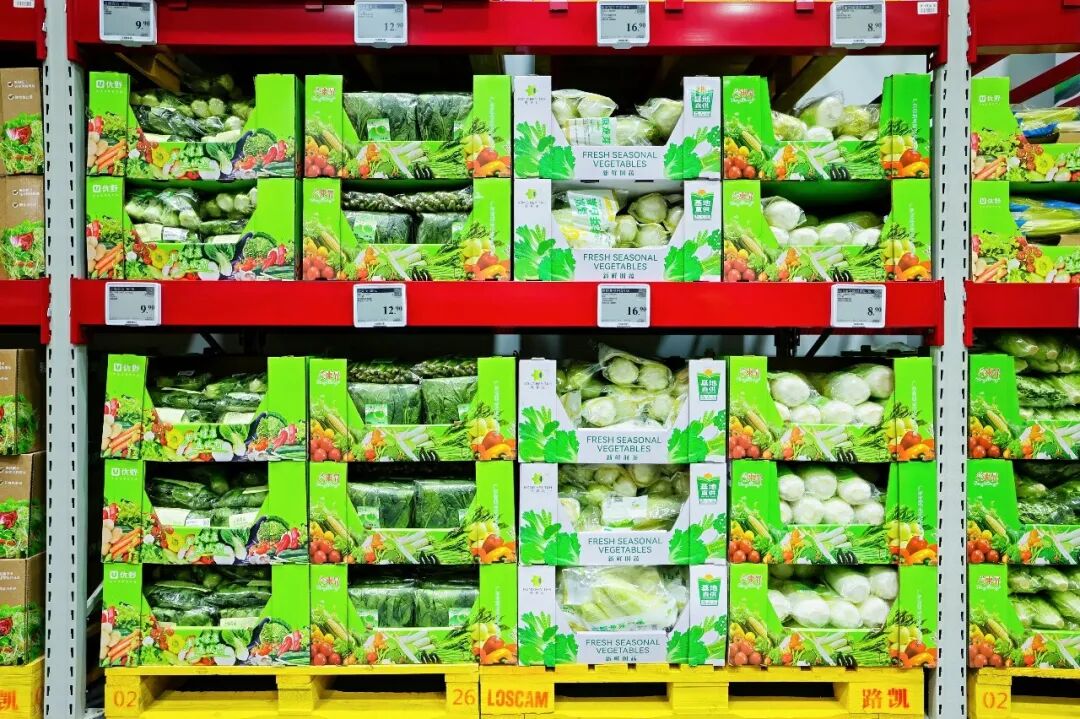
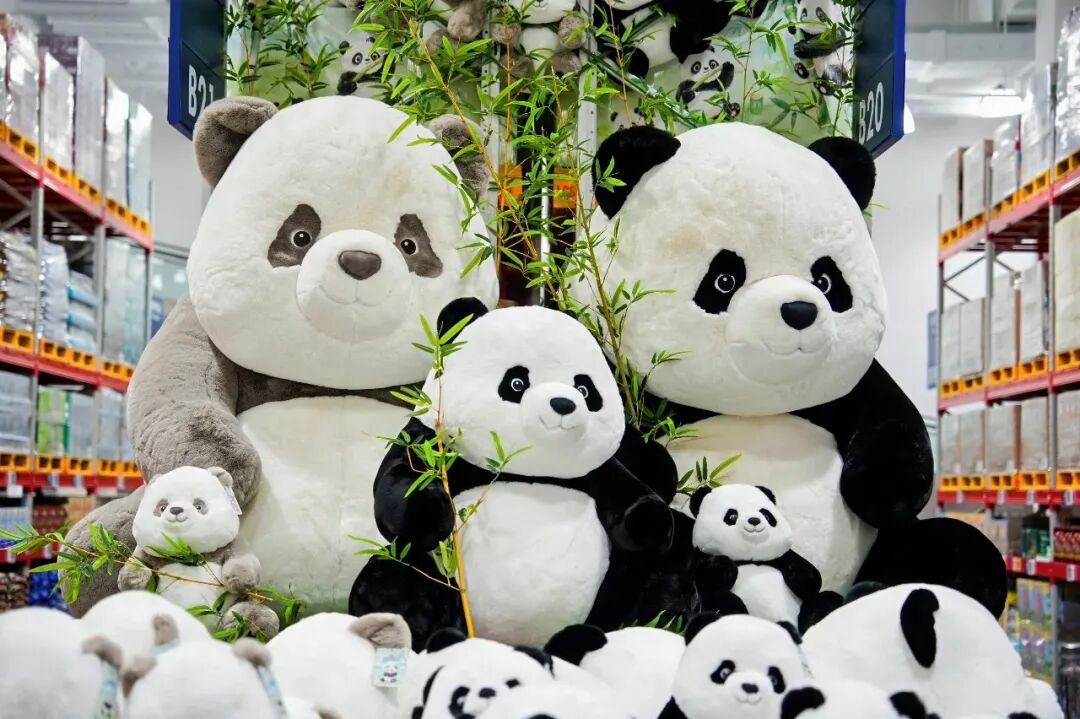
Sam's new store in Jinan is located in the High - tech Zone of Jinan, with a business area of about 21,000 square meters and more than 1,100 "extra - large" parking spaces. Inside the store, products such as an extra - large 180 - cm panda plush toy and a large inflatable castle continue its consistent sense of "surprise". The Sam's team has developed a series of exclusive products for these two new stores, all of which are labeled "Recommended for Opening".
What's more worth mentioning is that this time in Shandong, Sam's Club has brought a series of carefully selected "high - quality global protein" products for local members. These include whole large Spanish mackerel, deep - water wild - like large yellow croaker, whole - box whole Atlantic salmon, king crabs from Chile, as well as braised pork belly cubes (a local favorite in Shandong), seasonal sea intestines, abalones bigger than a palm, etc. A rich and diverse range of protein - rich fresh products, a blend of Chinese and Western cuisines, are presented on the shelves.
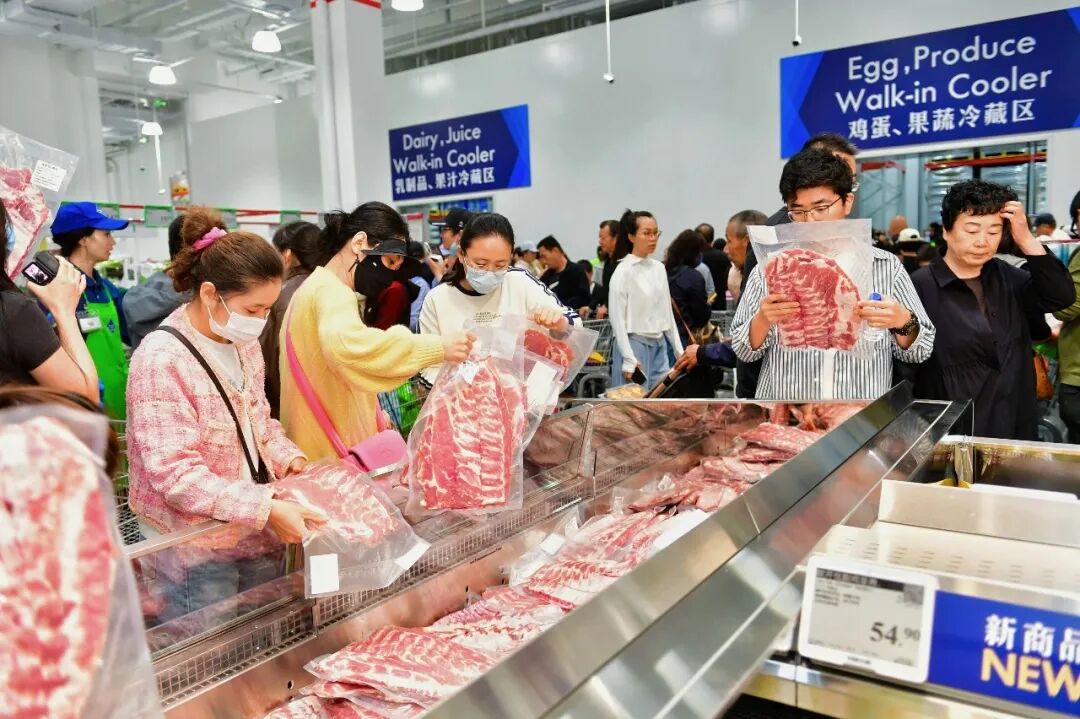
This is not a coincidence. People in Shandong love meat and know seafood well. They have an innate ability to judge the quality of protein and can tell if it's good just by taking a bite. "High - quality protein" is precisely where Sam's Club's full - chain capabilities are most concentrated - the scheduling of the global supply chain, the extreme management of cold - chain temperature control, the fine - tuning of local needs, and the long - term locking of upstream resources are all extremely well - demonstrated in a piece of beef or a fish.
During our store tour and interviews, Qu Yan, the vice - president of the procurement department of Sam's Club in charge of fresh food procurement, and Amber Bynum from the United States, the vice - president in charge of non - food procurement, two representatives from China and the West respectively, detailed some highly representative "Sino - Western blend" products. They explained how a piece of beef travels from an Australian ranch to the tables in Shandong and how a sun - protective clothing creates differentiation. Throughout the process, the keywords they repeatedly mentioned were still "quality", "differentiation", and "member value", which are the principles that Sam's Club has been reiterating since entering the Chinese market. The retail industry in China is undergoing great changes, but Sam's Club remains the same.
A Revolution in Full - Chain Quality Control of a Piece of Beef
Most of Sam's chilled beef is imported from Australia, which is not surprising. What's surprising is what it goes through before and after arriving in China.
Qu Yan has been working in Sam's procurement department for nearly 26 years. She mentioned a term called "Double - T Management" - Temperature and Time. In terms of temperature, the optimal storage temperature for beef is between - 2°C and 2°C. Sam's Club has built a full - chain cold chain with a temperature range of - 2°C to 2°C, not only in the transportation process but also in the warehouses. The temperature in the processing rooms of the stores is strictly controlled between 4°C and 7°C (the national standard requires ≤12°C). This means that a piece of beef is under temperature control throughout its journey from Australia to the shelves in China.
In terms of time, Sam's Club has a progressive shelf - life management system for beef. From the raw materials at the source, the receiving at the warehouse, the receiving at the store, to the final slicing and shelving, each step has strict time requirements and a quality control system far higher than the industry standard.
At Sam's Club, there are many products like beef that come from the "West". Sam's Club used to often mention the term "combination of Chinese and Western", but now it aims to achieve "integration of Chinese and Western". What is integration? "Take fresh food for example. It's not just about having good taste. We really need to get involved in the product's life cycle and do a lot of solid and detailed management with our supplier partners," Qu Yan explained.
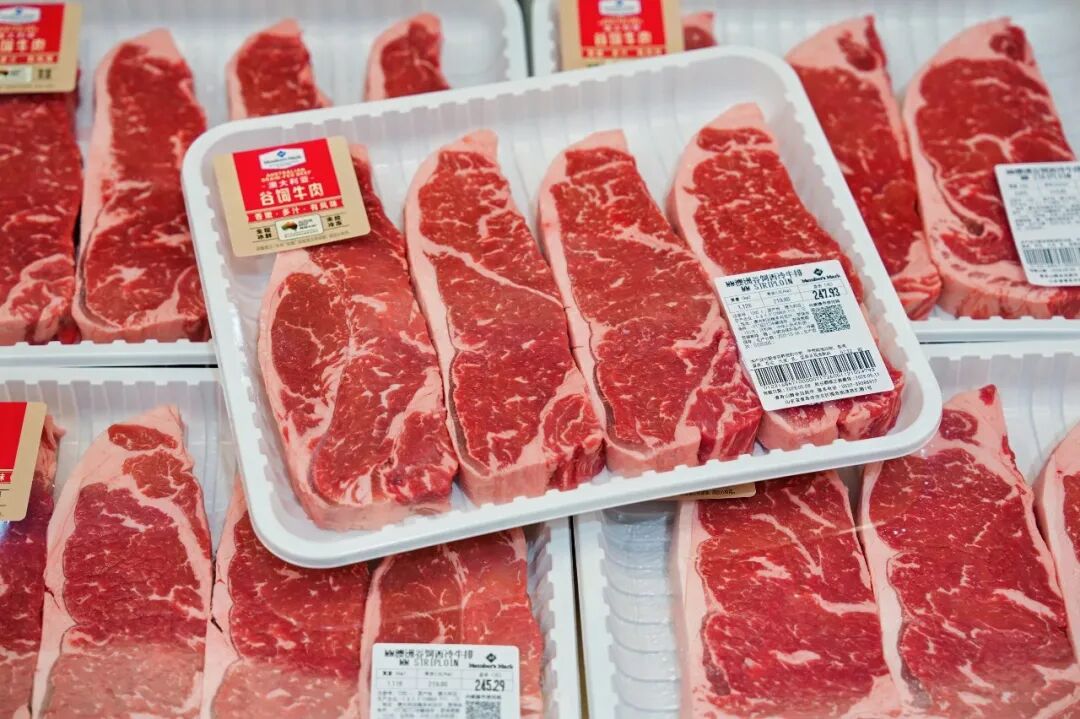
Taking beef as an example again, the beef on Sam's shelves today has been "custom - raised" since three years ago. The breeding cycle of cattle is three years. Sam's Club determined the custom - raising plan with the suppliers three years ago. The procurement team will visit the world's leading suppliers on - site to "customize" exclusive cattle, with strict standards for breed, age, post - slaughter pH value, lactic acid content, and the marbling distribution of the meat.
In addition to raw materials, Chinese consumers' cooking habits also provide important insights into products. Western countries have a habit of thick - cut steaks, but Sam's Club found that Chinese families have different needs. Some people like to fry, some like to stir - fry, and some like to cook in hot pots. So they cut the beef in different ways: 2 - 2.5 cm thick cuts for Western - style grilling, 1.1 cm thin cuts for more diverse cooking methods, and 0.2 cm thin slices for hot pots. For this purpose, Sam's Club invested tens of millions of yuan to introduce precise cutting equipment and completed the slicing in the stores.
After going through the whole process, we can see that there is a much more complex systematic project behind "high - quality protein". It doesn't end with "procuring good meat". It starts from custom - raising a cow, followed by cold - chain transportation, progressive shelf - life management, and precise slicing in the stores. Each step has quantitative standards, and no step can be overlooked.
The logic for seafood is different but equally precise. For example, Sam's imported frozen cod is "quick - frozen on the boat". After the fish is caught, it is slaughtered, cleaned, graded, and frozen in a very short time to lock in the taste and nutrition to the maximum extent. Each type of seafood, such as Thai shrimp, Chilean king crab, and Norwegian salmon, has a dedicated full - chain temperature control plan.
At Sam's Club, "quality is the top - priority project", Qu Yan said. For consumers, they can only feel the tenderness of a piece of beef or the freshness of a fish. But the more "invisible" standards and the amount of work behind it form Sam's most difficult - to - replicate competitive advantage. It's easy to improve quality control in a single step, but a full - chain, progressive quality control system with quantitative standards for each step requires more long - term and firm investment and implementation.
Differentiation is Not Selected, but Created
If full - chain quality control solves the problem of "stability", the next question Sam's Club needs to answer is: Why should members think that "I must buy this product at Sam's Club"?
The answer is differentiation. In the retail industry, Sam's Club's products are well - known for being "new, strange, and unique". However, Sam's Club's understanding of differentiation is different from the mainstream practices in the industry.
Most retailers achieve differentiation by "selecting". Suppliers bring products, and the procurement team selects the best and unique ones to put on the shelves. Sam's Club often does a more challenging thing: "developing" from the source.
The way of cutting beef is the most typical example. For the same piece of Australian beef, Sam's Club cuts it in three ways according to Chinese cooking habits to meet the needs of more scenarios. This kind of differentiation cannot be achieved by selection but by self - development. The same goes for the Spanish Iberian black pig. It is a rare breed in the black - pig category, fed on oak and with a breeding cycle of more than 10 months. Sam's Club found that there was a demand gap for black - pig ribs among Chinese consumers, so it specifically developed this category that is hardly found in the market.
Qu Yan told us, "It's easy to achieve superficial differentiation, but in - depth differentiation is the greatest requirement and challenge for procurement." This logic of "creating" differentiation also applies to non - food products.
According to Amber Bynum, the vice - president of the procurement department of Sam's Club, the washable silk quilt of Sam's private label "Member’s Mark" is a product developed based on members' feedback. Sam's members believe that silk quilts need to be washed in summer, but the problem of hardening after washing is frequent. So the procurement team, in cooperation with suppliers, pioneered a washable and soft knitted fabric and established dozens of internal control standards.
In addition, Sam's new cool - feeling bedding is also co - created with scientific research professors from universities and a top - 500 global source factory. It uses physical methods instead of chemical additives to achieve a cool feeling, remains effective after multiple washes, and its cool - feeling value far exceeds the national standard.
These cases point to the same conclusion: Procurement ability can be caught up with through capital and channels, but development ability requires the precipitation of time, experience, and organizational ability. In today's retail environment, "differentiation" can no longer be simply understood as selecting products that others don't have. True differentiation is creating products that others can't. The former is a multiple - choice question, while the latter is a fill - in - the - blank question, which is why Sam's differentiation is so difficult to replicate.
As Qu Yan said, "Sam's Club never deliberately creates blockbuster products. Blockbuster products are the natural result of core capabilities."
Sam's Club Remains the Same
Both full - chain quality control and product development from the source have a common prerequisite: time.
Beef needs to be custom - raised three years in advance, the breeding cycle of black pigs is more than 10 months, and Sam's Club is deeply involved in the whole process from land selection to the listing of vegetables. These are all time periods that cannot be compressed. The same goes for non - food products. Sam's cool - feeling bedding was developed two years in advance, the "400 - gram down jacket" that became a hit last winter went through two to three years of iteration, and the washable silk has also undergone multiple rounds of upgrades.
The time frame can be even longer. Qu Yan mentioned that Sam's beef is a "layout from ten years ago". The Sam's China team judged nearly ten years ago that high - quality imported beef would be the future demand of Chinese middle - class families. So they took the lead in finding suppliers from the source, building a cold - chain system, and standardizing operations. When other retailers started to follow up on the beef category, Sam's Club had already been in the game for ten years.
This "slow" approach forms a strong contrast with the mainstream "fast" approach in the retail industry. In the past few years, the industry has been chasing turnover rate, new - product launch speed, and the efficiency of replicating blockbuster products. Whenever a popular product appears on social media, channel providers will quickly find suppliers to offer the same product at a low price to compete for the market. This is a "responsive" product strategy. It's fast but difficult to achieve real depth and is easily replaced by faster late - comers.
Sam's approach is more like a "cultivation - based" one. It starts from the source, spends time, makes investments, and has the endurance to polish a product until it matures. There is no absolute right or wrong between the two, but there is a huge difference in terms of "trust". The former relies on traffic and price to stimulate repeat purchases, while the latter builds a mental perception through continuous quality delivery. Once the mental perception is formed, it's difficult to be shaken by low prices.
This is related to the essence of the membership - store model. The renewal rate of members does not depend on impulse consumption from a single promotion but on the accumulated satisfaction throughout the year. This satisfaction cannot be obtained through short - term actions but can only be accumulated through continuous quality delivery. The competition among membership stores is essentially a "slow race". Whoever can maintain the stability and improvement of quality over a longer period of time can gain continuous trust.
The essence of paid membership is a contract. Members pay, and Sam's Club delivers certainty. Certainty can only come from the system, not from individuals or single products. When Sam's quality control system can ensure that the same piece of beef has the same tenderness and flavor in Shenzhen and Jinan, and when the full - chain temperature control can ensure that the freshness of seafood from catch to the table is maximally retained, members will naturally renew their memberships without much marketing promotion.
Qu Yan summarized that after 30 years in the Chinese market, Sam's Club has completed the full cycle of "scale expansion - cost optimization - quality investment - member value enhancement". The key to this cycle is that no step can be overlooked. Scale expansion should not be at the expense of quality, cost optimization should not be achieved through cutting corners, and quality investment must be translated into value that members can perceive. If any step breaks, the cycle will not work.
What keeps this cycle running is long - term and forward - looking investment and a firm belief in what is the "right thing". During the store tour of Sam's new store in Jinan, Zhang Yi, the store manager, repeatedly emphasized that "Sam's member profile is very clear and has never changed" and that "product strength is Sam's most core value". Echoing this is the creed of the founder of this retailer, Mr. Sam Walton, which is that "all efforts revolve around customers and members".
There is no shortcut in retail. In an industry still keen on finding shortcuts, this may be a judgment worth repeating.
—————— Brand Feature ——————