Qi Lu, the Most Loving "Father" of Robots
When Wang Xing became the first investor in embodied intelligence, few people noticed that Lu Qi, who had been out of the public eye for a long time, was actually the "angel" in this field. QiJi Venture Capital's name can be seen in the early-stage financing of many embodied intelligence companies.
In 2019, Lu Qi founded QiJi Venture Capital, which was formerly the Chinese branch of the US startup incubator Y Combinator. In the past few years, QiJi Venture Capital's focus has shifted several times, from paying attention to the metaverse to chasing large models, and then turning its attention to robots.
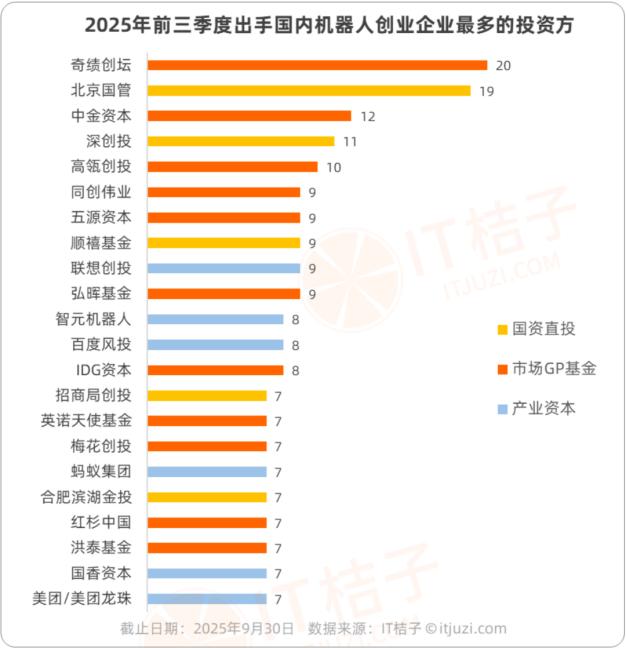
According to data from IT Juzi, in the first three quarters of 2025, QiJi Venture Capital was the most active investor in robot companies in China. It not only outperformed traditional venture capital institutions such as Hillhouse Capital and IDG Capital but also exceeded internet capital such as Ant Group and Meituan. In 2025 alone, embodied intelligence and robot projects accounted for 28% and 30% respectively in QiJi Venture Capital's spring and autumn roadshows.
Source: IT Juzi
In the field of embodied intelligence, Lu Qi's most notable investment is Zhiyuan Robotics, one of whose founders is Peng Zhihui, a former Huawei genius youth. Currently, Zhiyuan's valuation has exceeded 15 billion yuan. In addition, Guanglun Intelligence, which has been in the limelight recently and is valued at about $1 billion, also counts QiJi Venture Capital as one of its early investors.
As one of the evangelists in China's AI field, Lu Qi has worked at IBM, Yahoo, Microsoft, Baidu, and YC China. However, this person with significant influence in China's large model field was a bit late in the large model era. Among the so - called "Six AI Dragons" companies, neither Lu Qi nor QiJi Venture Capital was seen as an early - stage investor.
China Entrepreneur magazine reported in 2023 that a person close to Lu Qi revealed that Lu Qi invested in relatively few AI projects in the early stages. It was not until ChatGPT emerged that Lu Qi began to make large - scale investments. In this person's view, Lu Qi entered the market too late.
However, in the field of embodied intelligence, Lu Qi took action much earlier. As early as 2023 or even earlier, he began to invest in robots. Having missed the opportunity in the large model field, Lu Qi didn't want to miss out on robots.
A
Before making large - scale investments in embodied intelligence, Lu Qi's investment focus was on large AI models.
On April 22, 2023, Lu Qi gave a small - scale speech in Shanghai, sharing his worldview on large models. Starting with OpenAI, he shared his understanding of the large model era, gave suggestions to entrepreneurs, and pointed out potential entrepreneurial opportunities in the AI era.
This speech later went viral in the tech circle. Around this time, a number of AI companies were established one after another. Four of the so - called "Six AI Dragons" were founded during this period.
Wang Xiaochuan founded Baichuan Intelligence a month earlier; in April, Jiang Daxin founded Jieyue Xingchen, and in the same month, Yang Zhilin founded Yuezhi Anmian; Li Kaifu founded Lingyi Wanwu in May.
The trend of large models actually started earlier. Yang Zhilin said in an interview later that he started preparations when ChatGPT was released in November 2022. In February 2023, Yuezhi Anmian started its first - round financing. He once described the sense of urgency at that time: "If we delayed until April, there would basically be no chance." Many people didn't realize until March or April that this was the only thing worth doing in the next decade.
In this wave of large model entrepreneurship, the outside world expected Lu Qi to step in and create a Chinese version of "OpenAI". After all, he has known Sam Altman, the CEO of OpenAI, for more than 20 years and has a good understanding of Altman and OpenAI.
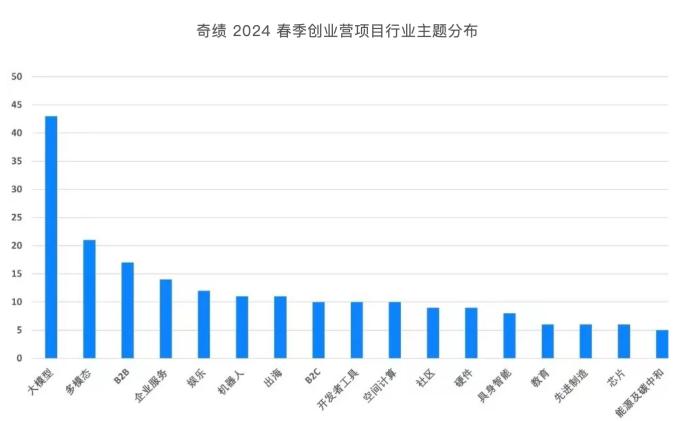
So after sharing his worldview on large models, Lu Qi began to invest intensively in large model projects. In the spring roadshow projects of QiJi Venture Capital in 2023, 39 out of 60 companies were related to large models; in the spring roadshow projects in June 2024, 81% were related to large models.
Source: QiJi Venture Capital
However, Lu Qi failed to invest in the so - called "Six AI Dragons".
For the angel - round financing of Baichuan Intelligence, Wang Xiaochuan and his friends invested $50 million themselves; Jieyue Xingchen received angel - round investment from Sequoia Capital, Qiming Venture Partners, and IDG Capital; Yuezhi Anmian received more than $200 million in angel - round financing from institutions such as Sequoia China and Capital Today; Lingyi Wanwu was invested in the angel - round by Li Kaifu's Sinovation Ventures.
Some people think that Lu Qi entered the market too late.
In December 2023, China Entrepreneur magazine reported, citing a person close to Lu Qi, that Lu Qi was not very optimistic or confident about AI in the previous years. Referring to OpenAI's development path, the real early - stage layout of large models should have started at least between 2016 and 2018. Entering the market now is too late.
Take two listed large model companies in China as examples. Their early - stage financing took place between 2019 and 2021. Zhipu AI was founded in 2019, and its angel - round financing came from Tsinghua University and Zhongke Chuangxing; MiniMax was founded in 2021 and received $31 million in angel - round financing from Yunqi Capital.
During this period, Lu Qi was busy investing in the metaverse.
From the investment projects announced by QiJi Venture Capital, before 2022, Lu Qi's main investment focus was on the metaverse and web3. In June 2023, Lu Qi shared the achievements of QiJi Venture Capital in the three years since its establishment. A total of 258 startup projects were invested in, and only 25 were in the fields related to artificial intelligence and large language models.
During those years, Lu Qi did invest in some large language model companies. For example, Shenyan Technology, which was founded in March 2022. QiJi Venture Capital participated in its two angel - round financings in a row for the first and second phases and later received angel - round investment from Tencent. However, this company did not receive much attention during last year's large AI model boom. Since completing its Series A financing in May last year, there has been no new financing progress.
Later, Lu Qi also invested in some AI companies one after another. For example, Jijia Technology, a world - model company, received angel - round financing from QiJi Venture Capital in September 2024. Currently, this company has reached the Series B1 financing stage, with a valuation of over 10 billion yuan.
Actually, three years ago, the Silicon Valley tech media The Information listed five candidates that might become the "Chinese OpenAI", namely MiniMax, Lanzhou Technology, Zhipu, Guangnianzhiwai, and Yang Zhilin, who was in the process of preparing to establish a company.
Now, whether it's these once - favored companies aiming at OpenAI, the so - called "Six AI Dragons" later, or various startups emerging in the large model wave, Lu Qi has missed them all.
It can't be said that Lu Qi didn't notice those star companies. Because the second investment product line of QiJi Venture Capital is to invest in companies at the Pre - A and A - round stages. Lu Qi once said in an interview that this is because "many good, technology - driven teams have reached the growth stage when we notice them." No matter what the reason is, it's a bit of a pity.
B
In that highly anticipated "Large Model Worldview" speech, Lu Qi not only shared his understanding of large models but also analyzed the opportunities in the large model era, among which robots were mentioned.
Lu Qi predicted that the next inflection point would be a combination: "Actions" would be everywhere (autonomous driving, robots, spatial computing). He explained that people need to act in the physical space. In 20 years, everything in the house will have robotic arms and automated devices.
Moreover, Lu Qi believed that Tesla had a high probability of standing at the next inflection point because its autonomous driving and robots were very advanced. At that time, only half a year had passed since Tesla announced the prototype of its humanoid robot "Optimus".
Not long after, in a speech in Silicon Valley, Lu Qi mentioned again that we are currently in the paradigm of the large model knowledge ecosystem, and the next paradigm shift will be "activities", such as autonomous driving and robots.
Lu Qi's judgments are also clearly reflected in his investment preferences.
Not long before he shared his "Large Model Worldview", in April 2023, Lu Qi invested in the angel - round of Zhiyuan Robotics.
At that time, Zhiyuan Robotics was a very popular project in the industry. On the one hand, it was due to the "Huawei genius youth" halo of its co - founder Peng Zhihui; on the other hand, humanoid robot projects were very scarce at that time. Two months after its establishment, Zhiyuan secured angel - round financing, and one month later, it received Series A financing.
According to a report by Kechuangban Daily at that time, an investor who had contact with Zhiyuan said that it was not easy to invest. Even so, QiJi Venture Capital and Hillhouse Capital managed to get a share in the angel - round.
Since 2023, Lu Qi has increased his layout in the field of embodied intelligence. In the spring roadshow projects of QiJi Venture Capital in 2023, the number of robot investments ranked third, only after "Artificial Intelligence and Large Models" and "Enterprise Services". The types of robots invested in are quite diverse, such as Guanglun Intelligence, an embodied intelligence data company, Rushen Robotics, an elderly - care robot, and Miaoguo Technology, a cleaning robot.
Take Guanglun Intelligence as an example. In June 2023, five months after its establishment, QiJi Venture Capital participated in its angel - round financing and later followed up with Pre - A round financing. Currently, the company is valued at about $1 billion. In August of the same year, QiJi Venture Capital participated in the seed - round financing of Jacobian Robotics, a robot company focusing on the supermarket scenario. Its founder and CEO, Qiu Dicong, is an alumnus of Lu Qi, also graduating from Carnegie Mellon University.
During this period, investment in the domestic embodied intelligence track was in full swing, with major venture capital institutions and internet industry capital competing to enter the market. Almost at the same time, investment in humanoid robots across the ocean was also booming. FigureAI received multiple rounds of financing. After getting Series B financing in February 2024, its valuation climbed to $2.6 billion, and now it has exceeded $39 billion.
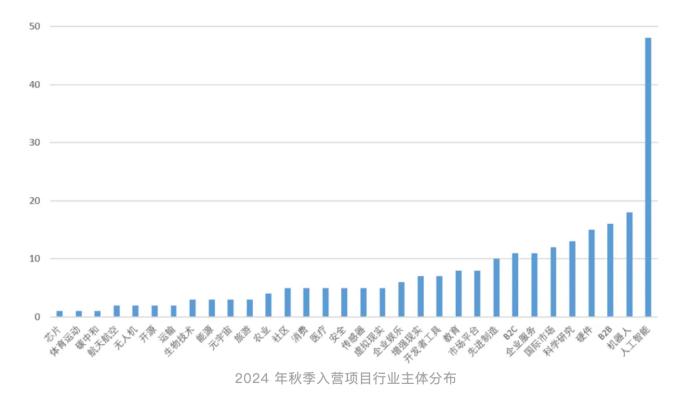
In the autumn roadshow in December 2024, QiJi Venture Capital announced the results of that roadshow, with "multi - modality, data, embodiment, and simulation" as the key promotion points. Among the 60 cutting - edge startup projects, 14 were in the field of embodied intelligence, and the number of robot investments was second only to that of artificial intelligence. A number of embodied intelligence companies such as Shutu Technology, Langyi Robotics, Weilai Dynamics, and Qiongche Intelligence all received investments from QiJi Venture Capital.
Source: QiJi Venture Capital
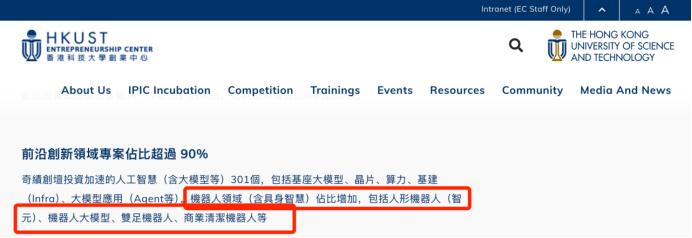
At the end of 2024, Lu Qi gave a speech at the Hong Kong University of Science and Technology to recruit students for the next spring's startup camp. When introducing investments in cutting - edge innovation fields, he specifically mentioned that QiJi Venture Capital's investment proportion in the robot field (including embodied intelligence) had increased, including humanoid robots (Zhiyuan), large robot models, bipedal robots, and commercial cleaning robots.
Source: Hong Kong University of Science and Technology
Actually, Lu Qi started investing in robots even earlier.
As early as 2020, QiJi Venture Capital exclusively invested 100 million yuan in the Series A+ financing of Stand Robot and later followed up with Series B and Pre - C financing; in June 2021, it also participated in the angel - round financing of the humanoid robot company Pasini, whose current valuation has exceeded 10 billion yuan.
It can be said that Lu Qi has laid out multiple tracks in the robot field through QiJi Venture Capital, gradually translating his prediction of "actions everywhere" into investments to seize the next upcoming inflection point.
C
Actually, in the early - stage investment and financing field, investments focusing on the seed - round and angel - round have always been full of challenges. This means a long return cycle, along with a relatively high failure rate and uncertainty. Especially in the robot industry, the R & D investment is large, the commercialization path is still unclear, and the return cycle is even longer.
For this reason, those who dare to "take the lead" in this field are mostly top - tier venture capital institutions with strong financial strength, such as Sequoia China, IDG Capital, and Hillhouse Capital.
Some early - stage investment institutions have adjusted their strategies after entering the market. Take Shanjin Capital as an example. Zhu Xiaohu said last year that he was "exiting humanoid robot companies" because "the commercialization path is not clear". For example, Shanjin Capital exited from Songyan Power and Xinghaitu. These two companies are now leaders in the embodied intelligence industry, especially Xinghaitu, which is valued at about 20 billion yuan.
QiJi Venture Capital has continued to make layouts. In the first three quarters of 2025, QiJi Venture Capital became the company that invested in the most robot companies. Data from Shangqi Research Institute also shows that from 2024 to February 2025, QiJi Venture Capital invested in 14 humanoid robot enterprises, making it the investment institution that participated in the most enterprises.
This persistence has not gone unrewarded. Take Zhiyuan Robotics as an example. In 2025, its revenue exceeded 1.05 billion yuan, and its founder, Deng Taihua, even proposed to achieve revenue of over 10 billion yuan next year, which means a ten - fold increase in revenue in three years.
Lu Qi's persistence in the robot industry stems from his investment judgment. He values technology - driven enterprises more. Of course, it also comes from his judgment of future trends. However, the return cycle in the robot track is indeed long. Zhang Han, a partner at Sequoia China, once said that embodied intelligence is a long - term track with a cycle of at least ten years.
For Lu Qi, there are risks. As an early - stage fund, it has always been difficult for QiJi Venture Capital to raise funds. In the early years, Lu Qi once mentioned the difficulty of