2026 Battery Technology Roadmap: LFP as the Ballast, Solid-state Batteries Leading the Charge, Sodium-ion Batteries Securing a Position
In 2025, China's production and sales of new energy vehicles both exceeded 16 million units, with the market penetration rate crossing the 50% threshold, ranking first in the world for the eleventh consecutive year. Ouyang Minggao, a professor at Tsinghua University, gave a sober judgment at the 2026 High - level Forum on the Development of Intelligent Electric Vehicles: the high - speed growth stage of the industry has ended, the competition model is shifting from incremental expansion to stock game, and the "follow - up model" is failing. When the incremental logic of the market changes, the key technologies of the three - electric system with the battery as the core have become the core competitiveness.
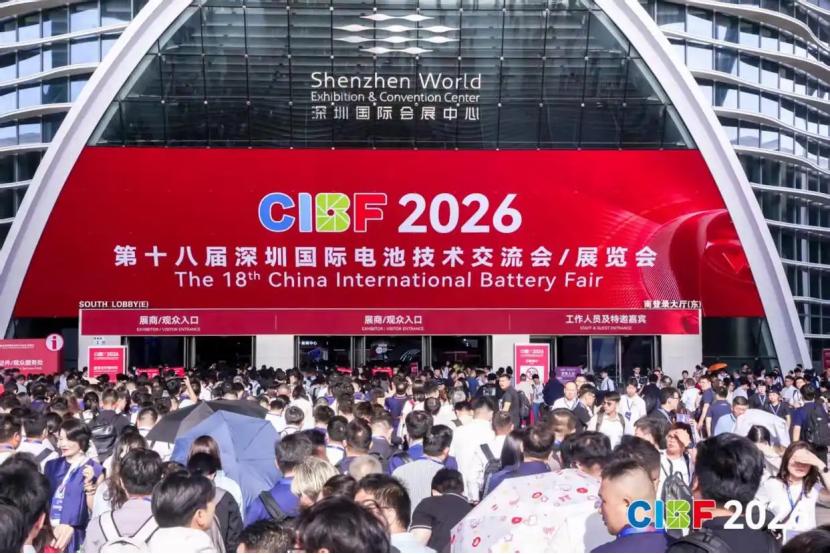
The 18th International Battery Technology Exchange Conference (CIBF2026), which just concluded in Shenzhen, clearly marked the key node for battery technology to leap from "laboratory parameters" to "large - scale mass production". At this exhibition, concepts such as semi - solid batteries, sodium - ion batteries, and 800V ultra - fast charging now all have clear mass - production schedules and definite commercial implementation paths.
From the "absolute dominance" of lithium iron phosphate to the divergence of new system routes
Data released by the China Automotive Power Battery Industry Innovation Alliance in April showed that the installed capacity of lithium iron phosphate batteries that month reached 50.8GWh, accounting for 81.5% of the total installed capacity that month, setting a new historical share record, while ternary batteries accounted for only 18.5%. The cumulative data from January to April also confirmed this phenomenon - the installed capacity of lithium iron phosphate was 149.8GWh, accounting for 80%, and the cumulative installed capacity of ternary batteries was 37.4GWh, accounting for 20%.
The large share of lithium iron phosphate is rooted in three basic advantages: safety guarantee brought by a thermal runaway temperature exceeding 500°C, durability with a cycle life of 3,000 to 10,000 times, and economic efficiency with a material cost about 30% lower than that of ternary lithium. This combination of advantages enables lithium iron phosphate to be widely used in three major markets: energy storage, commercial vehicles, and popular passenger cars. In the first quarter of 2026, China's energy - storage battery shipments reached 209GWh, a year - on - year increase of 115%, of which lithium iron phosphate accounted for more than 97%. Wang Chuanfu, the chairman of BYD, said bluntly at the 2026 "Flash Charging China" press conference: "Lithium iron phosphate is BYD's ballast stone."
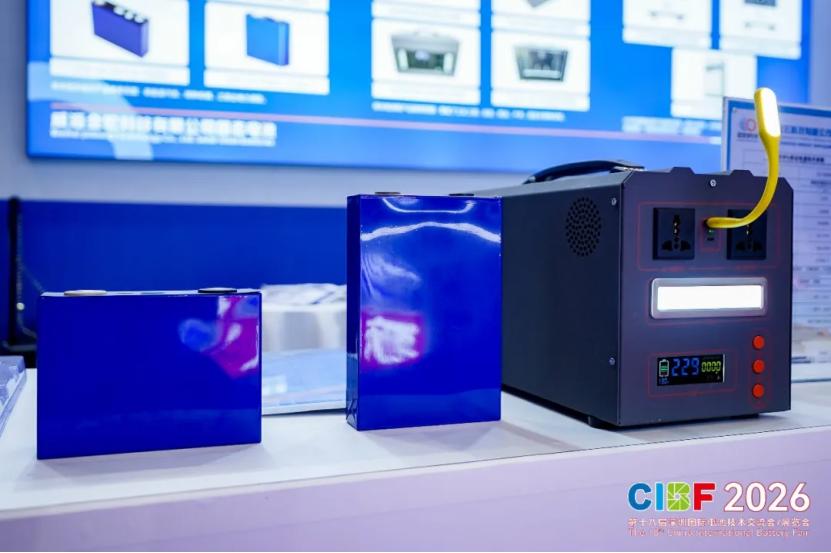
In response to the update of lithium iron phosphate technology, CATL, BYD, and Guoxuan High - Tech have fully mass - produced the fifth - generation lithium iron phosphate batteries. Institutions predict that the market share of this technology route will exceed 30% in 2026, becoming the mainstream technology platform for power batteries. At this CIBF2026, leading enterprises such as CATL, BYD, GAC, and EVE Energy have all presented new and mature technical solutions that can be directly installed in vehicles, marking that the three - electric technology has entered a new round of "realization period".
BYD's second - generation blade battery combines a lithium manganese iron phosphate composite cathode with a silicon - carbon anode to push the energy density to 190 to 210Wh/kg. Structural innovations such as CTP module - less technology and Kirin batteries are gradually making up for the energy - density shortcoming of lithium iron phosphate, enabling the system energy density to stably reach over 160Wh/kg.
However, lithium iron phosphate is not suitable for all vehicles. The CTO of CATL once publicly pointed out that using lithium iron phosphate in models priced over 250,000 yuan is a "disguised reduction in configuration" - currently, the single - cell energy density of ternary lithium batteries has reached 200 to 250Wh/kg, and high - end models have even exceeded 280Wh/kg, while that of lithium iron phosphate is generally only 140 to 180Wh/kg. To achieve the same range, more battery cells must be stacked. Against the backdrop of the continuous rise in lithium prices, cost pressure is forcing battery enterprises to look towards more cutting - edge tracks. Solid - state batteries have become the next bet for enterprises.
Crossing the critical point, the industrialization of solid - state and sodium - ion batteries accelerates
The clear signal released at CIBF2026 is that solid - state batteries are no longer just theoretical data in the laboratory, but have achieved full - line linkage of materials, equipment, battery cells, and applications. Yang Hongxin, the chairman of Honeycomb Energy, announced that 2026 is the "first year" of solid - liquid hybrid batteries, and multiple models equipped with 100 - kWh solid - liquid hybrid batteries will be mass - produced in September. CATL's Kirin condensed - state battery is expected to start mass production in the second half of 2026. Guoxuan High - Tech presented its all - solid - state battery "Jinshi" with an energy density of 350Wh/kg and plans to start small - batch mass production by the end of 2026.
Automobile enterprises are also accelerating their layout. Changan Automobile announced that it will complete the installation and verification of solid - state batteries in 2026 and gradually mass - produce all - solid - state batteries in 2027, with an energy - density target of 400Wh/kg. SAIC Group's new - generation semi - solid battery will be mass - produced and applied in the new MG4 model, and its first all - solid - state battery, the "Guangqi Battery", will be launched in 2027. GAC Group plans to install all - solid - state batteries in its high - end brand Aion models in 2026.
Sun Huajun, the CTO of BYD, publicly revealed that BYD will start the batch demonstration installation and application of all - solid - state batteries around 2027 and is expected to achieve large - scale installation around 2030. Data from the Gaogong Industry Research Institute shows that in the first four months of 2026, the expansion scale of the solid - state battery industry has exceeded 100GWh, with a planned investment of over 30 billion yuan and a total planned production capacity approaching 600GWh. The mass - production timeline is becoming clearer, and the competition has become white - hot.
However, before solid - state batteries are truly installed in vehicles on a large scale, there are still several problems. The technical route has not yet converged - the sulfide, oxide, and polymer routes each have their supporters, and the lack of a unified standard directly increases the collaborative cost of the industrial chain. The problems of decreased ionic conductivity and solid - solid interface contact caused by solid electrolytes are still the key bottlenecks restricting the consistency of battery cells and the mass - production yield. Huatai Securities pointed out in its industry analysis that although the industrialization trend of solid - state batteries from 1 to N is clear, in the short term, it still faces two major obstacles: "cost pressure" and "non - unified technical routes", and the real large - scale large - scale production may not occur until 2027 - 2028.
Different from the "rapid progress" of solid - state batteries, sodium - ion batteries present a more delicate situation. On the one hand, the enthusiasm for "sodium - loving" is no less than that for solid - state batteries - leading enterprises such as CATL and BYD have set up special exhibition booths, and material enterprises have also displayed relevant products. CATL's "NaXin" battery achieves full - temperature - range adaptation from - 40°C to 70°C and can still maintain 90% of the available power in extremely cold environments. At CATL's "Super Technology Day" in April, Zeng Yujun announced that the four major industry difficulties in the mass production of sodium batteries have been overcome - extreme water control, hard - carbon gas generation, aluminum - foil bonding bottlenecks, and large - scale mass production of self - generated anodes. The NaXin battery will achieve large - scale mass production by the end of 2026. At the same time, CATL signed a three - year order for 60GWh of sodium - ion batteries with Haibo Sichuang - while the global shipments of sodium batteries in 2025 were only about 9GWh, which shows the strong "endorsement" of leading enterprises.
On the other hand, "more expensive than lithium batteries" is still the reality faced by most sodium - battery enterprises: many enterprises have production capacity but no output, passively waiting for the "windfall" of another round of high lithium prices. Huatai Securities pointed out that against the backdrop of lithium prices approaching 200,000 yuan per ton, the strategic value of sodium batteries is being magnified, and this year will be the first year of sodium - battery mass production, with the cell cost expected to gradually decline. From the perspective of application scenarios, energy storage is generally recognized by the industry as the largest and most certain market for sodium batteries at present, and two - wheeled vehicles and start - stop batteries are the fastest way to replace lead - acid batteries. Zeng Yujun gave a judgment on the prospects of sodium batteries: "It is expected that sodium batteries may replace 30% to 40% of the existing battery market share in the future."
The iteration of battery technology never occurs in isolation; it must drive the synchronous evolution of the electric drive and electronic control systems. Outside the venue of CIBF2026, the systematic competition pattern of electrification technology is also clearly visible. The battery capacity per vehicle continues to rise. Data from the China Automotive Power Battery Industry Innovation Alliance shows that from January to April this year, the average battery capacity per new energy vehicle in China reached 67.8kWh, a year - on - year increase of 33.8%. A higher battery capacity means a higher demand for voltage platforms, and the 800V high - voltage architecture is penetrating from high - end models to the mainstream market. The large - scale application of silicon carbide power devices has become a key variable in the upgrade of the electronic control system.
The "seven - full" technical system direction proposed by Ouyang Minggao - full - process safety, all - climate ultra - fast charging, fully automatic driving, full - line - controlled chassis, all - solid - state batteries, full - working - condition efficiency, and full - function electric vehicles - marks that the industry has entered the stage of systematic technical competition from single - point breakthroughs.
Based on the overall performance of this CIBF and the recent attitude changes in the capital market, the overall industry trend is clearer. The lithium - battery industry has completely bid farewell to the stage of extensive scale expansion, and capital has turned to focus on scenario - customization capabilities, the quality of order structures, barriers in niche tracks, and cross - cycle layout capabilities. Industry competition is shifting from homogeneous manufacturing involution to comprehensive value competition in terms of demand understanding, solution matching, and ecological collaboration. The demand differences in different tracks directly determine the product strategies of enterprises and the differentiation of valuations in the capital market.