China has accomplished a significant feat in the mountains of Zhejiang Province.
How to 'fit' the over 600 - meter - tall Shanghai Tower into a mountain?
China has achieved it.
Recently, two shafts with a depth of 637 meters in the Songyang Pumped - Storage Power Station in Zhejiang Province have been fully connected through.
This not only refreshed the record of the deepest shaft project in China's pumped - storage field again, but also laid another solid foundation for China's energy layout.
What's the significance of building a pumped - storage power station in the mountains?
01 A Great National Project
The Songyang Pumped - Storage Power Station is located in Songyang County, Lishui City, Zhejiang Province. The total investment of the project is about 8.82 billion yuan, and the main project officially started in November 2023.
From the end of 2025 to May this year, Shaft No. 1 and Shaft No. 2 were successively connected through, marking a major phased breakthrough in the project construction.
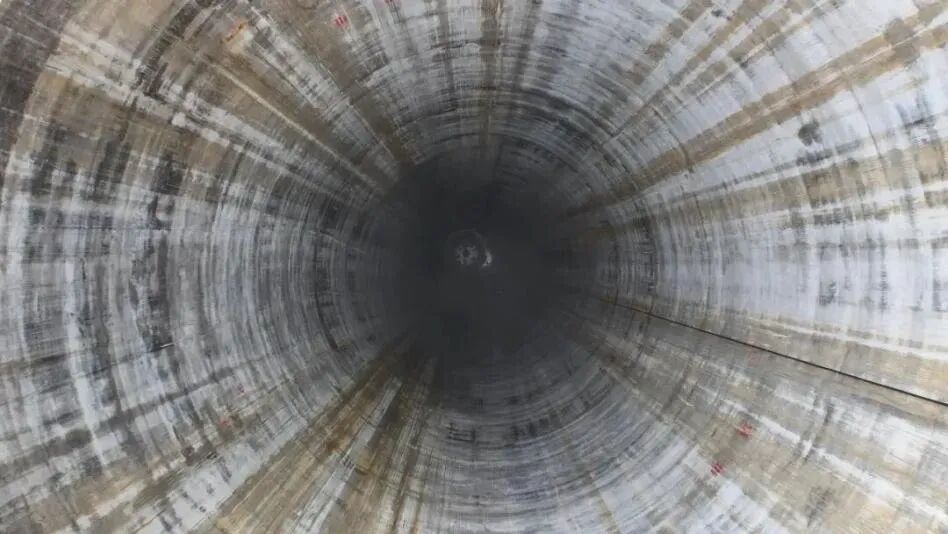
A bird's - eye view of the shaft
The power station is equipped with four 350,000 - kilowatt reversible pump - turbine generator sets, with a total installed capacity of 1.4 million kilowatts, an annual power generation of 1.4 billion kilowatt - hours, and a continuous full - load power generation time of 6 hours.
After the completion of the power station, it is expected to create nearly 200 million yuan in tax revenue for Songyang every year.
At the same time, it can save about 260,000 tons of coal consumption in the power grid system every year and correspondingly reduce about 520,000 tons of carbon dioxide emissions, which is of great significance for achieving the "dual - carbon" goal.
If just making a resume, the above content can basically summarize the general situation of the Songyang Power Station.
A power station that has not been fully completed has attracted attention not only because of its good - looking data, but also because its construction process itself must be eye - catching enough.
The two shafts mentioned above, with a maximum excavation diameter of nearly 10 meters and a depth of 637 meters, are really worth talking about.
These two shafts are equivalent to digging a depth of more than 200 floors underground, which is like fitting the Shanghai Tower into the mountain.
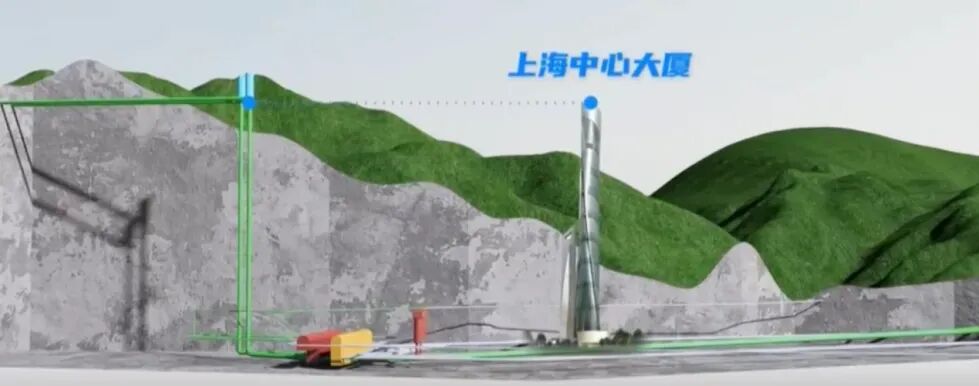
Schematic diagram of the shaft depth comparison
The geological conditions in the Songyang area are complex, the rock layer distribution is changeable, and the overall is mainly hard surrounding rock. The deeper the excavation, the more likely it is to encounter unexpected situations, such as faults and water seepage.
Not to mention causing production accidents, it may also lead to all previous efforts being wasted.
Traditional construction methods simply cannot meet the requirements. They are inefficient, and the workers working underground face great safety risks.
A great national project requires great national equipment.
To solve this problem, China independently developed the first 700 - meter - class ultra - deep shaft intelligent operation equipment in the country, with the core being the "Tianguanghao" shaft boring machine weighing more than 480 tons.
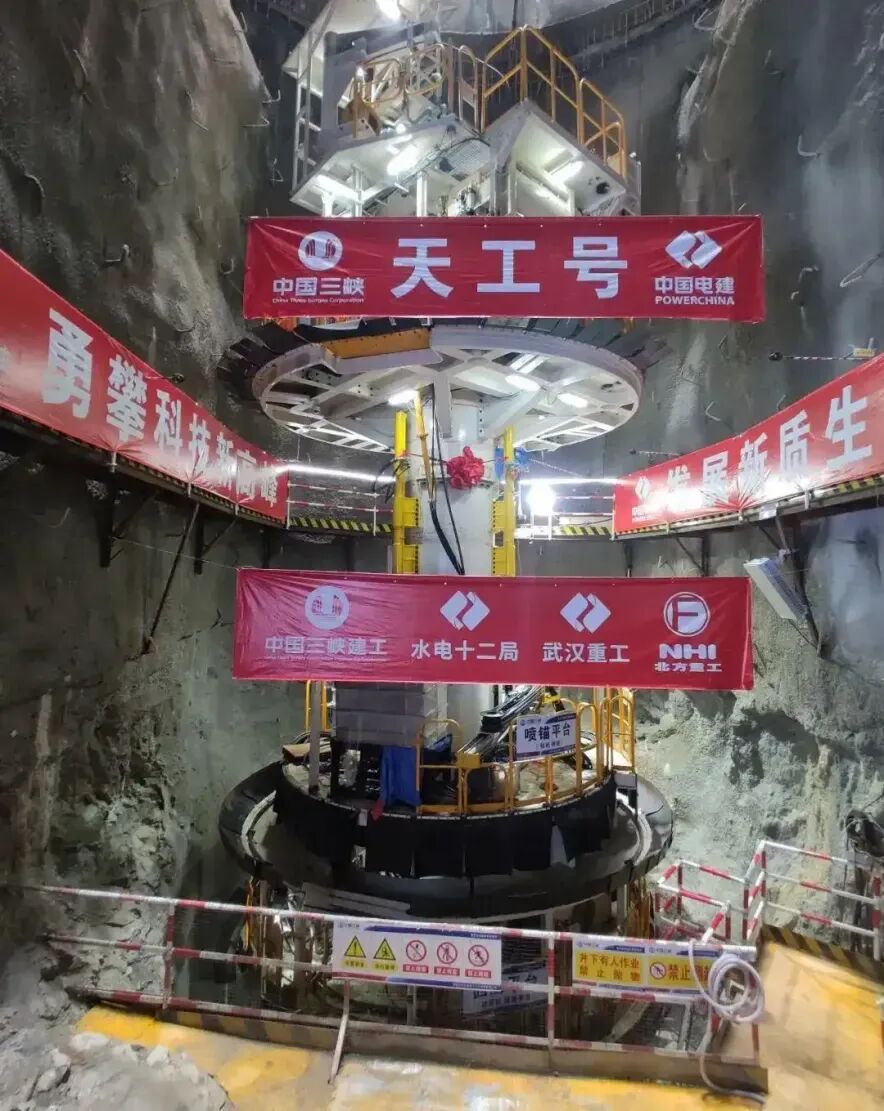
The "Tianguanghao" shaft boring machine
The "Tianguanghao" is a shield machine that can drill vertically. Its conical cutter head can adaptively cut through a variety of complex hard rocks. It can also integrate processes such as tunneling, support, and muck removal, achieving one - time forward expansion excavation.
With the support of the "Tianguanghao", the construction efficiency has been increased by nearly 10 times compared with traditional methods, and it has also created an industry record of tunneling 278.28 meters in a single month.
At the same time, the "Tianguanghao" is also equipped with a digital twin platform independently developed by China and uses hundreds of sensors. It transmits the underground pictures and data back to the ground in real - time through the 5G network.
It has completely realized "driverless" operation underground. The operator can remotely control the underground boring machine while sitting in an air - conditioned room on the ground.
Finally, it only took 61 days to safely and efficiently complete the excavation and support of a single shaft, and the well - forming deviation was controlled at the millimeter level, with the deviation rate far better than the industry standard.
Digging an ultra - deep shaft is not the key point. The most important thing is that China has achieved a comprehensive upgrade and independent control from equipment to technology in the field of ultra - deep shaft intelligent construction.
02 A Big 'Power Bank'
After talking so much, actually pumped - storage is not a new technology, but it's remarkable that China has dug such a deep shaft.
So the question is, why do we have to dig a 637 - meter shaft in the mountains?
To put it simply, a pumped - storage power station is like a big "power bank", and the depth of the shaft represents the milliampere - hour of the "power bank".
Building this kind of power station requires certain geological conditions. It must be possible to build two reservoirs, one at the top and one at the bottom of the mountain, called the upper reservoir and the lower reservoir.
The two reservoirs are connected by an artificially excavated shaft pipeline. The working capacity of the power station depends on the height difference between the two reservoirs.
The deeper the shaft, the greater the height difference, and the larger the milliampere - hour of the "power bank".
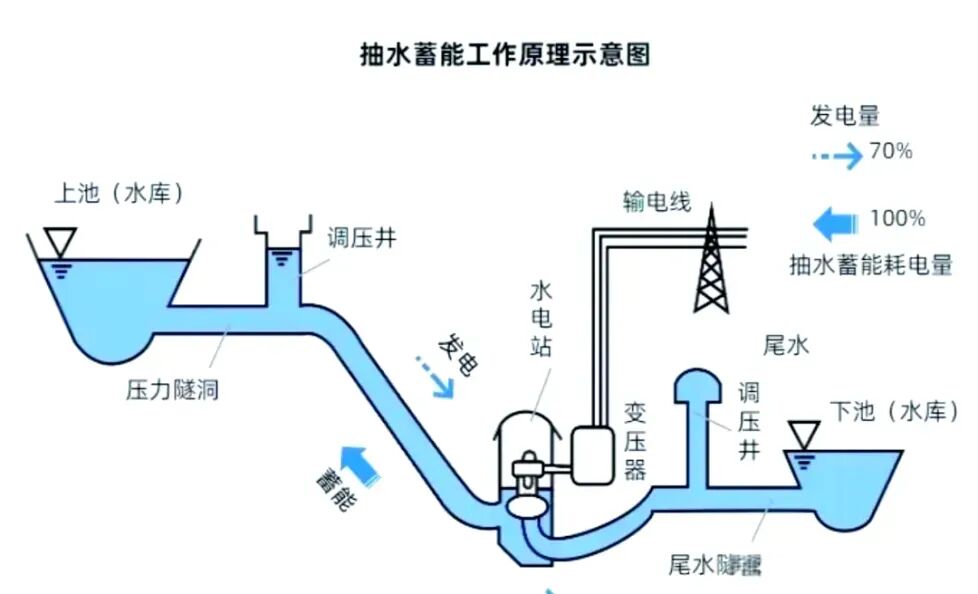
Schematic diagram of the working principle of a pumped - storage power station
At night, the power station uses the "idle electricity" that cannot be used up in the power grid to pump the water from the reservoir at the foot of the mountain through the pipeline to the reservoir at the top of the mountain for storage, converting electrical energy into the gravitational potential energy of water for storage.
During the day, when the peak electricity consumption period comes, the water in the reservoir at the top of the mountain is released and rushes down rapidly along the vertical deep shaft, driving the generator to rotate rapidly and converting the water energy back into electrical energy.
The entire process solves the problem of excess electricity through "energy storage - power generation - standby", perfectly balancing the power supply and demand in a physical way and playing the role of a stabilizer and an emergency switch in the regional power grid.
In most areas, more electricity is used during the day and less at night. The power grid load fluctuates greatly within a day, and the more economically developed the area, the greater the fluctuation.
There is excess electricity at night and insufficient electricity during the day, but the power generation sources can't adapt to such a huge day - night difference. So, a relay point is needed for adjustment.
The pumped - storage power station perfectly solves this problem and undertakes the basic task of peak shaving and valley filling.
This "low - charge and high - discharge" operation mode has greatly improved the operating efficiency and economy of the power system.
Although there must be energy loss in energy conversion - there is generally about a 20% energy loss in pumped - storage - it has successfully solved the worldwide problem of power grid peak regulation.
This characteristic of the pumped - storage power station makes it the best partner for the development of new - energy power.
Clean energy sources such as wind and solar power have natural volatility and randomness, which easily lead to the waste of "abandoned wind and solar power".
The pumped - storage power station can respond quickly, efficiently absorb and store the excess green electricity when the wind and solar power are abundant, and quickly fill the power supply gap when the wind and solar power weaken, making the unstable new energy stable and controllable.
A little - known fact is that with the improvement of China's new - energy clean power generation capacity, more and more electricity is wasted in China every year.
According to the statistical data of the first two months of this year, almost one - tenth of the wind and solar power in the whole country is "wasted".
The overall abandonment rate of solar power (absorption index) has risen to 9.2%, and the abandonment rate of wind power is 8.5%, almost three times that of the same period in 2024.
Due to the unbalanced development between the east and the west, the abandonment rates of wind and solar power in the eastern and developed regions are very low, while those in the western regions are relatively high.
According to the latest provincial - level new - energy grid - connected absorption situation released by the National Energy Administration, Shanghai, Fujian, and Chongqing have achieved zero electricity abandonment. The wind abandonment rate in Gansu is 9.5% and the solar abandonment rate is 17.5%; the wind abandonment rate in Xinjiang is 12.3% and the solar abandonment rate is 14.4%.
What's most distressing is Tibet, with a wind abandonment rate of 32.5% and a solar abandonment rate of 39.2%, which means that for every three degrees of electricity generated, one degree is wasted.
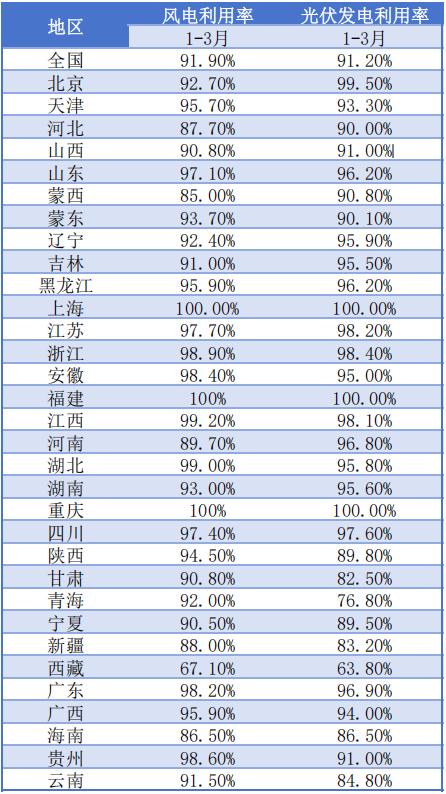
New - energy grid - connected absorption situation in each provincial - level region in the first two months of 2026
This serious waste of electricity has become a structural problem in the western provinces with the richest wind and solar resources.
The pumped - storage power station is one of the solutions.
After a wind farm in Gansu was equipped with a pumped - storage power station, it almost fully utilized all the green electricity it generated, reducing the electricity abandonment by 30%.
The Huangyang Pumped - Storage Power Station project under construction in Gansu is planned to install four reversible pump - turbine units with a single - unit capacity of 350,000 kilowatts, with a rated head of 479 meters and a total installed capacity of 1.4 million kilowatts. It is expected that all units will be put into operation and generate electricity in 2030.
The Hami Pumped - Storage Power Station in Xinjiang under the State Grid Xinyuan is also under intense construction. The volute base ring of the first unit was recently hoisted in place, and the project is planned to be put into operation in 2028.
The Jiufengshan Pumped - Storage Power Station in Henan is also under intensive construction. The total investment of the project exceeds 10 billion yuan, with an annual power generation of 2.52 billion kilowatt - hours. It is planned that the first unit will generate electricity in December 2028.
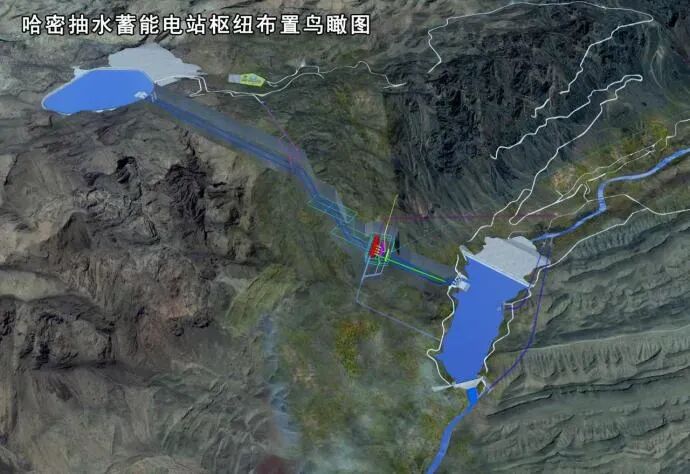
A bird's - eye view schematic diagram of the Hami Pumped - Storage Power Station in Xinjiang
The pumped - storage power station is also a rapid emergency rescuer for the power grid safety.
The pumped - storage units can start and stop extremely flexibly and can switch from the shutdown state to full - load power generation in a very short time.
When the power grid frequency fluctuates, it can act as a shock absorber to maintain stability.
Especially when a major fault occurs in the power grid or even a large - scale power outage happens, it can achieve a cold start without external assistance and help the entire power grid quickly resume power supply as an emergency power source.
During the heavy rain in Zhengzhou in 2021, the Huilong Pumped - Storage Power Station took only 3 to 5 minutes to restore power to the collapsed power grid.
The pumped - storage power station is not just a simple "power bank". Its existence is to make the power grid operate more safely, efficiently, and energy - efficiently.
03 A New Power Layout
China is a world - leading power - generating giant, and the new - energy power has grown rapidly, but the amount of abandoned electricity every year is astonishing.
How to reduce the abandoned electricity is a problem that must be solved in China's next - step power and energy layout.
According to the "Report on the Development of the Pumped - Storage Industry in 2024" released by the General Institute of Water Resources and Hydropower Planning and Design, less than 4% of China's pumped - storage resources have been developed. The electrical energy that can be utilized by the available pumped - storage power stations screened through the national census is about 1.6 billion kilowatts per year, and only about 200 million kilowatts are being used or are ready to be used in the projects under construction or approved, indicating broad development space and great potential.
The authoritative statement from the "Medium - and Long - Term Development Plan for Pumped - Storage (2021 - 2035)" issued by the National Energy Administration in 2021, which says "Pumped - storage is the most mature, most cost - effective, and most suitable power system green, low - carbon, clean, and flexible regulating power source for large - scale development", fully shows the state's high recognition of the role of pumped - storage.
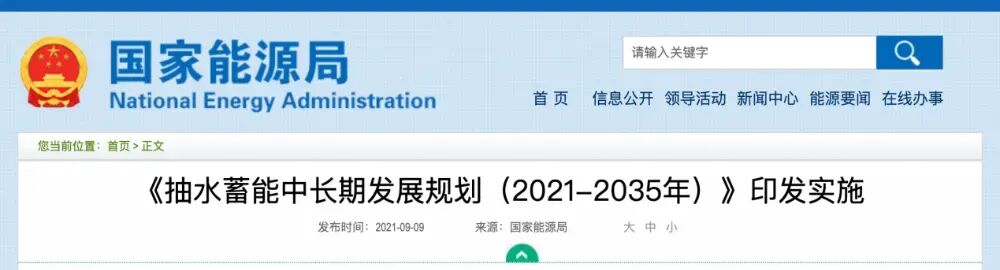
In 2021, the government officially