Ranked first in global sales, Jike secures $120 million in financing.
Exclusive to the investment community, today (May 18th), Hypershell, a consumer-grade exoskeleton startup, announced that it has completed a $50 million Series B+ financing round. The round was led by Ant Group and Meituan Longzhu, with Sofina and Granite Asia participating as follow-on investors. Gaohe Capital served as the exclusive financial advisor.
So far, Hypershell has raised a total of $120 million in its Series B financing rounds.
Sun Kuan, the founder of Hypershell, is a post-90s science and engineering major. In 2021, when artificial intelligence and robot technology began to bring about a revolution, instead of chasing after the popular humanoid robots, he took a different path. He combined these two cutting-edge technologies with ergonomics to enhance human capabilities through exoskeleton robots, and Hypershell was born.
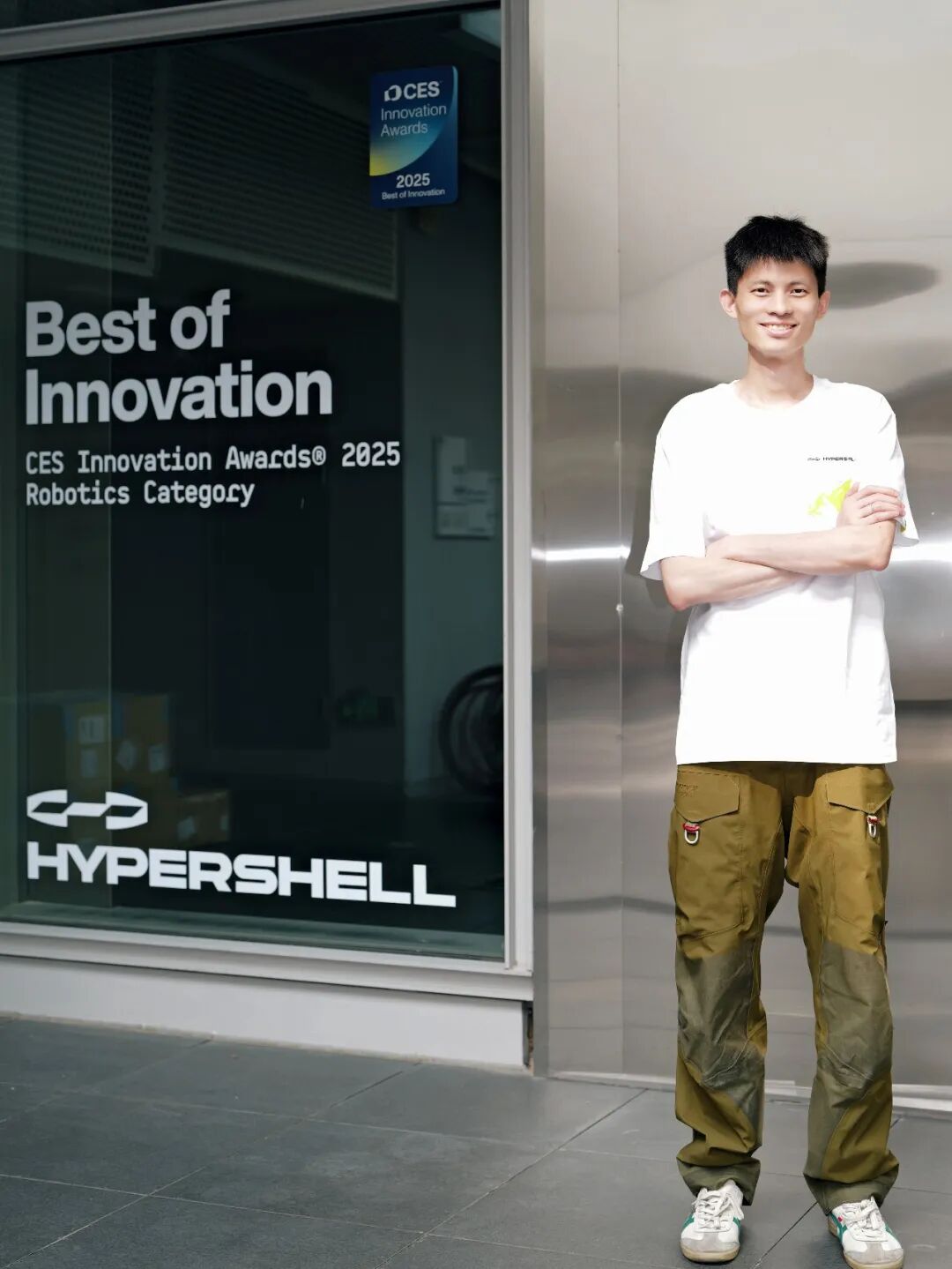
Sun Kuan, Founder and CEO of Hypershell
In just a few years, Hypershell has become the world's top-selling consumer-grade exoskeleton, attracting a large number of investors, including IDG Capital, Sequoia China, Monolith, Wuyuan Capital, Photosynthetic Ventures, Oasis Capital, and Dexun Investment. The lineup is impressive. Perhaps the future of a world where everyone is like "Iron Man" is not far away.
Investors Compete, A Post-90s Founder Becomes an Internet Sensation
"While humanoid robots aim to replace humans, we choose to enhance them." In the crowded embodied intelligence field, Sun Kuan chose a less-traveled path - exoskeletons.
The seed was planted early. Born in 1991, Sun Kuan grew up influenced by works like "Ghost in the Shell" and "Iron Man". He is a typical tech geek: He has a preference for science and engineering, started programming in junior high school, participated in various robot competitions in college, and loved to stay in the laboratory to study the technology behind complex projects. During his postgraduate studies, he specialized in exoskeleton simulation and once broke the upper limit of simulation accuracy in this field.
During this period, Sun Kuan worked his way up from a management trainee to a product manager at a well-known robot company and also led the establishment of the world's first modular PC brand. His experiences in robot hardware management, exoskeleton academic research, and the creation of an overseas hardware brand laid the foundation for his later entrepreneurship.
In 2021, he decided to do something that seemed almost crazy at the time: to turn the bulky, expensive exoskeletons that were only used in medical rehabilitation and industrial fields into consumer-grade products that ordinary people would be willing to buy and use every day. Thus, Hypershell was born.
The company's name comes from the "Shell" in "Ghost in the Shell" - aside from the soul, the body and clothing are all shells. Sun Kuan's extreme product concept is also hidden here: to make the shell more powerful and more free.
However, the reality was harsh. At that time, the annual sales of the entire exoskeleton industry were less than 1,000 units, and consumer-grade exoskeletons were beyond the common understanding. Sun Kuan later recalled that when he was seeking financing in 2022, he was rejected by nearly a hundred investors. Almost every time he gave a pitch, he would be asked the same question: "Why do ordinary people need a consumer-grade exoskeleton?" Some investors even bluntly said that it was an "unrealistic science fiction product".
The turning point came in 2023. Hypershell was the first to develop the world's first single-motor-driven exoskeleton system, and its Omega configuration based on its own global patent was also unveiled. This design reduced both the cost and weight by 50%. At the same time, Hypershell completed the independent research and development of core components, bringing the product price down to the thousand-yuan level and truly entering the consumer-grade market.
In March of the same year, Hypershell launched its first-generation product, Hypershell Go, on Kickstarter and eventually raised $1.23 million, becoming one of the best-selling products of the year. Among the supporters from around the world, 40% were from the United States. At that moment, the team realized that it wasn't that the market didn't need the product; it was just that no one had made the right product before.
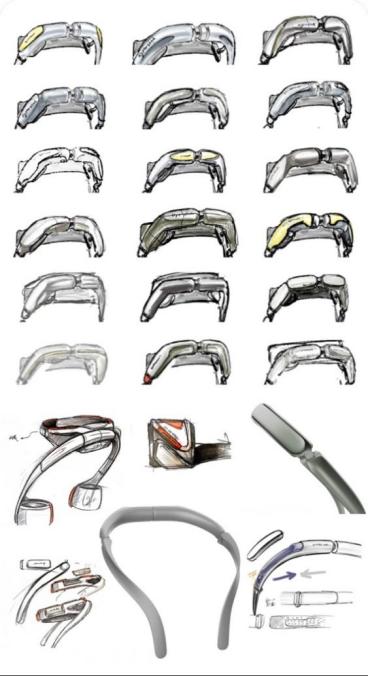
Design manuscript of Hypershell's first crowdfunding product
From then on, the financing situation began to reverse. Investors flocked to invest, and institutions such as MiraclePlus, Dexun Investment, Oasis Capital, Sequoia China, and IDG Capital entered the scene one after another. In 2025, more big names in the investment community came, and Hypershell completed a $70 million Pre-B and Series B financing round. Newly joined institutions included Photosynthetic Ventures, Wuyuan Capital, Monolith, and Meituan Longzhu.
Now, less than half a year later, the Series B+ financing has also arrived, led by Ant Group and Meituan Longzhu, with the participation of European veteran private equity funds Sofina and Granite Asia. Hypershell has become a phenomenon-level project in the venture capital circle.
The Hottest Hardware in the World, A Group of People, Reaching the Global No. 1
In just three years, Hypershell has created a rapid rise in the embodied era.
Let's start with its core competitiveness. Different from some companies' "showy R & D", Hypershell's R & D approach is very clear: to conduct R & D around consumer-grade implementation. For example, in industrial design, they made many specific choices: a carbon fiber body, retractable adjustment, a light overall weight, and only one switch. By addressing the old problems of exoskeletons being "heavy, bulky, and expensive" through lightweight design and low cost, Hypershell is the first company to bring mechanical exoskeletons from the medical and industrial fields to consumers.
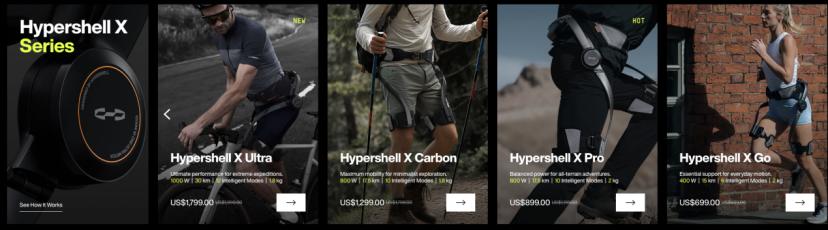
The Hypershell X series is a pioneering work verified by the market. Hypershell independently developed the Omega patent architecture and the AI MotionEngine™ motion engine algorithm. The overall weight of the product is compressed to about 1.8 kilograms, while the peak power of the motor can reach 800W, which can offset 30% of the sense of load. In typical usage scenarios, the battery life reaches 15 - 17.5 kilometers. With this set of technological combination, the Hypershell X Carbon won the CES Best Innovation Product Award in early 2025.
The Hypershell X Ultra, launched in September last year, was even more outstanding, winning the Berlin IFA Best Innovation Product Award. With a price of around 10,000 yuan, the upgrades of the X Ultra focus on two aspects: algorithm and battery life.
In terms of the algorithm, it is equipped with second-generation adaptive motion recognition, which can recognize and adapt to 12 postures. It also has preset terrain modes for scenarios such as cycling and hiking. Simply put, the exoskeleton no longer mechanically follows your movements but tries to "understand" what you want to do next - the cooperation between humans and machines thus becomes more natural and harmonious.
Based on the coordinated optimization of software and hardware, the overall efficiency of the X Ultra has been improved by 25%. This means that in the highest-intensity usage scenarios, the battery life has tripled. Users no longer need to worry about charging and can focus on walking longer distances.
More significantly for the industry, Hypershell has promoted the establishment of standards - the Hypershell X Ultra is the world's first exoskeleton product certified by the third-party authoritative testing agency SGS. In a situation where the industry lacks standards and there are many problems with false parameter marking, it provides a benchmark for the exoskeleton industry.
Its mass production ability is even more convincing. In less than three years since it became a top-selling product on Kickstarter, Hypershell has risen to become the world's top-selling brand of consumer-grade exoskeletons, with sales channels covering more than 70 countries and a cumulative shipment of tens of thousands of units. On the JD platform in China, Hypershell ranks first in both sales volume and market share in the exoskeleton category; on the Amazon platforms in the United States and Europe, it also ranks at the top in sales.
In other words, the world's hottest exoskeleton brand today is from a Chinese team.
Currently, Hypershell has offices in Shanghai and Shenzhen, with a team of nearly 200 people, of which more than 70% are R & D personnel. Most of these R & D personnel have work experience in top technology companies in the industry, mainly in the fields of robotics and AI consumer electronics. Now, Hypershell has accumulated hundreds of core technologies and patents in the core technology field of exoskeletons, creating another barrier besides mass production ability.
Let technology return to the "human" itself. On May 20th, Hypershell will globally launch a new X series - integrating the HyperIntuition™ algorithm, which integrates perception, recognition, prediction, and behavior planning into a complete closed-loop system: no longer relying on preset gait templates, but interpreting the user's movement intention in real-time to achieve "instantaneous action" instinctive cooperation. This is also the first end-to-end consumer-grade exoskeleton verified by TÜV Rheinland in Germany.
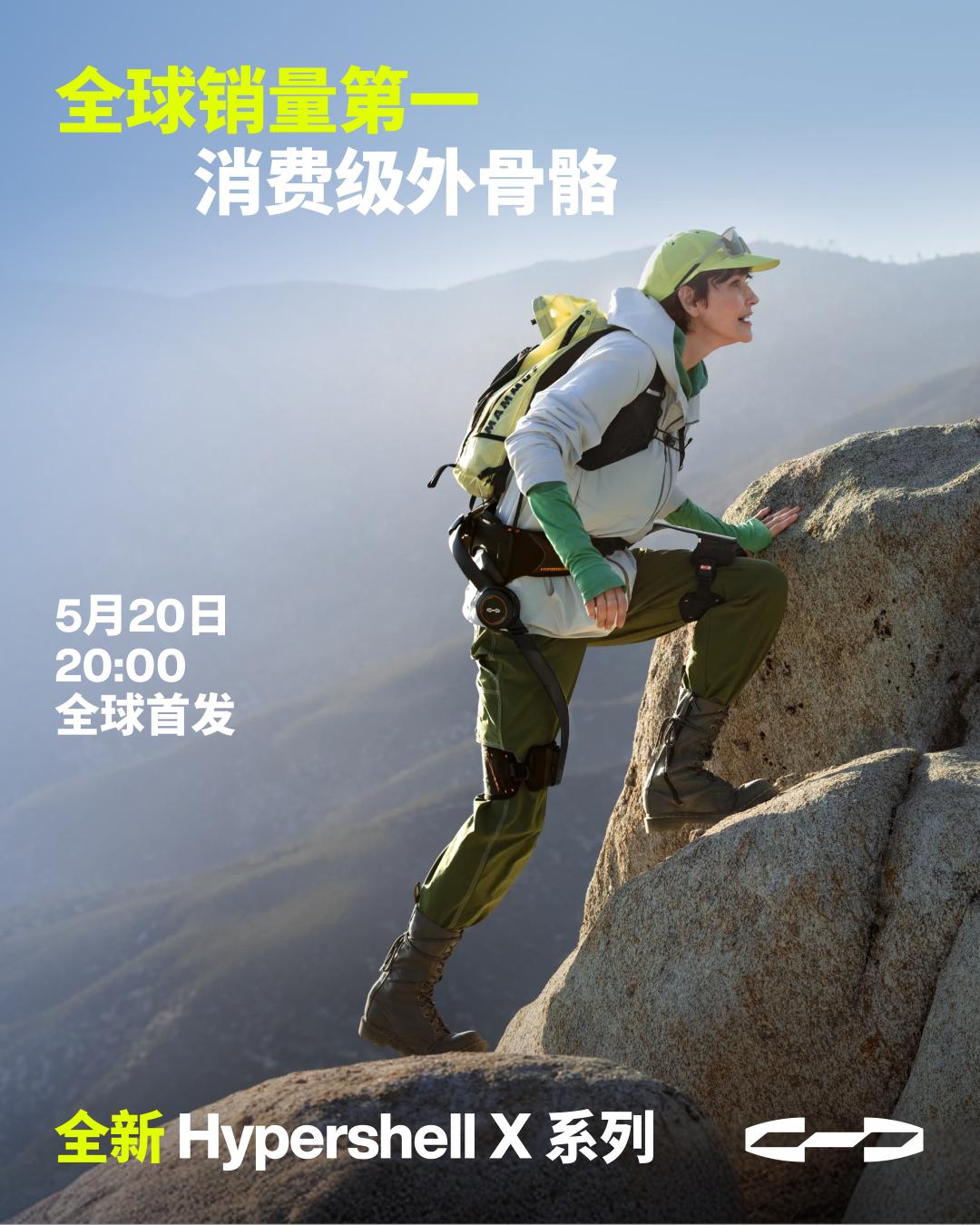
"In my dream, I had a red cloak that could take me to various places - a sense of freedom beyond the limitations of the physical world." The dream scene of Sun Kuan in his youth is now within reach.
The Trillion-Dollar Track Explodes, Chinese Faces Dominate the World
Looking ahead, exoskeletons - once a niche category - are gradually entering the daily lives of ordinary people.
For a long time in the past, limited by high costs and technological bottlenecks, exoskeleton robots were mainly used in B2B scenarios such as medical and industrial fields - they were often dozens of kilograms in weight and cost hundreds of thousands of dollars. It was not until recent years that the coordinated breakthroughs in AI algorithms, lightweight composite materials, high-density motors, and precision mechanisms made it possible for this technology to be popularized.
The emergence of Hypershell is a significant turning point. It has proven for the first time that exoskeletons can break through the boundaries of medical and industrial fields and enter more daily-life scenarios such as outdoor hiking, traveling, daily walking assistance, fatigue reduction, and even professional rescue. Moreover, it weighs about 2 kilograms and costs only a few thousand yuan.
Subsequently, the financing has heated up. Investors' attitudes have changed from waiting and seeing to making intensive investments, and the track is on the verge of an explosion. It is predicted that with the aging population, the popularity of outdoor sports, and people's desire to "break through physiological limits", the global exoskeleton market will grow at a rate of about 50% per year, reaching a trillion-dollar scale.
Amid the excitement, what really sets Hypershell apart is its understanding of users' real scenarios.

Aurélien Fontenoy, a top French endurance athlete, riding across Route 66 wearing Hypershell exoskeleton products
Robert McComb, a 60-year-old man, had given up long-distance hiking due to asthma and age. After wearing the Hypershell X Carbon, he completed the 96-mile West Highland Way in Scotland at a speed of 20 miles per day, including the terrifying "Devil's Staircase". After the hike, he found that he didn't use his asthma inhaler throughout the journey.
"What was impossible has now become possible," Robert said. "Why give up everything you love because of your body?"
There are many such stories: During a scientific expedition on the Qinghai-Tibet Plateau, Hypershell helped researchers carry heavy loads in the glacier area; during the aftermath of a fire in Hong Kong, frontline workers used it to carry objects weighing up to 90 kilograms after being soaked in water - the exoskeleton gave their legs "the strength to lift".

Scientific expedition team members on the Qinghai-Tibet Plateau wearing Hypershell exoskeletons for glacier research
This is exactly what makes Hypershell most touching: instead of following the zero-sum game of AI replacing humans, it uses AI to create a carrier that boosts human free will and makes people more free.
Another story of a Chinese company competing globally is emerging. Relying on the dual advantages of China's supply chain and AI, Hypershell, similar to star technology companies such as TuoZhu and Insta360, takes the path of "first overseas, then domestic". Since the end of December last year, Hypershell has opened a self-operated flagship store on JD.com. Now its products cover more than 70 countries, and the European and American markets contribute a significant proportion of its revenue.
"Hypershell has not only verified the market potential of consumer-grade exoskeletons but also demonstrated its ability to become a global brand." Wang Xinyu, a partner at Meituan Longzhu, has known the Hypershell team for several years and has witnessed the growth of this team. He has long been optimistic about this track - exoskeletons carry the imagination space of extending human capabilities and breaking through physiological limitations.
Li Haojun, the managing partner of Granite Asia, regards Hypershell as the starting point of a new consumer-grade robot category. In his opinion, as robot and AI technologies continue to evolve, companies that can truly transform complex technologies into products that ordinary consumers can perceive, buy, and use in the long term have great long-term value. "Hypershell is one of the most representative early-stage cases we have seen in the Chinese consumer technology field in recent years," sighed Iason Bance, an investor at Sofina.
In Sun Kuan's vision, the future of Hypershell is far from limited to this.
He believes that exoskeletons are essentially a "programmable interface" between humans and the physical world. Current products mainly cover the lower limbs and already have three capabilities: enhancing strength, reducing physical energy consumption, and reducing joint burden, with dynamic optimization by AI. There are more scenarios that can be extended in the future.
To make the world of humans larger, Sun Kuan firmly believes that opportunities are hidden in all the impossibilities.