Burning through $1.3 million in just one month, the "Father of Lobster" reveals his token bill, with all expenses covered by OpenAI.
Yes, you read that right!
Peter Steinberger, the "Father of Lobster," spent over $1.3 million on API tokens in just one month.
It can be seen that the total token consumption in 30 days was 603 billion, and the number of requests was 7.6 million.

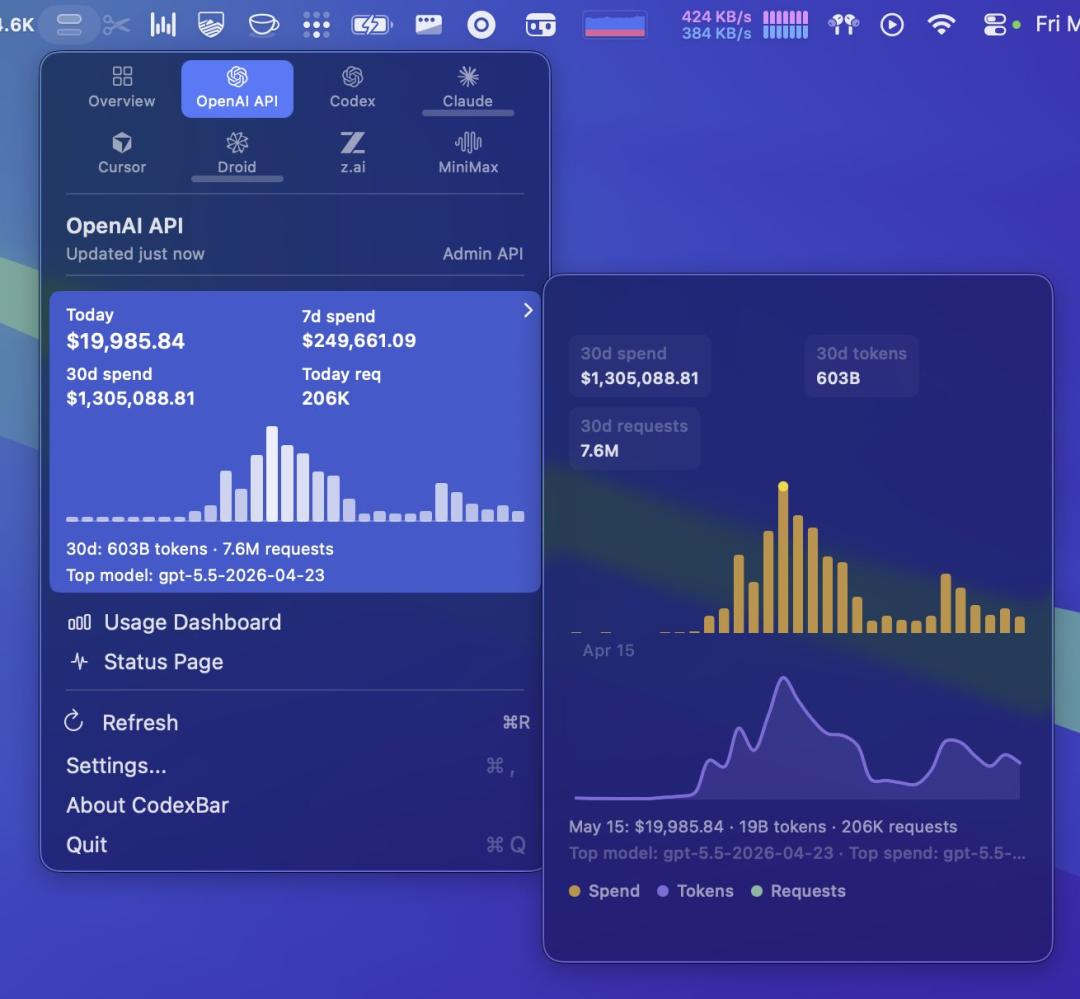
Netizens exclaimed, "Hiring a development team might be cheaper than this."

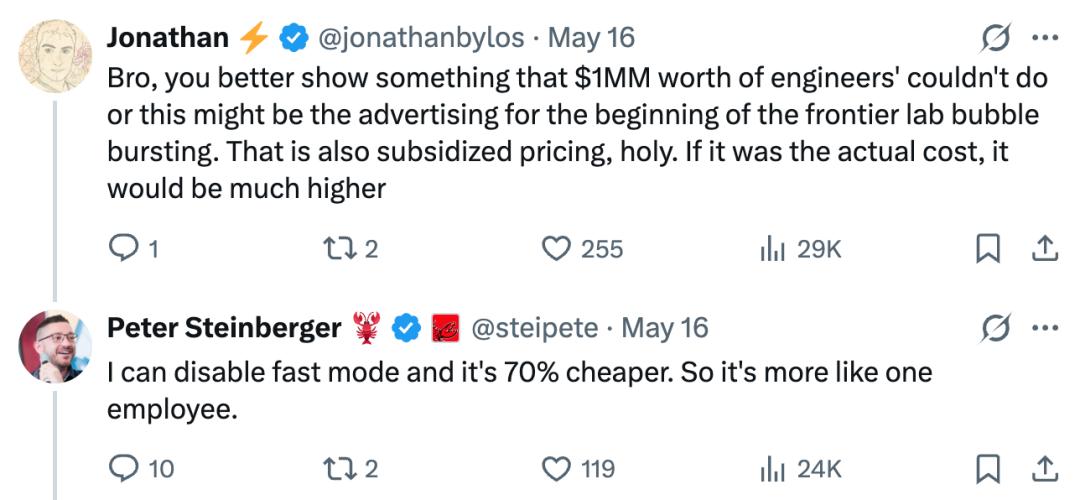
Another netizen asked, "Dude, you'd better show some real skills and create something that engineers with a million - dollar annual salary can't handle. Otherwise, this advertising might be a sign that the bubble of the cutting - edge lab is starting to burst. And this price is already subsidized. God, if calculated at the actual cost, it would be much more expensive."
Steinberger replied, "I turned off the fast mode, and the price dropped by 70%. So, it's just the cost of one employee."
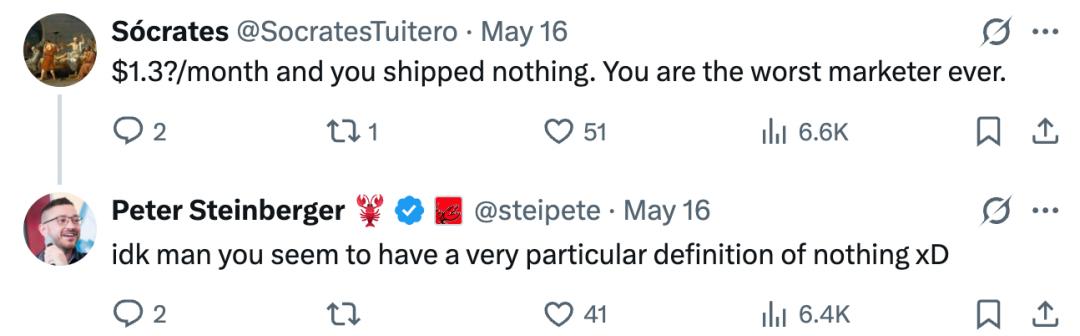
Someone even mocked directly, "$1.3 million a month? And you've delivered nothing. You're the worst marketing genius in history."
Steinberger also fought back, "Well, dude, your definition of 'delivered nothing' is quite special."
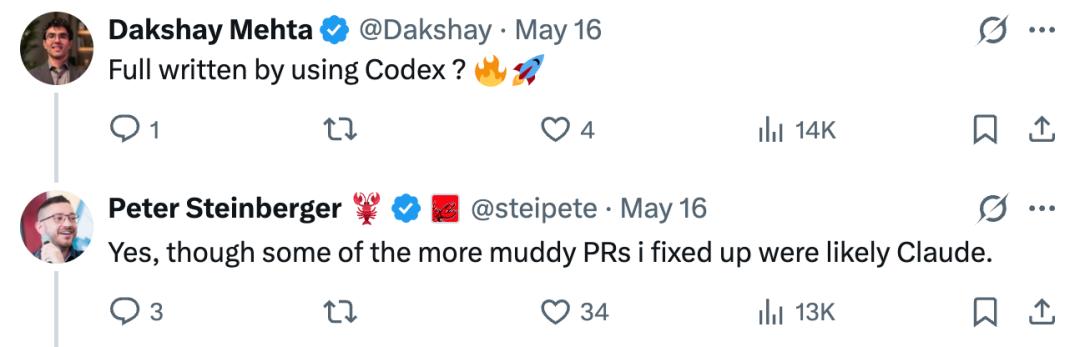
Steinberger also said, "All these codes were written by Codex. The pull requests that were a bit messy and I later organized were probably written by Claude."
After revealing his high token expenses and sparking heated discussions, Steinberger quickly responded. He said he was trying to answer this question:
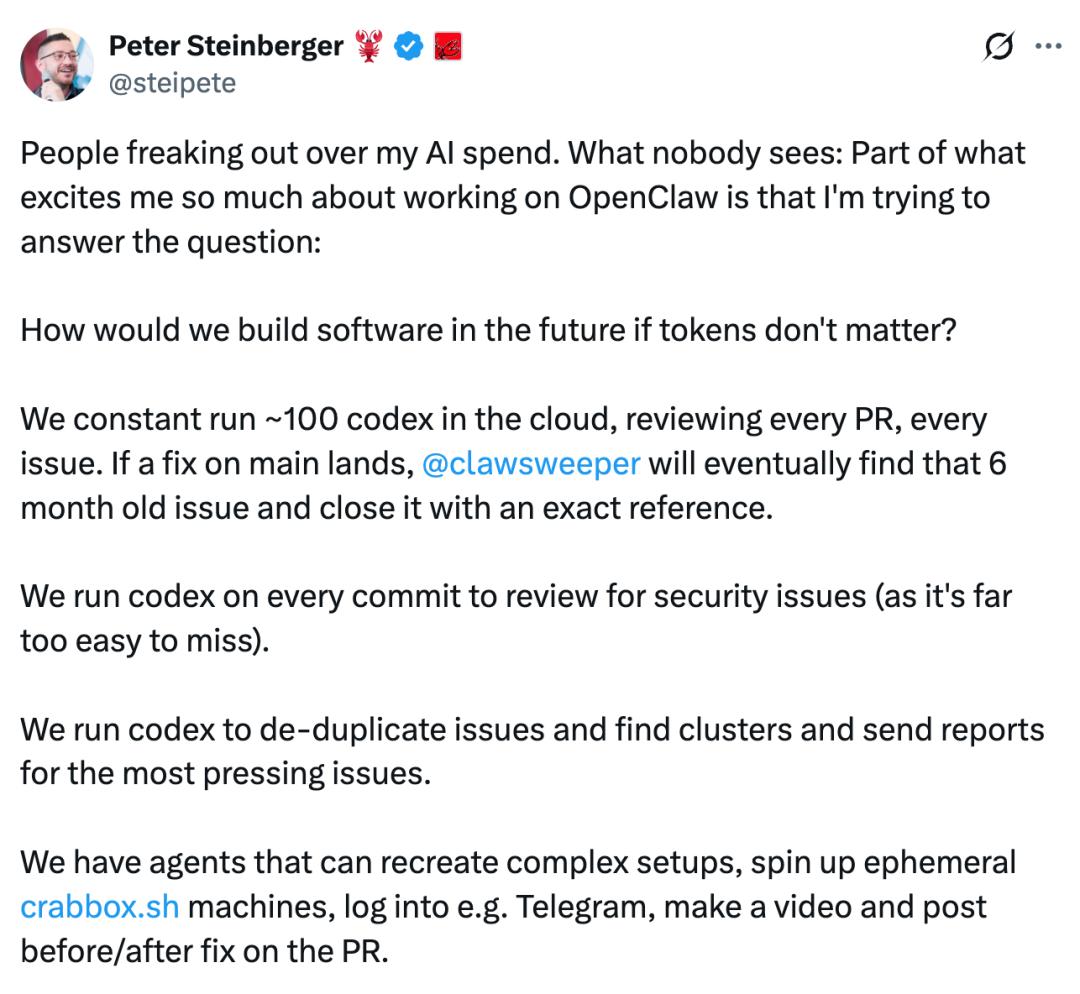
If tokens are no longer important, how will we build software in the future?
We run about 100 Codex instances in the cloud long - term, reviewing every PR and every issue. As long as a fix is merged into the main branch, @clawsweeper will eventually find that old issue that has been pending for 6 months and close it with precise references.
We run Codex on every commit to review security issues because these issues are so easy to miss.
We use Codex to deduplicate issues, discover clusters, and send reports for the most urgent problems.
We have some agents that can reproduce complex environments, start temporary crabbox.sh machines, log in to platforms like Telegram, record videos, and publish before - and - after comparisons of fixes in PRs.
Some Codex instances monitor new issues. If an issue matches our written product vision, it will automatically create a PR for it. Then, another Codex will review this PR.
We also run Codex to scan spam in comments and ban relevant users.
We run Codex instances to verify performance benchmarks and report regression issues to Discord.
We have agents that listen to our meetings and start working proactively. For example, when we discuss new features in a meeting, they will directly create PRs during the discussion.
We built clawpatch.ai, splitting all projects into functional units for reviewing, finding bugs, and regression issues.
In terms of security, we made the same split and combined Vercel's deepsec and Codex Security to find regressions and vulnerabilities.
All this automation allows us to run this project with an extremely lean team.
The question is, who will bear such high costs? Obviously, it's not him.
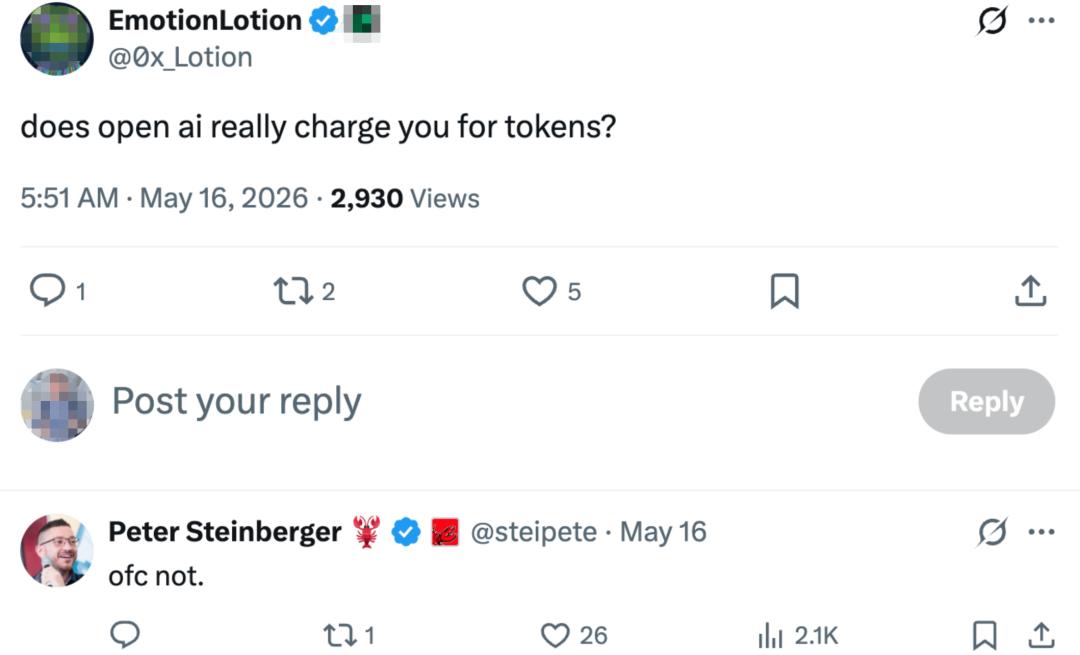
"OpenAI won't charge me for tokens."
Tokenmaxxing: How long can this throughput race last?
This directly killed the competition.
Recently, Tokenmaxxing has been a hot topic in the AI circle. Major manufacturers, including Meta and Amazon, even made public their internal token usage rankings, making the consumption of tokens with AI tools a daily KPI for employees.
At that time, the top individual user at Meta consumed an average of 281 billion tokens. Depending on the pricing of different models, it could cost millions of dollars. And Peter Steinberger, the "Father of Lobster," consumed 603 billion tokens in just one month, which is a real game - changer.
Karpathy, a former scientist at Tesla and OpenAI, admitted in a podcast that he also felt the pressure to maximize AI usage. "The key is tokens. What's your token throughput? How much token throughput can you mobilize?"
Tokens are gradually becoming a new means of production and even a unit to measure the operation density of AI. A team with high token throughput, a perfect task - splitting method, and a reliable verification loop may achieve an engineering density that only large teams could handle in the past.
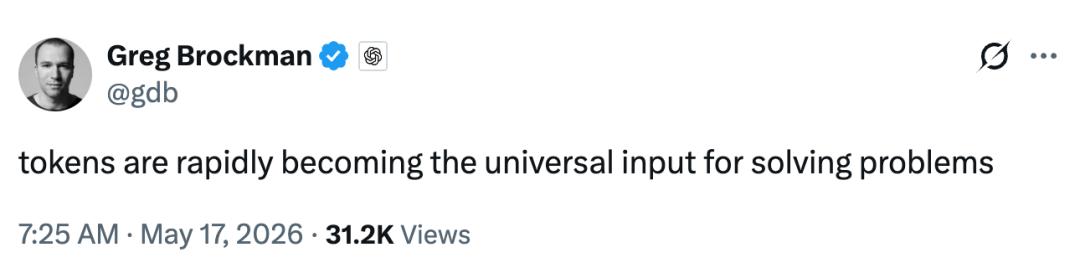
Just now, Greg Brockman, the president of OpenAI, tweeted, "Tokens are quickly becoming the universal input for problem - solving."
But we believe that it's not about the quantity of tokens. Just like how the "Father of Lobster" built an automated development flow for agents, a good project management model might be the key to victory.
This article is from the WeChat official account "MachineHeart" (ID: almosthuman2014). The author is "Someone Concerned about Lobsters." It is published by 36Kr with authorization.