Tianjin's robot army is actually quite powerful.
Recently, the humanoid robot half - marathon in Yizhuang, Beijing, became a huge hit. More than 100 teams and over 300 robots competed on the same stage, which can be regarded as a major technological parade of domestic intelligent robots.
While everyone's attention was drawn to the popular humanoid robots, a Tianjin - based company named Galileo quietly dominated the competition. It sent both self - developed quadruped robots and wheel - legged composite robots to the event and directly won two championships in the remote - control group, along with the speed award and the clearance award, achieving four championships at once.
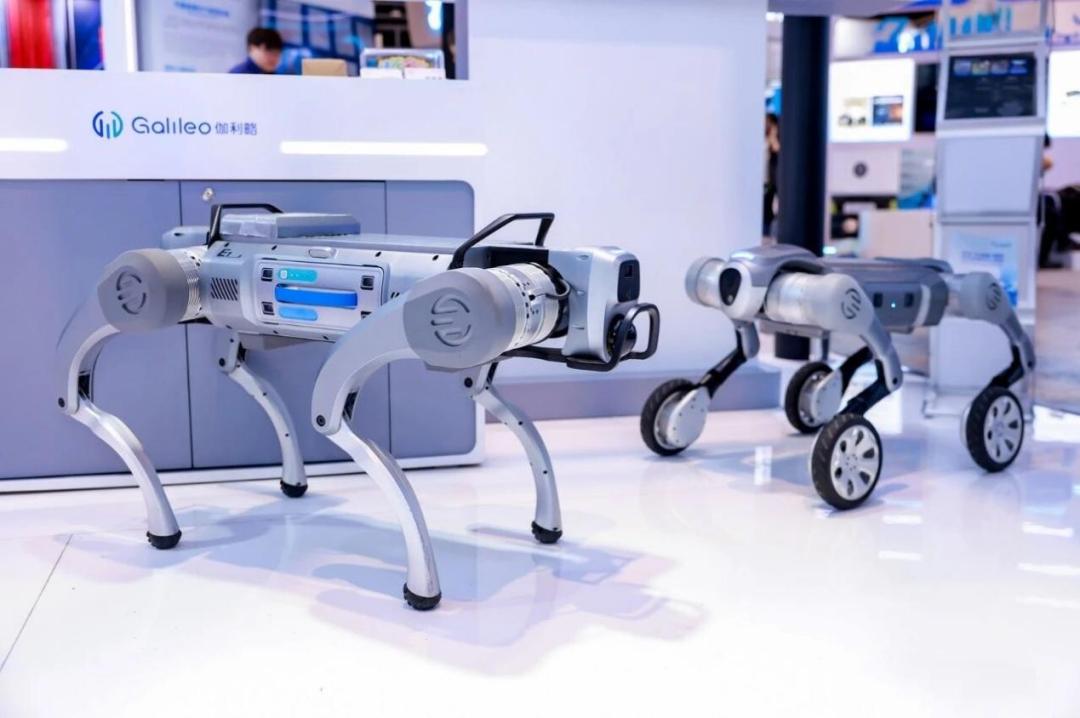
Only then did many people realize that while they were always talking about robots in Beijing, Shanghai, Guangzhou, and Shenzhen, Tianjin, a major industrial city in the north, had long become a powerful force that could not be ignored in the intelligent robot circle.
In the past few years, intelligent robots have definitely been the top - tier in the technology circle, but many people think that Tianjin seems to have been "silent" in this wave.
Is that really the case?
While people are still watching humanoid robots run, jump, dance, and pose, Tianjin's robots have long stopped with the fancy tricks. They have plunged into factories, the deep sea, and heavy - duty logistics sites, focusing on solving real problems and paving a solid - core path from core technology to the global market.
Without showing off skills or hyping, shedding the performance halo, Tianjin's robots take a practical, effective, and down - to - earth approach.
Tianjin Created the "Nerves" of Robots and Cut the Cost to One Percent
Previously, high - end tactile sensors were monopolized by Japan and the United States, and a single sensor cost tens of thousands of yuan. It was one of the biggest bottlenecks in robot commercialization.
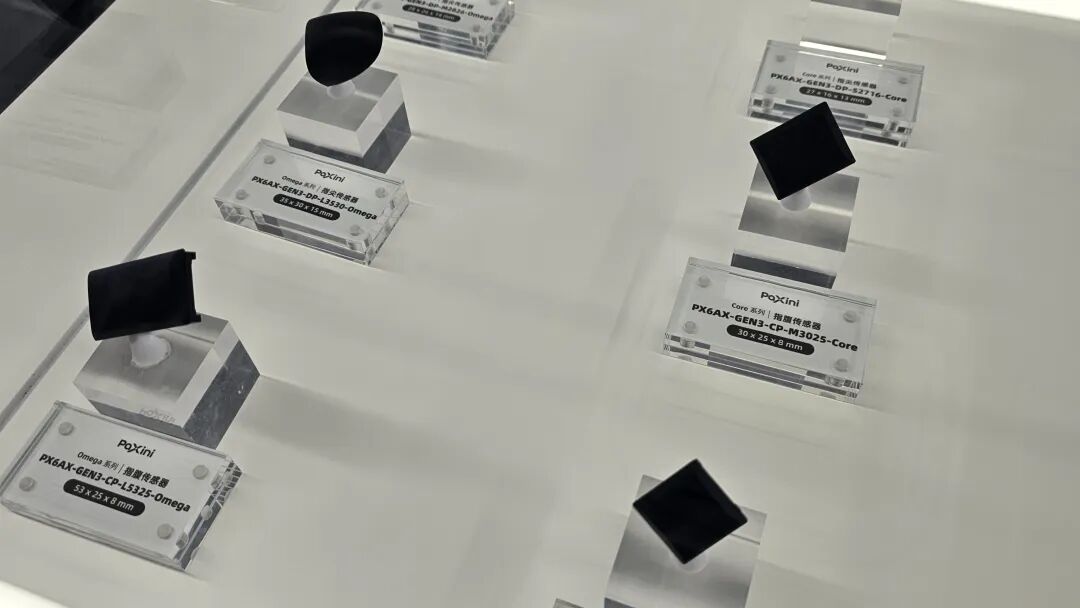
A Tianjin - based company named Pacini directly solved this problem.
The founder, Xu Jincheng, is a doctor from Waseda University and studied under a well - known figure in the robot field. After returning to China, he specifically tackled the tough problem of tactile perception. In just a few years, they reduced the price of sensors from the ten - thousand - yuan level to the hundred - yuan level, achieving domestic substitution.
However, their ambition is not limited to making hardware.
For robots to truly become intelligent, what they lack is not computing power but interaction data from the real world. So Pacini built a giant data factory in Tianjin, specifically to provide "high - quality corpora" for AI training.
While others only focus on data collection, they have perfected the entire closed - loop process of scenario design, data cleaning, annotation, and dimensionality reduction. They have self - developed a full - modal data collection system, covering tactile, visual, motion, and voice data.
Now, the Tianjin factory has accumulated more than 72 million pieces of data, which is 10 to 100 times the amount of open - source data in the industry. The annual production target is 200 million pieces, and the scale is maximized.
Their six - dimensional force tactile sensor has an accuracy of 0.01 Newton. Robots can sense how slippery or heavy an object is, as delicate as a human hand.
Currently, 80% of the world's humanoid robots are using Pacini's sensors, and all the leading domestic and international robot companies are their customers. From sensors, dexterous hands to humanoid robots, this Tianjin - based company has completely opened up the "tactile" track of robots.
Not Chasing Humanoid Internet Fame, Tianjin's Robots Specialize in Solving Various "Industrial Problems"
If Pacini has opened up the "senses" of robots, then several other local Tianjin enterprises have sent robots directly to the front - line to "work on the job".
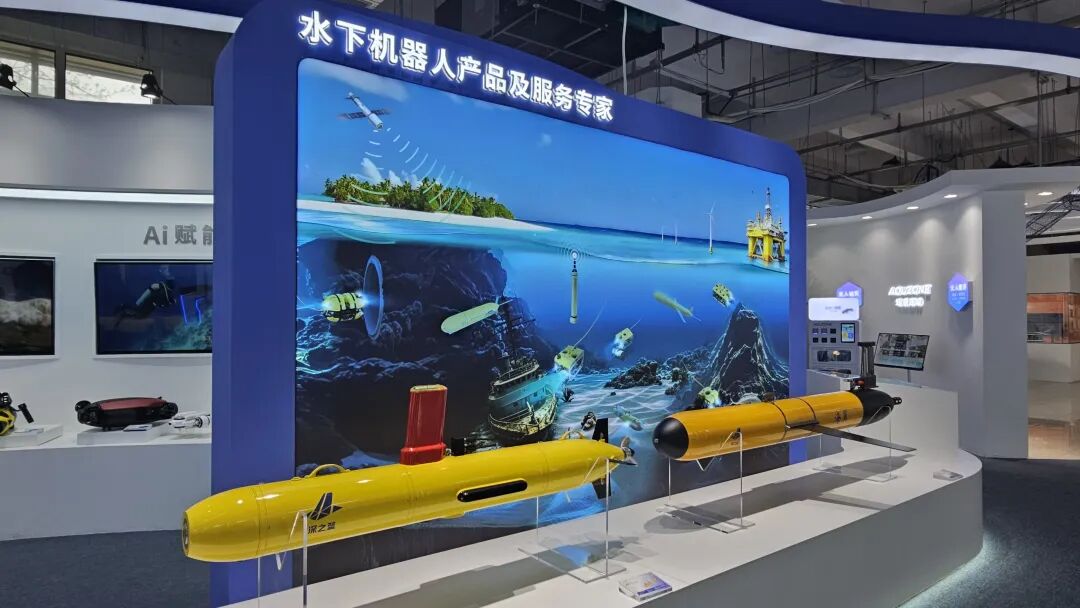
• DeepBlue: It has been quietly working in the deep - sea field for more than a decade, covering from the water surface to a depth of 7,000 meters underwater. It has mastered the four core technologies of underwater propulsion, navigation, and communication. It has been involved in the emergency support of the Shenzhou spacecraft and the South - to - North Water Diversion Project and has even saved lives. Previously, it relied on imports, but now it is self - controllable and is even exported overseas.
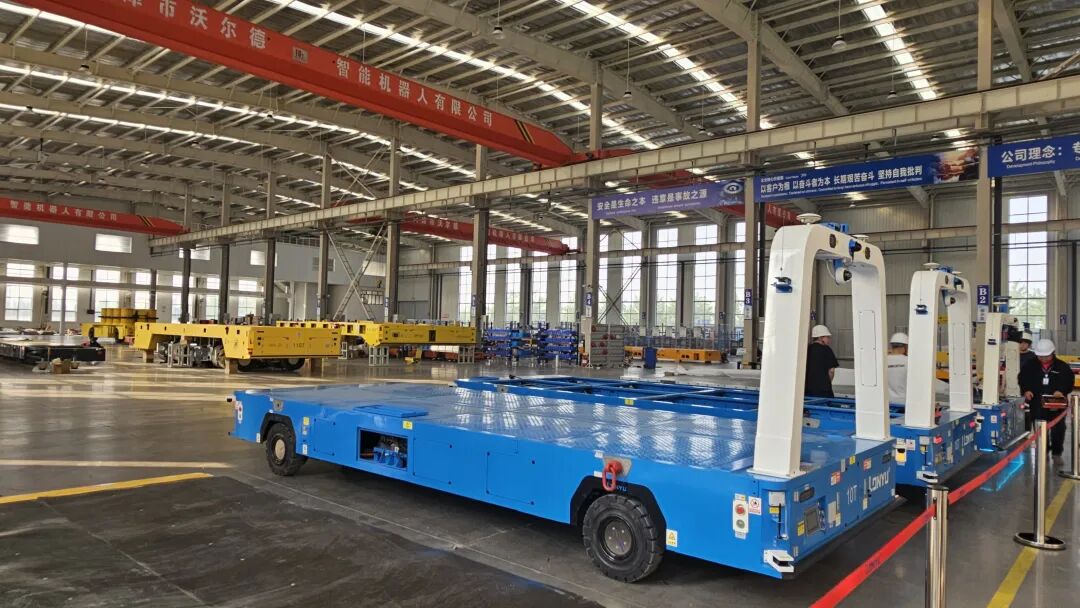
• Langyu Robotics: It specializes in heavy - duty AGVs, with a single - vehicle load capacity of up to 600 tons, ranking first in the world. It undertakes heavy tasks and dangerous jobs in scenarios such as aerospace, nuclear industry, and large - aircraft manufacturing, which are "national heavy - duty equipment".
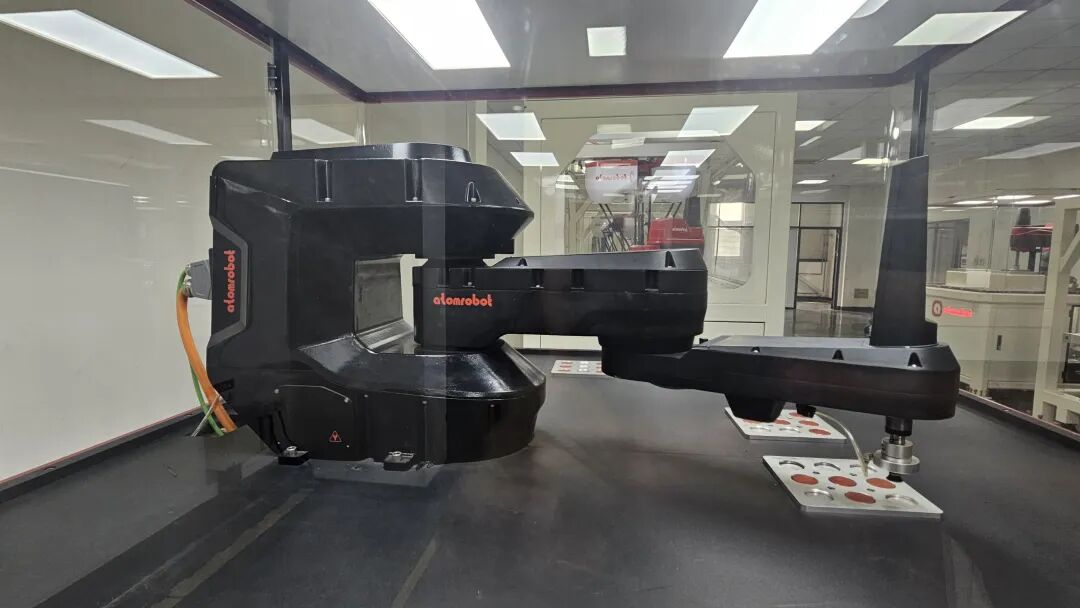
• Atom Robot: It is the leader in high - speed parallel robots, capable of grasping 80 - 130 times per minute. It can replace 2 - 3 people directly on food, pharmaceutical, and new - energy production lines. Its market share exceeds that of international giants such as ABB, ranking first among domestic brands.
In more diverse niche markets, there are many other robot enterprises that dominate their respective fields, but most of them are invisible giants in the industry that focus on their work.
For example, Tianjin's first humanoid robot, "Tianbing No. 1", has been successfully launched. It has a waist - bearing capacity of 200 kg and a multi - modal perception system and has been piloted in industries such as food, pharmaceuticals, and new energy. The world's first Type II C T6 explosion - proof humanoid robot, "Tiankui No. 1", has also achieved a technological breakthrough, filling the gap in special - scenario applications.
Do you understand? Tianjin's robots don't compete on "looking like humans" but on "being able to do difficult, heavy, and delicate jobs instead of humans".
Not chasing trendy concepts or putting on flashy shows, but rooting in the manufacturing industry to solve real pain points and improve real efficiency - this is Tianjin's differentiated approach.
The data is also straightforward: As of the first quarter of 2026, the total number of robot enterprises in Tianjin exceeded 200, including 104 core - chain enterprises, 82 high - tech enterprises, 1 national single - champion enterprise, and 13 specialized and sophisticated "little giants".
On a national scale, Tianjin's robot industry has taken the lead. In Tianjin's robot industry, industrial robots account for 75% of the output value, nearly 10 percentage points higher than the national average.
Of course, it's not just about the industrial field. There are also highlights in the consumer - grade market. DeepBlue's underwater boosters and children's floating boards have been launched in Sanya and overseas and can be used for water - playing and diving.
Why Tianjin? Not Following the Trend, but Truly Making It Happen
Many people are curious: With the robot boom so hot, why has Tianjin been able to quietly succeed?
Take Pacini as an example. The company started in Shenzhen but placed its most core data factory in Tianjin for very practical reasons:
• It has a solid industrial foundation. Experienced workers understand the on - site situation, and scenario design is more down - to - earth.
• The talent is reliable, and the government, universities, and enterprises provide sufficient support.
• There are many real industrial scenarios, so the technology can be tested and applied immediately.
Pacini plans to build five data factories across the country, and Tianjin is the model. The experience can be directly replicated nationwide.
DeepBlue has policies and space in Binhai New Area. More importantly, it is close to the sea. It has the largest civilian deep - sea experimental pool in China and a coastal test site, where it can conduct tests in a real - sea environment at will.
Atom Robot was initially supported by local Tianjin enterprises such as Samsung and Haihe Dairy. After running through the solutions on local production lines, it entered Mengniu and Yili smoothly.
Now these enterprises are also expanding overseas. Pacini's data is ready for overseas transactions. DeepBlue has sold its products to more than 70 countries, and Langyu and Atom Robot are receiving more and more overseas orders. China's high - end manufacturing is starting to be exported in reverse.
With talent, technology, industrial chain, and geographical location, Tianjin has put together a combination of "pragmatic manufacturing". It is not impetuous or following the trend but is down - to - earth in product development and implementation.
When the whole society is chasing hot topics, a calm and capable government is even more precious.
While some places are still using intelligent robots as a means to generate urban and brand traffic, the Tianjin government has been focusing on the industrialization and commercialization of intelligent robots from the very beginning.
In Tianjin, the robot industry has been designated as a key track for "new - quality productivity". From the perspective of institutional design, it requires focusing on key technological breakthroughs such as embodied intelligence, dexterous hands, and high - end sensors.
Currently, Tianjin's robots have reached the top - level in high - barrier fields such as marine engineering, explosion - proof operations, and intelligent welding nationwide.
To this end, Tianjin has built a complete industrial chain for the robot industry, including "upstream core components - mid - stream robot body manufacturing - downstream system integration".
Based on this "chain", Tianjin's robot enterprise chain has finally become an "industrial chain" and has ultimately become a key fulcrum for the country's robot industry to "fill in and strengthen the chain".
From single - point breakthroughs to cluster - style explosions, step by step, the resilience of an industry has been accumulated in a down - to - earth manner.
Conclusion
While the whole network is chasing the popularity of humanoid robots and consumer - grade robots, Tianjin didn't follow the trend but chose a more difficult, slower, but more stable path - differentiated development and rooting in the real economy.
It may take a long time to endure hardships and loneliness.
But as these robots penetrate deeper into factories, the deep sea, heavy - duty trucks, and production lines, it's only a matter of time before Tianjin's "intelligent robot army" steps onto the center stage.
This article is from the WeChat official account "Digital Light - Year". Author: Shao Yang. Republished by 36Kr with permission.