In 2003, the founder built a rocket, created a prototype engine with 400,000 yuan, and chose a path no one had ever taken | Industry Exclusive Interview
Text | Azhi
Zhang Zihan, the founder of Zhiyu Aerospace, doesn't look like an undergraduate still in college.
He speaks at a slightly fast pace, rarely smiles, and has a somewhat sophisticated temperament. He is used to answering questions in a three - part deductive way: first give the conclusion, then break down the premise and the approach, and finally supplement the exceptions or risks.
In Zhang Zihan's own words, he is a "person who is almost 100% rational, without any emotional factors involved in any of my decisions."
This temperament is naturally in line with the aerospace field, which requires extreme rationality, high self - reflection, and goal - orientation. However, as an outlier entrepreneur in this field, there are natural contradictions in him - being too young, having no "background", and not being bound by traditions.
He won the first prize in the national aeromodelling competition in the second grade of primary school, synthesized solid fuel with chemical agents in his own laboratory in the first grade of junior high school, and completed his studies ahead of schedule with all As in five subjects through self - study and self - examination in the second grade of senior high school. In his sophomore year, he wrote the business plan for Zhiyu Aerospace in a shared office in Shenzhen, and Zhang Zihan officially started his business - that year, he was just 21 years old.
The outside world would describe Zhang Zihan as a "genius teenager", but he doesn't like it very much because labels simplify the narrative, and excessive labeling often brings noise.
Zhang Zihan pursues an increase in the "signal - to - noise ratio" - simply put, it is the ratio of the intensity of the useful signal received to the interference noise. Steve Jobs' signal - to - noise ratio was 80%, and Elon Musk's might have been close to 100% when he was working on Tesla, SpaceX, and Neuralink in the early days.
Every Sunday, Zhang Zihan plans all his time except sleeping for the next week to maximize his efficiency and focus - especially after his personal role changed. As the manager of a team, he has to balance R & D, financing, internal operation and maintenance, and external cooperation. A person who used to be used to working in a "flow state" starts to learn to fill all his time with "airtight" plans.
This high - intensity and high - efficiency work style is not only reflected in Zhang Zihan but also in the business progress rhythm of the entire Zhiyu Aerospace team in the past year.
In October 2024, the project was initiated. In 2025, the company was officially established. Zhang Zihan and his three classmates from the Hong Kong Polytechnic University formed the core R & D team. Starting from the self - developed liquid oxygen methane electric pump engine, they aim to build the world's first recyclable and reusable small and medium - sized launch vehicle - Fission No. 1, which is specially designed for payloads below 450 kg, with the goal of controlling the single - launch cost to 1/4 of the industry average.
Different from the mainstream commercial launch vehicles, the core of this product positioning targets the launch demand for small and medium - sized satellites in the market.
Against the background of the accelerated development of large rockets and large satellites in the domestic and international commercial aerospace fields, the services of mainstream rocket companies target the networking needs of giant constellations such as Qianfan Constellation and GW Constellation, which consist of tens of thousands of satellites. For small and medium - sized satellites, they either have to "carpool" on large rockets for launch or use customized small solid rockets for launch. The former usually has to wait for 6 - 8 months or even longer on average and cannot choose the orbital inclination independently, while the latter is too costly for small enterprises to bear.
Zhang Zihan saw this market gap and hopes to reconstruct the launch cost curve through technological innovation to provide a space "special car" for small and medium - sized satellites - with controllable cost, supporting independent orbital customization, and striving to compress the launch interval to a weekly level as the recyclable technology matures.
Within less than a year of its establishment, this post - 2000s team of Zhiyu Aerospace spent less than 500,000 yuan to build the first small and medium - sized liquid rocket engine "Hantian" using the electric pump cycle scheme + liquid oxygen methane combination.
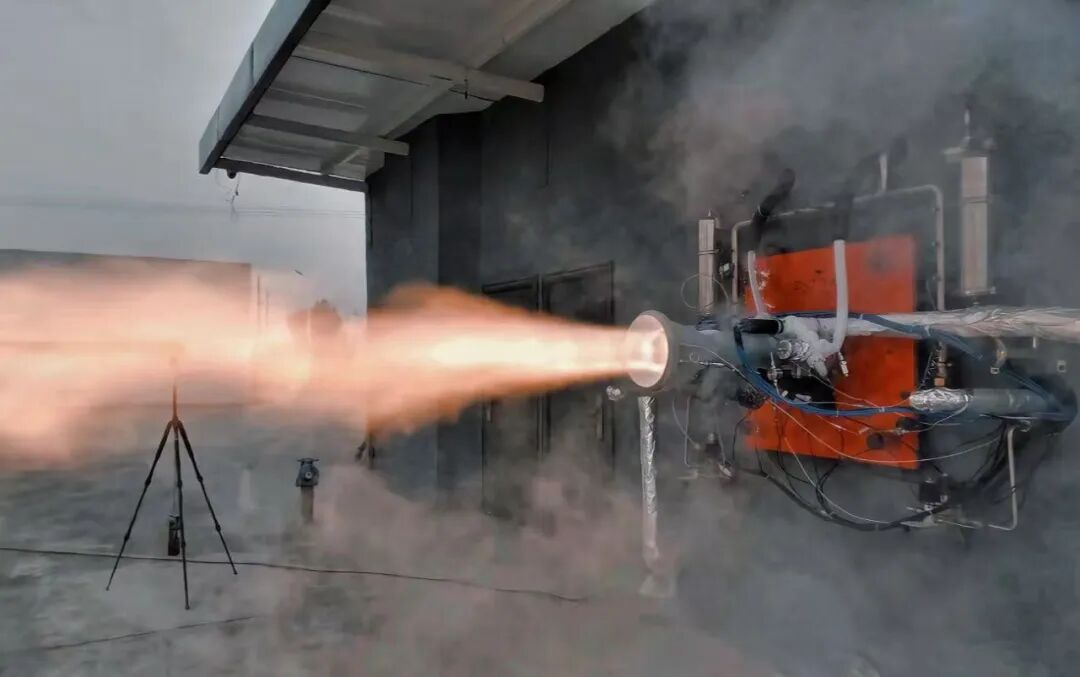
The self - developed small and medium - sized liquid rocket engine "Hantian" of Zhiyu Aerospace
In January this year, "Hantian" successfully completed a 20% low - condition full - system hot test. A 100% full - condition hot test will be carried out soon. Before the third quarter of 2027, Zhang Zihan's goal is to complete the standardized process guidelines and set up a small - scale production of 15 - 20 units, which is just one of the goals planned to be completed by Zhiyu Aerospace in the next two years.
The rapid progress of the company's business is attracting more attention from the capital market.
36Kr learned that at the beginning of May, Zhiyu Aerospace completed an angel round of financing worth tens of millions of yuan, led by Minyin International and jointly supported by Century Huatong, Songhe Innovation, and Beidou Group. Coupled with the seed round from Miracle Plus at the end of last year, Zhiyu Aerospace has completed two rounds of financing in half a year.
"You may not believe it, but what I see is that in the future, the total output value of the entire extraterrestrial (space) will exceed the sum of that on the earth's surface. In the future, these will not be science fiction; it will definitely happen."
Zhang Zihan thinks that the progress of Zhiyu Aerospace can be even faster because "if we don't do it now, it may be too late."
Building rockets is a matter of destiny
Zhang Zihan was interested in electronics and structures since childhood. In the first grade of primary school, he disassembled a microwave oven at home and almost electrocuted himself - but at that time, he was just curious. Finally, he restored the disassembled parts, and the microwave oven could be used normally, so no one knows about this incident to this day.
In the second grade of primary school, there were spots in the school to participate in the "National Youth Aerospace Model Competition". Zhang Zihan won his first national award and won again when he was in the fourth grade. This was more like an enlightenment of his interest, which led him into a field where he could explore infinitely. He did experiments and participated in competitions on his own while starting to study the development of global commercial aerospace and the rise trajectory of China's first - generation commercial aerospace companies.
"I decided to do this in the second grade of senior high school, which was based on the judgment of the trend." - In 2015, the policies for the commercial aerospace sector began to be liberalized, and our country was determined to build its own large - scale communication constellation, which meant that the logic of rocket launches must be commercialized, and this was the inevitable way to (achieve the networking goal). Zhang Zihan recalled.
Looking back, this moment has already arrived.
His judgment at that time was that it was better to enter the aerospace field as soon as possible. Zhang Zihan felt that he had too many things to do next, but there are only 24 hours a day, and "time is too tight." So he chose to complete his studies ahead of schedule with all As in five subjects through self - study and self - examination in the second grade of senior high school. "No one restricts you from doing this. As long as you find through investigation that this thing (completing studies ahead of schedule) is feasible, just do it. It's that simple."
During the process of preparing to apply to multiple universities at the same time, Zhang Zihan accidentally entered the Aerospace Engineering major at the Hong Kong Polytechnic University. This was not his "first choice", but looking back, it may have been the optimal solution to accelerate his subsequent entrepreneurial process. Most of the initial team members of Zhiyu Aerospace were his classmates during his undergraduate years.
"As soon as I entered the university, I started to look for (the entrepreneurial team) in my school and the other top five universities in Hong Kong." Zhang Zihan has a PIE rule, which is Passion, Innovation, and Efficiency. He believes that to achieve something, there is no need to blindly expand the team size. Instead, each member needs to have PIE, multi - dimensional quadrant capabilities, and all members should be able to communicate without obstacles.
In the past year, the team size of Zhiyu Aerospace has never exceeded 10 people. On the one hand, all - around excellent talents in the aerospace field are scarce. On the other hand, Zhang Zihan believes that achieving the business goals of Zhiyu Aerospace does not require a team of hundreds of people.
He wants to practice a new organizational collaboration model different from the traditional corporate system - similar to the non - hierarchical "honeycomb network" of DeepSeek. Zhiyu Aerospace does not set up a general department and does not use the model of splitting indicators for each department to complete tasks independently. It emphasizes a flat structure. The R & D team has no clear task boundaries, but all members need to have cross - disciplinary capabilities. While minimizing the horizontal communication cost, it maximizes the business progress efficiency and reduces the operation and maintenance cost.
Within a commercial aerospace company with a well - established system, this structure is obviously too radical - this is also one of the important reasons why Zhang Zihan finally decided to start his own business after interning at a leading enterprise.
With a basic team in place and the organizational model determined, the new round of the commercial aerospace trend also arrived as scheduled in 2025. Zhang Zihan once again felt the urgency of starting a business - according to Zhiyu Aerospace's plan from the engine to the first - type rocket, "We estimate that it will take until 2028 or 2029 to complete the first phase of this project in a closed - loop manner. At this moment, I have to start."
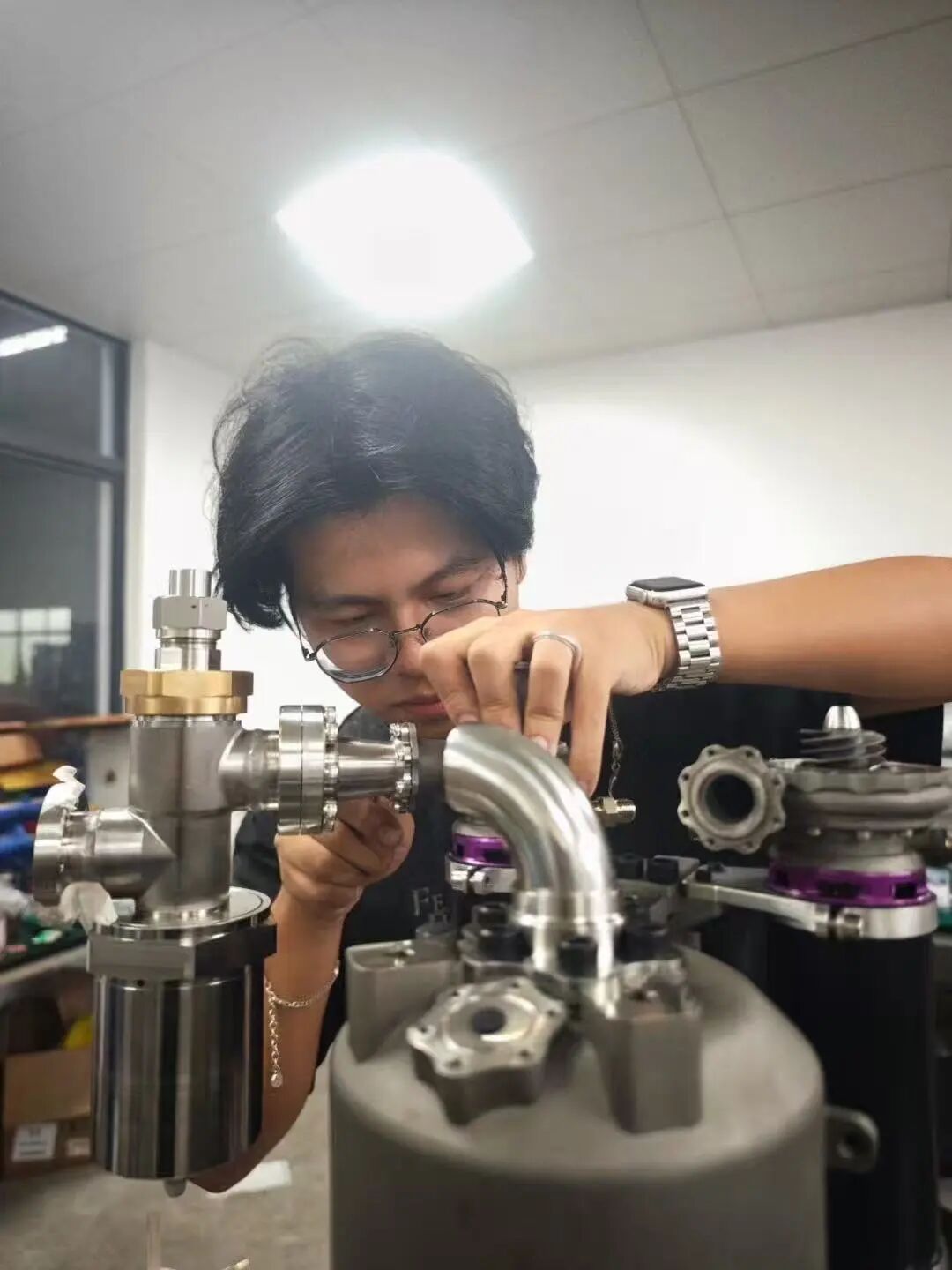
Zhang Zihan, the founder of Zhiyu Aerospace
Build a prototype engine with 400,000 yuan and provide a space "special car" for small and medium - sized satellites
The choice of the technical route often determines the fate of a company.
Zhiyu Aerospace's entrepreneurship starts from the "power heart" of the self - developed rocket. Different from the mainstream and mature gas generator cycle route, Zhang Zihan chose the combination of electric pump cycle + liquid oxygen methane, which is an almost blank direction. Currently, no successful recyclable rockets in the world have used the electric pump cycle in large - thrust engines.
The biggest advantage of the electric pump is extreme reliability. In the traditional gas generator cycle, part of the fuel and oxidizer are extracted from the rocket tank, mixed evenly and ignited, and then the high - pressure gas impacts the turbine, which drives the main shaft and the centrifugal pump to rotate. This process is accompanied by an extreme temperature difference - on one side is liquid oxygen at minus 183 degrees Celsius, and on the other side is gas at thousands of degrees Celsius. Once the seal fails, a catastrophic explosion will occur. The working principle of the electric pump cycle is simpler. It directly uses an electric motor to drive the centrifugal pump to rotate, eliminating the complex gas turbine system.
"90% of engine test explosions or launch failures are due to problems with the turbopump or timing problems caused by the complex structure of the turbopump. The electric pump has no gas, only low temperature, no high temperature, so it is naturally very reliable." Zhang Zihan mentioned that this is also one of the reasons why Rocket Lab, a US commercial aerospace company that Zhiyu Aerospace benchmarks against, has a very high launch success rate.
Secondly, for the recyclable and reusable technology, when the first stage of the rocket returns to the near - ground section, it needs to adjust the thrust change to make the linear velocity zero at the appropriate node. Therefore, the range within which the engine thrust can change determines the "soft - landing interval" of the rocket. The larger the range, the more calmly the rocket can "brake" during the return phase.
"Previously, the gas generator could only reach a minimum of 40% and couldn't go lower. This is also the reason why the Falcon 9, the pioneer of recyclable and reusable rockets, uses nine engines in parallel because the thrust - changing ability of a single engine is insufficient." Zhang Zihan mentioned that the advantage of the electric pump is that it can change the rotation speed. "The lower limit of the thrust - changing rate of our engine can reach 18%, and it is naturally suitable as the power source for recyclable and reusable rockets."
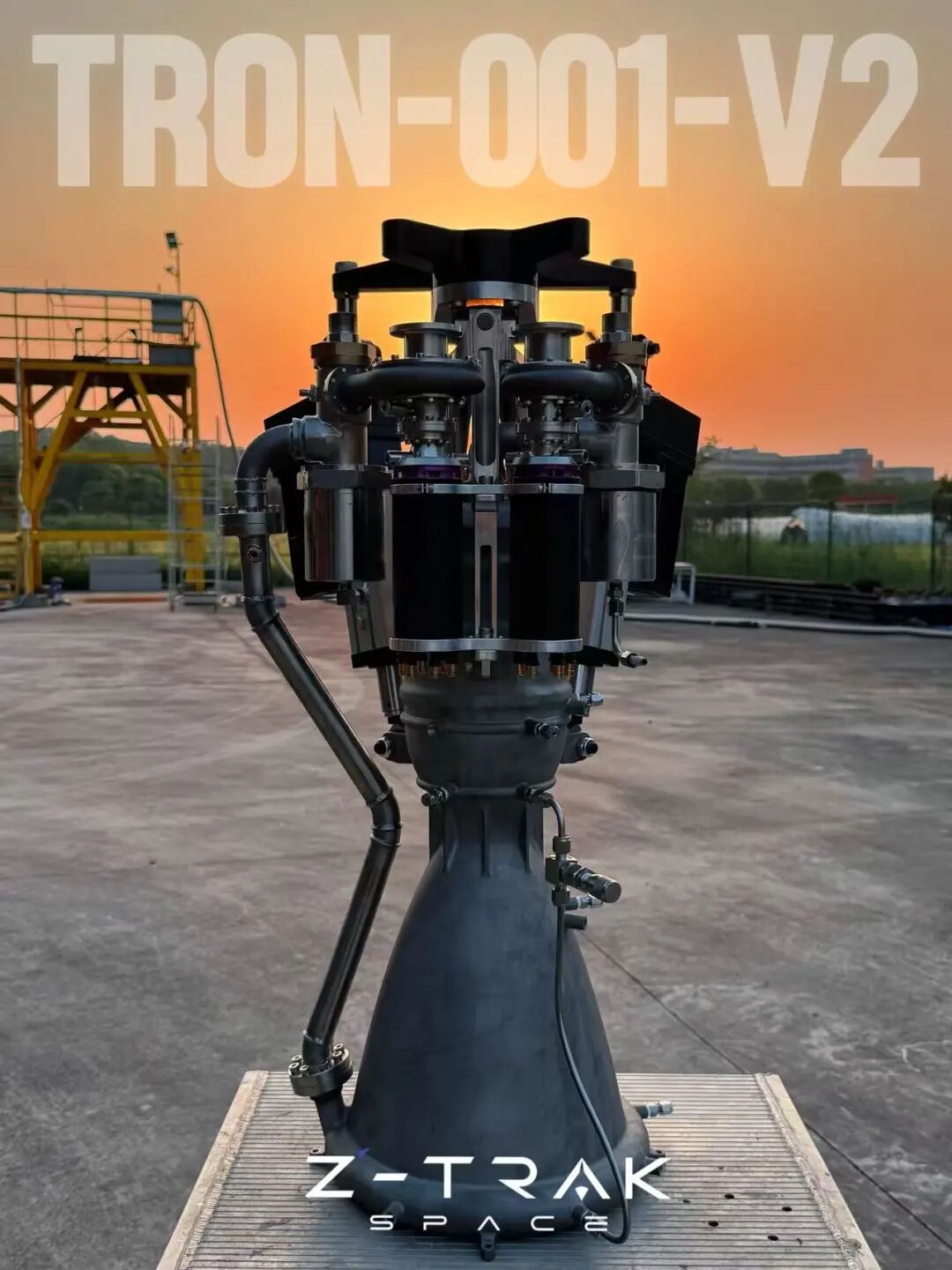
The self - developed small and medium - sized liquid rocket engine "Hantian" of Zhiyu Aerospace
Of course, the limitation of the electric pump cycle is that it brings "dead weight", such as motors, drivers, and battery packs, which are additional weights not required by the traditional gas cycle. Zhang Zihan has discussed this issue with many experts inside and outside the system, and the consensus is that from the perspective of the thrust - to - weight ratio, with the current energy density and discharge rate that the battery can provide, if the electric pump cycle exceeds 5 tons, it is not necessary to use the engine.
"So small engines are naturally very suitable for using electric pumps, while large engines can't." Zhang Zihan emphasized.
In fact, this just fits the product positioning of Zhiyu Aerospace to build small rockets at this stage.
In 2025, from making the first engine prototype to the test ignition, Zhang Zihan and the team controlled the R & D cost at a very low level.
In Zhang Zihan's view, to reduce the overall rocket launch cost in the future, innovation and improvement are needed in all aspects, including team operation and maintenance, R & D investment, and production line construction.
For example, the reduction of operation and maintenance costs relies on the innovation of the aforementioned company structure design and collaboration model to avoid redundant personnel, reduce decision - making delays, and communication costs. Second is the reduction of external procurement costs, using mature industrial - grade components instead of aerospace - grade materials, with the core focus on the product being usable, reliable, and reusable. Third is the internalization of the supply chain. Zhang Zihan mentioned that at this stage, except for the 3D - printed nozzle, all components of the engine, such as valves, pipelines, main impellers, inducer wheels, and other mechanical structures, are currently self - developed and self - produced. Through the control of the production process, the cost and quality can be controlled.
"We only need to buy materials, set our own processes, come up with our own design plans, and control the quality ourselves." In Zhang Zihan's view, this is the only way to control the launch cost of the "Fission No. 1" to 1/4 of the industry average.
"There are also small rockets in China now, but they are all solid, and the price and delivery time are relatively uncontrollable." Zhang Zihan hopes that through Zhiyu Aerospace's small liquid recyclable rockets, he can solve the three pain points of small and medium - sized satellites: the inability to compromise on the orbital inclination when carpooling for launch, the long waiting time, and the high cost, and provide a space "special car" for small and medium - sized satellites.
"Fission No. 1" is not the ultimate goal; "Fusion No. 1" is
In Zhang Zihan's plan, "Fission No. 1" is the first product of Zhiyu Aerospace to verify its recyclable rocket technology route, serving as a "general recycling algorithm verification platform". It is to make