The trend has changed for Xiaomi's foray into the automotive industry.
The trend of Xiaomi's foray into the automotive industry has changed.
From the Xiaomi SU7 Ultra's lap record at the Nürburgring to the YU7 GT's over - 1000 - horsepower performance, Xiaomi has taken the concept of "driving pleasure" to the extreme. However, no matter how fast it goes on this track, there is always a missing piece: the family.
Now, a new trademark has emerged - SkyNomad.
There are two lines of speculation about it:
One is an independent second brand.
Change the logo, name, and brand narrative, and completely separate from the current products. Divide it into two different brands for pure - electric and range - extended vehicles. At the same time, replace the rear - end logo and steering - wheel logo with the exclusive "Xuntian" logo.
It is understood that Xiaomi's range - extended models will adopt an independent brand and sales operation.

Suspected rear - end logo of Xiaomi Kunlun N90 (Source: Internet)
The other is a new product series. Similar to the relationship between Range Rover and Land Rover, but with a more wild, outdoor - oriented, and independent positioning outside the existing product spectrum.
Although there seem to be two paths, they lead to the same goal - Xiaomi's automotive product philosophy is shifting from "driver's cars" to "family cars."
From the SU7 to SkyNomad, Lei Jun has started to seriously think about what else a car can offer besides being "fun to drive."
In the past, Xiaomi focused on extreme performance, extreme efficiency, and extreme cost - effectiveness. Now, it starts to talk about family scenarios, space experience, and outdoor life.
This is the difference in product concepts between the SU7/YU7 and SkyNomad.
The Xiaomi SU7 and YU7 are "self - indulgent products," selling performance - related emotions.
SkyNomad is a "family - oriented product," selling space - related emotions.
The former pursues the boundary of speed, while the latter explores the limit of space.
It is understood that the first range - extended SUV of Xiaomi, the Kunlun N3, will feature a retractable roof, providing the experience of a small RV or even an outdoor camping vehicle.
Lei Jun is not only aiming for new growth but also wants to carve out his own niche in the highly competitive family - car market.
However, with the ebb of the range - extended vehicle trend, the establishment of an independent sub - brand, and the intense competition in the large six - seat SUV market, Lei Jun's challenges are just beginning.
01 Why must Xiaomi enter the family car market?
In the past two years, Xiaomi's automotive achievements have far exceeded expectations.
Xiaomi has delivered a cumulative total of 685,000 vehicles to date. Last year, its automotive sales revenue exceeded 100 billion and achieved profitability, with gross profit far surpassing that of Li Auto, which is known for its profitability.
Xiaomi's move in the automotive market has paid off. However, the market is constantly changing. Xiaomi not only needs to maintain its existing market share but also face two key issues.
One is the physical limit of the brand.
The Tesla Model 3 and Model Y serve as a mirror. In the first three years after entering the Chinese market, Tesla's annual sales almost doubled. However, the turning point came in 2023: the sales growth rate in the domestic market dropped from 133% to 37.1%, and in 2025, there was a 4.8% year - on - year decline for the first time. The sales of the Model 3/Y have been sluggish for three consecutive years, and the market share has started to shrink.
This set of data sends a clear signal: when a brand's sales are highly concentrated in two pure - electric models, further growth can only be achieved through stock competition. Iteration and price cuts can stabilize the market share but are difficult to open up new growth space.
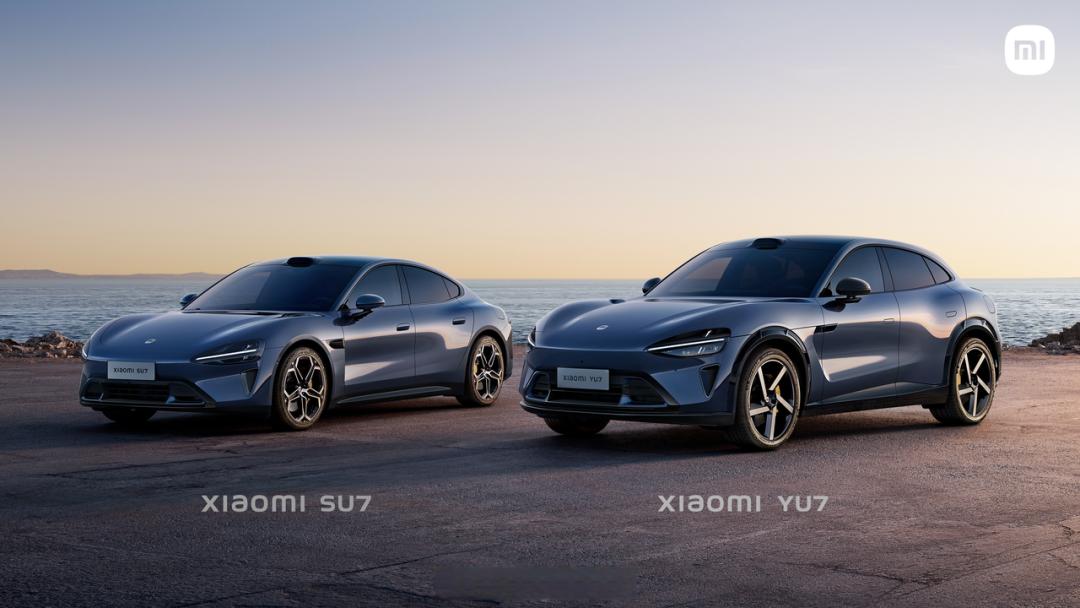
The combination of the Xiaomi SU7 and YU7 has established a solid foundation in the sedan market and achieved rapid growth in the SUV field, creating a complementary effect.
However, Tesla has already set a reference line for how far this combination can go.
In 2026, Lei Jun set an annual sales target of 550,000 vehicles. In the first four months, a total of 110,000 vehicles were delivered.
The overall speed is not slow, but only 20% of the annual target has been completed. The question of where the remaining 440,000 vehicles will come from is inevitable.
The answer lies not in digging deeper into the same market but in exploring new territory.
Xiaomi's main brand will stick to the high - performance pure - electric track, while the SkyNomad series will focus on the mobile intelligent space. The former will strengthen the brand foundation, and the latter will drive scale growth.
This is the first step to fill the gap of 440,000 vehicles. More importantly, Xiaomi's automotive business has completed the fundamental shift from single - product success to dual - line development.
The other is the boundary of the track.
In the past two years, the large six - seat SUV segment has been accelerating.
Since the second half of last year, more than 20 large six - seat SUVs have been launched in the domestic market, covering a price range from 200,000 to 1 million yuan. In 2022, this number was only 4.
In three years, the large six - seat SUV has evolved from a niche market to a highly competitive one. Almost everyone wants a share in this "Year of the Large Six - Seat SUV."
According to incomplete statistics, the market size of large six - seat SUVs was about 200,000 vehicles in 2021, and it increased to 300,000 vehicles from 2022 to 2023. The stable upper limit of the market volume is expected to reach 3 million vehicles per year, which means there is nearly three - fold growth potential compared to the 1.08 million vehicles in 2025.
Although various players are aggressive, it is easy to overlook that the market pattern is far from established.
In the current large six - seat SUV market, only the new NIO ES8 has a stable monthly sales volume of over 10,000 units. The Li L9 and AITO M9 are in the product - replacement period, with monthly sales of less than 3,000 units. The monthly sales of the remaining nearly 20 models are less than 300 units, and nearly 80% of large six - seat SUV models are in a survival dilemma.
With an undetermined pattern and many variables, it is the best time to enter the market.
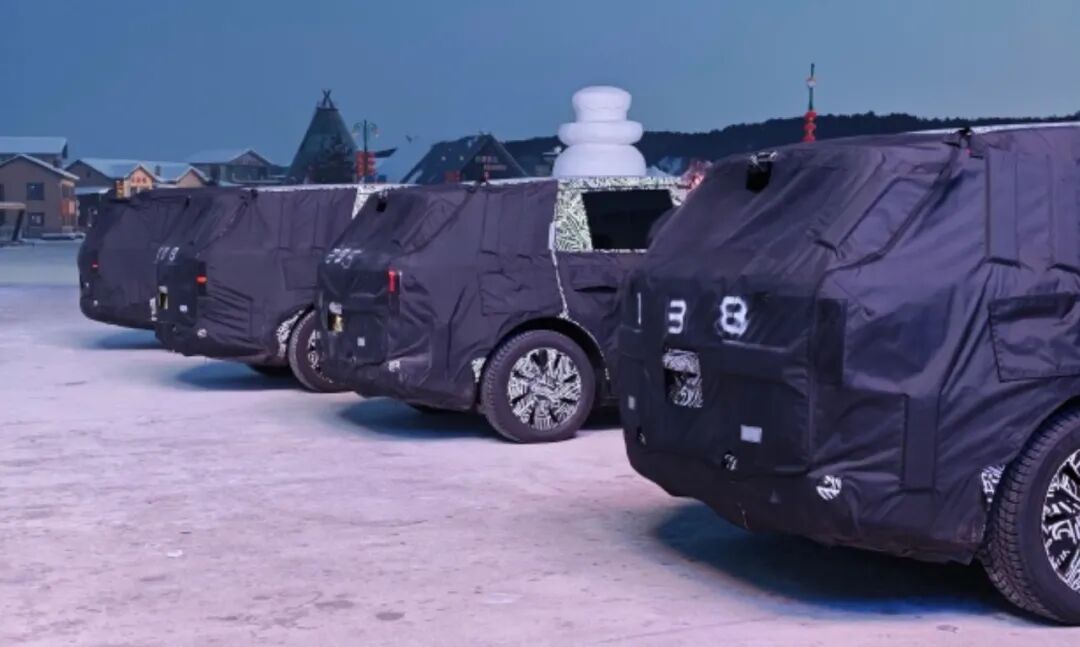
Xiaomi Kunlun N90 test vehicle
This is a long - distance race for reshuffling. Whoever can first establish an "irreplaceable" perception in the minds of family users will gain the right to define the family - car market.
In the past, Li Auto and AITO have set benchmarks in the six - seat family SUV market. Now, Xiaomi is ready to join the battle for the "mental high - ground."
02 As the range - extended vehicle trend ebbs, Xiaomi goes against the current
Lei Jun's new story starts with range - extended vehicles.
According to the plan, the three range - extended SUVs under the SkyNomad brand will be equipped with large batteries of over 70 kWh and have a pure - electric range of 400 - 500 kilometers.
Xiaomi has actually been preparing for range - extended technology for a long time. As early as October 2023, Xiaomi sent a clear signal of entering the range - extended field through recruitment websites.
Last year, Xiaomi's official website continuously recruited more than 20 range - extended - related positions, covering product, R & D, testing, calibration, and procurement. This means that Xiaomi is building a comprehensive team for the range - extended technology system.
Undoubtedly, the fuel tank has been the greatest source of security for high - end new - energy vehicle users in the past three years.
The success of the Li L9 and AITO M9 is essentially the victory of users' compromised needs. They accurately grasped the mentality of high - end users who want the intelligent experience of electric vehicles and the refueling freedom of gasoline vehicles. By combining a small battery with a range extender, they created a perfect product narrative without range anxiety.
However, the market has changed, and the range - extended vehicle track is showing signs of fatigue.
In 2025, the sales of domestic range - extended passenger vehicles increased by 6% year - on - year, a significant drop from the 78.7% growth rate in 2024, hitting a new low since 2021.
On one hand, the market enthusiasm is cooling down, while on the other hand, new products are flooding in:
More than 30 range - extended vehicles were launched last year, compared with only 19 in the same period in 2024. At the same time, the average sales increase per range - extended vehicle dropped from nearly 30,000 units last year to about 9,000 units this year.
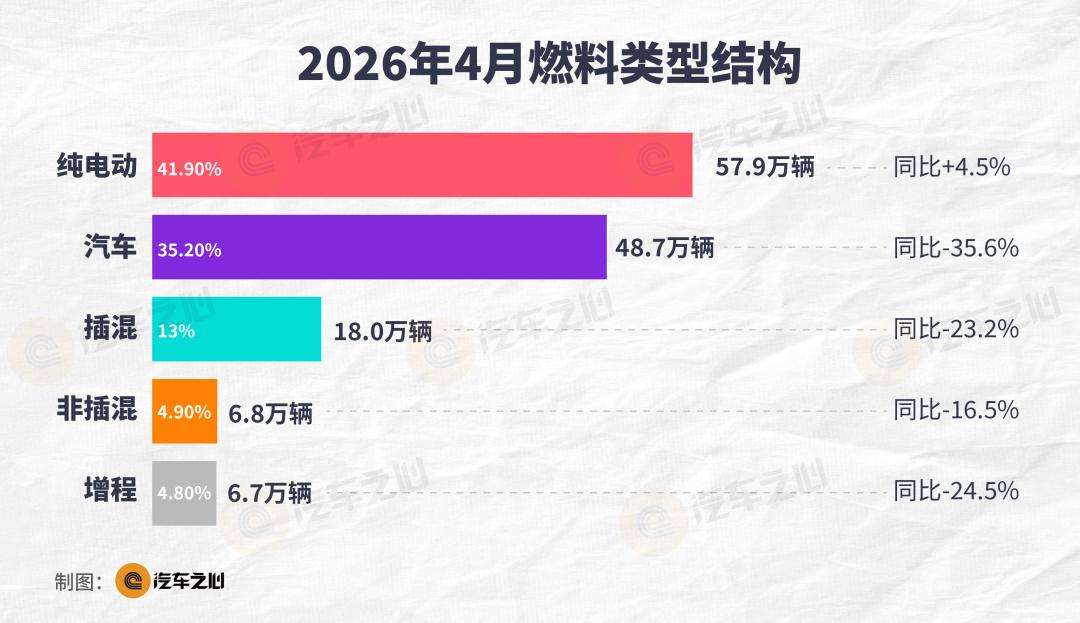
Obviously, more and more players are entering the range - extended vehicle track, diluting the market dividend. Each model can get a smaller share of the market.
This becomes Lei Jun's first crucial problem: Is there still a place for Xiaomi in the domestic range - extended vehicle market?
Regarding the sales of a vehicle, Li Bin once made a classic statement within NIO: Whether a car can sell well is determined at the product - definition stage.
In other words, at the product - definition stage, core elements such as appearance, size, power, range, level, and comfort configuration are determined. If the target market is accurately targeted and the product definition is comprehensive and accurate, the vehicle is likely to achieve good sales.
The sales ratio of the AITO M9 between pure - electric and range - extended models was about 1:9 last year, and the performance of the new NIO ES8 is sufficient to prove that as long as the positioning is accurate and the product is of high quality, a good car can "sell itself."
Therefore, the key lies in positioning. So, who is the target market for Xiaomi's range - extended vehicles?
Judging from the current fragmented information, Xiaomi at least has not taken the ordinary path. The Kunlun series has three models, similar to the AITO M series and Li L series.
The Kunlun 10 is positioned as a small five - seat vehicle, with a length of about 4,950 mm;
The Kunlun 20 is positioned as a large five - seat vehicle, with a length of about 5,290 mm, and offers a raised - roof version;
The Kunlun 30 is positioned as a large seven - seat vehicle, with a length of about 5,290 mm, without a raised roof.
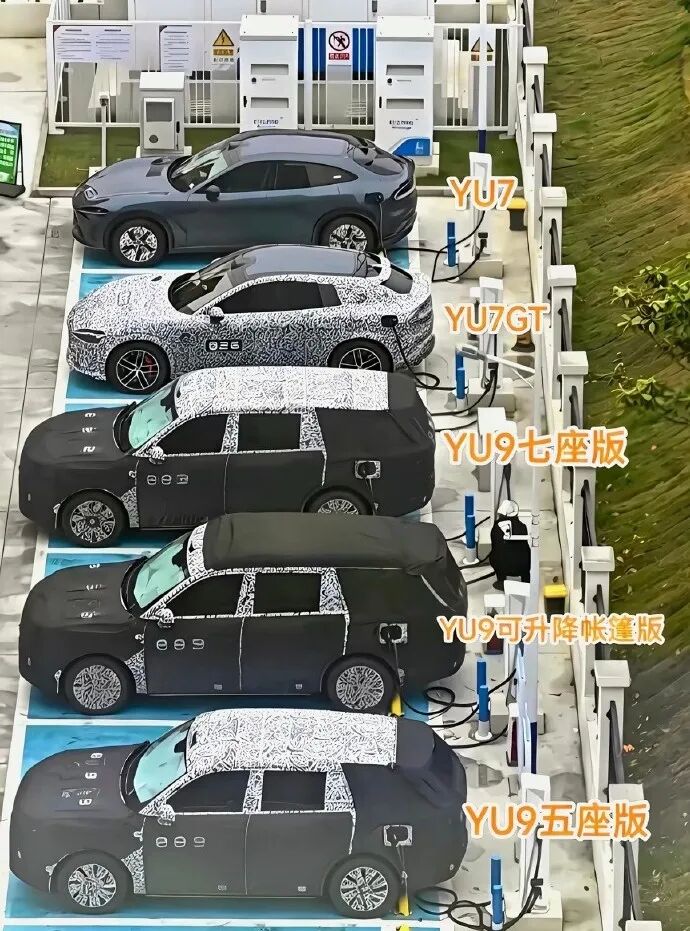
Suspected Xiaomi SUV lineup (Source: Internet)
In addition, Xiaomi has also planned a raised - roof outdoor RV codenamed "Isle of Man," which is positioned higher than the Kunlun series and is equipped with bathroom, refrigerator, and flat - foldable seats for outdoor scenarios.
It is not difficult to see that in terms of family - use scenarios and cost control, it is difficult for Xiaomi to compete with giants like AITO and Li Auto, which have already achieved million - level sales.
The difference of Xiaomi's Kunlun series is that it uses large batteries to completely eliminate users' range anxiety for pure - electric vehicles. At the same time, it makes full use of configurations such as the retractable roof to enhance the outdoor experience, similar to American full - size SUVs that meet family needs while also catering to the younger generation, with performance and off - road exploration attributes.
This also conforms to Xiaomi's automotive - manufacturing concept - To build a distinctive car for every person who refuses to be ordinary.
In the past, the industry has always said that range - extended vehicles are a transitional technology and will eventually be replaced by pure - electric vehicles. In fact, urban users are increasingly choosing pure - electric vehicles, while family users are becoming more and more fond of range - extended vehicles.
The reason is that families value "certainty" more than technological advancement. Having no anxiety about long - distance travel and no queuing for refueling are more important than any parameters.
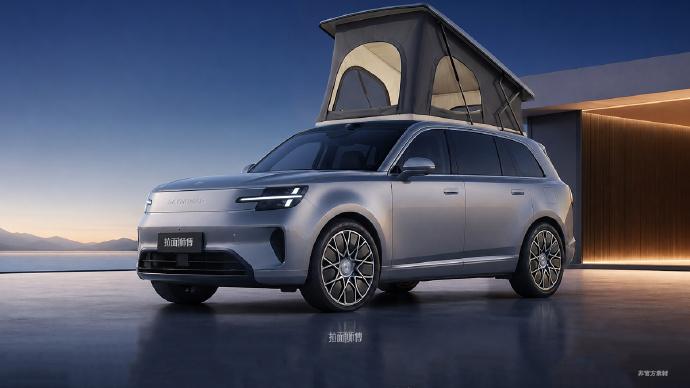
Rendering of Xiaomi Kunlun N90 (Source: @ Ramen Master)
Xiaomi is not betting on the resurgence of range - extended vehicles. Instead, in the highly competitive family six - seat SUV market, no one has dared to turn the "mobile intelligent space" into a mass - producible category.
This approach goes against the trend of product homogenization in the domestic automotive market in recent years.
While most car manufacturers choose the "middle - of - the - road" approach for a safe success, consumers' suppressed needs for personalization and diversification are experiencing a significant rebound.
In the new - energy vehicle market in 2026, the market is not short of family - friendly and presentable range - extended SUVs. What is lacking is the luxury and individuality.
After all, in the high - end market, emotional value is more important than functional value, which is exactly what Xiaomi is better at.
03 The story of performance cannot accommodate the family
Beyond the product, the second problem Lei Jun faces is: What role should SkyNomad play?