Is it the OpenAI moment in the robotics field? This company wants to equip robots with a "general-purpose brain".
“It's relatively easy to make computers perform at an adult level in intelligence tests or chess, but it's very difficult, even impossible, to make them have the skills of a 1 - year - old child in perception and action.”
In 1988, robot researcher Hans Moravec made an observation that later became known as “Moravec's Paradox”. Nearly 40 years have passed, and this remains the biggest obstacle in robotics.
However, a San Francisco - based startup, Physical Intelligence, is trying to completely solve this problem. They plan to build the world's first general “robot brain”, a foundational model that can adapt to various chaotic scenarios in the real world. The company was co - founded by Loki Green from Australia and has raised over $1 billion in funds, with a valuation of $5.6 billion.
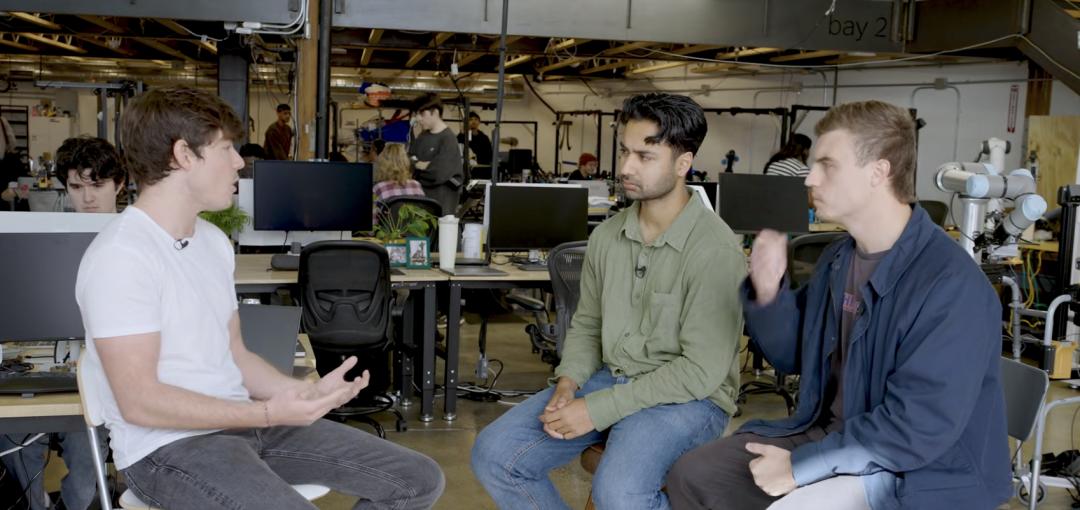
We visited their laboratory, witnessed their work firsthand, and had an in - depth conversation with the founding team and investors.
1. From Coffee Machines to Folding Clothes: Robots Are Learning to “Do Things”
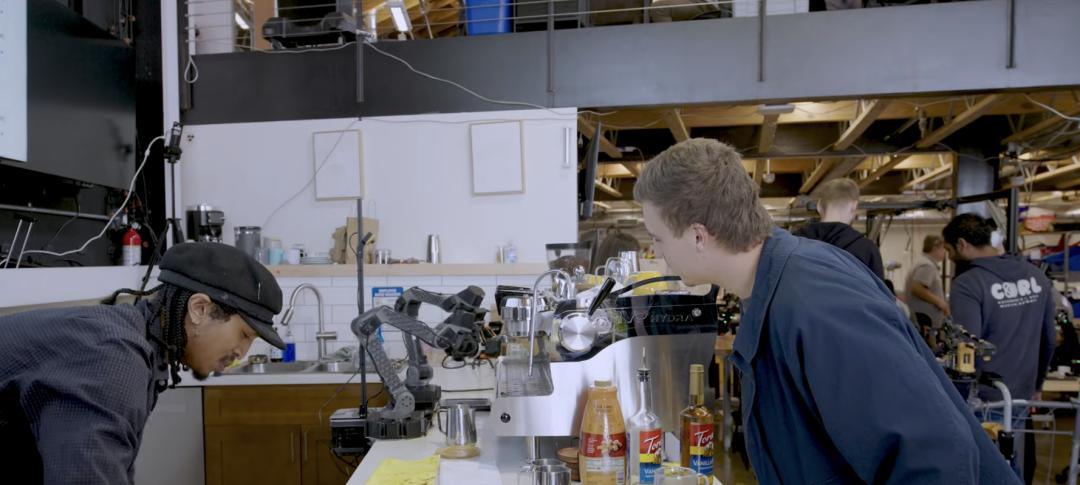
When entering Physical Intelligence's office, the first thing that catches the eye is a fully automated coffee - making robot. It can pick up the handle, put it into the coffee machine, and press the button, all in a smooth process.
“This is the best robot - made coffee I've ever had,” the interviewer said with a smile.
But this is just the tip of the iceberg. Next to it, a robotic arm is folding clothes - a pair of shorts it has never seen before. Through observing and using tele - operation data, the robot has learned how to handle deformable objects, a task that was almost impossible for robots in the past.
“I'm really bad at folding clothes,” Loki Green admitted. “So it's really helpful to see the robot can do this for me.”
The team also demonstrated other tasks such as peeling fruits and assembling packages. These seemingly simple household chores are huge challenges for robots because they involve deformable objects, fine motor skills, and complex environmental interactions.
2. Why Has Robotics Been “Underperforming” for Decades?
During the interview, Loki explained the fundamental reason why robotics has not been widely adopted for a long time.
“Previously, robots were almost completely pre - programmed,” he said. “You deploy them in a factory, and they pick up the same object at the same position, manipulate it in the same way, and then move on to the next one. That's okay, but it's deterministic.”
The next wave of robots introduced computer vision, but they were still designed for specific scenarios and highly restricted. The core problem is that they can't handle ‘variability’. The real world is chaotic and unpredictable: the light in the kitchen, the position of objects, the wrinkles of clothes... everything changes every second.
“Things that are easy for computers (such as arithmetic and chess) are difficult for humans; things that are trivial for humans (such as walking, grasping, and folding clothes) are extremely difficult for computers.” Loki calls this the lack of “physical intelligence”, which is exactly what his company aims to fill.
3. Data, Algorithms, Deployment: Physical Intelligence's R & D Engine
So, how do they plan to solve this problem?
Loki said that the method is similar to other deep - learning fields: “Collect a large amount of data, redesign and write algorithms that can fit this data and learn from it, and then gradually complete the deployment.”
In the company's open - plan office, on one side, researchers are discussing algorithms, and on the other side, data collectors are controlling robotic arms through “tele - operation” to demonstrate various tasks. This data will be labeled, mixed, and enhanced, and then used to train the model, and the model's performance will be evaluated on the same robot.
“We have a large research team,” Loki said. “They put forward hypotheses, and these hypotheses usually require collecting a certain amount of data. Then we train the model and evaluate it at the sites where the data was collected.
Through the results, we can see if this research idea is effective - maybe it's a new algorithm, a new data - collection strategy, or a new way of data mixing.”
4. From Laundry to Generalization: Three Versions, Three Breakthroughs
Physical Intelligence's first version (codenamed Pi - 0) focuses on proof of functionality - making robots do things that were never possible before, such as folding clothes. This not only involves great physical complexity but also has a very low data - collection threshold because “everyone knows how to fold clothes”, making it an ideal test platform.
The second version (Pi - 0.5) focuses on generalization ability. The team proved that the robot only needs to be trained in about 100 home environments to generalize its knowledge to a 101st home it has never seen before. They originally thought they might need thousands or even millions of samples.
The latest version focuses on performance. The team is developing methods to improve performance autonomously, enabling the robot to achieve a high success rate in tasks such as doing laundry, making coffee, and assembling packages.

“This is a level that has never been achieved before,” Loki said. “But to deploy robots on a large scale, they need to work very well together, and this has always been elusive. We haven't solved this problem yet, and we can't even say we're close to solving it.”
5. Investor's Perspective: Timing, Team, and Faster - Than - Expected Progress
Philip Clark is an investment partner at Thrive Capital and one of the earliest investors in Physical Intelligence. He started investing when the company was just four people working in a living room.
“All great company investments ultimately come down to two things: people and timing,” Philip said. “Obviously, these people are the world's top researchers working on this problem. And timing is also important - if we went back ten years, the underlying model capabilities weren't there yet.”
He revealed that Physical Intelligence's progress is two to three times faster than his most optimistic expectations. “I thought it might take three to five years to reach the current level, but they only took one and a half years.”
Philip specifically mentioned Loki Green's background: This Australian from Perth flew to Silicon Valley at the age of 17 and joined Stripe as an early employee. He worked at Stripe for six years, showing extraordinary work ethics. After that, he has been investing in and following the robotics field. In 2023, when he heard that several top scientists from DeepMind's robotics team (including Karl Hausman, Sergey Levine, and Chelsea Finn) were planning to leave, he joined hands to found Physical Intelligence.
6. The Next Decade: Robots Doing Boring, Dangerous, and Meaningless Work
When asked “What will the world be like in ten years if you succeed?”, Loki pondered for a while.
“The world will be very different, almost unimaginable,” he said. “But I think it will be a very good world.”
He emphasized that many things people do in their lives are not enjoyable - doing laundry, cleaning the house, and repetitive factory work. “They do these things not because they want to, but because they have to. To keep the world running, a large number of things need to be done, and people don't get much fun or meaning from them.”
“People find meaning in their work, but I think future work doesn't have to be the same as in the past. Our success is largely due to changing those boring, dangerous, uninteresting, and meaningless jobs - the jobs that should be done by robots. And people should do what they really want to do.”
“This is my real hope for all this. Of course, there will be many difficulties and complexities to deal with in between, but I'm full of confidence and optimism about human nature.”
7. Outlook: Has the GPT - 2 Moment Arrived?
Loki compares the current development of robotics to the early stage of large - language models.
“This is more like the GPT - 2 moment, not the GPT - 3, GPT - 4, or GPT - 5 moment. We see signs of life and potential, but we still need to scale up significantly to make it truly useful for everyone around the world.”
For the next one to three years, he is cautiously optimistic: “It's hard to imagine that every household will have practical robots in the next few years. Some things require a certain level of intelligence and the ability to handle changes - even just doing the dishes or folding clothes. We're on the way to solving the problem, and enterprise - level products seem within reach, and there will be a new wave of consumer products.”
8. Unique Culture: Research + Engineering, Seeking the Truth
Physical Intelligence's culture impressed the interviewer deeply. There are both top - notch academic researchers and engineers from companies like Stripe who focus on execution. “I didn't expect the company to be like this,” the interviewer sighed. “I thought there would be a lot of stereotypes, but the researchers and engineers here are surprisingly closely connected to the final goal. There's an obsession with the final goal and an obsession with achieving it as soon as possible.”
Loki said: “There's a desire to seek the truth and an ambition.” The best researchers have curiosity, creativity, and an open mind. “They're all great.”

From folding clothes to making coffee, from laboratory data collection to real - world space deployment - Physical Intelligence is standing at a historical turning point in robotics. They believe that the general robot brain is no longer science fiction but an upcoming reality. And the core goal of this transformation is to free humans from meaningless physical labor and let them do what they truly love.
This article is from the WeChat official account “Houlang Evolution Planet”, author: Mark. Republished by 36Kr with permission.