Liu Liguo, the person in charge of Li Auto's vehicle R & D: It's a big misunderstanding to say that Li Auto doesn't value technology.
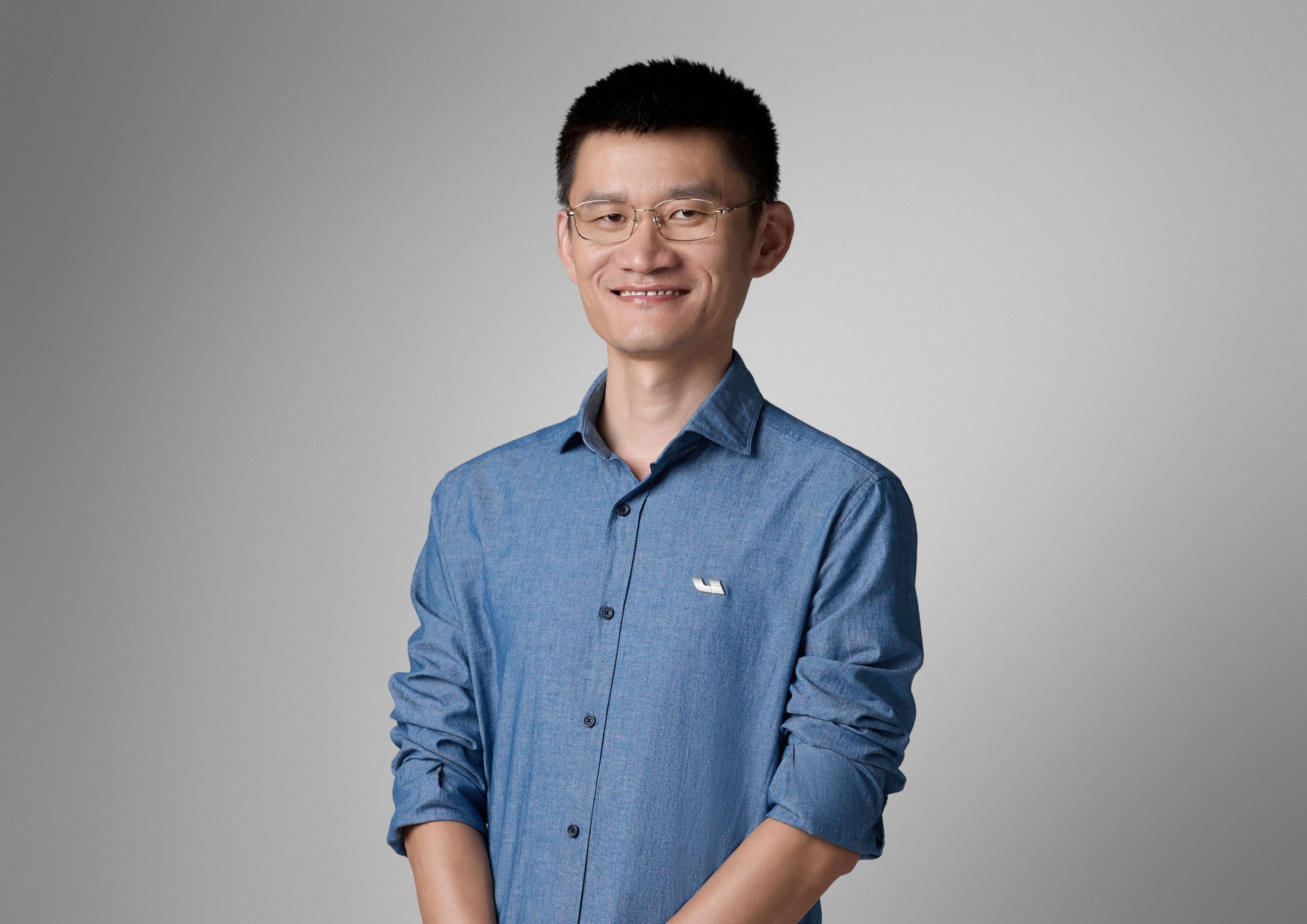
Liu Liguo, Senior Vice President of R & D for Ideal Auto's Vehicle Electrification
Text | Xiao Man
Editor | Li Qin
After a decade of car - building, new - force automakers have generally evolved from being "light - footed" to "substantial". In particular, Ideal Auto has declared its ambition to become an "embodied intelligence enterprise", while also strengthening its capabilities in every aspect of vehicle technology.
Especially in the past four years, Ideal Auto has almost completely re - engineered its chassis system. It has jointly developed three major chassis components with suppliers: EMB (Electro - Mechanical Brake), 800V active suspension, and steer - by - wire system.
Ideal Auto is also making in - house arrangements for battery production. Meanwhile, in the area of range - extender technology where it started, Ideal has reached the stage of self - research and self - production. Its latest - generation range extender, i.e., the engine, is now "self - produced" by Ideal Auto.
The above technological achievements will be mainly reflected in the latest flagship model, the Ideal L9 Livis. This means that the new - generation Ideal L9 will also mark the starting point of Ideal's new - generation technological capabilities.
"From the very first day of the project, we set the goal that the suspension and chassis technology of the new - generation L9 must be the best in the industry," said Li Xiang when the Ideal L9 Livis was first unveiled at the Beijing Auto Show. In the 20 - minute presentation, he spent half of the time introducing the chassis and suspension systems.
Not long ago, 36Kr interviewed Liu Liguo, the person in charge of Ideal Auto's vehicle electrification R & D. He summarized for 36Kr the thinking behind Ideal's series of chassis technology layouts: achieving generational leadership in user experience, meeting the "cerebellum" requirements under the evolution of intelligent technology, and even considering supply - chain security.
He also responded to 36Kr, "Sometimes the outside world mistakenly believes that Ideal Auto doesn't value technology. This is a big misunderstanding. In fact, the opposite is true."
Automakers have established interactive senses through intelligent cockpits, trained a smart "brain" through advanced intelligent driving, and used high - energy - density power batteries as a powerful "heart". However, the evolution of "perception" and "decision - making" must ultimately be realized through "execution" in the physical world.
"Without a cerebellum, no matter how smart the brain is, it can't stand steadily," said Liu Liguo, Senior Vice President of R & D for Ideal Auto's Vehicle Electrification. The chassis domain, which plays the role of the "cerebellum" for vehicle motion coordination, is the last piece of the puzzle for a car to become an "embodied intelligent entity".
Ideal believes that to fully master the full - stack capabilities of the chassis domain, it is necessary to thoroughly master the R & D of active suspension, steer - by - wire braking, and steer - by - wire steering. "Only when the three systems work together can there be a generational difference in experience," said Liu Liguo.
In the second half of 2021, Ideal Auto simultaneously launched R & D projects for the 800V active suspension and the complete steer - by - wire chassis. Among them, the most original and cutting - edge technology, which Ideal was the first to explore in uncharted territory, is EMB (Electro - Mechanical Brake). At that time, the industrial chain was not mature. This technology was only in the concept - verification and PPT stages in the industry, with no mass - production precedents and even no relevant regulations.
As the core technology for the next - generation chassis, EMB completely abandons the hydraulic braking system that has been used in the automotive industry for a century. It eliminates brake fluid, hydraulic pumps, and complex pipelines, and directly uses independent motors at the four wheel ends to drive the caliper brakes.
Finally, after four years, Ideal Auto has achieved three technological results: 800V active suspension, steer - by - wire steering, and steer - by - wire braking.
In terms of the hardware layer, Ideal Auto jointly developed with suppliers; in the software layer, it was independently developed by Ideal's engineers.
"Many automakers have also purchased steer - by - wire steering and steer - by - wire braking systems. However, when the system software of the chassis comes from black - box suppliers, the codes are incompatible, and it is impossible to achieve unified scheduling. It's like having a group of people speaking different languages working together. Each individual is excellent, but they can't form a cohesive force," said Liu Liguo.
To provide sufficient computing resources for the chassis algorithm, Ideal Auto designed a dedicated area for vehicle control in the Mahe M100 chip and reserved 100 - 200 TOPS of computing power, enabling the car's "cerebellum" to keep up with the computing power of the intelligent driving "brain".
Ideal's success in the past few years has largely been attributed by the outside world to "the victory of product definition" (precise family positioning, features like refrigerators, color TVs, and large sofas). However, when these obvious configurations have been replicated by the entire industry at a pixel - level, and Ideal's sales have been under pressure in the past two years, Ideal must prove to the outside world and itself that it has an underlying technological moat that is difficult to be easily surpassed.
36Kr Auto had an exclusive dialogue with Liu Liguo, Senior Vice President of R & D for Ideal Auto's Vehicle Electrification, trying to present Ideal Auto's technological judgment and business thinking. The following is the edited transcript of the dialogue:
Launching a single system alone doesn't make much sense. The synergy of multiple systems is what really makes 1 + 1+1>3
36Kr Auto: The biggest technological breakthrough of Ideal Auto in the chassis this time is EMB. When did you decide to pursue this direction?
Liu Liguo: Before the launch of the L - series models in 2022, when the previous - generation technology entered the mass - production stage, we started to prepare for the next - generation technology. We predicted that the next breakthrough direction would be the full electrification and intelligence of the chassis.
Only by achieving chassis electrification first can there be more possibilities for intelligence. In the past, the electromechanical integration system was extremely complex, and the rule - based control was very cumbersome. Moreover, each component was developed independently, making it extremely difficult to integrate them into a whole. We believe that chassis electrification is an inevitable future direction, so we started to gradually reserve relevant technologies in the three directions of steering, braking, and suspension.
36Kr Auto: Did Li Xiang put forward any requirements during the R & D of this generation of the chassis?
Liu Liguo: Li Xiang's biggest requirement for the next - generation flagship model is to provide a completely different driving experience and create a technological gap. This is his most important demand. He participates in every link, from requirements determination to human - interaction design and final acceptance. He often test - drives the car, usually once every two or three weeks.
36Kr Auto: Some other automakers have already launched active suspension and steer - by - wire steering. Didn't Ideal Auto consider implementing some technologies in facelifted models first?
Liu Liguo: To evaluate the driving experience, we need to assess the entire chassis domain, including the 800V active suspension and the complete steer - by - wire chassis, as a whole, rather than looking at individual components. The value of any single system is limited. For example, looking at steer - by - wire steering alone, it only achieves a variable steering ratio, which is not very significant. However, when combined with active suspension and rear - wheel steering, its value is magnified, and steering becomes easier.
When the three systems work together, the overall value is greater than the sum of the individual parts (1 + 1+1>3). Only by integrating these elements can we create a technological gap and a generational difference in experience, resulting in a complete steer - by - wire chassis with real potential for embodied intelligence.
36Kr Auto: Did you explore other routes before working on EMB?
Liu Liguo: Around 2022, the mainstream view in the industry was that the mass - production window for EMB would be between 2028 and 2030, or even later. There were no relevant regulations at that time (the regulations for steer - by - wire braking only came into effect on January 1, 2026), and no one could tell whether this path would be successful.
At that time, there was a popular route in the industry called "front - wet, rear - dry" - retaining the Boost hydraulic braking for the front two wheels and using a dry - type solution for the rear two wheels. This route was relatively conservative. If there was a problem with the rear wheels, the front - wheel hydraulic braking could still provide a backup. The industry once considered this to be the mainstream direction for the transitional stage.
36Kr Auto: Why didn't you choose this route and instead directly opted for EMB?
Liu Liguo: We also seriously discussed this route internally. However, after engineers used the first - principles thinking, they found several fatal problems. The "front - wet, rear - dry" solution cannot achieve the real advantages of EMB. The software platform cannot be moved up from the wheel end, and the software and hardware cannot be decoupled. Moreover, the electro - hydraulic hybrid control makes the entire system more difficult to maintain.
36Kr Auto: The steer - by - wire chassis has been very popular in recent years, but users' perception is not very obvious. What do you think is the real value of EMB?
Liu Liguo: The real value of EMB lies in independent four - wheel control and the complete migration of software to the upper level. Only the execution part remains at the wheel end, while all decision - making and coordination algorithms are moved up. The "front - wet, rear - dry" solution cannot achieve either of these, which means that it incurs the development cost of EMB but only obtains less than half of the benefits.
In terms of safety, EMB is safer than the previous EHB. Under the same tire and road - surface adhesion conditions, the braking distance of EMB is more than 2 meters shorter than that of EHB. The ABS (Anti - lock Braking System) can be adjusted more precisely, and the utilization of adhesion is higher. At the same time, the control loop of AD is very short, resulting in a better driving experience.
So, we finally chose the all - dry EMB. After we made the A - sample, other manufacturers in the industry also noticed the trend and started to follow suit. It's worth mentioning that many global leading suppliers actively approached us for cooperation after learning about the success of our EMB.
36Kr Auto: Are there any test indicators? What are the evaluation criteria for failures?
Liu Liguo: There are clear regulations for EMB. The assumed deceleration under full load is 1G. When it is lower than 0.65G, there should be an alarm and corresponding early - warning mechanisms. We need to know what has failed and have corresponding solutions. All out - of - control situations should not result in a deceleration lower than 0.25G, which is clearly defined in the regulations.
Since we implemented it, there has not been a single case where the deceleration was lower than 0.65G.
36Kr Auto: What does 0.65G mean?
Liu Liguo: In normal driving, the deceleration is usually 0.2G or 0.3G. In an emergency braking situation, many people can only achieve about 0.6G. Only those who are trained or step on the brake pedal all the way down can reach about 1G.
36Kr Auto: The main supplier of EMB this time is Bethel. Didn't you consider cooperating with some international suppliers? At least in terms of consensus, large - scale manufacturers have more comprehensive systems.
Liu Liguo: International giants like Bosch and ZF have been deeply involved in the EHB field for decades. Relying on their global platform - scale, they have mature technologies and extremely low costs, and have stable commercial returns in the existing market. For the new EMB route, their investment rhythm does not fully match our R & D requirements. This is not a matter of ability but a difference in commercial driving forces.
The processes of large - scale manufacturers are relatively complex. They may cooperate with you in development, but the sense of urgency, progress, and investment level will not necessarily follow your rhythm. This is also the reason why we need to conduct independent R & D. Moreover, China was the first in the world to issue EMB regulations, aiming to achieve self - control of components in this field and "overtake on a new track". So, we later chose Bethel to develop EMB together.
36Kr Auto: There has been a lot of discussion recently about the 48V active suspension and 800V active suspension routes. What does Ideal Auto think? Why did you choose to develop the 800V active suspension? What's the thinking behind it?
Liu Liguo: The 48V system was first promoted in Europe and the United States and was designed for traditional fuel - powered vehicles. It is relatively simple but cannot use high voltage.
During the early development process, suppliers initially recommended the 48V system. However, we found that the 48V system can provide relatively low power. To achieve high power, a large current is required, and the wiring harness needs to be very thick to handle it.
From the demand side, what is the core goal of an active suspension? It is to enable the four wheels to independently respond to the road surface and driving dynamics without compromising each other. The prerequisite for this is to have sufficient active force. Only when you can actively apply a large enough force to each wheel can you control it and achieve decoupling.
The power of the 48V system has an upper limit, and the active force it can provide is about 7000N. For an SUV, this force is not enough. When cornering at high speed, the roll moment is large, and 6000N is insufficient. A lateral stabilizer bar needs to be retained for assistance. With the stabilizer bar in place, the left and right wheels are connected. When one wheel moves, the other will also be affected, making it impossible to achieve "independent four - wheel control".
We also studied several existing routes in the market, including linear motors, ball screws, and 48V hydraulic pumps. We disassembled and analyzed each of them. Each route has its own logic and limitations. Finally, we chose the 800V hydraulic pump. Essentially, it's not because it's the "most advanced" but because it's the only solution that can truly achieve our goals. The 800V solution can provide an active force of over 10,000N, which can meet our requirements for various user scenarios such as single - wheel lifting.
36Kr Auto: What kind of verification did you conduct when the new technology was first installed in the vehicle?
Liu Liguo: The cumulative test mileage of Ideal's steer - by - wire chassis on special test roads has exceeded 4 million kilometers, covering various climates and working conditions in 23 provinces and cities across the country. In various extreme scenarios and simulated tests where signals were artificially disconnected, there were no complete failures. The EMB system's functional safety has obtained the DAkkS ASIL D certification, the highest international standard. The measured braking distance has reached 33 meters, comprehensively surpassing the traditional hydraulic braking system. National regulations are the minimum standard, and our standard far exceeds it.
The "cerebellum" of embodied intelligence: Software is more difficult to develop than hardware
36Kr Auto: Ideal Auto refers to the L9 Livis as an "embodied intelligence flagship SUV". Which part of the embodied intelligence does the chassis domain undertake?
Liu Liguo: The overall coordination and kinematic control are equivalent to the cerebellum; the full - function AD is equivalent to the brain.
The most core requirement of embodied intelligence for the chassis is that each joint can truly receive independent commands, that is, the four wheels can be completely decoupled in the X, Y, and Z directions.
The suspension has achieved complete decoupling of the four wheels in the Z direction. Each suspension can independently control the supporting force, enabling scenarios such as single - wheel lifting. The steer - by - wire steering and rear - wheel steering have achieved decoupling in the Y direction.