Liang Wenfeng leads Xiaolong to exceed 100 billion.
This May, the primary market of China's AI industry has been exceptionally bustling.
First, DeepSeek, a domestic super AI unicorn, is advancing its first external financing since its establishment. The latest information shows that investors such as the National AI Industry Investment Fund and Tencent are on the negotiation list.
A month ago, it was reported that DeepSeek was seeking financing at a valuation of over $10 billion. A few weeks later, the valuation has been pushed up to the range of $45 - $50 billion. Based on the current information, the scale of DeepSeek's current round of financing may reach $3 - $4 billion, and the funds will be mainly used for computing power infrastructure, R & D, and employee incentives.
Shortly after, it was reported that Dark Side of the Moon had completed or was close to completing a financing of about $2 billion, with a post - investment valuation exceeding $20 billion. This round of financing was led by Meituan Longzhu, with participation from China Mobile, CPE, etc.
Almost at the same time, it was also reported that another AI "Six Little Dragons", Jieyue Xingchen, was about to finalize a financing of nearly $2.5 billion. Notably, in this round of financing, capital from the mobile phone and consumer electronics industry chains such as Huaqin, Longcheer, OmniVision, and ZTE appeared. The Hong Kong Investment Management Co., Ltd., known as the "Hong Kong - style Temasek", was also reported to have joined the shareholder list.
The simultaneous promotion of financing by three leading AI unicorns is not accidental but rather a collective re - evaluation of China's AI industry. Represented by DeepSeek, the valuation threshold of China's leading foundation model companies has reached over 100 billion RMB.
It should be noted that a few months ago, Zhipu and MiniMax, which were the first to rush into the Hong Kong stock market, had pre - listing valuations of around HK$50 billion.
After listing on the Hong Kong stock market in January, these two companies quickly became rare foundation model targets in the secondary market, and their market values multiplied. As of the 9th of this month, Zhipu's latest market value has exceeded HK$400 billion, while MiniMax has stabilized at HK$230 billion.
The secondary market has set an example. All that's needed to ignite the enthusiasm in the primary market is a spark. With the financing signal from DeepSeek, the next wave of financing and IPOs for foundation model companies has finally reached the remaining AI unicorns.
A
No one expected that the pricing system of China's AI unicorns would be overturned within the past few weeks.
Three weeks ago, some media reported that DeepSeek was in negotiations for its first external financing since its establishment, planning to raise at least $300 million with a valuation of over $10 billion. However, this signal was quickly captured and accelerated by the capital market.
A few days ago, a significant name appeared on DeepSeek's investor list. The National Integrated Circuit Industry Investment Fund of China, also known as the "National Big Fund", is in negotiations to lead DeepSeek's first - round financing, and the valuation may reach $45 billion.
According to the latest news, DeepSeek's valuation may have reached $50 billion, and the expected financing amount is $3 - $4 billion. Tencent is also in negotiations to participate.
In other words, DeepSeek's valuation has quickly increased five - fold in the primary market within a few weeks.
This round of valuation increase is, on the one hand, because DeepSeek is regarded by both capital and the industry as a core competitor for the domestic AI foundation. Especially when DeepSeek's revenue is still limited, it is still regarded by investors as a key company in the domestic AI strategy.
On the other hand, the market has always been looking forward to DeepSeek opening the door to financing. However, for many years, DeepSeek has maintained the image of a "technological idealist" who rejects external capital.
In the past two years, DeepSeek has mainly relied on its founder, Liang Wenfeng, and the funds within the parent company Magic Square system. It has been difficult for external investors to enter. However, since 2026, the investment in the AI industry has shown an exponential growth trend. The competition in R & D, computing power, and talent has become more costly.
DeepSeek also faces competition from companies such as ByteDance and Alibaba, not only in the model market but also in the field of talent competition. For example, Guo Daya, a former core researcher at DeepSeek, recently switched to ByteDance.
On the other hand, the expansion of computing power is also a practical reason to promote financing. In the early years, the parent company Magic Square reserved a cluster of about 10,000 NVIDIA A100s for DeepSeek. However, in the era of new - generation models such as V4, both training and inference are increasing the consumption of computing power. Even though it is accelerating the adaptation to domestic computing power, the continued expansion of computing infrastructure still requires external capital support.
Notably, Alibaba once also tried to enter the financing negotiation table of DeepSeek.
A few weeks ago, it was reported that both Tencent and Alibaba had investment contacts with DeepSeek. However, recently, there have been reports that the negotiation between Alibaba and DeepSeek has broken down. According to the latest report from NBD, some market insiders said that Alibaba "should not have carried out the negotiation."
On the other hand, this round of capital story of DeepSeek is almost synchronized with the launch of the new - generation model V4.
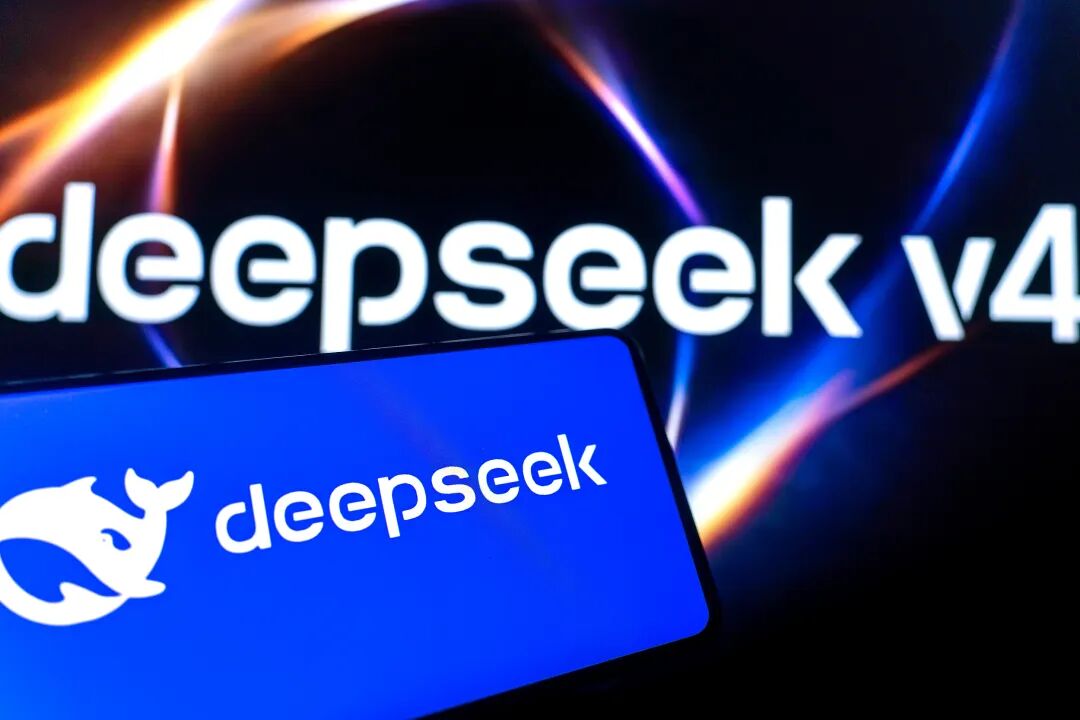
Two weeks ago, DeepSeek - V4 Preview was officially launched and open - sourced. The official documentation shows that the V4 series is divided into two versions, V4 - Pro and V4 - Flash, with a maximum context length of 1M for both. The total parameters of V4 - Pro have reached an astonishing 1.6T.
The external response to V4 follows DeepSeek's consistent cost - effective route. The pricing of V4 Pro is only $0.435 per million inputs and $0.87 per million outputs. On the development community Hacker News, some users said that when using it to run the same code review, it takes about twice as long as Opus/GPT, but the cost is less than one - tenth.
In contrast, the cost for enterprise developers of Anthropic's latest Claude Code has reached $13 per day and $150 - $250 per month.
Therefore, the market feedback on V4 is more like a return to cost - effectiveness. Artificial Analysis has listed V4 Pro in the first echelon of open - source weighted models, second only to Kimi K2.6.
More importantly, the significance of V4 is not just model upgrading but a strong binding with domestic computing power.
A key change in DeepSeek V4 is its adaptation to Huawei's most advanced Ascend AI chips. Huawei also announced at the first time that its Ascend super - nodes will fully support DeepSeek V4. Subsequently, it was reported in the industry that leading AI manufacturers such as ByteDance, Tencent, and Alibaba are accelerating the scramble for Huawei's Ascend 950 series chips after the release of V4.
This has pushed DeepSeek to the center of the domestic AI computing power ecosystem.
In the past, it was difficult for Chinese large - model companies to bypass the NVIDIA CUDA ecosystem. The more the model needs to be upgraded, the more it depends on high - end GPUs. The verification of DeepSeek V4 within the Huawei Ascend system means an important overlap in the routes between domestic foundation models and domestic computing power.
This is why DeepSeek can become the "leader" in this round of financing wave.
While DeepSeek's valuation is rising, other leading foundation model companies also have a new valuation reference system.
B
After DeepSeek raised the valuation anchor, several unlisted AI unicorns quickly underwent a value re - evaluation. The first to be affected were Dark Side of the Moon and Jieyue Xingchen.
Public information shows that Dark Side of the Moon recently completed a financing of about $2 billion, with a post - investment valuation exceeding $20 billion. This round of financing was led by Meituan Longzhu, with participation from China Mobile, CPE, etc. Meituan Longzhu contributed more than $200 million.
This is the largest single - round financing since the establishment of Dark Side of the Moon and was also the highest private financing amount among domestic large - model startup companies at that time.
As for why we say "at that time", it is because soon Jieyue Xingchen and DeepSeek broke this record.
However, apart from the single - round amount, the financing rhythm of Dark Side of the Moon has also been intensively implemented this year. In the first two months of this year, Dark Side of the Moon had completed three rounds of financing in a row. Coupled with this $2 - billion round in May, it has raised more than $3.9 billion in less than half a year.

In other words, the valuation of Dark Side of the Moon has more than quadrupled compared to the end of last year.
Notably, behind each round of financing of Dark Side of the Moon, there is an important presence of the Meituan system.
Meituan Longzhu was established in 2017 and is an industrial investment platform rooted in the Meituan system. In the early days, it was more focused on consumer and local - life investments and has started to increase investment in cutting - edge technologies in recent years. In July 2023, Wang Xinyu, a partner of Longzhu, participated in the financing negotiation of Dark Side of the Moon and made an early heavy investment before the popularity of Kimi.
After continuous additional investment in the latest round, Wang Xinyu also publicly appeared to support Dark Side of the Moon. In a recent interview, he disclosed that after the K2.5 update of Kimi, the ARR exceeded $100 million at the beginning of March and rose to more than $200 million in April. Both paid subscriptions and API calls are accelerating.
Wang Huiwen, the co - founder of Meituan, is another key figure in the financing process of Dark Side of the Moon. Public reports show that he participated in multiple rounds of investment in Dark Side of the Moon in his personal capacity and continued to follow - up in the $500 - million Series C financing at the end of last year, with a cumulative investment of about $70 million.
In terms of models, the latest generation model K2.6 of Dark Side of the Moon was officially released a few weeks ago. K2.6 has strengthened programming capabilities, long - range task execution, and Agent cluster capabilities, and can support the collaboration of up to 300 sub - Agents. Kimi has also started to test the Claw group function synchronously.
Test data shows that K2.6 can code continuously for 13 hours and write or modify more than 4,000 lines of code, making it the model with the strongest code - writing ability of Kimi so far. After the listing of Zhipu and MiniMax, Dark Side of the Moon was once considered the most promising company among the remaining members of the "Six Little Dragons" to rush for an IPO.
However, at the same time, another "little dragon", Jieyue Xingchen, has also quickly taken action.
In the past two days, multiple media reported that Jieyue Xingchen is about to complete a financing of nearly $2.5 billion. In the financing list, in addition to a group of local state - owned assets, capital from the mobile phone industry chain such as Huaqin, Longcheer, OmniVision, and ZTE has entered collectively, covering links such as whole - machine manufacturing, core components, and communication terminals.
Among them, Huaqin and Longcheer are the leading ODMs in the mobile phone industry, OmniVision is a core manufacturer of image sensors, and ZTE is a terminal and communication equipment manufacturer. Their investment in Jieyue Xingchen is somewhat like industrial partners coming forward to support.
On the other hand, Jieyue Xingchen's capital actions this year have also been very intensive. In January this year, Jieyue Xingchen completed a Series B+ financing of over 5 billion RMB, with investors including Shanghai state - owned assets, China Life Equity, Pudong Venture Capital, etc. On the same day, Yin Qi, the chairman of Qianli Technology, also took up the position of chairman of Jieyue Xingchen.
The addition of Yin Qi has quickly changed the external imagination of Jieyue Xingchen. Jiang Daxin is still the founder and CEO of Jieyue Xingchen, representing model R & D and company operation. Yin Qi is more like a connector between capital, industry, and terminal scenarios. And another line of Yin Qi as the dual - chairman has also started to be more deeply bound with Jieyue Xingchen: Qianli Technology and the Geely - affiliated capital behind it.
On April 22, Qianli Technology announced a comprehensive strategic cooperation with Jieyue Xingchen. The two sides will jointly build a "native intelligent driving foundation model".
Zhao Ming, the former CEO of Honor, also publicly appeared after switching to Qianli. As the co - chairman of Qianli Technology, Zhao Ming said at the press conference that Qianli Technology and Jieyue Xingchen have decided to deeply integrate from the pre - training stage of the foundation model, inputting general corpus and real intelligent driving perception and control data in the same source.
This can explain why there are a group of terminal industry chain capitals in Jieyue Xingchen's financing list.
Jieyue Xingchen's recent business actions also revolve around end - side Agents, voice models, and full - modality capabilities. On the 8th of this month, Jieyue Xingchen released StepAudio 2.5 Realtime, positioning it as a new - generation real - time large - scale voice model. Earlier, Jieyue Xingchen released the Step - GUI series, trying to promote the GUI Agent capabilities to terminal scenarios such as mobile phones.
On the other hand, although Jieyue Xingchen and Dark Side of the Moon have been constantly taking financing actions, to successfully go public on the Hong Kong stock market, there is still a crucial link: the split of the red - chip structure.
The red - chip structure is usually a set of equity structures in which a domestic operating entity in China undertakes overseas financing and listing arrangements through an overseas holding company. In the past, many Internet companies went public in the United States or Hong Kong through the red - chip/VIE structure.
However, in recent years, the requirements for overseas listing filings and regulatory reviews of red - chip structure companies in industries such as data, AI, and hard technology have become more and more strict. For companies preparing to go public in Hong Kong, removing the red - chip structure often means putting the equity and control relationships under domestic regulatory filings.
Current public reports show that Jieyue Xingchen has removed the red - chip structure, which is regarded as an important pre - step for going public in Hong Kong. As for Dark Side of the Moon, it is still in the negotiation stage, evaluating the time window and structural plan, and there is no public information indicating that it is deploying a share reform.
It remains to be seen which company will seize the window for AI listings on the Hong Kong stock market in this round.
Another former "Six Little Dragons", Lingyi Wanwu, has also been reported to have plans to go public on the Hong Kong stock market. The latest report says that it is conducting pre - IPO financing and planning for a Hong Kong stock listing.
Lingyi Wanwu responded that it is currently focusing on enterprise agents and market implementation, and its capital planning is "open and prudent", with no more disclosures for the time being. In terms of valuation, Lingyi Wanwu exceeded $1 billion in 2023, but there is limited information on recent financing and new valuations. In terms of business, the company has scaled back the pre - training of ultra - large foundation models and turned to enterprise agents, vertical scenarios, and industry delivery.
The reality is that the concept of the "Six Little Dragons" is already a thing of the past. Leading foundation model companies are now the darlings of various investment institutions, especially after this round of industry re - evaluation triggered by DeepSeek. At the big - model table, only players with a net worth of over 100 billion can participate.
C
In this capital - surging May, the valuation situation of the large - model industry in the primary market