Get AI glasses and robotic dogs for just a hundred yuan. Analyze the business model of white-label hardware in Huaqiangbei.
AI hardware priced at around 100 yuan has taken the center stage on the counters in Huaqiangbei.
From AI glasses to translation patches, from drones to AI intelligent companion robotic dogs, white-label AI hardware has almost occupied the prime spots on every counter in Huaqiangbei. Reporters noted during their visits that the core functions of these products labeled with "AI" almost entirely rely on mobile apps and cloud-based large models, and the hardware itself is only responsible for data collection and transmission.
This "hardware shell + app core" model has also enabled small and medium-sized enterprises to complete the entire process from design to shipment at extremely low costs.
An analyst told a reporter from Science and Technology Innovation Board Daily: "In essence, this is a form of AI equalization." In their view, the explosion of white-label AI hardware is driven by three factors: the maturity of large models, the modularization of the supply chain, and the premium dividends from overseas markets.
On-the-spot investigation in the Huaqiangbei business district: 100-yuan AI products with a "hardware shell + app core" take the center stage
At the beginning of May, with the lingering buzz of the Canton Fair, the Huaqiangbei business district was still bustling with people. Foreign businesspeople dragging suitcases were coming in and out. A reporter from Science and Technology Innovation Board Daily took the escalator along with the crowd, and the ears were filled with English with various accents and the loud calls of stall owners to attract customers.
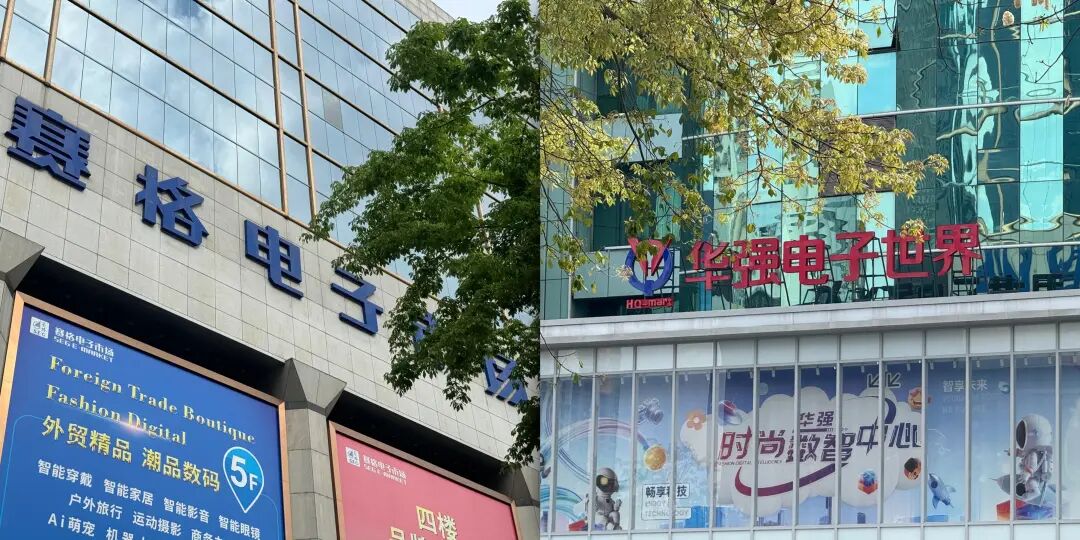
Huaqiangbei business district
Reporters found during their visits that AI hardware products have become the mainstream in the Huaqiangbei business district. From SEG Electronics Market to Huaqiang Electronics World, white-label AI hardware such as AI glasses, AI translation patches, AI companion robotic dogs, AI smart watches, and drones have almost occupied the prime spots on every counter.
Price is the biggest weapon of white-label products. Reporters noticed that almost all products are available in both Chinese and English versions, with prices as low as 100 yuan. In contrast, similar products in brand display cabinets a few hundred meters away are priced at over 2,000 yuan.
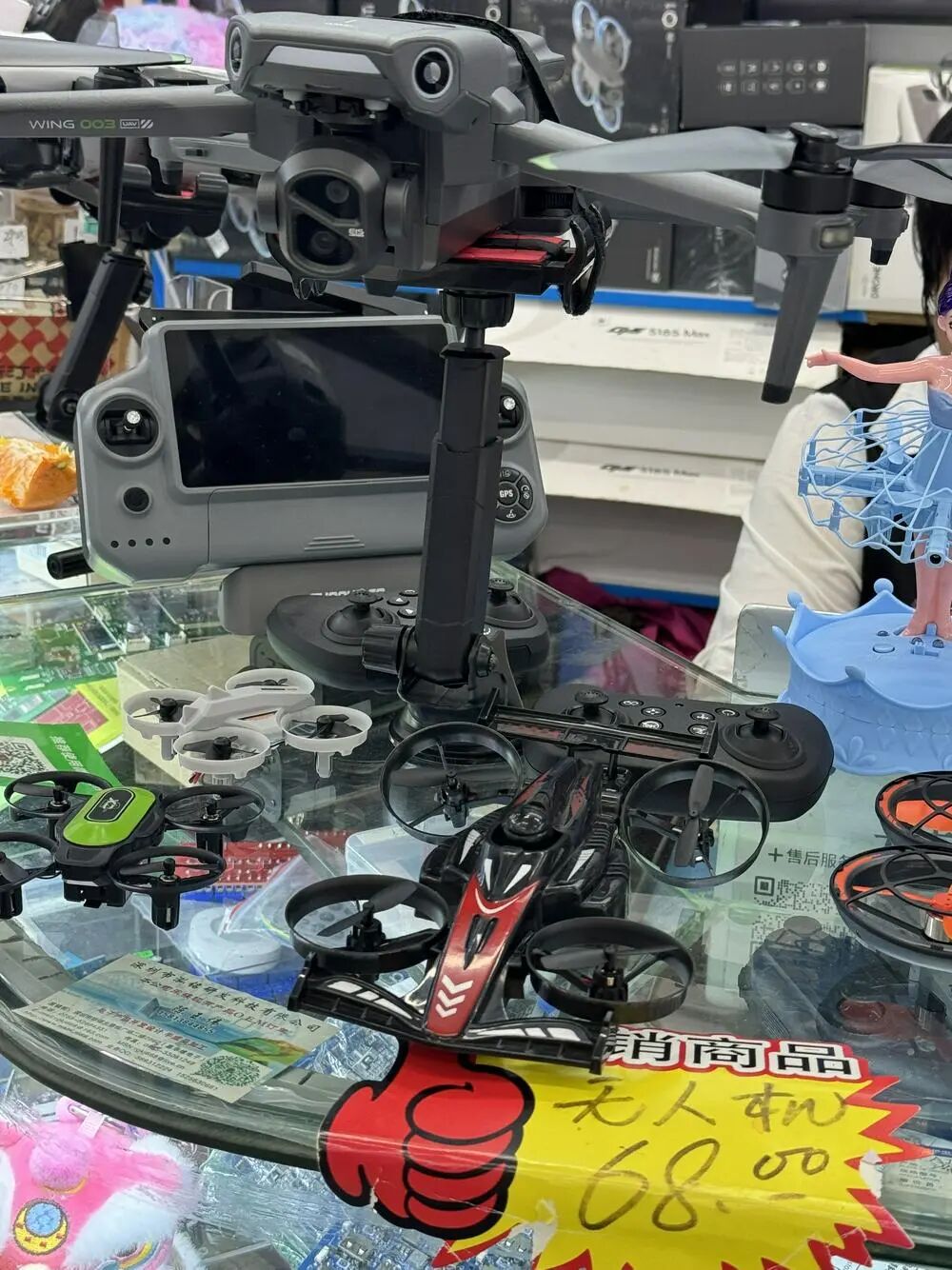
Drone products priced as low as double digits
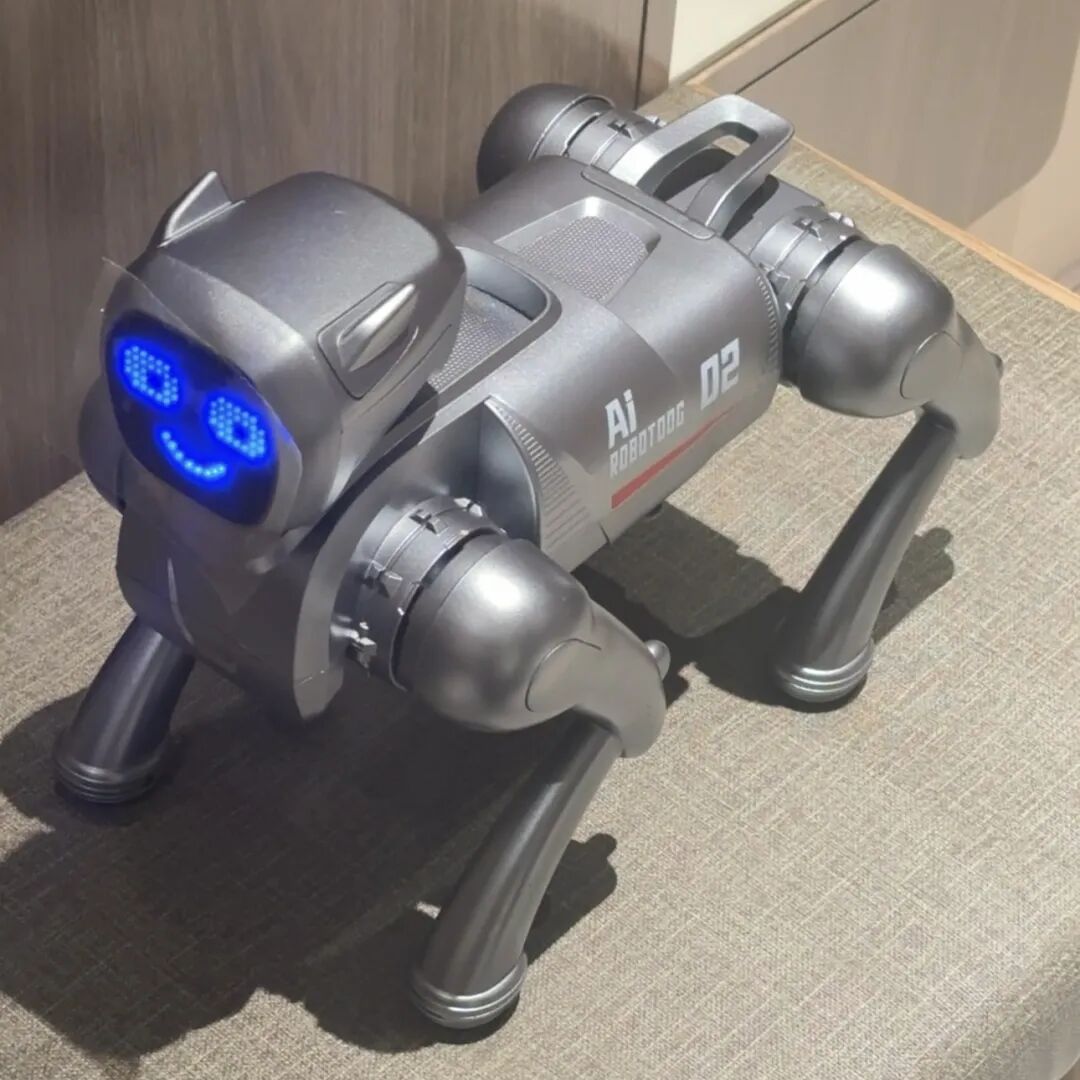
AI robotic dogs offering companionship services start from 100 yuan
Official data also shows that from mid-December 2025 to early February 2026, the overall sales of technology products in Huaqiangbei increased by more than 30% year-on-year. Among them, the sales of AI glasses soared by 70% - 80%, and the sales of drones, service robots and other categories increased by 30% - 50%. During the same period, the number of visiting foreign businesspeople doubled year-on-year.
In a stall on the first floor of SEG Electronics Market, a dazzling array of AI glasses caught the reporter's eye. The counter, less than four square meters in size, was filled with a wide variety of products, including metal frames, plastic frames, daily-wear styles, and polarized sunglasses styles.
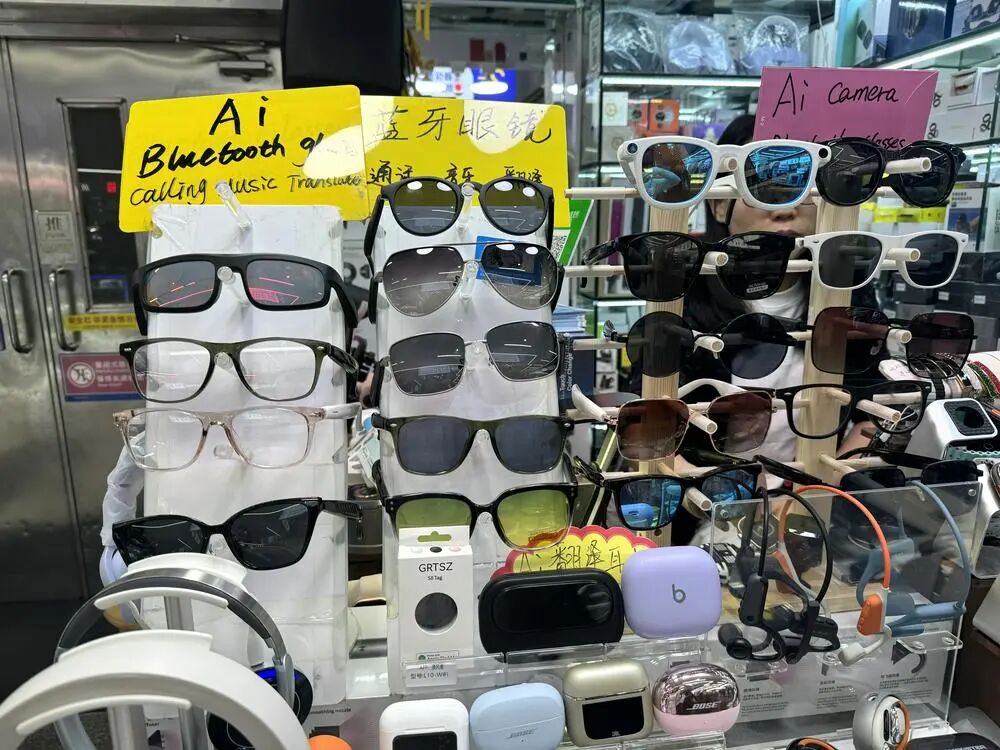
AI glasses filling the counter
The shop owner introduced to the reporter that the AI glasses in the store are divided into two types: those with a camera and those without. "The ones without a camera cost around 130 yuan, and the ones with a camera cost around 380 yuan. The price may vary depending on the frame style."
During the conversation, overseas customers came to inquire one after another. The shop owner immediately switched to English and introduced the products with gestures: "You can answer calls, listen to music, use navigation, and the voice assistant. It also has a translation function. The ones with a camera can also record videos and take photos."
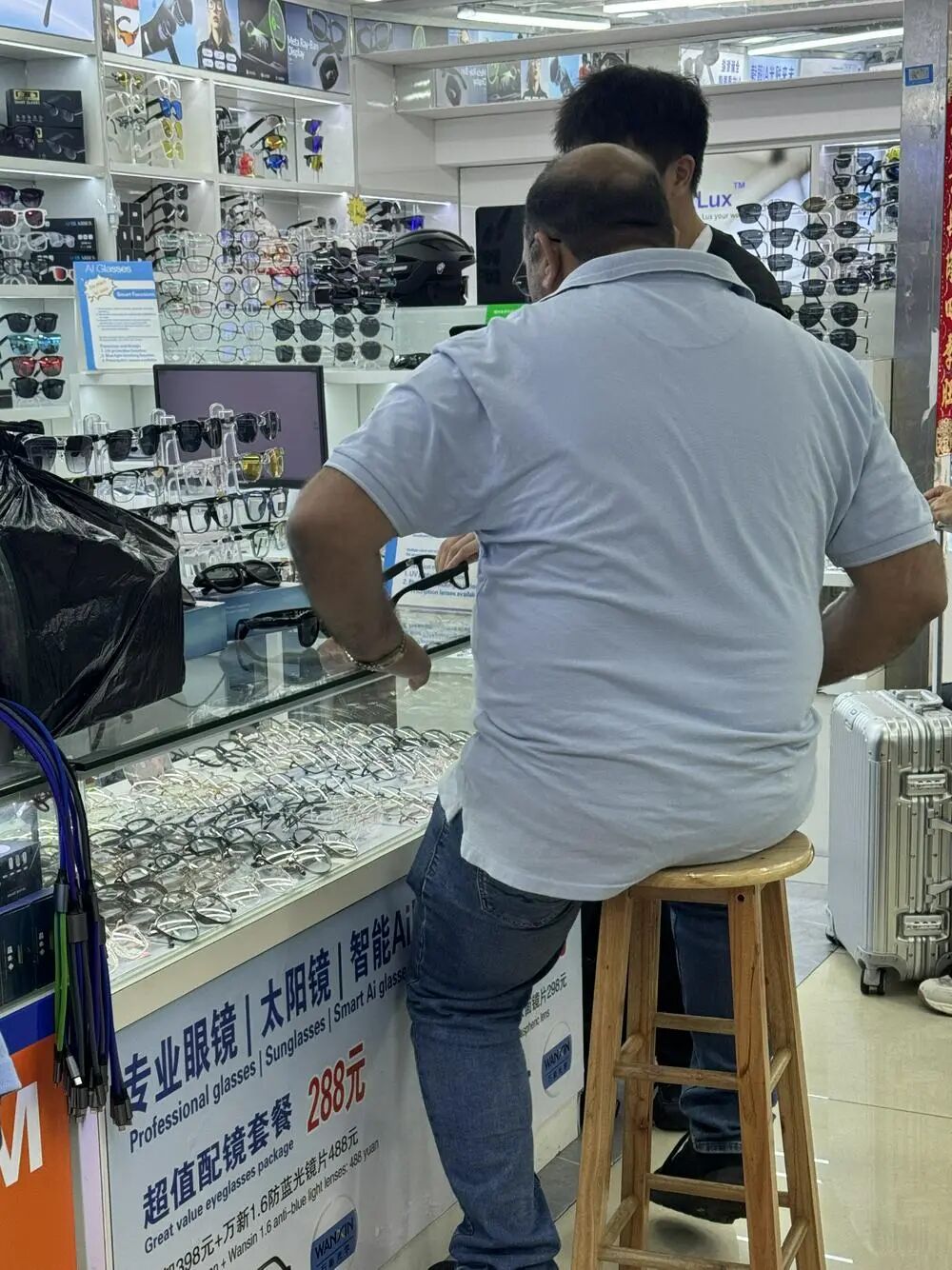
Overseas customers inquiring about AI glasses
When the reporter asked about the implementation path of these functions and the dependence on mobile apps, the shop owner frankly replied that functions such as translation, recognition, and interaction mainly rely on cloud-based large models and mobile apps. "Now all of them need to be used in conjunction with mobile apps. There is no display screen on the glasses because the cost would be too high."
"It's just a medium that connects the microphone. The main functions still need to be viewed through the mobile app." The owner of a store selling AI translators also demonstrated to a reporter from Science and Technology Innovation Board Daily that when speaking Chinese into the translator, the English translation would be displayed in real-time on the mobile app. Functions such as meeting minutes also need to be organized through the app.
This "hardware shell + app core" model is also the technological foundation of white-label AI hardware in Huaqiangbei. Small and medium-sized enterprises do not need to invest a large amount of money in the research and development of embedded AI algorithms. The cycle from product design to shipment is significantly shortened, and the cost is also greatly reduced.
The hardware itself is built with a Bluetooth chip, microphone, and battery as the framework to create the lowest-cost physical entry point. The most core functions, such as natural language processing, machine translation, and multimodal recognition, are completely handled by the mobile app and cloud-based large models, and the results are then transmitted back to the hardware via Bluetooth for playback.
In-depth analysis of the white-label business model: How does AI equalization support 100-yuan AI products?
"In essence, this is a form of AI equalization." Zhang Yirui, the managing director of CIC Consulting, interpreted the development path of white-label AI hardware in Huaqiangbei and its "hardware shell + app core" business model in this way during an interview with a reporter.
He pointed out that traditional smart hardware requires an SoC to process voice recognition, natural language processing, and image recognition. By having the hardware shell only responsible for data collection (microphone/camera) and transmission (Bluetooth/Wi-Fi) and entrusting the core computing to the mobile app or the cloud, the hardware cost can be significantly reduced, and the user's threshold for trial and error can also be lowered.
"For small and medium-sized enterprises in Huaqiangbei, this model does not require in-depth development of embedded AI algorithms. They only need to call the API of large models. The cycle from product design to shipment is greatly shortened, which is highly adaptable to the current situation where large models are iterating extremely fast." Zhang Yirui said.
When analyzing why white-label AI hardware products in Huaqiangbei have been growing rapidly in recent years, Zhang Yirui dissected the core driving forces from three dimensions.
First, the maturity of large model capabilities. Currently, many models perform very smoothly in visual recognition and real-time voice translation. White-label hardware only needs to provide a physical entry point, and users can experience translation and object recognition functions comparable to those of high-end products.
Second, the maturity and modularization of the entire supply chain. The supply chain in Shenzhen has an agile manufacturing system that can quickly assemble mature solutions into glasses frames.
Third, the premium dividends from overseas markets. Driven by cross-border platforms, white-label products from Huaqiangbei can be sold at a considerable price difference compared to well-known brands priced at hundreds of dollars, which is extremely attractive in the sinking markets of Southeast Asia, Latin America, and even Europe and the United States.
With the rapid development of the white-label market, there has been much discussion in the industry about whether it will squeeze the living space of large brand manufacturers. Some industry insiders told a reporter from Science and Technology Innovation Board Daily that white-label products are helping the entire market with early education, allowing more people to experience AI hardware at a low cost.
Zhang Yirui also believes that white-label AI hardware in Huaqiangbei will continue to exist in the long term, and AI hardware will become a common consumer electronic product.
He emphasized to a reporter from Science and Technology Innovation Board Daily that the long-term market will evolve into a clear hierarchical structure. "The top-tier large manufacturers sell ecological integration, privacy security, and top-notch industrial design. The mid-tier emerging brands focus on extreme efficiency in specific scenarios. The bottom-tier white-label products from Huaqiangbei emphasize extreme cost-effectiveness and trendy appeal."
From AI translators, AI smart glasses to bionic robotic dogs that can do somersaults, the "AI creations" in Huaqiangbei have completed the first wave of market popularization at the lowest cost.
It is worth noting that in the face of fierce market competition, the stalls in Huaqiangbei are quietly adjusting their survival strategies, shifting from simple price wars to brand building.
During the reporter's visit to Science and Technology Innovation Board Daily, it was also noticed that some stalls have removed the "white-label" label and given their products clear brand names and more refined packaging. Statements like "This is made by our own factory" and "It's our own brand" were often heard during the visit.
Currently, Huaqiangbei is guiding entrepreneurs to focus on core sectors such as "AI + hardware" and robotics by creating an OPC innovation community, releasing a List of Characteristic Application Scenarios, and implementing 11 special policies to support the development of OPC.
From the equalization model of "hardware shell + app core" to the quiet brand transformation, Huaqiangbei is standing at a new starting point in the wave of AI hardware. It is not only the first stop for global AI products but also a testing ground for Chinese manufacturing to move from white-label to branded products. How much real value the 100-yuan white-label AI hardware can ultimately achieve remains to be tested by the market.
This article is from the WeChat official account "Science and Technology Innovation Daily". Author: Li Jiayi. Republished by 36Kr with permission.