The $250 billion unicorn vanishes overnight, completely reshaping the global AI landscape.
Abstract:
A global reshuffle in AI, which concerns the technological dominance in the next decade, has officially begun.
Just when the outside world thought that the global large - model competition had reached a phased end, the plot took a new turn.
On May 8th, Phoenix Tech learned from an informed source that Jieyue Xingchen is about to complete a nearly $2.5 billion financing round. Meanwhile, it has accelerated its listing process and may become another domestic large - model company going public in Hong Kong after Zhipu and MiniMax.
In recent days, it was also reported that DeepSeek is in talks with the National Integrated Circuit Industry Investment Fund for its first round of external financing, and its post - investment valuation is expected to reach $45 billion. On the other hand, Kimi is about to complete a new round of $2 billion financing, and its post - investment valuation will exceed $20 billion. Since the beginning of 2026, the total amount of Kimi's multiple rounds of financing has reached $3.9 billion.
A new round of reshuffle has begun.
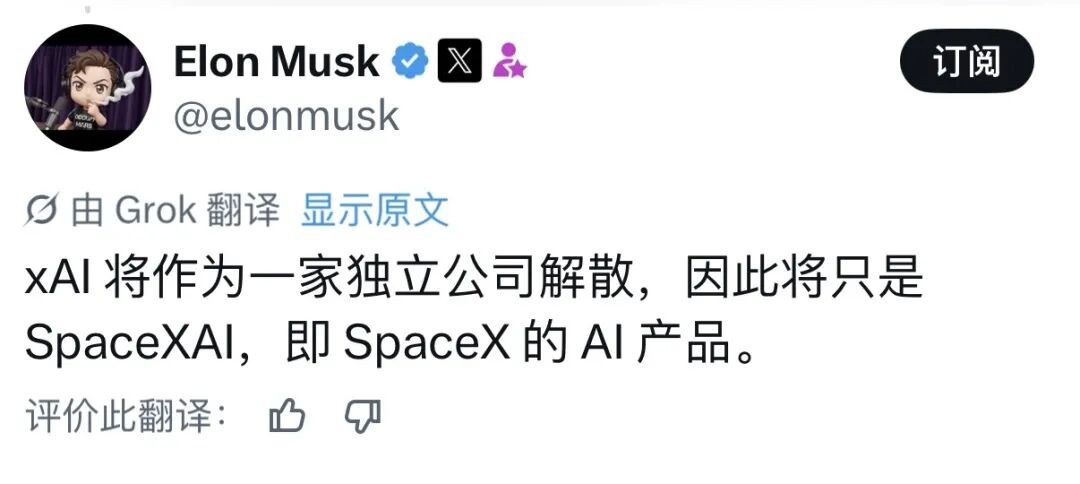
Just early in the morning one day ago, Elon Musk ended his self - founded AI empire with a short statement on social media X: "xAI will be dissolved as an independent company. In the future, there will only be SpaceXAI." This news, like a boulder thrown into a calm lake, caused a huge stir in the global tech community.
In less than three years, this AI unicorn, which once had a valuation of up to $250 billion and had raised over $40 billion in total, has come to the end of its independent existence from being a highly - anticipated industry star.
The dissolution of xAI is by no means an isolated incident. It is just a microcosm of the profound transformation that the global AI industry is undergoing.
On the same day, SpaceXAI and Anthropic announced a historic computing - power cooperation agreement, sub - leasing all 220,000 NVIDIA GPUs originally built for Grok to this company that was once denounced by Musk as "anti - humanist."
Meanwhile, OpenAI is facing a triple dilemma of failing to meet revenue targets, slow user growth, and public internal disagreements. In contrast, Anthropic, with its remarkable performance growth, has quietly surpassed OpenAI in valuation, reaching $1.2 trillion.
A global reshuffle in AI, which concerns the technological dominance in the next decade, has officially begun.
Overseas AI: Reversals, Dissolutions, Sub - leases, and Struggles
The dissolution of xAI is not a sudden drama but the result of a months - long end - game scenario.
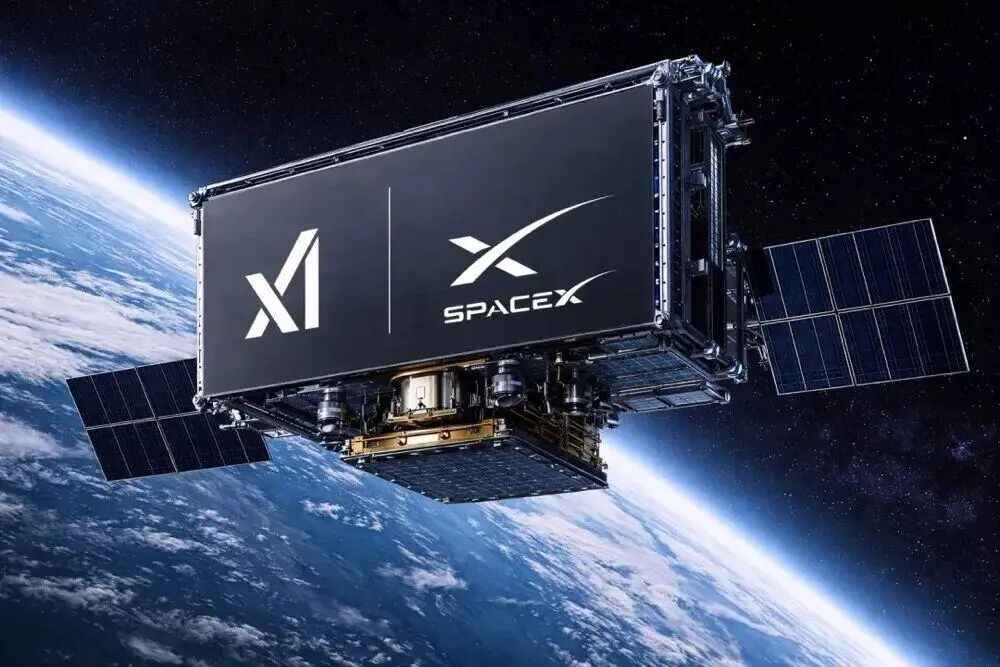
In February this year, SpaceX completed a full acquisition of xAI. The transaction valued SpaceX at $1 trillion and xAI at $250 billion, with the combined entity having a total valuation of up to $1.25 trillion, setting a global record for high - valuation corporate mergers and acquisitions.
At that time, Musk packaged this deal as a "powerful combination of the vast universe and general artificial intelligence," claiming to create "the most ambitious and vertically - integrated innovation engine on Earth and beyond."
However, behind the merger and restructuring was a severe upheaval within xAI.
From February 2025 to March 2026, within just 13 months, all 11 original co - founders of xAI left the company, covering all core team leader positions in areas such as reasoning, pre - training, code, and image generation.
On March 27th, the last co - founder, Ross Nordeen, regarded as Musk's "loyal subordinate," quietly removed his employee verification label on the X platform without leaving any farewell letter. At this point, the founding team of xAI was completely gone, leaving Musk alone.

As the team fell apart, xAI's business model also faced severe challenges. Although Grok had 600 million monthly active users, the high computing - power costs and limited commercialization capabilities made xAI a huge burden on SpaceX's financial statements.
SpaceX's 2025 financial report showed that the company suffered a loss of $4.94 billion that year, while it had a profit of $791 million in 2024. The main reason for the loss was the large - scale investment in xAI's artificial - intelligence infrastructure.
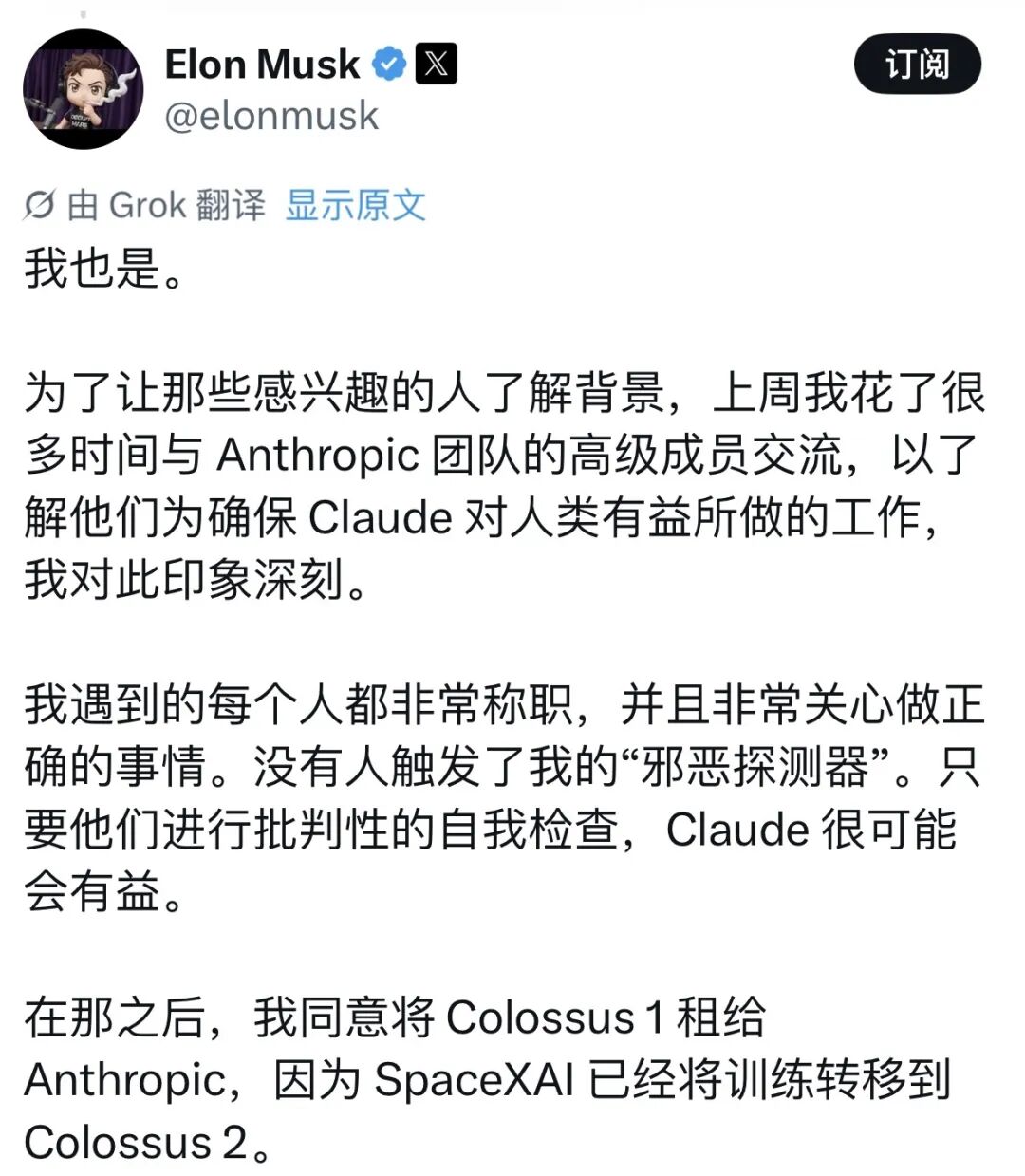
In this context, Musk made a surprising decision: to completely dissolve xAI and incorporate it into SpaceX as a subsidiary, while sub - leasing the Colossus 1 super - computing cluster, which cost tens of billions of dollars to build, to Anthropic.
This data center in Memphis has a computing capacity of 300 megawatts and 220,000 top - of - the - line NVIDIA GPUs, making it the world's largest single AI super - computing cluster at present.
Even more dramatically, just three months ago, Musk publicly criticized Anthropic on X as a "human - hating and evil company." But in a post on May 6th, he changed his tune, saying, "I've spent a lot of time communicating with Anthropic's senior management. Everyone I've met is very competent and concerned about doing the right thing. No one has triggered my 'evil detector.'"
Behind this 180 - degree turn is the oldest and most practical rule in the AI industry: the enemy of one's enemy is one's friend. Currently, Musk's lawsuit against OpenAI is at a stalemate, and Anthropic happens to be OpenAI's strongest current competitor.
By transferring computing - power resources to Anthropic, Musk can both relieve SpaceX's financial pressure and indirectly attack his old rival OpenAI, killing two birds with one stone.
For Anthropic, this deal is like a timely rain. In the past few months, due to a severe shortage of computing power, Claude Code has been subject to various strict usage restrictions, greatly reducing the developer experience.
Now, with full access to the Colossus 1, Anthropic immediately announced three major changes: doubling the rate limit of Claude Code every five hours; removing the peak - hour rate limit for Pro and Max accounts on Claude Code; and significantly increasing the API rate limit of the Claude Opus model.
The breakthrough in the computing - power bottleneck has given Anthropic even more momentum in its development. At the recent San Francisco Developers Conference, CEO Dario Amodei announced a data that shocked the audience: in the first quarter of this year, Anthropic's annualized revenue and usage volume increased by an astonishing 80 times year - on - year, far exceeding the company's original expectation of a 10 - fold increase.
He even complained in a somewhat boastful way: "This super - high - speed expansion is too difficult to handle. I hope the growth rate can drop back to just 10 times so that I can have an easier time."
The capital market has shown its confidence in Anthropic with real money. The latest on - chain pre - IPO transaction data shows that within just seven days, Anthropic's implied valuation soared by 20%, reaching $1.2 trillion, officially surpassing OpenAI's valuation of $852 billion.
In sharp contrast to Anthropic's rapid progress, the former industry leader OpenAI is in an unprecedented predicament.
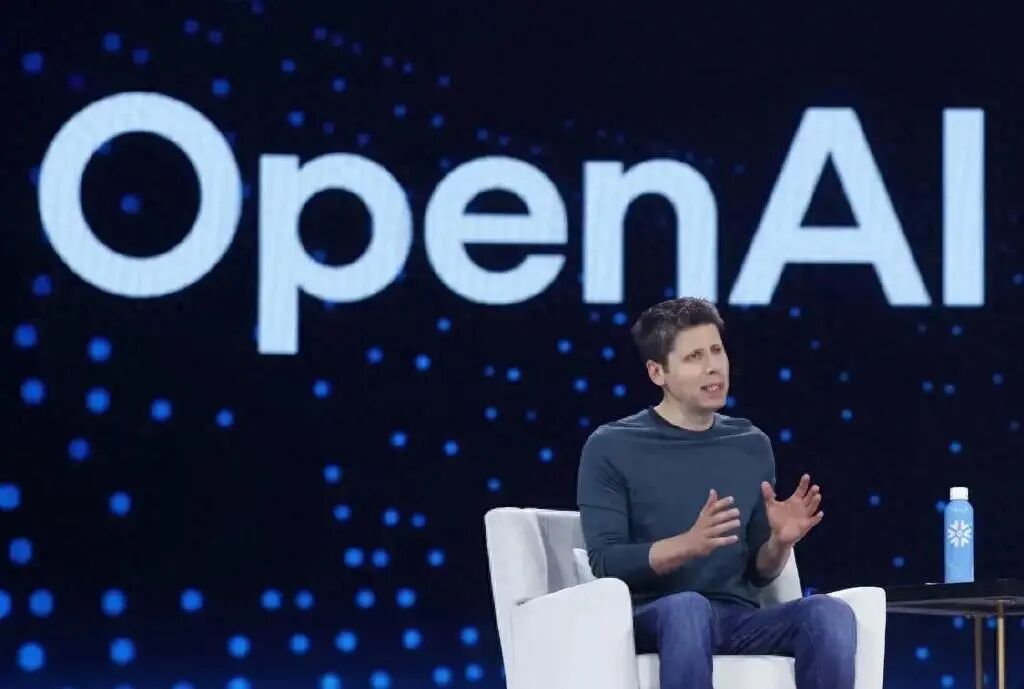
According to The Wall Street Journal, OpenAI failed to meet its internal revenue target in the first quarter of 2026, with the actual revenue falling short of the target by $2.2 billion. The shortfall is expected to widen to $3.5 billion in the second quarter. What's more worrying is that the user growth of ChatGPT has been lower than expected for several consecutive months, and the company's goal of reaching over 1 billion weekly active users by the end of 2025 has not been achieved.
Behind the stalled growth is the increasingly fierce market competition. On the consumer side, Google Gemini, with the distribution advantage of the Android system and its deep integration with YouTube, Gmail, and Google Workspace, is steadily eroding ChatGPT's market share.
In the two most profitable and high - priced segments of enterprise services and programming tools, Anthropic has quietly pushed OpenAI behind. It is reported that Anthropic's market share in the enterprise large - model market has reached 32%, exceeding OpenAI's 25%.
Under the double pressure of internal and external problems, there are also serious disagreements within OpenAI regarding the listing schedule. CEO Sam Altman hopes to go public in the fourth quarter of this year to seize the position of the "first large - model stock" and build a moat at the capital level.
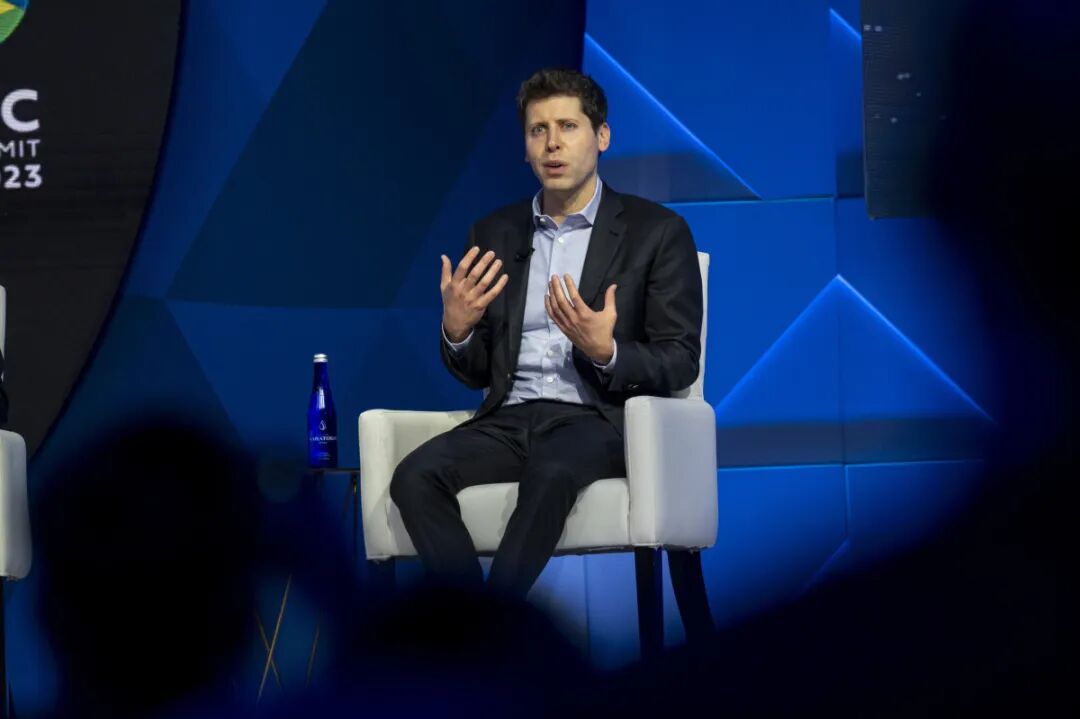
However, CFO Sarah Friar holds a cautious attitude. This veteran, who has witnessed the entire listing process of Nextdoor and the collapse of technology - stock valuations after the pandemic, believes that the conditions for listing in 2026 are not yet mature, as the organizational structure, regulatory processes, and investor - relationship systems are not in place.
The Determined Surge of Domestic Large Models
While the AI situation in Silicon Valley is changing rapidly, in China, tens of thousands of kilometers away, the financing stories of large models are flooding the news at an unprecedented density. However, different from the "listing race" logic in Silicon Valley, this is a turning point from low - key development to a collective surge.
The $2.5 billion financing of Jieyue Xingchen is backed by more certain commercialization results. A person close to the transaction told Phoenix Tech that a notable feature of Jieyue's new financing is the concentrated entry of industrial - chain capital. In addition to financial investors, several mobile - phone and consumer - electronics industrial - chain companies, such as Huaqin, Longcheer, OmniVision, and ZTE, have participated, covering multiple links from whole - machine manufacturing to upstream core components. Among them, Huaqin and Longcheer are first - tier global mobile - phone ODM enterprises, providing R & D, design, and manufacturing services for complete devices; OmniVision is an image - sensor supplier, located upstream of key components such as mobile - phone cameras; and ZTE Mobile has previously deeply co - created AI mobile - phone functions with Jieyue and mass - produced them in several flagship models such as the Nubia Z80 Ultra.
On the other hand, Jieyue's capital structure is also preparing for listing. Business registration information shows that the company completed its share - system reform in April, changing from a limited - liability company to a joint - stock limited company. An informed source said that its red - chip structure has also been removed, which is usually regarded as a key pre - step for a Hong Kong IPO.
While some companies are achieving large - scale implementation with excellent engineering performance and industrial - chain advantages, others are exploring the technological frontier. Compared with the intense competition between OpenAI and Anthropic overseas, domestic large - model companies are forming a silent consensus and sharing technological innovation breakthroughs.
This innovation is also being supported. On May 6th, according to media reports, the National Integrated Circuit Industry Investment Fund is in talks with DeepSeek to lead its first round of external financing, and the post - investment valuation of the enterprise is expected to reach about $45 billion.
According to a source cited by Shanghai Securities News, the talks are true, but the final valuation has not been determined. In addition to the National Integrated Circuit Industry Investment Fund, several internet giants and other state - owned - capital - backed funds are also participating in the financing negotiations, and all parties are currently being cautious and low - key.
DeepSeek's path is unique in the domestic AI startup landscape. This company, incubated by Magic Square Quantitative in July 2023, has never received external VC funding from the very beginning. Its R & D and operation funds are completely supported by the internal resources of the quantitative private - equity firm.
Although it has been established for a short time, thanks to the excellent performance of models such as DeepSeek - V3 and DeepSeek - R1, DeepSeek has not only become the fastest application to exceed 30 million daily active users but also ranked first in app stores in 140 countries.
On April 24th, the preview version of DeepSeek - V4 was officially launched and open - sourced simultaneously. It outperformed all currently publicly - evaluated open - source models in multiple evaluations such as mathematics, STEM, and competitive coding, comparable to the world's top closed - source models.
Almost at the same time, Kimi officially announced that it is about to complete a new round of approximately $2 billion financing, with a post - investment valuation exceeding $20 billion. The financing is led by Meituan Longzhu, with participation from China Mobile, CPE Yuanfeng, etc.
