The San Francisco Paradox: Technological Breakneck Speed, Urban Weightlessness
If we only look at AI technology, San Francisco might be one of the cities closest to the future in the world at present.
01
This is the most symbolic origin of generative AI. The headquarters of OpenAI and Anthropic are both located in downtown San Francisco, and it only takes about ten minutes to drive between them.
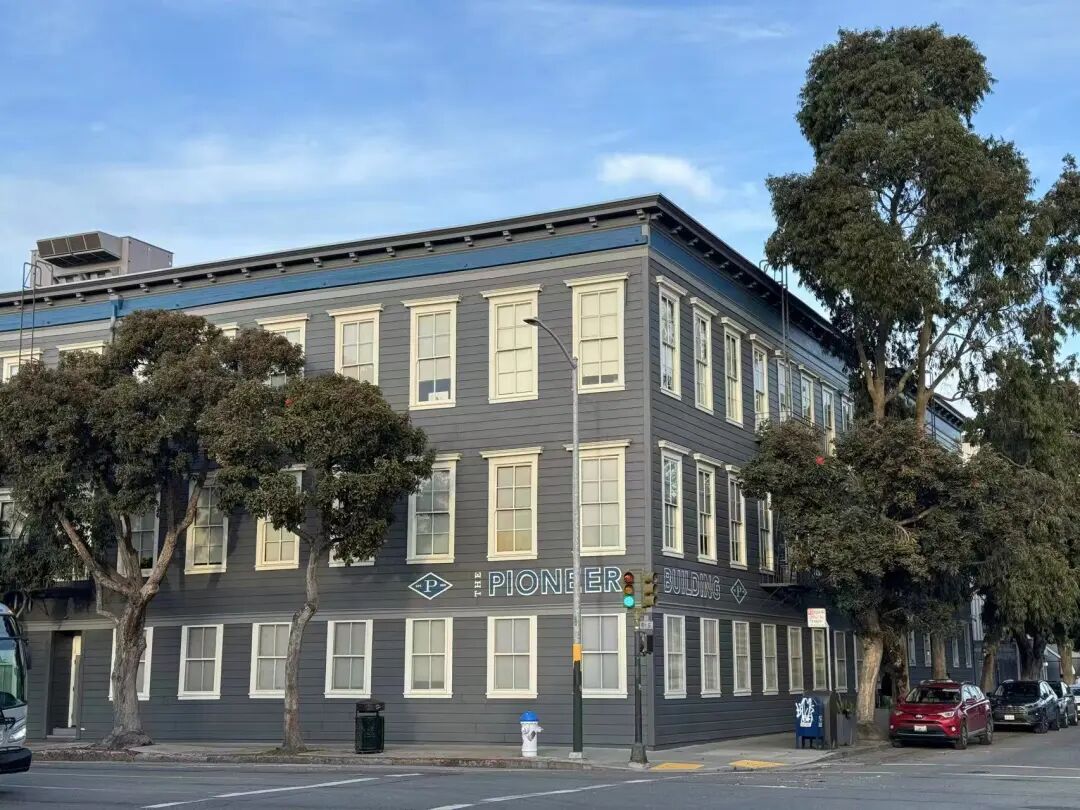
OpenAI's San Francisco office
Other AI software companies also demonstrate their undeniable presence through huge wall advertisements, towering billboards by the road, and even aerial banners.
An AI agent company called Artisan chose to use a small plane to tow the slogan "Stop Hiring Humans" over San Francisco from time to time. This startup founded in 2023 currently has a core product of virtual specialists that can independently complete the entire process of specific positions such as sales and marketing.

In the same area, there is also the densest Robotaxi fleet in the world. Waymo has currently deployed more than 800 robotaxis in San Francisco and the Bay Area. These driverless cars with rotating lidars have become a common means of transportation on the streets of San Francisco.
Meanwhile, the Robotaxis of Tesla and Amazon are accelerating their occupation of the roads in San Francisco. In front of the famous Citylights Bookstore in the urban area, a reporter once saw local media filming Amazon's Zoox, indicating its continuous testing and exposure in the core area of the city. Tesla has not yet achieved the "one-step" goal presented by the Cybercab. Instead, it is making a preliminary attempt on real roads by modifying Model Y and equipping safety drivers.
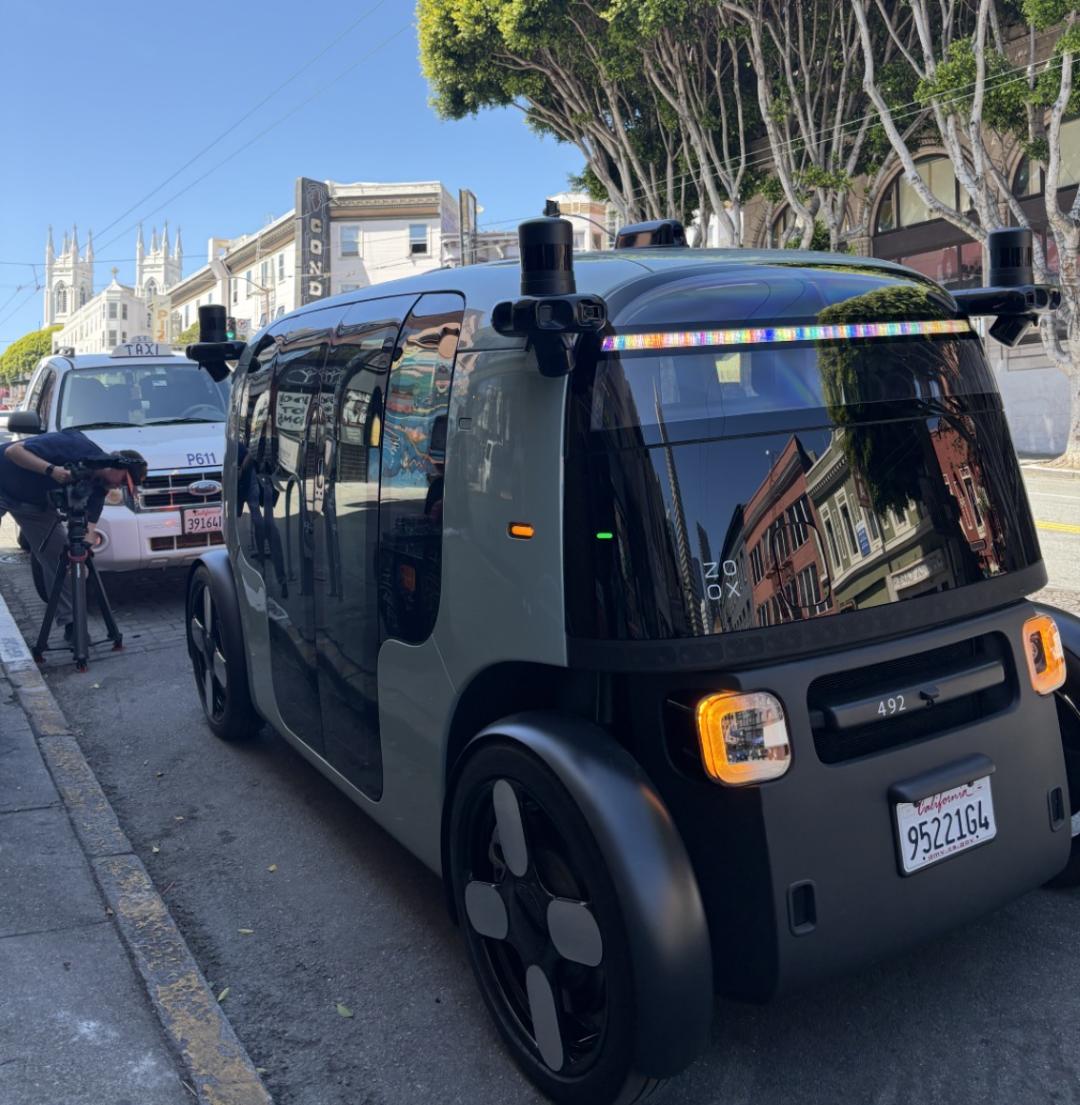
Amazon Zoox
02
However, if we shift our focus from technology to the city itself, the picture takes a sharp turn. The central business district of San Francisco looks a bit desolate, with a high vacancy rate of shops and a low footfall that hardly matches the level of a city of this size.
The statistical data also matches this perception. A report from real estate consulting firm CBRE shows that as of the first quarter of 2026, the average office space vacancy rate in downtown San Francisco was around 30%. Due to the decrease in office workers and tourists, the core business district has also been severely hit. The retail vacancy rate in the once most prosperous commercial area, Union Square, once soared to 47.8%.
What is even more disturbing is the group of homeless people gathered in the core area of the city. Local residents told reporters that since the new mayor took office, the urban security and sanitation conditions have improved compared to the previous two years. However, most of the time, residents with the means still choose to avoid going to the downtown area as much as possible.
This is the most prominent contradiction in San Francisco at present - the advancement of technology does not seem to drive the city's recovery synchronously.
In the traditional technology cycle, technology forms a positive feedback loop for the city through the chain of employment - income - consumption. For example, in the era of the Internet and mobile Internet, the creation of a large number of middle - class jobs drove the overall prosperity of urban consumption, real estate, and the service industry.
However, in this round of the AI cycle, the path seems to be different at least for now. Firstly, the expansion effect of employment seems to be weakened at this stage. Secondly, the income distribution in the AI industry also shows a more concentrated trend. As a result, technology has begun to operate bypassing the original urban economic structure.
In the past, the prosperity of San Francisco was due to a highly coupled system formed by enterprises, talents, consumption, and the service industry, which ultimately led to the prosperity of the city. But now, this coupling is being broken. AI enterprises still gather, raise funds, and expand here, but their dependence on the city is decreasing: remote collaboration reduces the need for geographical concentration; automation reduces the dependence on the scale of the workforce, and capital returns thus stay more at the enterprise level rather than spreading to a wider urban population.
More importantly, the rapid evolution of technology does not naturally lead to the repair of urban governance and social problems. Many times, people tend to believe that technology itself will automatically solve problems - improve efficiency, reduce costs, and ultimately lead to an increase in overall well - being. But the fact is that people may not automatically be included in this positive feedback of efficiency improvement. Even if the improvement of technological capabilities lacks corresponding social acceptance, it may bring not only progress but also more obvious differentiation.
In this sense, what San Francisco presents may not just be a sample of a locally imbalanced city, but also an early manifestation of the AI era that deserves our vigilance.
This article is from the WeChat official account "Science and Technology Innovation Daily", author: Ao Jin. It is published by 36Kr with authorization.