Two insurmountable hurdles: A deep dive into how far solid-state batteries are from large-scale mass production
This spring, there have been continuous good news in the field of solid-state batteries.
In terms of policy, the first national standard, "Part 1: Terms and Classification of Solid-State Batteries for Electric Vehicles," is open for public comments, and the "Technical Specification for Solid Electrolytes for Solid-State Batteries in Electric Vehicles" has entered the drafting stage. The "15th Five-Year Plan" also includes solid-state batteries in the core track of future industries.
In terms of the industry, BYD, Chery, Guoxuan High-Tech and other companies have intensively announced the mass production and vehicle installation schedules of solid-state batteries. A prospectus of Qingtao Energy on the Hong Kong Stock Exchange has completely ignited the industry's enthusiasm for solid-state batteries.
However, the higher the expectations are, the more we need to calmly judge the current real situation of the solid-state battery industry.
In this article, we ask three questions:
① What stage is the industry currently in?
② Where are the bottlenecks? How far is it from mass production?
③ Where will the "first pot of gold" fall?
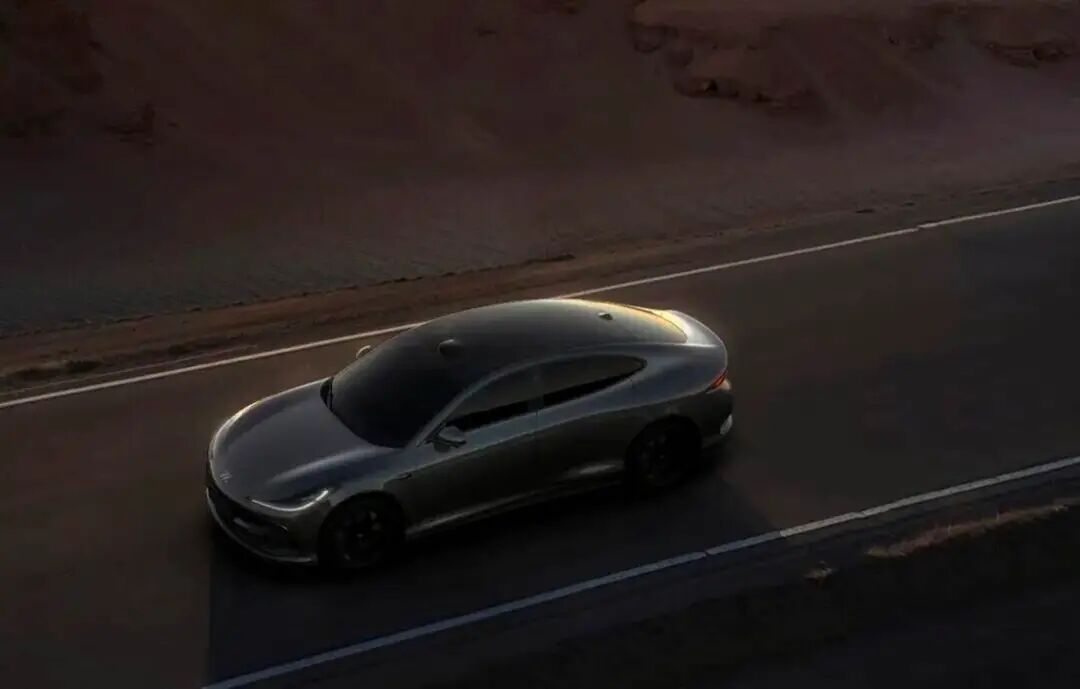
The Zhiji L6 Light-Year Edition equipped with Qingtao Energy's solid-state battery (Source: Qingtao Energy)
01 Three Routes Progressing Simultaneously, but Each Has Its Own "Hard-to-Read Scripture"
According to the different electrolyte materials, there are mainly three technical routes for solid-state batteries: sulfides, oxides, and polymers.
Sulfides: The hottest track, with giants such as CATL, BYD, Toyota, and Samsung all betting on it.
The advantage is that it has the strongest conductivity and the highest upper limit in improving energy density. The disadvantage is that it is chemically active and will produce highly toxic hydrogen sulfide gas when exposed to water vapor, which requires extremely high safety and airtightness for the production line. It has the greatest potential but is the most difficult to develop.
Oxides: The main battlefield of Qingtao Energy, Weilan New Energy, and Ganfeng Lithium Battery.
The advantage is good stability, acceptable energy density, and the manufacturing process is the closest to that of liquid batteries. The disadvantage is that the electrolyte is hard and brittle, and it is difficult to solve the problem of poor contact at the "solid-solid interface" between the electrolyte and the electrode.
Polymers: Representative players include Sunwoda, Xinjie Energy, and Solid Ion Energy.
The advantage is good flexibility, low cost, and easy processing. The disadvantage is low conductivity at room temperature. The battery needs to be heated to 60 - 80°C to perform normally, and the energy density is also the lowest among the three routes.
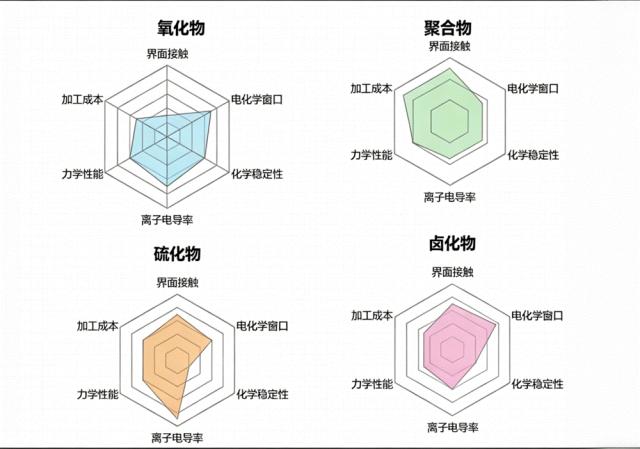
Solid electrolytes have their own advantages and disadvantages (Source: Minmetals Securities)
Over the past decade, the industry has stopped arguing about the advantages and disadvantages of different routes. Instead, a consensus has gradually formed - in the words of Xu Hangyu, the R & D general manager of Weilan New Energy:
"A single material is difficult to balance comprehensive performance such as ionic conductivity, electrochemical window, stability, and processability. The shortcomings of materials need to be compensated by process equipment."
In other words: No route is perfect. Who can emerge first depends not on the material, but on who can use a higher - level manufacturing process to make up for the material's shortcomings.
Currently, the three routes are progressing separately, with slightly different schedules, but overall, they are all in the difficult climbing period from pilot testing to small - scale mass production.
Each route has its own "hard - to - read scripture," but in the face of mass production, they are all taking the same test.
02 Two "Hurdles" for Large - Scale Mass Production
At the "2026 Gaogong Solid - State Battery Technology and Application Summit" on April 23, many industry insiders stated a rather cruel reality:
Entering the GWh - level production line only means having the ability of "batch production," but the distance to large - scale commercialization seems close but is actually extremely difficult.
There are two hurdles in front:
The first is cost.
The core problem of the sulfide route is that lithium sulfide is extremely expensive, up to 2 - 3 million yuan per ton. At the same time, lithium hexafluorophosphate in liquid electrolytes is only 100,000 yuan per ton, less than a fraction of the cost of lithium sulfide.
According to the calculation of Huatai Securities, when using a high - nickel cathode, a silicon - carbon anode, a sulfide electrolyte, and the isostatic pressing process, the comprehensive cost of all - solid - state batteries is about 6 - 8 times that of traditional liquid batteries.
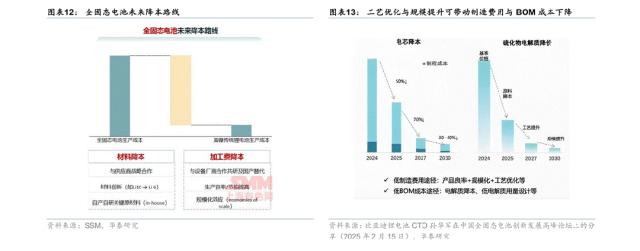
Cost - reduction route for all - solid - state batteries (Source: Huatai Securities)
The oxide and polymer routes are also under heavy cost pressure. Oxide ceramics are difficult to process, and polymers need to solve the temperature control problem, both of which increase the manufacturing cost in different aspects.
Qingtao Energy's prospectus also confirms this: In 2025, the average price of its power batteries was halved to 0.31 yuan per Wh, and the gross profit margin was - 111.6%.
Based on this calculation, its theoretical cost is about 0.65 yuan per Wh, still about twice as high as the price of lithium iron phosphate batteries.
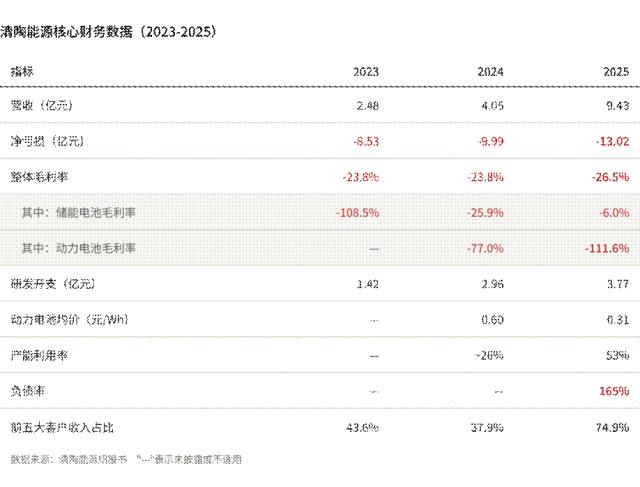
Qingtao Energy's financial data from 2023 - 2025 (Source: Prospectus)
The second is yield.
Zhu Xingbao, the chief scientist of Guoxuan High - Tech, frankly said: "For battery manufacturers, sometimes a 95% yield means a loss, while a 95.5% yield can lead to a profit."
Compared with liquid batteries, the fault - tolerance windows of processes such as isostatic pressing and dry electrodes in solid - state batteries are already narrow. Coupled with the lack of standardization of special equipment, when several variables are combined, the stability of the production line cannot be guaranteed.
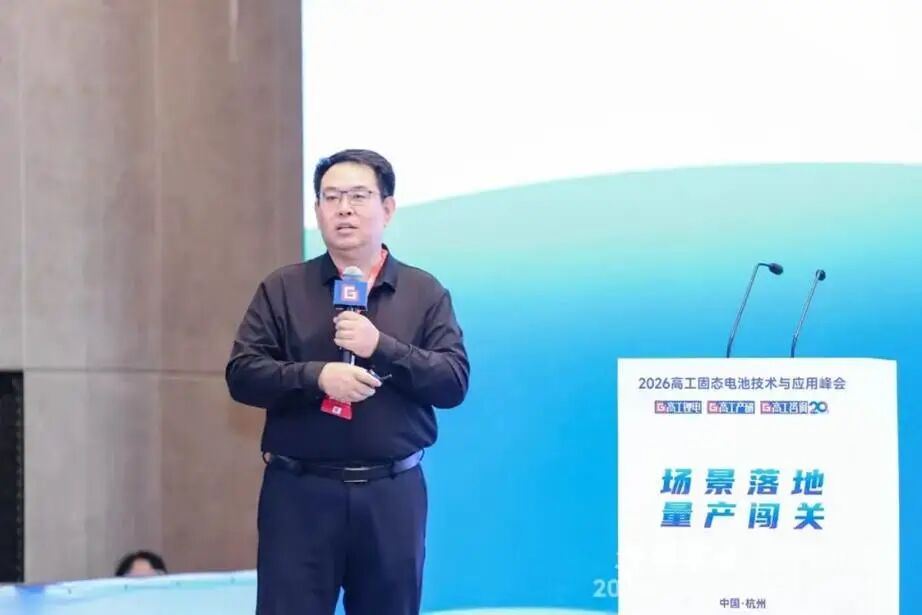
Dr. Zhu Xingbao, the chief scientist of Guoxuan High - Tech, sharing his views (Source: Gaogong Lithium Battery)
Can you see? - These two hurdles of cost and yield are the result of the coupling of multiple factors such as scale, equipment, and process, and cannot be solved by one or two companies in the short term.
That's why CATL and BYD have both set the large - scale mass - production node around 2030 - they know well that the time required for the industrial chain to climb the slope together may be longer than expected.
03 The "First Pot of Gold" May Not Be from Cars
Although "automotive - grade" products are difficult to mass - produce, many players have already achieved commercialization in other scenarios.
Ganfeng Lithium Battery's semi - solid batteries have been installed in the AE200 aircraft of Wo Fei Chang Kong and have obtained airworthiness certification;
Xinjie Energy has put into operation a 2GWh solid - state battery mass - production line and delivered products to the eVOLT, electric bicycle, and embodied intelligence fields;
Jinyu New Energy has developed and delivered solid - state batteries that can work at a high temperature of 200°C for the oil exploration scenario, solving a problem that even top European institutions have not been able to solve;
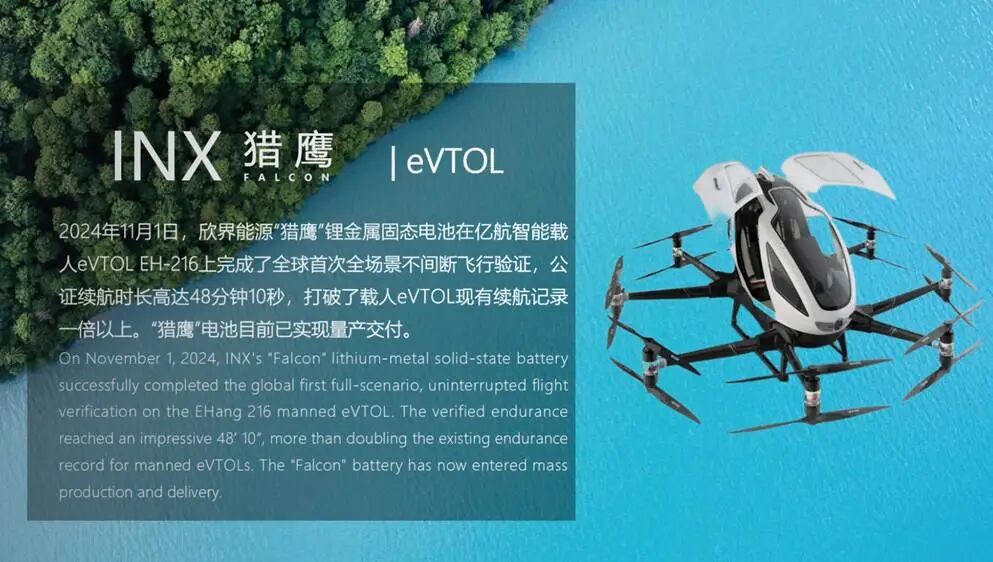
Xinjie Energy's solid - state batteries are applied in the eVTOL scenario (Source: Xinjie Energy)
In the current hot energy storage field:
Yinpai Battery announced that it will mass - produce 587Ah semi - solid energy - storage large cells this year, competing directly with liquid cells;
Weilan New Energy's 280Ah energy - storage cells have been mass - produced and delivered, targeting high - safety demand scenarios such as data centers;
Qingtao Energy's energy - storage batteries contributed 62.8% of the company's revenue in 2025. The 800MWh energy - storage power station in Wuhai, Inner Mongolia, as the world's largest solid - liquid hybrid battery project, has completed a complete commercial cycle.
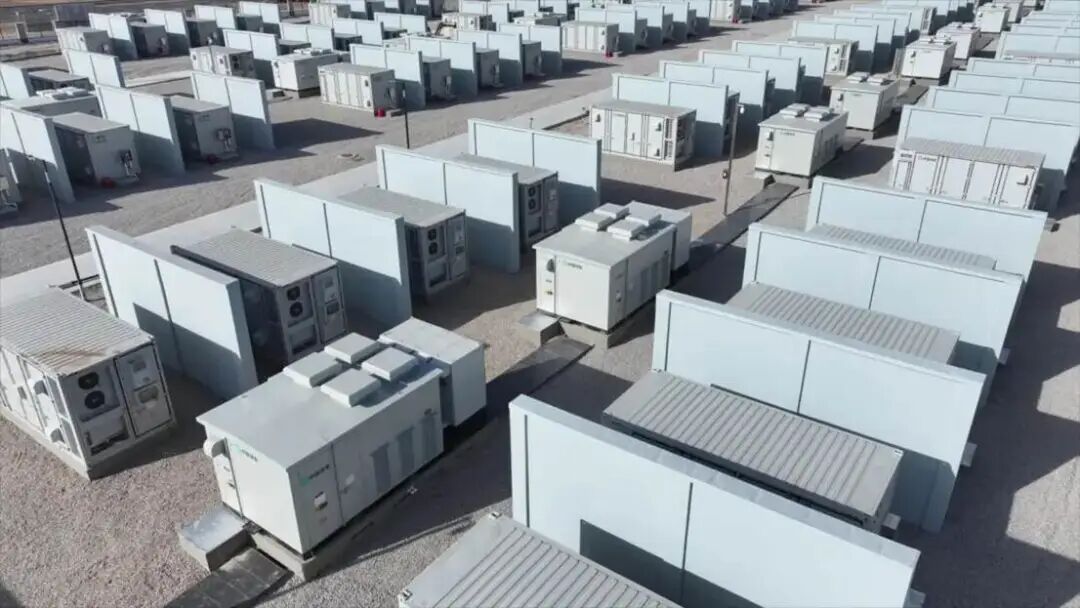
Qingtao Energy's 800MWh energy - storage power station project in Wuhai, Inner Mongolia (Source: Qingtao Energy)
Compared with electric vehicles, eVOLT, electric bicycles, and embodied intelligence are less sensitive to battery cost, and energy storage is less sensitive to battery volume. At the same time, they have higher requirements for safety.
The performance premium that solid - state batteries cannot realize in the electric vehicle scenario has become a real competitive advantage here.
Before being used in cars, the first pot of gold for solid - state battery players may be hidden in the battery compartments of aircraft, robots, and energy - storage power stations.
04 Conclusion
After a decade - long race, the three routes of solid - state batteries have all reached the critical climbing period before mass production.
However, to overcome the two hurdles of cost and yield, the entire industrial chain still needs to cooperate and work together to break through.
It will still take some time for solid - state batteries to be used in cars. eVOLT, electric bicycles, embodied intelligence, and energy storage may become the first scenarios for the commercialization of solid - state batteries.
Large - scale mass production will eventually come, but before that, perhaps we should put aside grand narratives such as "the next - generation battery" and "the ultimate solution," maintain a calm mind, and wait patiently for success.
This article is from the WeChat public account "New Energy Industry Home," author: Li Chaoran. Republished by 36Kr with permission.