The hands of Xiaomi's latest humanoid robot can "sweat".
The most surprising new product from Xiaomi recently isn't a car or a phone, but a humanoid robot that hasn't been officially launched yet, the Xiaomi CyberOne V2.
It made its public debut at the Xiaomi Investor Conference the day before yesterday.
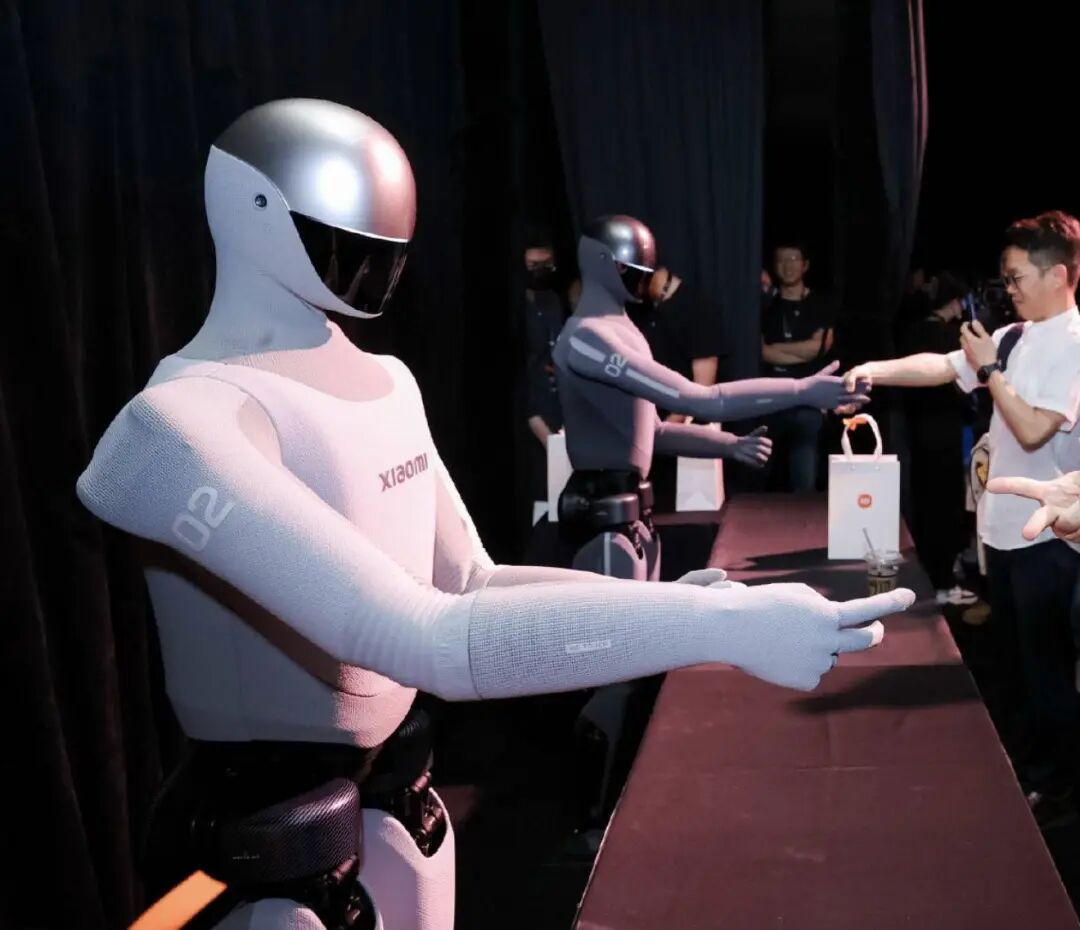
It didn't run, jump, or perform a backflip. It just stood there quietly, like a well - trained staff member, handing out souvenirs to the guests at the conference, shaking hands and high - fiving people.
Xiaomi official hasn't released the official parameters yet. According to online breaking news, the Xiaomi CyberOne V2 humanoid robot is 178cm tall and weighs about 52kg.
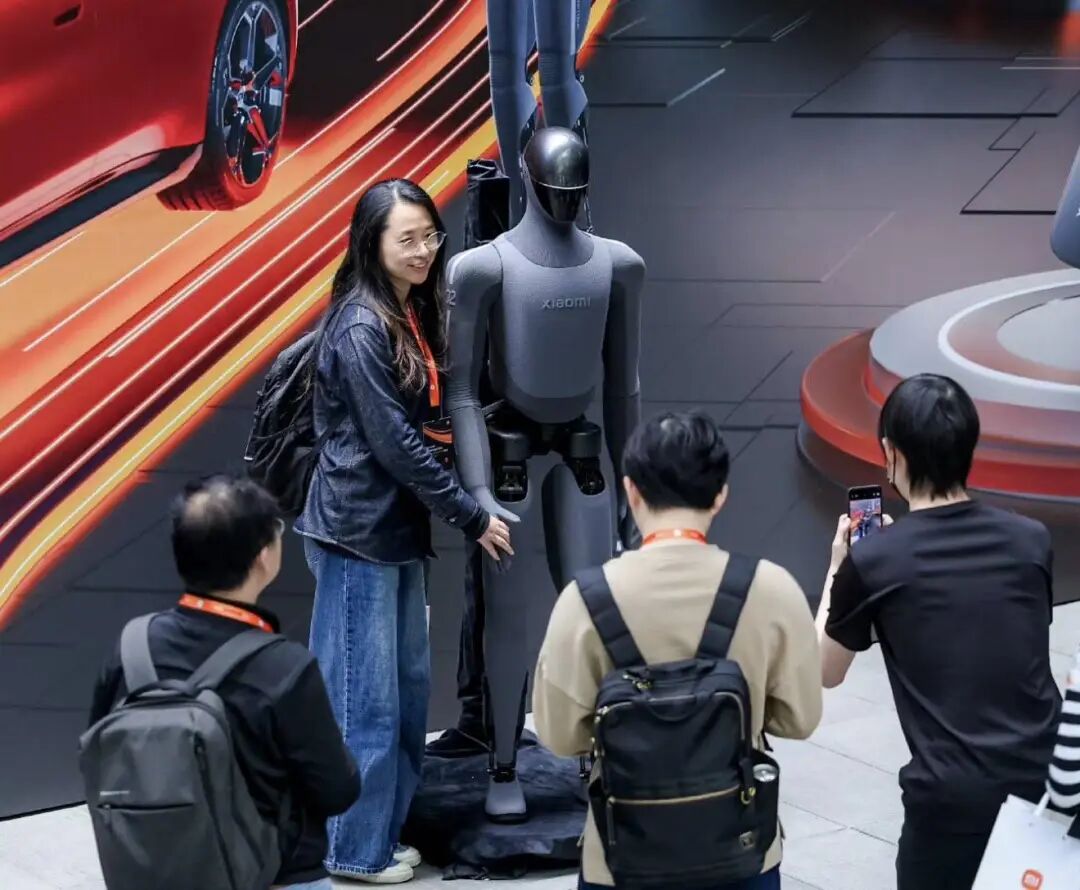
Other parameters, such as the robot's walking speed, are about 0.98m/s, and the single - arm lifting capacity can support a weight of 3kg. In contrast, the H2 robot released by Unitree earlier has a maximum walking speed of 3.3m/s, and its arm can carry a maximum load of 15kg, with a rated load of 7kg.
It's obvious that the focus of the Xiaomi CyberOne V2 isn't on walking and weight - lifting. What's most worth paying attention to this time is the redesigned hand of the Xiaomi robot.
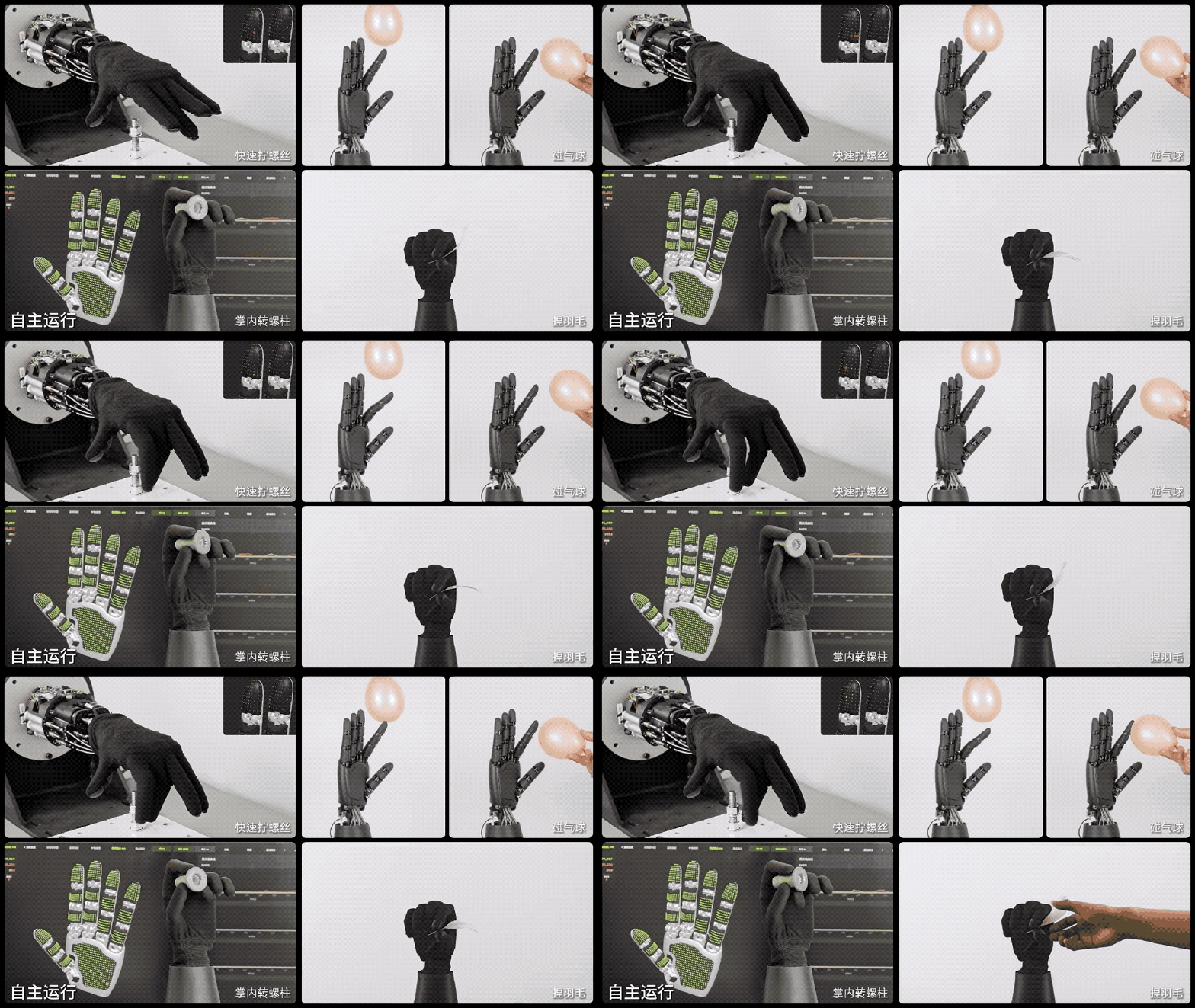
This pair of hands is made in a 1:1 ratio to an adult male's hand, with 22 - 27 degrees of freedom. It can not only perform tasks in fine industrial scenarios such as quickly screwing screws and rotating studs in the palm, but also pinch feathers and touch balloons.
Even more unexpectedly, these hands actually have human "sweat glands".
Other breaking news also mentions that the Xiaomi CyberOne V2 can recognize facial expressions and voices relying on the emotional AI model on its back, and then give appropriate interactive feedback.
But some American netizens commented below that the Xiaomi CyberOne V2 looks too much like Tesla's Optimus, and it was right for Musk to choose not to show any information about Optimus in advance.
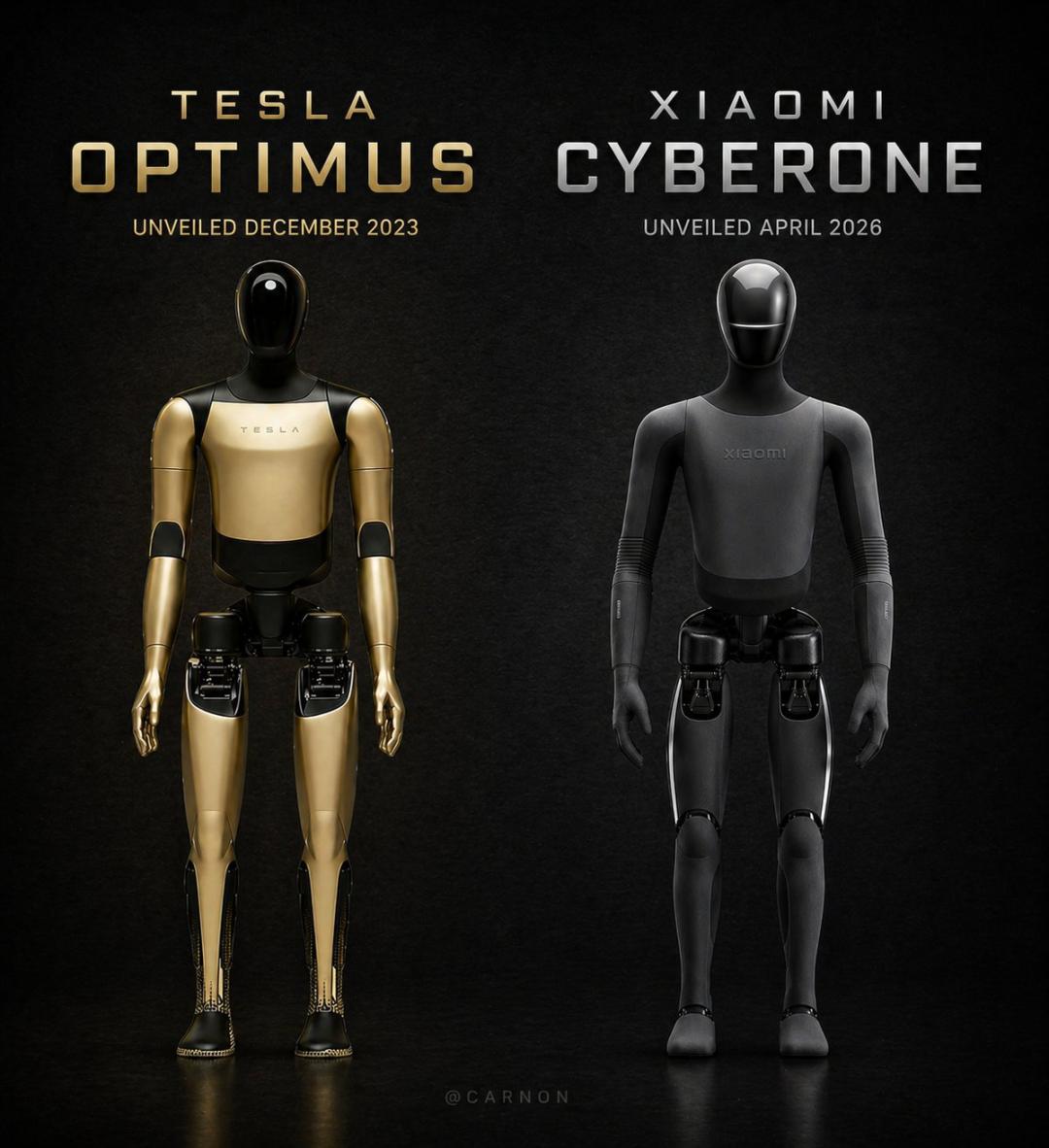
Previously, Musk said that he postponed the display of Optimus V3 to prevent competitors from copying, and he believes that it should be kept hidden as much as possible before large - scale mass production.
The dexterous hand is the hardware bottleneck of the robot
Both in terms of technology and the capital market, the development of robots has been very rapid recently. There is almost a financing for embodied intelligence every day.
In terms of footwork, robots have refreshed the human record in the half - marathon, completing it within an hour.
But in terms of "hand - operated" tasks, such as turning pages and tying shoelaces, these daily operations of human hands are still a far - fetched dream for robots.

The core of embodied intelligence actually lies in how the robot's brain interacts with the real world through its physical body, and the dexterous hand has become the biggest hardware bottleneck for achieving perfect interaction.
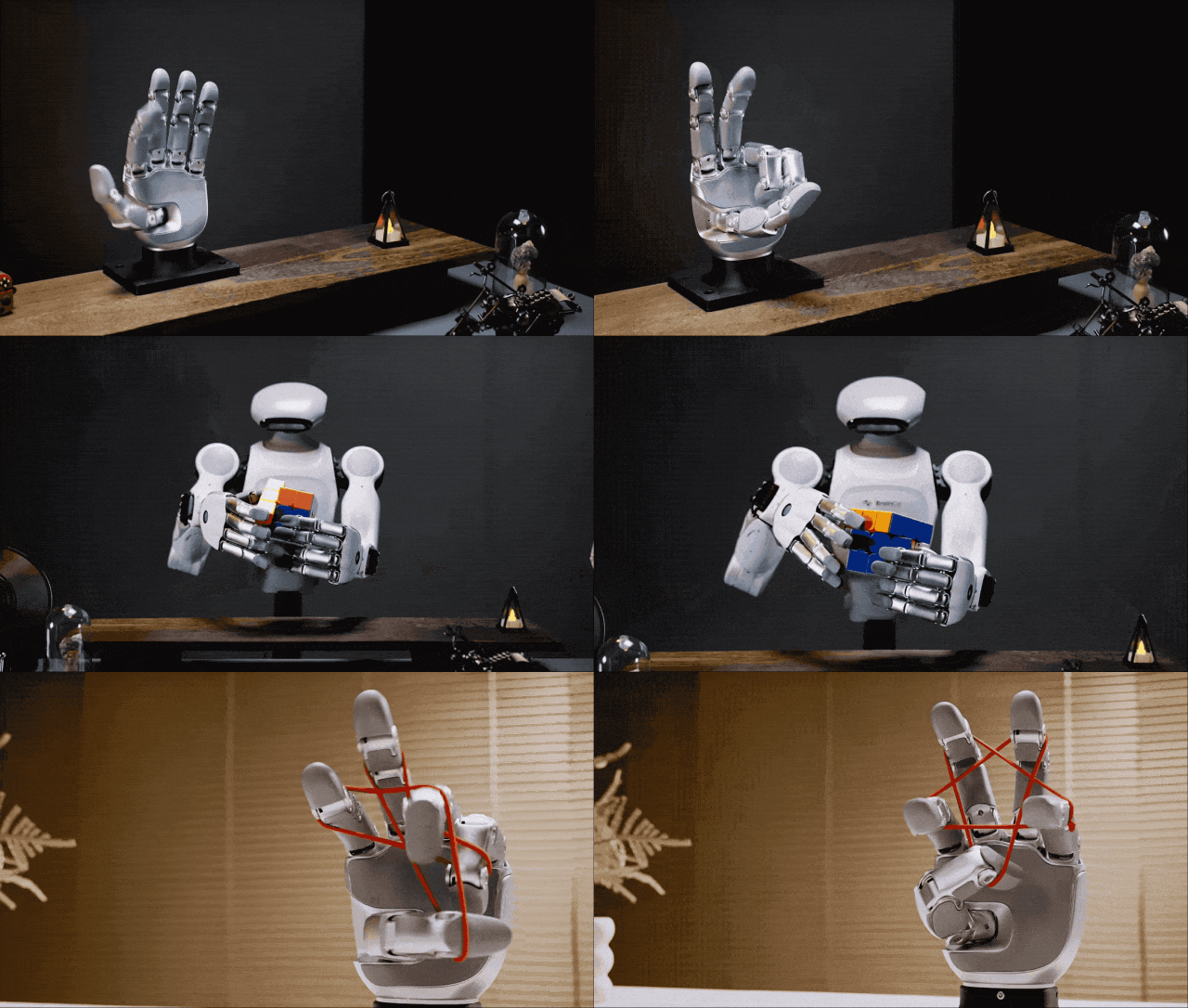
Many robot companies have specifically studied the problem of dexterous hands. BrainCo Technology previously released the BrainCo Revo 3 intelligent dexterous hand, which has 21 degrees of freedom, integrates full - palm tactile and fingertip visual - tactile, and is compatible with the open - source ecosystem.
In the official demonstration video, this hand surpasses the movement space of human hands, covers 33 types of grasping gestures, and can solve Rubik's cubes with both hands, use scissors, and play with bracelets.
The reason why the dexterous hand has become a difficult problem is that both software and hardware are stuck.
In terms of software, the movement from a human hand to a robot hand needs to be redirected. In terms of hardware, it is difficult for the small actuators inside the fingers to be powerful, sensitive, and reliable at the same time.
The "redirection" here can be understood as converting the posture, fingertip trajectory, and contact relationship of a human hand into joint angles and control commands that a robot hand can execute.
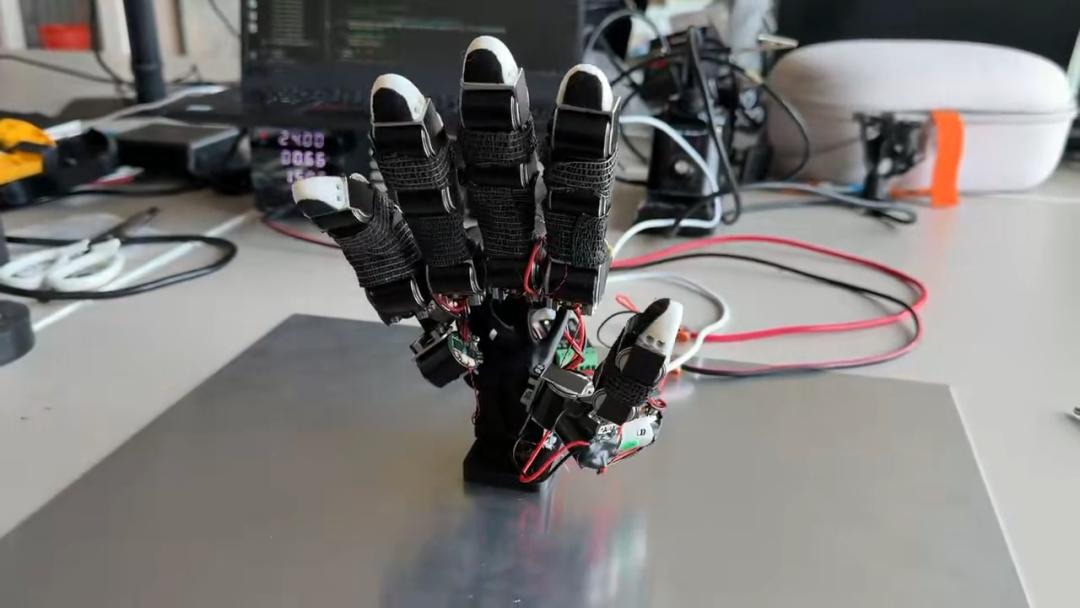
However, the size, number of joints, and range of motion of human hands and mechanical hands are not exactly the same. Actions that are very natural for humans may become unreachable, penetrate objects, or have incorrect contact points when directly mapped to a robot hand.
In terms of hardware, leg joints usually have more space, allowing motors with larger radii and higher torque densities to be installed. Therefore, it is easier to adopt low - reduction ratio or quasi - direct - drive solutions.
For example, a 6:1 reduction ratio means that when the motor rotates 6 times, the output shaft rotates 1 time. The speed decreases, and the output torque increases.
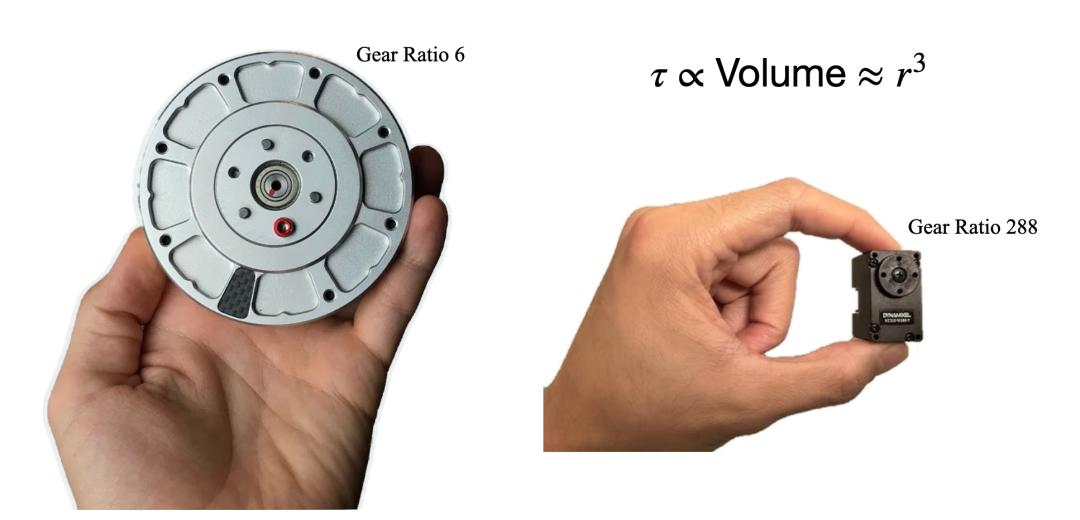
Leg motor (gear ratio: 6) and finger (gear ratio: 288). Torque scales with r³.
Fingers don't have such space. The motor must be shrunk to fit into the finger joint. In the case of geometric similarity, the motor torque generally decreases with the cube of the characteristic length. When the linear size is reduced to 1/10, the torque may only be about 1/1000 of the original.
When the torque is insufficient, a common practice is to compensate with a higher reduction ratio, such as 100:1, 200:1, or even 288:1.
The cost of a high - reduction ratio is also direct: friction, backlash, efficiency loss, and reflected inertia will become more difficult to handle.
Fingers that seem very dexterous in simulation may become stiff and blunt in reality, not compliant enough when in contact, making fine operations difficult.
According to an article on the exploration of the full - palm tactile bionic hand released by Xiaomi Technology, in order to fully reuse human data, Xiaomi also carried out a major reconstruction of the bionic hand of the CyberOne V2 this time.
1:1 ultimate bionics: The volume of the bionic hand has been significantly compressed by 60%, and its size is exactly the same as that of an adult male's hand. At the same time, the degrees of freedom have been increased by 64%, with 22 - 27 degrees of freedom (DoF). The reachable space and inertia distribution are infinitely close to those of a real human hand.
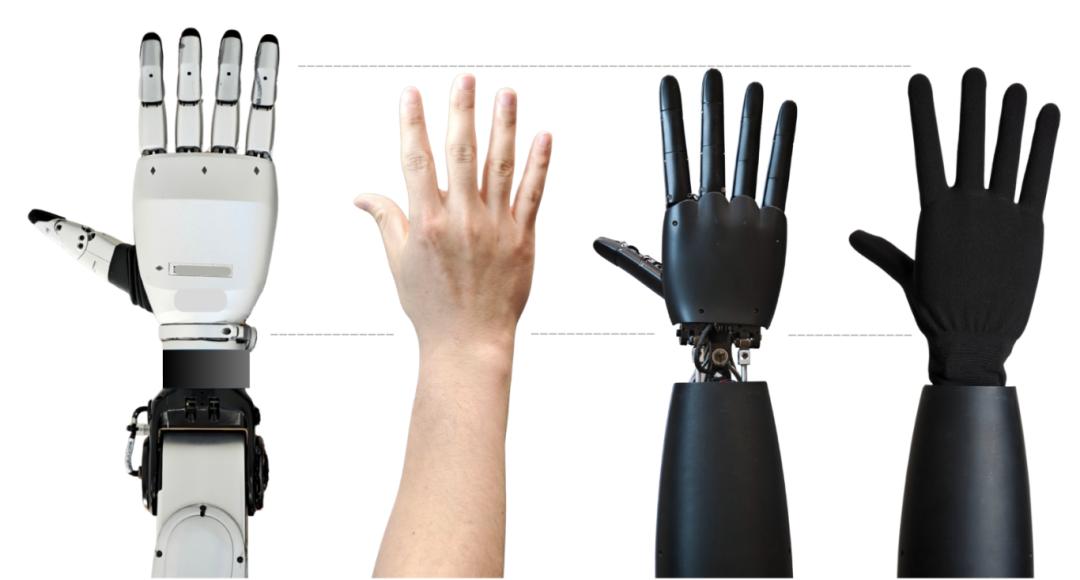
Full - palm tactile coverage: If a robot's vision is blocked, it basically can't operate normally. Xiaomi introduced a tactile glove solution, increasing the coverage area of the full - palm tactile sensor to 8200 square millimeters. When a human wears it to create a sample, the robot can perfectly inherit the "feeling of touch".
150,000 - time durability test: It's easy to pinch a cup in the laboratory or in a demonstration video, but when screwing screws continuously 10,000 times in a factory, the tendon ropes, springs, and sleeves of the robot will break. Xiaomi's bionic hand has currently broken through a cycle life of 150,000 times in actual grasping.
And the most special detail is the "sweat glands" of the dexterous hand.
In order to realize this high - degree - of - freedom dexterous hand, Xiaomi also had to stuff various motors into the single - arm forearm of the robot.
In practical applications, the power of a single - arm motor exceeds 100W, and 30W of it will be directly converted into waste heat, which can easily burn out the circuits. In a small space without an external large - scale fan, they found inspiration from human "sweating to dissipate heat".
Xiaomi used metal 3D printing to create a micro - liquid - cooling circulation channel in the compact forearm structure. A micropump is used to transfer the heat, and then the heat is absorbed and the temperature is reduced through water evaporation.
In actual tests, this bionic sweat gland system only needs to evaporate 0.5mL of water per minute to provide about 10W of active heat - dissipation capacity.
Beyond the hand, there is also the robot's brain
The hardware is iterating, and the model is also advancing synchronously.
Two months ago, Xiaomi open - sourced Xiaomi - Robotics - 0, a VLA (Vision - Language - Action) model for embodied intelligence.
In Xiaomi Technology's official tweet, they further open - sourced the complete process of post - training on a real machine.
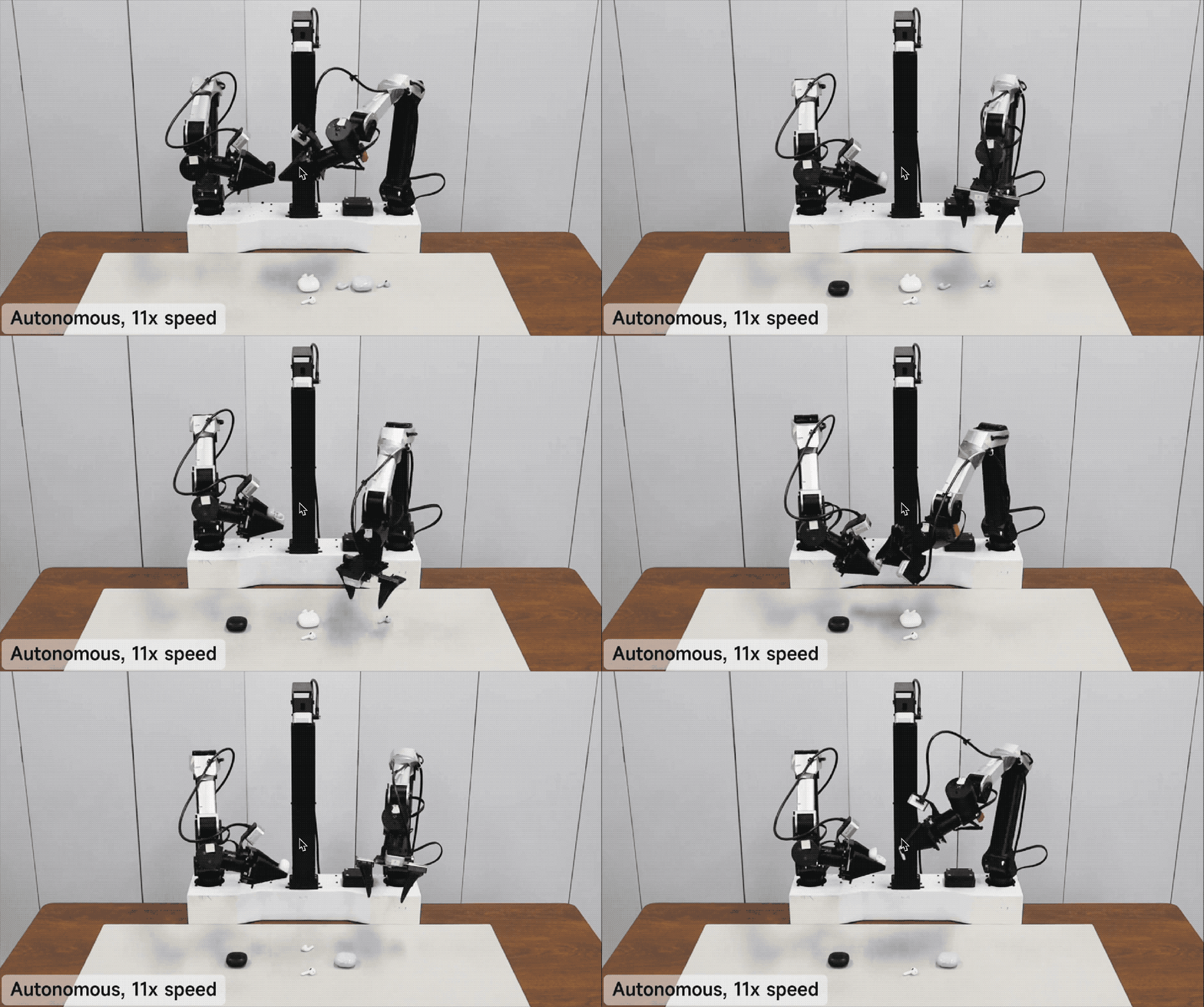
The most intuitive data is that based on the pre - trained base, after 20 hours of task data for post - training on a real machine, the Xiaomi - Robotics - 0 model can learn the difficult task of "putting earphones into the earphone case" and can continuously complete the storage of multiple earphones.
There is a technical detail worth paying attention to in this post - training process: the solution to the "laziness effect".
In order to make the robot's actions smooth, the industry usually uses asynchronous inference and the "action prefix" technology, that is, allowing the new action to naturally transition along the inertia of the previous action. But this will cause the AI to start "lazying around": relying too much on the action inertia and selectively ignoring the real - time visual feedback from the camera.
Xiaomi uses three mechanisms to deal with this problem: adaptive weighted loss, Λ - shaped attention mask, and random masking of prefix actions. Simply put, it is to deliberately create a situation of "incomplete answers" for the model during training, forcing it to look at the current visual signals.
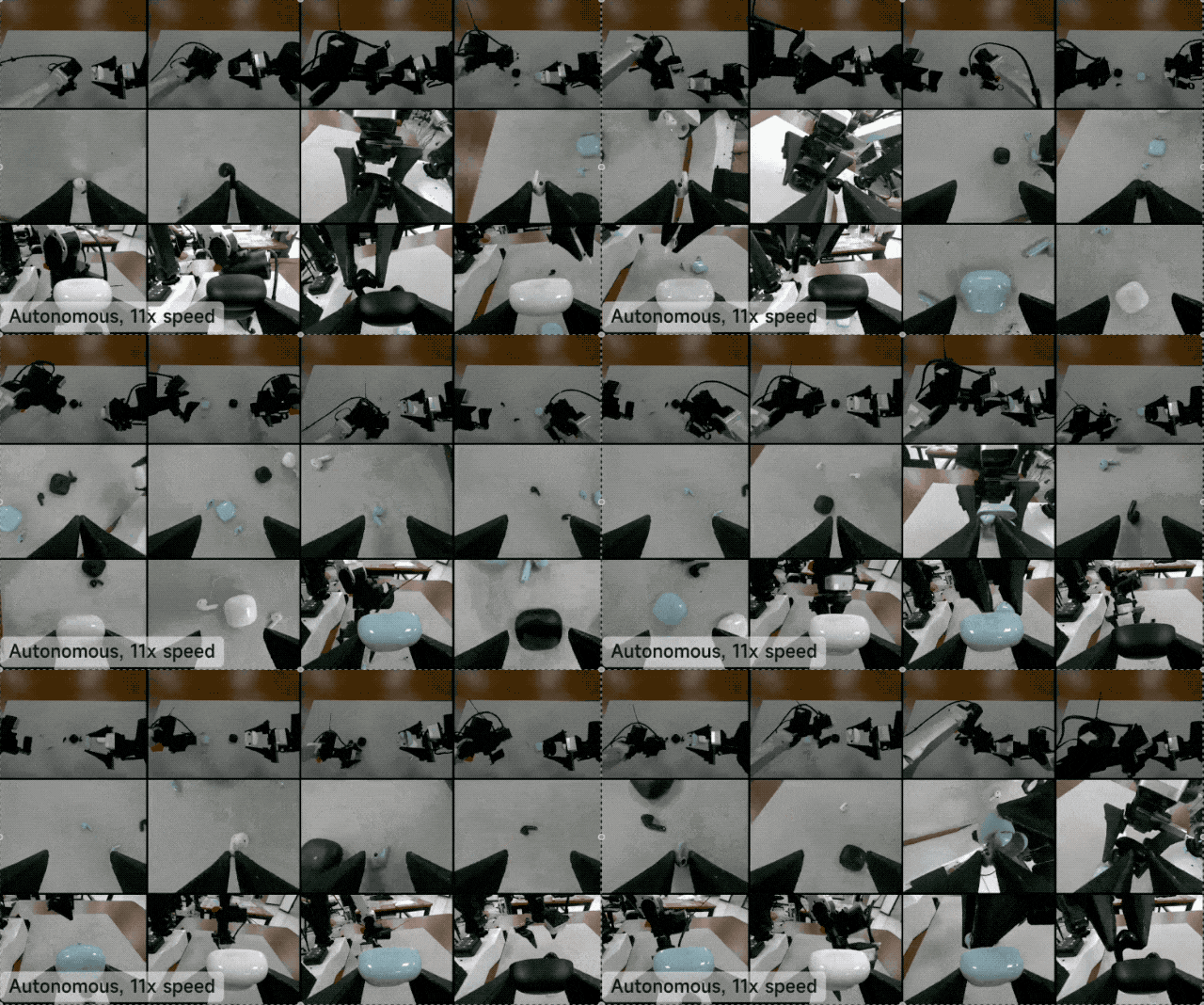
The combination of software and hardware capabilities has also enabled Xiaomi robots to work in the automobile factory. At the self - tapping nut loading station, it can operate continuously for 3 hours without intervention, with an installation success rate of up to 90.2%, and can cooperate with the high - speed rhythm of 76 seconds on the production line.
Robots starting large - scale delivery
Tesla previously cut off the entire production line of the Model S/X to make room for robots.
At the first - quarter earnings conference, Musk announced that the third - generation Optimus V3 is expected to be unveiled in the middle of the year, production will start at the Fremont factory in California from late July to August, and it will be delivered to enterprise customers in the second half of 2026, with a planned annual production capacity of 1 million units.
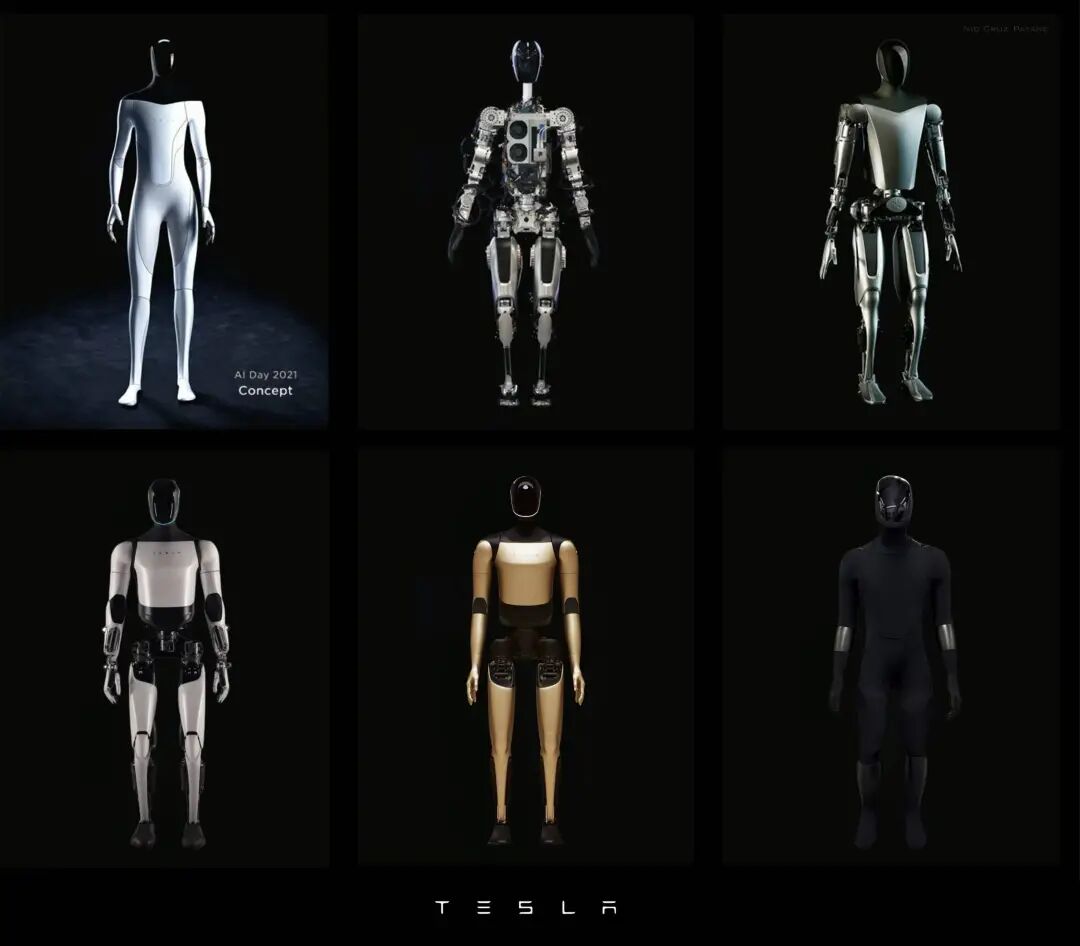
But as Musk admitted in a podcast before, fine hand operations are "the most difficult part of the whole project".
Tesla's Optimus hasn't been mass - produced yet. Another American humanoid robot company, Figure Robotics, announced on X today that its production scale has been expanded by 24 times, from producing one robot per day to producing one robot per hour.
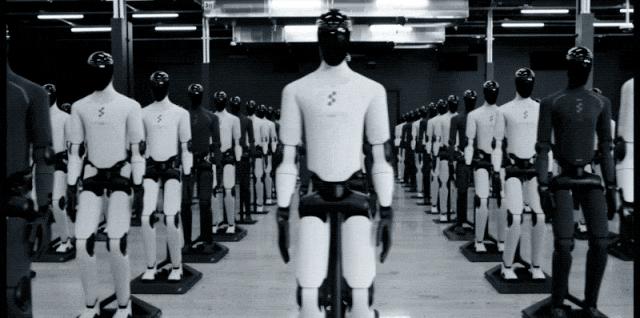
In the official press release, Figure mentioned that they have delivered more than 350 robots.
For Xiaomi, making robots may not quickly lead to the sale of a consumer - grade general humanoid robot like Figure, Unitree, or even Tesla.
But from the direction of the CyberOne V2, it can be seen that what Xiaomi really wants to solve is not only to make the robot run faster and lift heavier,