Why has a giant in the apparel technology track entered the embodied intelligence field?
The golden age of "Physics AI" may be just around the corner.
Back at the end of April, Qunhe Technology was listed on the Hong Kong Stock Exchange, with its share price surging nearly 400% in two days. As a leading company in the home technology track, it has accumulated massive 3D model data with real physical parameters over 15 years, successfully sprinting to become the first listed company among the "Six Little Dragons of Hangzhou", and officially kicking off the grand era of "Physics AI".
Interestingly, also in Hangzhou, another industry giant is doing something similar.
Different from Qunhe Technology which focuses on "3D rigid body simulation", its target is the "3D flexible simulation" track that features extremely high technical difficulty and extremely scarce data.
In February this year, Lingdi Technology released its self-developed physical simulation and synthetic data system SynReal. As a giant in the clothing technology track, Lingdi Technology has accumulated massive 3D flexible data of fabrics over 10 years. Its SynReal system can reduce the training cost of embodied intelligence simulation while improving data throughput. For example, the clothes-folding robot of Galaxy General at the Spring Festival Gala is partially supported by Lingdi Technology's technology.

Galaxy General's clothes-folding robot at the Spring Festival Gala (Source/Enterprise)
Why is "flexible simulation" so difficult? Why is it called the "Holy Grail of Embodied Intelligence"? Why did a giant in the clothing technology track choose to cross into the robotics track, and what does it rely on to achieve success?
The story starts with the "robot clothes-folding problem".
01 Robots Can't Even Fold Clothes
When you think embodied intelligent robots are very "smart", you can ask them to fold a piece of clothing to test.
This cutting-edge technological creation that can carry heavy loads, run long distances, and even outperform humans in half-marathon races may find itself at a loss in front of an ordinary T-shirt, failing to spread it flat, grasp it stably, or fold it neatly.
Of course, there are quite a few players that can "fold clothes well", and their implementation paths generally fall into two categories:
One is to "hardcode" the action program: the clothes are placed at a designated position, spread flat and arranged in advance, and then the machine completes fixed movements.
The other type of robot is more "intelligent", capable of flexibly grasping different clothes and continuing tasks even when disturbed by humans — but the price to pay is that it takes more than half a year to collect real human operation data as the "training materials" for the robot. Once the scene, lighting, tabletop, clothing material and other factors are changed, the "materials" can no longer be reused.
Smart readers must have thought of this: can we build a "virtual world" that conforms to the physical rules of the real world in a computer, and train robots with code?
Indeed, it is feasible, and many giants are doing exactly this, such as NVIDIA Isaac, Microsoft AirSim, and MuJoCo acquired by DeepMind, etc. Different from AI software such as large models, this path is deeply bound to the physical world, so it is often called "Physics AI".
However, as mentioned above, "rigid data" absolutely dominates in current Physics AI. Open the database, and you will find that it is full of cubes, robotic arms, and regular objects. They are easy to define and convenient for calculation.
But as we all know, in the real world, from the clothes we wear to the fruits in the supermarket, from the plastic bags we knead casually to our own skin... at least one third of all objects are "flexible".
The motion trajectory of a rigid object is relatively deterministic. But for a piece of soft fabric, every fiber is fluttering freely.
When the robot grabs it, the tiny force applied will trigger a chain reaction. How do wrinkles form? How does the fabric drape? The change of every point is connected to the whole. An ordinary piece of fabric is discretized into tens of thousands of vertices in 3D simulation, and each vertex has multiple degrees of freedom. This will bring an astronomical amount of explosive computing load, and the difficulty will surge sharply.
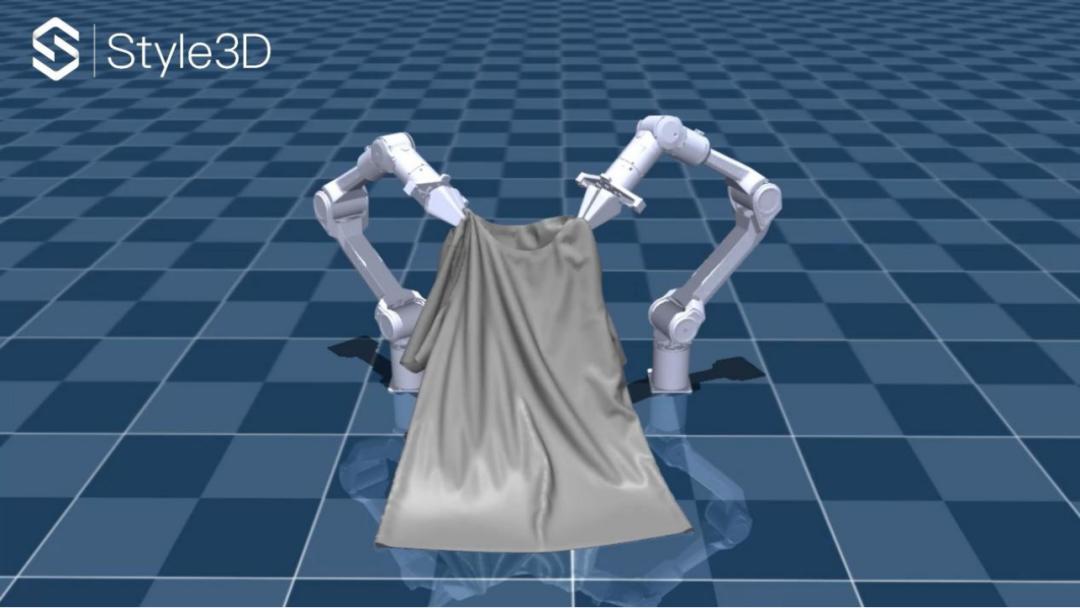
Lingdi Technology's flexible 3D simulation technology (Source/Enterprise)
When two flexible objects come into contact, for example, when folding clothes, it is the folding and contact between the fabric and itself, and the complexity of its physical interaction is simply "hell-level difficulty".
This is why "flexible 3D simulation" is called the "Holy Grail of Embodied Intelligence": it not only has extremely scarce data and very high computing difficulty, but is also a technical problem that must be overcome for the implementation of embodied intelligence.
After all, just imagine what terrible consequences it would bring if a senior care robot treats human beings as non-deformable "rigid bodies".
02 The "Hidden Master" in the Clothing Industry
The problem of "flexible 3D simulation" has plagued the industry for many years. When all the spotlight is focused on robotics companies and AI labs, no one expected that the real game-changer would come from a seemingly "unrelated" field.
3D clothing technology.
How does a piece of virtual fabric drape? How does it flutter? How does it twine, bend, stretch and fold with another piece of fabric? These problems regarded as "hell-level" in the field of physical simulation are exactly the daily work of Lingdi Technology.
Founded in 2015, this clothing technology giant has accumulated massive, high-quality and extremely scarce "3D flexible simulation data" over ten years. As a hidden champion in the clothing technology field, it is not only consistently listed in the "Hangzhou Unicorn Enterprise List", but also ranks among the "Eighteen Arhats of Hangzhou Embodied Intelligence" by virtue of its flexible 3D simulation technology.
Of course, data accumulation alone is not enough.
Over the past decade, Lingdi Technology's research team has made amazing long-term investment in the basic research of physical simulation of flexible objects. It has published a number of research results at top global graphics conferences such as SIGGRAPH, covering core technical issues including deformable body physical simulation, complex contact processing and high-performance numerical calculation.
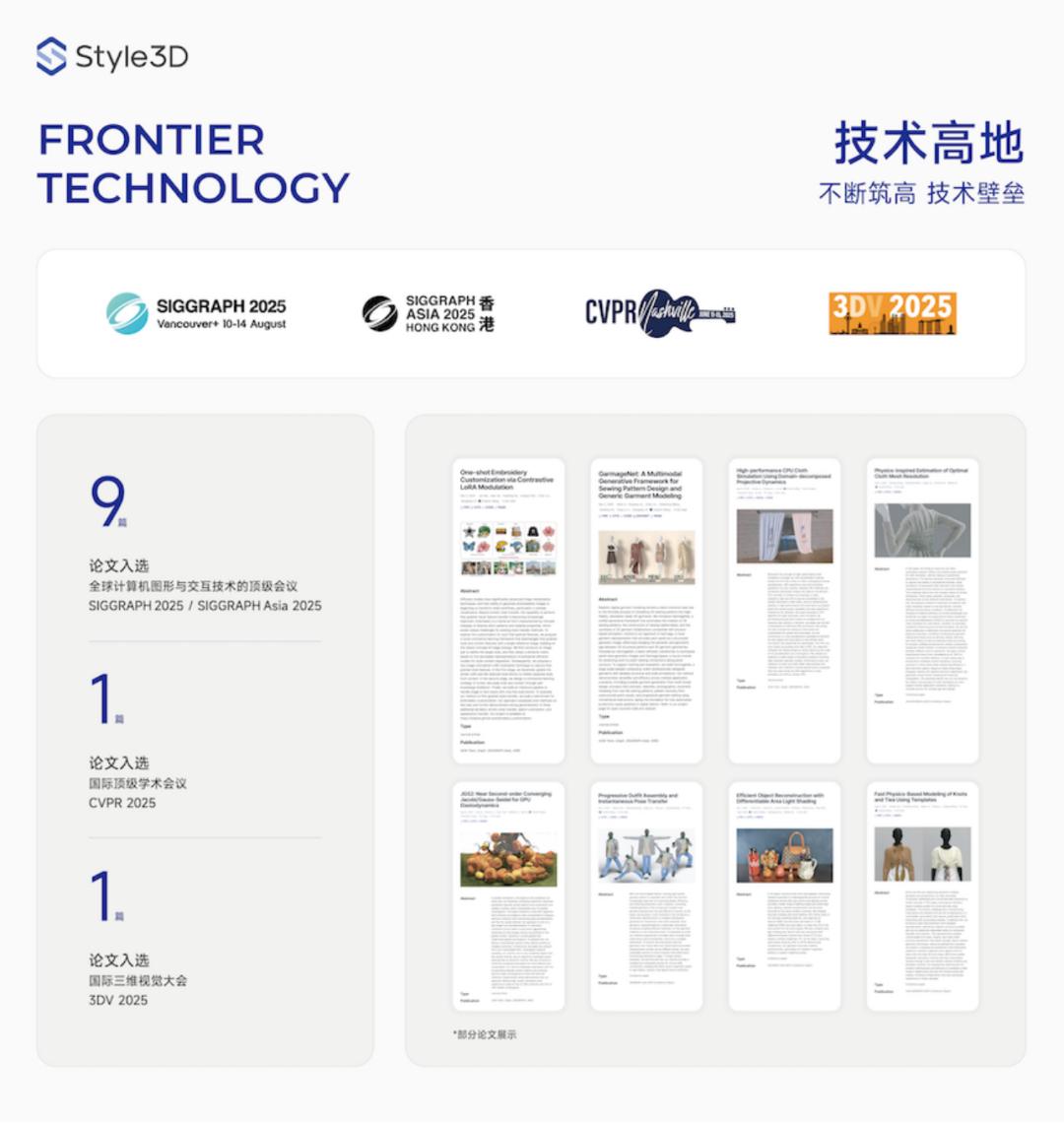
Lingdi Technology's paper achievements in 2025 (Source/Enterprise)
Therefore, while the embodied intelligence industry is struggling for half a year to collect data for "folding a piece of clothing", Lingdi Technology's "arsenal" has already stored ammunition for ten years. While people are suffering from the "hell-level difficulty" of flexible 3D simulation calculation, Lingdi Technology's basic research is "finding solutions" for this problem.
Now, this "hidden master" has finally stepped onto the front stage.
The SynReal physical simulation and synthetic data system launched by Lingdi Technology is the "masterpiece" that condenses its ten years of experience.
It will try to hold that "Holy Grail" and let robots truly touch the "soft side of the world".
03 3D Simulation Determines the Upper Limit of Embodied Intelligence
SynReal is mainly composed of three parts:
1. SynReal Sim — High-fidelity simulation engine;
2. SynReal Arena — Embodied intelligence training platform;
3. SynReal Core — Training model based on large-scale synthetic interactive data.
It may sound a bit complicated. To put it simply, SynReal Sim is responsible for creating a "virtual world" that conforms to physical rules, SynReal Arena provides a "virtual training ground" for robots, and SynReal Core is responsible for enabling robots to learn and develop capabilities.
The combination of the three forms a SynReal "robot training school". Robots can go through millions of "virtual trainings" per minute in it, gradually learning how to interact with the physical world, and then go to the real world to "work" after "graduating" from the school.
In contrast to the "virtual school" of physical simulation and synthetic data systems like SynReal, another training idea for embodied intelligence is to train robots through manually collected data, which we call "textbook-style" robots.
In comparison, this training method is technically simpler to implement, and since the "textbook-style" data comes from the real physical world, it can contain certain details and noises, which can help robots adapt to the real environment.
However, the disadvantages of the "textbook-style" approach are also extremely significant — it is very expensive, time-consuming and labor-intensive, and difficult to generalize.
It should be noted that the data collection time of the "textbook-style" approach is often measured in "months" or "years". The collection of high-quality demonstration data for a single task often takes a professional team several months, with costs ranging from hundreds of thousands to millions of yuan.
In contrast, the simulation platform can generate millions of data trajectories covering rich changes within a few hours, and such cost control and data scale are almost impossible for the "textbook-style" approach to achieve.
Compared with other Physics AI simulation platforms, "authenticity, speed and stability" are the three unique advantages of SynReal.
First is "authenticity". Supported by the reserve of massive rigid and flexible 3D simulation data, SynReal can not only provide robots with a more realistic, more complex and more realistic training environment closer to the real world, but also achieve more accurate statics and dynamics calculation, with an error nearly 20% lower than the industry benchmark Isaac Sim.
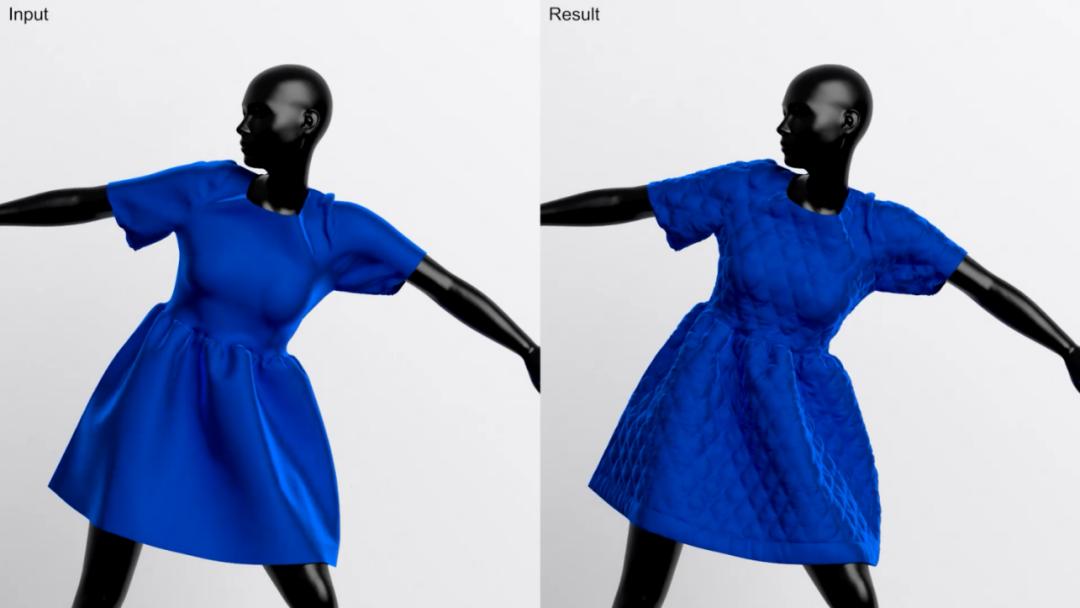
High-fidelity physical simulation effect (Source/Enterprise)
Second is "speed", which is also one of the most important indicators of the "robot virtual school". The simulation speed determines whether data generation can be scaled up. Lingdi's technical team has reconstructed the overall process of "flexible 3D simulation" around the GPU parallel computing architecture, which can greatly improve the simulation throughput. The simulation speed is 5-10 times faster than Isaac Sim, significantly improving the robot training efficiency.
Last is "stability". As mentioned above, the 3D simulation of a single flexible object is already very difficult, and the physical interaction difficulty when two or more flexible objects come into contact will "explode" directly — in 3D games, flexible objects such as hair and clothes are most prone to "clipping" issues. To solve this problem, Lingdi's technical team introduced the IPC (Incremental Potential Contact, the latest innovative idea proposed at SIGGRAPH 2020) path calculation method into the simulation, enabling SynReal to maintain simulation stability even under frequent changes of multi-point, multi-layer and self-contact, so that robots can obtain more stable and reliable learning results in complex scenarios.
Only a more realistic, more efficient and more stable "virtual school" can train smarter, more dexterous embodied intelligent robots that are more adaptable to the complex real world.
At a time when labor costs are getting increasingly expensive and the demand for robot training is exploding, using massive, low-cost and high-quality simulation data to train robots is undoubtedly the general trend.
Only through repeated tempering in the "virtual school" can robots truly reduce costs, change from costly "lab treasures" and "stage performers" to massively deployable "social labor", stepping into families and thousands of industries to do laundry, cook, provide elderly care and companionship.
The turning point of history is often driven by "cross-border practitioners".
Just as NVIDIA's "old business" was gaming graphics cards and Xiaomi's old business was "enthusiast smartphones", a large number of technological breakthroughs and industry leaders are actually "cross-border practitioners".
"Cross-border practitioners" carry completely different industrial genes. They use the deep accumulation of new fields to "overtake on a different track" and solve stubborn pain points in old fields, without outdated thinking patterns, but only new tools and new perspectives to solve problems.
Flexible 3D simulation is the key technical watershed of the current embodied intelligence industry, and Lingdi, which owns the entire treasure house of flexible 3D models, is exactly the "cross-border practitioner" that the industry most needs at present.
Lingdi Technology's 10-year accumulated flexible 3D simulation technology in the clothing technology field, combined with its engineering capabilities deeply optimized for parallel computing, has built an extremely realistic, efficient and stable SynReal "virtual training ground", directly targeting the long-standing pain points of the robot training industry: "high cost, low speed, and difficulty in generalization".
It is undeniable that today's robots are still far away from people's daily lives.
The past decade has seen rapid development of software AI. We have witnessed the emergence of neural networks, deep learning, and large language models that are popular all over the world.
But as the well-known joke on the internet goes — "I hope AI can help me do the laundry and dishes, so that I