More popular than the iPhone? The "Xiaotiancai landline" has become extremely popular overseas. It can only make calls, yet it's actually sold out?
Open a paper address book, find the number along the names, and then press the keys one by one. Clutch the receiver and wait for the long "beep" sound.
This series of actions is the collective memory of a bygone era for a generation.
But recently, this action has been making a comeback among North American teenagers -
A landline called Tin Can has created a social network similar to that of Xiaotiancai in North America. It has sold hundreds of thousands of units in just one year since its launch, and the backlog of pre - order lists once approached 100,000 people.
Currently, the official website shows that it is out of stock, and the next batch will be shipped in June.

A research report from the Pew Research Center shows that among more than 20 million 8 - 10 - year - old children in the United States, only 29% are using their own smartphones. In other words, 70% of child users have potential demand for buying mobile phones. Tin Can targets this market of tens of millions of users and is the product most likely to compete with the iPhone.
Tin Can is a real landline
Don't get me wrong. Tin Can is not a toy with a conceptual packaging. It is really a landline, priced at $100.
It consists of two parts: a base that can be hung on the wall, and on the other side, a handset with a receiver, a microphone, and physical number keys, connected by a coiled telephone line.
(It's a bit absurd that I even need to specifically emphasize that a landline has physical keys and a coiled line 🤣)

It also has all the necessary functions such as a hands - free speaker, speed - dial keys, and an answering machine.
Using Tin Can is also very simple. This landline can connect to Wi - Fi, but it has no screen. Plug it in, connect to the Internet, and calls between the same devices are completely free. It can also directly dial emergency numbers like 911 to call the police.

If you need to contact the outside world, parents only need to pay a monthly subscription fee of $10 to set up an exclusive whitelist for incoming calls, completely eliminating unknown calls and blocking online sales pitches.
Tin Can has even considered the scenario where parents don't live together: put a Tin Can in each of the two homes and share the same number. No matter which parent's place the child goes to, they won't miss calls from friends.
It can be said that except for not being able to connect to a landline, it is a real landline.
Of course, it is also similar to the "Xiaotiancai" that domestic users are more familiar with in terms of functions and logic.

But this simple landline has given rise to an interesting usage habit -
To prevent children from doing other things around the house while on the phone, Tin Can deliberately doesn't have a built - in battery and must be plugged in, keeping the child in one place and forcing them to focus on the conversation;
Coupled with the lack of a screen and a one - click synced contact list, to talk to friends, children have to return to the most primitive action: copy their classmates' numbers stroke by stroke into a paper address book.
Chet Kittleson, the CEO of Tin Can, said that this is also the source of his inspiration:
Text and video hinder the development of real communication skills. Everyone should learn how to deal with the natural pauses during a call in a more meaningful way.
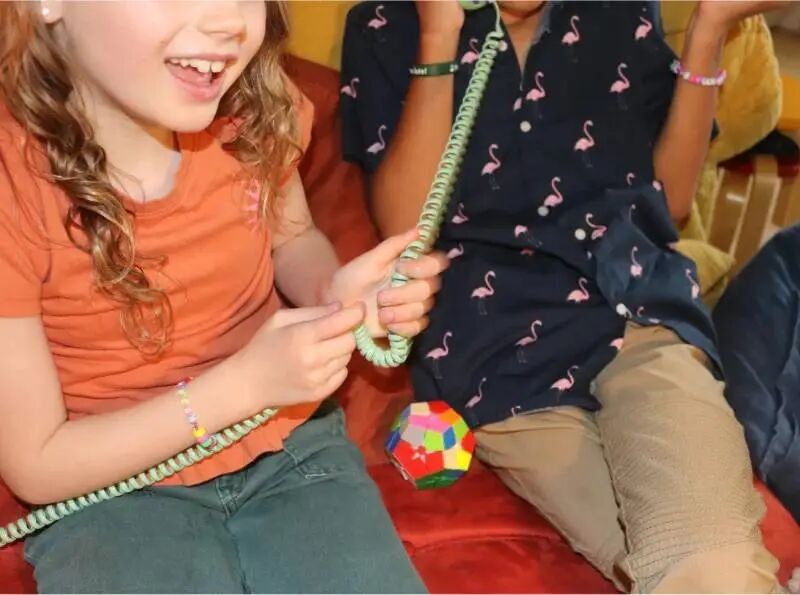
This small device has even caused an absurd - looking incident.
Just during the recently passed Christmas, due to too many families opening it as a gift and connecting it to Wi - Fi, the surge in activation volume crashed Tin Can's servers.
A company that produces landlines actually suffered a server outage because of too many new users.
Even more incredibly, as the first - generation hardware of a startup, Tin Can actually has quite a few problems: the underlying VoIP causes a 1 - second delay in calls; the physical keys are too hard for kids; the USB - C power supply interface comes loose easily when pulled.
Moreover, there are already imitators eyeing the market, such as Karri in the UK and Pinwheel, which is preparing to launch a low - cost competitor.
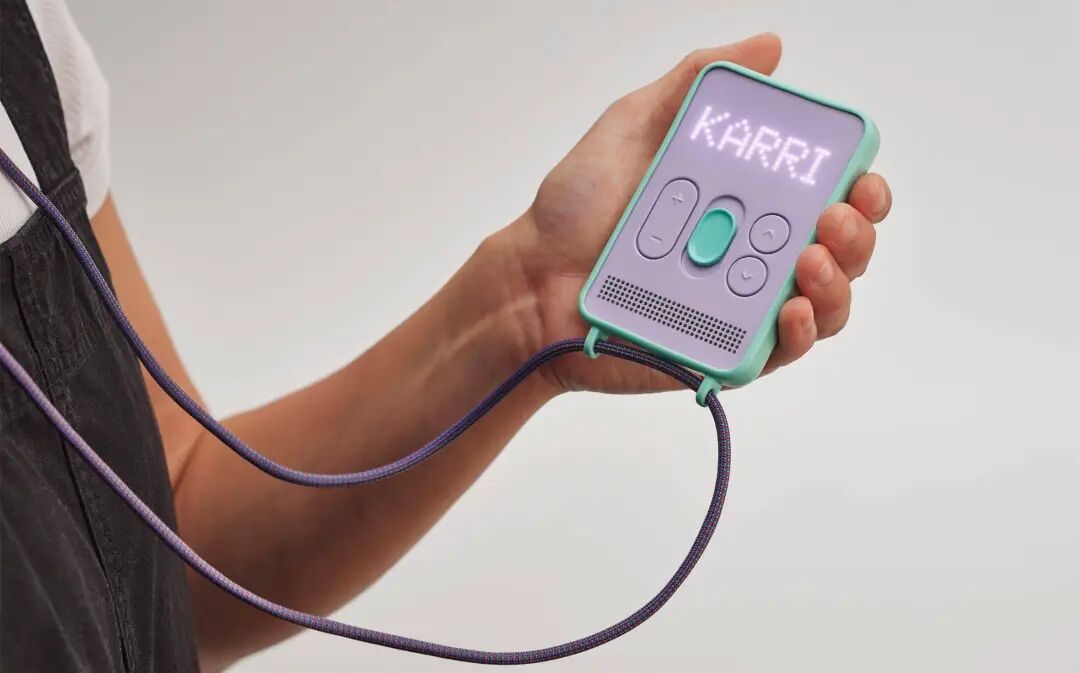
But even so, parents and children still love it. Part of the reason lies in its ingenious design -
As a device that is actually anti - technology, Tin Can has chosen a solution that appeals to both the young and the old. It uses bright cream colors and toy - style packaging to please children and reduce the younger generation's resistance to old - fashioned things;
It also uses the classic wall - mounted landline shape and completely retro physical interaction to quickly evoke the growth memories of parents.
To enhance the sense of retro in muscle memory, Tin Can is also very particular about the detailed design. Kittleson once revealed that he even spent a lot of time testing the coiled telephone line just to find the perfect elasticity and stretch, so that parents of the millennial generation can be transported back to their living rooms in the 1990s the moment they pick up the handset.
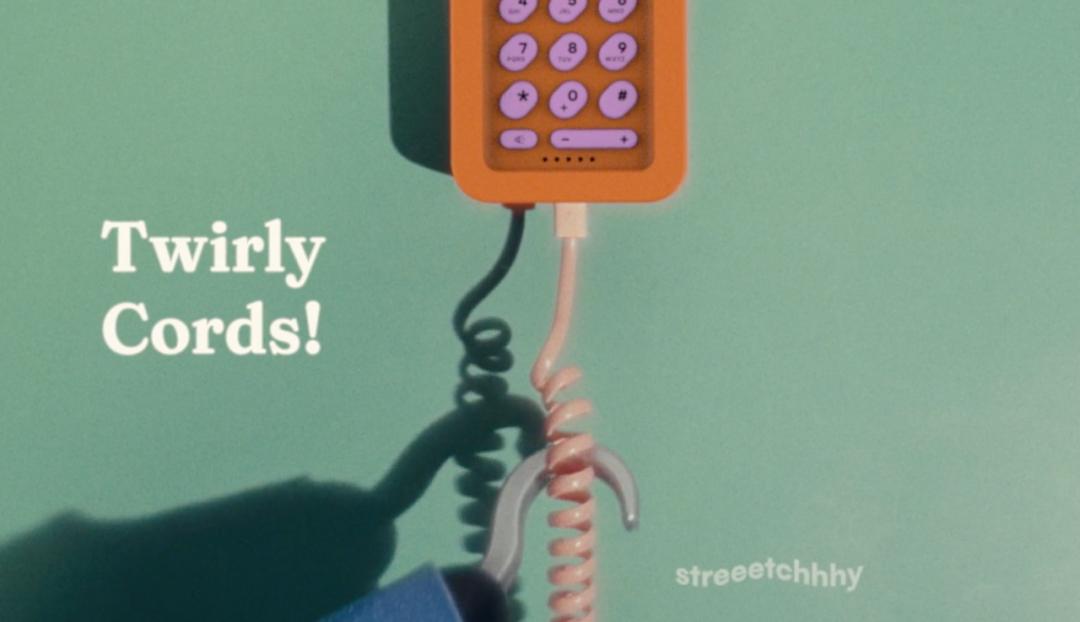
This kind of catering is very smart.
Chet Kittleson, the CEO of Tin Can, obviously understands a truth: the users of Tin Can are children, while the decision - makers are parents. To "win over" both adults and children, he revealed the secret behind it:
We could have created a modern device and designed it to cater to children. But I want it to have an intuitive connection with the real buyers - that is, the parents. It can directly awaken the simple childhood memories of adults, which is exactly what we all long for now.
But obviously, if it's just about design, Tin Can can at best be regarded as a delicate toy and a unique gift.
It's not convincing enough to be a best - seller.
Anxiety is the key to Tin Can's success
Looking around, a battle to defend the digital frontier of minors has been launched globally.
In the AI era, the cost of content production has been significantly reduced, the density of junk content has reached an all - time high, and the cost of discrimination has further increased, which has actually troubled minors whose values are in the process of being formed.
Psychologists at New York University presented shocking data in "The Anxious Generation": between 2010 and 2015, with the popularization of smartphones and social media, the depression and anxiety rates of American teenagers soared by 134% and 106% respectively.

Data and charts from @Jonathan Haidt
The social media ban for those under 16 in Australia has been officially implemented. The UK government is also brewing similar tough regulations, which are expected to be implemented in the coming days.
In Los Angeles across the ocean, a 20 - year - old girl sued Meta and Google, accusing the tech giants' algorithms of inducing her mental health problems, and won this milestone - setting lawsuit.

Meta paid $2.1 million for this. Picture from @Reuters/Mona Edwards
Self - rescue efforts by parents are also in full swing. The "Wait Until 8th" movement in the United States (not giving smartphones to children before the 8th grade) and the "Kitchen Phone" principle popularized by the wife of a former NFL star (only putting landlines in the living room and banning mobile phones from the bedroom) are all trying to pull children away from the screen.
When society as a whole is gradually turning towards social media anxiety, Tin Can Untechnologies Inc. was born.
Chet Kittleson, the CEO of this startup, is also a father. His entrepreneurial motivation is very personal: he was fed up with acting as a "social secretary" in the parent group, sending text messages back and forth every day to arrange playdates for his children.
With the obsession of "letting children handle their own social interactions", he and two old friends spent a week at the kitchen table, assembled several prototype machines, and gave them to his daughter's friends.
A miracle happened at 8:15 am the next morning - the handset rang. It was the first time his daughter received an invitation to go to school with a friend without the help of any adults.

Subsequently, Kittleson even went door - to - door to install about fifty prototype machines, asking parents what they were most worried about while installing, and then adjusting the product accordingly.
This kitchen experiment made Kittleson see the huge potential behind it.
In April 2025, Tin Can Untechnologies officially launched the Tin Can landline, directly removing the "Internet access" option from the hardware level.
In the frenzy where the entire industry is vying for AI opportunities, this company with "Untechnologies" in its name was spotted by capital at a glance. They first received a $3.5 million investment, and then won a $12 million seed round led by top venture capital firm Greylock Partners.
Mike Duboe, a partner at Greylock, clearly pointed out the value of this non - technology company in a press release: Tin Can is redefining how we view modern social interaction through its products.

Mike Duboe
Capital has always had a keen sense of smell. What attracts real money is not the landline or Wi - Fi, but the collective anxiety of parents around the world approaching a critical point and the huge market gap hidden behind it.
With sufficient resources, Tin Can is competing with the iPhone and Galaxy and is becoming a new trend growing against the odds on North American campuses.
At Nativity Parish School on the outskirts of Kansas City, as many as 95% of families have joined the program centered around Tin Can to establish a new social paradigm among minors;
At St. James Episcopal School in Los Angeles, the school is planning to distribute this device for free to all 220 families in the school to replace the group text messages that easily lead to comparisons and even turn into invisible bullying during the summer vacation.
It is extremely difficult to ask a single child to put down their smartphone, as it will immediately make them a social outcast among their peers. But what if hundreds of families make a joint agreement?
By pulling children into a local area network without filters, likes, or strangers, where all social interactions are based on the real world, everything becomes logical.
There are Xiaotiancai - like products in both China and the US, but they are different
In a sense, this approach is not unfamiliar to Chinese readers. From the perspective of its strong expansion momentum and the establishment of a new social paradigm for minors, Tin Can is simply the "North American version of Xiaotiancai".
However, the birth and evolution of products are inseparable from the environment. The world in different periods has given Xiaotiancai and Tin Can different ideas:
Xiaotiancai's success is based on the mature "social network effect" and "attention economy".
Since the launch of its first - generation product in early 2015, Xiaotiancai has quickly topped the Chinese children's smartwatch market. At its peak, it occupied half of the domestic market, and it still holds a nearly 30% share and ranks first in the industry. The price of its high - end flagship model has reached as high as 2,399 yuan, comparable to a smartphone.
