CATL's Ambitious Vision: When the Battery Giant Decides to Do More Than Just Sell Batteries
- Hosted the New Product Launch of the Super Technology Day
- Launched five battery models
- The biggest resistance it faces comes precisely from its most important customers, the vehicle manufacturers.
On the evening of April 21st in Beijing, CATL held the New Product Launch of the 2026 "Polar Realm Appointment" Super Technology Day. The term "Polar Realm" is quite significant - it can refer to the extreme limits of battery performance or be understood as the areas reached by CATL's expanding business territory.
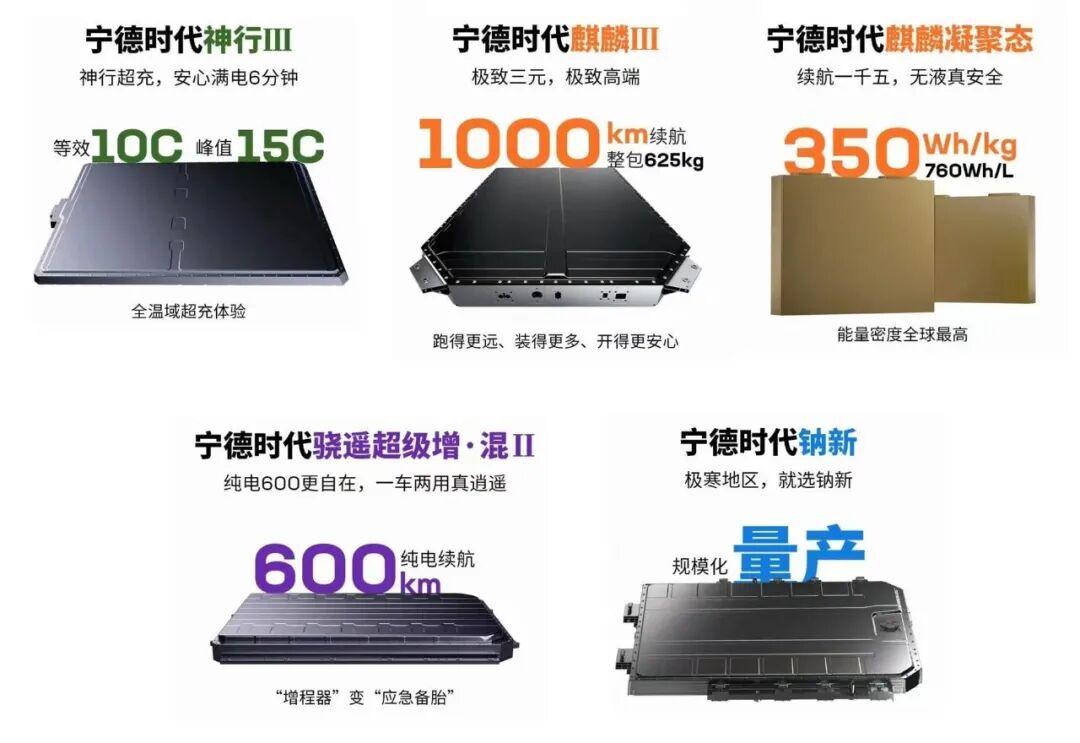
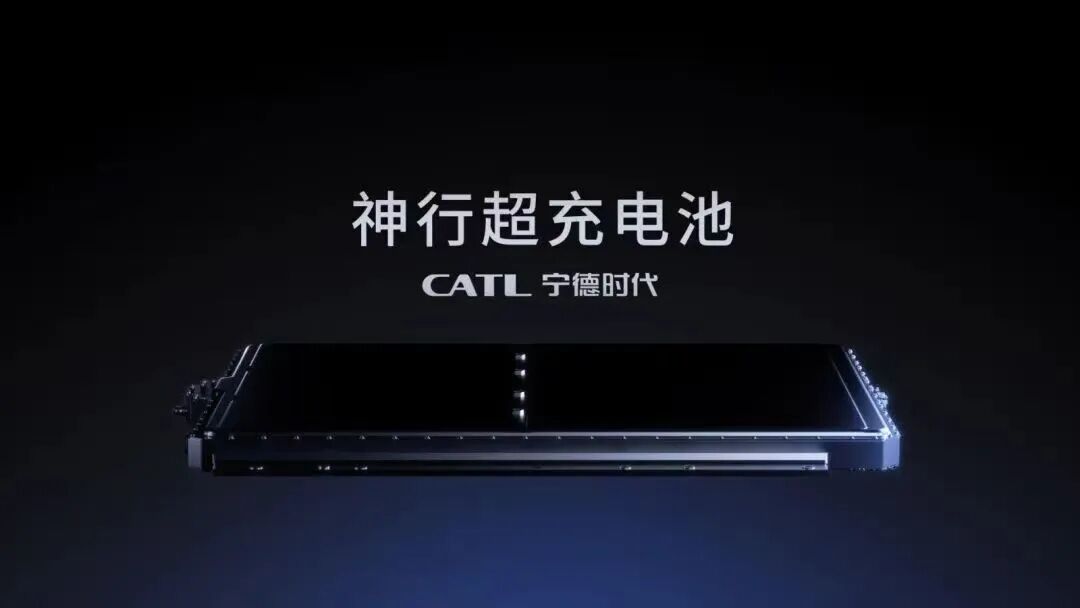
During the 90 - minute event, CATL launched five battery models: the third - generation Shenxing Ultra - fast Charging Battery, the third - generation Qilin Battery, the Qilin Condensed - State Battery, the second - generation Xiaoyao Super Hybrid Battery, and the NaNew II Battery. Each model has refreshed certain industry parameters - fully charged in 6 minutes, 1500 - kilometer range, and stable discharge at minus 50°C. These figures quickly occupied the media pages that evening and the next day.
However, the parameters are just the most superficial part of this launch. What's more worthy of in - depth consideration is the card that CATL revealed at the end of the launch: a full - scenario energy replenishment network called "Ultra - fast Charging and Battery Swapping Integration", and the plan to jointly build the "Ultra - fast Charging and Battery Swapping Shared Network" with six automakers, including Changan, Chery, GAC, Seres, Wuling, and BAIC.
Putting these two things together, what CATL wants to say is clear: it doesn't just want to sell batteries; it wants to become the "energy infrastructure" in the era of new energy vehicles in China.
This means a profound species evolution: from a manufacturer to a platform operator. And in this evolution, the biggest resistance CATL faces comes precisely from its most important customers - the vehicle manufacturers.
01
The Battery Matrix Has Wildly Refreshed Industry Parameters
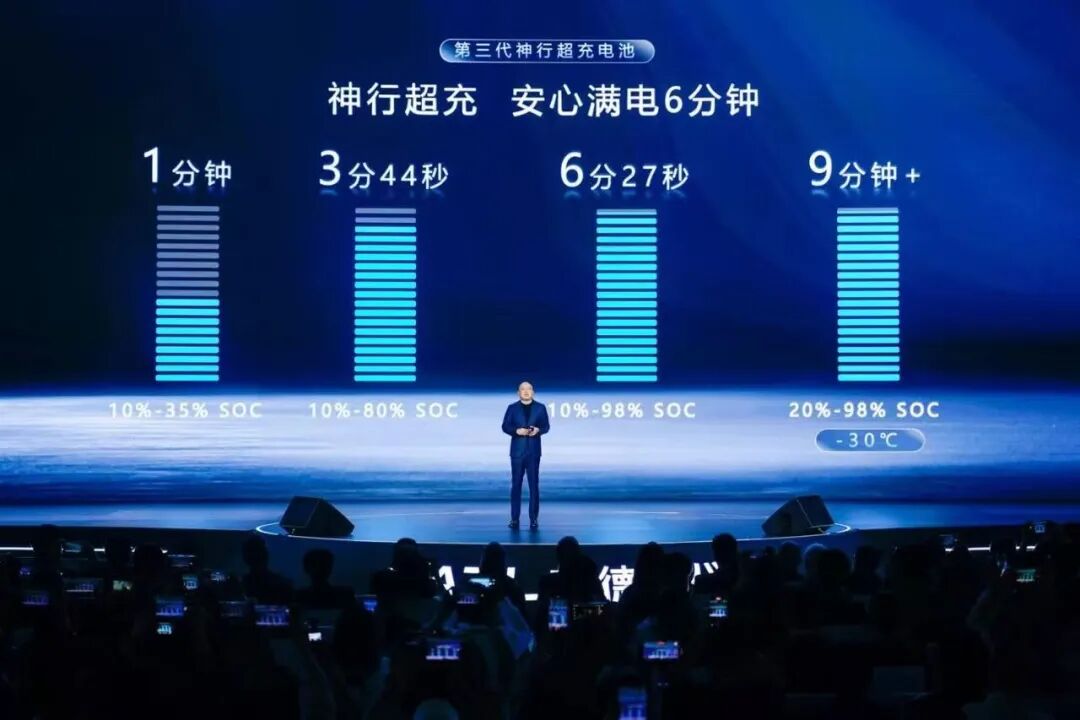
The third - generation Shenxing Ultra - fast Charging Battery is the most straightforward "killer weapon" at this launch. With an equivalent charging rate of 10C and a peak of 15C, it only takes 3 minutes and 44 seconds to charge from 10% to 80%, and 6 minutes and 27 seconds to fully charge. More importantly, in the extremely cold environment of minus 30°C, it only takes about 9 minutes to charge from 20% to 98%. This figure is already close to the time experience of refueling a fuel - powered vehicle.
CATL has extended its ultra - fast charging ability from the Shenxing brand to the Qilin and Xiaoyao brands, announcing that its three major brands have "fully entered the era of being fully charged in six minutes". Ultra - fast charging has changed from being exclusive to flagships to being a standard feature across the entire product line.
The Qilin Condensed - State Battery represents a breakthrough in another dimension. With a cell energy density of 350Wh/kg and the battery pack controlled within 650 kilograms, an executive - class sedan equipped with it can achieve a range of 1500 kilometers. This is a historic record for the energy density of mass - produced batteries. CATL's "transfer" of the condensed - state electrolyte technology from the aviation scenario to mass - produced passenger cars means that the technological gap of ternary lithium batteries in the high - end market is rapidly widening.
The NaNew II Battery bears another strategic logic. It has a pure - electric range of 400 - 600 kilometers, a capacity retention rate of over 90% at minus 40°C, and can still discharge stably at minus 50°C. CATL calls it "the world's first mass - produced automotive - grade sodium - ion battery" and announces that it will be officially mass - produced by the end of the year and installed in models such as GAC Aion, Changan Oushang, Geely Xingyuan, and Chery QQ3.
From the perspective of the technological product matrix, CATL has achieved a precise full - price - range coverage: the NaNew is targeted at the mainstream market of 100,000 - 200,000 yuan, the Shenxing III covers the mainstream pure - electric segment of 200,000 - 300,000 yuan, the Qilin III is for the high - end market above 300,000 yuan, and the Qilin Condensed - State Battery is aimed at the luxury market above 500,000 yuan and new scenarios in the low - altitude economy. There are no blind spots.
CATL's CTO, Gao Huan, said a sentence at the launch, which was more straightforward than any parameter at the event: "Using lithium iron phosphate batteries in vehicles priced above 250,000 yuan is a disguised form of downgrading."
02
Targeting "Ultra - fast Charging and Battery Swapping Integration"
CATL saved the "Ultra - fast Charging and Battery Swapping Integration" for the end of the release, which is the most strategically significant part of this technology day.
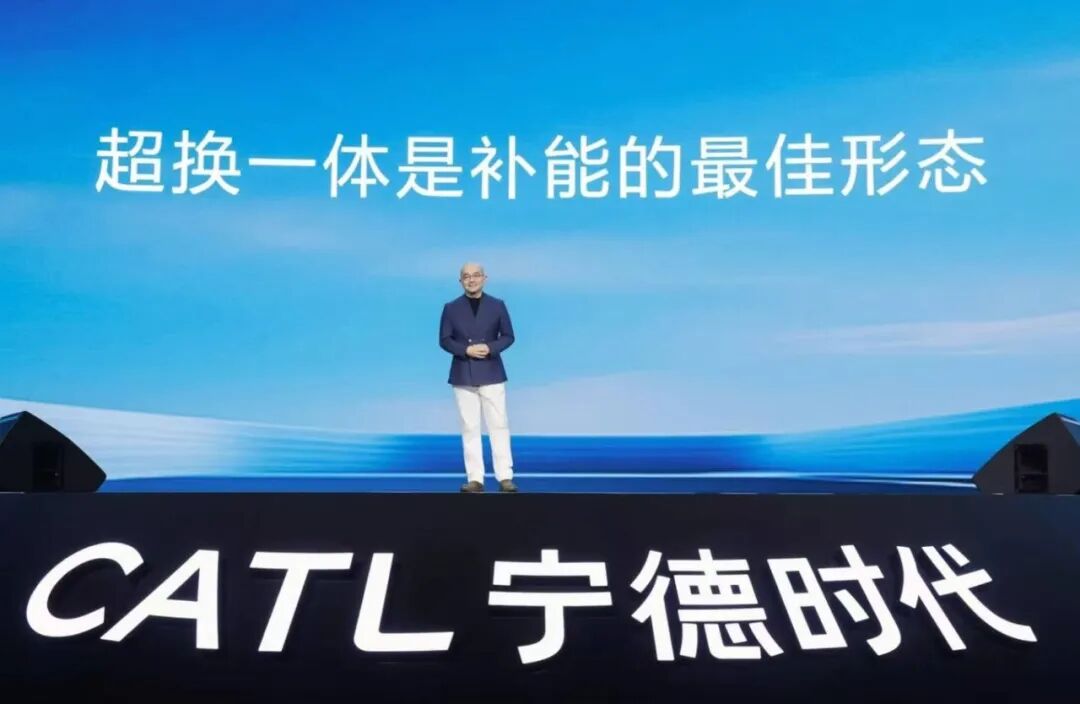
CATL announced that the passenger - car "Chocolate" and heavy - truck "Qiji" battery - swapping stations will be equipped with Shenxing ultra - fast charging piles as standard across the entire product line, forming the "Ultra - fast Charging and Battery Swapping Integrated Station" - each station can both swap batteries and provide ultra - fast charging. The stations share the box - type substation and charging modules. The comprehensive electricity loss rate is 13 percentage points lower than that of similar energy - storage charging stations in the market. The equipment reuse rate is over 85%. The service capacity per parking space is three times that of traditional energy - storage charging stations, and the fixed investment cost of the ultra - fast charging part is only 1/5 of the latter.
The goal is to build 4000 ultra - fast charging and battery swapping integrated stations by the end of 2026, covering 190 cities; and to construct over 100,000 shared energy replenishment infrastructure facilities by the end of 2028.
The reference for this figure is that the total number of gas stations in China is currently about 100,000.
CATL also announced an unexpected function - in the second half of this year, users of the Chocolate battery - swapping service can "sell electricity back" their fully - charged Chocolate batteries to the battery - swapping stations during peak electricity price periods and earn dozens of yuan in revenue per day. This is the implementation of V2G (Vehicle - to - Grid) technology on the user side and also the first step for CATL to turn battery - swapping users from "service consumers" into "energy network participants".
What CATL is building is the "energy gas station system" in the new energy era in China - except that this time, CATL is not only the "oil company", but also the "gas station operator" and the "gasoline standard setter".
The commercial value of this logic far exceeds that of simply selling batteries. Once the battery - swapping network reaches a certain scale, CATL will simultaneously control battery health data, user energy - replenishment behavior data, power dispatching rights, and the ownership of battery assets under the "separation of vehicle and battery" model. These assets will ultimately lead to a re - division of the entire new energy vehicle value chain.
03
A Fundamental Contradiction
The deepest - level challenge CATL faces does not come from BYD or CALB, but from its own most important customer group.
The reason is not complicated. Battery cost accounts for 30% - 40% of the total vehicle cost. The stronger CATL becomes, the thinner the profit margin of vehicle manufacturers will be. "Reducing reliance on CATL" - introducing a second supplier, self - developing batteries, and vertical integration - has been an unspoken major trend in the industry in the past few years. Self - developing batteries takes a cycle of 5 - 8 years, and it is difficult to get rid of the dependence in the short term, but the long - term pressure is real.
Now, CATL not only wants to sell batteries but also control the battery - swapping standards, operate the battery - swapping network, and capture the user energy - replenishment entry point. This step has completely touched the bottom line of automakers.
In 2022, when CATL first launched its battery - swapping solution EVOGO, an automotive analyst said a sentence that is still accurate today: "Just as SAIC was unwilling to cooperate with Huawei before, today's automakers are also unwilling to hand over the 'core' of the battery to the supplier."
The reason why SAIC refused Huawei's intelligent driving system back then was that it didn't want to hand over the "core". Today, the mentality of automakers when facing CATL's battery - swapping ecosystem is highly similar - the intelligent driving system controls driving data and brand perception; the battery - swapping standards are directly related to the ownership of battery assets, the vehicle pricing power, and the profit distribution under the future "separation of vehicle and battery" model.
This is not an interest conflict that can be resolved through negotiation but a structural zero - sum game: the more successful CATL is, the more the automakers will lose.
04
Five Paths to Break the Deadlock
CATL is not blind to this contradiction. In the publicly observable strategic moves, it has already made arrangements in five directions simultaneously, and each direction points to the same goal: changing the nature of the game rather than directly breaking through the resistance.
First, form joint ventures to tie up automakers and make them a community of interests. On the manufacturing side, CATL has established joint - venture companies with mainstream automakers such as SAIC, GAC, Changan, Dongfeng, FAW, Geely, and Chery, and built battery factories within the automakers' bases. The "factory - within - a - factory" model has significantly increased the cost for automakers to switch suppliers - not only the technical switching cost but also the sunk asset cost. On the battery - swapping operation side, six automakers have joined the cooperation agreement, but the equity binding has not been completed yet, and deepening this aspect will be the key in the next stage.
Second, start with commercial vehicles and establish a basic market where the resistance is the smallest. Heavy - truck and ride - hailing operators calculate the full - life - cycle cost and have no concerns about brand "core". CATL has launched the 75# standardized heavy - truck battery - swapping block and announced that it will build an "Eight Horizontal and Ten Vertical" green battery - swapping network covering 80% of the national trunk - line transportation capacity by 2030; at the same time, it has established a joint - venture company "Era Xiaoju" with Didi and entered the battery - swapping operation from the ride - hailing scenario. The maximum daily service times at the first station in Wuxi reached 822 times. Once the profit model for commercial vehicles is proven, it will provide real - world commercial verification for the passenger - car market.
Third, promote the narrative of "separation of vehicle and battery" and turn "losing control" into "unloading a burden". The depreciation of battery residual value is the biggest pain point in the new energy used - car market. Under CATL's battery - swapping system, the batteries are owned by CATL's battery - swapping service subsidiary. In fact, automakers have transferred a heavy asset risk - they can sell cars at a lower price, and the used - car value retention rate will be higher. The newly added V2G electricity - selling - back function at this technology day has further turned battery - swapping users into beneficiaries of the energy network, reshaping consumers' perception of the value of the "separation of vehicle and battery" model.
Fourth, make private standards become national standards. Instead of "handing over" the battery - swapping block standards to industry associations, CATL has chosen a more efficient path: the Chocolate battery - swapping block has become the first standardized battery - swapping brand in China to pass the new national standard GB 38031 - 2025 test. The Chocolate and Qiji battery - swapping brands have participated in formulating dozens of national and industry standards. If the physical dimensions of the 20#/25# battery - swapping blocks ultimately become national standards, CATL will change from a "standard setter" to a "standard interpreter" - while reducing the automakers' suspicion, it will actually firmly hold the technical discourse power. If this step is successful, it will be a moat more binding than any cooperation agreement.
Fifth, tie in with the national energy strategy and upgrade the level of the game. This is the step with the most strategic depth among the five paths. In April 2025, CATL signed a framework agreement with Sinopec in the form of "industrial cooperation + capital cooperation" to jointly build a national battery - swapping network, with the goal of building 10,000 battery - swapping stations. Sinopec currently has 30,000 energy - replenishment stations and serves 20 million customers per day on average. By leveraging Sinopec's station network, land resources, and government endorsement, CATL will upgrade the construction entity of battery - swapping infrastructure from a "private technology company" to a "national - level energy project jointly developed by a state - owned enterprise and a private enterprise". At that time, automakers will no longer be facing just CATL as a supplier but a new - type infrastructure backed by the national energy system. The nature of the game will be completely different from then on.
05
The Ambitions of the Strong
CATL currently has a solid foundation: in the first quarter of 2026, its operating income was 129.1 billion yuan, a year - on - year increase of 52.45%; the net profit attributable to shareholders was 20.7 billion yuan, a year - on - year increase of 48.52%, with an average daily net profit of 230 million yuan. The advance payments made by downstream customers to CATL reached as high as 49.2 billion yuan, a year - on - year increase of 77%.
This means that CATL has enough resources to bear the most difficult transition period for the battery - swapping business from loss to profit - which the industry usually calls the "valley of death". NIO struggled in this valley of death for many years and finally saw the dawn of single - station profitability after building user stickiness through free battery - swapping services. CATL's financial strength far exceeds that of NIO, so theoretically, it has the ability to hold on for a longer time.
However, strong financial strength cannot solve all problems. Transitioning from a manufacturing - based company to a ToC operator is a real "species barrier". Abilities such as site selection and