Sam Altman and AWS CEO Appear Together Rarely: Discuss Agents, Harness, and the Next Battle in the Cloud
Ben Thompson, the founder of Stratechery, interviewed both Sam Altman, the CEO of OpenAI, and Matt Garman, the CEO of AWS. At that time, the outside world didn't know that just three days later, Microsoft and OpenAI would announce the amendment of their multi - year exclusive agreement, and Azure would no longer be the sole cloud service provider for OpenAI's models. However, the logical contradiction of this cooperation was already on the table - why did the leaders of the two companies sit together?
The underlying logic is not complicated. Initially, Microsoft locked in a huge competitive advantage by having "Azure exclusively use OpenAI's models", but it also tied OpenAI's hands - a large amount of enterprise data was already on AWS, and customers didn't want to move just to switch models. Anthropic has seen rapid growth this year, precisely benefiting from the "models where the customers are" trend. For Microsoft, continuing to hold the exclusive right was actually harming its most important investment in OpenAI. Loosening the restrictions was painful - Azure lost a core differentiating weapon - but not doing so would be even more costly: if OpenAI's growth was restricted by the exclusive agreement, Microsoft, as the major shareholder, would suffer losses far greater than the benefits Azure could gain.
Thus, there was this joint release: Bedrock Managed Agents, powered by OpenAI. It can be understood as the "AWS version of Codex" - an intelligent agent operating environment that runs on the cloud and has complete identity, permission, logging, governance, and deployment capabilities. Customer data remains within AWS, and OpenAI does not access the raw data. The goal is to enable enterprises whose data is already on AWS to directly use the most advanced AI capabilities without migration.
The following is a summary of the core content of this interview. The original link: https://stratechery.com/2026/an - interview - with - openai - ceo - sam - altman - and - aws - ceo - matt - garman - about - bedrock - managed - agents/
1
The "AWS Moment" of AI: Making Agents Go from Operational to Usable
Sam Altman: Every time I see users using our models, I'm both happy that they think it's magic and frustrated by the unnecessary torture they go through. Users need to copy and paste things from one place to another, come up with a series of complex prompts, and keep trial - and - erroring - I see all these pains.
Matt Garman: Before this joint product came out, customers who wanted to use AI agents had to piece together all the components themselves - model calls, identity management, database authentication, integration with internal systems, and understanding of their own data. Every customer had to do it all over again. All these integration tasks were left for the customers to handle on their own.
Matt Garman: The security frameworks that AWS has built for global banks, medical institutions, and government agencies over the past 20 years - VPC (Virtual Private Cloud), role permissions, gateways - can just come in handy. What customers worry most about is "I love this technology, but how can I ensure that I won't make a mistake that could bring down the company?" These problems are solvable, and the key is to provide customers with a controllable sandbox environment.
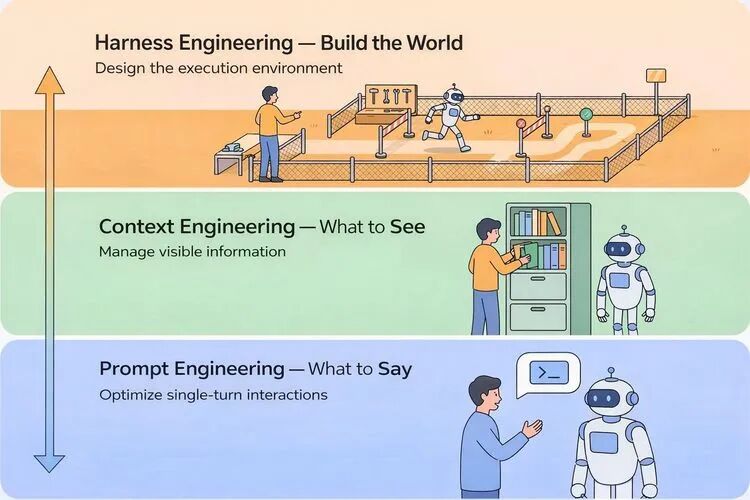
Sam Altman: The model and the orchestration layer (harness) are becoming increasingly inseparable. Many things that used to require painstaking adjustment at the system prompt level can now be handled by the model itself as it becomes smarter. For example, tool invocation - initially, we thought tool invocation didn't need to be integrated into the training process, but later we found that the deeper the integration, the better it works. The boundary between the orchestration layer and the model will continue to blur, and even pre - training and post - training will eventually be more closely combined. But the entire industry is still in the "Homebrew Computer Club" era - that is, the stage when personal computers were just emerging and no one knew what the final form would be.
2
Local vs. Cloud: The Two Paths Will Eventually Converge
Sam Altman: Codex moved from the cloud to the local environment because the local environment is simpler - your files and configurations are all there, and you don't need to worry about where the data is. But this is not the end. The ultimate form is the cloud - based agent - it continues to work on the cloud when you close your computer, can handle high - intensity tasks in parallel on the cloud, and can be scaled to a level that a single laptop can never achieve.
Matt Garman: No computing environment has ever truly eliminated the client. iPhone apps also have local components, and local operation has the natural advantages of low latency and ease of use. But once it comes to enterprise scenarios - sharing between two people, permission boundaries, security boundaries - the local environment falls short. Eventually, the local and cloud paths will definitely be combined.
Sam Altman: When agents enter the workforce as "virtual colleagues", all our mental models about software and permissions need to be rewritten. Should you, as an employee, have an account and let your agent use the same account? Or should the agent have a separate account so that the server can distinguish who is operating? What if a person has ten agents? I envision a "primitive" that hasn't been invented yet: when Ben's agent logs in, it uses Ben's account, but the system can mark that it's an agent rather than Ben himself. We haven't figured these out yet, but as agents join the workforce and become more and more autonomous, these issues will soon be on the table.
3
The "Intelligence Factory" and the Pricing Revolution
Sam Altman: Essentially, we are a "token factory" - no, it should be an "intelligence factory". Customers don't care what chips you use or how many tokens the model runs. They only care about one thing: getting the best intelligent units at the lowest price, as many as they need. The newly released 5.5 model has a much higher price per token than the previous generation, but the number of tokens required to complete the same task has been significantly reduced, making it cheaper overall. You shouldn't care about how many tokens you use; you should only care about how much you spend and whether the job is done. Pricing by tokens will become obsolete in the long run and will eventually evolve into charging by "completing a job".
Sam Altman: Water, electricity, and gas have elastic boundaries - you won't take two showers a day just because water is cheap. But intelligence may be different. I've never seen any other utility that makes me think "as long as the price is low enough, I'll use it without limit". Currently, more customers are asking me "give me more computing power no matter how expensive it is" rather than bargaining. But I'm confident in continuously and significantly reducing the cost of intelligence.
Matt Garman: This is completely in line with the historical trajectory of computing power. The cost of a computing cycle today is many orders of magnitude cheaper than it was 30 years ago, but the amount of computing sold today is more than in any other era. AI is still in its very early stages - people are rushing for cutting - edge models because only they can complete truly useful work. In the future, there will definitely be a mix of model structures: small and fast models for specific tasks, and cutting - edge giant models to tackle cancer.
4
What is the Endgame of Agents?
Ben Thompson: Enterprises may need two layers of agents. The lower - level agents' job is to continuously dig into various databases, SaaS applications, and file systems to retrieve, organize, and correlate information - this is a "data integration agent". The upper - level agents are responsible for interacting with humans, presenting results, and making decisions - this is the "user interface agent".
Sam Altman: When communicating with large enterprise customers recently, their needs have become increasingly consistent: they want an agent runtime environment, a management layer that can connect data and control token consumption, and a workspace for employees. People are describing this set of things more and more similarly, but the product hasn't been fully developed yet. But at some point, you may find that this multi - level architecture is just our reluctance to let go of the old world, and once the model is strong enough, the whole thing should be rebuilt from scratch.
Matt Garman: We don't fully know what the final form will be yet, and this is also the fun of doing this - let customers use it, learn from their practices, and then make the product faster and better in return.
Ben Thompson: Google just talked about full - stack vertical integration from chips (TPU) to models (Gemini) to applications at the Next conference, but you and Sam - one without a cutting - edge model and the other not a cloud provider - are sitting together to announce a cooperation. Is AWS lagging behind because it doesn't have its own cutting - edge model, or is it a deliberate choice of this open - ended route?
Matt Garman: Since day one of AWS, embracing partners has been one of our core strategies. Our measure of success is not "do I own everything", but "are our partners successful - if they are successful, we are successful". This is different from the philosophy of "I must own the full stack", but both routes have their believers. We believe that customers should have the right to choose the best things. If the best things are made by us, that's great. If the best things are from partners but run on our infrastructure, it's also a victory for us. No single company can own all the best applications.
Sam Altman: I truly believe that developers can now build a whole new class of products. The capabilities of models will improve at a very steep curve in the next year, and it's the right time for us to jointly build a platform. I hope that a year from now, when people look back, the focus of the discussion won't be "finally being able to use OpenAI on AWS", but "we completely underestimated the importance of this new product at that time".
Ben Thompson: The last time we did a product interview was with Kevin Scott from Microsoft about New Bing, and you were very confident about challenging Google at that time. How do you look back on it now?
Sam Altman: ChatGPT's performance exceeded our expectations at that time - it may be the first truly large - scale new consumer product since Facebook. The API and Codex also did well. But Google is still an underestimated company in many aspects - their breadth and depth are admirable. This cooperation with AWS is not only a win - win at the business level but also a new starting point at the technical level. When the model capabilities and orchestration tools finally reach an intersection, what developers can do will be completely different.
This article is from the WeChat official account "Silicon Star GenAI", and is published by 36Kr with authorization.