Who will be the first person to achieve rocket recovery in China?
The countdown reached zero, and flames gushed out from the bottom of the launch pad. A rocket was propelled into the sky by a powerful thrust. Just a few minutes later, the rocket body disappeared into the horizon, leaving only a brief and enthusiastic cheer at the scene.
For a long time, "successfully reaching space" was the entire meaning of the space industry.
But now, when people look up at the stars again, what truly determines the future of the industry is no longer how high or how far a rocket can fly - but whether it can return safely.
01 Differentiation
In the early stage of the development of commercial space, the core of the industry competition was to prove that private forces could also build a truly usable orbital rocket.
This consensus was soon completely disrupted.
When SpaceX achieved the vertical recovery of the first - stage rocket on an offshore platform, rockets changed from single - use consumables to reusable core assets, and the entire industry's competition logic was completely rewritten.
The evaluation criteria have since shifted: it is no longer about whether it can reach space, but whether it can be reused.
This change also occurred in China. Most of the early domestic private space entrants came from traditional space research institutes and the military - industrial system and were well aware of the technical complexity and risks of the industry. They clearly realized that relying solely on single - use rockets could not support the future high - frequency and large - scale launch requirements.
In the eyes of these practitioners, rocket recovery is a long - term goal that needs to be steadily tackled and gradually implemented within the existing system.
Leading players represented by Landspace adhere to the route of heavy - liquid rockets + high - performance liquid engines, and embed the recovery ability into the overall engineering system from the design source. For them, recovery is not a radical experiment, but a natural result after the maturity of the entire system technology.
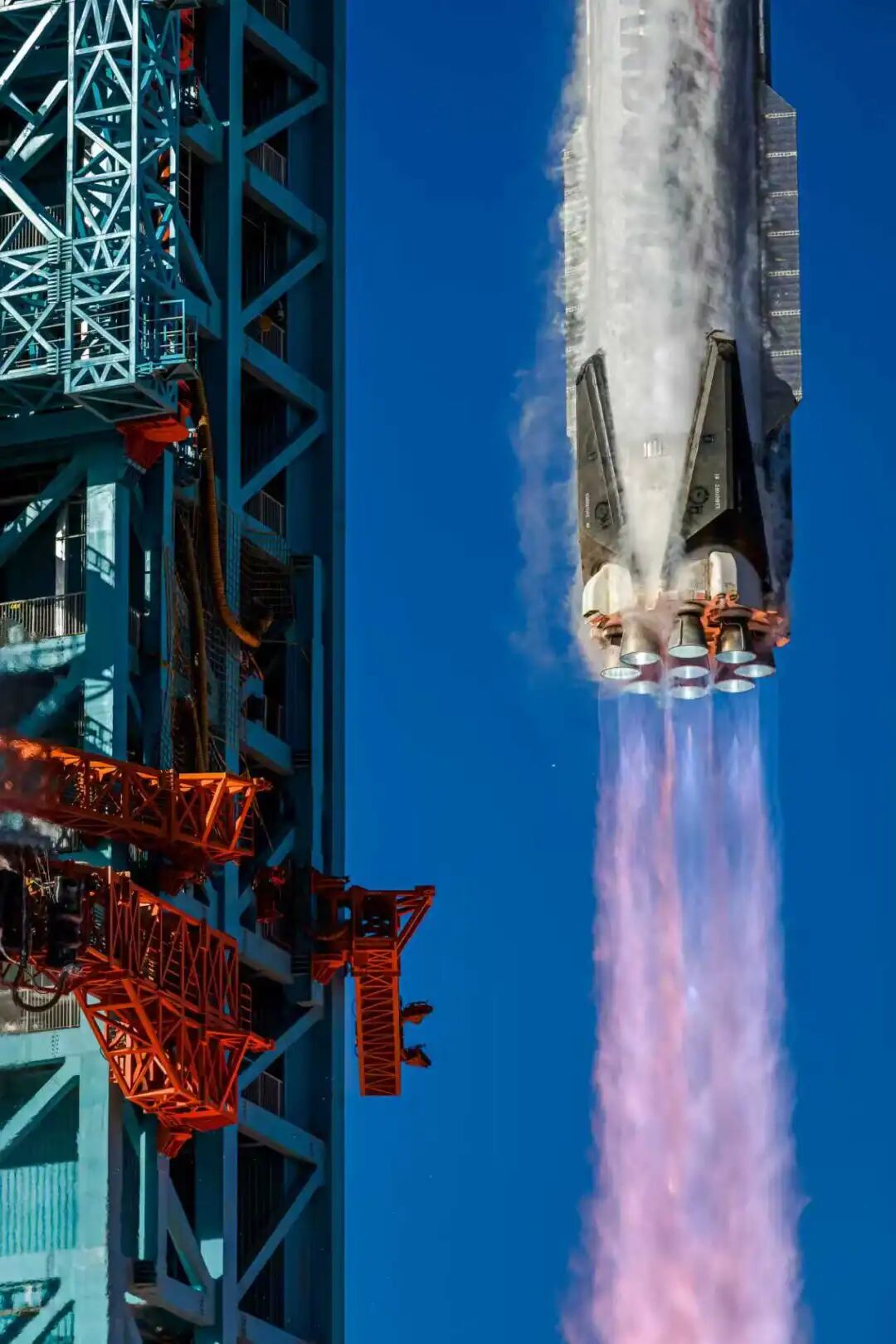
▲ Image source: Landspace
But new contradictions emerged.
The high - frequency reuse of rockets is no longer fully compatible with the engineering logic of prioritizing reliability in traditional space. The reusable system technology is more complex and the test density is higher. If you pursue stability, it is difficult to speed up; if you pursue speed, you will inevitably increase risks.
The industry route differentiation was thus formed:
Some enterprises continue the steady engineering thinking. Represented by Landspace, they steadily consolidate the technical foundation and minimize the uncertainty of single - test.
Others choose to start intensive tests first and approach the recovery goal in rapid iterations, which is closer to the iterative engineering thinking of the Internet.
Typically, Deep Blue Aerospace disassembles the complex recovery system into multiple independently verifiable sub - modules through continuous vertical take - off and landing tests, and gradually narrows the gap with the final goal from low - altitude to high - altitude.
This is no longer just a choice of technical route, but the essential difference between the engineering steady - state thinking and the rapid - iteration thinking: the former exchanges time for certainty, while the latter exchanges tests for propulsion speed.
Meanwhile, some enterprises choose to postpone the recovery challenge and prioritize consolidating the basic launch capabilities. For example, Galactic Energy first achieves stable and reliable orbital entry and then gradually arranges the R & D of reusable rockets.
With multiple methodologies competing in parallel, the core of the industry competition has completely changed: it is no longer about who can make it, but who can achieve it earliest, most stably, and on the largest scale.
02 Competition
Once, there were various technical concepts for rocket recovery: parachute recovery, gliding return, winged return, space - shuttle - like solutions, etc. But these routes all had fatal flaws: they were difficult to support high - frequency large - scale reuse.
Parachute recovery has structural loss and accuracy shortcomings. Gliding is restricted by aerodynamics and weight. Winged return greatly increases the structural complexity and launch cost.
Therefore, the mainstream consensus in the industry quickly converged: vertical recovery. Relying on the engine's reverse thrust to decelerate and the attitude control system to correct the trajectory, the first - stage rocket body can land vertically. The core technical difficulties are concentrated in three points: thermal protection and structural load - bearing during the re - entry phase, high - precision guidance and control during the return phase, and multiple reliable ignitions of the engine under extreme conditions.
But not all enterprises follow the mainstream. Qianyi Aerospace adheres to in - depth research on the horizontal recovery route and relies on a dedicated aerodynamic layout and return control to achieve the gliding horizontal landing of the aircraft. In theory, this route can reduce the dependence on the engine's strong reverse thrust and high - precision control during the landing phase and avoid the strict requirements of vertical recovery on the engine's deep throttling and multiple ignitions.
At the same time, horizontal recovery also puts forward new requirements for the overall system design: new aerodynamic structures are added, increasing weight and complexity, and the flight logic changes from pure rocket logic to aircraft composite logic. Li Rui, the founder of Qianyi Aerospace, defined it as a "differentiated smart path" suitable for China's industrial foundation:
"It's not about going against the laws of physics, but going with the trend, using aerodynamic deceleration to offset the extreme requirements of vertical recovery on the engine."
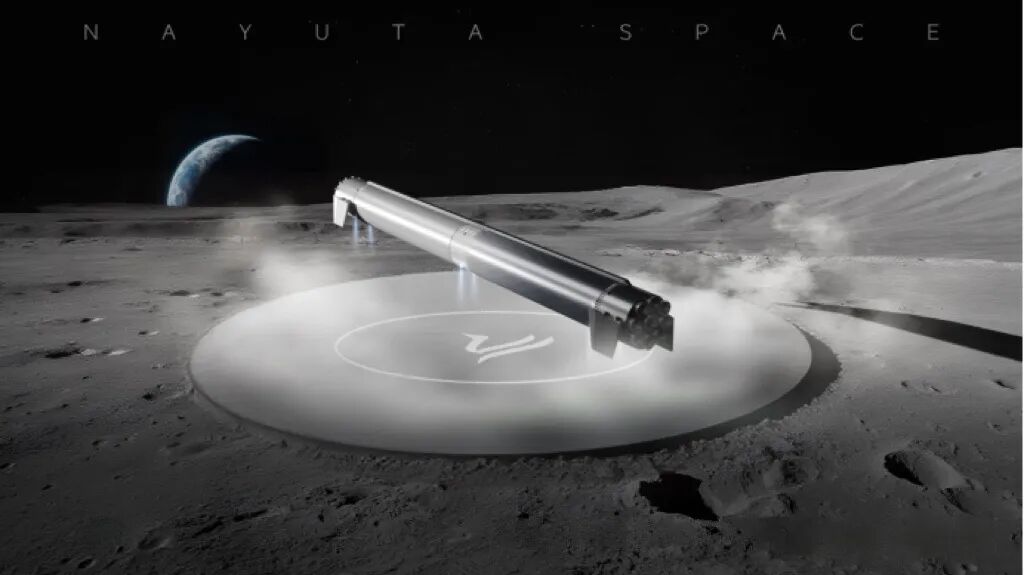
▲ Image source: Qianyi Aerospace
The coexistence of multiple routes just shows that the industry has not solidified the answer, and the market is accelerating the screening of the technical path with the greatest large - scale potential.
Judging from the current trend, the industry's choice is rapidly converging towards vertical recovery. This route has been verified by SpaceX for a long time: it is technically feasible, replicable, and scalable. And within the same track, there are three completely different approaches:
1. Engineering approximation type (steady original design)
Continuing the rigorous logic of traditional space, it advocates implanting the recovery ability from the beginning of the design, with a complete engineering closed - loop and controllable risks.
Representative enterprise: Landspace, representative product: Zhuque - 3.
Zhuque - 3 reserves a complete recovery ability from the source: the engine supports multiple ignitions and deep throttling to meet the landing deceleration control; the structure takes into account both lightweight and re - entry impact load; the guidance and control system can adapt to two completely different flight environments of high - speed re - entry and low - speed landing.
2. Test - driven type (high - frequency iterative verification)
Represented by Deep Blue Aerospace, it starts with small - sized and low - cost test rockets and gradually overcomes the core technologies through high - frequency vertical take - off and landings.
In July 2021, Deep Blue Aerospace completed the meter - level vertical recovery test of the Nebula - M1 (commonly known as the grasshopper jump in the industry); in October of the same year, it completed the 100 - meter - level recovery; in May 2022, it completed the kilometer - level vertical take - off and landing, and the landing point accuracy was less than 0.5 meters from the target center.
The core logic of this route is to disassemble the complex system into repeatable verifiable sub - problems and verify the thrust control, attitude response, and landing point prediction ability one by one. The advantage is a fast iteration speed and a large amount of real flight data accumulated in a short period.
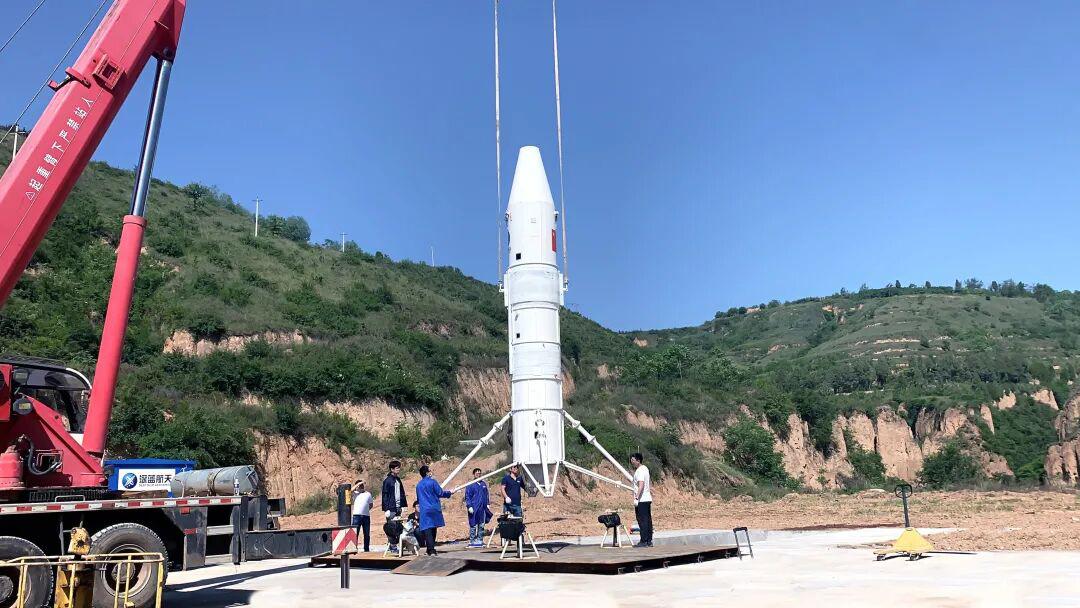
▲
3. Commercial rhythm priority type (survive first and then tackle challenges)
Enterprises believe that recovery is crucial, but continuous survival is equally important. They first build a stable launch capacity and a cash - flow from commercial orders, and then steadily promote the reuse technology. Representative enterprise: Galactic Energy.
On the basis of commercializing the orbital entry ability and providing stable launch services, Galactic Energy arranges the R & D of reusable rockets. As of now, the Ceres - 1 solid rocket has completed 19 successful launches in total, sending 81 satellites into orbit, and it is one of the domestic private rocket enterprises with the highest launch frequency.
At the Zhongguancun Forum in March 2026, Liu Baiqi, the founder of Galactic Energy, elaborated on the core barrier:
"Through high - frequency launch actual - combat accumulation, a systematic engineering closed - loop with high reliability, low cost, and fast response is constructed."
In this logic, launch is both a technical goal and a source of cash - flow - using stable commercial orders to buy precious time for the recovery technology challenge.
The three routes represent different bets on risk, capital, and time by enterprises. And all routes ultimately point to the same core proposition: cost.
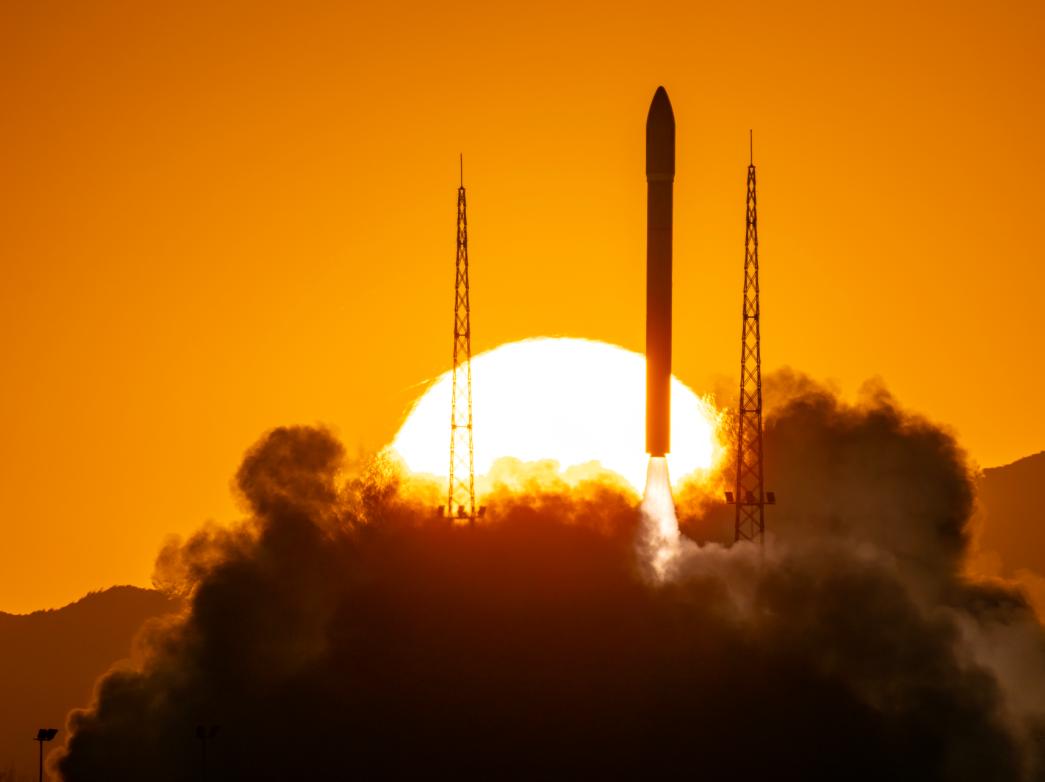
▲ Launch picture of Ceres - 1
03 Pressure
Rocket recovery may seem like a pure technical problem, but in essence, it is first and foremost a financial problem: how much money is needed for R & D? How long can the enterprise's cash - flow support it?
The current industry is in a high - level financing window period. In 2025, the total financing of China's commercial space industry was 18.6 billion yuan, a year - on - year increase of 32%; the financing in the rocket manufacturing field was 6.71 billion yuan, second only to satellite applications, and it is the core track for capital. Five leading enterprises including Landspace, Tianbing Technology, Zhongke Aerospace, Interstellar Glory, and Galactic Energy have all launched the listing process, with an overall valuation of over 100 billion yuan. Among them, Landspace's IPO on the Science and Technology Innovation Board has been accepted, planning to raise 7.5 billion yuan, with a valuation of over 20 billion yuan.
Although the industry's financing and valuation are at a high level, deep - seated structural contradictions always exist: the technology cycle and the capital cycle are seriously mismatched.
It took SpaceX more than a decade to polish vertical recovery from a single success to a large - scale system, while most domestic private space enterprises have been established for less than a decade.
Rocket recovery is a typical long - cycle and heavy - investment technology, but it is placed in the short - cycle capital market that pursues short - term returns, and the contradiction is directly transformed into huge cost pressure.
For enterprises with a steady engineering approach, the primary pressure comes from upfront R & D investment. In most industries, the cost is concentrated in production and manufacturing, while in the rocket industry, the largest cost is in the design and R & D stage: multiple rounds of engine iteration, repeated optimization of the control system, and extreme verification of material structures. A large amount of cost is fully paid before the rocket takes off.
Taking Landspace as an example, the R & D investment in liquid oxygen methane engines and heavy rockets is mainly reflected in aspects invisible to the outside world: thousands of seconds of cumulative ignition tests on the test bench, repeated overthrowing and reconstruction of the plan, and long - cycle reliability verification. These investments cannot be compressed or skipped.
The financial data is also intuitive: In April 2025, Country Garden announced the transfer of an 11% equity stake in Landspace, disclosing that the company's pre - tax losses in 2023 and 2024 were 1.177 billion yuan and 1.015 billion yuan respectively, and the after - tax annual losses also exceeded 1 billion yuan.
If upfront R & D is the pressure on the balance sheet, high - frequency tests are a continuous real - money consumption.
The accuracy of vertical recovery cannot be fully relied on simulation. It must be repeatedly verified in a real flight environment. Any small deviation in engine thrust fine - tuning, attitude control response delay, or aerodynamic disturbance trajectory correction may be infinitely magnified in the last few seconds of landing.
Therefore, Deep Blue Aerospace chooses the high - frequency test iteration route, but each test is a one - time consumption: continuous expenditure on fuel, equipment, and manpower, and the speed of technological progress is almost the same as the speed of capital consumption.
In the past two years, Deep Blue Aerospace has completed 6 rounds of financing, raising more than 1 billion yuan in total. The investors include market - oriented VCs, local state - owned assets, and national - level industrial funds.
At the same time, the cost of failure in the space industry is extremely high. Failure will not be reflected in the daily statements, but in the in - air disintegration and explosion of the rocket body, and years of investment will be instantly zeroed. Any malfunction in ignition, attitude control, or landing point deviation may end the mission within seconds.
In recent years, China's commercial space has experienced varying degrees of failure in orbital entry attempts and recovery verifications: In June 2024, the power test rocket of Tianlong - 3 crashed into the mountain; in July of the same year, the eighth launch of Hyperbola - 1 failed; in December 2025, the recovery test of Zhuque - 3 failed.
These failures indicate that the industry has no low - cost trial - and - error space. The cost of rocket recovery is not a one - time expenditure, but a long - term continuous investment curve. Therefore, this round of competition not only compares the scale of investment, but also the endurance ability. This is also the core reason why leading enterprises are concentrating on sprinting into the capital market and broadening financing channels in 2026.
When all enterprises are calculating the cash - flow endurance, a fundamental question emerges: Is it really worth investing huge amounts of money in the recovery challenge?
04 Value
Looking back at the present, a very realistic question arises: With the continuous increase in domestic launch demand and sufficient orders, is it necessary for rockets to be reusable?
In the short term, the answer is not absolute.
First, the launch demand continues to explode. The construction of low - orbit satellite Internet and remote - sensing constellations is accelerating, a large number of satellites are being densely networked, and the launch windows are constantly tight.
Second, single - use rockets still have commercial feasibility. In the scenarios of small and medium - sized payloads and customized orbits, after optimizing the cost and pricing, single - use rockets can achieve stable profits. Galactic Energy is a typical example.
Third, national tasks provide a stable basic market, buffering the cycle pressure for enterprises.
In the short term, not recycling will not immediately lead to elimination from the industry. But in the long run, the answer is very certain: Recycling is an inevitable choice for the industry.
What determines the industry's direction is never short - term supply and demand, but the long - term industrial structure. As Elon Musk said:
"If rockets cannot be reused like airplanes, the cost of human access to space will never really decrease."
The long - term structural change mainly depends on three factors:
1. The efficiency requirement for large - scale launches
The global satellite networking is moving from the scale of hundreds of satellites to thousands or even tens of thousands of satellites. The launch mode is changing from scattered task - based to large - scale batch deployment, and the launch frequency has become the core bottleneck. Single - use rockets are restricted by production capacity. Recycling transforms the "manufacturing pressure" into the "scheduling pressure" of the rocket body, fundamentally improving the launch efficiency.
2. The potential for