An "anti-AI landline phone" that's even more powerful than Xiaotiancai has become a huge hit in American parents' groups.
I can still recite the mobile phone number of my primary school deskmate's family to this day.
Back then, when we wanted to invite someone to play, we always had to get past our parents first: "Hello, Auntie. Is XX at home?" Only after the elders shouted to call the person over could the phone call really start. Looking back, our social interactions back then always had to "go through" the adults.
Those born after 2010 and 2020, who have been surrounded by touchscreens since birth, probably find it hard to empathize with this experience. Even if parents are slow to get their kids phones, the children's smartwatches that are everywhere on the street have already filled this gap. They can handle positioning, calls, and voice messages all in one device.

Generated by GPT-Image-2
But on the other side of the ocean, there are also a group of parents who choose to let their children have late access to smart devices. The problem is, the alternatives they can offer their children are no more abundant than what we had back then. It is this common parenting dilemma that gave birth to a special product -
The Tin Can retro landline.

Tin Can
A "metal can" that sells for $100
At first glance, you'd definitely think the Tin Can is a prop used by a film crew for nostalgia.
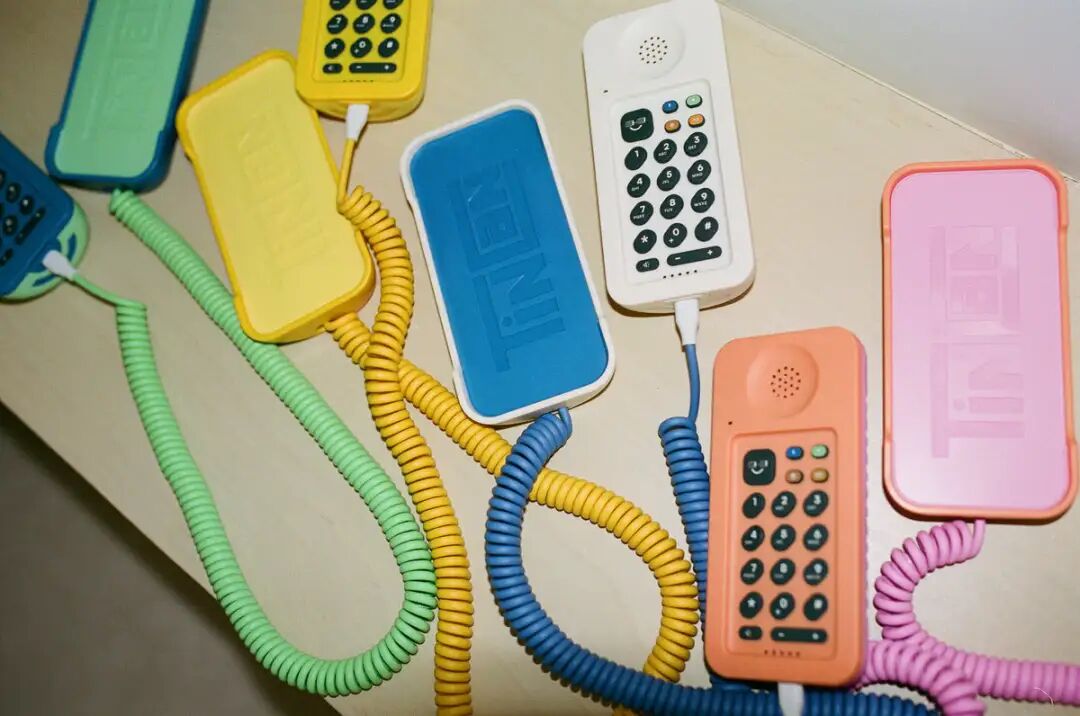
It looks like a cylindrical can, and even has slight patterns similar to those on a can label on its surface. This device comes in four dopamine - style color schemes: ocean blue, pure white, lemon yellow, and lilac purple, and is equipped with a signature retro coiled telephone line.
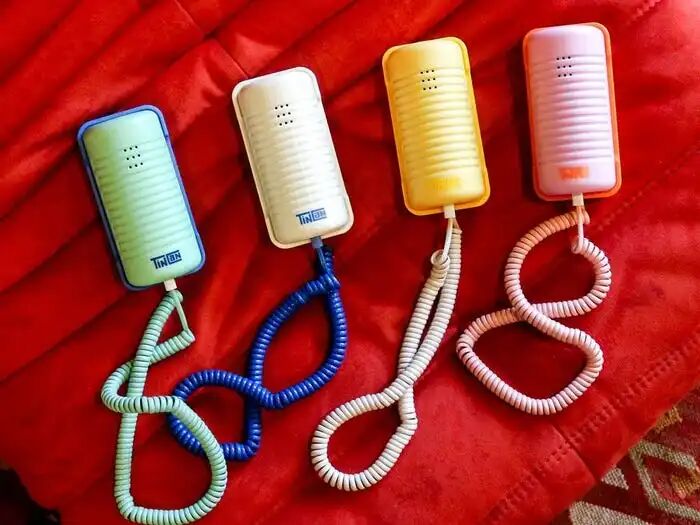
This device, priced as high as $100, has no screen, no camera, no app store, and even the text - messaging function has been mercilessly removed. The only thing it can do is "make phone calls".
You might think this is a rip - off, but in North America, it's being snapped up by anxious middle - class parents.

From a hardware perspective, the Tin Can is a modern VoIP (Voice over IP) terminal in a retro shell. It can work when connected to the home Wi - Fi.
There is a button with the brand logo on the body. It lights up to indicate unread voicemails. There are also four speed - dial keys with emoji icons, which are convenient for young, illiterate children to make a call with one click.
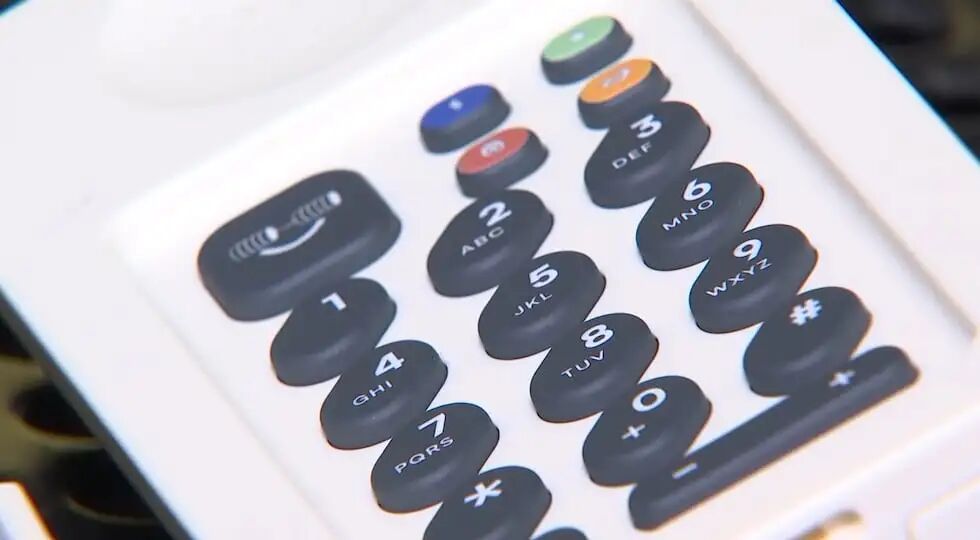
Its business model understands the essence of "creating a niche community":
It's completely free to call other Tin Can users' five - digit short numbers. But if you want to call your grandparents' regular mobile phones, you need to subscribe to the "Party Line" package for $9.99 per month. According to official sources, the vast majority of users obediently pay this monthly fee.

The most amazing thing is its permission management.
All settings are tightly controlled in the parents' mobile app. The device can only make and receive calls from the "whitelist" numbers set by parents, and all spam calls are blocked. If a child tries to call a number outside the whitelist, the microphone will only play a merciless "unreachable" prompt tone.
Parents can also set "mute periods", such as before bedtime or when the child is doing homework. During these times, the phone becomes a plastic brick (except for emergency calls). Even more hardcore, in a divorced family, parents can place one device in each home and share the same number. No matter which parent's home the child goes to, they won't miss calls from friends.
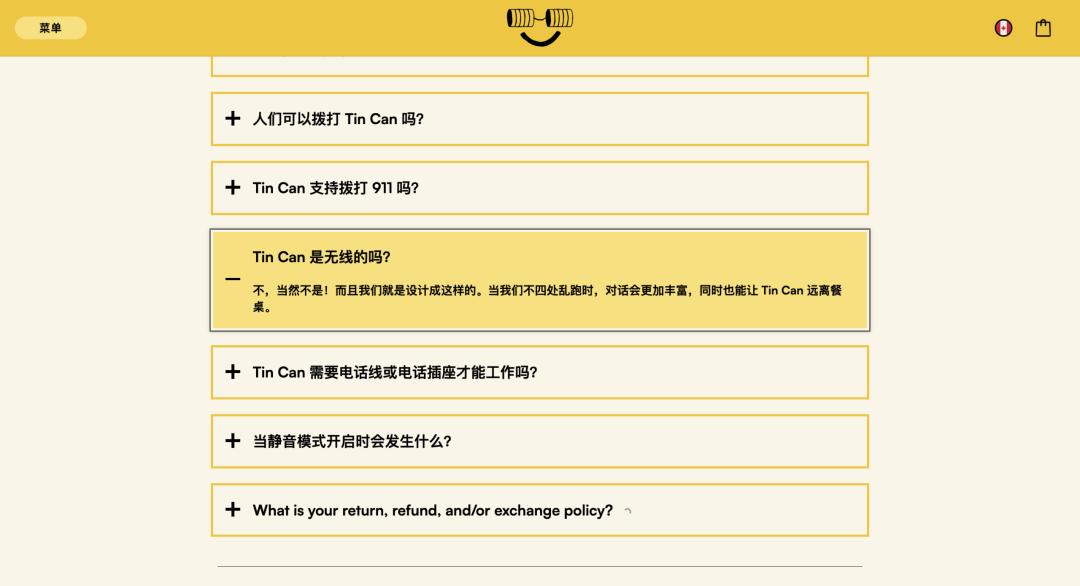
The official introduction even lists "not being a wireless device" as a selling point.
Additionally, it deliberately has no built - in battery and must be plugged in to use.
Tin Can founder Chet Kittleson also explained that this is because he extremely disliked the state of his mother running around the house while answering the phone and chatting absent - mindedly while doing housework. Now, the landline without a battery "anchors" the children in one place, forcing them to talk attentively.
In other words, the Tin Can may seem like a nostalgic toy on the surface, but in essence, it's a fencing system for children's social communication. It bypasses the three most headache - inducing problems in the smartphone era, strangers, addiction, and algorithmic recommendations, through hardware limitations.
Three dads and a product verification at the kitchen table
The motivation behind the birth of the Tin Can precisely hits the most painful nerve of contemporary parents - they've suffered from being the "social secretaries" for a long time.
Chet Kittleson once served as an executive at the Seattle real - estate technology company Redfin and later left to start a business, which failed. Three years ago, when he was picking up his child at the school gate, he heard parents complaining bitterly. To arrange a weekend playdate for their children, parents had to confirm the time back and forth via text messages.
"Today's children don't have any tools to actively contact their friends, and all the coordination work falls back on the parents." As a father of three children, Kittleson suddenly realized.
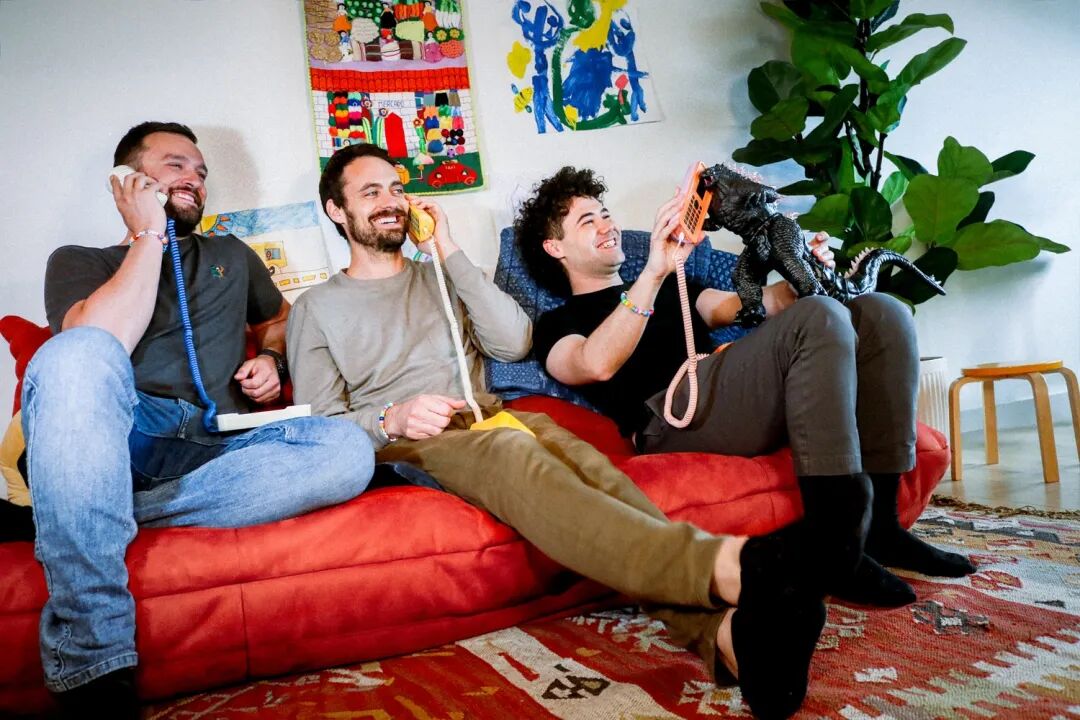
From left to right: Tin Can founders Graeme Davies, Chet Kittleson, and Max Blumen
The week his company went bankrupt, he invited two old friends, Max Blumen and Graeme Davies, to his home. The three dads spent a week at the kitchen table and assembled five prototype devices. They gave two of them to his daughter's friends.
A miracle happened. At 8:15 the next morning, the phone rang. It was his daughter's friend calling to invite her to walk to school together. It was the first time his daughter arranged a social activity on her own without the help of any parents.
The news spread by word - of - mouth among parents and soon reached strangers. Kittleson personally installed about fifty prototype devices. While installing, he asked parents how they felt about the product and what they were most worried about, and then adjusted the product based on the feedback.
He described this product as having a natural viral - spread quality: "Once someone buys it, their friends also want one. When others come to the house and see a retro phone there, they'll go crazy - the fact that a child has an old - fashioned phone at home has a certain magic."
Yes, the peer pressure in the social circle also accelerated the popularity of the Tin Can. The reason why the Xiaotiancai phone watch rose quickly is largely because it turned the product from a tool into a social entry point. Designs like "tap to add friends", micro - chatting, and the home page circle have made the watch a social currency among children.
Similarly, if everyone else has a Tin Can and you don't, your child will be socially isolated.
So, the killer feature of the Tin Can has become "group buying". In an elementary school in Kansas City, USA, 95% of families purchased this landline together. Children even started using paper address books to record each other's numbers. When "not using smartphones" becomes the common choice of an entire community, it becomes a new form of community identity.

In April 2025, the Tin Can was officially available for purchase. The first few batches of products sold out one after another, and the backlog of pre - orders once approached six digits. Currently, the product covers all 50 states in the US and Canada, and the delivery date for the latest batch of orders is scheduled for June 2026.
On the capital side, the product's success has also attracted high - level attention from venture capitalists. In the summer of 2025, the Tin Can completed an early - stage financing of $3.5 million, with investors including PSL Ventures, Newfund Capital, etc. In December of the same year, Greylock Partners led a $12 - million seed - round financing, bringing the cumulative financing to $15.5 million.

The Tin Can also plans to use the new funds to expand production capacity, increase engineering and customer - service staff, and promote its layout in the international market. However, the reality is harsh. As the first - generation hardware of a startup, the Tin Can once suffered a severe setback.
During the Christmas holiday in 2025, when a large number of families turned on their devices at the same time, the call volume increased by 100 times that day, and the Tin Can's server crashed. Many children who excitedly opened their gifts faced two weeks of disconnection and call failures. The company had to issue an emergency apology and waive the monthly subscription fee.
There are also many hardware problems:
The underlying VoIP causes a 1 - second delay in calls, and there is occasional echo. The physical buttons are too hard for children's hands. The USB - C power supply interface is prone to loosening when pulled, and it even poses a tripping hazard for children. In addition, Karri in the UK and Pinwheel, which is preparing to launch a $60 competing product, are eyeing the market. But even so, parents still have a soft spot for the Tin Can.
The more realistic AI companionship becomes, the more valuable real - world social interactions seem
If we take a broader view, we'll find that the popularity of the Tin Can is riding on a wave of anti - screen sentiment sweeping the globe.
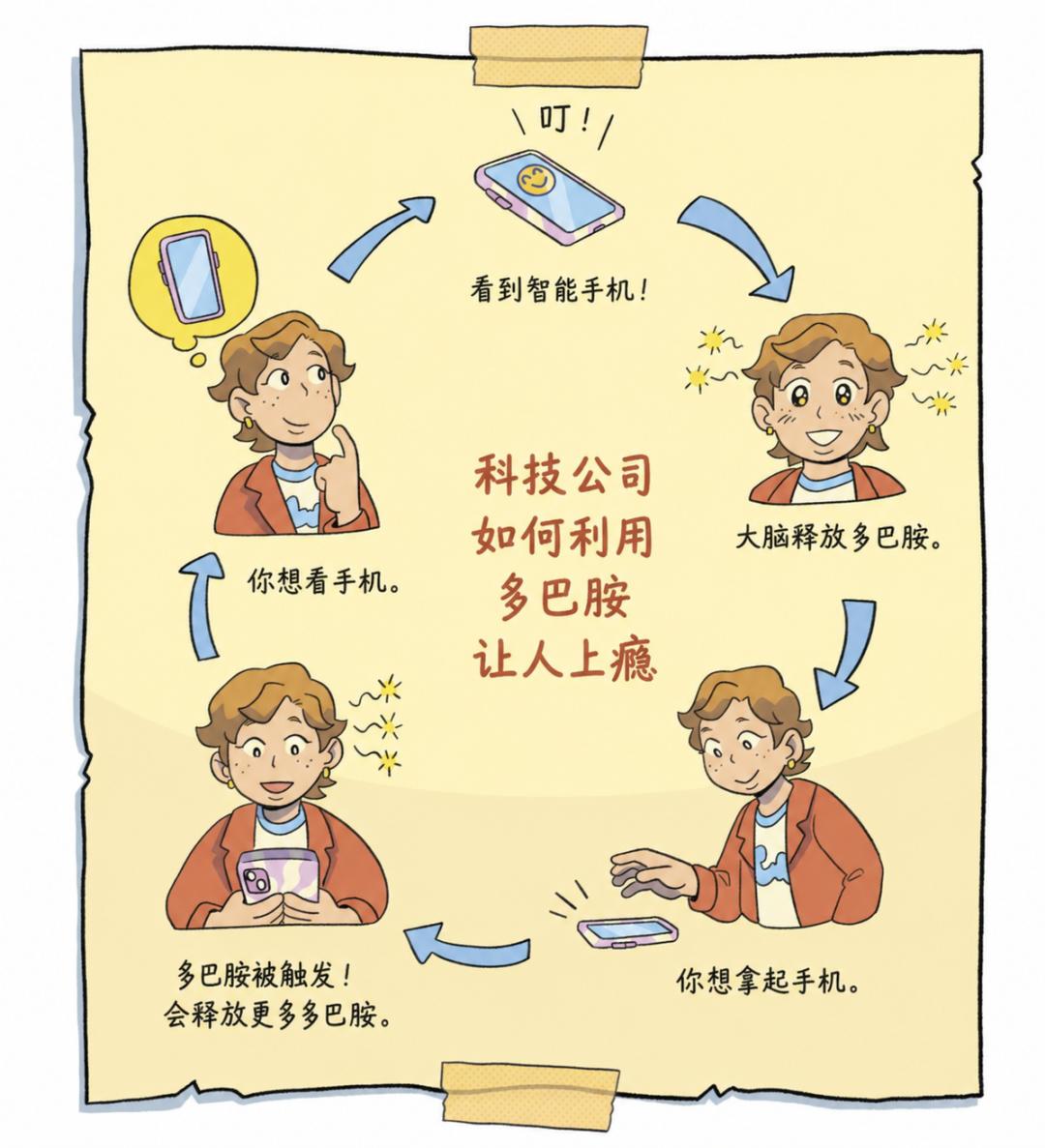
Jonathan Haidt, a psychologist at New York University, pointed out in his book *The Anxious Generation* that between 2010 and 2015, with the popularization of smartphones and social platforms like Instagram, children's childhoods underwent a profound digital transformation.
Statistical data shows that the depression and anxiety rates of American teenagers increased by 134% and 106% respectively during this decade. Female teenagers were particularly affected, with a significant increase in body - image anxiety and eating - disorder problems. Male teenagers faced the risk of social withdrawal and attention problems.
Haidt put forward four specific suggestions: not providing smartphones before high school, banning the use of social media before the age of 16, implementing a full - time school - phone ban, and increasing children's independent activities in the real world. This framework quickly became the most widely - cited reference for parents.
Facing this situation, governments around the world have started to intervene at the legislative level.
As of early 2026, more than 114 education systems globally have implemented school - phone bans to varying degrees, accounting for 58% of the total number of countries in the world.