Behind the suspension of the $2 billion acquisition, Manus should reflect on the unrepeatable luck.
After the founding team remained silent for several months, the final decision has been made, and the Manus incident has reached its conclusion.
According to the website of the National Development and Reform Commission, on April 27, the Office of the Working Mechanism for the Security Review of Foreign Investment (National Development and Reform Commission) lawfully and in accordance with regulations made a decision to prohibit foreign investment in the acquisition of the Manus project and required the parties to revoke the acquisition transaction. The wording was unprecedentedly strict.
It's hard to imagine that just a few months ago, this young team was so full of enthusiasm. They visited global tech giants and were praised by the CEO of Microsoft. They even forgot that the AI competition itself has long ceased to be just a technical issue.
When entrepreneurs accustomed to the "going global" route forget the real meaning behind the competition under the huge halo, and when technological development is inevitably linked to national strength, no one will question this result.
However, what's worth reflecting on is how this story, which skyrocketed to fame and was once a thrilling tale, ended up in this situation?
01
A local entrepreneur took a global route
The Wuhan headquarters of Butterfly Effect, the parent company of Manus, is just across the road from the alma mater of its founder, Xiao Hong, Huazhong University of Science and Technology.
For a long time, in the AI circle, when people mentioned the name of Xiao Hong, the founder of Manus, it was often associated with Wuhan.
"If you want to interview Xiao Hong (as he's called in the circle), you might have to go to Wuhan," said some AI application entrepreneurs to Phoenix Tech in late 2024. At that time, before he became well - known, Xiao Hong was already a bit famous in the circle, and many entrepreneurs highly respected his business logic.This serial entrepreneur, born in 1993, founded "Nightingale Technology" after graduating in 2015 and launched two official account operation tools, Yiban Assistant and Weiban Assistant, which were later sold.
In 2022, Butterfly Effect registered a company in Beijing. Its core product at the initial stage was a browser AI plugin called Monica, targeting overseas users. It was one of the earlier AI products in China with a commercial closed - loop. In 2023, ZhenFund, which was already familiar with Xiao Hong, invested in the seed round of Monica again, with a valuation of about $14 million. In November 2024, in the Series A round, Sequoia China and Tencent joined, and the valuation was raised to $85 million. At this stage, Butterfly Effect was almost entirely rooted in the domestic market in terms of its investors and business revenue, and it also promoted itself as having its "headquarters in Wuhan Optics Valley".
The turning point in fate came in April 2025. The product momentum after the release of Manus completely lifted the company's valuation. Manus suddenly became a well - known name, and for a while, first - tier funds and global capital all focused their attention on it.

Among them was Benchmark, an established Silicon Valley institution. It took the lead in investing $75 million in the Series B round, and the post - investment valuation soared to nearly $500 million. Benchmark is not an ordinary VC; it represents the entire mainstream investment circle in Silicon Valley. For Manus at that time, this was also a kind of affirmation with strong technical endorsement.
However, this transaction was soon put under review by the US government.
According to the "Reverse CFIUS" (Foreign Investment Security Program) that came into effect in January 2025, it restricts "US entities" represented by US investment institutions from investing in three key fields in China: AI, semiconductors, and quantum information technology. US capital's investment in the Chinese AI field needs to be reported to the US Treasury Department, and although Manus focuses on AI application development, it was still included in the review scope.
If Benchmark is required to make supplementary declarations or even withdraw its investment later, its demonstration effect in Silicon Valley may spread. For AI startups with Chinese elements, the difficulty of raising funds from Silicon Valley VCs will further increase.
In fact, before Benchmark led the investment in Manus, several US venture capital firms had contacted Manus. However, some institutions chose to withdraw due to concerns about potential regulatory reviews for investing in Chinese startups.
At this time, Manus was in a difficult situation: accepting US dollar capital meant giving up the right to decide the location of its headquarters. If it didn't meet the core conditions of the investors to eliminate regulatory risks, it meant that the entire Series B valuation would end in a project failure.
Focusing on the overseas market and aiming to become a global company was Manus' strategic goal from the beginning. Before Manus was launched, Xiao Hong mentioned in an interview that "Chinese entrepreneurs today should be more radical in going global. Everyone should go to the international market to gain experience and participate in global competition instead of competing in the market we are used to."
The overseas market has a higher customer unit price and stronger willingness to pay. Relying on the overseas market to survive and expand rapidly is a logical choice for many AI entrepreneurs.
"If we want Manus to exist in the long term, there is only one possibility: to become a world - class company," Xiao Hong wrote on his social platform three months after its popularity.
02
Moving to Singapore in struggle, a wrong move
Soon, Manus started to take action.
In May 2025, the three co - founders of Manus, Xiao Hong, Ji Yichao, and Zhang Tao, flew to Singapore together. In June, the official announced that the operating entity had been changed to Butterfly Effect Pte. Ltd., and the headquarters was officially moved to Singapore. At the same time, offices were set up in San Francisco and Tokyo. By July, only about 40 core R & D and business personnel out of the 120 - person team in China were invited to move to Singapore, and the remaining 80 domestic employees were laid off. The Chinese social media accounts were cleared, and the official website began to block Chinese IP addresses.
Previously, the strategic cooperation commitment with Alibaba's Qwen had also become invalid. At that time, Manus was still hoped to be "the next DeepSeek" and a strong proof that domestic AI products could surpass overseas ones.
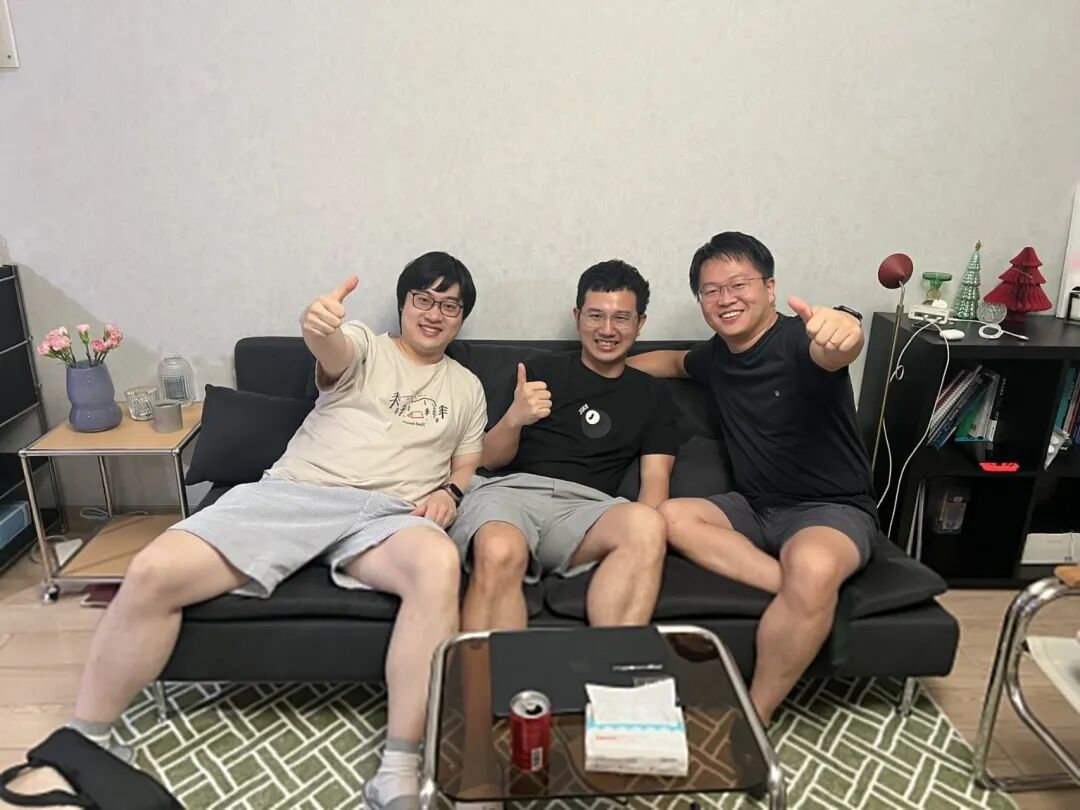
According to the statements of founder Zhang Tao on different occasions, Manus made this move for three reasons: Singapore can provide access to high - end GPU clusters, and it can also gain the trust of Silicon Valley investors to prepare for larger - scale financing and strategic exit in the future.
Commercially, this may be a good move; but in today's AI competition, it is a risky move.
The AI investment in the domestic market is also booming. The Wuhan government had provided Manus with startup resources, such as rent - free offices, special funds, fiscal interest - subsidy, and the official endorsement of being an "outstanding enterprise", even though they were not a perfect match.
"State - owned investment institutions prefer early - stage projects in hard - tech fields. For example, projects founded by professor teams from universities, which are based on years of scientific research results, solve some bottleneck problems, and can be industrialized later, are easier to understand," said an investment person from a state - owned enterprise in Wuhan to Phoenix Tech. "So we were quite surprised to see a company doing AI applications in Wuhan. We generally rarely look at such companies."
However, with its efforts and the novelty of its products, Manus had caught people's attention and quickly stood out among many hardcore technologies. But fatally, Manus didn't take a real substantial step and missed a hard - won opportunity. Therefore, the incident needs to be analyzed objectively.
According to public information, after Meta's acquisition announcement, Manus disclosed that its annualized revenue exceeded $125 million, it processed over 147 trillion tokens, and created over 8,000 virtual computers within only eight months of its launch. The R & D cycle of this underlying technical ability was much earlier than the time when it relocated its registration to Singapore in June 2025.
In other words, this story can be easily understood as: Manus first completed the precipitation of its core products, team, and engineering capabilities in China, then transferred them overseas under the guise of changing the headquarters name, and finally completed capital cashing out by selling to an American company.
This model is called "Singapore washing" in the legal circle.
Its operation logic is to transfer the R & D capabilities, data, and teams in China to neutral economies such as Singapore to avoid strict two - way investment reviews in the Sino - US technology field and clear the way for US capital to take over.
The problem is that once the exact time of the company's registration location and the actual R & D location is obtained and the verification chain is fully presented, the statement of "a Singaporean company selling to Meta" doesn't hold water.
From Benchmark's cross - border financing agreement, to the time window of the entity transfer, and then to the synchronous relocation of the core team and technical assets, every link precisely stepped on the most untouchable red lines.
Therefore, it received an unusually strict statement.
03
Misjudgment after misjudgment, the transaction was doomed to be stopped
Four months ago, the Chinese venture capital circle was once excited by the news of "Meta's acquisition of Manus".
On December 30, 2025, Meta officially announced the acquisition of all of Manus' assets for about $2 billion. This transaction became Meta's third - largest acquisition in history, second only to the acquisitions of WhatsApp and Scale AI.
According to the acquisition terms, Xiao Hong would serve as the vice - president of Meta and report to COO Javier Olivan. Judging from the materials disclosed later, the early - stage shareholders of Butterfly Effect were ready to wait for the payment. Many domestic institutions had very high expected return multiples in this transaction.
However, the final decision didn't go as expected. On January 8, 2026, He Yadong, the spokesperson of the Ministry of Commerce, publicly stated that relevant ministries would be coordinated to evaluate and investigate the compliance of Meta's acquisition of Manus in terms of export control, technology import and export, and foreign investment.
And the final decision on the website of the National Development and Reform Commission on April 27 used extremely strict wording - "prohibit foreign investment in this acquisition in accordance with laws and regulations and require the revocation of the transaction".
This is the first publicly - stopped foreign acquisition in the AI field since the implementation of the "Measures for the Security Review of Foreign Investment" in 2020, and it is also the most severe type of review conclusion.
The regulatory logic is clear - it doesn't matter where the company is registered, but when, in what way, and what technology was taken out of China. There is no doubt that the underlying technology R & D of Manus was completed in China using Chinese engineers' resources and commercial capital before it relocated its registration to Singapore.
From a chronological perspective, this was Manus' most fatal misjudgment. It thought that by moving to Singapore and completing the transaction before the more strict Sino - US regulatory framework was formed, it could seize a compliant window period.
However, it underestimated a key logic: the Sino - US AI technology game is fully penetrating from policy control to specific enterprises.
Every step of Manus in this game basically stepped on the key nodes of geopolitical changes, and every time it made the same kind of struggle - choosing "de - Sinicization" when accepting US dollar funds, choosing to exit the Chinese market when relocating, and choosing to be on the balance sheet of an American tech giant when being acquired.
And at the moment when the acquisition was stopped, the competitive environment Manus faced was completely different.
When Manus rose, it was almost the only synonym for AI Agents. But today, the market has entered the stage of "a hundred Agents competing". Agents are no longer a new species but a standard ability of giants and vertical manufacturers, and there is no shortage of such representatives in the domestic market.
Looking back on Manus' "journey", it has always been in a struggle. By the time it completed the relocation of its registration, the review framework for foreign acquisition of core AI assets by the regulatory authorities had been formed, and the Sino - US wrestling in the AI field had been upgraded from chip control to a full - chain traceability of "technical origin". Manus almost followed the standardized template of "domestic R & D - overseas re - packaging - foreign capital takeover" completely.
In other words, it was almost inevitable that the acquisition of Manus would be stopped.
Regrettably, behind this ups - and - downs experience, the market has changed completely.
In the past year, ByteDance, Alibaba, Tencent, and Baidu have integrated their Agent capabilities into office software, search engines, and developer platforms. The user habits and ecological positions are no longer the same as in early 2025.
The real problem for Manus is not that it can't come back, but that it's hard to find its place after coming back.
It is neither a pure foreign - funded upstart nor an "insider" accepted by the domestic ecosystem. As a platform, it lacks traffic and ecological support; as a vertical player, it lacks in - depth industry accumulation; as a technology provider, its underlying model depends on third - parties, and the premium space is limited. Its brand recognition still remains at the popularity level in March 2025, but its brand affinity has been completely consumed in a series of "de - Sinicization" operations.
Perhaps the original intention was to use the global capital path to amplify the technical dividends of the Chinese team, but against the backdrop of Sino - US technological decoupling, this path is becoming more and more like a tightrope.
Its ending may provide a heavy case reference for those AI startups facing the same choices: you can only choose one path and go all the way to the end without looking back. But the premise is that this path is not a dead - end.
This article is from the WeChat official account "Phoenix Tech", author: Zhao Zikun, editor: Dong Yuqing. It is published by 36Kr with authorization.