China's optical fibers have received a large number of orders.
In 2024, there was a global shortage of chips; in 2025, transformers were in short supply worldwide; in 2026, optical fibers became the new scarce commodity.
Since the beginning of this year, the price of optical fibers has been changing almost daily.
The price of the American G.657.A1 bare optical fiber has increased by 69% since January; the same type of optical fiber in Europe skyrocketed by 130% within two months; while the domestic G.657.A2 optical fiber, which was priced at 32 yuan per core - kilometer last year, has soared to 240 yuan, nearly an eight - fold increase.
Tech giants have long sensed the trend. Microsoft previously announced that it would deploy 15,000 kilometers of hollow - core optical fibers within two years, and Meta even spent a whopping $6 billion just to secure sufficient supplies ahead of others.
This is just the beginning. According to CRU's prediction, the global demand for optical fibers will still increase significantly in 2027, reaching 880 million core - kilometers, a 35.4% increase compared to 2025. The situation of supply falling short of demand shows no sign of easing in the short term.
As the absolute main force in global optical fiber production capacity, Chinese manufacturers, holding more than 60% of the market share, are going all out to embrace this feast of rising volume and prices.
01 Big Order Surge
"The optical fibers produced every day can circle the Earth four times."
This is the daily production capacity of the "Lighthouse Factory" under Hengtong Optoelectronics in Suzhou, which is the world's largest single optical fiber production base. However, even with such a huge output, it is just a drop in the bucket in the face of the surging global demand.
According to the company's responsible person, the company's current on - hand orders are already scheduled until the first quarter of 2027, and the sales growth rate in the overseas market has even exceeded 55%.
In Wuhan, 700 kilometers away, FiberHome Telecommunication Technologies also has a large number of orders. The company won the bid for the Ningxia hollow - core optical cable procurement project at the end of last year and recently won a 500 million yuan intelligent computing order from China Mobile.
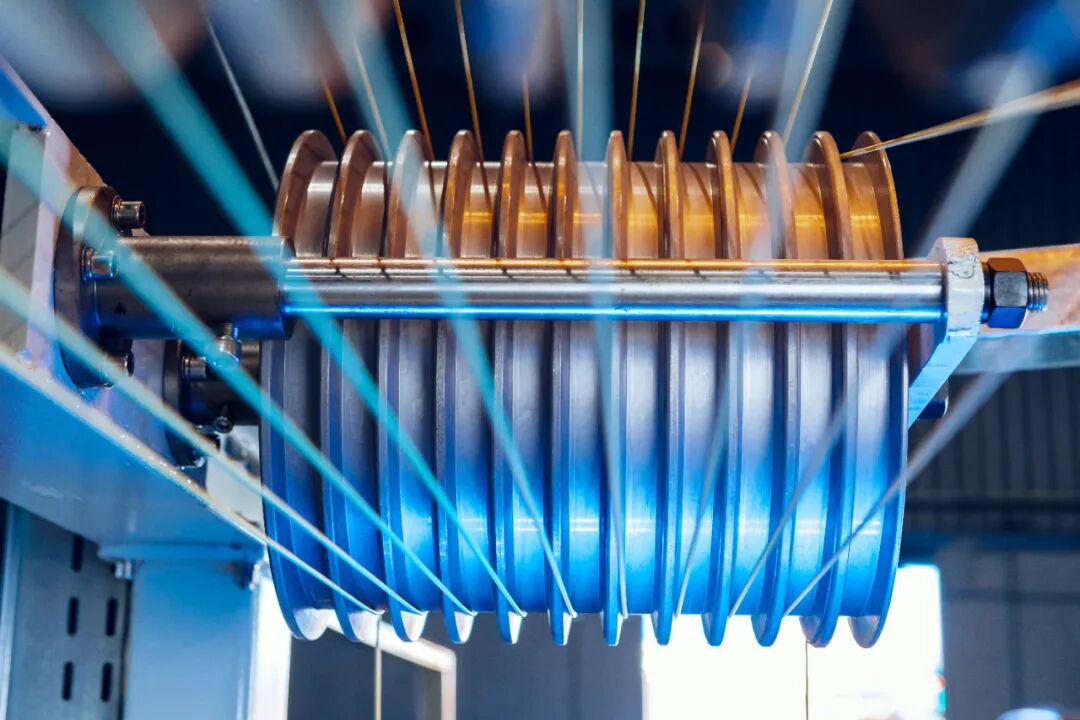
The entire factory's production lines are operating at full capacity 24 hours a day, but the order scheduling has still been postponed to three months later.
The long - standing rules of the industry have even been rewritten because of this.
Some manufacturers said, "Previously, we would deliver the goods first and the customers would pay later. Now, in order to ensure they can get the goods, customers are willing to pay first and then wait for delivery. There's no worry about sales!"
At the most extreme, the quoted price was only valid for the day because it would increase again the next day.
The market's demand for optical fibers is like a bottomless pit. Before the products are even produced, the production capacity has been locked in advance. From the export data, in just one month of February this year, the export value of Chinese optical fibers reached 790 million yuan, a significant increase of 126.8% compared to the same period last year.
Another set of data is also thought - provoking. According to Qichacha, from the beginning of this year to April 20, as many as 7,607 new optical fiber - related enterprises were registered across the country.
Established manufacturers are accelerating capacity expansion, and new entrants are rushing to invest. Obviously, Chinese enterprises are making every effort to seize this opportunity, and expanding optical fiber production capacity has become the primary issue in the industry.
Why have optical fibers suddenly become so popular?
The main reason is that the construction of global AI computing power centers has entered a peak period. These super - brains serving artificial intelligence need to process massive amounts of data instantaneously during operation, with extremely high requirements for transmission speed and efficiency, and every millisecond counts.
At this time, the advantages of optical communication technology are highlighted: fast transmission, low power consumption, and suitability for long - distance transmission. Therefore, in recent years, key components and technologies in optical communication such as optical chips, optical modules, and CPO have successively become the hotspots for tech giants to compete for layout.
As the "blood vessels" connecting all computing power nodes, optical fibers are extremely crucial. The demand for them is also huge. An AI data center equipped with tens of thousands of high - performance computing cards requires 5 to 10 times more optical fibers than a traditional data center, with a total amount of up to tens of thousands of core - kilometers.
Therefore, the supply of optical fibers is becoming increasingly short. In 2025, the demand for optical fiber cables in global data centers increased by 75.9% year - on - year, reaching 69.6 million core - kilometers. This year, this figure is expected to exceed 100 million core - kilometers, and the growth momentum remains strong.
In addition to the demand from AI, the global 5G network construction has also added fuel to the fire. 5G requires a large number of optical fibers to ensure high - speed transmission. At the same time, the demand for optical fibers from military drones is also increasing. The superposition of multiple factors has jointly promoted the global demand for optical fibers to enter an explosive period.
While the demand is surging, the expansion of production capacity cannot keep up with the pace.
The core raw material of optical fibers is optical fiber preforms, and optical fibers are made by drawing from preforms. However, the expansion cycle of preforms usually takes 18 - 24 months, which is far from meeting the needs of the current booming market.
With the demand skyrocketing on one side and the slow supply on the other, the global scramble for optical fibers has become an inevitable result.
In this situation, the eyes of global purchasers have all turned to the same place - the 'Chinese Team' that controls 60% of the global optical fiber production capacity.
02 The Chinese Team
Among the world's top ten optical fiber enterprises, four are from China: Yangtze Optical Fibre and Cable Joint Stock Limited Company, Hengtong Optoelectronics Co., Ltd., Zhongtian Technology Co., Ltd., and FiberHome Telecommunication Technologies Co., Ltd. They are often referred to as the "Four Outstanding Optical Fiber Enterprises" in the industry.
Among them, Yangtze Optical Fibre and Cable Joint Stock Limited Company is the largest and most experienced.
It is the world's only enterprise that simultaneously masters three mainstream preform preparation technologies, namely PCVD, VAD, and OVD, and has achieved industrialization.
According to CRU data, since 2016, Yangtze Optical Fibre and Cable Joint Stock Limited Company has ranked first in the global market share of preforms, optical fibers, and optical cables for nine consecutive years.
Yangtze Optical Fibre and Cable Joint Stock Limited Company was founded in 1988, jointly established by the former Ministry of Posts and Telecommunications, the Wuhan Municipal Government, and Philips of the Netherlands. It is one of the earliest optical fiber and cable manufacturers in China.
The name "Yangtze" was chosen with the hope of becoming the "Philips on the banks of the Yangtze River", with the original intention of "exchanging the market for technology".
In 1992, Yangtze successfully produced China's first commercial optical fiber, but it couldn't have been achieved without the technical support of Philips. At that time, the foreign party strictly controlled the core technology, and even screws had to be imported.
Feeling the pain of being restricted by others, Yangtze decided to take the path of independent research and development. In 1997, Yangtze conquered the G.655 single - mode optical fiber technology in China and became the third company in the world to master this technology after Corning and Lucent in the United States. Even Philips at that time had not yet conquered this technology.
An international giant once proposed a cooperation, with the condition that Yangtze stop the research and development of single - mode optical fibers. However, Zhou Changyong, the then chairman, rejected this cooperation and instead led the team to conquer the technical difficulties within eight months.
This experience of extreme breakthrough made Yangtze realize that technology cannot be obtained by exchanging the market. In 2000, the company established a research and development department, and since then, Yangtze has consistently invested more than 5% of its annual revenue in research and development without an upper limit.
The result of continuous investment is also reflected in the business performance. Since its production started in 1992, Yangtze has achieved profitability for 33 consecutive years. Even during the industry's downturn in the first half of 2019, when the average price of optical cables decreased by about 40% year - on - year and many peers suffered losses, Yangtze still maintained a net profit of 437 million yuan.
According to the financial report, in 2025, Yangtze achieved an annual operating income of 14.252 billion yuan, a year - on - year increase of 16.85%, and a net profit of 814 million yuan, a year - on - year increase of 20.4%.
On April 2, 2026, Yangtze's stock price soared, making it the first enterprise in Hubei with a market value of 200 billion yuan.
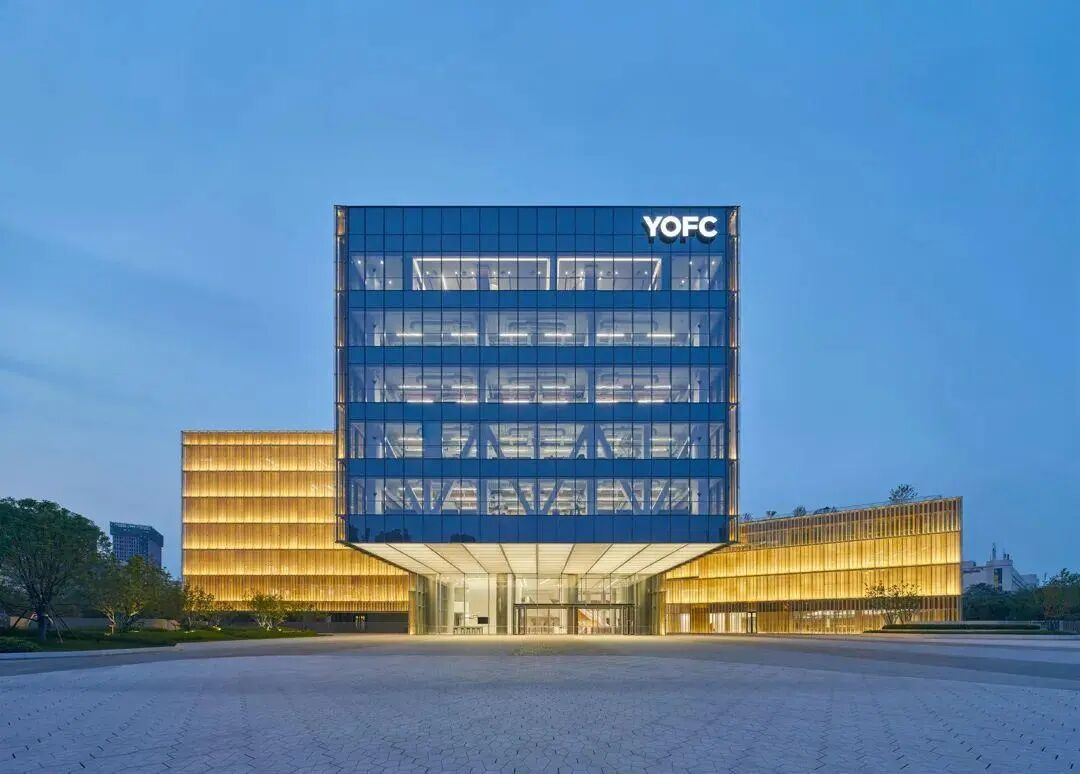
▲ Yangtze Optical Fibre and Cable Industrial Building
Hengtong Optoelectronics also performed outstandingly.
As a private enterprise, Hengtong Optoelectronics is not only among the top three in the global optical fiber communication industry but also among the top three in the global high - voltage submarine cable industry.
In 1991, Hengtong was just an agricultural machinery factory on the verge of bankruptcy with a debt of 1.2 million yuan. After Cui Genliang, a veteran, took over the enterprise, he decided to transform into the communication industry.
In 1992, Cui Genliang jointly established a company with Wuhan Research Institute of Posts and Telecommunications and produced the first qualified optical cable in East China.
In 2006, when the optical cable business was going smoothly, Cui Genliang decided to invest 600 million yuan in the independent research and development of optical fiber preforms. 600 million yuan was 10 times the current profit at that time, but Cui Genliang firmly believed in the future of optical fibers and thus made a firm investment. His consistent concept is:
"If you don't innovate today, you'll fall behind tomorrow and be eliminated the day after tomorrow."
In 2010, Hengtong Optoelectronics independently developed the first domestic optical preform, getting rid of the dependence on imports.
After 2019, Hengtong Optoelectronics successively acquired a 51% stake in Huawei Marine, German j - fiber, and took control of Indonesian Voksel, opening up the entire industrial chain of marine communication and strengthening its global layout.
As of October 28, 2025, Hengtong Optoelectronics has held large orders worth over 20 billion yuan for submarine cables, land cables, and other energy interconnection projects, and also won a marine communication order worth 7 billion yuan.
In the same year when Hengtong Optoelectronics produced the first optical cable in East China, Xue Jiping, a fellow Jiangsu native of Cui Genliang, was leading the difficult transformation of Rudong Hekou Town Brick and Tile Factory. He also chose to enter the optical cable industry. This brick and tile factory is the predecessor of Zhongtian Technology.
In the early stage of development, Zhongtian Technology once made a name for itself with special optical cables. The slogan "Find Zhongtian for special optical cables" was quite influential in the industry.
When its peers flocked to the special optical cable business, Zhongtian Technology entered the submarine cable market. Its deep - sea ROV (Remotely Operated Vehicle) armored cable technology filled a domestic gap. And when its peers flocked to the submarine cable business, Zhongtian Technology chose to open up a new track in the new energy field, entering areas such as photovoltaics, wind power, and energy storage.
This company is especially good at developing the second and third growth curves. Therefore, compared with the other three outstanding enterprises, Zhongtian Technology has a more diversified business structure.
As of October 24, 2025, Zhongtian Technology has on - hand orders of about 31.8 billion yuan in the energy interconnection field, including about 13.1 billion yuan for the marine series, about 16.2 billion yuan for power grid construction, and about 2.5 billion yuan for new energy. The company's market value also exceeded 110 billion yuan in April 2026, reaching an all - time high.
Among the "Four Outstanding Optical Fiber Enterprises", FiberHome Telecommunication Technologies, founded in 1999, is the "youngest" enterprise. However, as a listed company under the central enterprise China Information and Communication Technology Group Corporation, it is a member of the "National Team" with the strongest background.
Different from the other three companies, FiberHome Telecommunication Technologies can not only produce optical fibers, preforms, and optical cables but also master the full - chain technology of optical communication systems. It is the world's only enterprise that integrates the three strategic technologies of "optical communication systems, optical fibers and cables, and optoelectronic devices".
This vertical integration ability of "from sand to system" is unique among the four giants. This means that FiberHome Telecommunication Technologies can not only produce optical fibers but also build complete communication network solutions.
In addition, the mission and resources brought by its "National Team" status enable FiberHome Telecommunication Technologies to directly undertake major scientific research projects in key projects such as the "East - West Computing Corridor" and "West - to - East Power Transmission" and become the designated supplier in fields related to national strategic security such as ultra - high - voltage power transmission communication and national defense communication.
Driven by the "Four Outstanding Optical Fiber Enterprises", there are more than 200,000 optical fiber - related enterprises across the country, jointly contributing more than 60% of the global production capacity.
Today, if you take a walk in Wuhan Optics Valley or stroll around the Suzhou Industrial Park, you will see a large number of optical communication enterprises clustered together, forming a large - scale industrial cluster and the powerful "Chinese Optical Communication Team".

▲ Wuhan Optics Valley Future Technology City
03 The Last Mountain
Although Chinese enterprises have reached the top in optical fiber production capacity, there is still a mountain to climb, which is the high - end market.
On top of this mountain, there are many century - old enterprises from the United States, Japan, and Europe.
Corning in the United States was established as early as 1851 and has been in business for 175 years. This enterprise produced the famous Gorilla Glass, which was selected by Steve Jobs as the preferred glass panel for the iPhone.
At the same time, Corning is also one of the leading enterprises in the global optical fiber industry.
56 years ago, when the world still had no idea what optical fibers were, three scientists at Corning developed the first low - loss optical fiber that met the practical technical requirements, kicking off the era of optical fiber communication.