How did Qiu Zhen, a brand that has made it into the top tier of domestic thousand-yuan bags, achieve explosive sales with "vegetable-tanned leather"?
Around the upcoming May Day holiday, Qiu Zhen, a domestic women's bag brand deeply rooted in the vegetable-tanned leather market, will open four new stores in Wuxi, Hangzhou, Nanjing, and Foshan.
In the past two years, in the domestic luggage market where luxury brands have dominated for years, domestic women's bag brands have carved out a niche with their high-quality leather materials and exquisite craftsmanship. Take Qiu Zhen as an example. Against the backdrop of the general "downsizing" in the retail industry, especially the pressure on physical retail, Qiu Zhen's move to open four stores in the core business districts of key cities across the country is quite bold.
Of course, the confidence to open stores lies in Qiu Zhen's impressive sales data in the past three years: In 2023, Qiu Zhen's annual sales exceeded 100 million yuan; in 2024, this figure soared to 230 million yuan; by 2025, Qiu Zhen ranked among the top three in the category of women's bags priced over 1,000 yuan on Tmall.
Qiu Zhen started in a leather workshop in Foshan in 2015. At that time, there were no similar domestic brands focusing on the water-dyed vegetable-tanned leather market. Since its establishment, Qiu Zhen has been deeply involved in the vegetable-tanned leather market, and with its pioneering layout, it has become a pioneer in the domestic water-dyed vegetable-tanned leather industry. After 11 years of development, through investment in its own leather factory and the layout of high-quality raw leather resources at home and abroad, Qiu Zhen has gradually broken through the constraints of the supply chain, established industry competition barriers, and become a leader in the vegetable-tanned leather market.
From the founder's personal aesthetic and interest preferences to becoming a top domestic women's bag brand, what has Qiu Zhen done right? Against the backdrop of the collective upgrade of domestic women's bag craftsmanship, how has Qiu Zhen successfully broken through?
11 years of "diligent efforts" to build a supply chain moat
In the increasingly competitive market of bags priced around 1,000 yuan, Qiu Zhen has deeply occupied the mental high ground of "water-dyed vegetable-tanned leather". This brand awareness penetration does not come from short-term marketing dividends, but from its 11-year deep cultivation in the vegetable-tanned leather market.
Compared with international luxury brands that rely more on symbols and narratives to maintain premium prices, Qiu Zhen's rapid growth is more due to its insistence on quality. Water-dyed vegetable-tanned leather has always been recognized as a challenging market in the industry. Since it refuses to cover defects with industrial resin, it not only tests the brand's control over the top raw leather supply chain but also challenges the production limit of mass-producing non-standard products in the era of industrial standardization.
The so-called "vegetable tanning" is an ancient process of tanning leather using natural plant tannins extracted from plants. It has a long cycle and requires high technology and environmental conditions. And "water dyeing" refers to the method of soaking and dyeing instead of surface spraying in the coloring process, allowing the dye to penetrate into the leather fibers and completely retain the natural texture and pores of the leather.
This means that leather products made of water-dyed vegetable-tanned leather are still breathable, changeable, and full of vitality. More amazingly, leather products made by this process will gradually darken in color over time, become softer in texture, and form a warm patina on the surface, making the whole bag more story-telling.
It is worth mentioning that since there is no spraying or covering, any defects of the leather itself - such as scars from mosquito bites, growth lines of the leather, and even slight color differences - will be fully presented. Therefore, Qiu Zhen has extremely strict requirements for the grade and quality of raw leather.
Most of Qiu Zhen's cowhide and sheepskin come from traditional high-quality producing areas such as Europe, the Hetao Plain in China, and Hankou Road in China. Even for the highest-grade raw leather from the best domestic producing areas, Qiu Zhen only selects 1% - 5% of them; for the Dutch milk-fed calfskin in Europe, only about 20% of the raw leather can be selected for the production of Qiu Zhen's water-dyed vegetable-tanned leather.
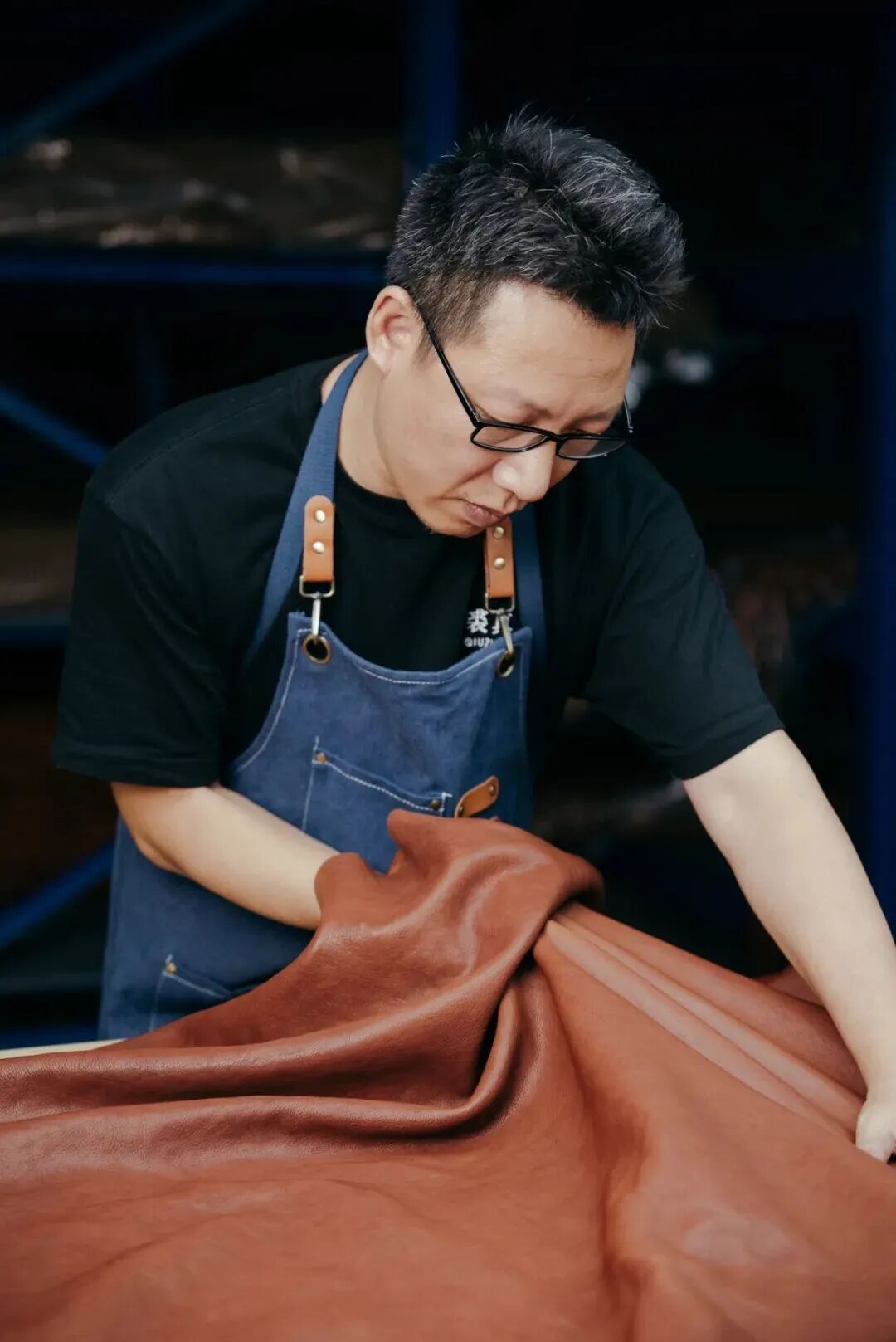
During the leather selection process, each piece of leather needs to be manually selected by experienced craftsmen. On average, a craftsman can select 3,000 pieces of raw leather for spraying on the market per day. However, Qiu Zhen's water-dyed vegetable-tanned leather has more refined requirements for raw leather, and each piece needs to be manually selected to identify hidden injuries. On average, each craftsman can only select 100 - 200 pieces of leather per day.
Behind these figures is Qiu Zhen's product belief of "seeking truth through perseverance". Cheng Baohua, the founder of Qiu Zhen, has more than 20 years of experience in the leather industry. Because he understands the ins and outs of the industry, he especially cares about the quality of leather. He said, "We clearly know the quality of leather materials and craftsmanship, so we always adhere to using good leather materials and doing good craftsmanship to make each leather product well within our ability."
Facing the requirement of scale, most luxury brands choose the "asset-light" model: the brand is responsible for design, production is outsourced to a contract manufacturer, the contract manufacturer purchases the leather materials, and after-sales service is provided by a third party. The advantage of this model is that it starts quickly and occupies less capital, but the price is that the brand's control over quality is seriously diluted. Qiu Zhen has chosen another way: heavy assets and full-link self-control.
As early as the beginning of 2023, Qiu Zhen established a leather factory with its own funds, covering the entire process of leather production, design and development, and leather product manufacturing. As of the beginning of 2026, Qiu Zhen has completed the full-link integration of water-dyed vegetable-tanned leather, established its own leather R & D and procurement team, and delved into the source of raw leather procurement. The investment in areas such as raw leather loss and leather tanning process R & D has already exceeded tens of millions. Finally, it has achieved full-link control over raw leather procurement, tanning process, stylized treatment, and quality control system. This "stupid method" has also enabled Qiu Zhen to establish deep industry barriers in the niche market of water-dyed vegetable-tanned leather.
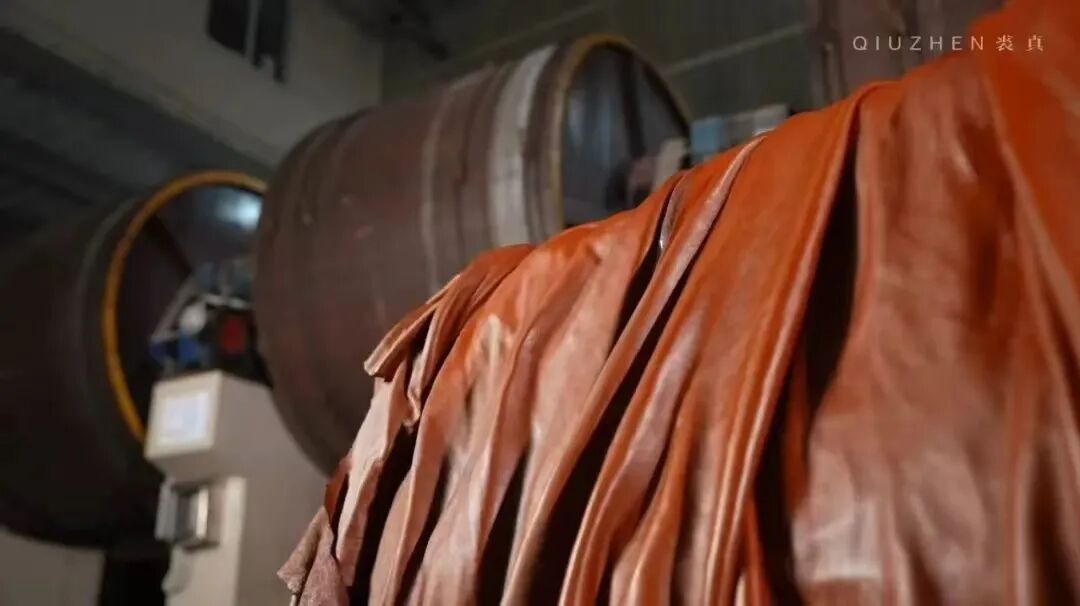
Although Qiu Zhen's GMV has doubled for three consecutive years, the brand's attitude of "good work takes time" towards products has not changed. The brand is still willing to invest more time and higher costs in a single product.
In April this year, Qiu Zhen's vintage rubbing color process, which was launched 11 years ago, officially returned. The uniqueness of this process lies in that craftsmen dip natural plant extracts and manually wipe the surface of the bag repeatedly to create a gradient effect on the leather surface, giving each bag a unique artistic imprint. The whole process goes through more than 200 procedures, and the rubbing color process accounts for 20% of the total working hours.
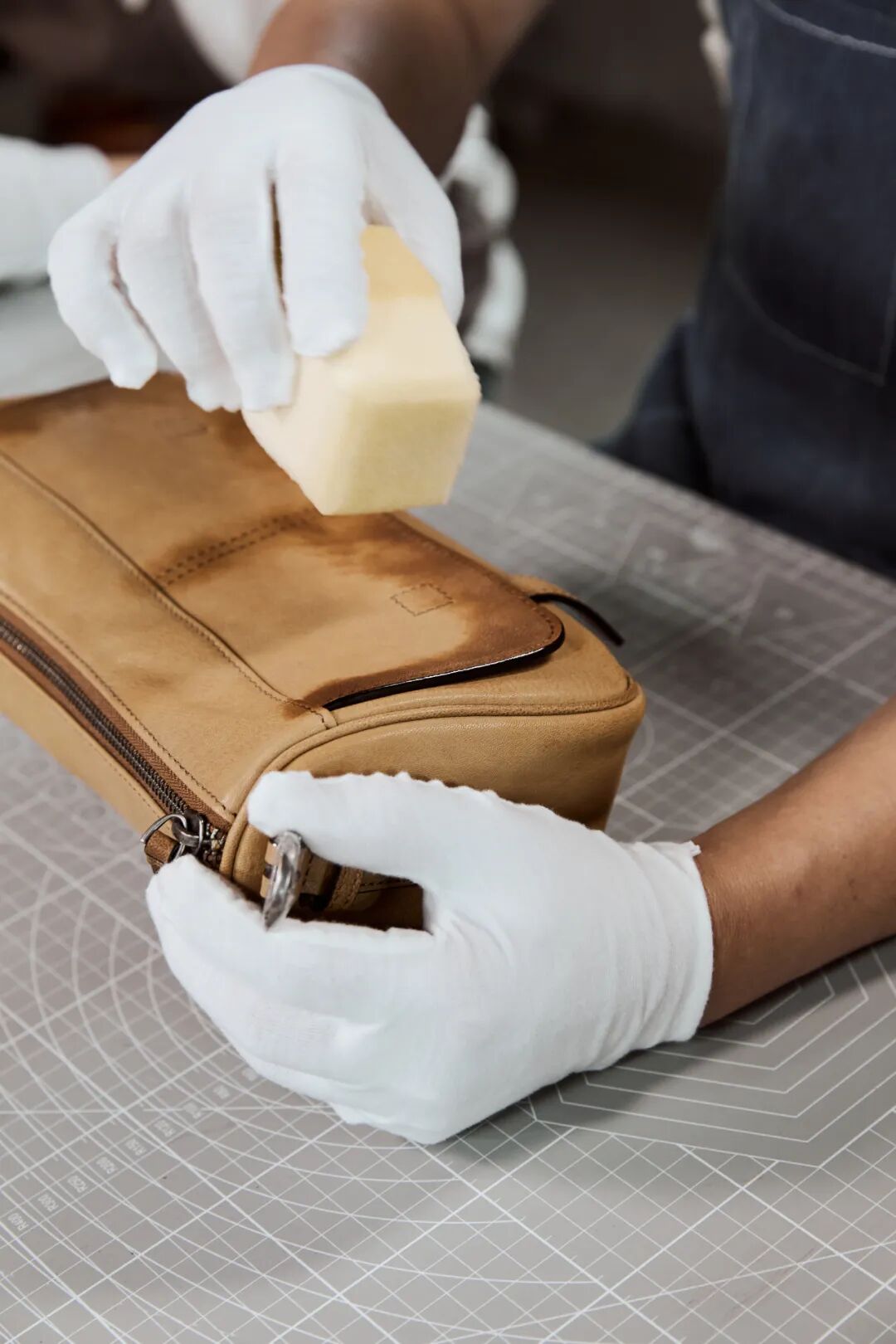
Different from the common "resin spraying coloring" and "alcohol dye rubbing color" on the market, the natural plant extracts used in Qiu Zhen's manual vintage rubbing color process will not damage the leather. The leather will still form a smooth patina over time, while alcohol dye rubbing color will damage the oil in the leather, making the leather dry, less durable, and even fade.
The return of this process is not only an update of the product line. More importantly, Qiu Zhen dares to show the "traceable" production process to the outside world, and is also using its strength to write a brand commitment system for consumers.
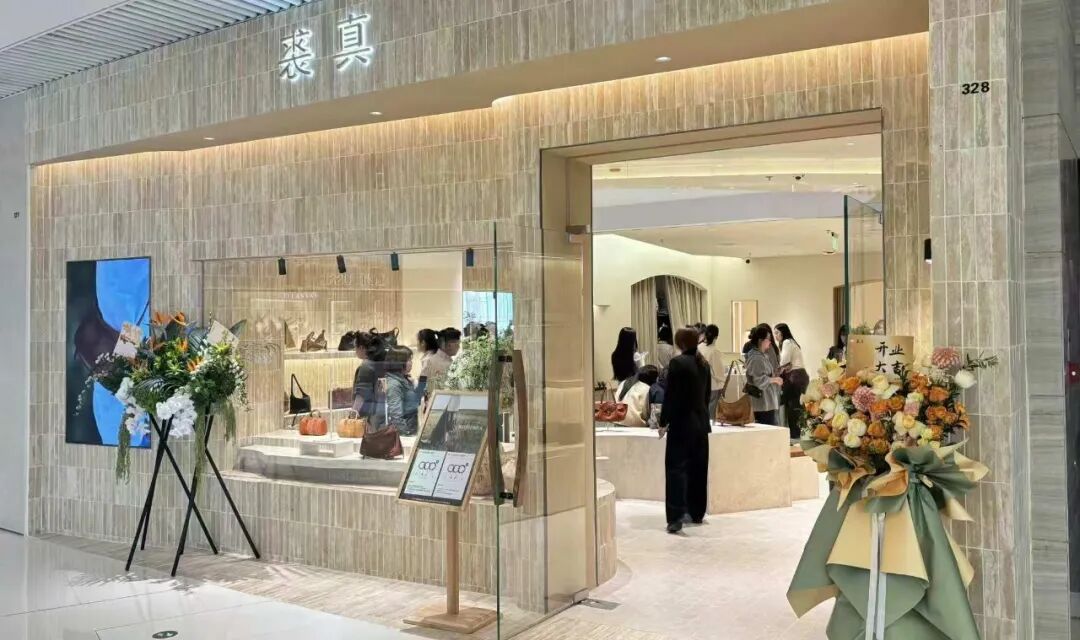
This confidence is enough to support Qiu Zhen to open four stores in the core business districts of four cities. Qiu Zhen knows well that a good product is not limited to online retouched pictures and does not rely on marketing filters. The touch, smell, and texture of the leather can only be fully perceived through real contact in the store. In other words, the offline store is the most direct test field for Qiu Zhen's "product power".
Many users who are interested in Qiu Zhen quickly make a purchase after experiencing the real texture and understanding the process details in the offline store. The high popularity of the stores is enough to show that products carefully crafted by craftsmen and the heavy asset investment in the supply chain and core processes constitute Qiu Zhen's deepest moat and are also a direct manifestation of Qiu Zhen's core competitiveness in products.
The patina aesthetics of vegetable-tanned leather: more stories with use
Cheng Baohua, the founder of Qiu Zhen, once said that each bag is an unfinished product, half completed by the craftsman and the other half by the user. This statement fully captures the essence of vegetable-tanned leather products.
Before leaving the factory, the vegetable-tanned leather handbag is carved and polished by craftsmen, with a clean but slightly immature surface. After reaching the user's hands, it begins its real "journey through time". With the repeated use of the bag owner, the oil and temperature of the palm soak into the leather, the color deepens from light to dark, and the leather becomes soft in the process of repeated use. Even those inadvertent scratches and watermarks have become unique imprints of the bag itself after the tempering of time. This patina texture is not wear and tear but "cultivation".
The brand theme "Time Container" released by Qiu Zhen in April this year accurately captures the most charming feature of vegetable-tanned leather. It also officially announced the actress Chun Xia as the brand ambassador to interpret the concept of "Time Container". At the same time, Chun Xia had an in-depth conversation with the talk show actress Niaoniao to share their understanding of "time".
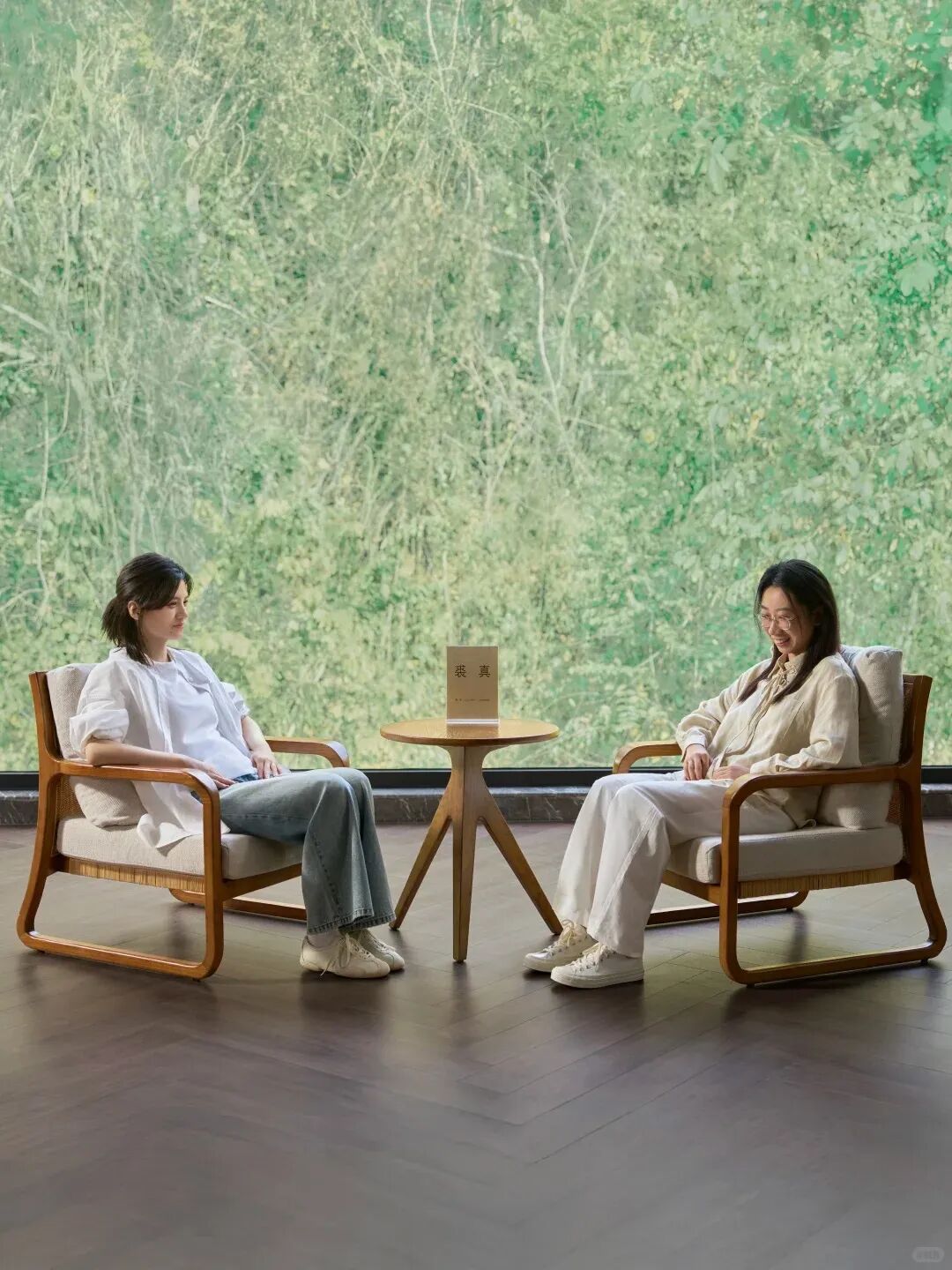
Two women, one interprets characters through acting, and the other expresses thoughts through language; one has experienced the "traces of time" from glory to silence and then to return, and the other constantly introspects and "cultivates" her own style in daily observations. They are both "containers", and they have both chosen to let certain traces stay and certain emotions pass through.
This is exactly the resonance between Qiu Zhen's water-dyed vegetable-tanned leather's long-term patina and the traces left behind and every user: time will leave traces on everyone, and these traces shape us.
This brand narrative highly coincides with the spiritual pursuit of "relaxedness" and "long-termism" of urban middle-class women. In an era when consumerism advocates "chasing trends", Qiu Zhen goes against the trend and subtly conveys a new consumption concept to consumers: it's okay to be a bit old; having traces is actually more beautiful.
Attracting customers through the brand's aesthetics and humanistic resonance is not Qiu Zhen's first attempt. As early as 2023, Qiu Zhen entered Dong Jie's live-streaming room and participated in the "buyer economy" on Xiaohongshu. On its tenth anniversary in 2025, Qiu Zhen invited Teng Congcong, the director of "My Altay", to shoot the documentary "Butterflies Come to Plum Blossom Town", recording the daily lives of Qiu Zhen's handicraftsmen in the Plum Blossom Town factory and presenting the brand's real and delicate emotional value.
From Dong Jie to Teng Congcong, from Song Jia to Chun Xia, the cooperation partners selected by Qiu Zhen all have a common characteristic: they have a sense of story, are real, and do not cater to traffic. This choice itself is the brand's insistence on "seeking truth": not chasing short-term popularity but looking for expressers who can truly convey the brand spirit.
Qiu Zhen's way of telling a good brand story is not limited to artists. Qiu Zhen also continuously outputs high-quality content through podcasts such as "Hearing is Believing" and gradually builds an emotional connection with consumers through in-depth content and real-person conversations.
Going slow to go fast: How does Qiu Zhen adhere to long-termism?
From building a supply chain moat to telling the "vegetable-tanning aesthetics" of vegetable-tanned leather, we can clearly see that Qiu Zhen's explosive growth does not rely on accidental marketing highlights but is a brand example of "long-termism".
It took 11 years to complete the transformation from 0 to 1 and then to the leader in the vegetable-tanned leather market through in-depth cultivation of the supply chain, perseverance in craftsmanship, and shaping of brand philosophy in the slow market of "vegetable-tanned leather". In a consumer business context that pursues hot products and rapid iteration, Qiu Zhen's story seems a bit out of place. However, it is precisely the choice of this slower, heavier, and more "stupid" path that constitutes Qiu Zhen's core competitiveness.
As Cheng Baohua, the founder of Qiu Zhen, emphasized: "In the 11 years that Qiu Zhen has gone through, we have always taken products as the core and good products as our belief. We will not forget our original intention when we founded Qiu Zhen, our product belief, and the utopian products we pursue just for the sake of increasing sales. We will never forget these."
In 2025, with an explosive growth of more than 100% in the whole-network GMV for three consecutive years, Qiu Zhen ranked among the top three in the category of women's bags priced over 1,000 yuan on Tmall on Double 11. This also means that Qiu Zhen is no longer just a niche brand but has become the definer of the water-dyed vegetable-tanned leather market.
In the market of bags priced around 1,000 yuan, which has been dominated by international brands for a long time, Qiu Zhen's path to break through provides a reference model for domestic brands that want to achieve high-end and brand building in niche areas: It does not try to compete directly with brands like COACH and MK in fashion trends. Instead, it starts from its own advantages, deeply explores the product connotation around its product features, extends the "vegetable-tanning aesthetics" from the special production process of vegetable-tanned leather, completes the cultivation of market and user awareness, and establishes a stable emotional connection with consumers; The brand adheres to long-termism and does not dilute product quality for short-term growth. Whether it is product refinement or word-of-mouth marketing, it always takes product power as the core competitiveness of the brand.
Therefore, when consumers want a handbag with a sense of story, one that can accompany them through growth and become more charming with use, Qiu Zhen becomes the brand that can provide users with such a definite experience.
In addition, compared with the strict and cold after-sales policies of luxury brands, Qiu Zhen's service is deeply in line with the brand's long-termism concept.
When consumers purchase high-end leather products, they often worry about difficult repairs, expensive maintenance, and lack of follow-up guarantees, thus lacking a sense of consumption security. However, Qiu Zhen jumps out of the short-term transaction thinking and responds with long-term service: an 18-month extended warranty, free repair for non-human quality problems; free cleaning and maintenance for life without limit; and a professional vegetable-tanned leather maintenance team