$300 million, breaking the record for low-altitude financing in China
This year, the record for low - altitude financing has been broken.
According to investment industry sources, today (April 27), Volant Aero announced the completion of a $300 million Series C financing round. The round was led by LeiShi, with Sequoia China and Shanghai State - owned Futeng Capital participating as follow - on investors. Existing shareholders, including MingShi Venture Capital and Legend Capital, continued to participate with over - subscription.
This is not only the largest single - round financing in China's manned eVTOL sector to date but also sets a new record for the largest financing in the domestic low - altitude track in recent years.
What's even more intriguing is the combination of investors in this round - Middle Eastern tycoons, top - tier VCs, and local state - owned assets. For the first time, they have collectively invested in an eVTOL aircraft manufacturer. After communicating with Dong Ming, the founder and CEO of Volant, one impression stands out: After a long period of activity in the low - altitude track, the leading companies have finally emerged.

Dong Ming, Founder and CEO of Volant
Above the sky, the industrial competition is approaching at full speed. The next century of the global aviation industry may start to unfold its imagination from China.
A Single Financing Round Breaks Industry Records
Wind Vane
This single financing round is worthy of being written into China's low - altitude history.
Looking at the list of investors, the luxurious lineup is astonishing. What's even more interesting is that all three new investors are investing in an eVTOL aircraft manufacturer for the first time.
The leading investor, LeiShi, has a significant background. Headquartered in Abu Dhabi, it focuses on top - tier technology companies in emerging Asian markets. Previously, it has invested in robotics and autonomous driving in China. Now, investing heavily in Volant, the underlying meaning is not hard to understand - the Middle East is a key destination in Volant's overseas expansion plan. At this time, the entry of overseas capital is more than just a financial investment.
There is also Sequoia China, which has a long - standing relationship with Volant. A little - known detail is that as early as the establishment of Volant, the two parties had exchanges. This long - awaited judgment has finally materialized today.
Digging deeper, Futeng Capital, a Shanghai state - owned asset, has also joined the fray, adding a more distinct industrial signal to this financing round.
Currently, Shanghai is continuously ramping up its efforts in the low - altitude economy and has clearly proposed to cultivate leading eVTOL enterprises. This is the first time that Shanghai's municipal state - owned assets have been invested in an eVTOL aircraft manufacturer. Looking at the long - term, Volant has already attracted state - owned assets from multiple regions - state - owned institutions in Shanghai, Beijing, Shenzhen, Xiamen, Zigong, etc., have successively chosen it as the first option in the low - altitude economy track.
It is not difficult to see that three top - tier institutions have reached a consensus on Volant. As the industry progresses, the certainty increases, and resources naturally converge towards the leading players. Volant's financing in this round is the most direct proof.
The consensus did not exist from the beginning. Looking back at the earliest financing round, Volant did not secure it easily.
It was early 2021, and the company was just starting out. At that time, the concept of the "low - altitude economy" did not exist in China, and Joby in the United States had not yet gone public. Many investors didn't even know what eVTOL was. This track was both unfamiliar and lacked references, seemingly shrouded in a fog.
Dong Ming, the founder and CEO of Volant, still remembers this scene. At the investment decision - making meeting of Shunwei Capital, the atmosphere was not relaxed. He tried his best to elaborate on the technology, market, and industry path, but most of what he could present were judgments rather than evidence. After several rounds of discussions, neither side could fully convince the other. However, in the end, Shunwei was the first to give Volant a vote of confidence in the midst of non - consensus.
Looking back now, it's almost like a prophecy coming true. Over the past five years, the projections written in Volant's business plan have gradually become a reality:
In terms of products, Volant's first - model product, the VE25 - 100, completed its first in - flight test with a pilot on board, and the certification basis and the entire certification plan were approved. In terms of commercialization, it has accumulated nearly 2,000 letters of intent and about 30 firm orders. At the industry level, the "15th Five - Year Plan" has listed the low - altitude economy as an emerging pillar industry.
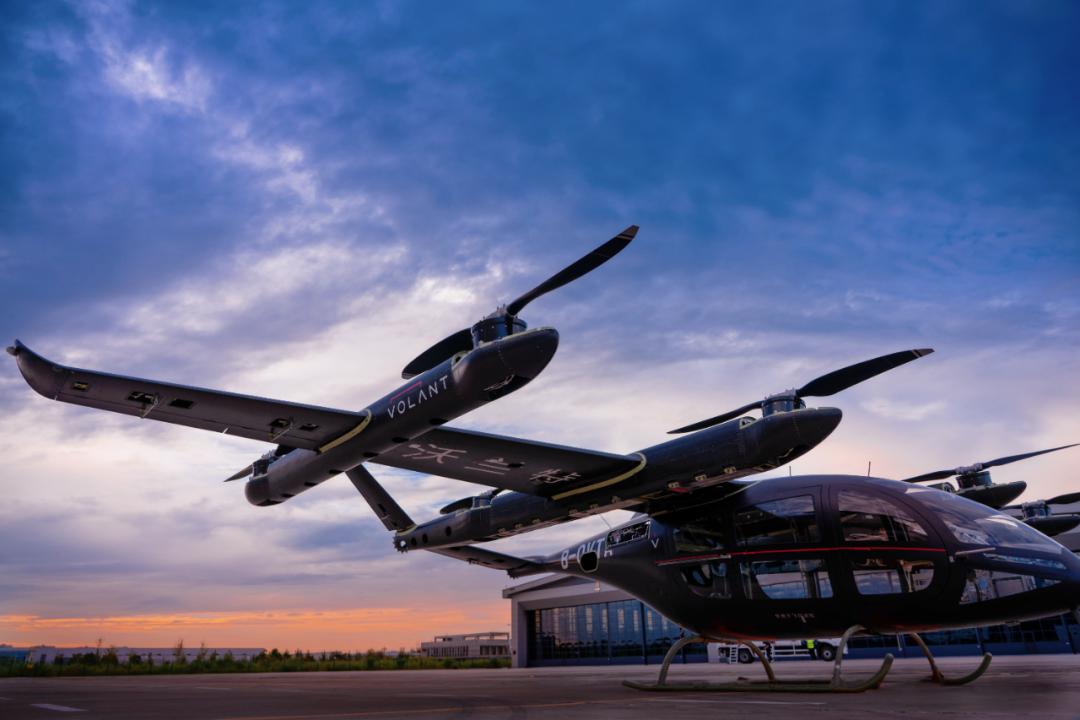
The era does not favor anyone without reason; it only rewards those who see it first.
It is this kind of cognitive ability to penetrate non - consensus that has become Volant's most important foundation - it didn't lose its rhythm during the trough and didn't lose its composure in the boom. Instead, it has efficiently navigated through the most difficult stages of product development, airworthiness certification, commercialization, and financing.
So far, Volant has repeatedly broken industry financing records: completing the most financing rounds in a year, having the highest cumulative financing amount, and now securing the largest single - round financing in China's manned eVTOL sector.
Unveiling the Team Behind
After talking with several investors, one thing that is repeatedly mentioned about Volant is its team and culture.
This starts with the industry itself. The challenges in developing high - grade commercial eVTOLs have never been limited to a single technology but involve a high degree of cross - discipline integration, a systematic development process, and extremely high airworthiness standards. This means that any company aiming to enter this field must have forward - looking judgment on the industry direction, R & D capabilities at the level of civil aircraft, and the patience for long - term commercialization.
Volant's core team is a concentrated manifestation of such capabilities.
Dong Ming, the founder and CEO, was born into an aviation family and has had a flying dream since childhood. He started his career in software coding and hardware development and has worked in aviation industry, General Electric, Rockwell Collins, and Aviointertechnique. He was deeply involved in the development of major domestic aircraft models such as the ARJ21 and C919. He also volunteered to lead a team to tackle difficult projects like the whole - vehicle control system for the Golmud - Lhasa section of the Qinghai - Tibet Railway.
Dong Ming told the investment industry about a past event. At the beginning of the C919 project, he represented the Chinese side in receiving technology transfer from GE. It took four years from digesting a large amount of materials to producing the first deliverable system. The difficulties involved are indescribable. This experience made him realize that the ultimate test in commercial aircraft development lies in people and team culture. Without perseverance and a pursuit of truth, it is impossible to build an aircraft that is truly recognized.
In 2021, he led the team to officially establish Volant, betting on commercial passenger eVTOL - the most difficult direction recognized in the entire track at that time. Beyond the technical challenges, the more important thing is how to efficiently organize and promote a large - scale system project that spans a long time, requires in - depth collaboration, and involves dozens of disciplines. Every step in the development of commercial passenger aircraft must be rigorous and complete, able to withstand explanation, verification, and inspection. For a new team, this is where the real skills are tested.
Many people don't realize that from the very beginning, Dong Ming has been building Volant's team and organizational structure based on the logic of civil aircraft development.
First, the core technical backbones mostly have similar backgrounds to Dong Ming, having long - term experience in civil aircraft model development and covering key disciplines. The R & D process follows a forward - looking approach, with the systems engineering department responsible for controlling the complexity of the entire process. Airworthiness requirements are incorporated at the design and verification stages and are strengthened through a large number of tests, without taking technical shortcuts.
Engineer culture has thus become the foundation of Volant: emphasizing both efficiency and collaboration, focusing on both results and the root causes of problems. It is this seemingly unflashy but effective approach that has enabled Volant to move forward.
Although it may seem "stupid," such a team and culture precisely correspond to the most scarce capabilities in eVTOL: the rhythm of civil aircraft development, the methods of airworthiness promotion, the discipline of complex engineering, and high requirements for "commercial viability." Therefore, what Volant has achieved first is high R & D efficiency.
The earliest verification came quickly. In the early days, Volant didn't even have a decent office, but it completed the flight of its first scaled - down aircraft just three months after its establishment. Although the aircraft was small, it was enough for the company to confirm early on that the technical direction was correct and the team could move things forward.
In Dong Ming's view, the window period for the aviation industry is predictable. Looking at the history of the aviation industry, few companies can complete development within 3 to 5 years. Since aircraft are naturally global products, R & D efficiency determines who is more likely to seize the opportunity.
Soon, Volant's first product in the "Three Models, Three Generations" series, the VE25, came into the spotlight: it adopts a compound - wing configuration and a 6 - seat layout, and its overall size is close to that of a medium - sized helicopter. By the following year, the full - scale technology verification aircraft of the VE25 was successfully rolled out and completed its first round of test flights in January 2023.
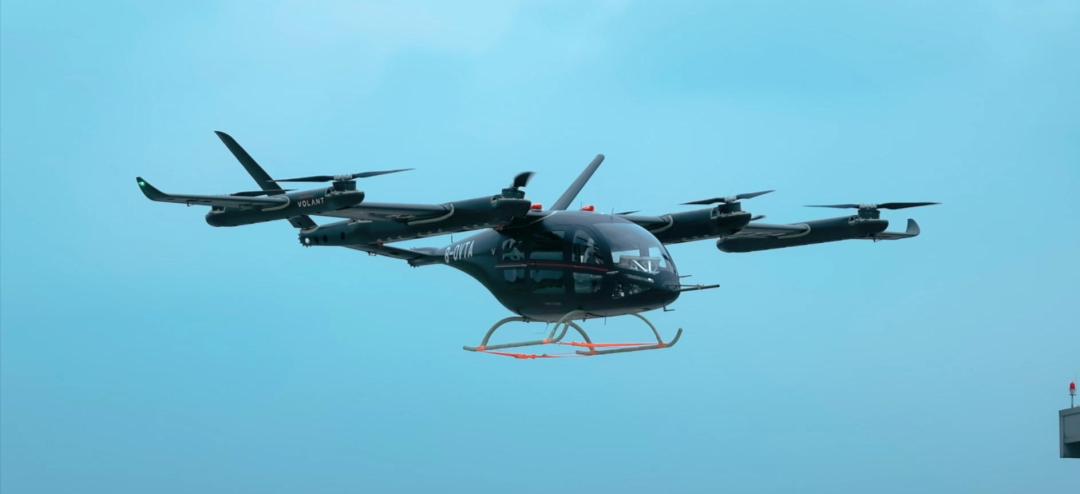
"We define our first product as safe, reliable, and user - friendly. Its mission is to explore and launch the eVTOL application market. That's why we chose a technical route with higher inherent safety and better maturity, hoping to complete R & D and enter the market as soon as possible to verify and iterate in real - world scenarios. The premise of all this is always safety," Dong Ming explained.
However, in 2023, this fledgling company almost crashed. Volant encountered a series of troubles, and just at this time, an investor who had already reached an agreement withdrew.
It was precisely during this period that Volant's systematic development mechanism withstood the most severe test. Subsequently, the company was the first to complete the full transition from the multi - rotor flight mode to the fixed - wing flight mode. It also introduced core executives such as Huang Xiaofei and Zhang Baozhu, and the team quickly regained its footing.
When talking about the most difficult days, Dong Ming doesn't shy away from the word "pain." But what really supported the company to move forward was the team. He said, "R & D continued as usual, test flights continued, and the airworthiness work never stopped. Even two or three dozen colleagues voluntarily took pay cuts to stay."
Only after passing through the darkest night can one see the brightest stars. Since then, Volant has achieved a milestone almost every year. By 2025, the VE25 completed its first manned flight, which was also the first time that a ton - class manned eVTOL in the industry actually carried people into the sky.
Just before the first manned test flight, a panel of experts from the Chinese Flight Test Establishment completed a review and clearly affirmed that Volant's development level and maturity were no less than those of any civil aircraft models they had encountered before. After the flight, the test pilot's evaluation was equally straightforward: the eVTOL's controllability and stability were excellent.
As time goes by, Dong Ming has become increasingly aware that the so - called "connection of fate" is probably like this: the past has converged into the present and gradually formed Volant's cultural foundation: confident yet humble, open yet rigorous, efficient yet diligent, and uncompromising in integrity. With all these qualities, this team has always maintained the power to move forward.
China's Low - Altitude Window Period
Value - Oriented
The world is vast, and the opportunity has arrived.
In the past few years, the low - altitude economy has boomed. Remember in 2024, the "low - altitude economy" was first written into the government work report as a new growth engine. By the "15th Five - Year Plan" period, it has been regarded as an emerging pillar industry. According to the prediction of the Civil Aviation Administration of China, by 2035, the market scale of the low - altitude economy is expected to exceed 3.5 trillion yuan.
Above the sky, a new track is being re - measured. "This is a paradigm - level change," Dong Ming believes. This time, China is no longer just a follower.
Since the 12 - second flight of the Wright brothers, in the first century of human aviation, the sky has long been defined by giants such as Boeing and Airbus. China has never produced a world - class aviation enterprise of the same scale.
"In the eVTOL track, China and the United States are almost on par. China has clear advantages in the electrification supply chain and the marketization of major application scenarios," Dong Ming said. "For us, this is not only an industrial opportunity but also the aspiration of every aviation person - to see a truly valuable company emerge from China in the second century. This is Volant's vision."
In a sense, the path that domestic electric vehicle manufacturers have taken in the past decade is being replicated in the low - altitude field. However, unlike the emergence of hundreds of new players in the car - making wave, perhaps not many companies will reach the finish line in the passenger eVTOL field. Technical thresholds, capital investment, certification cycles, and the thickness of the industrial chain all determine that this track is naturally for a select few.
Therefore, whoever becomes the first in China will be closer to being the first in the world. Dong Ming believes that the next three years will be the most critical period for passenger eVTOL to secure a position - certification, delivery, and commercial verification are all indispensable.
In Dong Ming's view, what really matters during the window period is not just building the aircraft but creating product value. For this reason, Volant has planned its product, technology, and market strategies from the very beginning: targeting commercial passenger transportation, defining products with higher safety standards, while being compatible with scenarios such as freight and emergency rescue, and laying out supporting systems such as training and maintenance for leading customers in advance.
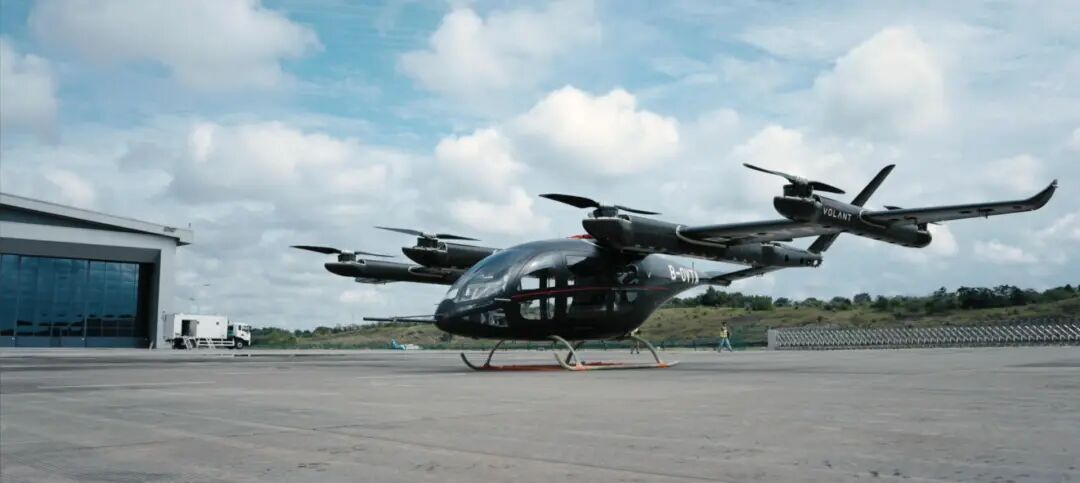
In this race for the future, Volant has long realized that a single aircraft manufacturer alone cannot fly into reality or the world. The actual implementation of eVTOL involves not only an aircraft but also the supply chain, airworthiness system, infrastructure, operation network, and an entire industrial ecosystem that operates in a coordinated manner.
When talking about Volant's future, Dong Ming paints such a picture: moving forward together with partners in the ecosystem, going through rounds of technological iterations and industry challenges, and continuing to develop; customers making money from more cost - effective operation routes, making low - altitude transportation more popular; ordinary people safely and confidently enjoying efficient and convenient air travel, ultimately benefiting society. "After all, what truly matters are those things that are more meaningful and long - lasting for society."
Therefore, what Volant cares about today is not just the current generation of products. Next, the company has set its sights on the pre - research direction for higher - speed and longer - range aircraft. Looking upstream, it involves the continuous