Xu Huazhe of "Breaking Shell Robotics": Within two years, usable household robots will appear in China.
Text by | Qiu Xiaofen
Edited by | Su Jianxun
In 2026, entrepreneurs in the field of embodied intelligent robots around the world have all turned their attention to the deep - water area: the family.
What ignited this enthusiasm is the glimmer of the Scaling Law that has emerged in the industry recently —
First, Generalist AI, a Silicon Valley - based embodied intelligence company, verified the certainty of the GEN - 1 model. After feeding a large amount of data into the robot, the success rate of fine - operation tasks unexpectedly increased from 64% to an astonishing 99%;
Subsequently, Sunday Robotics, a popular embodied intelligence unicorn company in Silicon Valley, also attempted to solve the data challenges in the home scenario. It not only launched the Umi glove data collection solution but also directly sent the robot Memo into households to do housework (such as tidying up the table, making coffee, and folding clothes), thus attracting a large amount of capital investment.
In China, on the other side of the ocean, there is a familiar figure among the entrepreneurs who have recently entered the field of household robots — Xu Huazhe.
"Within two years, usable household robots will appear in China," he is equally optimistic and radical in his judgment of the industry.
As one of the "Four Returned from Berkeley" and an assistant professor at the Institute for Interdisciplinary Information Sciences of Tsinghua University, in 2023, Xu Huazhe joined Xinghaitu as the former chief scientist and co - founder, helping to turn the company into a star enterprise in the field of embodied intelligence in China.
However, at the peak when the company's valuation exceeded 20 billion and it raised nearly 3 billion in financing, Xu Huazhe chose to "go solo" and founded a new embodied intelligence company, "Poke Shell Robotics".
This time, as he starts anew, what he wants to create is an embodied intelligent robot with true generalization ability that can perform tasks in the home scenario.
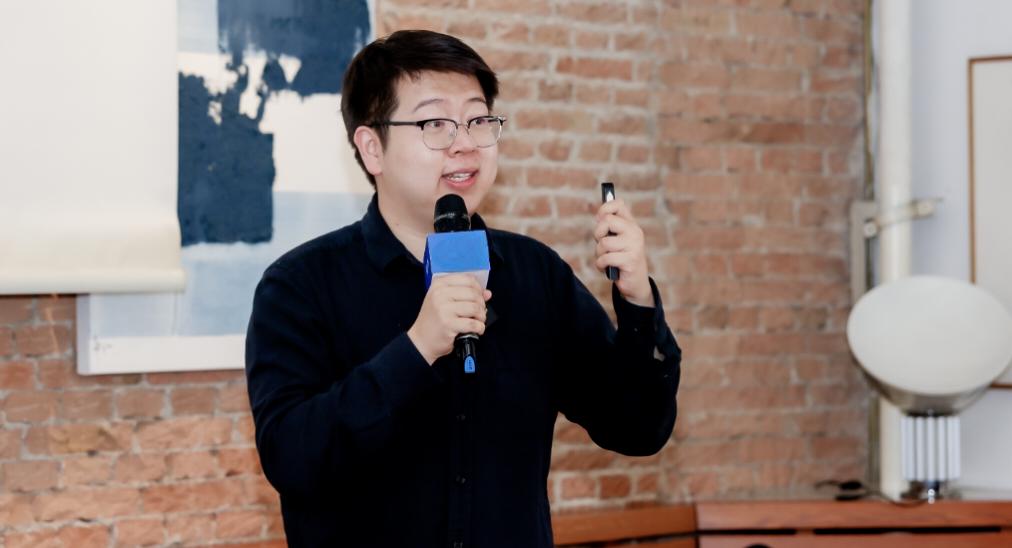
△ Xu Huazhe
Actually, the idea of starting a household robot company is not a recent whim. After reading "Steve Jobs" in junior and senior high school, a seed was planted in his heart to found a great To - C company. Later, during his studies at Tsinghua, Berkeley, and Stanford, he has been deeply involved in the field of robot reinforcement learning, with the dream of sending robots into millions of households.
The household robot in his ideal, although not omnipotent, can perform complex tasks that previous - generation robots (such as vacuum cleaners and floor scrubbers) could not, such as more delicate cleaning work, and the sequential and multi - step tasks like doing laundry and storage.
In his view, this choice of entrepreneurial direction also reflects a strong aesthetic obsession. Xu Huazhe straightforwardly said that the essence of generalization is a kind of "beauty and influence" — using the simplest and most elegant model to solve complex human life problems and truly transform AI into productivity, rather than simply replacing low - end labor.
From a more rational perspective, entering the To - C home scenario also reflects Xu Huazhe's business judgment. In his opinion, currently, many robot manufacturers send humanoid robots into factories to perform tasks such as loading and unloading and box - handling that traditional robotic arms can already do. In essence, they are just using new forms to do old - fashioned things, and the robots are not fully leveraging their true versatility.
He believes that true AGI should be born and applied in the home scenario because the tasks in the home scenario are more chaotic and random than those in the factory scenario, and the data is rich, which is precisely the best environment for training general models.
Therefore, in order to seize the opportunity, within just one month of starting the business, the new company "Poke Shell Robotics" has completed financing, the establishment of the core team, the training of the embodied model, and the hardware iteration.
According to exclusive information from "Intelligent Emergence", Poke Shell Robotics recently completed a tens - of - millions - of - dollars angel - round financing, led by Yunqi Capital, and received support from first - tier US - dollar funds such as Shunwei Capital and Honghui Fund, well - known industrial players such as Xiaomi Strategic Investment and Xinghaitu, as well as first - tier market - oriented funds such as BV Baidu Ventures, Inno Angel Fund, Tsinghua Alumni Seed Fund, and Orient Fortune Capital.
The rapid capital investment is also due to Xu Huazhe's different choices in key technical routes.
In order to achieve generalization, in terms of key technical routes, his choice seems a bit counter - intuitive. He completely abandoned the mainstream VLA (Vision - Language - Action) base model solution in the industry and instead built a world model that can directly input and output "video - action".
In terms of the model structure, he also proposed a unique "UAG architecture". He used parallel pre - training to replace the previous cascading method and integrated reinforcement learning throughout the entire process of pre - training and deployment, achieving a five - fold increase in training efficiency.
In addition to laying a solid foundation for the model, at the data and hardware levels, he also collected high - quality data through a three - layer solution of UMI, exoskeleton, and first - person - view data, forming a closed - loop iteration from task definition to data, model, and ontology.
According to Xu Huazhe, the first - generation 32B - parameter - scale embodied world model of "Poke Shell Robotics" has completed the first - round training and is currently in a critical stage of data iteration. At the hardware level, the glove hardware customized for data collection by "Poke Shell Robotics" has gone through five or six iterations.
Recently, "Intelligent Emergence" had a conversation with Xu Huazhe. The following is the transcript of the conversation (slightly edited):
Why did you leave Xinghaitu?
"Intelligent Emergence": Why did you choose to leave Xinghaitu and found a new robot company?
Xu Huazhe: This idea has been brewing for a long time. In August and September 2023, I started talking with Gao Jiyang about joining Xinghaitu. But after two years, by November and December last year, I had basically decided to leave. I officially completed the procedures this year, and founding "Poke Shell Robotics" is something that happened in the last month.
The main reason for leaving is that I have always wanted to create some To - C, truly generalized and universal robots.
"Intelligent Emergence": Since you've always wanted to do To - C, why didn't you directly start a To - C robot business at the beginning?
Xu Huazhe: There are multiple reasons. When I joined Xinghaitu in 2023, I also considered starting my own business. But at that time, I had just returned from the United States after finishing my studies and had only been working at the Institute for Interdisciplinary Information Sciences for about a year. Leading a company while also taking care of my teaching duties would have been a huge challenge.
At that time, Xinghaitu and some other embodied intelligence companies also invited me to join. I thought that joining an excellent team as a co - founder was a more prudent choice. Moreover, the publicity of Xinghaitu also mentioned something like "let robots serve millions of people", which was in line with some of my ideas.
"Intelligent Emergence": What progress has your new company made, even though it has only been established for a month?
Xu Huazhe: In terms of the team, there are currently about 20 people. On the AI side, there are some talented young people, and on the hardware side, there are many engineers with experience in To - C mass production and delivery. We are still actively recruiting.
In terms of technology, our AI model has good early - stage accumulation in three dimensions: "fast movement", "strong generalization", and "high success rate", enabling the robot to achieve a nearly 100% success rate when performing certain complex tasks.
Our first - generation 32B model has completed its first training, but it still needs data iteration to show better capabilities. Our hardware gloves have also gone through five or six iterations.
In the first month, we had to handle various matters such as company registration, site selection, and decoration. I think we've achieved a relatively fast pace.
"Intelligent Emergence": How is your mindset different from your first - time entrepreneurship?
Xu Huazhe: The biggest difference is that I'm more down - to - earth and bolder. Before my first entrepreneurship, I was worried. I wondered how I could give others jobs when I had never worked myself. I was also concerned about how to do business and how to deal with investors and the government.
During my two - year tenure at Xinghaitu, I got involved in these things. I realized that "if you haven't done it, just do it hard". In the end, things went quite smoothly. There's no need for too many concerns. The most important thing is to take the first step. This time, I'm more at ease psychologically.
"Intelligent Emergence": Is there a big difference between starting a household robot business in 2023 and 2026?
Xu Huazhe: There's a significant difference. First, in terms of the hardware body, China's hardware supply chain has been better refined in the past three years, and there are more available robots. In 2023, only industrial arms might have been available;
Second, regarding data, in 2023, the data of robots was almost zero. Now, there are hundreds of thousands of hours of open - source data online, and a large number of data suppliers have emerged. Although data quality and cross - ontology adaptation are still issues, the data richness is incomparable;
Third, in terms of financing and market perception, it might have been difficult to raise funds for a To - C robot business in 2023, and the time buffer given by the market was shorter. It's better to start now than in 2023.
Applying AGI to the home, while the factory is the territory of the previous - generation technology
"Intelligent Emergence": What triggered your long - standing desire to create To - C robots?
Xu Huazhe: First, a core question is, what are we really doing when we make robots? Robots have been a pursuit of humanity since ancient times. We've seen robots in Haidilao, hotels, and factories. But if we just use humanoid shells to screw and move boxes in the factory, it's essentially still doing old - fashioned things.
The most core difference of this generation of robots lies in their versatility. Versatility should be applied in places that are more chaotic and require more general abilities. The answer is the home, or the service scenario in a broad sense. I believe that general AGI (General Artificial Intelligence) should be used at home.
Second, from a personal preference perspective, building a brand - based business can be large - scale and full of dreams. Many great companies are To - C, such as Apple and Xiaomi.
Third, from a data perspective, versatility requires rich data, and the chaotic home scenario can precisely provide such data. If your data source is wrong, you won't get the correct model.
Based on these three points, I think creating To - C robots is the right thing to do, and I'm particularly interested in it myself.
"Intelligent Emergence": When do you think the AI model can support the development of household To - C robots?
Xu Huazhe: My prediction is relatively optimistic and radical. I believe that within two years, usable robots will appear. They won't be omnipotent, but they will be well - defined products capable of performing a considerable number of general tasks. However, there will be some tasks they clearly won't do, such as holding a baby or boiling water.
"Intelligent Emergence": What tasks can robots perform when they enter the home? Can you give some examples?
Xu Huazhe: There are two categories. One category consists of tasks that are inherently difficult, such as more delicate cleaning, like cleaning mold in the corners, wiping away dried soup, peeling oranges, and peeling shrimp.
The other category is the concatenation of long - sequence, multi - step tasks. For example, a complete laundry process is to put dirty clothes into the washing machine, pour laundry detergent, start the machine, and then the robot can do other things. After hearing the "washing is done" sound, it will take out the clothes, put them into the dryer, start the drying process, and finally take out the clothes, fold them, and put them into the wardrobe.
Current robots can perform any single step, but no robot can complete the entire process from start to finish like a human being, taking into account the "gaps" between tasks. I believe that robots two years from now will have this ability.
"Intelligent Emergence": What is the biggest difference between the home and factory scenarios?
Xu Huazhe: To some extent, both the home and the factory are "chaotic", but they are essentially different. The chaos in the factory is more about "management chaos", such as things being thrown around and people moving around. However, the specific tasks, such as loading and unloading and assembly, are highly deterministic.
The chaos at home is the chaos of the tasks themselves, such as clothes being in a mess and dishes and cups needing to be tidied up. This kind of chaos needs to be restored to order through work. Much of the chaos in the factory doesn't need to be restored. So, these are two completely different types of "chaos".
"Intelligent Emergence": What do you think is the biggest challenge in developing household To - C robots currently?
Xu Huazhe: The logic of robots entering the home is different from that of To - B implementation. It's difficult to calculate the cost - effectiveness of To - B. Since the tasks assigned to humanoid robots in factories have low value, a robot worth two or three hundred thousand yuan might be equivalent to a person's salary for three or four years. Considering reliability and maintenance, it's hard to recoup the investment. Moreover, the data collected in factories might be too specialized.
The cost - effectiveness of To - C is not simply about "replacing human labor". It's more like a combination of a tech trendy product + a household assistant + a butler. When users buy it, they are purchasing a cutting - edge lifestyle and ultimate convenience, just like people buying cars twenty years ago. We are considering that when users have a budget, they need to decide whether to buy a car or a robot that can change their lives.
Therefore, the key is that the product experience needs to be good enough, and the value perception needs to be strong enough. We are still discussing the price range within the company, but it will definitely start at a five - digit figure.
Pursuing generalization is also pursuing beauty and influence
"Intelligent Emergence": So, the idea of To - C is not something that emerged after you left Xinghaitu, but has been a consistent thought?
Xu Huazhe: Yes. I've wanted to do To - C and start a business since I was a child. In junior and senior high school, after reading "Steve Jobs" and "Walt Disney", I was eager to start a business and create a company like Google. Later, I chose the Department of Electronic Engineering because I wanted to work in IT. I also double - majored in management at university to prepare for entrepreneurship.
After that, I went to Berkeley and Stanford, where I've been working on reinforcement learning and robots. Later, I also did some research related to haptics, which is still within the broad field of robotics.
When I graduated from my Ph.D. in 2021, I mainly looked for teaching positions and talked to investors to see if there were any entrepreneurial opportunities. At that time, the general perception was that the next - generation technology was still far away, and the current technology was mainly about making vacuum cleaners and restaurant robots, which had little to do with AI. I didn't see any entrepreneurial opportunities that matched my professional skills.
"Intelligent Emergence": What are your criteria when judging whether to do something or when talking about your interest in something?
Xu Huazhe: One is beauty. The thing should bring me a good aesthetic experience. The other is influence. There's a term in the academic circle called "impact inquiry".
Beauty is more of a personal experience. The things I create should be elegant and concise, just like a simple formula can describe complex phenomena. The essence of generalization is also beauty; influence