Is Google down? It invests $40 billion in its arch-rival, ending the era of the "Big Three" in AI, leaving OpenAI isolated.
Just now, Google has written another "huge check" in the history of AI.
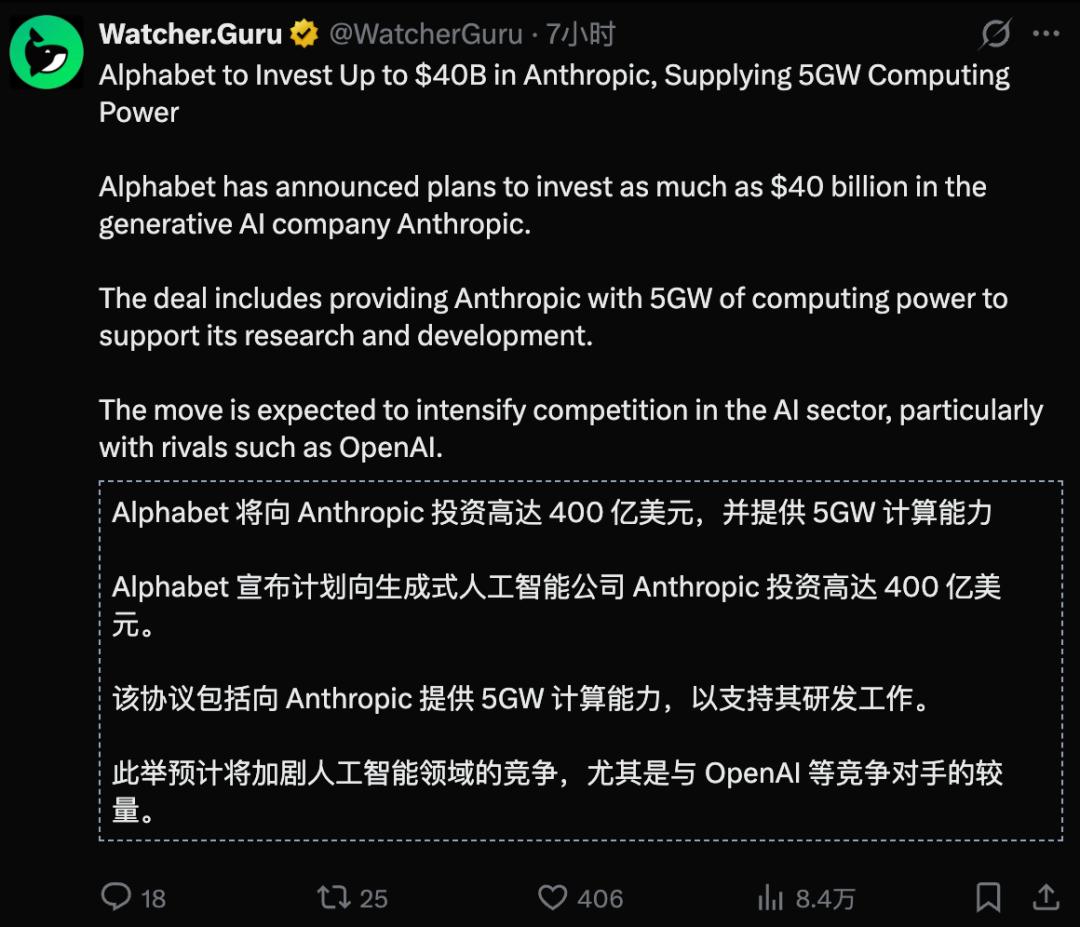
It will invest up to $40 billion in Anthropic!
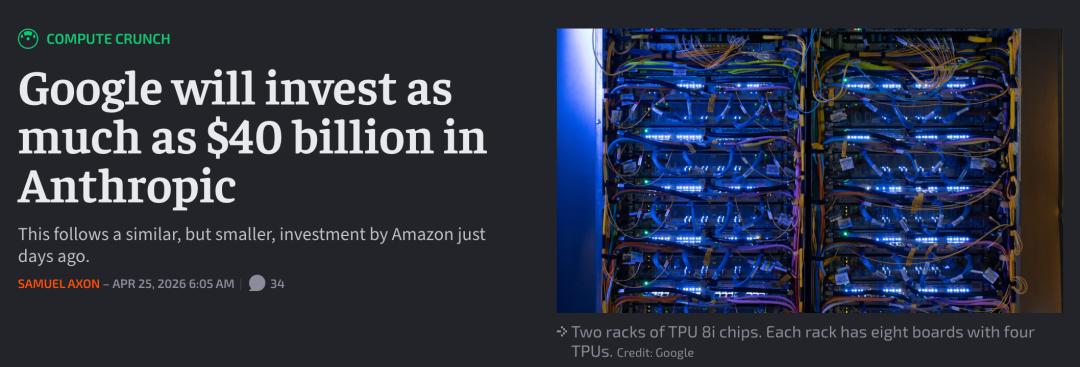
$10 billion will be transferred immediately, and Google will take a stake in Anthropic based on its latest valuation of $380 billion.
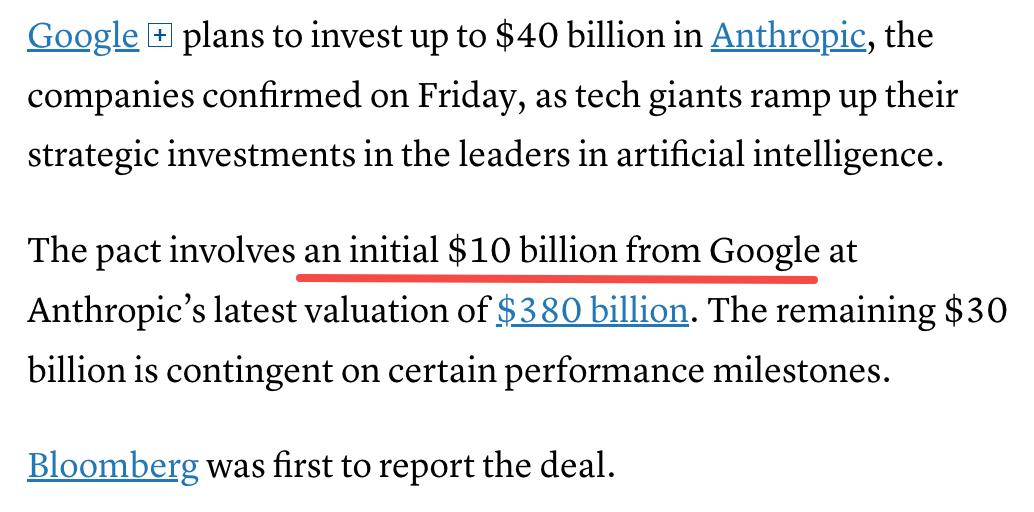
The remaining $30 billion is tied to performance milestones — as long as Anthropic meets the targets, the money will be transferred.
What's even more impressive is the computing power.
Google Cloud has promised to deliver 5GW of computing power to Anthropic over the next five years, starting in 2027.
Anthropic's scale of TPU usage will expand exponentially.
What does this number mean?
It's equivalent to Google investing all the money that DeepMind has burned through from its establishment until now all at once — but this time, it's not investing in its own subsidiary, but in an external company.
Interestingly, Google already has DeepMind, Gemini, and the world's largest TPU cluster.
A company with such a luxurious lineup of in - house models has chosen to invest $40 billion in someone else's Claude.
The Gemini model is designed to compete with Claude.
Theoretically, Anthropic is Google's direct competitor.
But now, Google has become one of Anthropic's biggest financial backers.
Some foreign media have called this Google's latest high - stakes bet in AI.
This approach is quite rare in the AI circle: a tech giant, which already has its own flagship model, has instead poured a huge amount of capital and computing power into the opposing camp.
A decade ago in Silicon Valley, this would have been called "surrender".

A meme image from netizens
The era of the "Big Three" is over, and the Anthropic camp has taken shape
In the past two years, the top echelon of AI has been defined as the "Big Three".
OpenAI, Google, and Anthropic have stood in a three - way standoff, each holding its own ground; of course, Musk's xAI has also been causing disruptions.
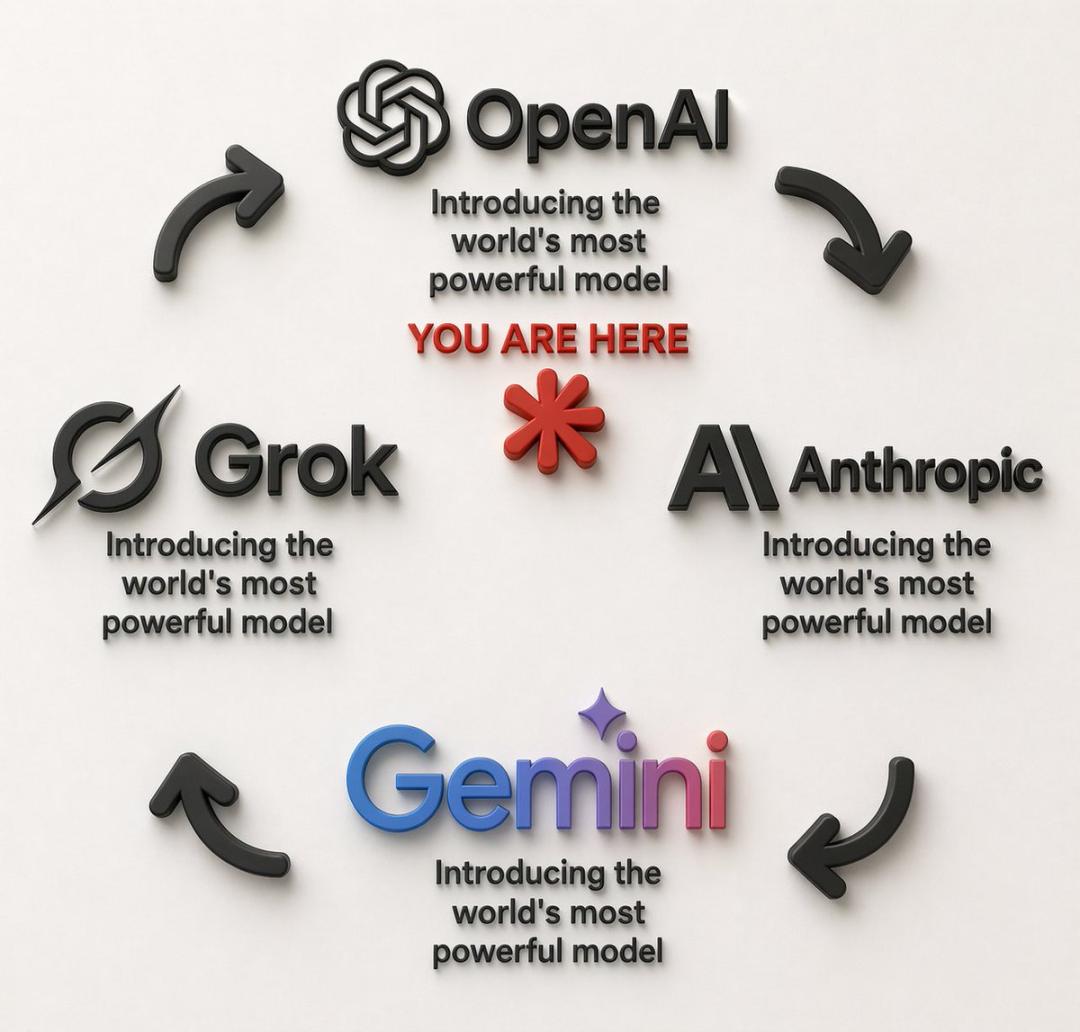
OpenAI took an early lead with GPT and ChatGPT, backed by Microsoft.
Anthropic has made inroads in the enterprise market with Claude. Initially, it received funding from both Amazon and Google while maintaining its independence.
In the week of April 2026, this narrative completely fell apart.
If you list Anthropic's financial backers in the past six months, you'll find an absurd reality:
Amazon: $5 billion in cash + a maximum of $25 billion + 5GW of Trainium computing power + a $100 - billion AWS procurement contract;
Google: $10 billion in cash + a maximum of $40 billion + 5GW of TPU computing power;
Nvidia: a maximum of $10 billion + 1GW of GPU supply;
Microsoft: a maximum of $5 billion + Anthropic will purchase $30 billion in computing power from Azure.
Four top Silicon Valley players are all on Anthropic's shareholder list.
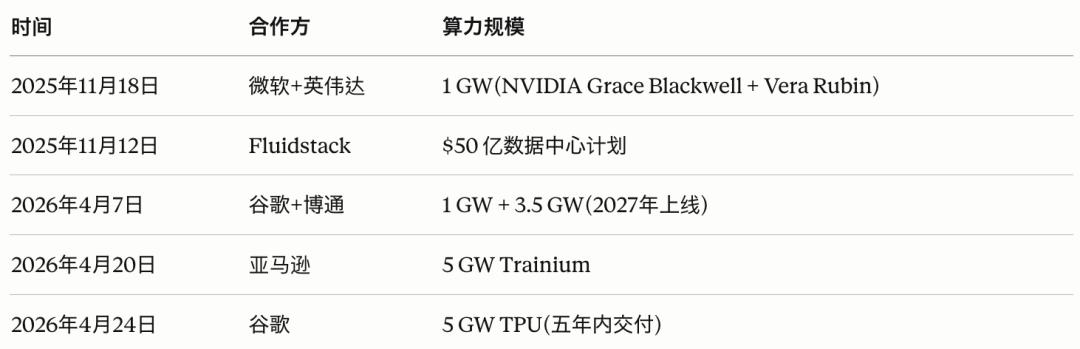
Just four days ago, on April 20th, Amazon announced an additional investment of $5 billion in Anthropic, promising a total investment ceiling of $25 billion, plus Anthropic will purchase more than $100 billion in Trainium computing power from AWS over the next 10 years.
Anthropic has received two "billion - level" infusions of capital within four days.
The most dramatic part is about Microsoft.
Microsoft, as the largest external shareholder of OpenAI, is also investing in OpenAI's arch - enemy.
This is an extreme version of "hedging" — Azure, which is dominated by OpenAI, is also a source of computing power for Anthropic.
In total, Anthropic has received commitments for more than 11GW of cumulative computing power, with three different chip systems being supplied simultaneously, so the disruption of any one supplier will not be fatal.
What about OpenAI?
Its core computing power comes from the Stargate project — a huge infrastructure plan worth $500 billion, with an implementation cycle of several years.
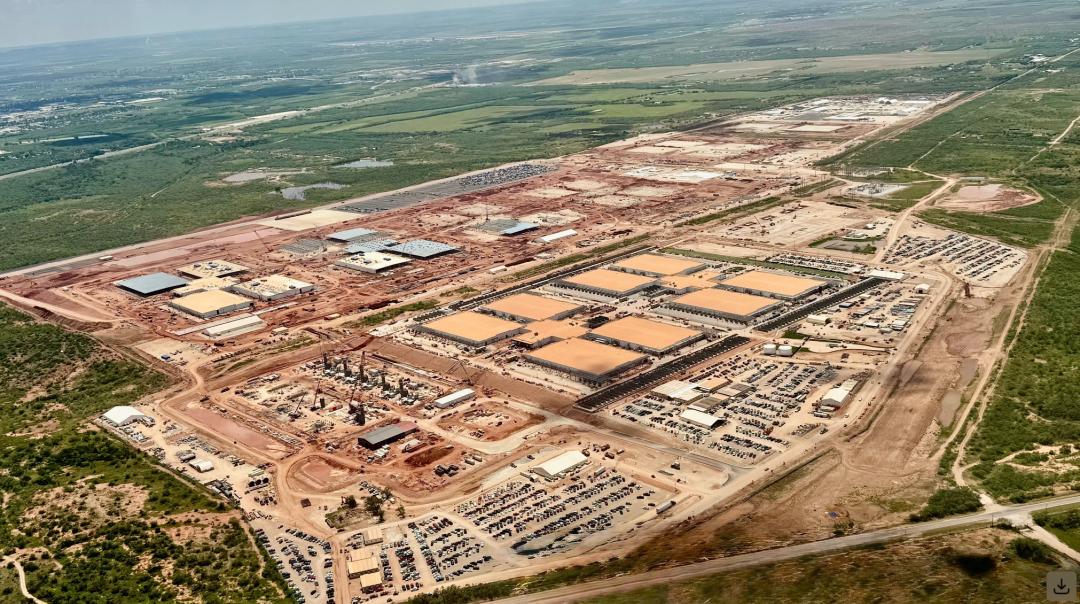
Microsoft is no longer the exclusive supplier for the Stargate project. OpenAI also has to seek computing power from Oracle, SoftBank, and the UAE.
The landscape has changed from "three - way division of the market" to a two - way confrontation between "Anthropic vs OpenAI".
The concept of the "Big Three" is a thing of the past.
Although Google is a direct competitor in the field of AI models, it is also a key infrastructure provider for Anthropic. Anthropic heavily relies on Google Cloud for chips and infrastructure, including the use of Google's Tensor Processing Units (TPUs) — these dedicated chips designed for AI workloads are regarded as one of the best alternatives to Nvidia's popular processors.
Google's strategy: Instead of going head - to - head, leverage the situation
Google's willingness to invest $40 billion in its arch - enemy can be understood by looking at three numbers.
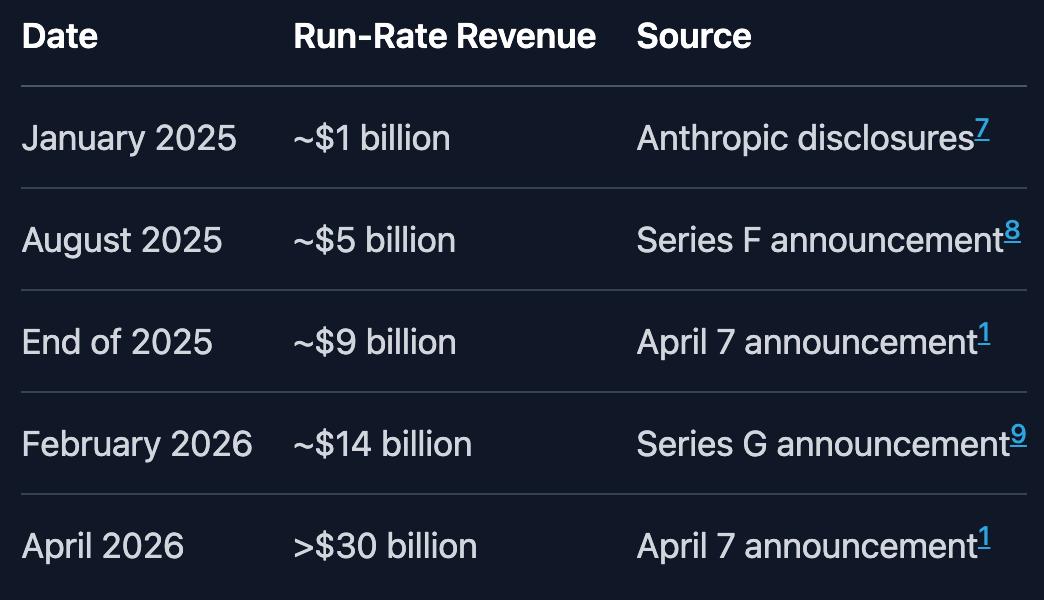
First: Anthropic's Annual Recurring Revenue (ARR) in March 2026 exceeded $30 billion.
At the beginning of 2025, Anthropic's ARR was only around $1 billion.
In just one year, it increased by 30 times.
Claude Code has gained popularity in the programmer community, and its enterprise channels are fully open, attracting B - side customers ranging from startups to Fortune 500 companies.
Second: Anthropic's implied valuation in the secondary market has soared to $1 trillion.
This is based on secondary - market data cited by Bloomberg and Tom's Hardware.
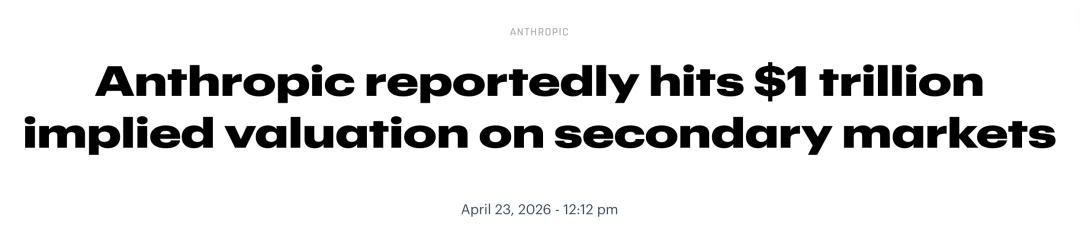
Anthropic's secondary - market valuation has exceeded that of OpenAI's AI business segment.
Third: Google's capital expenditure plan for this year is $185 billion (ranging from $175 billion to $185 billion).
Most of this money will be invested in data centers, TPU production, and power supply.
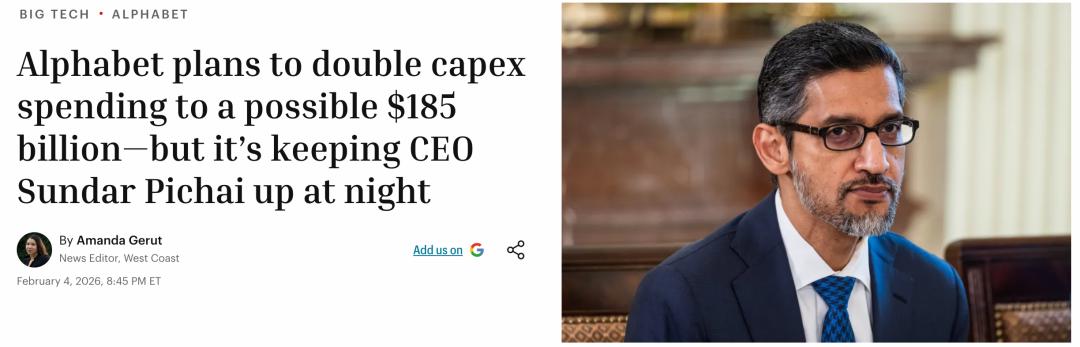
If there are no major customers to consume the TPUs, they will become the most expensive inventory.
Anthropic is not only a gateway for B - side enterprises using Claude but also the best ballast for Google's TPU production capacity, killing two birds with one stone.
Looking at it together, Google's investment in Anthropic is a hedging operation of "if you can't afford to lose, buy in".
If Anthropic wins the AI enterprise market, Google can at least get a return on its equity;
If Gemini succeeds, Google wins on both fronts;
If Gemini fails, at least the TPU shipments are stable, and Google's AI business can also gain a foothold with the help of Anthropic.
Since the release of Gemini more than two years ago, its share of developers in the enterprise - level AI market has been consistently suppressed by Claude.
Claude Code's penetration rate among programmers directly crushes similar products of Gemini.
Google has been restructuring its Gemini team internally, but the results have been limited.
Instead of going head - to - head, it's better to use the opponent's strength against them.
Computing power: The new moat in the AI industry
The real protagonist behind this series of investments is computing power.
Anthropic pointed out the keyword in its public statement: infrastructure strain.
This expression comes from Anthropic's official blog (April 20, 2026, in the announcement of the cooperation with Amazon). The original text is: Our run - rate revenue has now exceeded $30 billion, up from approximately $9 billion at the end of 2025.
This kind of growth rate has inevitably put pressure on our infrastructure; especially our unprecedented consumer growth has affected the reliability and performance of the free, Pro, and Max levels.
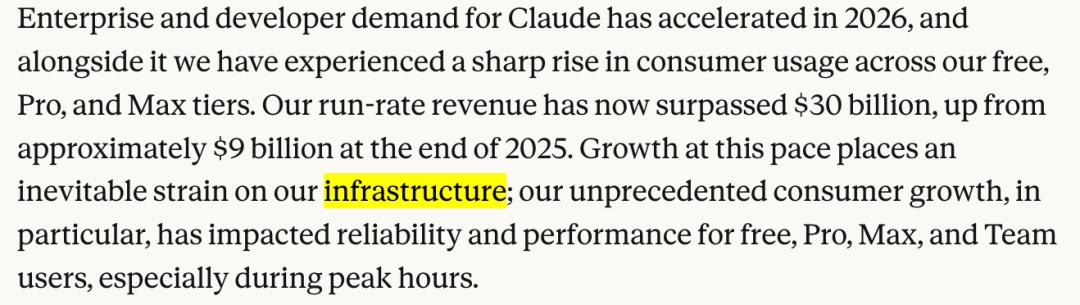
The demand for Claude in the enterprise, developer, and consumer markets has skyrocketed, and its own computing power can hardly keep up. It has to seek external support.
Adding up the numbers: Amazon has promised 5GW of Trainium computing power, Google has promised 5GW of TPU computing power, and Nvidia will supply up to 1GW of GPU.
The total commitment of cumulative computing power is more than 11GW.
This is equivalent to the power generation of 10 nuclear power plants.
OpenAI's announced Stargate project also aims for 10GW of computing power, but it will take several years to be implemented.
Anthropic has locked in the same level of computing power in just one week.
OpenAI is taking a different path: betting on the long - term $500 - billion infrastructure of the Stargate project.
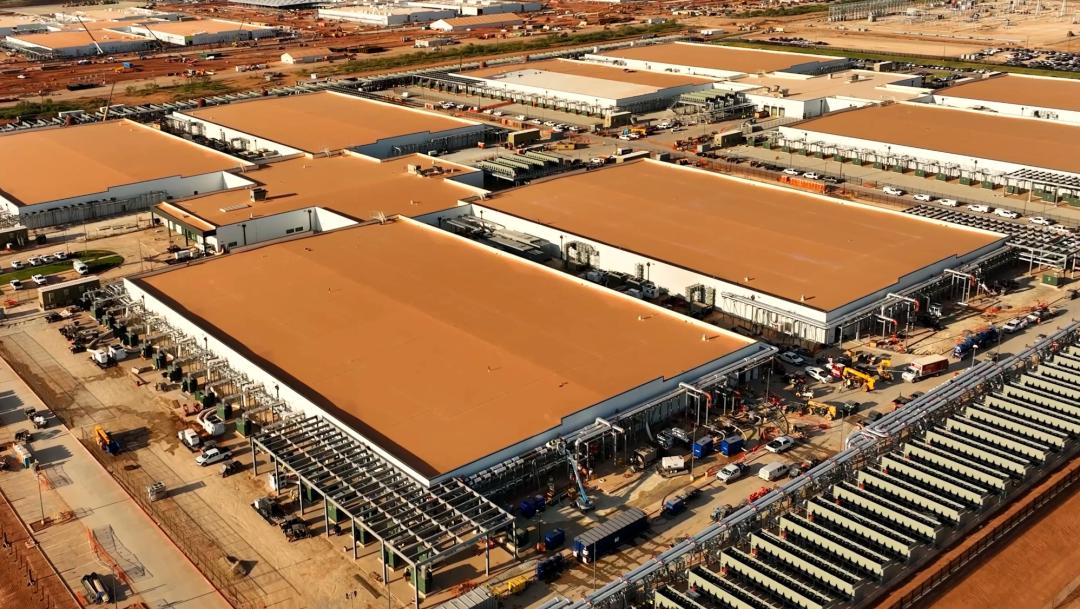
The biggest problem with this path is the implementation cycle.
The Stargate project will not reach full production until around 2029, and as of April 2026, the physical progress of the first Texas data center is still slow.
Computing power has changed from an infrastructure