GPT-5.5 has just been leaked.
Early this morning, OpenAI experienced another major data leakage incident.
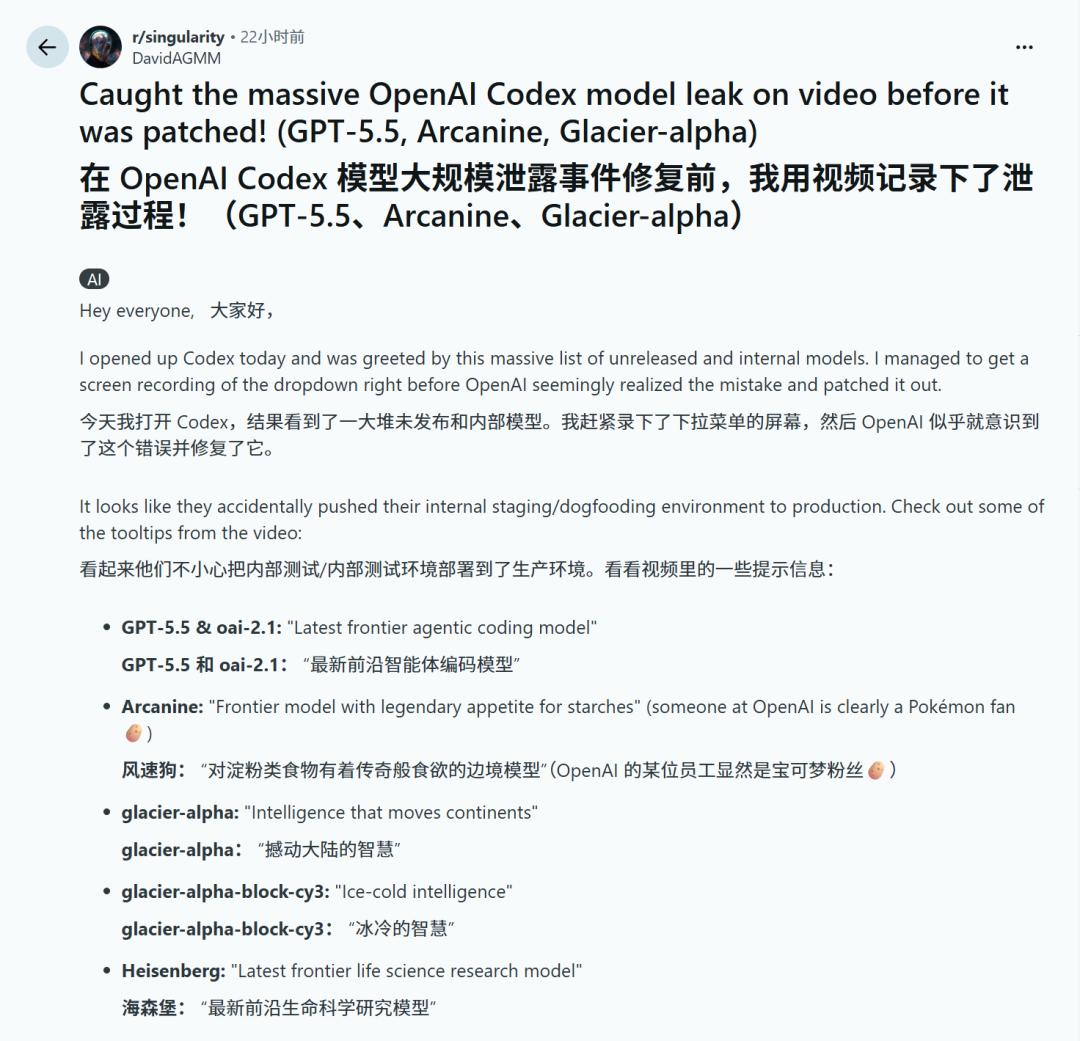
Multiple Pro users of the Codex platform noticed that a long list of never-before-seen "ghost models" appeared in the classification section of the drop-down menu.
GPT-5.5, oai-2.1, Arcanine, Glacier, Heisenberg...
All of OpenAI's unreleased internal models were leaked!
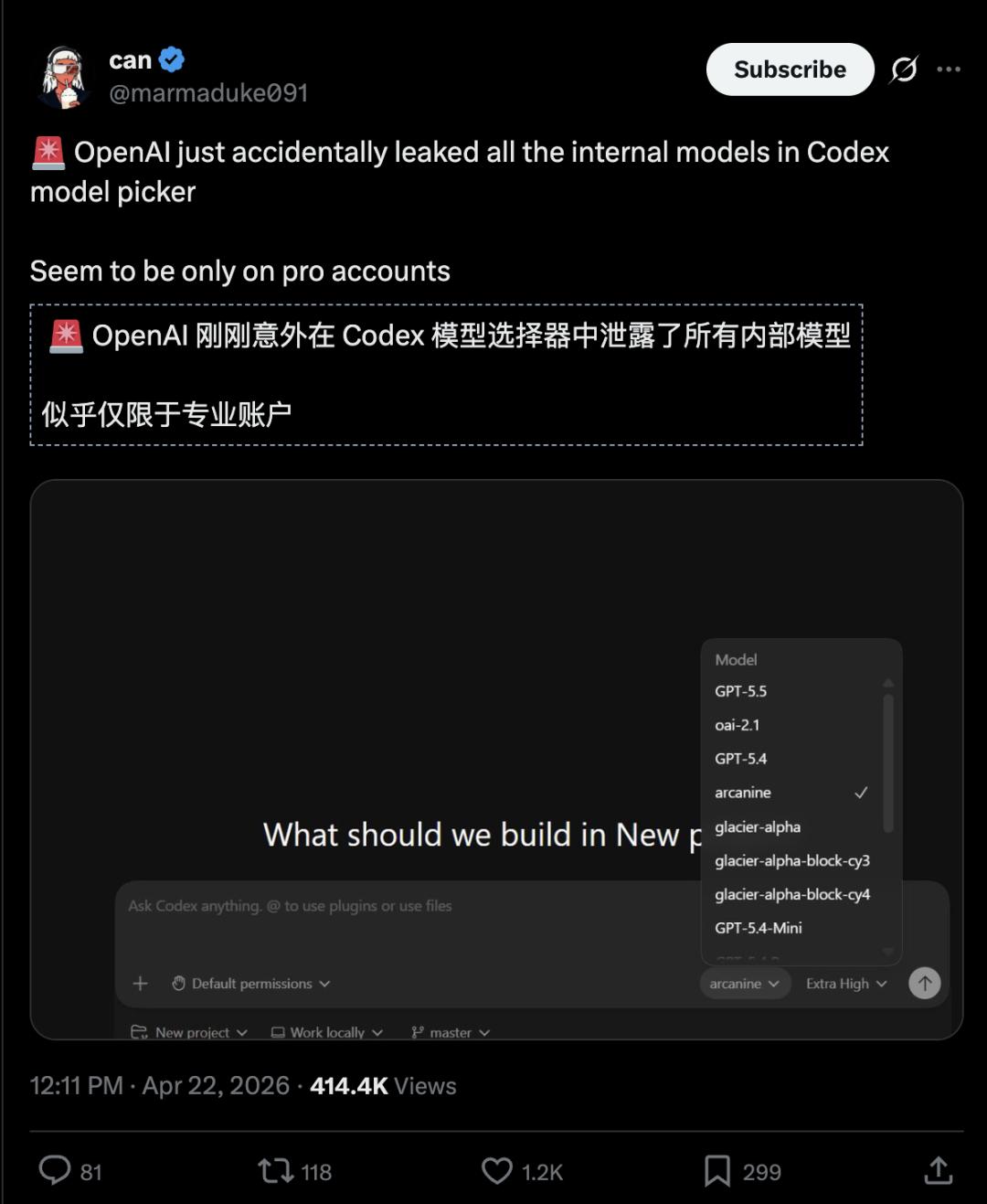
These new names stunned onlookers: OpenAI sure knows how to name things.
Although OpenAI quickly fixed the vulnerability and the menu returned to normal soon after the incident, it was obviously too late.
Now, the video has gone viral in the tech community.
Catching the Scene: A Group of New Species Accidentally Leaked
The cause of the incident is almost confirmed.
Originally, Codex was just an ordinary coding interface.
But at a certain moment early this morning, OpenAI mistakenly pushed its internal Staging or Dogfooding environment to the production environment.
The system used by engineers for internal testing was directly presented to paying users, resulting in the test drop-down menu, which was originally only accessible to OpenAI employees, appearing on the interfaces of a few Pro users.
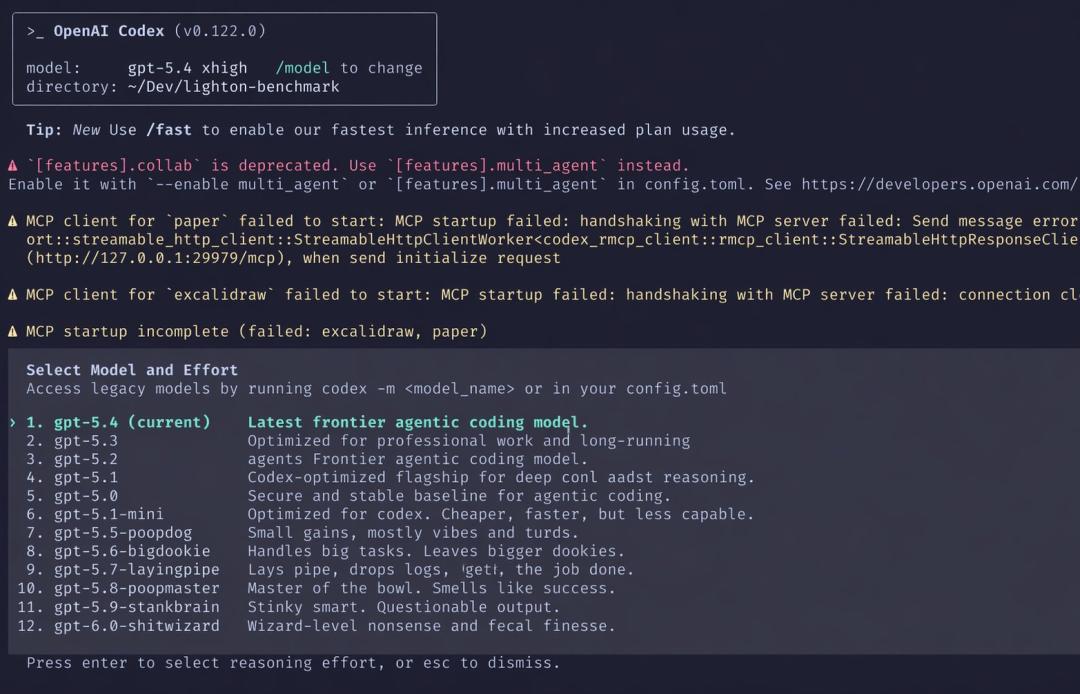
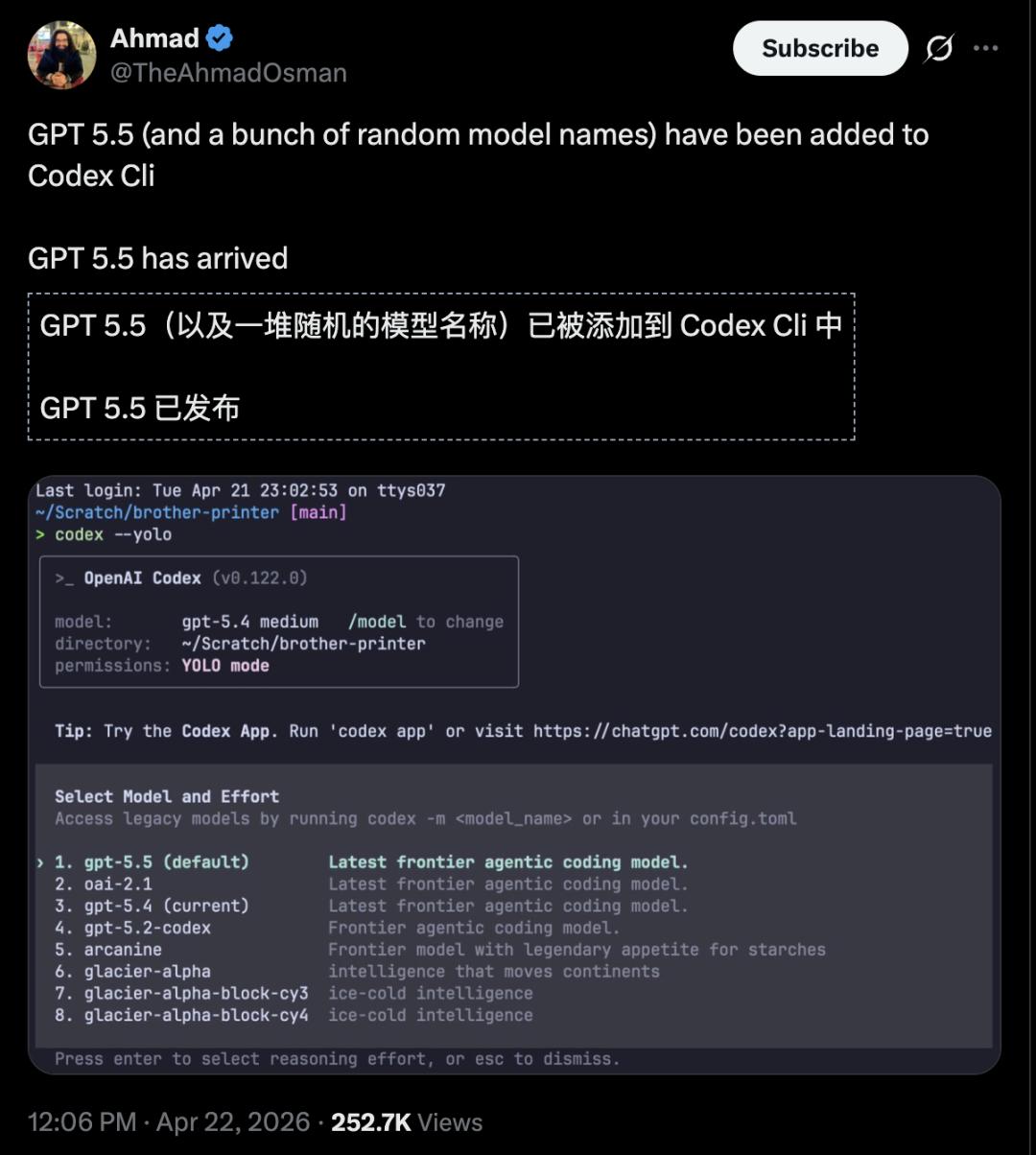
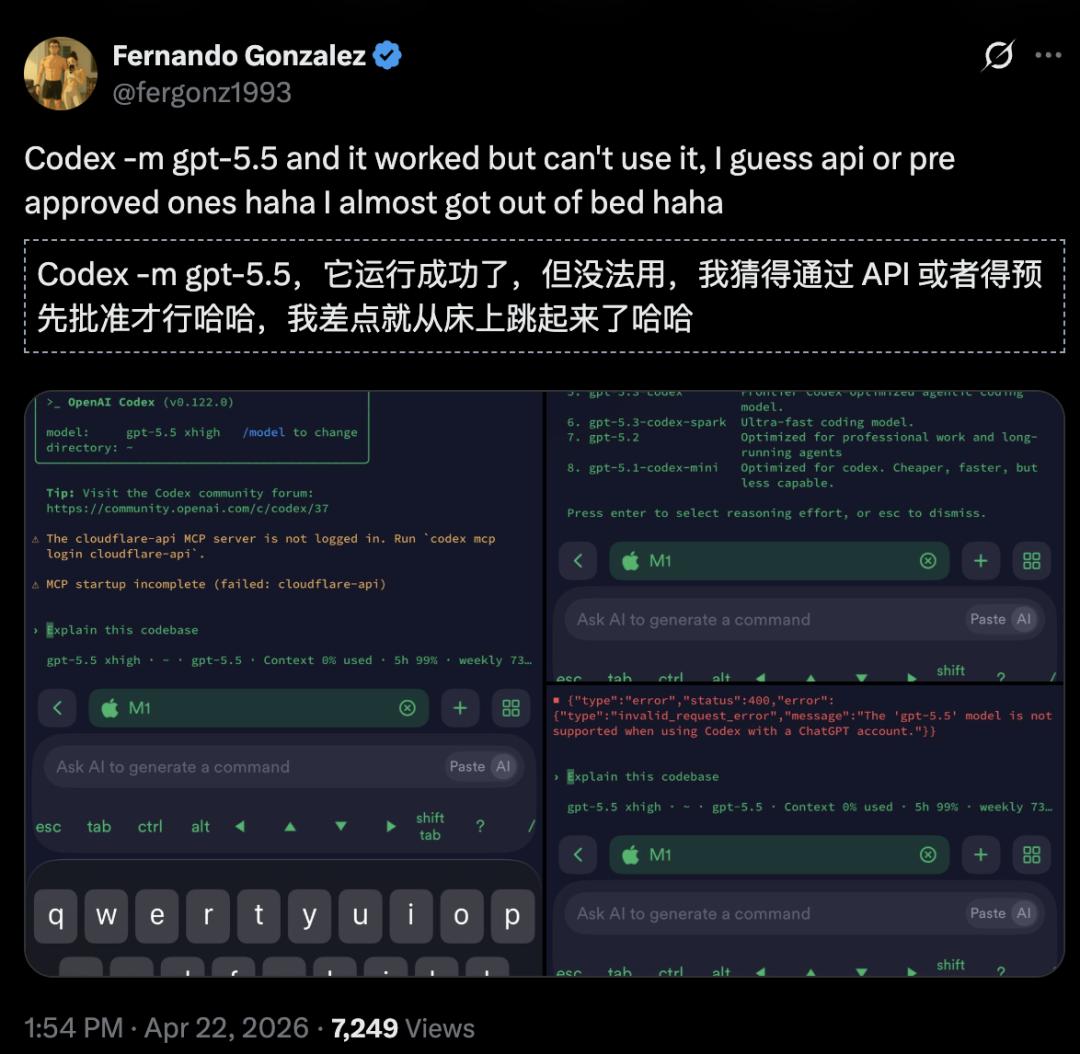
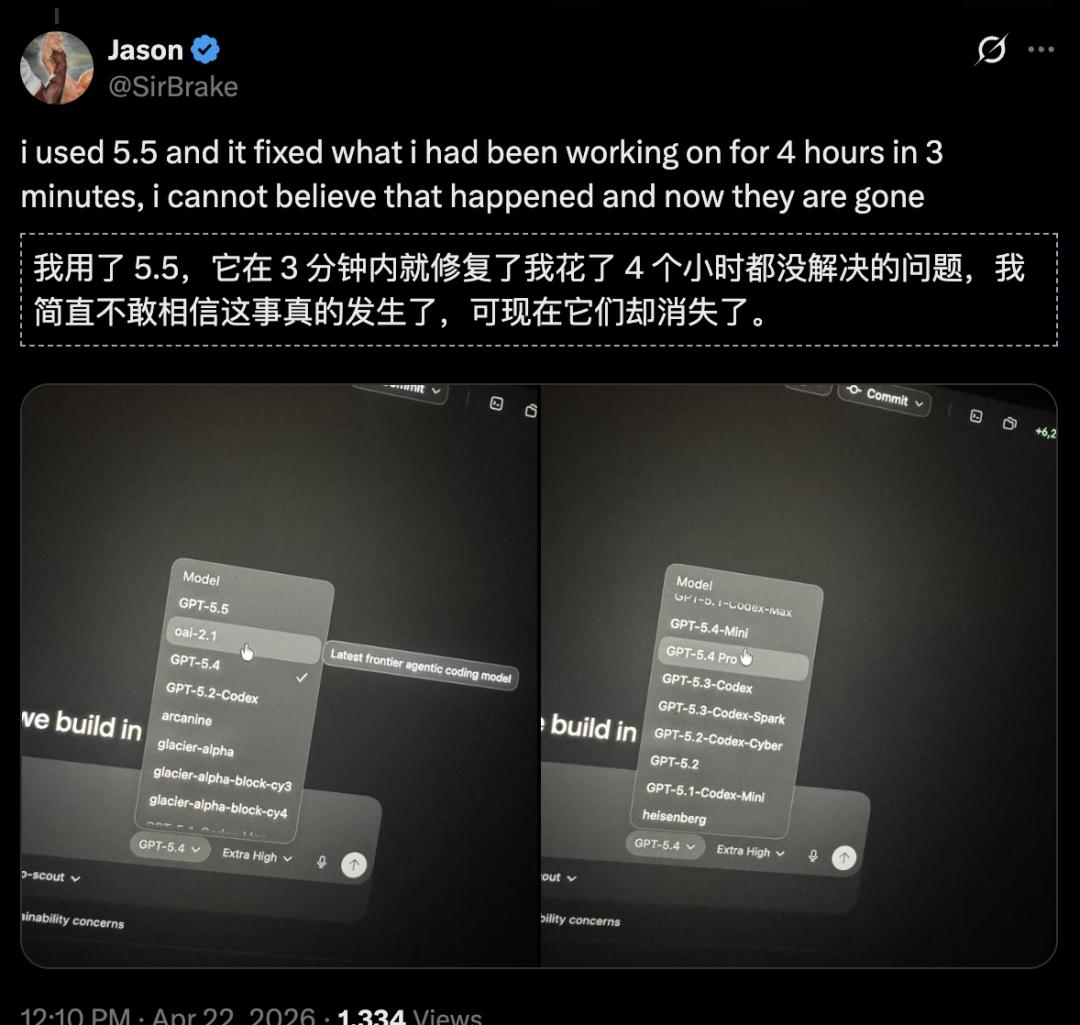
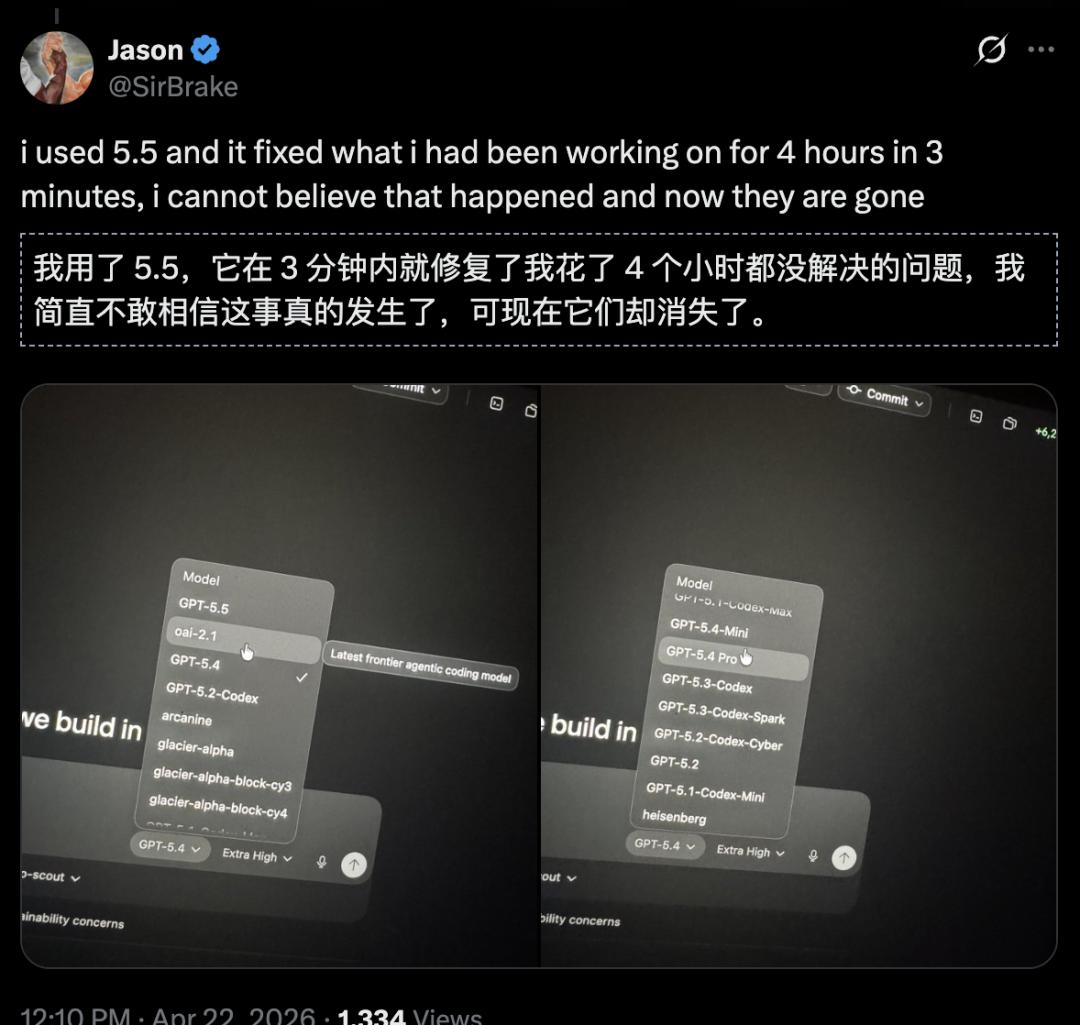
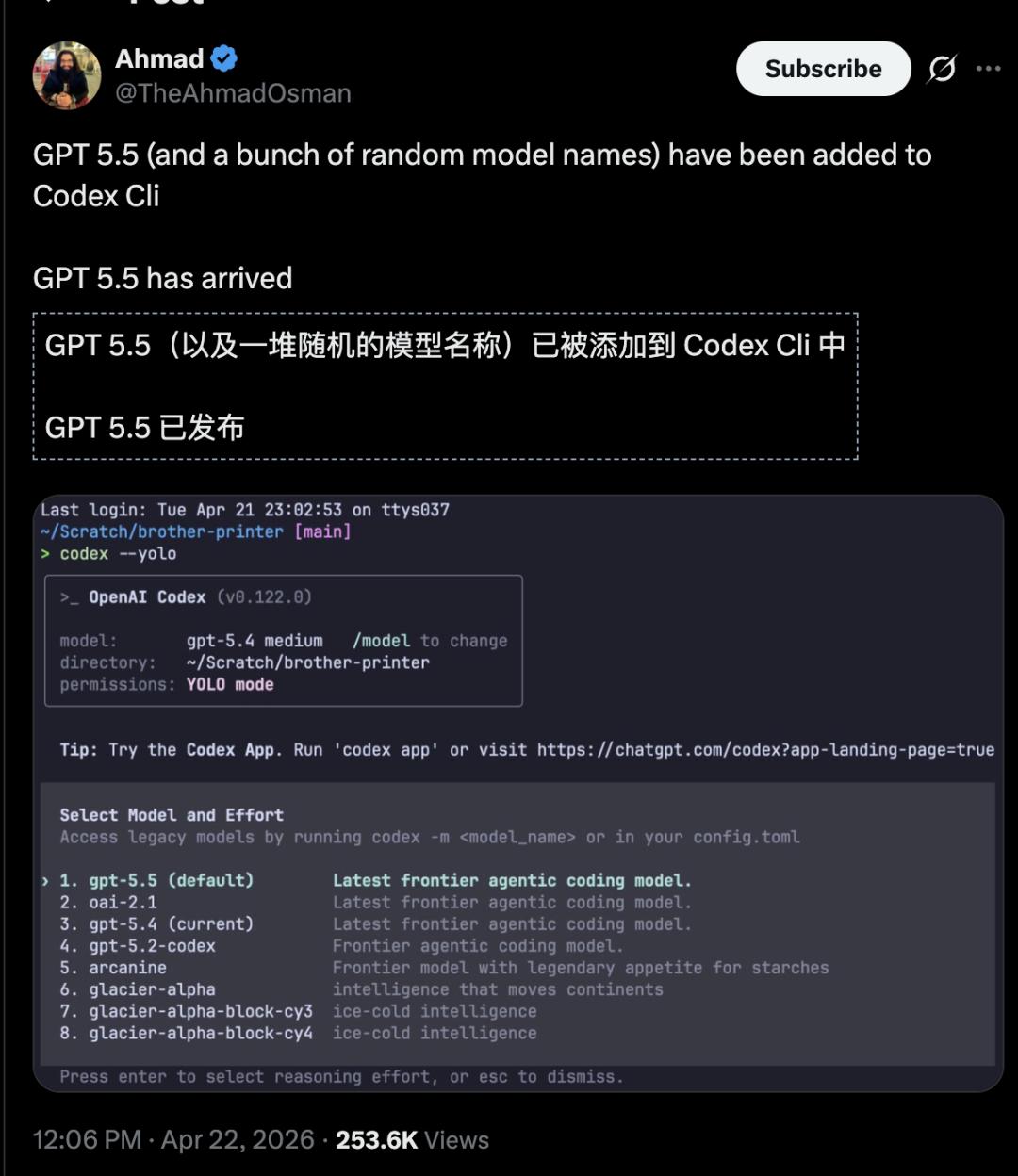
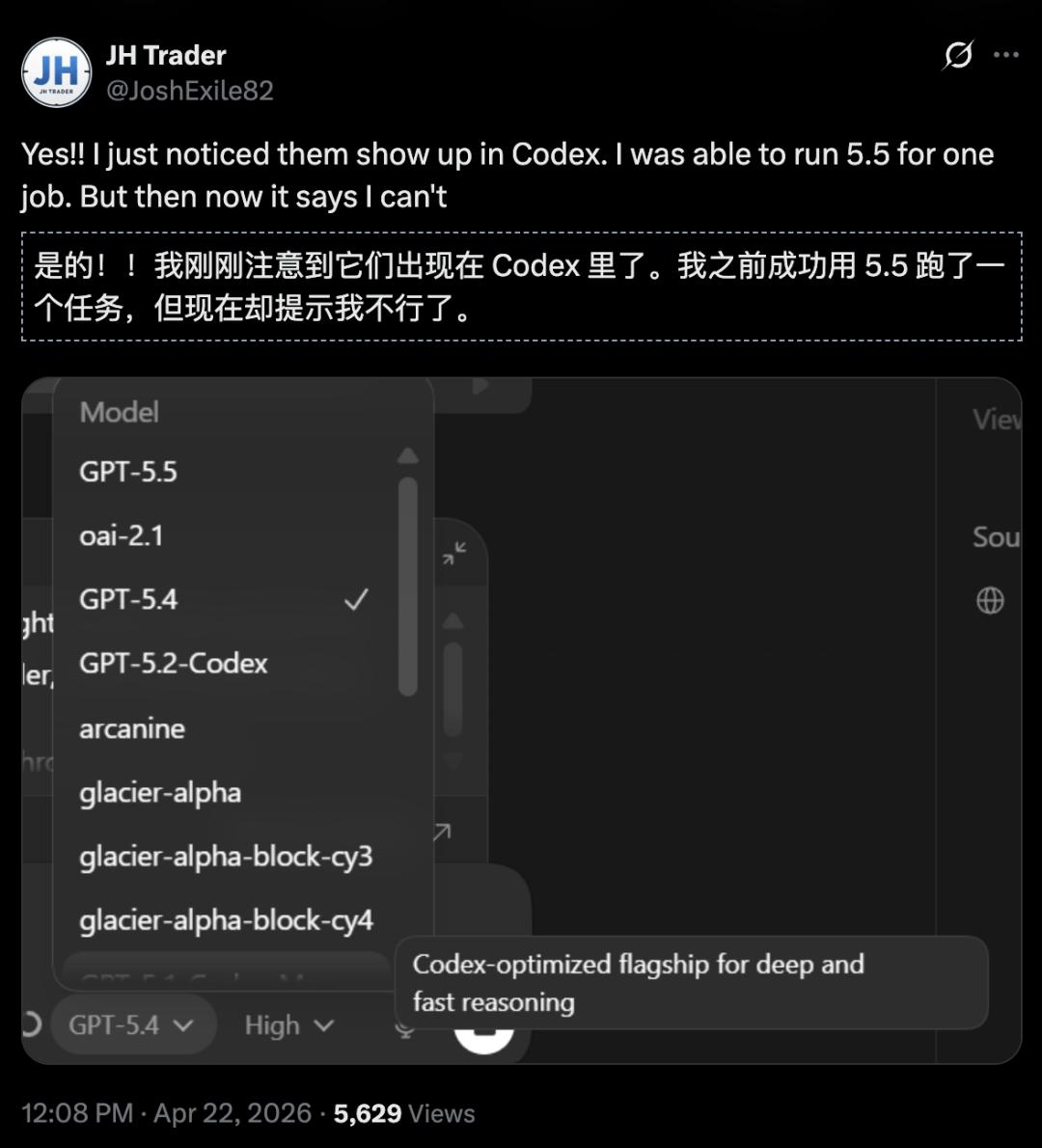
Although OpenAI patched the vulnerability within minutes, some quick - witted developers had already recorded the entire process and revealed the tooltips of these models.
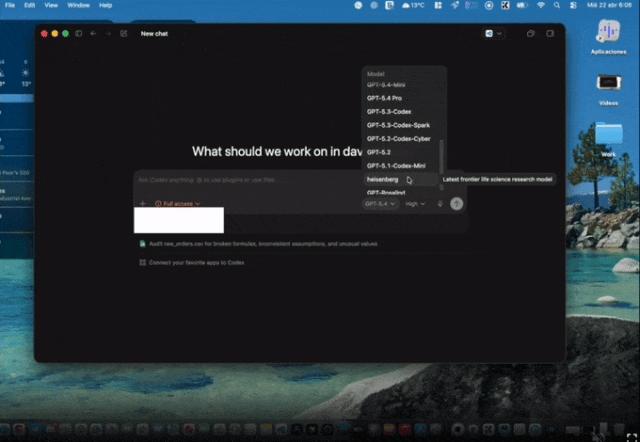
Let's see what these "new species" models that were caught in the act are.
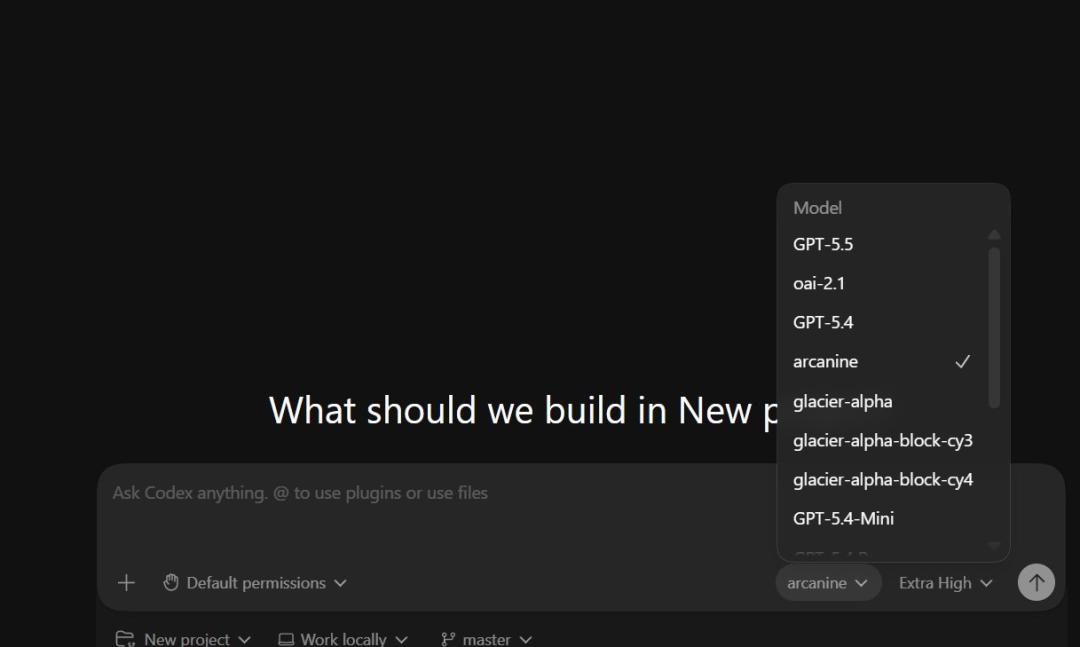
The Rumored GPT-5.5: An Agentic Coding Model, Not a Chatbot
The most prominent name in the drop-down menu is, of course, GPT-5.5.
It is accompanied by an internal code oai-2.1, and the tooltip clearly states: "Latest frontier agentic coding model".
Note that they use "Agentic" instead of "Language Model".
This also confirms the industry rumor: OpenAI's next - generation model will completely move away from the "dialogue box" form and pursue autonomous action.
This means that GPT-5.5 is positioned as an agent that can autonomously execute tasks, including writing code, debugging, and deployment.
It has been further upgraded to become a digital worker that can directly take over your server and complete full - stack development.
Does GPT-5.5 represent OpenAI's exploration of the ultimate answer in the agent era?
Six weeks ago, Sam Altman said in an interview: "AGI will look like just a warm - up for what comes next."
At that time, no one knew what he meant, but now we may understand a little more.
Some netizens also revealed that GPT-5.5 will be 3 - 4 times faster than the regular GPT-5.4, and the newly released Image 2 will also help with better web development.
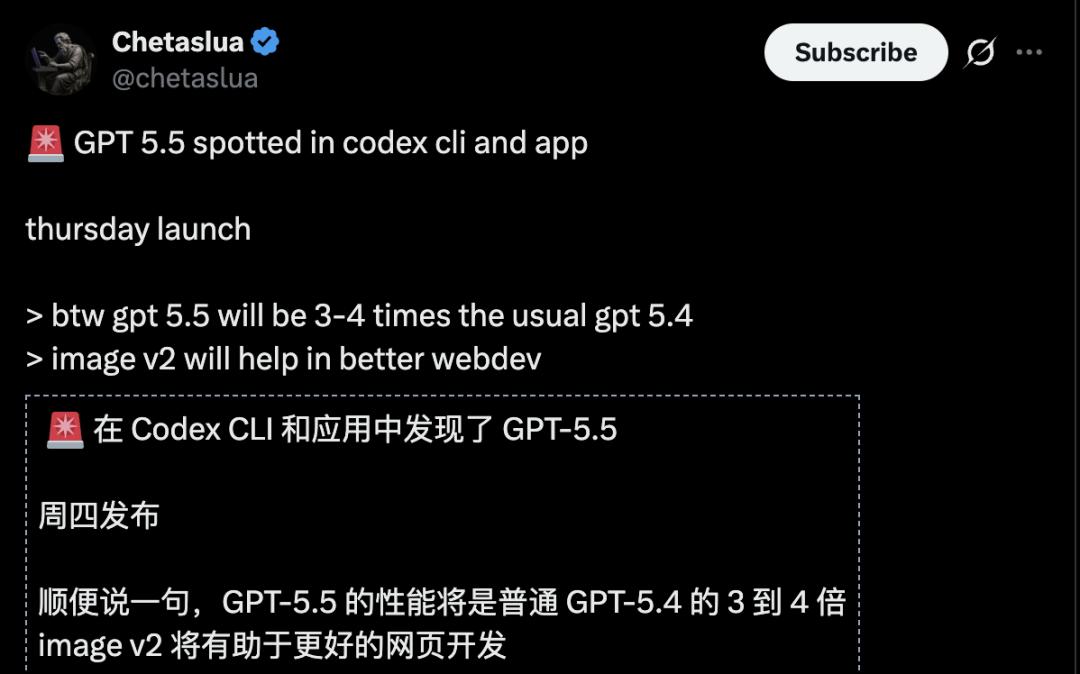
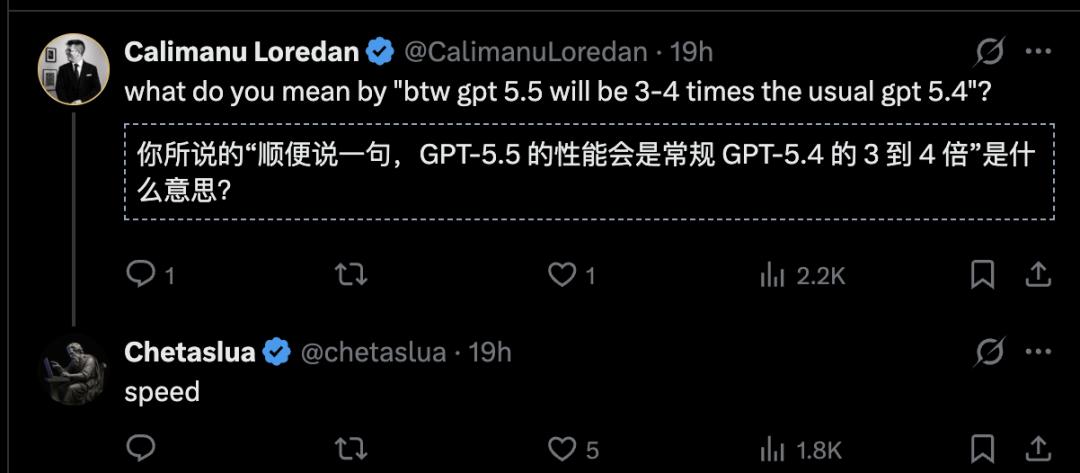
Recently, Altman also hinted that GPT-5.5 will be released this Thursday. His ability to generate hype is unparalleled.
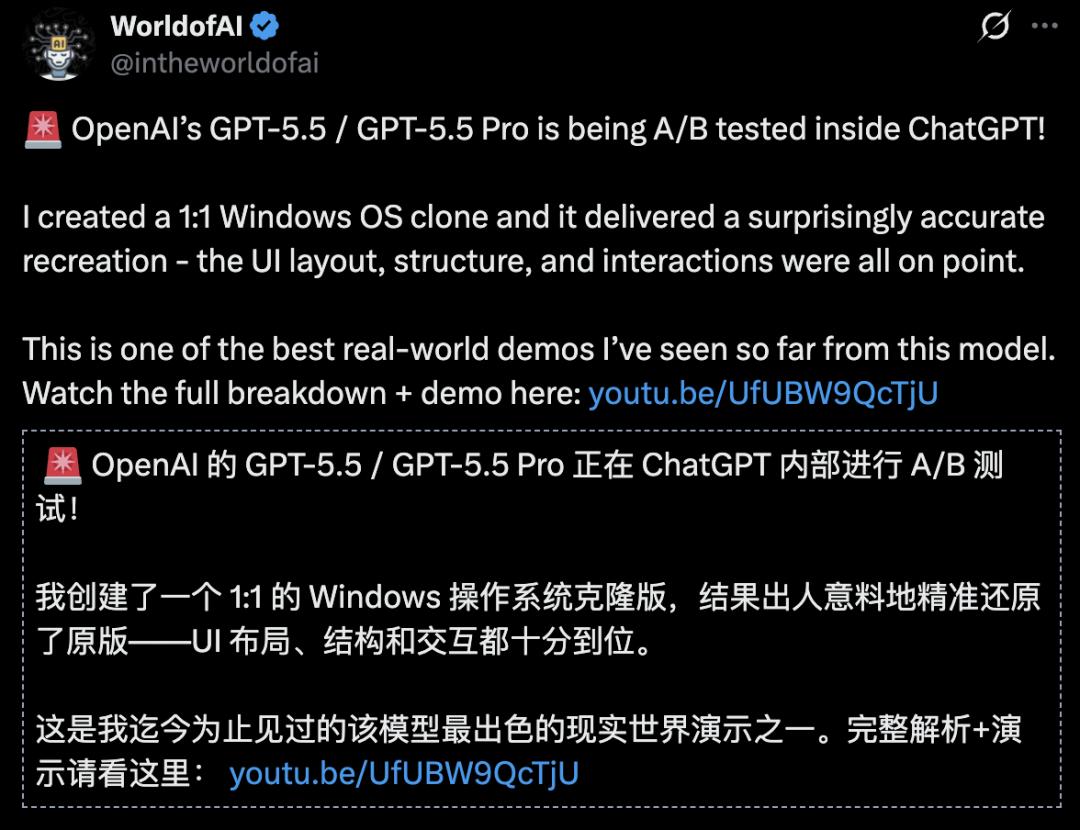
It seems that OpenAI has started a gray - scale test of GPT-5.5 in ChatGPT.
Some netizens replicated the Windows operating system 1:1, with the UI layout, structure, and interaction all on point. It was described as "one of the best real - world demonstrations of a GPT model ever seen".
In any case, GPT-5.5, as a new breakthrough in pre - training by OpenAI in the past two years, is worth looking forward to.
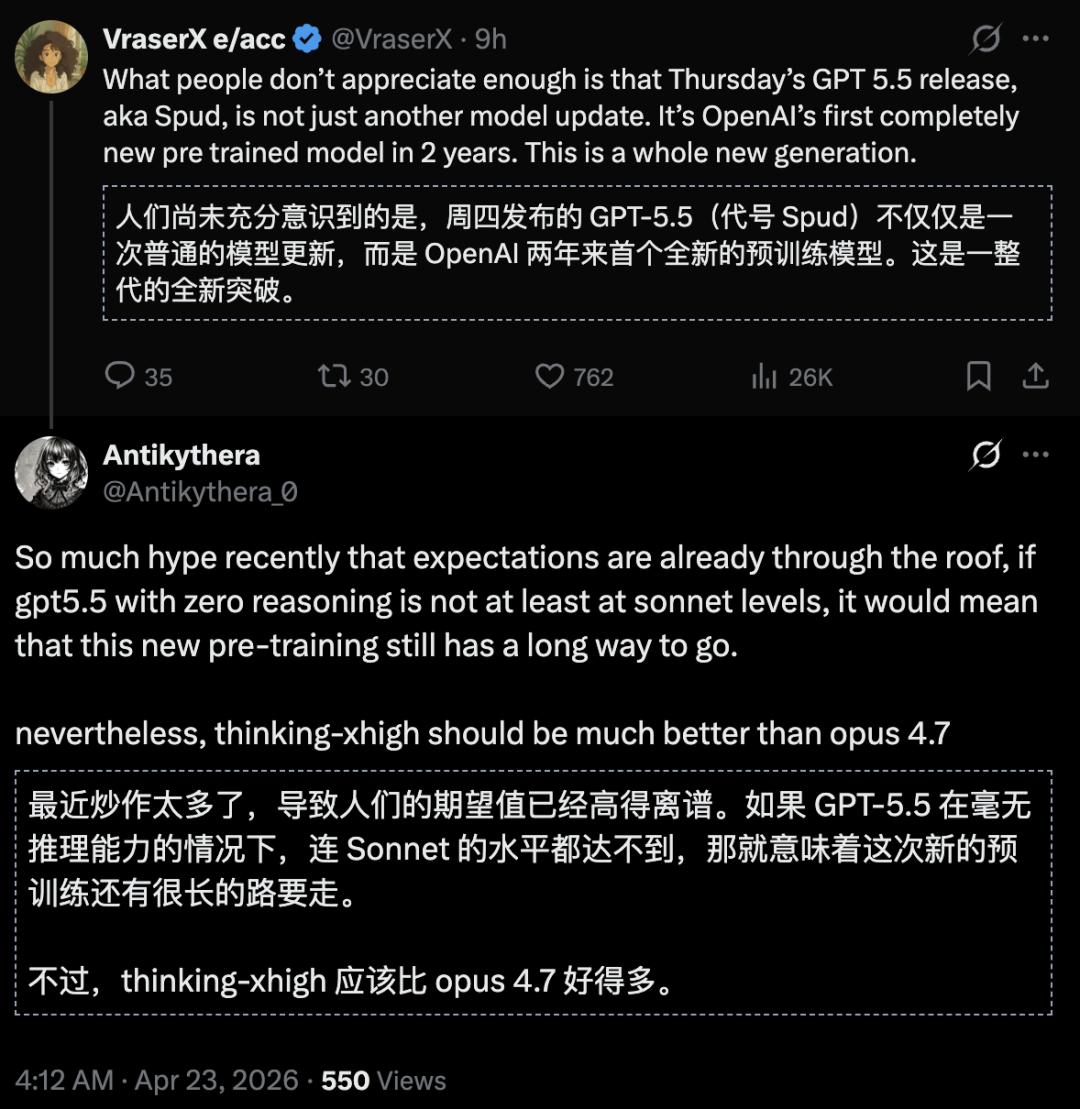
Finally, GPT-5.5 is not a minor iteration of GPT-5. The code oai-2.1 implies that there have been multiple internal iterations. The maturity of this product line is much higher than the outside world thinks.
Glacier: "Intelligence that Moves Continents"
If GPT-5.5 is an expected blockbuster, then the Glacier series is an unexpected bombshell.
The second model is the Glacier series, which includes glacier - alpha and its variants.
The description is astonishing: "Intelligence that moves continents".
Such a bold description makes people wonder if Glacier is a model with a huge number of parameters or one that has undergone a qualitative change in logical depth.
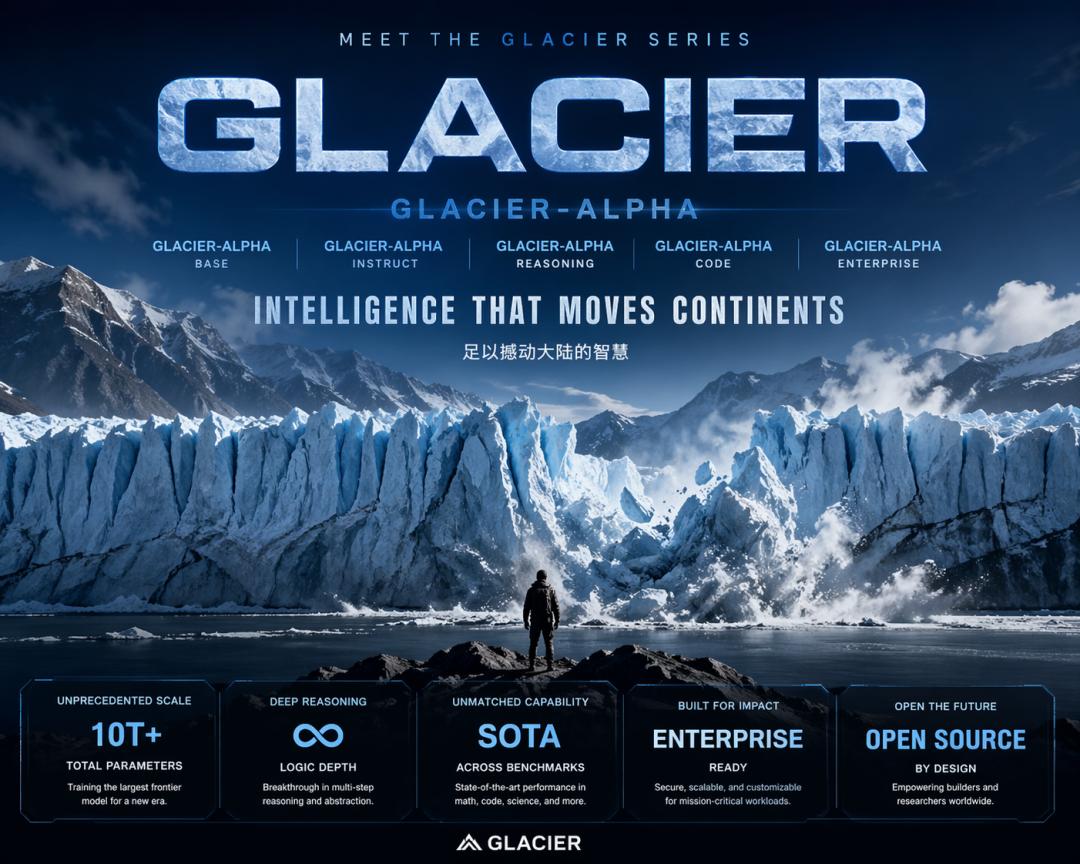
There is also a variant, glacier - alpha - block - cy3, with an even colder description: "Ice - cold intelligence."
This naming style is different from any of OpenAI's previous models. The GPT series is named by function, the o series by inference, and Glacier uses an imagery naming - glaciers, continents, and movement.
The tech community has started to speculate what "cy blocks" are.
Some people think that cy represents a new computing unit or architectural module, and block implies a modular combination. If this speculation is true, Glacier may not be a single model but a set of assemblable model architectures.
Sam Altman also said another thing six weeks ago: "I bet there must be another brand - new architecture that will bring benefits as great as Transformer did to LSTM."
He believes that there is a new architecture with gains comparable to the overwhelming advantage of Transformer over LSTM.
Is Glacier the bet? It's still unknown. But the words "moves continents" should not be written casually by researchers.
Heisenberg: OpenAI Enters the Life Sciences
The third one is the Heisenberg model.
Its description is "Latest frontier life science research model".

This doesn't surprise us, as OpenAI has made many arrangements in this field before.
Heisenberg is the founder of quantum mechanics, the proposer of the uncertainty principle, and also the protagonist in "Breaking Bad".
OpenAI naming a life science model after him clearly indicates that this is not an accessory to the general - purpose model but an independent vertical product line.
Obviously, OpenAI is seizing the life science track. Protein folding, drug discovery, and genome analysis, which were previously monopolized by DeepMind AlphaFold, are now being strongly penetrated by OpenAI.
Interestingly, the appearance of Heisenberg coincides with another recent trend in the industry. Jeff Bezos' Prometheus is working on "physical economic AI", and Periodic Labs is working on AI - accelerated chemical synthesis. AI is penetrating into both the physical world and life sciences from the digital world.
Arcanine: An Easter Egg of OpenAI's Engineer Culture
The most amusing name in the menu is Arcanine.
Arcanine is a legendary fire - type Pokémon.
The description is "Frontier model with legendary appetite for starches".
This unconventional naming method may represent an inside joke among OpenAI engineers. But despite the joke, Arcanine is labeled as a frontier model.
Its actual capabilities and positioning are currently completely unknown.
An interesting detail: In Pokémon, Arcanine's characteristic is "Intimidate" - it reduces the opponent's attack when it appears. It's unknown if this model has a specific meaning related to this.
Or, in code or specific logic, does "starches" imply a certain intensive task?
Currently, these are just speculations.