36Kr Exclusive | Teams from Tsinghua University and Harbin Institute of Technology Develop Dexterous Hands, Reducing Costs to One-Third and Raising Nearly 100 Million Yuan in Three Months
Author | Qiao Yujie
Editor | Yuan Silai
Yingke learned that Shenzhen Xingji Light-Year Technology Co., Ltd. (hereinafter referred to as "Xingji Light-Year") recently completed a new round of financing. This round was led by Shunchuang Industrial Investment, with existing shareholder Yunshi Capital continuing to increase its investment, and Weixing Ningyuan participating in the follow-on investment.
So far, the company has completed two consecutive rounds of financing in the past three months, with a cumulative financing scale of nearly 100 million yuan. This round of financing will be mainly used for the implementation of the general dexterous operation platform in real industrial scenarios, continuous product improvement, large-scale production line upgrade, and the construction of the global team ecosystem.
Xingji Light-Year focuses on the R & D and commercialization of dexterous hands and general operation platforms. The core team comes from top domestic and overseas universities such as Tsinghua University, Harbin Institute of Technology, the University of Hong Kong, the Hong Kong University of Science and Technology, and Northwestern University in the United States, and has profound technical accumulation and industrial insights in the field of robot dexterous operation.
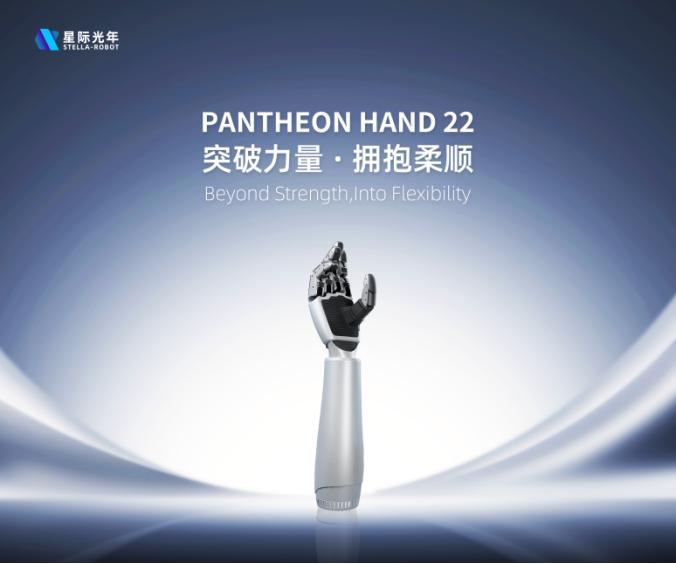
In terms of the technical route, Xingji Light-Year adheres to a dual-track strategy of rope drive and direct drive in parallel: on the one hand, it explores the performance ceiling and ultimate application scenarios with the fully rope-driven dexterous hand (Pantheon series), which has extremely high technical barriers; on the other hand, through technological dimensionality reduction, it launches a cost-effective, modular direct-drive dexterous hand (Gaia series) to promote the popularization of embodied operation technology and accelerate ecosystem building.
In terms of rope drive, the Pantheon series adopts a fully tendon-driven transmission architecture, which mimics the "tendon - muscle" coordination mechanism of the human hand and can achieve efficient linkage control of multiple degrees of freedom. Combined with the company's first - developed instant automatic tensioning algorithm, while maintaining extreme lightweight at the end, it can also have the characteristics of high degrees of freedom, high precision, high impact resistance, and high load capacity.
When being interviewed by Yingke, Founder Wei Dehao introduced that in response to the industry's general concerns about rope drive creep and temperature drift, Xingji Light-Year starts from both the structure and the algorithm. Structurally, it uses the only single-sided rope-pulling technology in China, the same as Tesla, to ensure the consistency of rope tension during long-term use. At the algorithm level, it cooperates with a more difficult motion control algorithm to solve the problems of rope consistency and stability.
(Image source: Company)
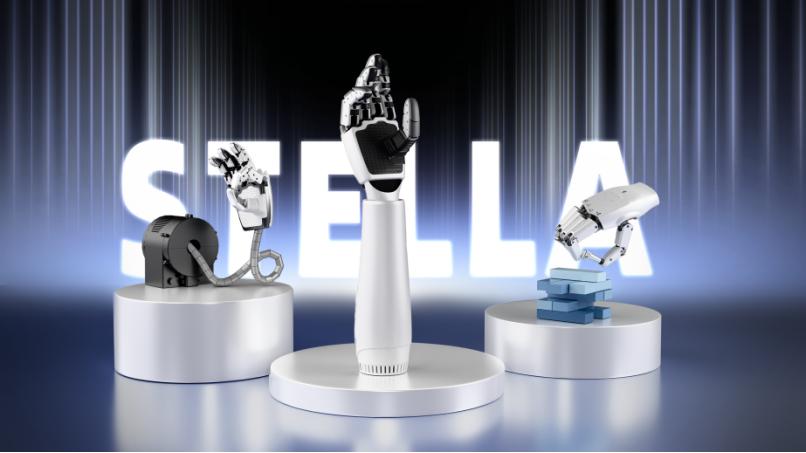
In terms of direct drive, based on the fully self-developed micro-joint modules, Xingji Light-Year has achieved an extremely simple modular design of the direct-drive dexterous hand like "building blocks". The Gaia Hand 20 series released this year is standard with 20 degrees of freedom across the board and is equipped with a stepped tactile configuration, which can flexibly adapt to the different R & D needs from basic motion control verification to multi-modal perception operation.
"We have standardized the 16 - 20 rotation modules of the dexterous hand into a single module, which means only one type of module is used for each hand, greatly reducing the degree of customization and achieving cost reduction at the technical level," Wei Dehao introduced. "Another advantage of the joint-level module is that it can quickly replace and repair faulty modules, and the maintenance time can be compressed to the minute level."
At the software level, Xingji Light-Year has simultaneously built an "embodied operation base model" for operation tasks. Wei Dehao said that in the final analysis, the embodied intelligent system should form a hierarchical structure: the upper layer is responsible for environmental understanding and task planning by visual language models (VLM), etc., the middle layer is undertaken by an operation model with generalization ability to receive instructions, and the lower layer is responsible for joint-level control execution. Xingji Light-Year's base model is the key link connecting "perception - decision - execution", which can predict and control complex operation tasks through the integration of visual and tactile data, combined with real-world data training and Sim2Real technology.
In terms of the commercialization path, Xingji Light-Year adopts the strategy of "prioritizing scientific research and focusing on industries". On the scientific research side, the company's products have entered many domestic and foreign universities and research institutions and become basic tools in the research of embodied intelligence; on the industrial side, the company chooses to prioritize high-value scenarios such as precision manufacturing and high-risk operations, and verifies the implementation ability of the "general end-effector + AI operation" through joint development with leading enterprises.
The following is an excerpt from the interview (some content has been edited):
Yingke: Why do you layout both the direct-drive and rope-drive technical routes at the same time?
Wei Dehao: We focus on making rope-driven dexterous hands and have carried out full-stack self-research for this, from materials, motors, ropes to motion algorithms. However, we realize that it may take another two or three years for rope-driven dexterous hands to finally enter the household and consumer scenarios. Before that, in order to connect with the market, expand the embodied ecosystem, and achieve the popularization of technology, we must reduce the cost. Our method is to standardize the 16 - 20 rotation modules of the dexterous hand into a single module, reduce the degree of customization, and increase the shipment volume of a single module, thereby reducing costs. The Gaia direct-drive hand developed in this way, although its performance is not as good as that of the rope-driven one, meets the current needs of data collection, algorithm verification, and simple product exploration, and the cost is extremely low. Rope drive is what we look up to the stars for, and direct drive is our down-to-earth contribution to the market and the ecosystem. Currently, we are the only company in the world making modular dexterous hands.
(Image source: Company)
Yingke: How to understand Xingji Light-Year's self-developed embodied operation base model?
Wei Dehao: Controlling a dexterous hand requires a "brain". To grasp an object, it must rely on vision and touch, and then train a model through expert data or reinforcement learning - we call it the base model. Xingji Light-Year does not develop large models such as VLM, but we believe that there is a need for an operation base model to connect the large model and the dexterous hand: it receives the planning instructions from the large model and then sends them to the joint-level control instructions. In the end, there must be three layers: the top layer is the VLM for scene recognition and task planning; the middle layer is the operation base model with strong generalization ability, and the generalization is mainly reflected in the operation of specific tasks.
Yingke: Why is there a change from open source to closed source for the two generations of dexterous hands?
Wei Dehao: Whether it is open source or closed source, the essence is to hope that more people will participate. The shell of the open-source hand (Gaia 15) is fully open source, and a simple version can be quickly built, but it lacks product-level stability. In order to allow more people to use it at a low price and at the same time improve the product, we designed the main control board, improved the communication protocol, the upper computer, and the simulation software for the closed-source hand (Gaia 20), increased the communication frequency and response speed, and achieved higher performance while still keeping the price very low. Although the Gaia 20 is closed source, it is fully modular, and the cost is 1/3 or even lower than that of traditional dexterous hands with the same degrees of freedom. Facts have proved that we have also achieved the goal of getting more people involved. Just two days after the sale, our first batch of 88 sets were all sold out. In addition, for scientific researchers and students with limited funds, we launched the "Top Player Program": no need to pay, as long as you use our hand to achieve a scientific research DEMO within 3 - 6 months, the hand will be given away for free.