The world's first release of China's brain-computer interface. How did it suddenly surpass that of the United States?
While Elon Musk's brain-computer interface is still waiting for approval in the laboratory, China's brain-computer interface has been officially launched to treat patients.
In March 2026, the "Implantable Brain-Computer Interface Hand Motor Function Compensation System" (hereinafter referred to as the NEO system) of Boraycon Medical Technology Co., Ltd. officially obtained the registration certificate for Class III medical devices (881144) issued by the National Medical Products Administration of China. This is the world's first invasive brain-computer interface medical device approved for marketing, marking that China has achieved a leap from a follower to a "parallel runner" and even a partial "leader" in the field of brain-computer interfaces. It should be clear that this "surpassing" is not a comprehensive lead, but rather a differentiated competition pattern between China and the United States: China excels in the speed of medical implementation and industrialization, while the United States still has advantages in basic research and frontier exploration.
The Rise at Tsinghua University
There are more than 3.7 million cumulative spinal cord injury patients in China, with 10 new cases added every hour, and there are as many as 15 million patients globally. This type of injury can lead to motor and sensory disorders. Most patients with high-level paraplegia are bedridden all year round, and there is a lack of treatment methods. Moreover, more than 70% of the patients are under 50 years old, mostly caused by traffic accidents, falls from heights, and sports injuries.
The emergence of the NEO system has brought hope to these patients and their families. Before being approved for marketing, it had completed multi-center confirmatory clinical trials in 11 hospitals across the country. By implanting a minimally invasive device the size of a coin to collect and interpret brain signals in real-time, all 32 patients with cervical spinal cord injury [1.1] were able to achieve brain-controlled grasping. Lao Yang, who had been paralyzed for 16 years, could hold his granddaughter with both hands, and Xiaobai, who had been paraplegic for many years, could control a wheelchair with his brain and excitedly have a video call with his mother.

Image source: Tsinghua University
It all started with Professor Hong Bo from Tsinghua University. It was he who led his team to cooperate with Boraycon to develop this medical device. Hong Bo is known for not following the crowd. He chose the unpopular biomedical engineering major in college. After completing his work as a visiting scholar at Johns Hopkins University in 2005 and returning to teach at Tsinghua University, he devoted himself to the field of brain-computer interfaces with an uncertain future.
At that time, there were two major technical routes for brain-computer interfaces: the non-invasive method places the device outside the scalp, which is safe but the signals are weak; the invasive method implants the device into the cerebral cortex, which provides high-quality signals but has high risks, such as problems with biological compatibility and electrode detachment. After years of exploration, in 2013, Hong Bo pioneered the concept of a semi-invasive brain-computer interface, placing a flake electrode outside the dura mater without contacting the brain tissue while ensuring signal quality.
After that, he led his team to overcome a series of technical problems such as wireless power supply and brain signal decoding, achieving the goal of "precise signals, high safety, and long-term stability". Even more surprisingly, nearly 70% of the patients in the clinical trial regained some hand motor functions after using the brain-computer interface for six months. Some patients with better recovery could drink water and hold dumbbells with their bare hands. This means that the brain-computer interface is not only a temporary "crutch" but can also assist in "repairing nerves." Hong Bo then returned to basic research to delve into the scientific principles behind this phenomenon.
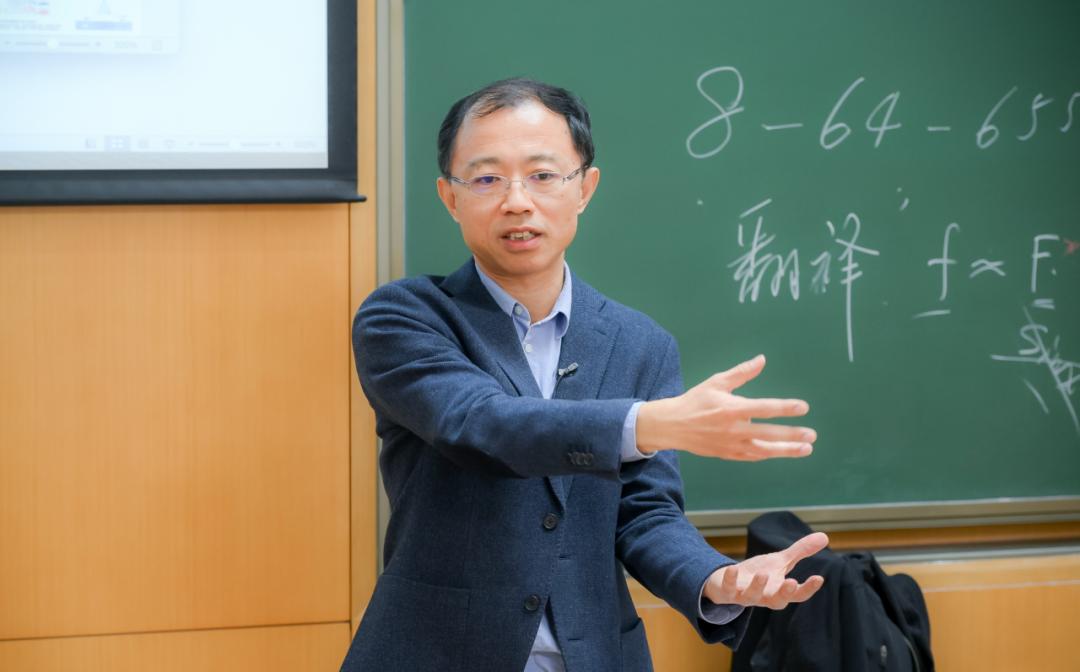
Hong Bo. Image source: Tsinghua University
Being bold in exploring new directions and laying a solid foundation in research, Hong Bo pointed out the way for China's breakthrough in the field of brain-computer interfaces. And it was his first doctoral student, jointly supervised by him, who turned his scientific concept into a real product.
The Long March of Entrepreneurship
In 2001, Xu Honglai entered the Department of Biomedical Engineering at Tsinghua University and later joined the brain-computer interface research group. At that time, all the experimental equipment had to be imported at high prices, and they were often rejected when trying to buy advanced equipment - the sellers were worried about helping Chinese scientific research and having their technology copied. These experiences strengthened the team's determination to conduct independent research and development.
In 2005, the research group won the championship in an international brain-computer interface data competition, and the brain-computer interface equipment they developed was even featured on the CCTV News Broadcast, becoming a social hot topic. In 2006, Xu Honglai, who was about to graduate with a master's degree, was already well-known and received an offer from a large medical device company. However, a few words from his tutor, Hong Bo, changed his life trajectory: "If you go there now, you'll just be a small cog. It's better to start a business and turn the laboratory technology into an industrialized product. You should pursue a doctorate to fully understand the technology."
To turn the technology into a real product, Xu Honglai persevered for 20 years. In the first five years, he focused on exploring the feasibility of productization. At that time, the research on electroencephalogram signals generally adopted the safe but inefficient analog technology route, but he turned to the "fully digital" solution that only existed in theory. This solution was not tried by anyone because of serious signal interference, and there was no experience to draw on.
Xu Honglai started from scratch, making his own detection equipment and purchasing precision instruments. He often dragged his classmates to do experiments, and over time, everyone wanted to avoid him. Once, a junior was electrocuted because of a device leakage. "If you try something 99 times, there's always a chance of success on the 100th try." With this perseverance, he finally overcame the fully digital solution and founded Boraycon Technology (Changzhou) Co., Ltd. at the end of 2011, starting a 15-year-long entrepreneurial journey.
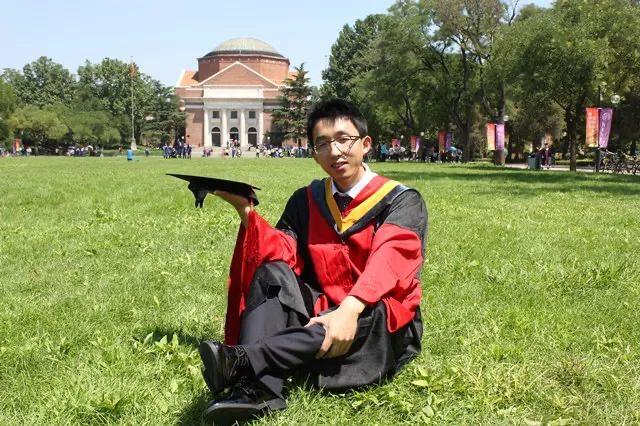
Xu Honglai. Image source: Changzhou Science and Education City
Entrepreneurship is more difficult than scientific research. After transforming from a student to a founder, Xu Honglai met many investors but was always regarded as a fraud. The brain-computer interface was too sci-fi at that time, and even the Tsinghua University brand didn't help. The long-term setbacks almost made him accept an acquisition offer of 8 million yuan from a company. At a critical moment, technology brought him a turning point. Around 2015, Boraycon launched the first-generation product prototype. Hospital experts evaluated that although the appearance was crude, the signal quality far exceeded that of domestic equipment and was comparable to imported products.
With this prototype, Boraycon received 15 million yuan in angel investment. Eager for success after getting the initial funds, Xu Honglai quickly expanded the business, such as renting venues and obtaining certificates. He exhausted the funds in less than a year and even had to borrow money from his family to pay the employees' salaries. After that, he became more practical and restrained. He first focused on the relatively simple non-invasive brain-computer interface products, cooperated with many hospitals to collect data, and gradually opened up the domestic scientific research market. In 2019, it completed a Series A financing of 60 million yuan.
After accumulating enough funds and experience, Xu Honglai implemented his tutor's concept and launched the research and development of the semi-invasive brain-computer interface, establishing a collaborative system of "academic guidance from Hong Bo's team, demand definition by clinical doctors, and technology implementation by the company's engineers" in the integration of industry, academia, medicine, and research. While Elon Musk was promoting his brain-computer interface everywhere, Boraycon was quietly accumulating strength, waiting for the moment to explode.
The City of Dreams
Boraycon was founded in Changzhou, Jiangsu. After completing a Series B financing of over 100 million yuan in 2021, it established a subsidiary in Zhangjiang Science City, Shanghai. The research and development of the semi-invasive brain-computer interface is extremely difficult, and the requirements for talent and the industrial chain far exceed those of conventional industries. Zhangjiang happens to have three core industries: integrated circuits, artificial intelligence, and biomedicine, providing all-round support.
The implanted device requires low power consumption, high precision, and miniaturization, which depends on the integrated circuit industry; the complex and noisy brain signals need to be decoded into specific action instructions in real-time by AI through deep learning; the more than 2,300 innovative entities and 96,000 employees in the biomedicine field can provide biocompatible materials, neuroscience support, and clinical verification methods. This synergistic industrial ecosystem allows Boraycon to quickly integrate resources, speed up research and development, and finally achieve the world's first launch of a Chinese brain-computer interface medical device.
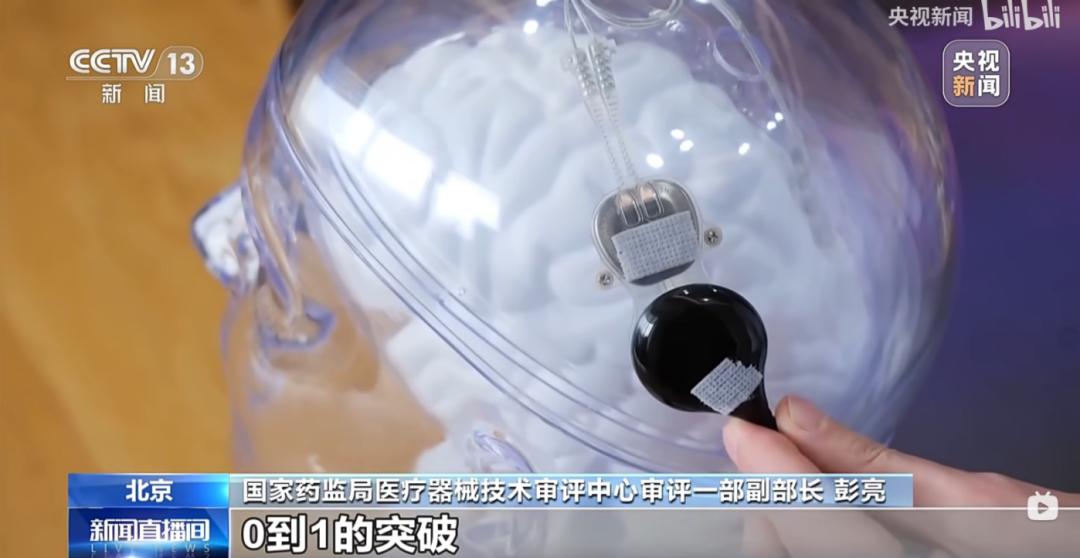
Image source: CCTV News
Zhangjiang Science City could become a dream place for entrepreneurs thanks to Jiang Shangzhou, who was transferred to be the deputy director of the Shanghai Economic Commission in 1997. As one of the few officials who understood semiconductors, after studying the industries in Taiwan, China, he put forward a bold idea: to make Shanghai surpass Taiwan and become the world's semiconductor manufacturing center. At the end of 1998, he proposed to the Shanghai decision-makers to plan a 22-square-kilometer Zhangjiang Microelectronics Development Zone [2.1] in Pudong, which was three times the size of the Hsinchu Science Park in Taiwan, China.
At the beginning of 2000, Jiang Shangzhou warmly invited Zhang Rujing, a well-known figure in the semiconductor field. The four major leadership teams in Shanghai welcomed him in full force, and Zhang Rujing immediately decided to establish Semiconductor Manufacturing International Corporation (SMIC) in Shanghai, with the meaning of "the first chip of Chinese technology." In just three years, SMIC's sales exceeded 3 billion yuan, and its foreign exchange earnings from exports were about 300 million US dollars. By the end of 2003, its total production capacity ranked fourth in the industry, only after TSMC, United Microelectronics Corporation, and Chartered Semiconductor Manufacturing. It accelerated the development of the mainland's chip industry by 30 years and strongly promoted the development of the integrated circuit industry in Zhangjiang.
SMIC's rise put pressure on TSMC, which sued SMIC for patent infringement in the United States in 2003 and 2006 respectively. In the first lawsuit, TSMC received a settlement fee of 175 million US dollars. In the second lawsuit, TSMC put forward even more demanding requirements - a 200-million-US-dollar compensation, 10% equity transfer, and Zhang Rujing's resignation. After the judgment was announced in 2009, Zhang Rujing left in tears. Jiang Shangzhou, who was ill, was entrusted to be the chairman in a critical moment.
On June 24, 2011, in Shanghai Ruijin Hospital, Jiang Shangzhou, who was in a critical and comatose state, was awakened by an old friend's words "integrated circuit." Unable to speak, he twisted his neck anxiously. Only when he heard "the equipment prototype was very successful" did he calm down. He passed away a few days later. Although Shanghai failed to become the world's semiconductor manufacturing center as expected, driven by Jiang Shangzhou, Zhangjiang Science City rose rapidly and became the "Silicon Valley of China" and a world-class innovation highland. In recent years, SMIC has emerged from the trough and ranked third in the global wafer foundry field in 2025, once again becoming a strong competitor to TSMC. And the brain-computer interface is another industrial ace incubated in Zhangjiang.
The Relay from Afar
In today's brain-computer interface industry, there are many grand narratives such as "telepathic communication" and "human-machine symbiosis," but the Chinese team has always been cautious and pragmatic, focusing on medical pain points and solving practical problems.
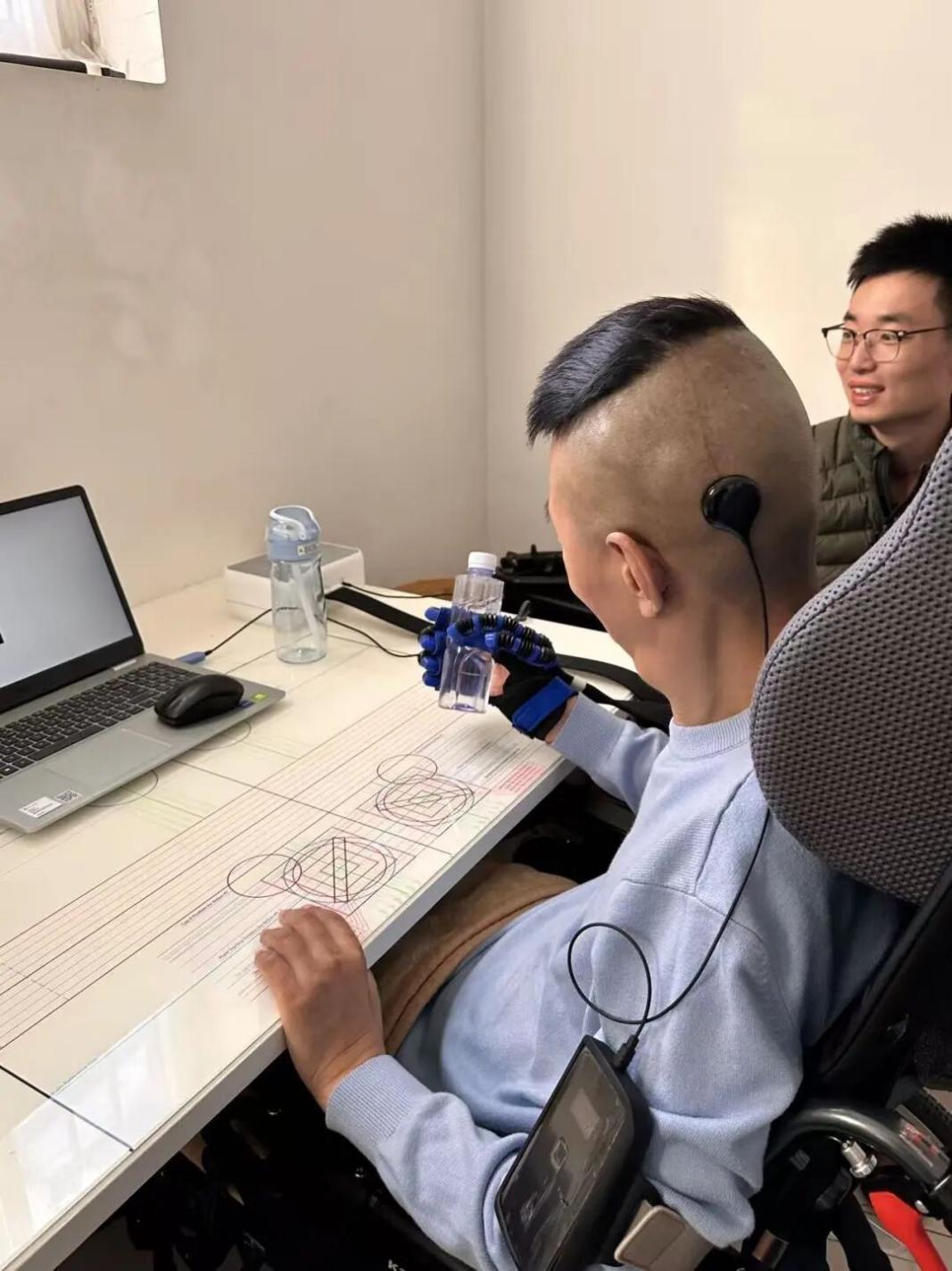
During the clinical trial, a paraplegic patient achieved brain-controlled grasping. Image source: Tsinghua University
Thanks to Hong Bo's technological innovation, Xu Honglai's perseverance in entrepreneurship, and Jiang Shangzhou's industrial layout, the three of them relayed from afar, and finally in the spring of 2026, they brought the once-sci-fi brain-computer interface from the laboratory to the real medical scenario. This also provides valuable ideas for China's future industrial cultivation: the breakthrough in hard technology has never been a single-point technological breakthrough but the resonance of "scientists + entrepreneurs + strategists."
It should be clear that the competition between China and the United States in the field of brain-computer interfaces is not a "winner-takes-all" game: China has achieved the world's first marketing of an invasive brain-computer interface medical device with the NEO system, leading in medical implementation and industrial application; the United States still leads in basic research (such as brain signal decoding algorithms and basic neuroscience theories) and frontier exploration (such as the long-term implantation safety of invasive brain-computer interfaces and multi-modal signal fusion). Although Elon Musk's Neuralink has not been launched on the market, its technological accumulation in the miniaturization of brain-computer interfaces and signal acquisition accuracy cannot be underestimated.
In the future, the global brain-computer interface industry is expected to replicate the new energy pattern: China and the United States will run side by side with different focuses, and other countries will find it difficult to enter the core competition circle.
Notes:
1.1 Cervical spinal cord injury is considered the most severe type of spinal cord injury, which can lead to total paralysis and loss of sensation, and a series of complications also need to be managed.
2.1 The Zhangjiang Microelectronics Development Zone planned at that time has now been upgraded and integrated into the overall scope of "Zhangjiang Science City." Its integrated circuit industry cluster has made Zhangjiang Science City the Silicon Valley of China.
References
[1] "The World's First, Approved for Marketing! From Tsinghua University!" Tsinghua University
[2] "From the Tsinghua Laboratory to the World's First Certificate: Boraycon's Road to China's Brain-Computer Interface" The Paper
[3] "Tribute to Entrepreneurs | Xu Honglai of Boraycon Technology: To Be an Up-and-Coming 'Unicorn'" Changzhou Science and Education City
[4] "Remembering the Strategic Scientist Jiang Shangzhou" Science and Technology Daily
[5] "Shanghai Pudong: Unlocking the 'World's First Certificate