CATL drops bombshells: Fully charged in 6 minutes, maximum range of 1,500 km, and rapid construction of integrated supercharging and battery swapping stations
Overnight, CATL has triggered a major reshuffle in the new energy industry.
Just now, CATL held a press conference with the highest technical density ever. A variety of brand - new technologies and products emerged collectively and were finally presented in quantifiable figures.
For example, the third - generation Kirin battery can easily achieve a 1000 - kilometer range. The Kirin solid - state battery has directly extended the range to 1500 kilometers.
The second - generation Xiaoyao Super Hybrid battery has directly increased the pure - electric range to 600 kilometers, which undoubtedly provides a brand - new solution.
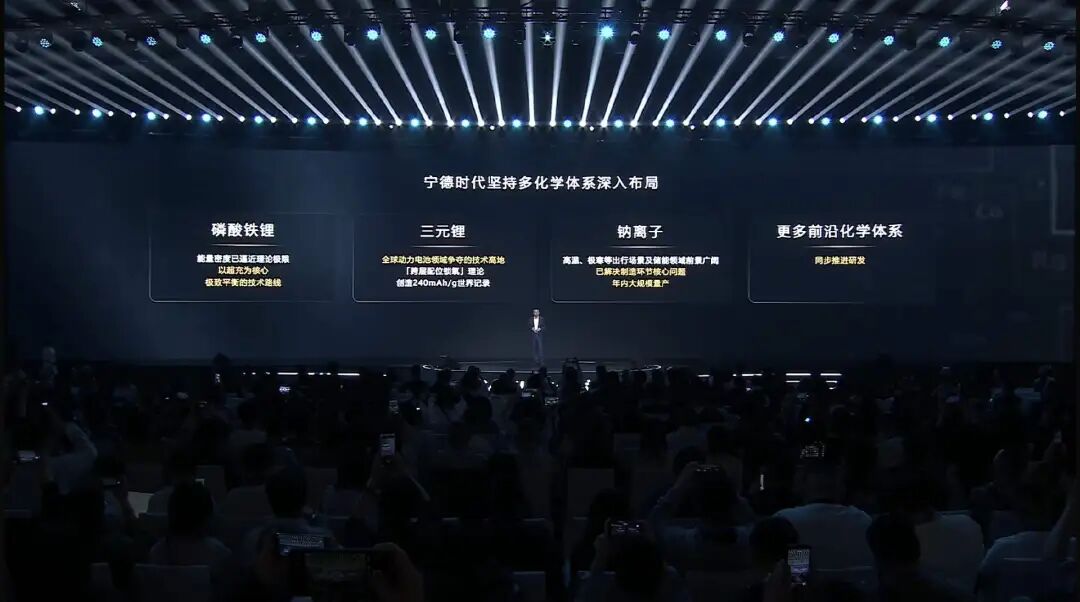
Compared with these batteries, the more far - reaching significance of this press conference lies in giving full play to the advantages of each technical route:
The performance of lithium iron phosphate seems to have reached a bottleneck. Developing ultra - fast charging has become a key breakthrough to achieve balance. The energy density of ternary materials still has great potential to be tapped, and sodium - ion batteries will play an important role in high - temperature, extremely cold travel scenarios and the energy storage field.
As for the energy replenishment link, CATL has given full play to ultra - fast charging. At the same time, it believes that the integration of ultra - fast charging and battery swapping is the best energy replenishment form in the future. It plans to build a cumulative total of 4000 ultra - fast charging and battery swapping integrated stations by the end of 2026.
Break through the 1500 - km range
Among the aces that CATL has shown all at once, the most astonishing one is the Kirin solid - state battery.
Actually, as early as 2023, CATL released the solid - state technology, with a single - cell energy density as high as 500Wh/kg. However, its initial application target was manned aviation. Now, it has completed the first - flight verification on a 4 - ton commercial aircraft and is about to conduct further verification work on commercial aircraft over 8 tons.
This time, CATL has officially applied the solid - state technology to the passenger car field.
The most intuitive data is that it has a gravimetric energy density as high as 350Wh/kg and a volumetric energy density as high as 760Wh/kg.
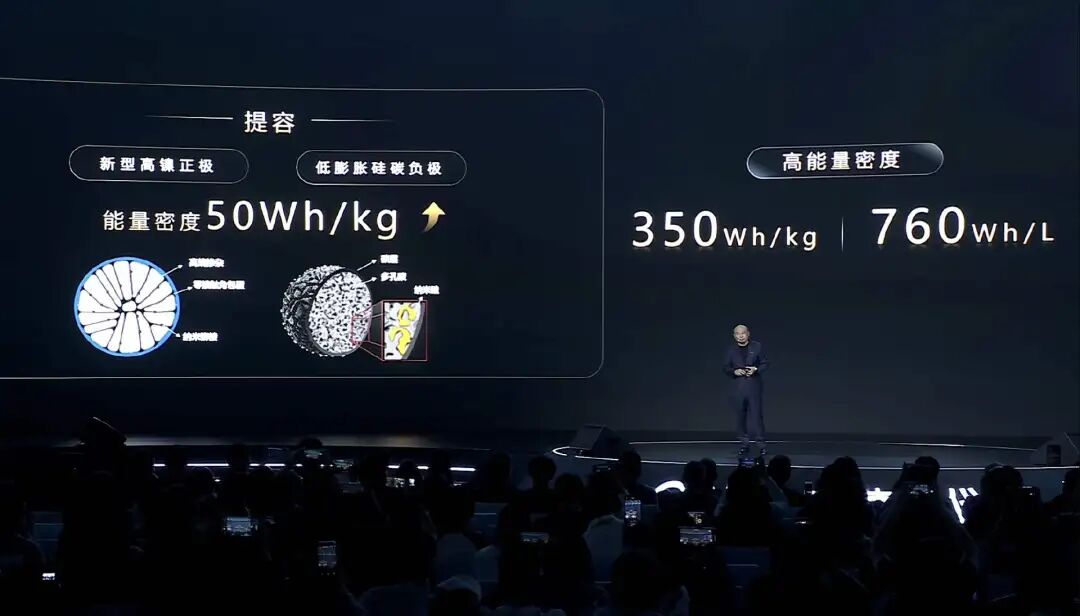
It uses a dedicated high - nickel cathode and a new low - expansion silicon - carbon anode technology, increasing the energy density by 50Wh/kg. At the same time, it has also applied aviation - grade titanium alloy materials to the battery casing for the first time. Compared with conventional aluminum casings, the thickness is reduced by 60%, the weight is reduced by 30%, the unit strength is increased by 3 times, and the energy density is also increased by 20Wh/kg.
What does an energy density of 350Wh/kg mean?
Currently, the energy density of mainstream ternary lithium batteries is between 200 - 250Wh/kg, and that of lithium iron phosphate is between 140 - 180Wh/kg. In other words, the energy density of the solid - state battery is twice that of lithium iron phosphate and 75% higher than that of ternary lithium. This means that for batteries of the same weight, the range of the solid - state battery is at least doubled; or for the same range, the battery weight is halved.
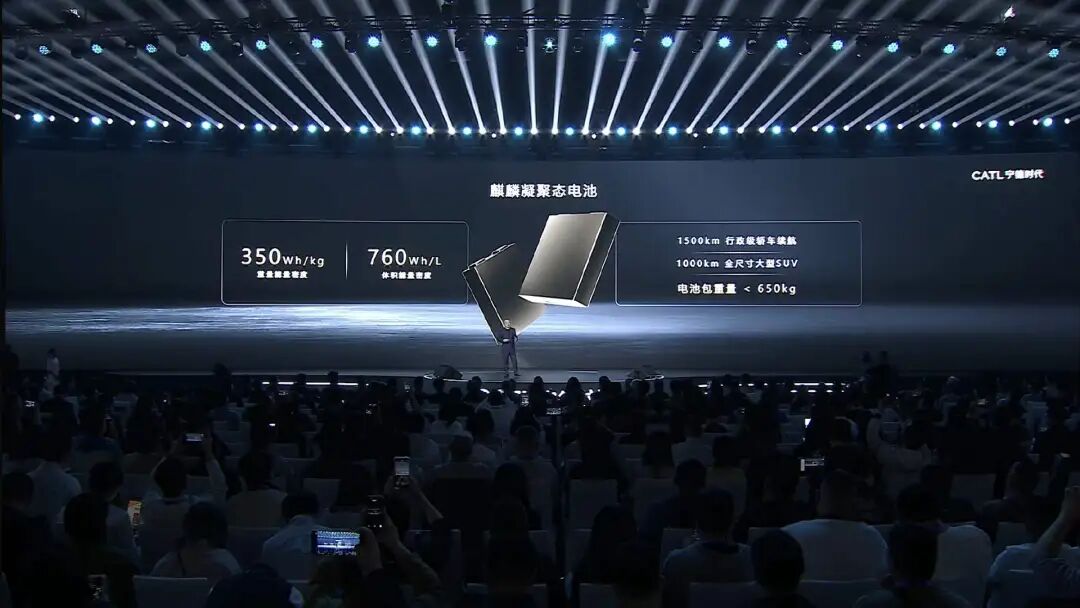
This also enables an executive - class sedan equipped with CATL's solid - state battery to have a range of up to 1500 kilometers. Even a full - size large SUV can achieve a range of 1000km. For example, the distance from Beijing to Nanjing is more than 1000 kilometers. Even if the high - speed range is discounted by 30%, it can still reach the destination in one go.
According to the data released by the Beijing Transportation Commission, the average annual mileage of private cars in Beijing is more than 9500 kilometers, which is about 800 kilometers per month. The 1500km range of the Kirin solid - state battery is equivalent to the commuting needs of ordinary users for nearly two months, completely changing the charging frequency from "weekly charging" to "once every two months".
Although all - solid - state batteries are recognized as the ultimate form of next - generation batteries in the industry, as is well known, there are also pain points that are difficult to mass - produce with current technology - the interface impedance of solid electrolytes and the precision requirements of manufacturing processes are high walls between the laboratory and the factory.
The solid - state battery is CATL's "transitional ace" before the mass production of all - solid - state batteries.
This name sounds a bit mysterious. Simply put, the solid - state battery is a technical route between traditional liquid batteries and all - solid - state batteries. The electrolyte has changed from liquid to semi - solid or gel state, which not only retains the advantage of high ionic conductivity of liquid batteries but also fundamentally achieves "no liquid leakage and no liquid flammability", completely cutting off the safety risks that may be caused by liquid leakage.
In addition to an energy density as high as 350Wh/kg, the battery is also made thinner and lighter, with a maximum weight of 650kg and a volume of only 309L. On the scale of a 1500 - kilometer range, the Kirin solid - state battery is 400KG lighter in vehicle weight and the battery compartment volume is reduced by 225L compared with a lithium iron phosphate battery with the same 1500km range.
New sodium batteries to be mass - produced by the end of the year
If the solid - state battery is the "technological crown" for the future, then the new sodium battery is the "key" for CATL to open the door to the large - scale popularization of new energy.
Actually, sodium batteries are not a new concept, but they have been stuck on three problems in the past: "insufficient energy density, poor cycle life, and slow charging".
At the press conference, Wu Kai, the chief scientist of CATL and an academician of the Chinese Academy of Engineering, said, "The core problems in the manufacturing process have been solved, and large - scale mass production will be achieved within this year."
For example, in the battery manufacturing process, trace amounts of water from the environment will inevitably be introduced into the materials and electrodes, which will also affect the service life of the battery. CATL has made the entire material into a hydrophobic material structure to achieve extreme dehydration, reducing the water content to below 200 PPM.
It has also self - developed a bipolar functional coating and a self - generating anode technology. The former solves the problem of difficult bonding in aluminum foil coating, and the latter solves the consistency of the sodium metal deposition interface.
Currently, CATL's new sodium battery has achieved a pure - electric range of over 400km, with a maximum energy density of up to 175Wh/kg. It can maintain over 90% of its capacity at an extremely cold temperature of - 40°C, while lithium - ion batteries usually only have 60 - 70%. It can still discharge at - 50°C, which is of great significance to the cold market in the north.
The most critical factor is the cost. No matter how cheap the price of lithium carbonate is, there is a bottom line. However, the reserves of sodium in the earth's crust are 400 - 1200 times that of lithium, so the cost is naturally low. More importantly, China is self - sufficient in sodium resources, and there is no supply - chain risk of 70% dependence on imported lithium resources.
According to industrial research data, the cost of sodium battery cells has dropped to 0.35 - 0.40 yuan/Wh in the first quarter of 2026, and the price difference with lithium iron phosphate batteries has been reduced to 0.10 - 0.15 yuan/Wh.
Although the initial investment seems to be basically the same as that of lithium iron phosphate, don't forget that the cycle life of sodium batteries reaches 8000 - 15000 times, which is 2 - 3 times that of lithium iron phosphate. This means that within the 10 - 20 - year service cycle of the energy storage system, the full - life - cycle cost of sodium batteries is much lower than that of lithium iron phosphate.
Gao Huan, the CTO of CATL, said, "CATL's new sodium batteries will be officially mass - produced and supplied on a large scale in the fourth quarter. The era of the co - existence of sodium and lithium batteries has arrived."
Eliminate the last gap between electric and fuel vehicles
Compared with the brand - new battery technologies for the future, CATL's iterative upgrades of existing battery technologies are eliminating the last gap between electric and fuel vehicles.
"Charge for 5 minutes and get a 400 - kilometer range." This sentence has been heard countless times at press conferences. But this time, CATL has achieved "fully charged in just 6 minutes."
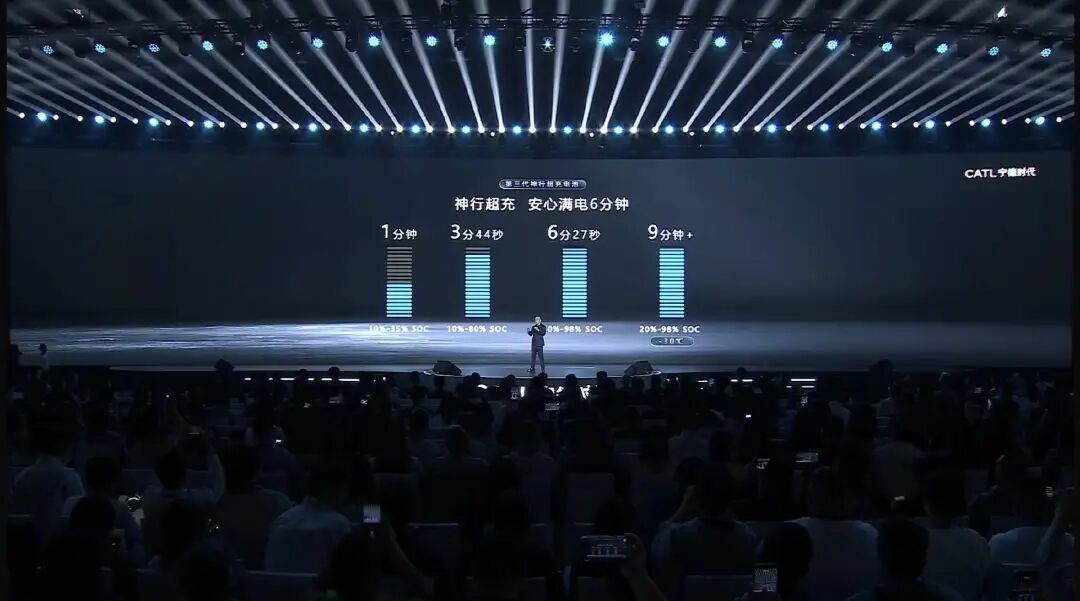
This is because the third - generation Shenxing Ultra - Fast Charging battery has achieved a charging power of equivalent to 10C and a peak of 15C.
Under normal temperature conditions, it only takes 1 minute to charge from 10% to 35%, 3 minutes and 44 seconds from 10% to 80%, and 6 minutes and 27 seconds from 10% to 98%. Even in an environment of - 30°C, it only takes 9 minutes to charge from 20% to 98%. The energy replenishment speed is infinitely close to that of refueling a fuel vehicle.
According to the statement at the press conference, the material characteristics of lithium iron phosphate determine that it is not suitable for ultra - long - range applications. Lithium iron phosphate has an inherent shortcoming in energy density. If it wants to achieve a 1000 - kilometer range, it can only increase the number of batteries to increase the power, resulting in the battery pack weight reaching nearly 900kg or even more than 1 ton. Such weight goes against the most basic requirement of the automotive industry for lightweight.
Therefore, under the inherent limitations of the material, CATL's solution is to use extreme ultra - fast charging technology to resolve the "energy replenishment anxiety".
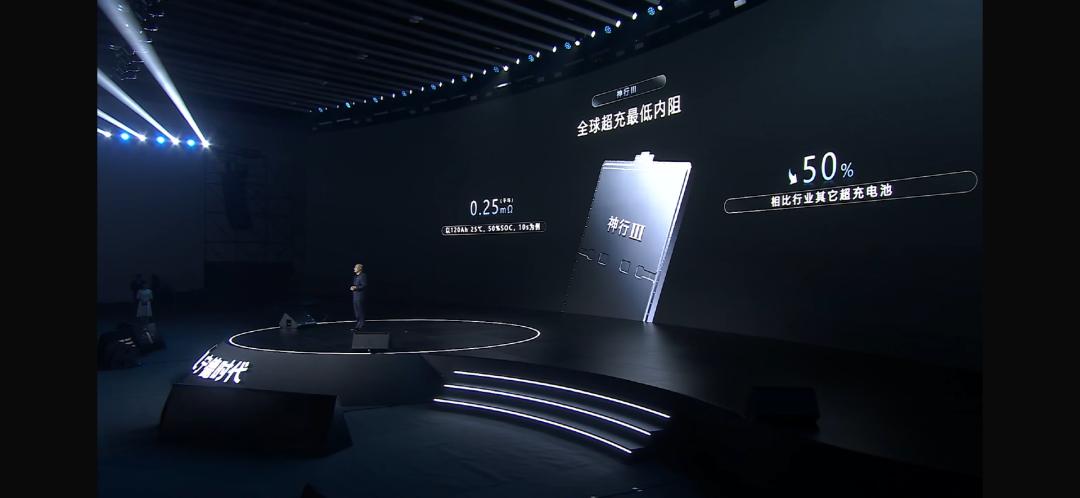
Gao Huan, the chief technology officer of CATL, said that the real core problem of ultra - fast charging is not "trickle charging" but "temperature rise". The higher the temperature rise, the faster the battery life decays. Reducing the internal resistance is the core path to control the temperature rise. The third - generation Shenxing Ultra - Fast Charging battery has "the lowest internal resistance for ultra - fast charging globally", with an average of 0.25mΩ, which is 50% lower than other ultra - fast charging batteries in the industry.
In addition, it has brought the latest technological achievement - the cell shoulder cooling solution. Through a large number of topological simulation analyses, it is found that the heating is most concentrated at the tab position of the cell during charging. So, precise cooling is carried out in the hottest area, increasing the cooling efficiency by more than 20%.
This also enables the third - generation Shenxing Ultra - Fast Charging battery to maintain a battery capacity retention rate of over 90% after 1000 complete ultra - fast charging cycles.
More importantly, not only the Shenxing battery, but also the Kirin battery and the Xiaoyao battery dedicated for plug - in hybrids can all achieve such a charging speed.
Moreover, thanks to the inherent advantages of ternary lithium materials, the third - generation Kirin battery has an ultra - long range of 1000km while being ultra - fast charged, with a battery energy density of 280Wh/kg.
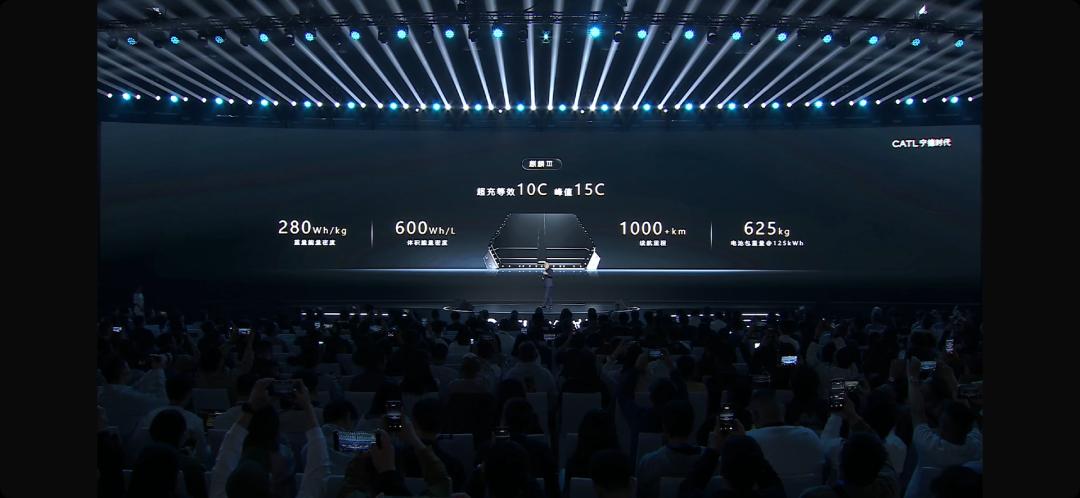
At the same time, the weight of the battery pack is also controlled at 625kg. Compared with lithium iron phosphate models with the same 1000 - kilometer range, the weight is reduced by 255kg and the space is saved by 112L.
The benefits brought by lightweight to the whole vehicle are very significant. In terms of energy consumption, compared with lithium iron phosphate batteries of the same power, the third - generation Kirin battery can directly reduce the vehicle's energy consumption per 100 kilometers by 6%, saving about 0.78 kWh per 100 kilometers.
The handling performance has also been improved. Taking a mid - to large - sized sedan weighing 2.6 tons with a 0 - 100km/h acceleration time of 5 seconds as an example, reducing the weight by 255 kilograms can make the 0 - 100km/h acceleration 0.6s faster, shorten the 100 - km braking distance by 1.44 meters, increase the passing speed in the moose test by 8%, and reduce the body roll angle by 6.5%.
In addition, the service life of consumables such as tires can be extended by 30%. Under normal circumstances, tires need to be replaced after about 60,000 - 80,000 kilometers. Now, it can be directly extended to 80,000 - 100,000 kilometers. Taking an annual mileage of 20,000 kilometers as an example, under the same working conditions, the tires can be used for 1 - 2 more years. It can also reduce the impact load on elastic components such as the chassis suspension, increasing the service life by 40%.
More importantly, the discharge power has been greatly improved. In