When medicine delivery turns into health management: Meituan redefines pharmaceutical retail with "Xiaotuan Health Butler" and "Health Card"
In the narrative logic of large Internet companies, the pharmaceutical business once seemed somewhat "cumbersome."
It is not as high - frequency as food delivery, nor as flexible as ride - hailing. For a long time, it was only regarded as an "emergency room" in instant retail. Only when a child has a fever at night, someone forgets to bring antihypertensive medicine on a business trip, or needs a hangover remedy after a social gathering, do people think of the fast - moving "yellow medicine delivery box."
But by 2026, this story is taking a step forward.
On April 14th, at the Wuzhen Health Conference, Meituan's Pharmaceutical and Health division launched the AI Family Health Butler "Xiaotuan Health Butler" and the paid membership service "Health Card". This is not just a regular new product launch. More notably, Meituan is using this opportunity to advance its role in the pharmaceutical and health field from "a platform that meets one - time emergency medicine purchase needs" to "an entry point for long - term family health management needs."
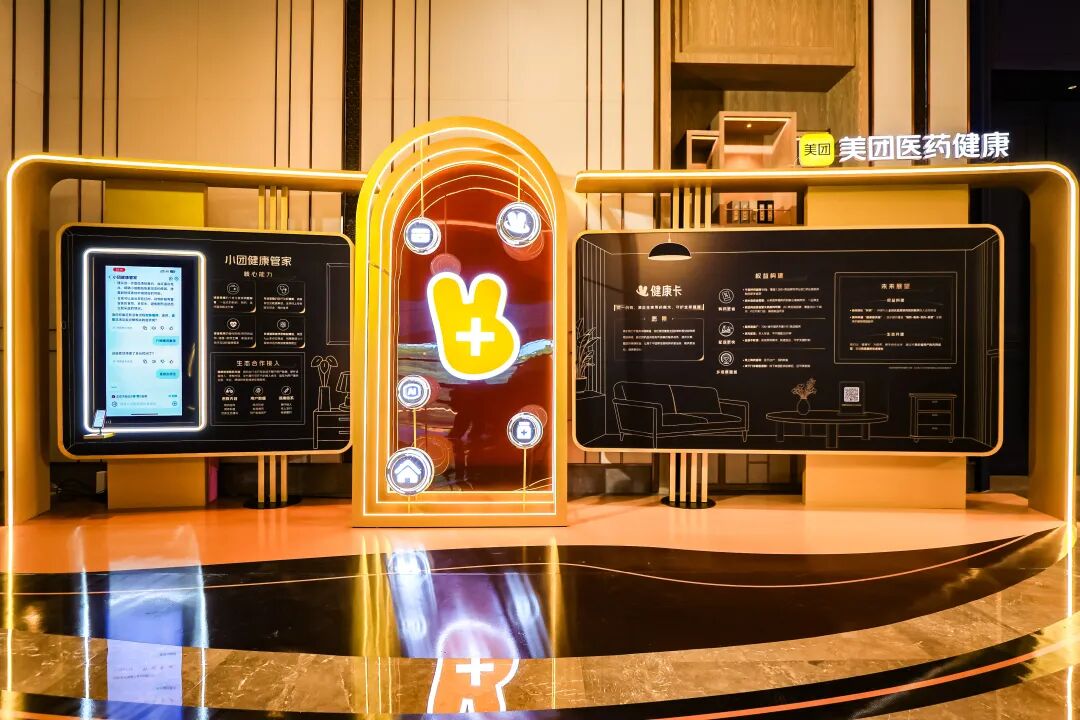
From the perspective of the entire pharmaceutical retail industry, on the one hand, health consumption is shifting from "buying medicine after getting sick" to more daily and proactive management, and the demand for family - based health management is also on the rise. On the other hand, new technologies are changing the way users manage their health. The actions scattered in search, medical consultations, medicine purchases, physical examination report interpretations, and repurchase reminders now have the opportunity to be re - connected by a more natural interactive entry point.
From this perspective, Meituan's move this time is also an attempt to reorganize traffic, services, and fulfillment capabilities around "family health management."
01
No Longer Just "Treat When Sick"
A significant change in the Chinese pharmaceutical retail market in recent years is that users' needs are no longer just centered around "what to do when sick," but are increasingly shifting to "how to manage health on a daily basis."
In the past, the platform dealt with clear and single - point problems. For example, when having a fever, buy antipyretic medicine; when coughing, buy cough medicine; when the medicine runs out, replenish a box. The user's decision - making path was short. As long as the platform was efficient enough in supply and delivery, it could complete the transaction. But today, more and more health needs do not appear in this way.
Often, users can't even clearly say what services they need. They just vaguely feel that "they need to do some health management." Meituan data shows that about 30% of online searches on the platform are fuzzy searches. Users enter things like "what to do when a child has a fever" instead of the name of a medicine. About 60% of users have a need for medication guidelines, but traditional platforms can only stop at the stage of "giving you a box of medicine" or "giving you a piece of popular science knowledge," leaving the rest of the judgment to the users themselves.
In other words, today's user needs are more vague, more scattered, longer - tailed, and more like a part of family life. When the seasons change, children are prone to allergies, and parents will search in advance for children's medicine and nursing services. Parents with hypertension or diabetes need to regularly repurchase prescription drugs. After young people have a physical examination, they hope someone can help them understand the indicators and decide whether to have a re - examination, adjust their work and rest, or seek medical treatment as soon as possible.
This change is first reflected in the consumption structure. Meituan's pharmaceutical and health data shows that children's vision screening, oral care, and growth and development management are changing from optional consumption to regular expenditures for many families. Products related to proactive health management such as blood glucose meters, blood oxygen meters, and GLP - 1 have seen a significant increase. More and more users are starting to view health as a long - term task rather than a one - time consumption.
Meanwhile, for many families, health expenditures have changed from an individual behavior to a shared budget, and it is becoming more and more common for family members to buy medicine or make appointments on behalf of others.
A group of user cases mentioned by Meituan at the Wuzhen Health Conference can, to some extent, illustrate this change: A middle - aged woman from a new first - tier city had 76 health - related consumptions on the platform in the past year, covering multiple scenarios such as children's medicine, vision screening, medicine purchase for her parents' chronic diseases, and family physical examinations. Of course, this sample does not represent all users, but it at least reveals a real trend, that is, the core unit of online health consumption is changing from "a patient" to "a family."
This is why "family health management" has become a new proposition that platforms are competing for. However, traditional pharmaceutical e - commerce is best at standardized transactions, such as placing orders, delivery, price comparison, and promotions. Family health needs are precisely non - standard. They are high - frequency, trivial, across different populations and cycles, and also have a strong emotional attribute.
When a child has a fever at night, an old person's chronic disease recurs, a parent's physical examination shows abnormalities, or someone wants to control blood sugar, these needs do not occur neatly in one entry point but are scattered in the daily lives of each family member. Whoever can receive these scattered signals at a lower cost will have a better chance of becoming the core platform for pharmaceutical retail in the next stage.
In this sense, it is not abrupt for Meituan to put "family health management" in the spotlight at this time. According to Meituan data, in the past year, the cumulative user scale of the platform increased by 27% year - on - year. Users aged 20 to 40 accounted for about 80%, and the proportion of orders placed on behalf of family members has reached 20%. This means that the generation of Meituan users who are most familiar with online consumption is becoming the new "family health managers."

What this group of people wants is not just "speed," but "less judgment - making, less process - running, and less platform - switching." They hope to be able to buy after asking, have the medicine delivered after buying, and be reminded of repurchase after delivery. It would be even better if they could manage their family's health records and medication information at the same time.
02
From "Ask a Question" to "Help You Do It"
In this context, when looking at "Xiaotuan Health Butler" and "Health Card," we can find that they are not two isolated products, but a typical combination of "entry point + fulfillment." The former solves the problem of "how to receive the demand," and the latter solves the problem of "how to retain the demand."
Let's start with "Xiaotuan Health Butler." A large number of users come to the platform with vague health concerns but get stuck in the cycle of "can't describe clearly - can't find - dare not decide."
The deeper structural problem behind this is that there is something wrong with the interaction paradigm of online health services. It requires users to first "translate" their symptoms into keywords that the platform can understand, and then complete the screening and judgment by themselves from the search results. This translation process itself is a threshold.
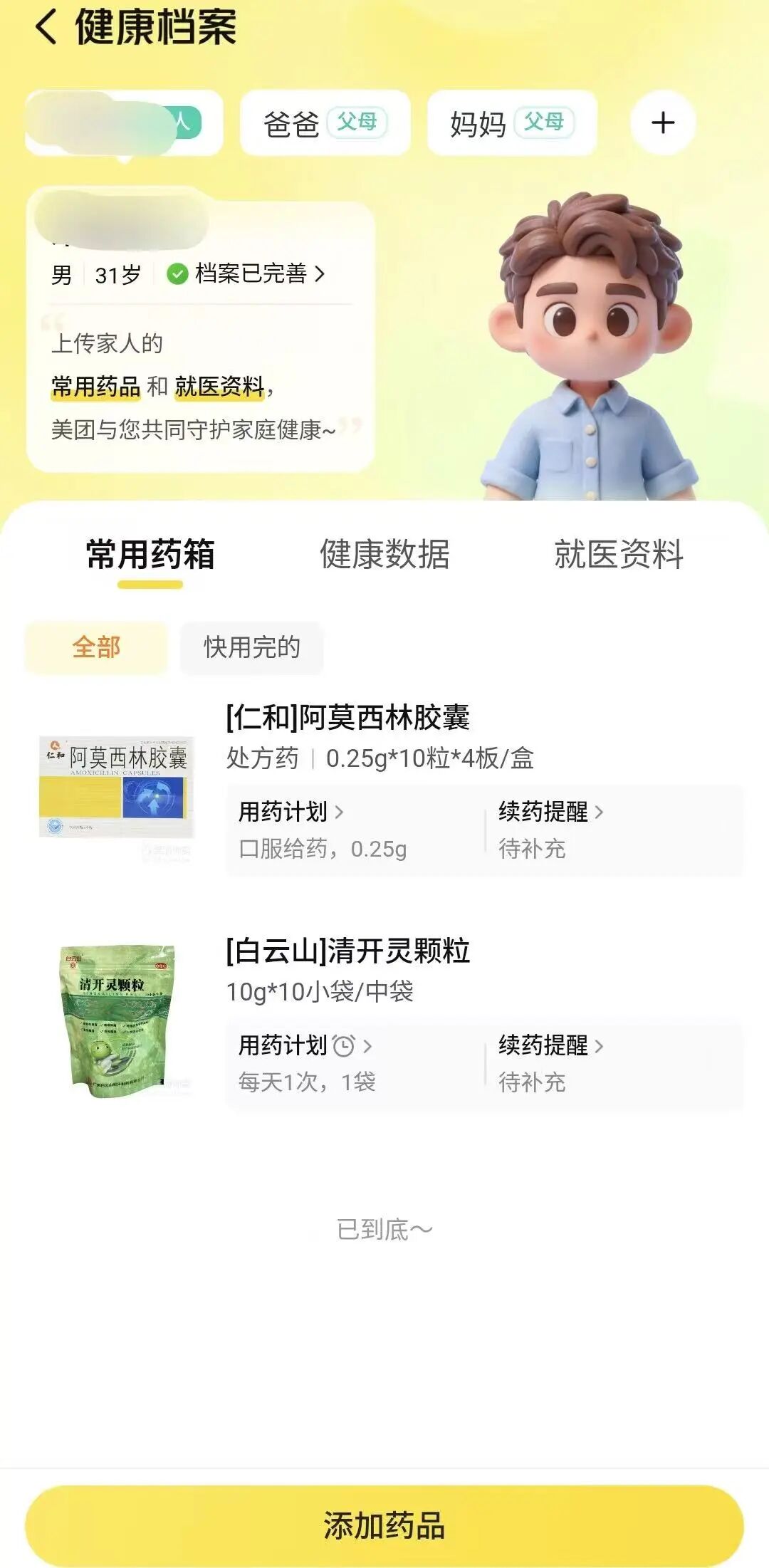
What "Xiaotuan Health Butler" does is to remove this threshold. It allows users to "describe" their discomfort in the most natural way. For example, if a child has a fever at night, just describe "a 3 - year - old baby with a temperature of 38.5 degrees and a bit of a cough." "Xiaotuan Health Butler" will give targeted fever - reducing suggestions based on the child's age, weight, and allergy history in the family health record, instead of returning a page of general search results.
The multi - modal ability further broadens the boundary of this "natural expression." If there are sudden rashes on the skin, is it an allergy or an infection? There are a row of fluctuating arrows on the physical examination report. Which ones should you be worried about? Often, users are faced with a situation of "can see but can't describe clearly."
As we understand, "Xiaotuan Health Butler" supports image recognition. By uploading a photo of the skin, it can initially determine the type of problem and give treatment suggestions. The same goes for physical examination report interpretation. It interprets the indicators in plain language, conducts personalized analysis in combination with the user's medical records, and gives follow - up suggestions based on abnormal indicators.
After a real user consulted about the side effects of a medicine, "Xiaotuan Health Butler" suggested a blood test for re - examination. After the re - examination, he uploaded the report again for interpretation. The path that originally required switching back and forth between multiple platforms, from "not understanding" to "knowing what to do next," has been compressed into the same conversation flow.
But so far, "Xiaotuan Health Butler" is still just a better "health Q&A tool," stopping at the "information exit." The key ability that Meituan adds to it is "able to take action after asking."
These four words touch on a long - standing unsolved structural problem, that is, the fragmentation of online health services. After asking about symptoms and needing to buy medicine, you have to open another page to search. If you need to see a doctor, you have to jump to a consultation platform. If you need to go to the hospital, you have to make an appointment by yourself. Every switch between links leads to a loss, and many health needs disappear precisely at these fragmented points - not because they are not needed, but because it is too troublesome.
The essence of "able to take action after asking" is to compress the actions scattered among different services into the same path. After describing the symptoms, you can directly jump to buy medicine. After the report is interpreted, you can make an appointment for a consultation with one click. After the doctor issues a prescription, you can place an order and have the medicine delivered in 30 minutes. The role of "Xiaotuan Health Butler" here is not just simple conversation, but a pre - emptive demand interpreter and distributor: first receive the vague signals, and then accurately direct them to the most suitable services.
Therefore, the "Health Card" that is paired with "Xiaotuan Health Butler" is more like a retention tool in this chain.
If "Xiaotuan Health Butler" solves the entry - point problem, the "Health Card" solves the repurchase problem. According to 36Kr, the "Health Card" launched by Meituan this time currently covers more than 1,000 kinds of medicines, including more than 300 kinds of original research drugs. It features a 15% cash - back on medicine purchases, one - on - one express delivery, and subsidies for offline outpatient and emergency services. The price for the first month is 2.9 yuan, and the annual card is 39 yuan.
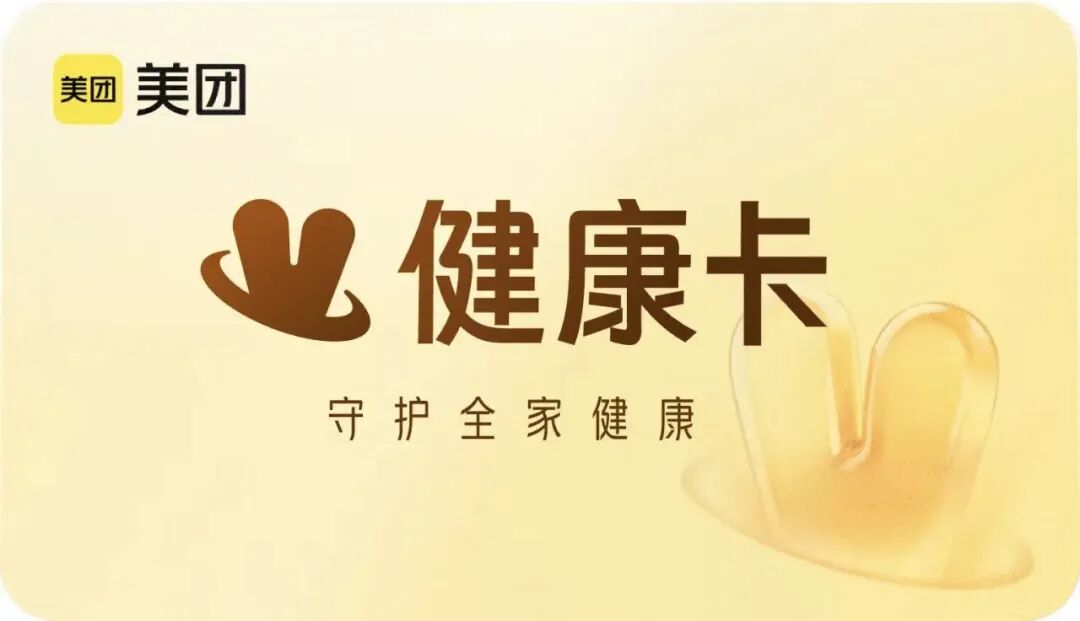
This design is very straightforward. It is trying to turn users' originally scattered and occasional medicine - purchase needs into a membership relationship that can be used repeatedly and makes users feel "cost - effective."
Behind this is a mature Internet logic: high - frequency services are responsible for establishing usage habits, the membership system is responsible for increasing the willingness to repurchase, and fulfillment capabilities are responsible for solidifying the experience loop. In the field of pharmaceutical and health, this logic has not been fully realized in the past. The core reason is that health consumption is both low - frequency and scattered, and it is difficult for a single user to stably contribute a high enough usage frequency.
But if we change the observation unit from "an individual" to "a family," the situation is different. When the needs of children, parents, and oneself are combined, the demand frequency, scenario richness, and customer order structure will all change, and the membership model may truly be established.
So, Meituan's move this time is not just a simple "new product launch," but an answer to a bigger question: When the dividends of pharmaceutical and health are gradually extending from emergency scenarios to daily scenarios, how can the platform not only make a one - time transaction but also build a continuous family health relationship?
03
The Invisible Thresholds Are Beyond the Entry Point
Any platform can talk about "family health management," but few can really push this matter forward.
The reason is simple. Family health management may seem like a new entry point, but in fact, it tests whether the platform can simultaneously possess three capabilities: high - frequency user reach, complete local health supply, and a stable fulfillment system. Without any one of these, it is difficult to turn "asking a question" into "helping you do it."
In the past few years, Meituan's accumulation in the pharmaceutical and health field is not just about selling medicine, but about building a local health service network. As of now, Meituan's pharmaceutical and health division has covered 250,000 pharmacies and 440,000 offline medical service institutions, and has served a cumulative of 430 million users. Whether it is the user scale, the density of offline supply, or the instant fulfillment ability, Meituan already has the foundation to connect health needs from "online consultation" to "offline completion."
This means that Meituan's approach to "Xiaotuan Health Butler" is different from the logic of general large - scale models. The latter is more about solving the problem of "whether it can answer questions," while Meituan wants to solve the problem of "after answering, can it immediately move on to the next step" - users can buy medicine after asking about symptoms, make an appointment for a consultation after uploading a report, and place an order for delivery immediately after the doctor issues a prescription. Every step has real supply to support it.
More importantly, this approach is consistent with Meituan's existing capabilities, rather than starting from scratch.
Meituan is originally good at organizing and fulfilling high - frequency local life scenarios. The reason why the pharmaceutical and health field has developed in Meituan's system in the past few years is precisely because it is naturally suitable to be incorporated into this capability framework. The addition of "Xiaotuan Health Butler" does not overturn this system, but reconnects the contact points originally scattered among search, consultation, medicine purchase, and in - store services, enabling the platform to understand users' needs earlier and more naturally direct the needs to fulfillment.
If this story holds true, its significance is not just about having an additional health assistant or a paid membership card.
As Li Xiaohui, the general manager of Meituan's Pharmaceutical and Health Division, said at the Wuzhen Conference, "Family health management is the next opportunity for pharmaceutical retail." The key to seizing this opportunity lies in who can be more like a real health service system that can accompany families.
This also means that pharmaceutical instant retail is entering the stage of "infrastructure competition" from "emergency services." In the future, the focus of competition is not only on delivery time and the number of SKUs, but more importantly, on who can solidify every link from consultation to fulfillment in the "family" consumption unit.
As for how far this system can go, it depends on two variables: one is whether users will really entrust "family health management" to the platform, and the other is whether the platform can turn this capability into infrastructure that industry partners are also willing to invest in for the long term.
For Meituan, this may be a natural extension; but for the entire industry, the signal it releases is more worthy of attention