Robots outperform humans. Then what?
Hello everyone, I'm Wei Ming. I wonder how many of you have seen the news about the robot half - marathon recently. Today, let's talk about it.
On April 19, 2026, in Yizhuang, Beijing, the "Lightning" robot developed by Shenzhen Honor completed the 21.0975 - kilometer half - marathon in 50 minutes and 26 seconds, which is even faster than the human half - marathon world record. This news quickly went viral, and there were exclamations of "machines surpassing humans" everywhere on social media. Actually, we reported on robot running competitions last year. At that time, many robots couldn't run very far and gave up. They've made quite rapid progress in the past six months or so.
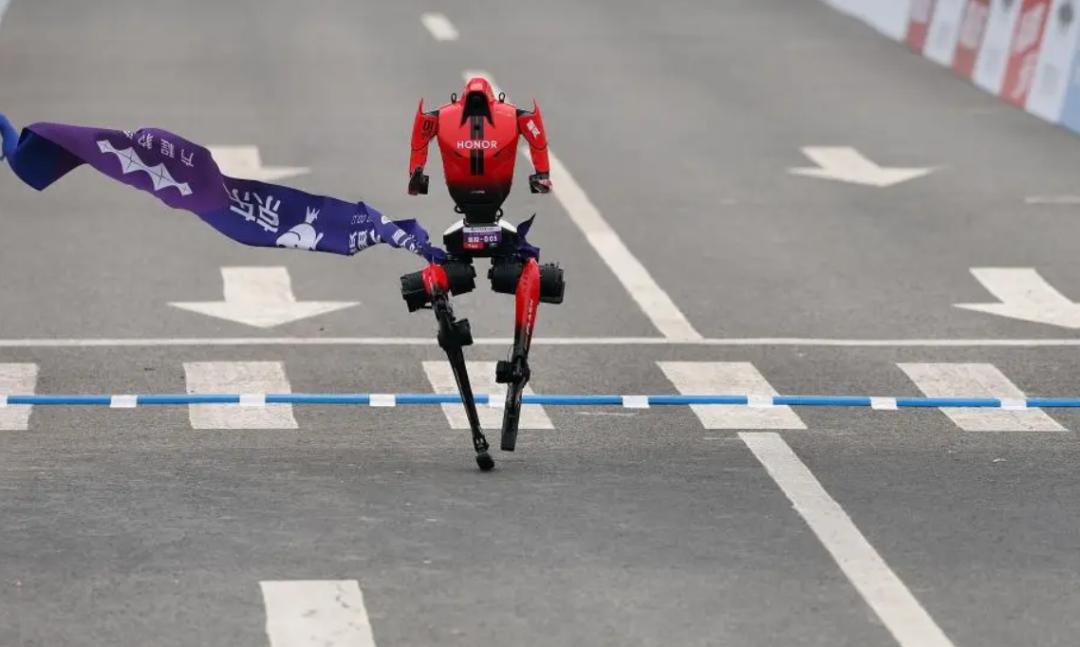
Image source: Internet
However, if you browse more short videos, you'll see another aspect: halfway through the race, the robot went to the roadside for maintenance. The staff changed the robot's battery, poured a large amount of ice cubes on its back, and also needed to spray a cooling aerosol for it to continue moving forward. One "Lightning" set a world record, but all robots had to avoid "heatstroke and collapse".
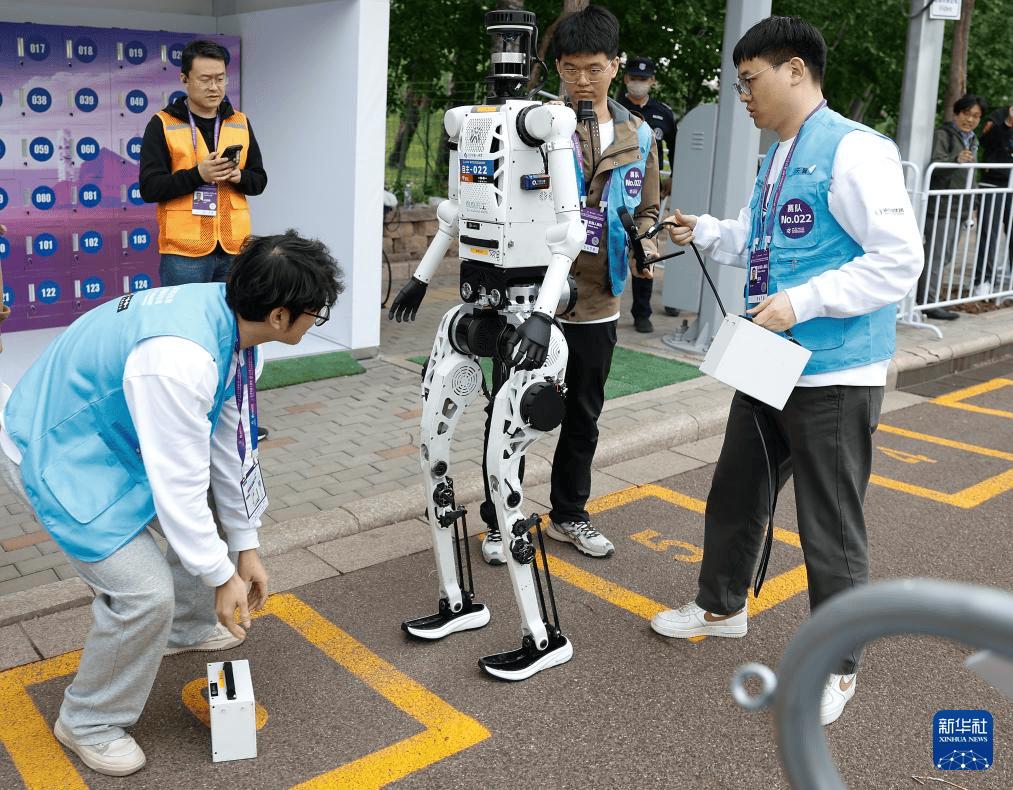
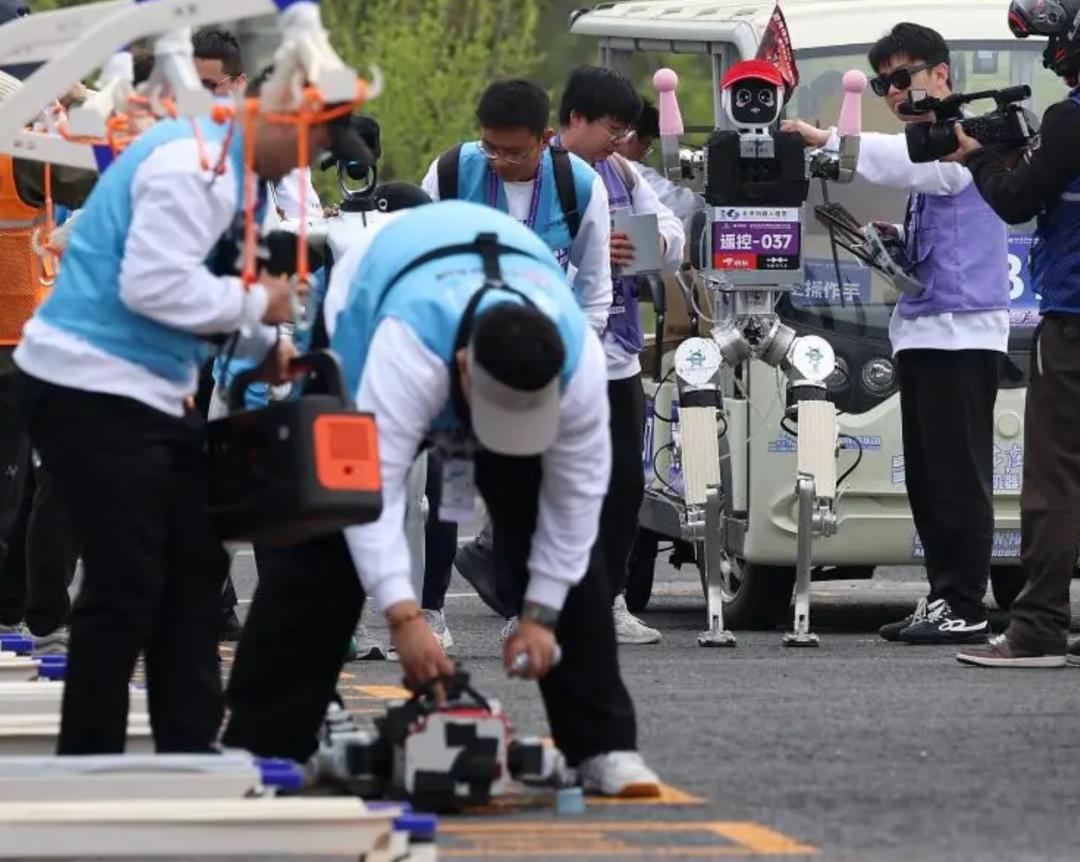
Image source: Xinhua News Agency
The gap between these two pictures is the right way to understand the real state of humanoid robots.
Today, let's talk about the bottlenecks that humanoid robots need to break through in their future development.
Remote control or autonomy: Behind the 38% figure
The humanoid robot half - marathon in Yizhuang, Beijing, is currently the largest - scale and most - participated humanoid robot event in the world. In the first event in 2025, 6 teams completed the race; in 2026, there were over 100 teams from 13 provinces, and the scale increased dozens of times.
The most notable technical detail is that the proportion of teams using autonomous navigation reached 38% - this is the data announced by the Beijing Municipal People's Government before the race, and it is also the core direction of this year's event rule upgrade: teams using autonomous navigation will have their real - time results counted, while teams using remote control will have their fun - timing results counted. The rules themselves are tilted towards autonomous technology.
But what does "autonomous navigation" really mean today?
There is a much deeper gap between it and remote control than we think.
Remote control (Teleoperation) essentially involves a human - in - the - loop: the operator controls every movement of the robot in real - time through the transmitted video. The robot is just a "monitor on legs". In this mode, the stability of the robot completely depends on the human's reaction speed. There is a delay of hundreds of milliseconds for a command to go back and forth. When encountering an obstacle, it has to wait for the operator's judgment. The word "intelligence" is out of the question.
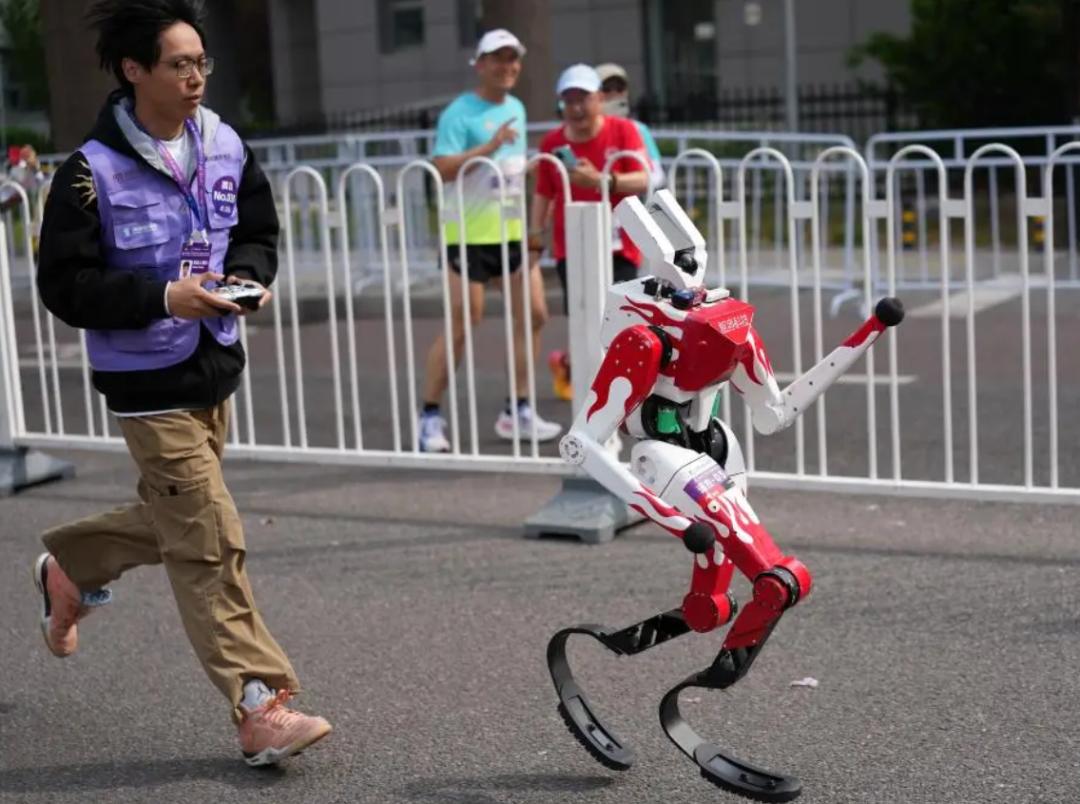
Image source: Internet
True autonomous navigation requires the robot to independently complete three - dimensional environment perception, real - time path planning, dynamic balance control, and energy management and fault handling during long - distance movement without human intervention. This is a comprehensive test of perception algorithms, motion control, and hardware reliability.
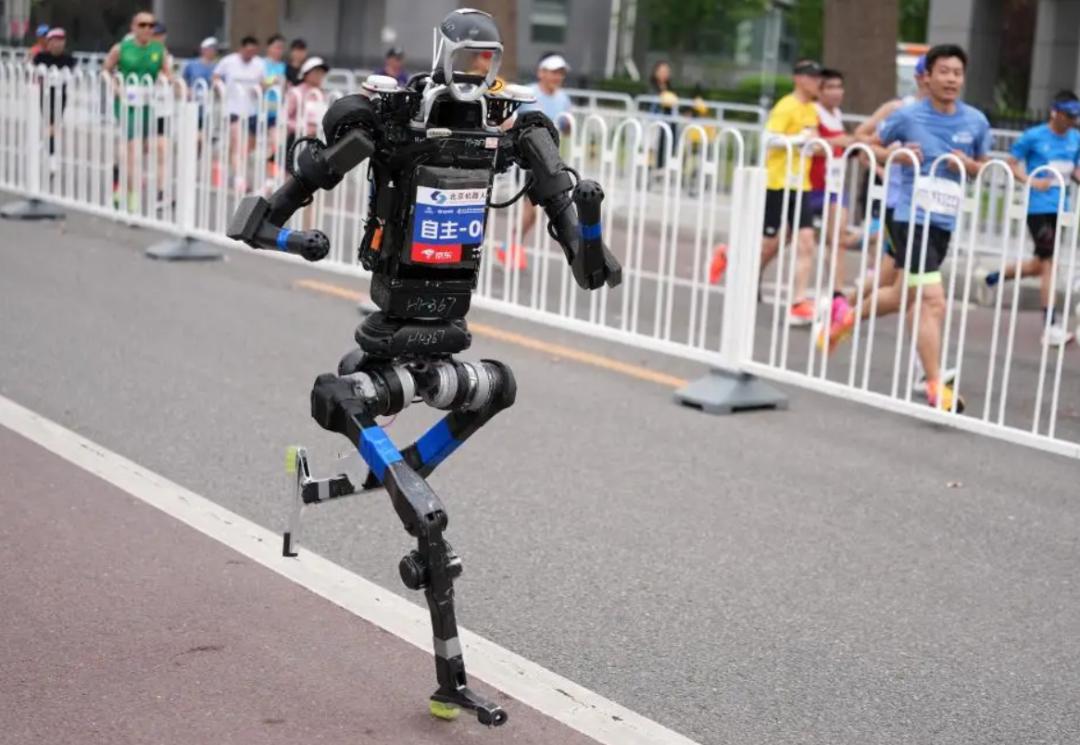
Image source: Internet
The problem is that the vast majority of this year's 38% "autonomous navigation participating teams" are still in a semi - autonomous state. The robot can walk autonomously on relatively stable straight roads, but when encountering complex terrains, slopes, or obstacles, it still needs the background staff to intervene at any time. Truly "not being managed from start to finish" is extremely rare in this year's competition.
The trajectory of technological progress is clear: in 2025, it was basically all remote control; in 2026, 38% was autonomous; in 2027, this figure is very likely to exceed 60%. The reason is that the core algorithms of the perception - planning - control link are updated generation by generation every few months, and the progress of computing chips makes real - time reasoning possible.
It can be predicted that in the next 12 to 18 months, semi - autonomy + human backup will become the mainstream; within 2 to 3 years, fully autonomous operation in closed parks and standardized tracks will change from a "highlight" to a "standard feature". The real difficulty lies not in the algorithm, but in the corner cases of edge scenarios - flooded roads, sudden changes in light, unexpected obstacles - these are the "last mile" of autonomous navigation.
Heat dissipation: A hard threshold easily underestimated
If the dilemma of autonomous navigation lies in the algorithm, then another problem magnified by those ice packs on the race track is more fundamental - heat dissipation.
A research report from Guohai Securities reveals the core contradiction of humanoid robot thermal management: when the robot is running, about 90% of the energy is ultimately converted into heat instead of doing work. This means that the joint motors with continuous output power of dozens or even hundreds of watts and the AI chips performing large - scale matrix operations continuously accumulate waste heat every second. If the heat cannot be discharged in time, the joints will overheat and reduce frequency, the dexterous hands will lose accuracy, and the battery management system will trigger a protective power cut.
How difficult is it specifically? Take the micro - joint of the dexterous hand as an example. The internal cavity gap is less than 2 millimeters, leaving almost no space for a fan or heat sink. It is the "ultimate test site" for the robot's heat dissipation design.
The most primitive and direct way to deal with it on the race track is to use ice packs and cooling aerosol sprays (compressed air, tetrafluoroethane, chloroethane, etc.) - physical heat absorption, simple and crude, but in essence, it is like "the robot has heatstroke, and humans cool it down" rather than the robot autonomously managing heat. This kind of passive external heat dissipation shows that the thermal management systems of most current commercial robots are still blank.
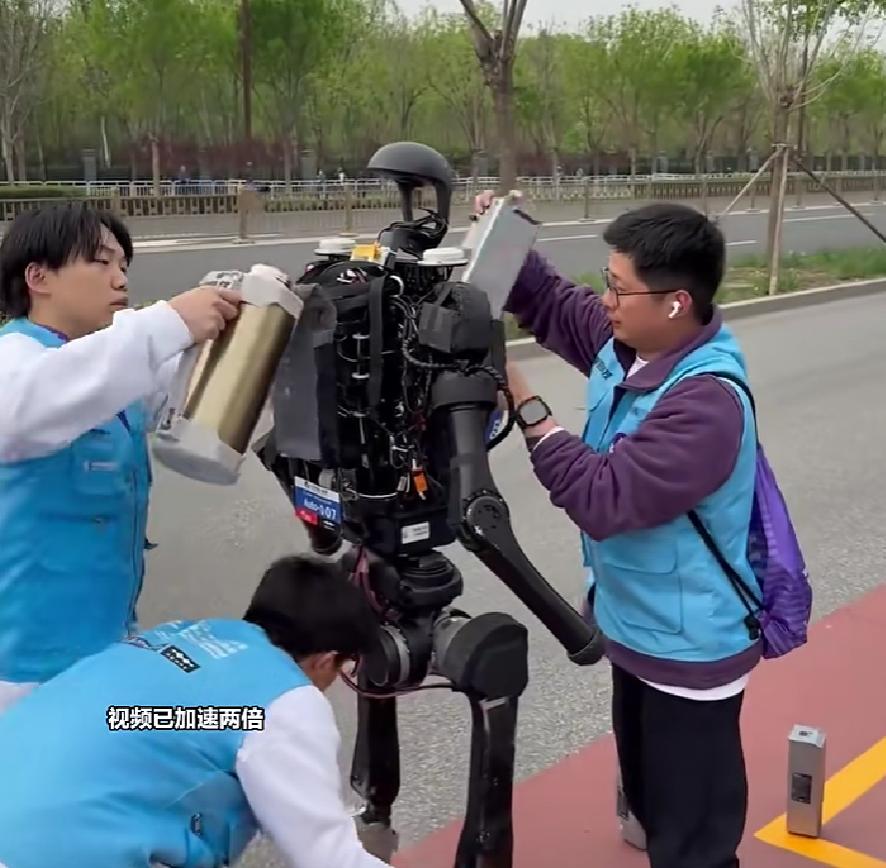
Image source: Internet
So, what is the real heat dissipation technology path?
The first way: Air cooling, the most economical but with a ceiling. Forced air cooling (forcing air circulation through a fan) can achieve 5 to 10 times the heat dissipation effect of natural heat dissipation. It has a simple structure and controllable cost, and is the choice for most current low - and medium - end humanoid robots. However, the disadvantages of air cooling are also obvious: it is noisy, takes up space, and is ineffective for internal joint heat dissipation.
The second way: Liquid cooling, which is becoming the mainstream for high - end models. Using coolant as the medium, it directly exchanges heat with the heating devices through the micro - channel cold plate, takes away the heat, and then discharges it to the outside through the radiator. In the mass - produced whole - machine products of leading manufacturers such as Unitree Technology and Zhipu Robotics, liquid cooling has begun to be applied on a large scale. Data from thermal management suppliers such as Sanhua Intelligent Control shows that the liquid - cooling module can control the temperature rise of the joint motor within 15 degrees Celsius, significantly better than air cooling.
The third way: Phase - change materials, the next step in passive heat dissipation. Phase - change materials (PCM) use the principle of absorbing a large amount of latent heat during the phase - state change (usually solid - liquid) of substances for heat dissipation - the temperature hardly rises, and the heat absorption capacity far exceeds that of ordinary heat - conducting materials. Since it does not require active components such as pumps and pipes, it is particularly suitable for dexterous hand joints with extremely limited space. It has already been maturely applied in the 3C electronics and aerospace fields, and the bottleneck for its migration to humanoid robots lies in cost and mass - production processes.
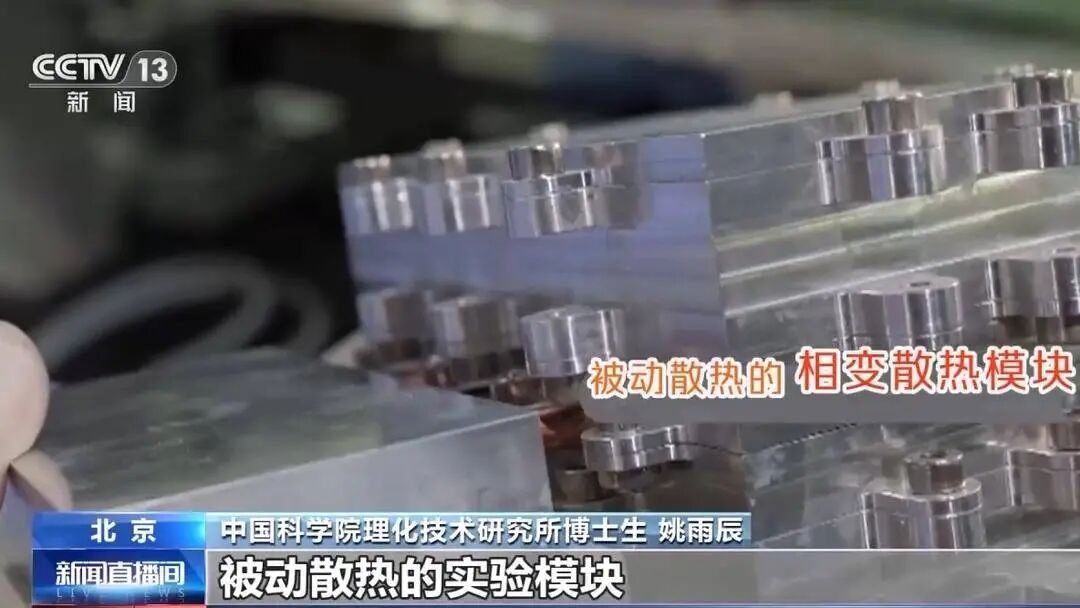
Image source: CCTV.com
The fourth way: "Electronic blood", the most radical full - system solution. Institutions such as Stanford University have proposed to build a liquid - cooling network similar to the human blood circulation inside the robot to cool the two main heat sources, the joint motor and the AI chip, simultaneously, and discharge the heat through the same radiator. This is a system - level path, not a single - point breakthrough, and requires the coordination of mechanical structure, fluid design, and thermal algorithms. The commercialization time is expected to be more than 5 years.
There is also an often - overlooked aspect: Thermal management is highly coupled with the robot's battery life. The battery discharge efficiency is greatly affected by temperature - both overheating and over - cooling can cause a significant reduction in the available capacity. A well - designed thermal management system can not only protect the joints and chips but also allow the battery to work in the optimal temperature range, thereby indirectly improving the effective battery life.
From an investment perspective, there are three directions in the directly - benefited industrial chain: thermal management suppliers for liquid - cooling circulation systems (pumps, valves, cold plates), material manufacturers for high - thermal - conductivity interface materials (silicone grease, gel, phase - change materials), and body manufacturers for integrated joints (integrated design of motors, reducers, and heat - dissipation structures).
Back to the question: Are robots ready?
On the half - marathon track, a detail is quite meaningful: the champion "Lightning" didn't use ice packs throughout the race, and its liquid - cooling + high - power joint solution withstood 21 kilometers of continuous high - load operation. However, a considerable number of robots using ice packs either withdrew from the race midway or needed frequent breaks.
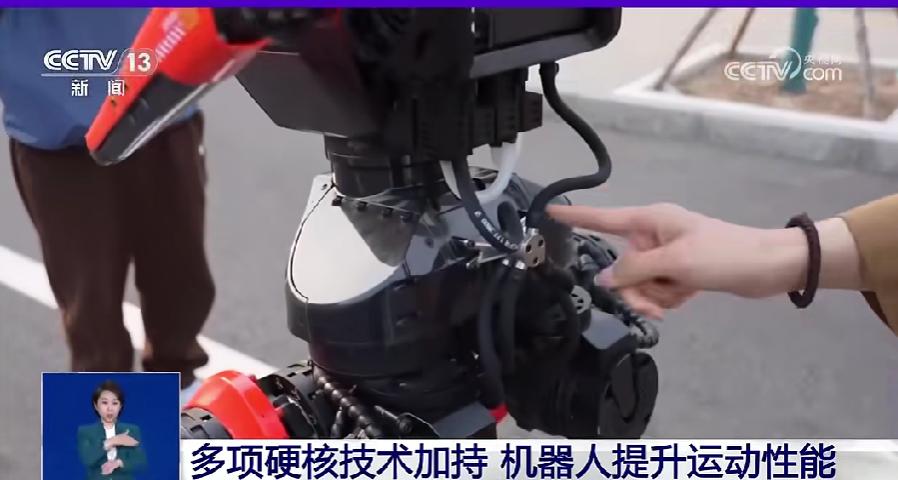
Image source: CCTV.com
This comparison itself is part of the answer: There is already a generational gap between robots.
Leading players (Honor, Unitree, Zhipu, etc.) have taken the lead in breakthroughs in hardware thermal management and high - power joints, while followers are still using the most primitive physical cooling methods to solve problems. This means that the Matthew effect in the humanoid robot field may come faster than expected.
But what's more worthy of attention is another thing: the half - marathon champion "Lightning" completed the race in 50 minutes and 26 seconds, but the Honor team behind it used an entire team of engineers for support just to prepare it for this race.
The robot outran humans on the track, but off the track, it still needs full - time logistical support from humans.
This is the real position of humanoid robots at present: the demo stage is basically over, and the engineering stage has just begun. There is still a considerable distance from "being able to run" to "being able to run autonomously", and from "running with human care" to "running unattended". The heat - dissipation problem is just the most obvious one among these difficulties.
50 minutes and 26 seconds is a milestone. But turning it into a robot that can really work in factories, warehouses, and homes requires crossing a much greater distance than a half - marathon.
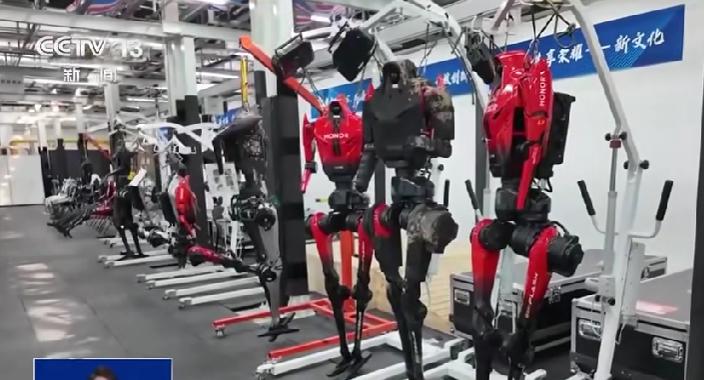
Image source: CCTV.com
This article is from the WeChat official account “Chief Business Review” (ID: CHReview), written by Wei Ming, and is published by 36Kr with authorization.