From "taking baby steps" to "surpassing humans", what are the highlights of this half-marathon?
One year later, the half - marathon for humanoid robots kicked off again in Yizhuang, Beijing.
In last year's inaugural event, only 6 robots from 20 participating teams successfully completed the race. The champion, Tiangong Ultra, crossed the finish line in 2 hours, 40 minutes and 42 seconds. At that time, seeing the robots staggering and frequently falling on the track, many netizens joked: "This is not a marathon at all. It's clearly a baby walker competition."
One year later, at 7:30 a.m. on April 19th, the 2026 Beijing Yizhuang Half - Marathon and the Humanoid Robot Half - Marathon were held as scheduled. More than 300 humanoid robots from over 100 teams representing 26 brands, along with 12,000 human runners, took to the 21.0975 - kilometer track. The scale of the event expanded nearly fivefold compared to last year. There were more than 20 university teams, and for the first time, 5 international teams from countries such as France, Germany, and Brazil participated.
The robot contestants, who were "learning to walk" last year, presented an astonishing result this year: The champion's time not only significantly refreshed the event record but also surpassed the world record for the men's half - marathon by humans.
If last year's competition was a "technical assessment," then this year's competition is a complete "technical explosion."
What happened in this year from 2 hours and 40 minutes to 50 minutes and 26 seconds?
Last year, Tiangong Ultra won the championship with a time of 2 hours, 40 minutes and 42 seconds. The last - finishing team among the 6 completing teams took nearly 5 hours. This year, the self - navigating robot "Lightning" from the Monkey King Team of Honor won the championship, reducing the time to 50 minutes and 26 seconds (net time).
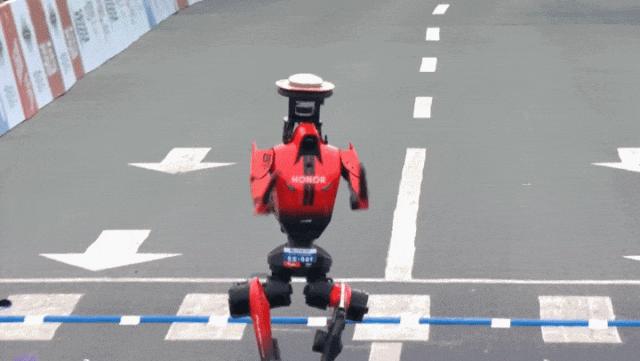
The self - navigating robot "Lightning"
Comparing with the human world record: In March 2026, Ugandan star Kipruto set a new men's half - marathon world record of 57 minutes and 20 seconds in the Lisbon Half - Marathon. That means the champion robot "Lightning" this year was nearly 7 minutes faster than the human world record.
However, there is a detail to note about this "surpassing."
This year's competition had two modes: self - navigation and remote control. The results of the two categories were calculated with weighting coefficients of 1.0 and 1.2 respectively. The net time in the self - navigation mode was directly counted, while the time in the remote - control mode was multiplied by a weighting coefficient of 1.2. The original intention of this rule design was to encourage the development of the more difficult self - navigation technology.
Therefore, an interesting scene occurred on the actual track: Although the remotely - controlled robot "Lightning" from Honor crossed the finish line first in 48 minutes and 19 seconds, after weighting, its final result was behind that of the self - navigating "Lightning" robot.
In the sprint dimension, Unitree Technology announced that its H1 robot (2023 revised version) independently completed a more than 1.9 - kilometer winding track in 4 minutes and 13 seconds. Calculated proportionally, it broke the human 1500 - meter world record. This means that the Unitree H1 can reach a peak speed of 10 meters per second, approaching the human limit of 10.44 meters per second set by Bolt.
The person - in - charge of the Beijing Humanoid Innovation Center said after the competition: "The championship records were refreshed by Honor and Unitree. This is exactly the manifestation of the 'group gold medal' of China's embodied intelligence industry. A diverse development is more meaningful than a monopoly."
More than 300 robots from 26 brands compete on the same stage
Compared with last year's "minority report," this year's participating lineup can be described as "stars shining brightly."
In terms of the number of brands, 26 mainstream robot brands participated in this event, covering leading enterprises such as the Beijing Humanoid Robot Innovation Center, Honor, Unitree, Songyan Power, and Acceleration Evolution, as well as universities and research institutions such as Tsinghua University, Peking University, and the University of Science and Technology of China. The robots brought by these teams have their own characteristics, ranging from speed - oriented racing types to interaction - oriented types emphasizing anthropomorphic gaits, with a quite rich variety.
Next, let's take a look at these "contestants" on - site brand by brand.
01. Honor: Took the top six places and won big in its first participation
As the biggest dark horse in this event, Honor, which participated for the first time, sent 10 teams with two self - developed humanoid robots - "Lightning" and "Yuanqizai". Among them, 6 "Lightning" robots took the top six places in the event.
"Lightning" is 169 cm tall, focusing on speed and explosive power. It is equipped with a self - developed high - dynamic motion system, with an effective leg length of 0.95 meters and a single - joint peak torque of up to 400 N·m. To deal with the heat dissipation problem during long - time running, it is equipped with a high - power liquid pump on its back, achieving a heat - exchange flow of more than 4 liters per minute.
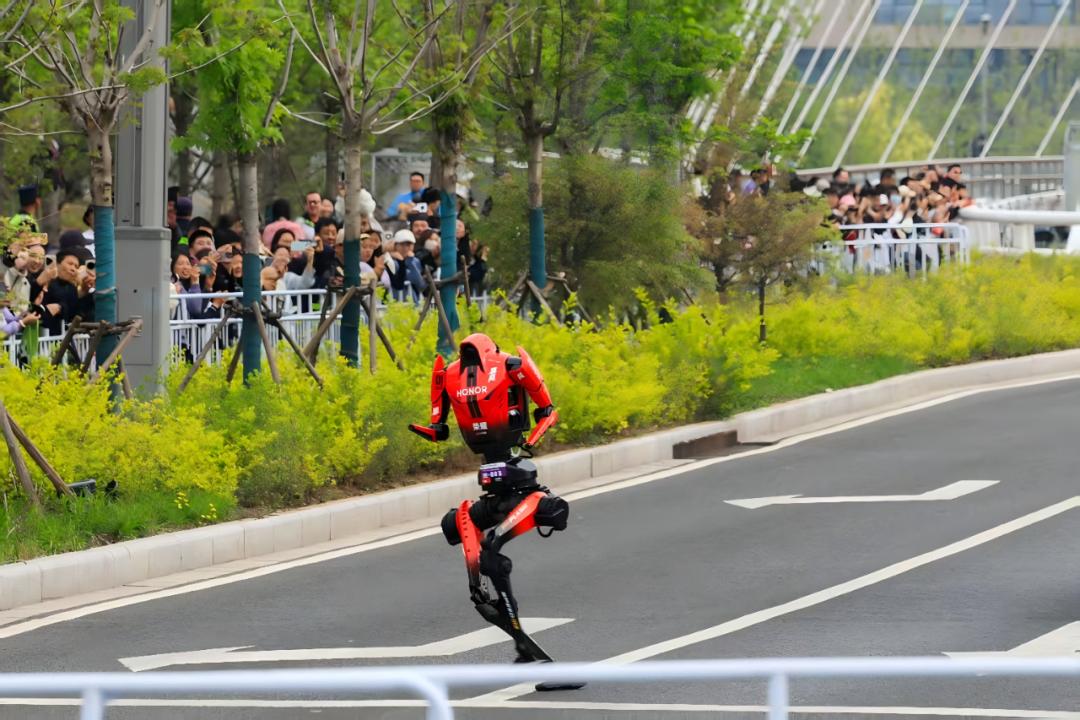
Honor's "Lightning"
The other robot, "Yuanqizai", is 136.9 cm tall and focuses more on interactive companionship. Its running posture, including arm - swinging and stride, completely replicates the human motion posture, competing for the "Best Anthropomorphic Gait" award in the event.
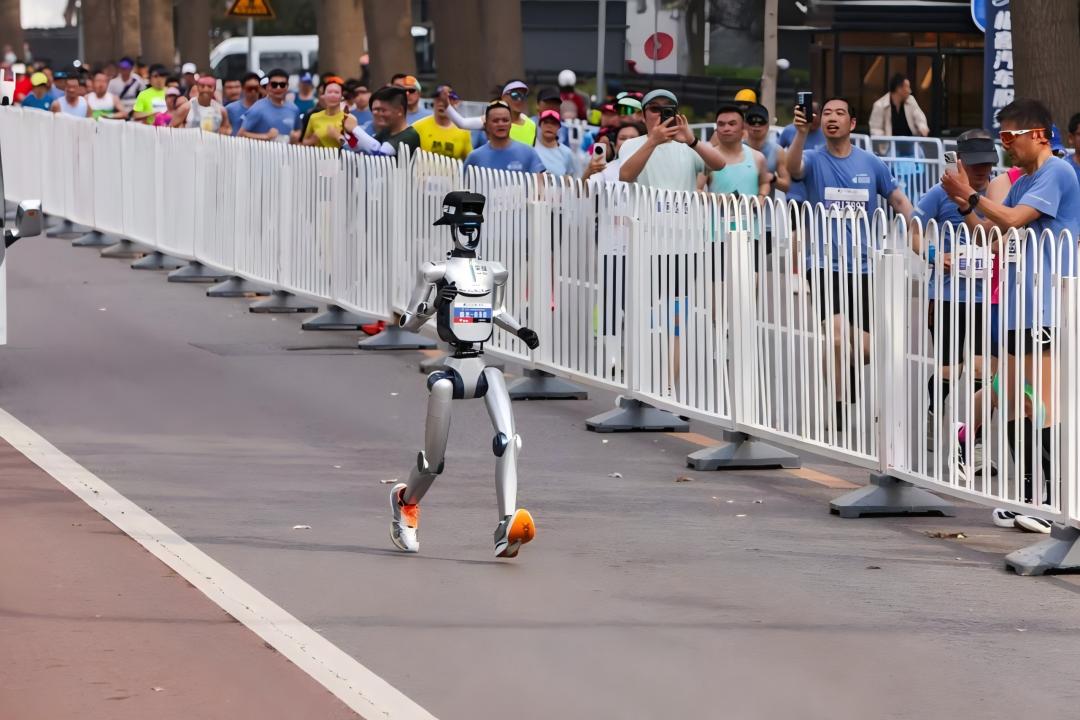
Honor's "Yuanqizai"
02. Unitree Technology: Participated for the first time with amazing speed but faced setbacks on the track
Unitree Technology, which sent its official teams to participate in the event for the first time this year, brought a fine - tuned version of its H1 humanoid robot. Unitree sent three official teams from Beijing, Shanghai, and Hangzhou.
In the pre - race tests, the Unitree H1 showed amazing speed potential. In the qualifying race on April 16th, it independently completed a more than 1.9 - kilometer winding track in 4 minutes and 13 seconds. Calculated proportionally, it had broken the human 1500 - meter world record. Unitree also said that the H1 had recently reached a speed of 10 m/s, approaching Bolt's human limit speed of 10.44 meters per second.
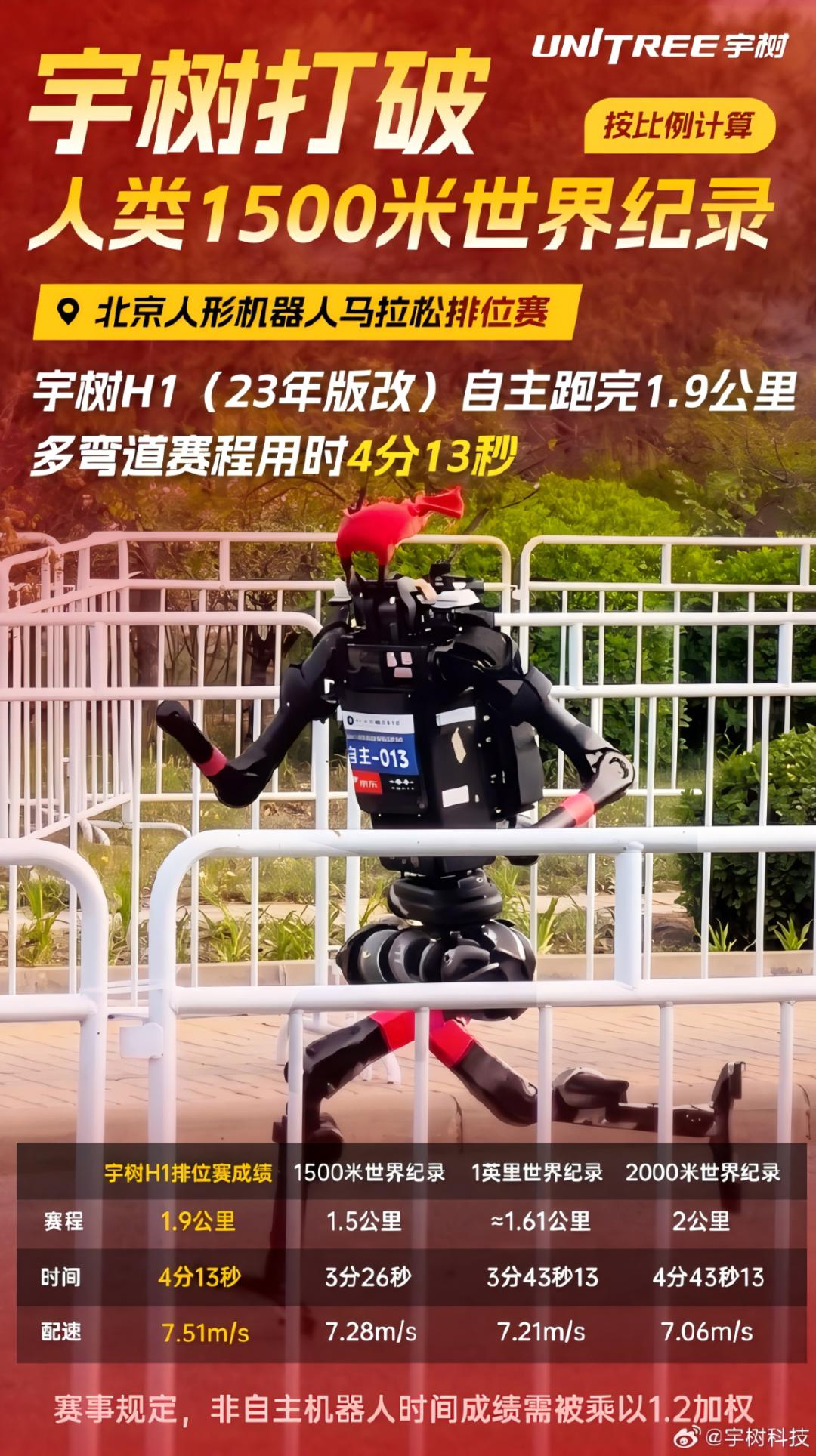
However, in the actual official race, the performance of the Unitree H1 was a bit bumpy. Videos circulating online showed that it fell within seconds after starting the race after battery replacement, with its head hitting the ground and debris scattered. According to CCTV News, its energy - replenishment process required three people to operate simultaneously: one to replace the battery, one to load ice to cool the chips, and one to spray coolant on the joints. The whole process took about 30 - 40 seconds.
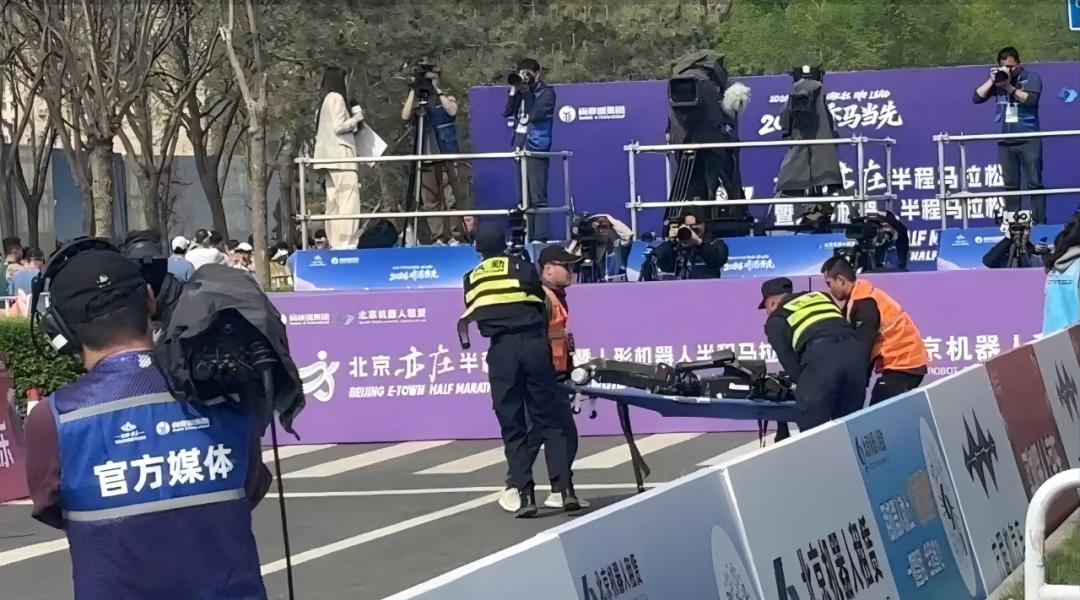
Unitree H1
03. Tiantong Series: Failed to defend the title but had a high degree of autonomy
The Beijing Humanoid Robot Innovation Center (Beichuang), which won the championship last year, sent 3 Tiantong Ultra robots to participate in the event in a fully autonomous mode this year. Although they didn't make it into the top three, the Tiantong Ultra robots completed the whole race stably in a fully autonomous mode without any human intervention, with a final time of 1 hour and 15 minutes. This was a significant reduction of 1 hour and 25 minutes compared to the humanoid robot half - marathon record (2 hours, 40 minutes and 42 seconds) it set last year.
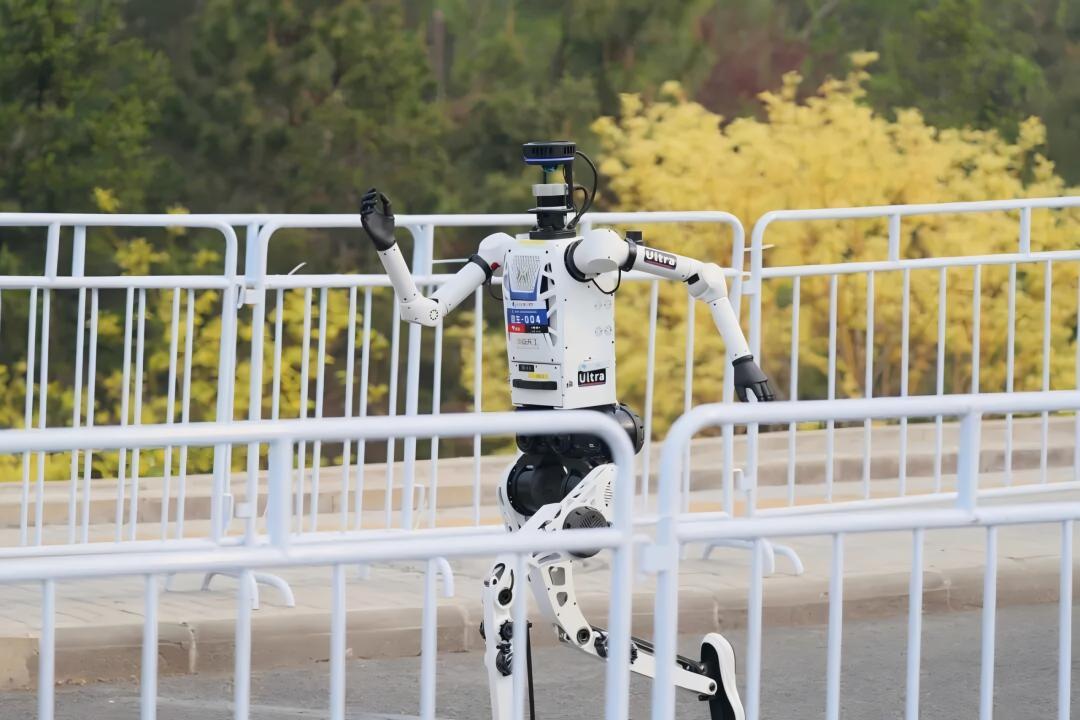
Tiantong Ultra
The significance of this result is that the Tiantong Ultra is one of the robots with the highest degree of autonomy among the participating teams, requiring no human intervention throughout the race. It is also equipped with a self - developed 400N·m high - torque integrated joint and a liquid - cooling heat - dissipation system, showing no performance degradation due to overheating during the whole race.
04. National - Local Center (Linglong 2.0): Participated for the first time with three teams in three directions
The National - Local Joint Humanoid Robot Innovation Center from Shanghai (referred to as the "National - Local Center") participated in the event for the first time this year, sending three teams: the National - Local Leaping Team, the National - Local Exploration Team, and the National - Local Expedition Team. The participating model is the Linglong 2.0, which is designed for general light - load scenarios. It has excellent dynamic balance and whole - body coordination control capabilities and is also equipped with a high - performance computing module.
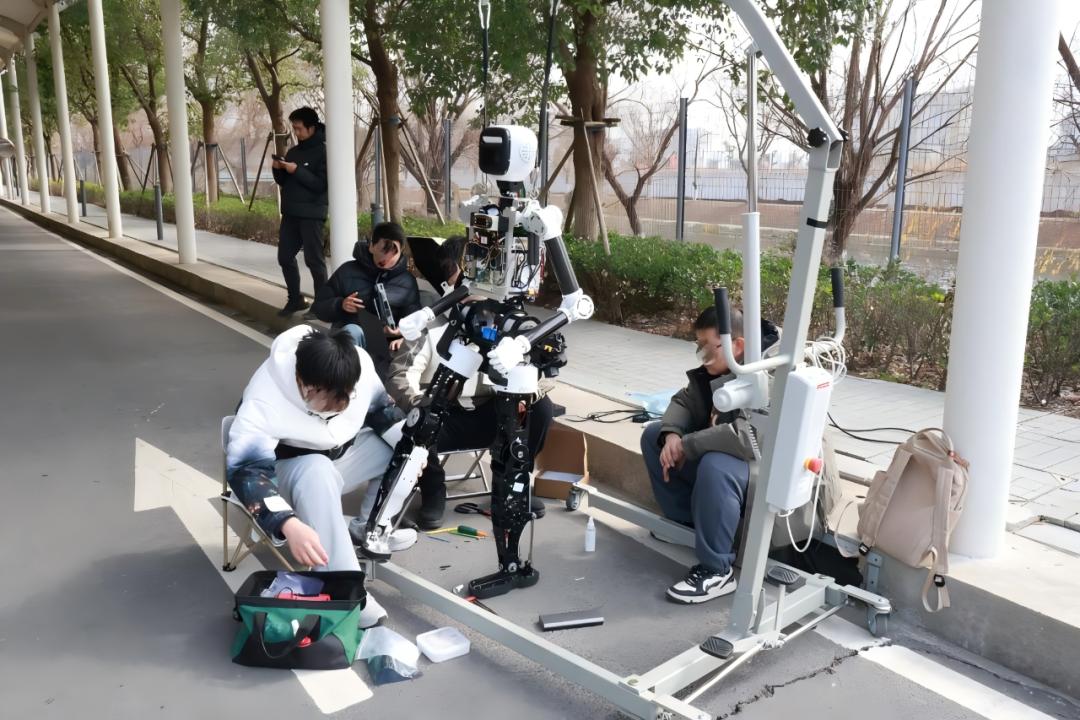
The National - Local Leaping Team is debugging the humanoid robot
The three teams conducted technical verifications in three directions: high - dynamic motion ability, stability in complex environments, and long - distance autonomous operation ability, showing different technical routes.
05. Tsinghua, Peking, and USTC: The strength of universities should not be underestimated
In addition to enterprise teams, the scientific research strength of universities was also an important participant in this event. Universities such as Tsinghua University, Peking University, and the University of Science and Technology of China all sent their robot teams. Although these university teams may not directly compete with leading enterprises in terms of speed, they showed solid scientific research capabilities in aspects such as self - navigation algorithms, gait control, and hardware design.
06. International Teams: Teams from France, Germany, and Brazil participated for the first time
This year, the event attracted 5 international teams from countries such as France, Germany, and Brazil for the first time. Although the finishing results of these teams did not rank among the top, the participation of international forces marks that this event is moving from a domestic technical competition to a global arena.
07. AutoNavi: The debut of the "four - legged dog"
It is worth mentioning that AutoNavi also made an appearance in this event. On - site, AutoNavi's four - legged robot "Tutu" independently guided a visually impaired college student to complete urban - road - level challenges such as dynamic and static obstacle avoidance, passing through narrow passages, and avoiding sudden disturbances without human intervention.
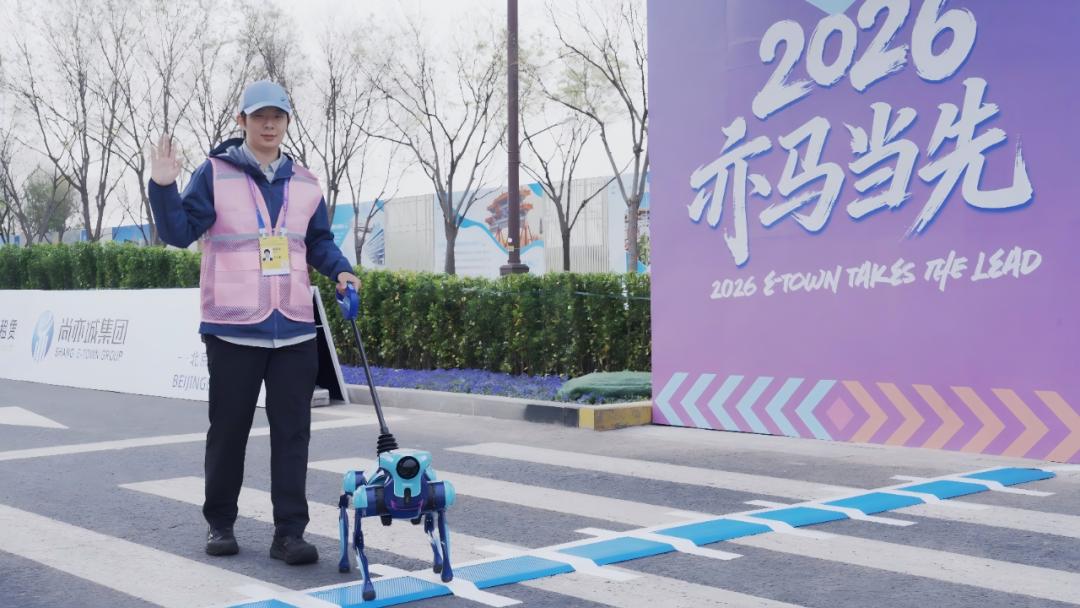
AutoNavi's four - legged robot "Tutu"
"Tutu" is the first embodied intelligence hardware entity under the Alibaba Group. Its appearance marks that China's embodied intelligence track has entered the ecological construction period of "large enterprises entering the market" from the pioneering period of "geek entrepreneurship."
08. There were not only runners but also robot "service officers" on the track
At the track refreshment stations, Xinghaitu brought its R1 Pro and R1 Lite robots, acting as "robot service officers." There were 4 refreshment stations along the race route, and all were staffed by Xinghaitu robots. They provided services such as handing out water, towels, and supplies to the participating runners in a fully autonomous and non - remote - controlled way throughout the race.
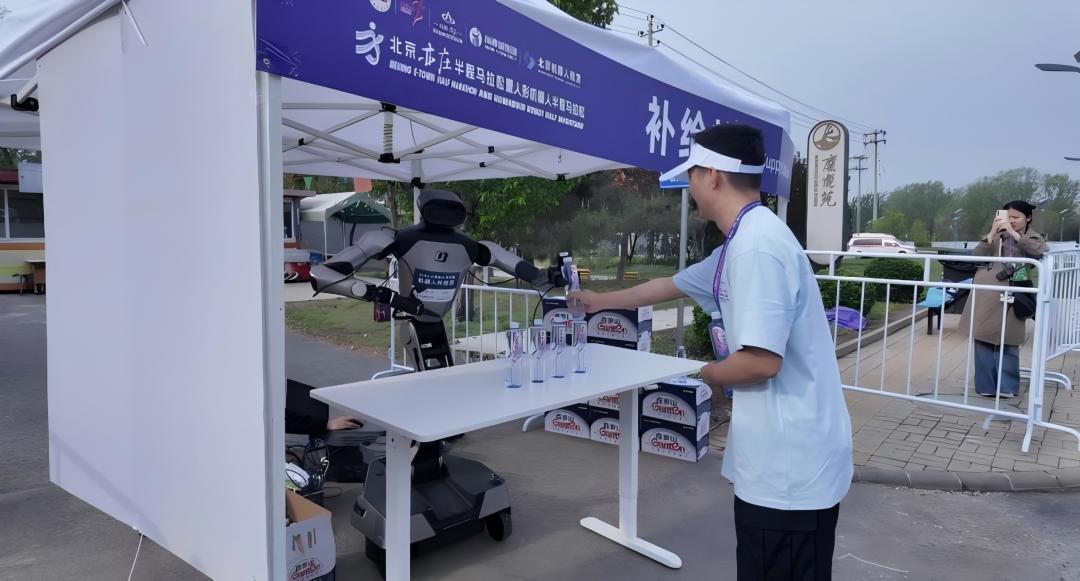
Xinghaitu acting as "robot service officers"
Zhang Yujia, the marketing director of Xinghaitu, said: "This is our first time participating in the robot marathon as robot service officers. The biggest difficulty is to let the robots interact in real - world scenarios, which is quite different from laboratory scenarios. Therefore, we collected a lot of data to ensure that the robots can work stably in complex outdoor scenarios."
A marathon reflects the collective leap of China's embodied intelligence
In just one year, China's humanoid robot industry presented a result far beyond expectations.
Liang Liang, the deputy secretary - general of the China Electronics Society, compared this event to a "technical verification," which is equivalent to setting up a "college entrance examination" for humanoid robots to enter the real world.