Suddenly becoming stronger, with the speed quadrupled, GPT Pro has shown "divine-level" operations, and netizens suspect that GPT-5.5 is already in place.
Just now, a group of ChatGPT Pro users were in an uproar on social media:
They found that their Pro model was “abnormally” good.
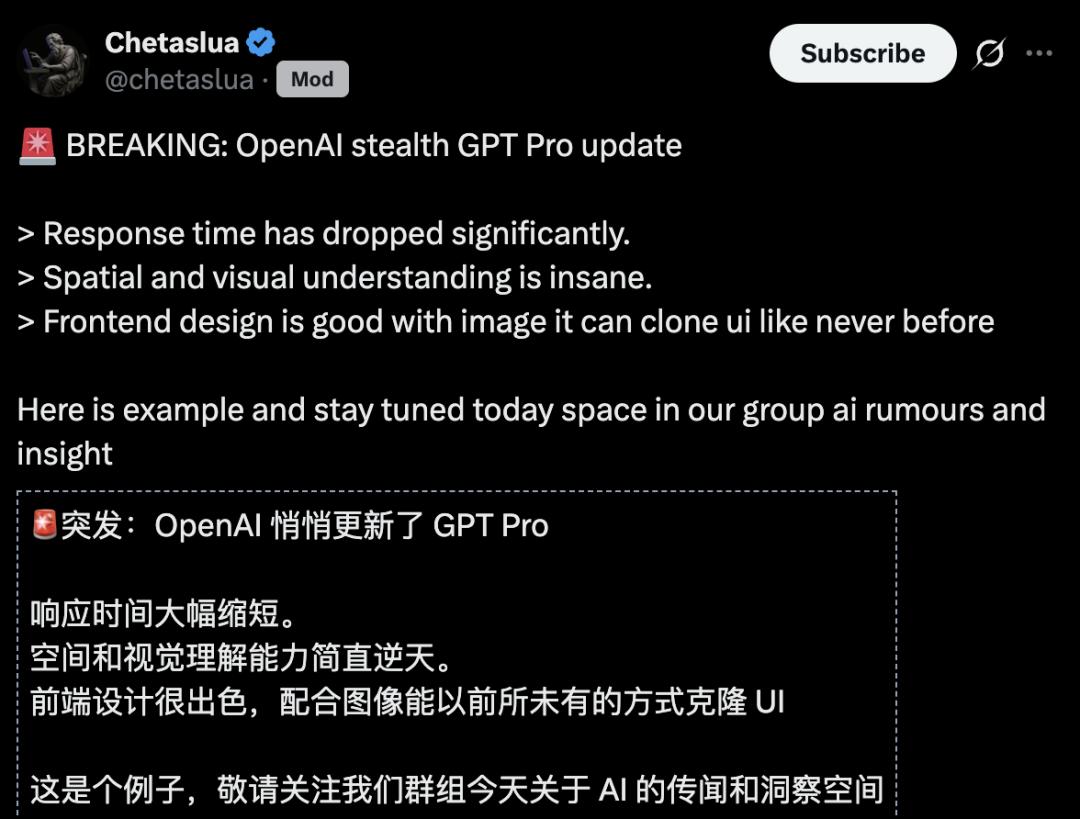
There were no push notifications, no official press conferences, and no “Altman slump”.
Just like that, OpenAI quietly completed an upgrade that might change the competitive landscape.
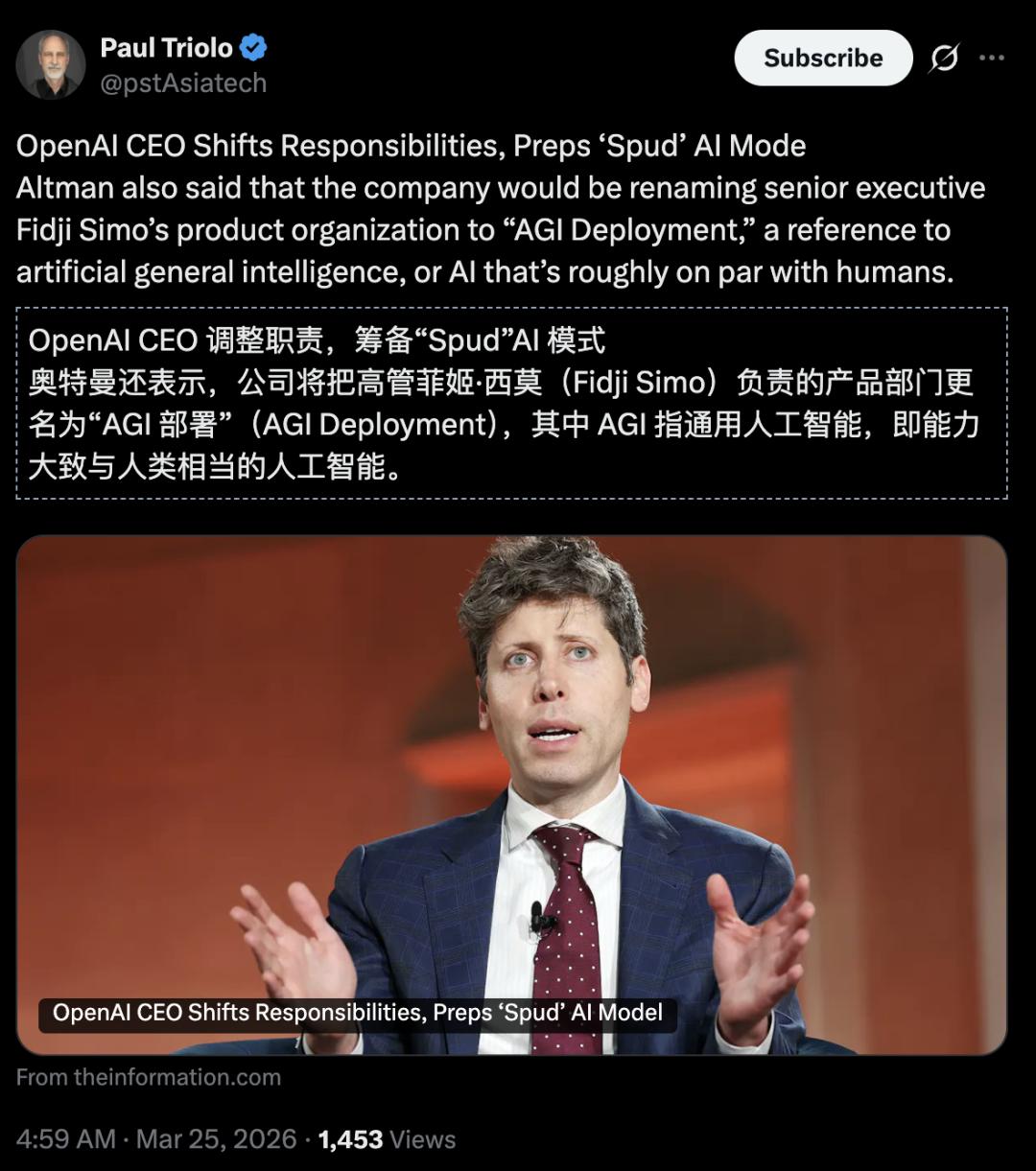
Meanwhile, the next-generation model GPT-5.5, codenamed “Spud” (potato), completed pre-training on March 24. Altman personally confirmed that it was “only a few weeks away” from release.
The community is full of speculations that “GPT-5.5 is already running in the background.”
These signals, when combined, point to a clear conclusion: OpenAI is entering a new stage of “silent acceleration”, speaking with tangible performance superiority.
A Silent Revolution: Not Just About “Speed”
For daily users of large language models, response speed is the key to the experience.
Even if the model is extremely intelligent, if users have to wait a minute for each response, the smoothness of “conversing with AI” will be completely lost.

OpenAI's efforts in speed optimization are actually traceable.
At the beginning of the year, in the API update log, they quietly wrote a line:
We have optimized the inference infrastructure, and now GPT-5.2 and GPT-5.2-Codex run about 40% faster.
No changes were made to the model or model weights.
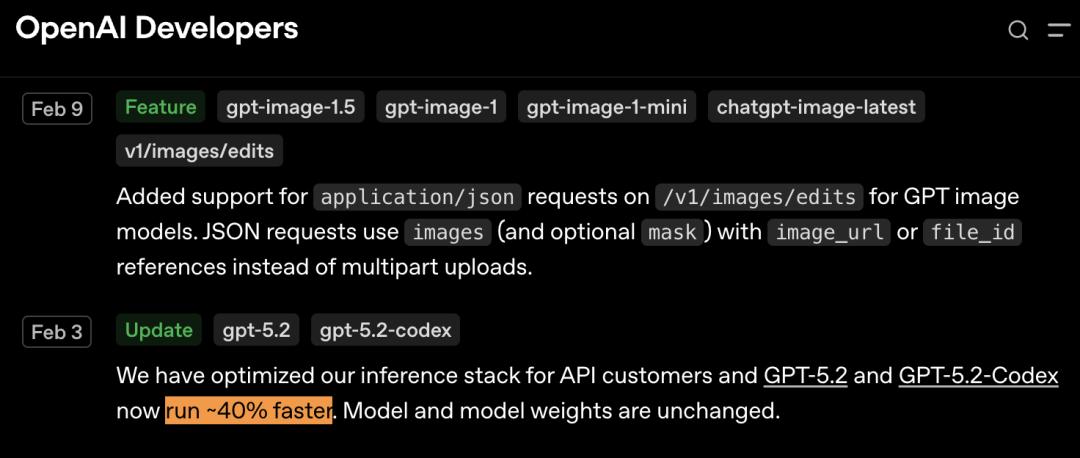
Without releasing a new model or making a big fuss - just pure underlying engineering optimization - they achieved a 40% reduction in latency.
For GPT-5.4, the speed improvement is even built into the model architecture.
OpenAI emphasizes that GPT-5.4 can solve the same problems with fewer tokens.
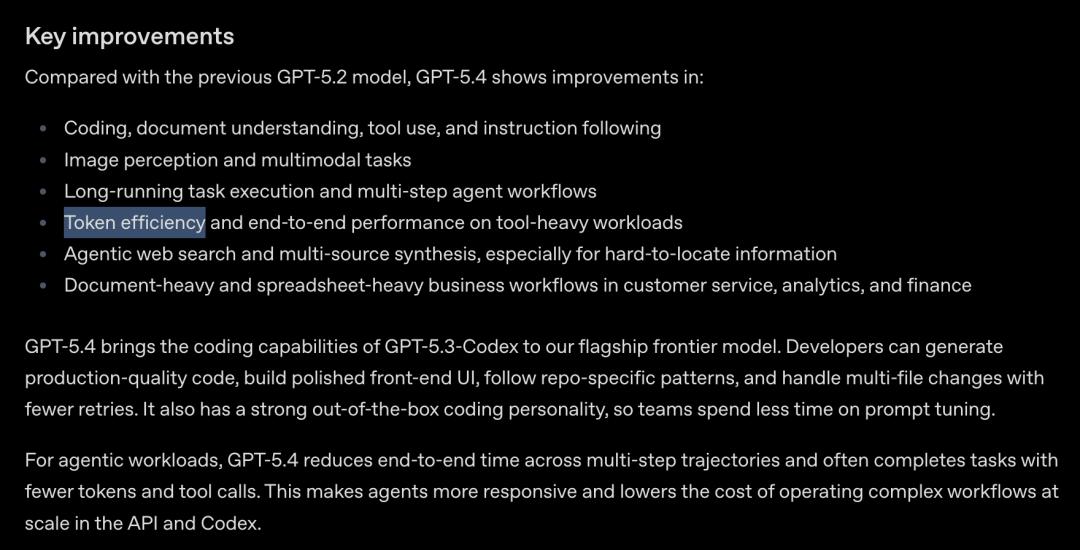
This means not only lower latency for the first word but also a decrease in overall generation cost.
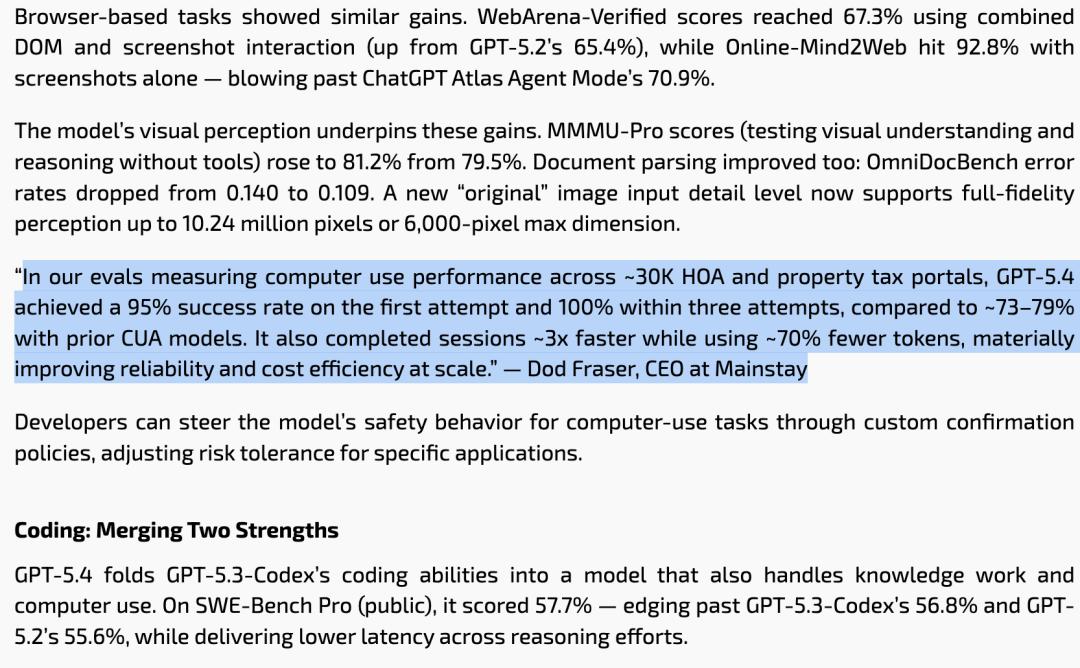
In a computer performance evaluation of about 30,000 HOA and property tax portals, Dod Fraser, the co-founder and CEO of Mainstay, said that
GPT-5.4 achieved a 95% success rate on the first attempt,
reached 100% within three attempts,
was about three times faster than the previous CUA model,
used about 70% fewer tokens,
and significantly improved reliability and cost efficiency in large-scale deployment.
This is not just about “running faster”.
When a model can generate higher-quality content with less computing resources in a shorter time, its practical value undergoes a qualitative change.
In scenarios such as long-form writing, multi-round conversations, and code debugging, users no longer need to make a painful choice between “depth of thinking” and “waiting time”.
Mastering Visual Understanding: From Describing Pictures to Cloning UIs
If the speed improvement is a “quantitative change”, then GPT-5.4's performance in visual and spatial understanding is approaching the threshold of a “qualitative change”.
On March 22, OpenAI specifically released a developer guide - “Designing Delightful Frontends with GPT-5.4”, devoting a whole long article to introducing the model's capabilities in the field of front-end design.
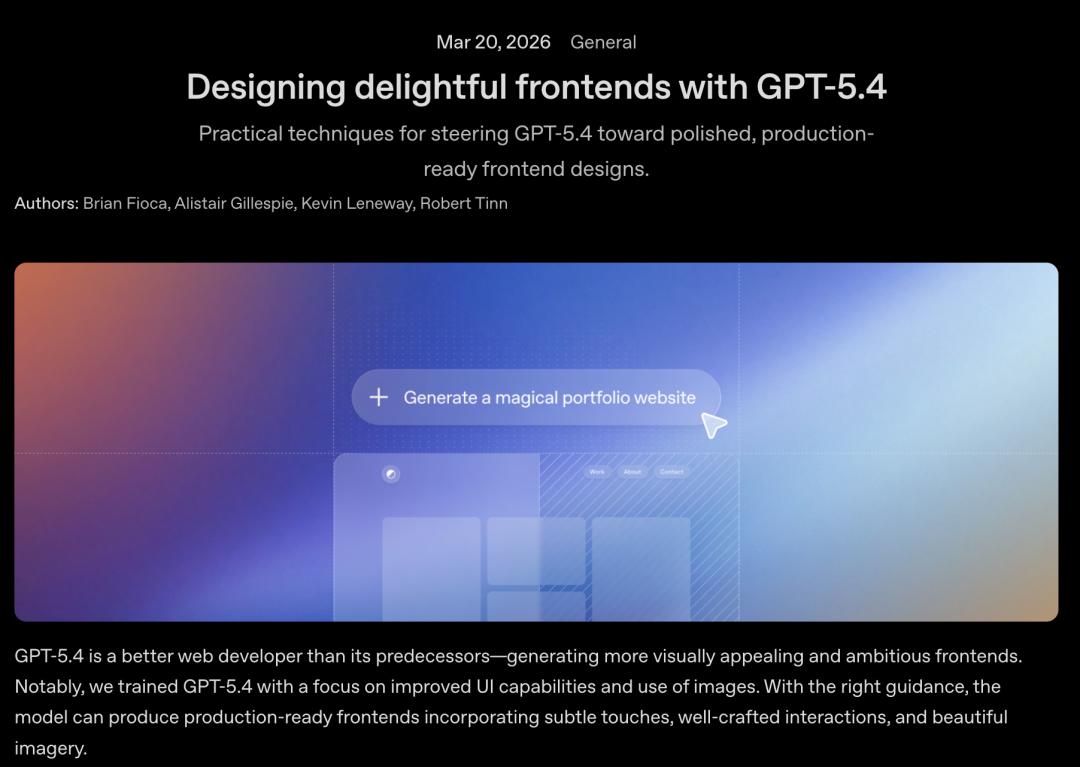
According to the guide, GPT-5.4 is OpenAI's first mainline model specifically trained and optimized for UI capabilities and image understanding.
It can generate more aesthetically pleasing front-end interfaces:

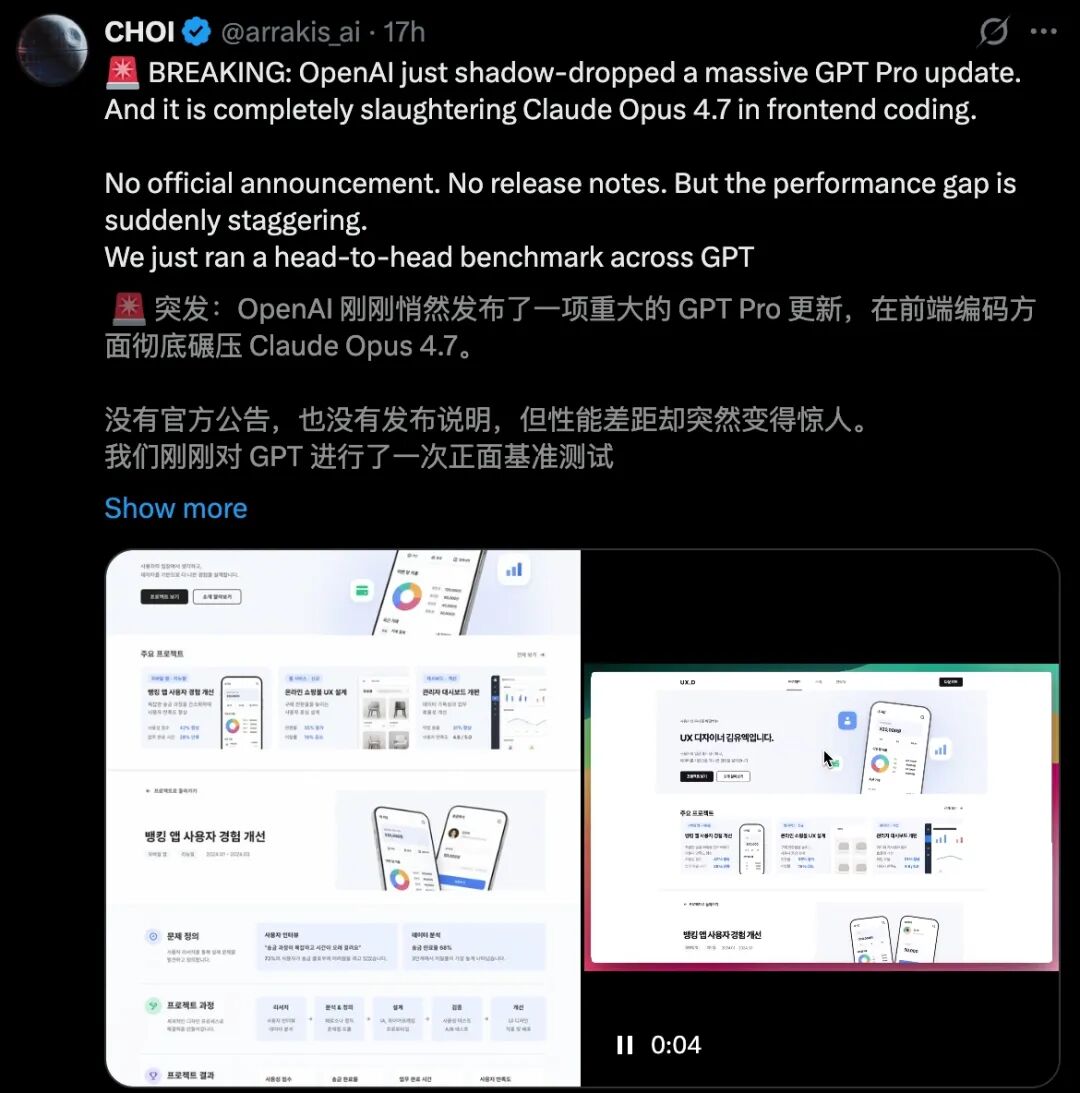
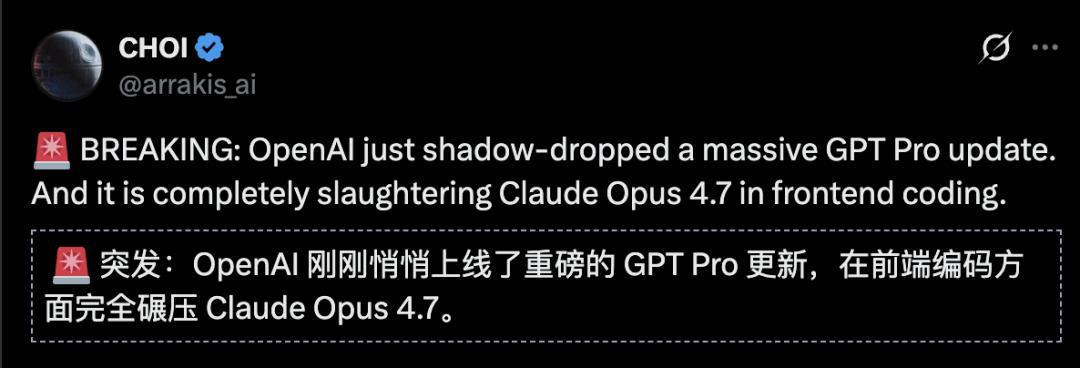
In addition, it can clone existing UIs with extremely high precision from screenshots. Some netizens even think that the latest update of GPT Pro outperforms Claude Opus 4.7 in front-end coding.
In tests, when clearly instructed to make the coded UI “100% identical” to the reference image, GPT Pro not only wrote better CSS but also engaged in “loophole exploitation” behavior.

The model doesn't need to laboriously write complex graphic resource codes. Instead, it automatically crops precise UI elements from the provided reference image and injects them into the code.

This is a lazy shortcut and an excellent, human-like interpretation of the instruction to “copy exactly”.
This proves that the model is dynamically evaluating the most efficient way to meet the prompt constraints.
Imagine the synergistic effects that will occur in the workflow when this new state-of-the-art front-end capability is fully integrated with GPT-IMAGE-2 and Codex.
Naturally, it's also possible to directly generate code from text without any reference images.
In just 11 minutes, GPT Pro generated a masterpiece in voxel art style of “a pelican riding a bicycle”, which made netizens can't help but praise!
Prompt : create a voxel art of A Pelican riding a bicycle. Create the scene in as much detail as possible, think about every tiny little detail on the main build, but also on the surroundings in one html code block , code it so well that it will show how better you are from everything else , i gave you full creative freedom take benefit of it
In SVG generation, the updated GPT Pro can generate correct and complex SVGs in one go, with clearer structures and higher visual accuracy:
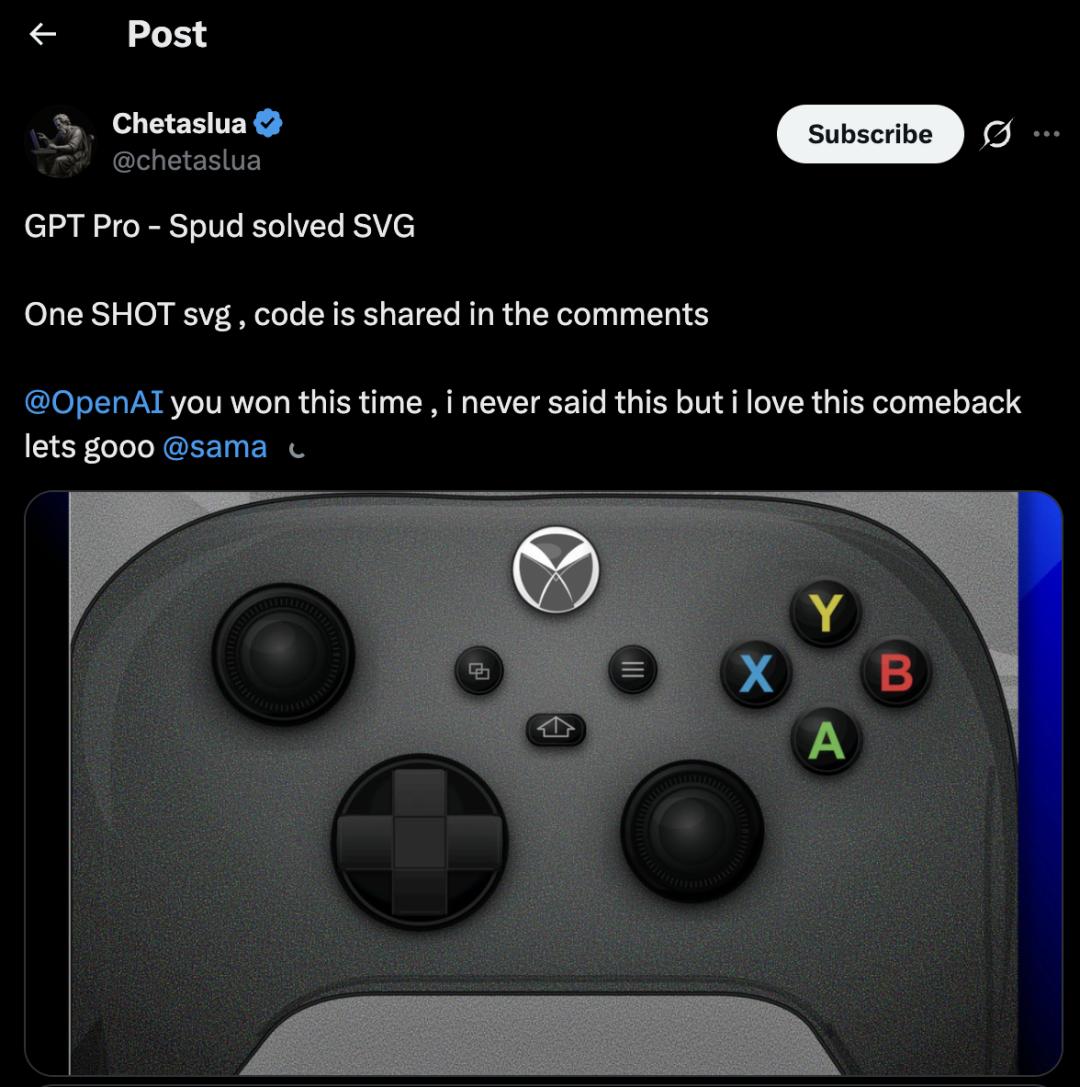
The restoration degree from image to code by GPT Pro has been significantly improved.
In tests where the model needs to regenerate the user interface based on an image:
The output is closer to the original design
There are fewer visual deviations
The handling of details and spacing is more excellent
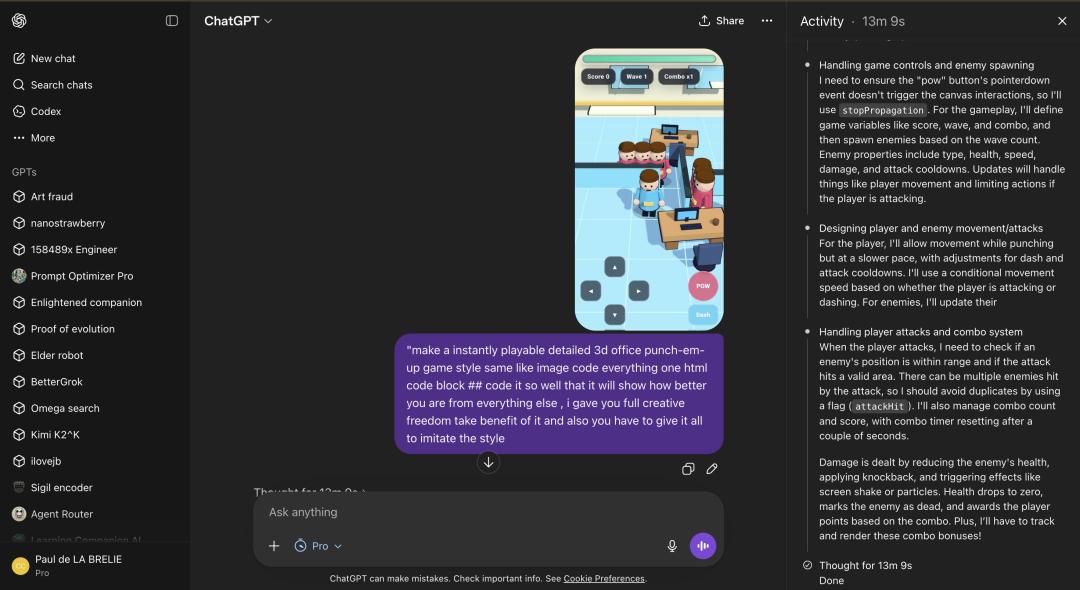

The 3D generation results are no longer simple basic shapes. After the upgrade, the output of GPT Pro is more detailed and has a richer structure.
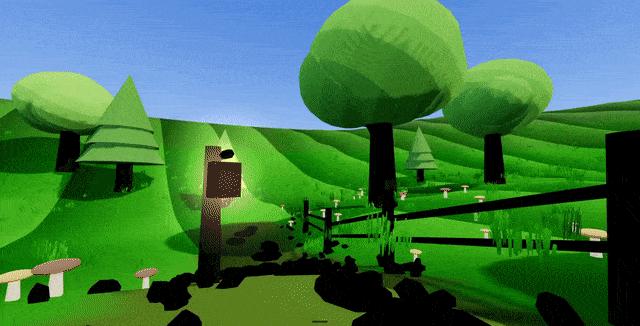
The Shadow of GPT-5.5, Codenamed “Spud”, Is on the Way
Currently, the latest available models in ChatGPT are still GPT-5.3 Instant, GPT-5.4 Thinking, and GPT-5.4 Pro.
However, the output of GPT 5.4 Pro has suddenly become faster and better, providing an unprecedentedly good experience, which makes people wonder if GPT 5.5 is secretly being tested behind GPT 5.4 Pro?
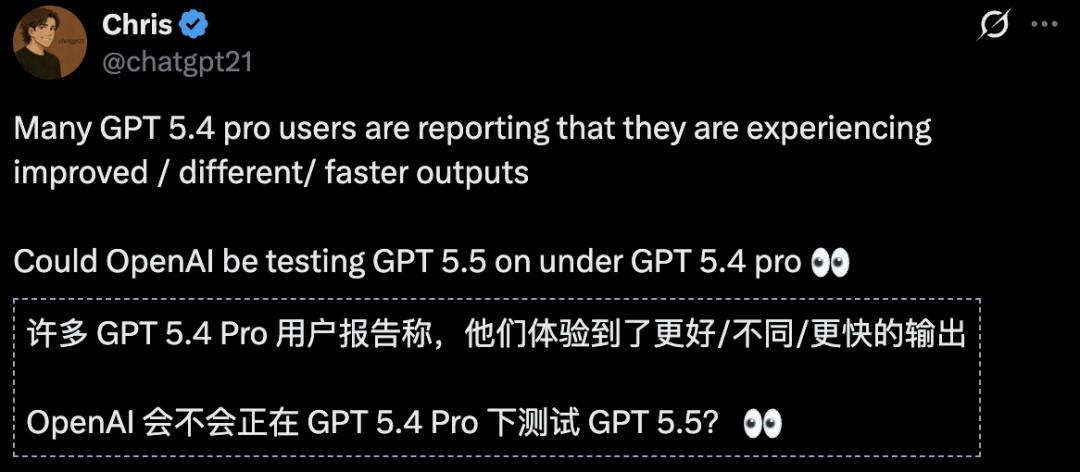
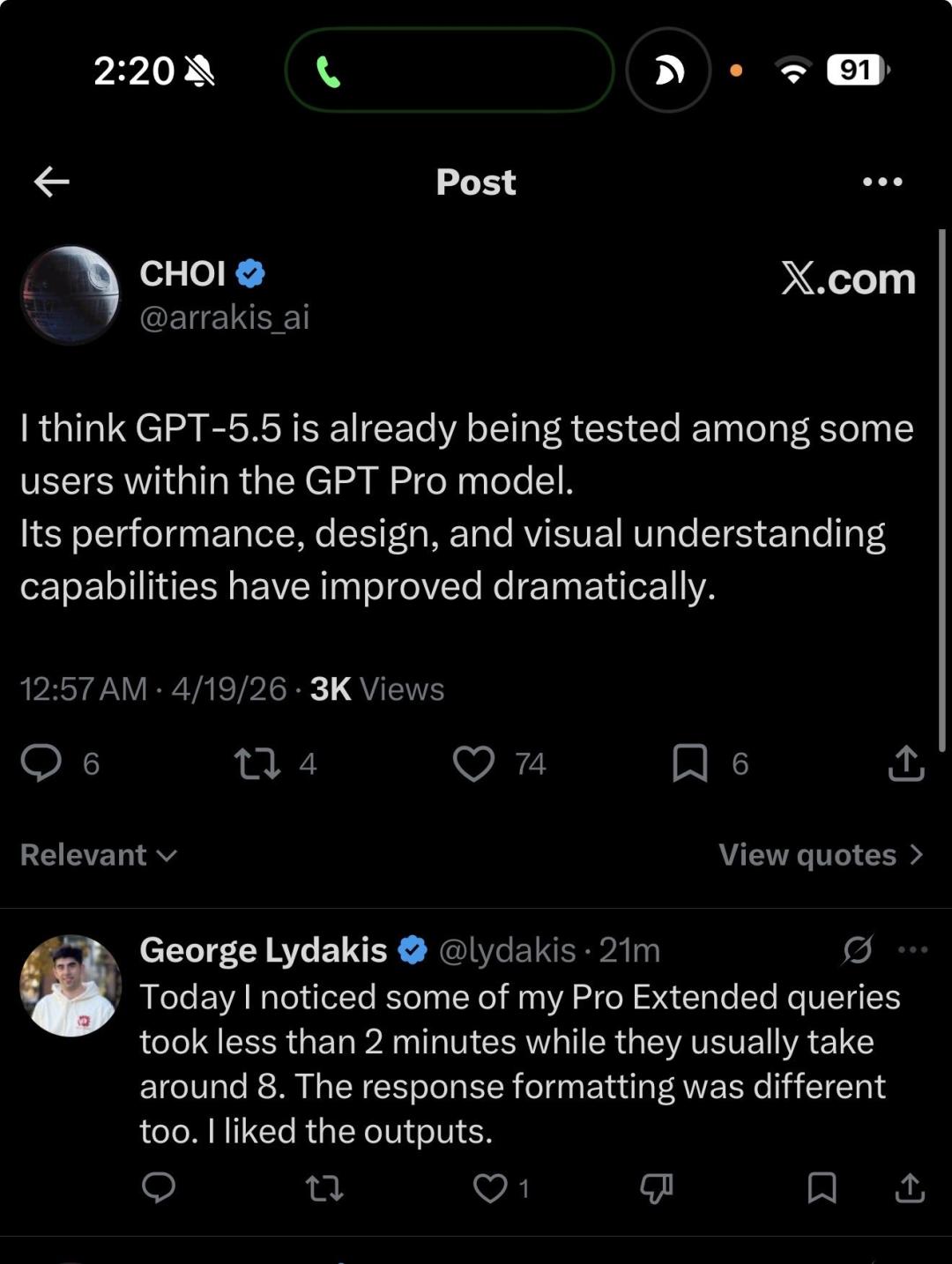
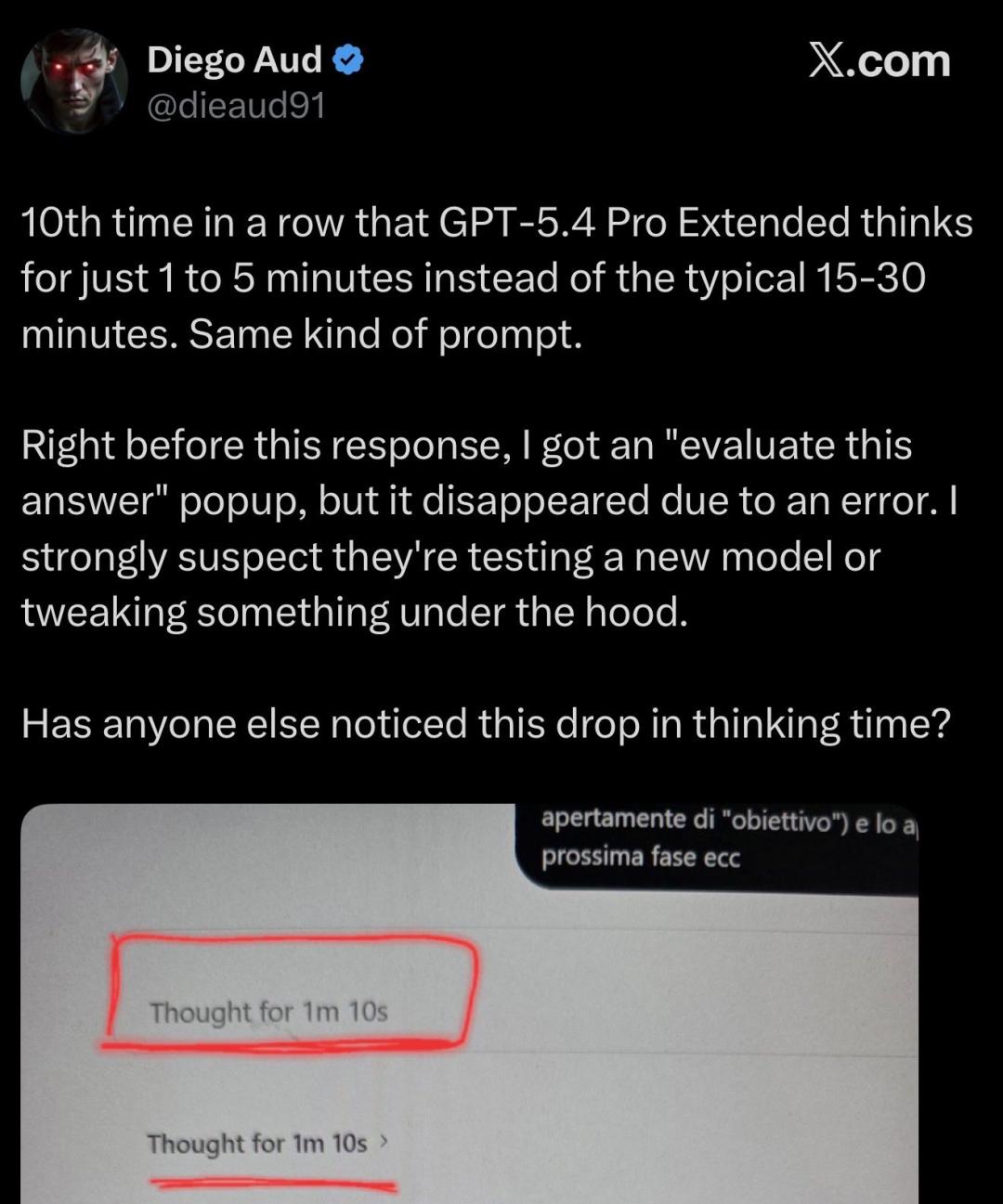
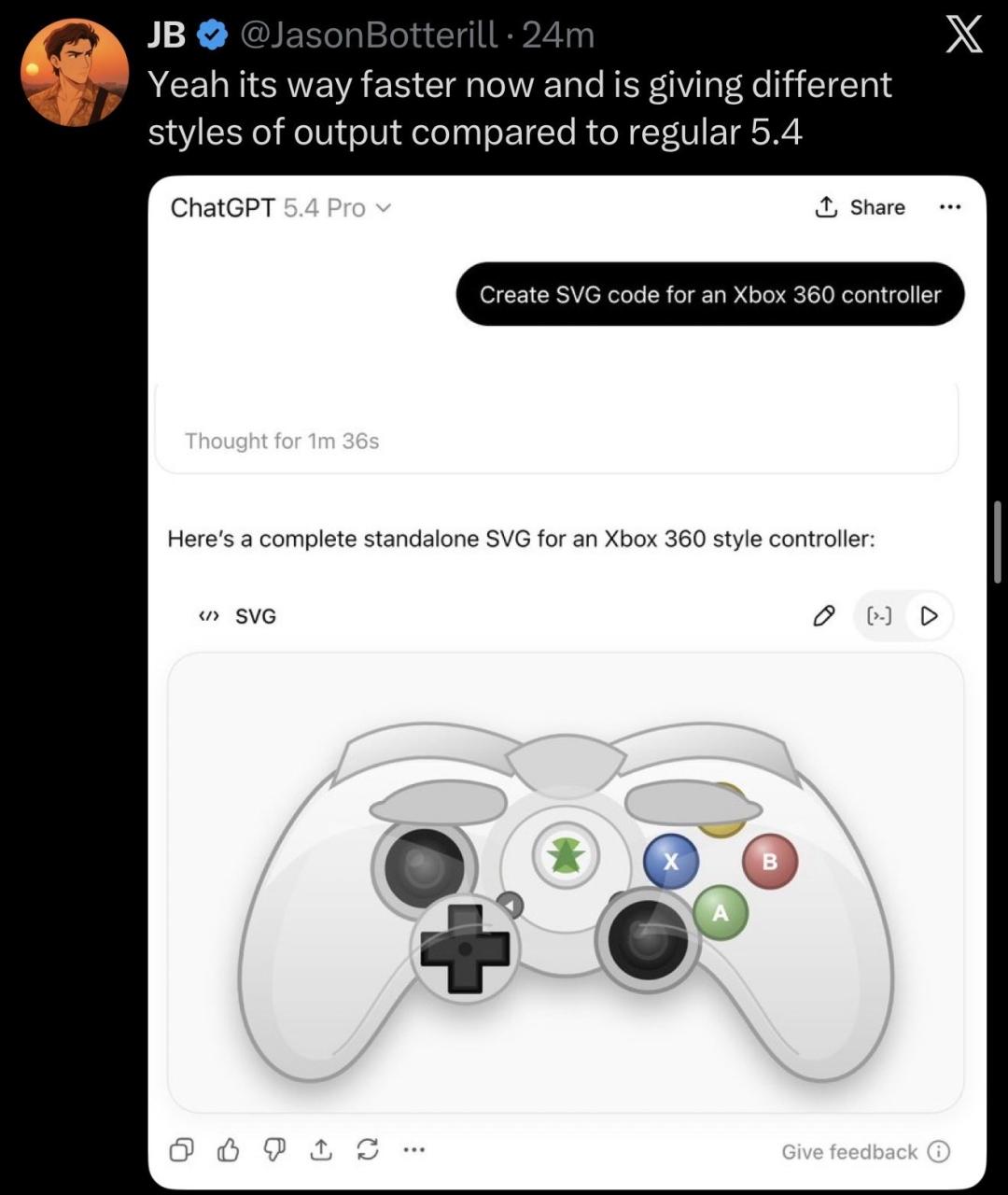
The secret upgrade of GPT 5.4 Pro doesn't seem like a minor adjustment at all. It seems more like version 5.5, “Spud”.
