Exclusive Interview with Li Xiangdong, an AI Expert at Honor: The Direction of Edge AI Has Not Converged Yet, but AI Phones Are the Best Carriers
Text by | Qiu Xiaofen
Edited by | Su Jianxun
In 2026, AI is accelerating its transition from the cloud to the edge. Recently, both model manufacturers and mobile phone manufacturers have been making efforts behind the scenes.
In late March, several major domestic mobile phone manufacturers almost simultaneously pushed large - scale updates for edge - side AI, extending the AI capabilities originally limited to flagship phones to the mid - range and budget phone markets. Since then, edge - side AI has finally become a standard feature of most smartphones.
At the beginning of April, Google released the open - source model Gemma 4 series, which significantly reduced the threshold for edge - side AI deployment through architectural innovation, allowing AI capabilities to truly penetrate into edge scenarios such as mobile phones and IoT devices for the first time.
Although there are various explorations of the implementation directions of edge - side AI in the current industry, the only consensus among the many non - consensuses is that AI phones remain the best implementation form of edge - side AI in the short term.
Previously, in 2025, in the global AI wave, Honor initiated a transformation, shifting from a smartphone manufacturer to an AI terminal ecosystem company, and planned to invest 10 billion US dollars in the AI field over five years.
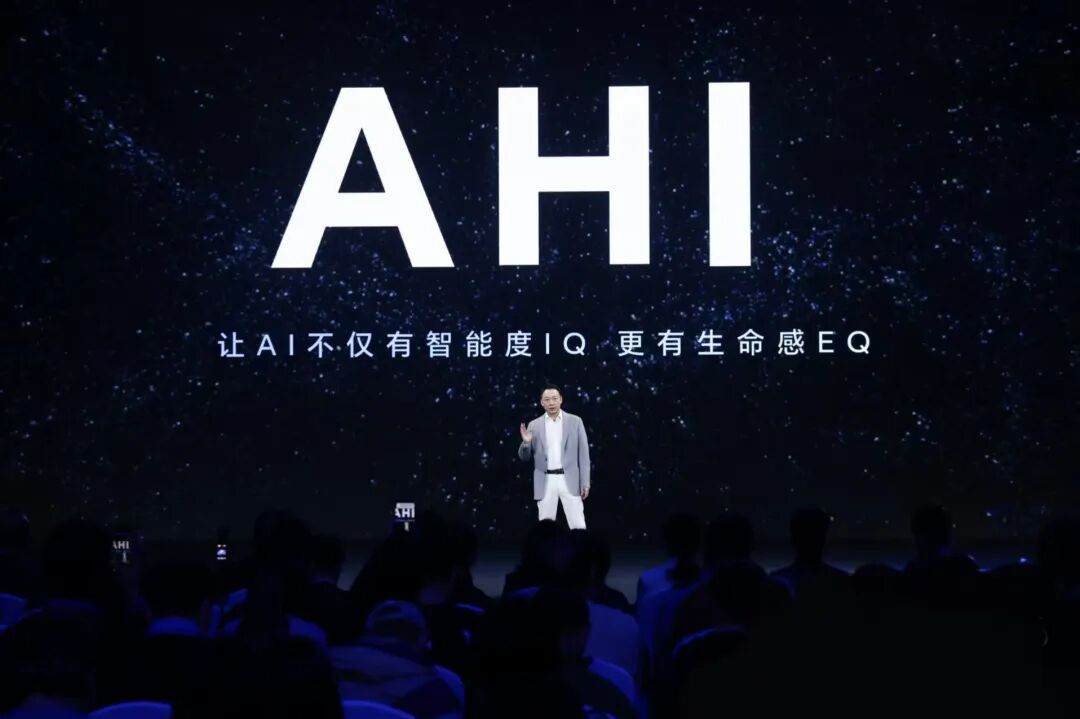
Honor AHI Strategy
In the past explorations, Honor has gradually built its own AI approach. On the operating system side, Honor released the native and self - evolving AI intelligent agent operating system, MagicOS. On the AI Agent product side, Honor launched the core carrier, YOYO Intelligent Agent. Features such as "YOYO Suggestions", "One - sentence Taxi Booking", and "One - sentence Shopping Price Comparison" are all characteristic AI functions on Honor phones.
The urgency of transformation is also reflected in the organizational management level. In 2025, Honor restructured its organizational structure in R & D, established an AI & Software department, integrated teams such as the operating system, AI products, and Internet products, and further built Honor's core AI competitiveness.
If you experience Honor's latest flagship phone, Magic V6, you can find that the experience of AI phones has undergone a fundamental change.
In the past, AI on mobile phones was mostly a painless "Q&A" function. However, on the Honor Magic V6, the phone is gradually evolving towards productivity. For example, the "AI Meeting Advisor" function can remind users before the meeting, implement AI hosting during the meeting, and generate structured meeting minutes and to - do lists with one click after the meeting. On the "AI Document Intelligent Agent", users can also achieve "Photo - to - Document" and "Edit as You Take Photos".
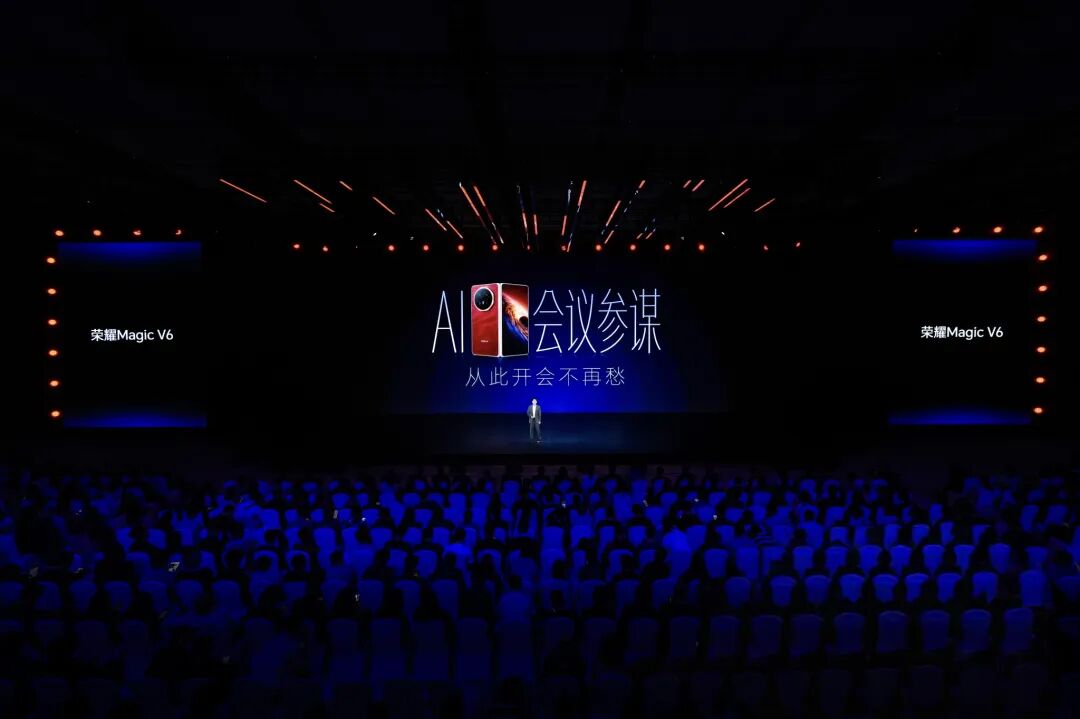
AI Meeting Advisor
Li Xiangdong, an AI product expert of Honor MagicOS, analyzed for "Intelligent Emergence" that this reflects three iterative directions for future AI phones.
First, AI phones will support Agent automatic execution, which is equivalent to having "hands" and "feet". At the same time, as the most frequently used hardware terminal by users, AI phones will also have a dedicated knowledge base and memory system, achieving the effect of "the more you use it, the better it understands you". In the future, AI phones are likely to be personalized for each user. In addition, future AI phones will also support multi - modal interaction, extending from voice and text in the past to video, photos, and even embodied intelligence.
In Li Xiangdong's view, the iteration of future AI phones will also bring about a subversive change, such as the human - machine interaction mode and even the reconstruction of the traffic distribution logic on mobile phones in the past.
Recently, "Intelligent Emergence" had a conversation with Li Xiangdong about his understanding of AI phones and edge - side AI, as well as Honor's thinking on AI. The following is the transcript of the conversation (slightly edited):
AI Phones Will Reconstruct Everything
"Intelligent Emergence": In general, what do you think will be the biggest difference between future AI phones and current phones?
Li Xiangdong: There are three fundamental changes. First, the more you use it, the better it understands you. The phone will provide users with highly personalized services, and AI phones will be personalized for each user.
Second, the human - machine interaction paradigm will change from "humans adapting to GUI" to "the system actively serving humans". For example, our current "YOYO Suggestions" will provide full - process proactive reminders for your flight journey, which is the prototype of proactive service.
Finally, future AI phones will have powerful automatic execution capabilities. AI can act like a secretary, understand complex and cascading user needs, break down task workflows, and automatically complete tasks. Users only need to make choices or provide feedback.
"Intelligent Emergence": Many manufacturers are also secretly deploying AI phones this year. What are the key trends worth noting in this industry in 2026?
Li Xiangdong: First is intelligent agents and automatic execution. Agent capabilities will be deeply integrated with mobile phone scenarios.
Second, global memory will also be emphasized on AI phones. The phone will provide personalized services based on global long - context memory, achieving the effect of "the more you use it, the better it understands you".
Finally, multi - modal interaction. On AI phones, there will be a combination of visual, voice, and text interactive services. For example, Honor recently released the HONOR Robot Phone, which can "see what you see and hear what you hear", provide accompanying explanations, and generate summaries, representing the future direction of multi - modality.
"Intelligent Emergence": In the direction of automatic execution, will mobile phone manufacturers face difficulties in promotion, since a large amount of user data is stored in various apps?
Li Xiangdong: This is indeed an ecological issue. However, objectively speaking, terminal manufacturers have an advantage over app manufacturers and large - model manufacturers. App manufacturers only know users' habits within their own apps, and large - model manufacturers can only understand user needs when users are using their services. However, terminal manufacturers can understand users across apps and throughout the day.
We are also promoting strategic cooperation with large - scale app manufacturers. Our common goal is to provide users with a better experience while protecting user privacy and achieve business win - win results.
"Intelligent Emergence": But will future AI phones reshape the existing traffic distribution logic in mobile phones?
Li Xiangdong: There is no doubt about it. The current business model involves app manufacturers, large - model manufacturers, and terminal manufacturers, each leveraging their strengths and competing, which is relatively stable.
However, with the development of AI, especially the advancement of AI automatic execution and proactive service centered on user intentions, it will reshape the original business model and traffic distribution. All parties will eventually reach a new balance, and the reshaping process requires exploration and adaptation among all parties.
"Intelligent Emergence": After the emergence of intelligent agents, many manufacturers are exploring AI phones, such as model manufacturers, Internet manufacturers, and mobile phone manufacturers. What do you think are the respective advantages and disadvantages of manufacturers with different backgrounds in this direction?
Li Xiangdong: The advantages of model manufacturers lie in their large - model base capabilities, computing power, and inference technology. However, they may lack understanding and investment in hardware and accumulation in the terminal consumer industry.
The advantages of terminal manufacturers lie in their in - depth understanding of terminal consumers, a large number of accumulated users, the ability of software - hardware integration, and mature experience in consumer product operation. However, they cannot fully focus on the R & D of the base model like large - model manufacturers.
Each party has its own strengths and focuses of investment. They will also integrate and cooperate based on their own advantages to serve users better.
A Mobile Phone Manufacturer's AI Determination
"Intelligent Emergence": Honor has been continuously investing in AI. If we were to summarize, how many stages can it be divided into?
Li Xiangdong: Honor's in - depth exploration of AI can be traced back to the birth of the first - generation Magic series smartphones and the Magic Live intelligent engine in 2016. By 2020, Honor entered the core exploration stage of AI.
From 2020 to 2023, we were in the stage of overall platform - level AI deployment and AI strategic layout. At that time, we released platform - level AI based on MagicOS 7.0 and provided a human - machine interaction experience based on intention recognition through the Magic Live intelligent engine.
In the first half of 2024, we released MagicOS 8.0 and the edge - side AI function "Arbitrary Door". The Arbitrary Door is based on the industry's first edge - side intention recognition framework, allowing users to quickly access required services across apps through simple dragging. Also in this year, Honor clearly defined the intention recognition framework and the four - layer architecture of edge - side AI, and reconstructed the operating system and cloud - edge collaboration with AI.
In the second half of 2024, we noticed that the entire industry was starting to move towards the trend of AI intelligent agents and began to explore the function of intelligent agents helping users automatically execute tasks.
In 2025, we fully moved towards intelligent agents and AI self - evolution. We not only released our three - layer architecture of edge - side AI intelligent agents but also launched the latest Magic Family large model.
From 2020 to 2025, Honor completed the establishment of the entire AI technology underlying architecture and core strategy. The popularity of OpenClaw and Hermes intelligent agents recently also confirms the value and forward - looking nature of Honor's investment in the technical path.
"Intelligent Emergence": From a product perspective, we found that on the newly released Honor Magic V6, the AI experience seems to be richer than before. For example, there are obvious AI personalized services, and there is a deeper emotional connection with users, making it more like the movie "HER".
Li Xiangdong: Yes. On the Honor Magic V6, we accurately targeted the target group.
Through research, we found that their core pain points are high - frequency meetings and document processing. So we created a complete AI meeting advisor experience, including pre - meeting reminders, real - time transcription and summarization during the meeting, and automatic generation of accurate minutes and to - do lists after the meeting.
In addition, we also launched a document intelligent agent for the target group, allowing users to convert paper documents into editable files with one click.
Moreover, we created an "AI Intelligence Officer" for investors. Users can customize information push on their mobile phones. All these solutions address users' pain points based on real - life scenarios. The underlying concept is to transform AI from a toy into a productivity tool.
"Intelligent Emergence": Honor has completed the transformation from a mobile phone manufacturer to an "AI terminal ecosystem company". In terms of architecture, Honor also established a dedicated first - level AI department last year, elevating AI to a high strategic level. What are the main differences in Honor's approach to AI before and after the establishment of this department?
Li Xiangdong: The differences are quite significant. Before its establishment, AI was a secondary module under the operating system department, mainly focusing on the intelligent engine and AI platform within the OS.
After its establishment, key modules such as the OS, AI, Internet, and ecosystem were integrated, and the investment in AI became more focused and systematic.
"Intelligent Emergence": Can you give some examples of matching different AI functions to different hardware?
Li Xiangdong: Take our flagship phone, Honor Magic V6, as an example. It has strong computing power and high - end configuration, making it the focus for building core AI competitiveness. We will focus on enabling and promoting industry - leading directions such as intelligent agent (Agent) automatic execution, global memory, and multi - modal interaction on the flagship phone.
For mid - and low - end models, users' core requirements are smooth operation, no lag, and long battery life. We also provide a system - level lightweight AI Native solution. This solution reconstructs the OS, making the system more lightweight through AI technology. As a result, mid - and low - end phones with relatively limited chips and storage can also achieve a smooth experience similar to that of flagship phones. This capability also improves the experience and user stickiness of a large number of mid - and low - end phone users.
"Intelligent Emergence": How does Honor decide whether to develop a certain AI function? What is the decision - making logic behind it?
Li Xiangdong: Our core logic has shifted from "what AI can do" to "what AI should do". The fundamental goal is to make AI "understand you better the more you use it" and serve users better. So we specifically layout around three directions:
First, plan functions according to the needs of target users of different hardware products. For example, we created the "AI Meeting Advisor" and "Document Intelligent Agent" functions for the business users of Honor Magic V6.
Second, we also expand the product around the core AI product "YOYO". The goal is to enable users to "turn to YOYO for everything".
Finally, we deeply integrate AI Agent into MagicOS to achieve proactive service and automatic execution, such as YOYO Suggestions and Arbitrary Door.
We will abandon functions that are complex for users to use, have low usage frequency, high learning costs, or have insufficient AI accuracy and require a large amount of third - party adaptation. We pursue a close combination of AI, products, and user needs to provide a closed - loop and user - friendly experience.
"Intelligent Emergence": You have developed many characteristic AI functions, such as the Arbitrary Door. How do you internally evaluate whether a certain AI function truly provides real value to users, that is, what is commonly referred to as PMF (Product - Market Fit) now?
Li Xiangdong: This is an area we are good at. We have a mature To C consumer product evaluation system, which is specifically operated at three levels:
First, for different hardware, we plan functions based on the core scenarios of the target group in the early stage and verify them through user co - creation and post - surveys (such as user satisfaction).
Second, for the core AI product "YOYO", we adopt the rapid iteration model of Internet products, such as A/B testing, user feedback, and daily active users, to evaluate the performance of AI functions.
Finally, for the native AI experience of MagicOS, after injecting AI into system - level applications, such as the alarm clock and Arbitrary Door functions, we also continuously observe user usage rate, satisfaction, and retention rate. Through a hierarchical verification system, we ensure that AI functions can truly address the pain points of target users.
Mobile Phone Manufacturers Didn't Make "Doubao Phones" Not Because of Lack of Ability
"Intelligent Emergence": I'm curious about your view on "Doubao Phones".
Li Xiangdong: Doubao Phones are an important industry exploration. Their highlight lies in integrating system - level capabilities, achieving generalized cross - app Agent automatic execution and background task processing.
At the same time, their success also has a specific background, including cooperation with mobile phone manufacturers to obtain system - level permissions and building benchmark scenarios with large - scale model and computing power investment regardless of cost.
"Intelligent Emergence": Mobile phone manufacturers have been talking about AI phones, but many people have questioned why phones similar to Doubao Phones were not developed by mobile phone manufacturers first.
Li Xiangdong: In fact, we considered ideas similar to Doubao Phones a long time