OpenAI has completely reengineered Codex, developed an independent mouse - like function, and schedules its own work, out - competing human workers.
Just now, OpenAI has completely revolutionized Codex!
Yesterday, you were still using Codex to write code.
Today, it can view your screen, control your mouse, remember your preferences from last week, and even schedule its own tasks.
Several AI Agents are working for you in the background simultaneously, without affecting your mouse and keyboard operations at all.
Codex's "secret weapon": It can directly use apps in the background without taking over your entire computer.
From today on, this tool used by 3 million developers every week is no longer just a programming agent.
You focus on your work, and it runs Xcode in the background for you
Now, Codex has its own cursor, which doesn't interfere with your mouse.
While you're writing a document, it can run Xcode to test apps on the side, and both tasks can be carried out simultaneously.
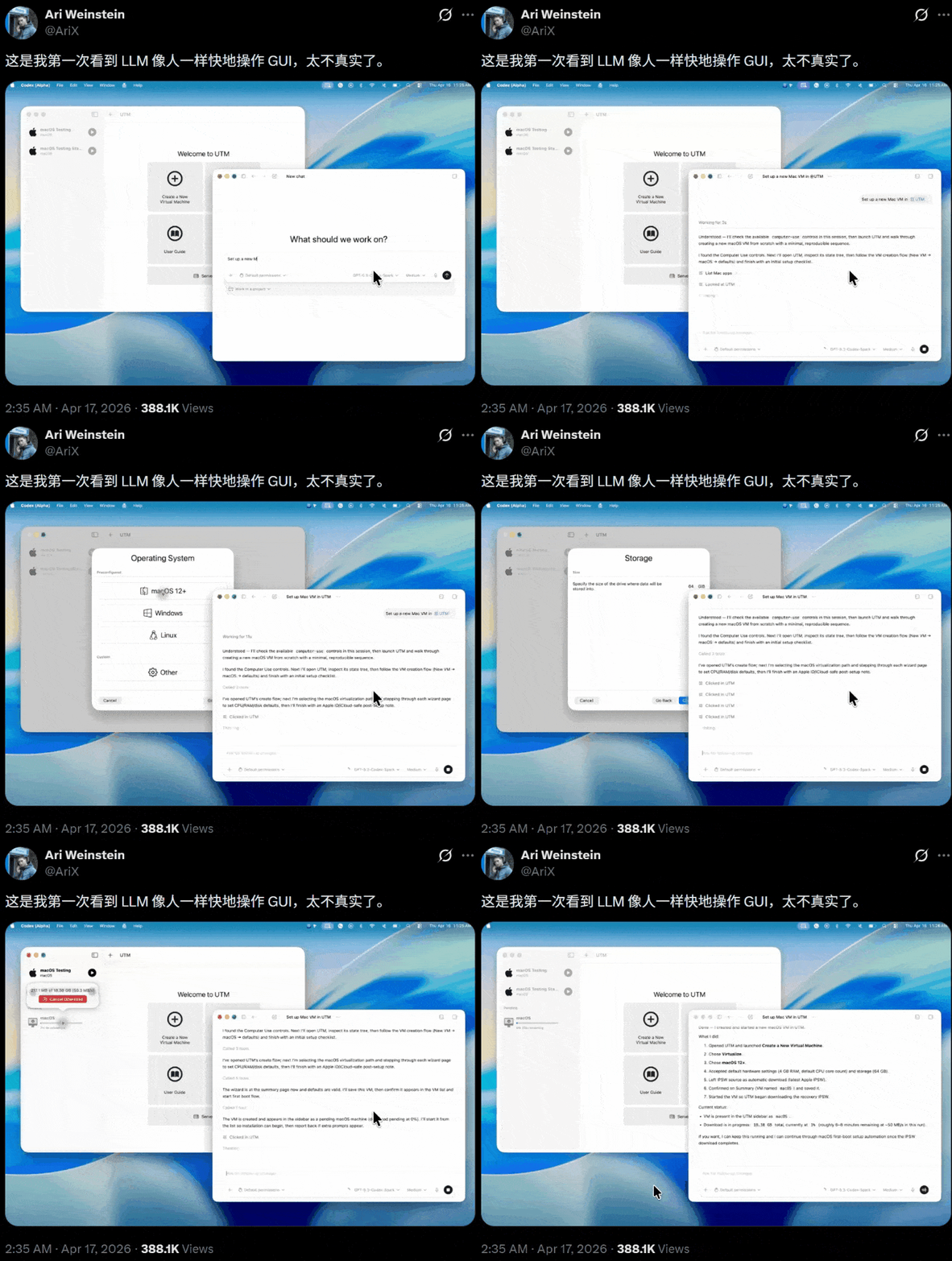
This feature has an impressive origin. Ari Weinstein, who is in charge of it, is a co-founder of Apple Shortcuts. He and his team were acquired by OpenAI last autumn.
You'll understand what it can do by watching a demonstration.
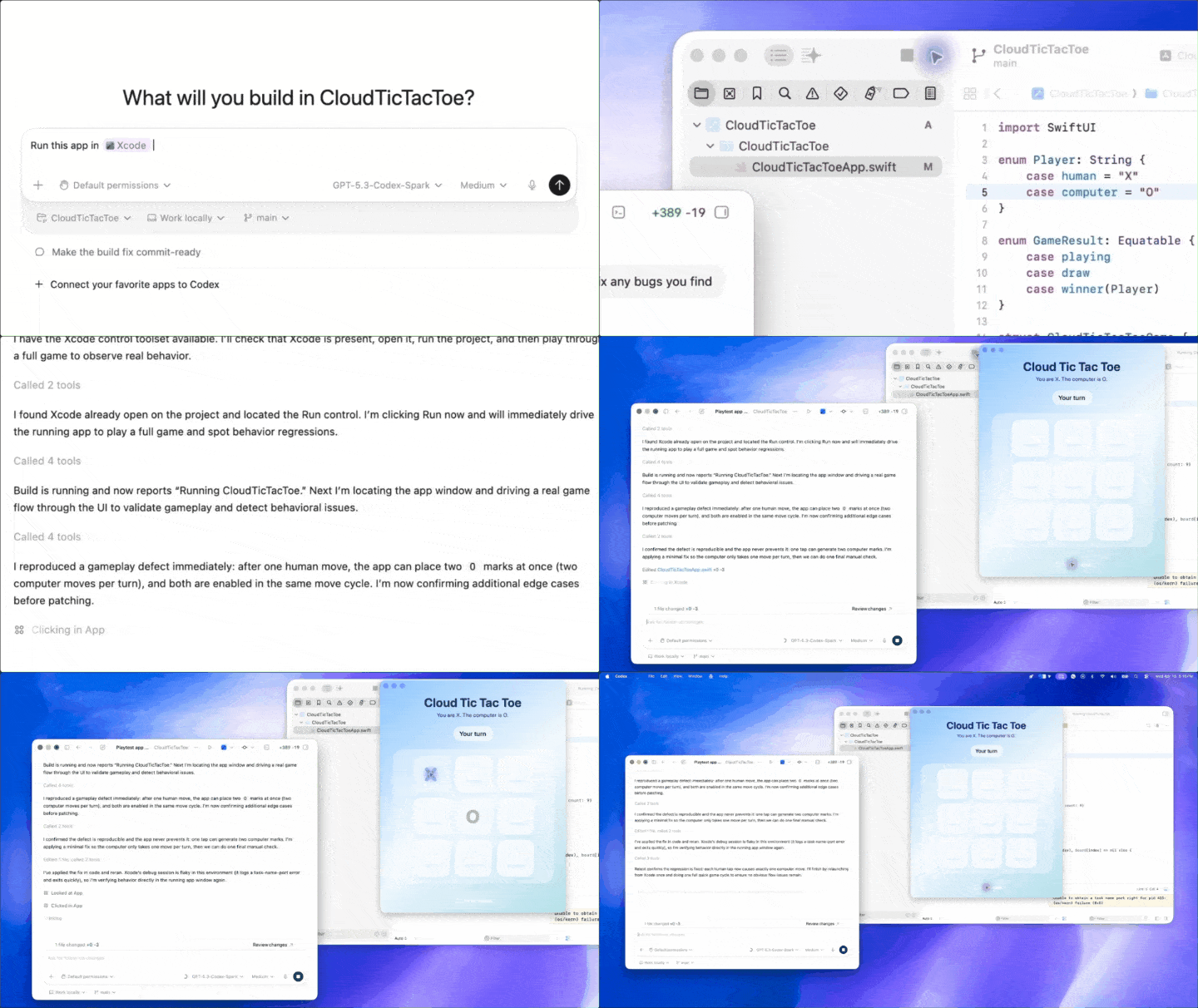
First, the user issues an instruction: "Run this Tic-Tac-Toe app in Xcode, play a game by yourself to test it, and fix any bugs you find."
Then, Codex opens Xcode on its own, launches the iOS simulator, and starts playing the game with its own cursor.
During the testing process, it discovers a logical bug - when a human makes a move, the computer draws two "O"s at the same time.
After some thinking, Codex switches back to the code interface and locates the bug.
After modifying the Swift code, it immediately recompiles the code and conducts a second round of comprehensive testing for verification.
In less than a minute, it completes the entire debugging cycle, including running, testing, finding bugs, fixing them, and regression verification.
Currently, Computer Use only supports macOS, and users in the EU and the UK can't use it for the time being.
On the Windows platform, you can pull information from other apps into Codex, but it doesn't support cursor-level control in the background yet.
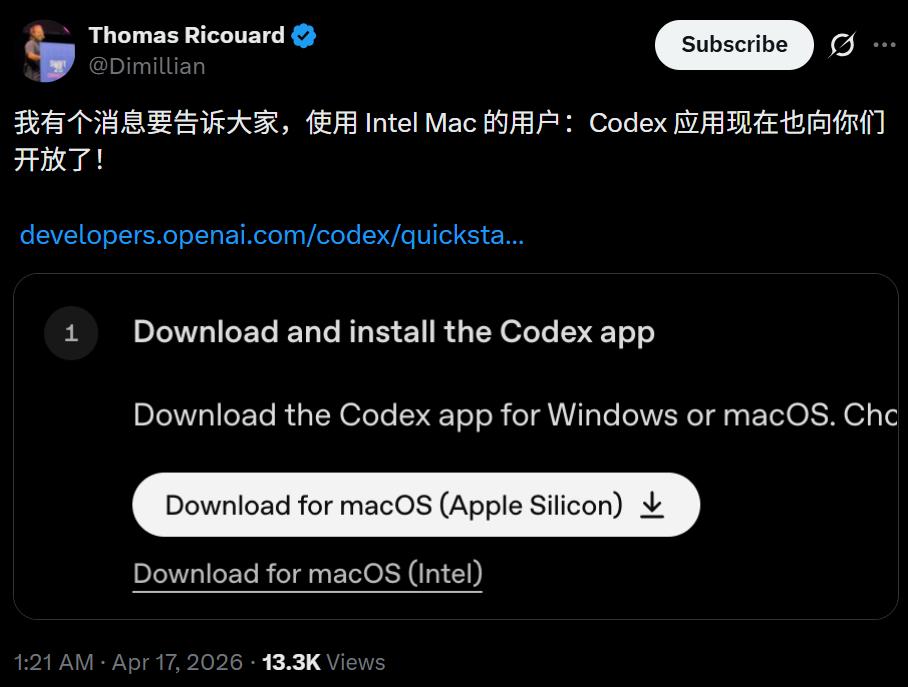
In this update, Codex has gained support for Intel Mac for the first time.
Click where you want to modify, and no need to search through code for front-end debugging anymore
The Codex client now has a built-in browser, which uses OpenAI's own Atlas engine at the bottom.
In practice, in the past, when front-end developers adjusted the UI, they had to switch back and forth between the code and the browser. Now, they can operate directly on the rendered web page.
Click on the main title and leave a comment saying "Reduce the font size and shorten the slogan"; click on the top-left corner and say "Add a logo"; if you find that the legend on the X-axis of the chart is out of bounds, click on the error location and write "Fix the out-of-bounds issue".
Codex can understand visual and spatial context, modify the code in the background in real-time, and refresh the page instantly.
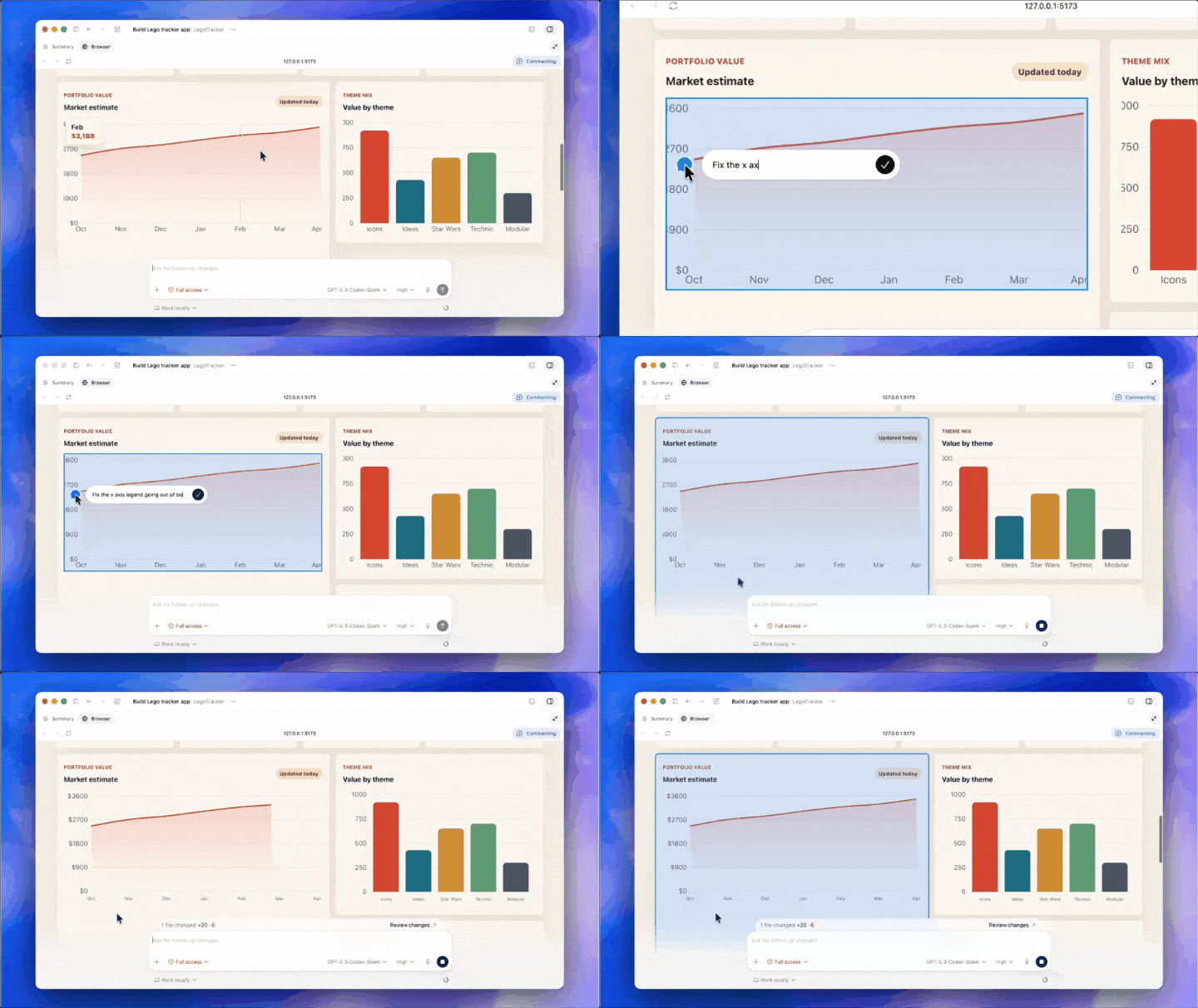
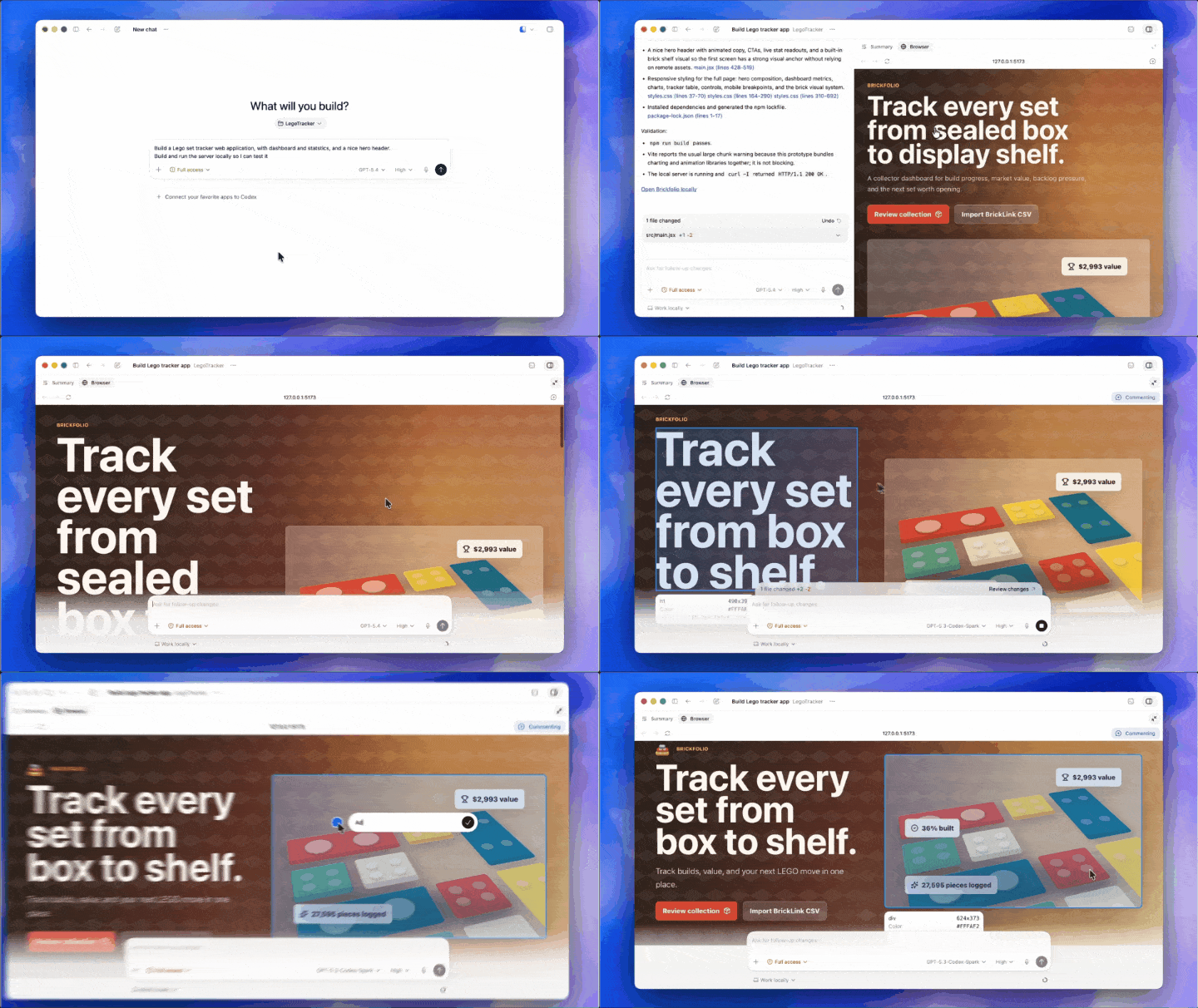
The web application used by OpenAI for demonstration is a Lego kit tracking app called Brickfolio.
Codex writes the code from scratch, configures the environment, starts the local server, and then opens the rendered page in the built-in browser. The whole process only takes a few seconds.
Then, you can have a what-you-see-is-what-you-get modification experience. It's like reviewing a design drawing. You just need to mark the problems, and the underlying iteration will be handled by the AI.
In other words, users just need to click and mark on the page, and Codex will modify the code in the background and show the results in real-time on the front end.
Currently, the built-in browser is only available for local preview on localhost. OpenAI says that it will expand to full browser control capabilities in the future.
Over 90 plugins are launched, integrating the entire toolchain into Codex
In terms of plugins, OpenAI has launched over 90 of them this time.
Atlassian Rovo manages JIRA, CircleCI handles CI/CD, GitLab Issues tracks requirements, Microsoft Suite processes documents, and Neon by Databricks operates databases. These plugins cover almost all the tools that a development team uses in daily work.
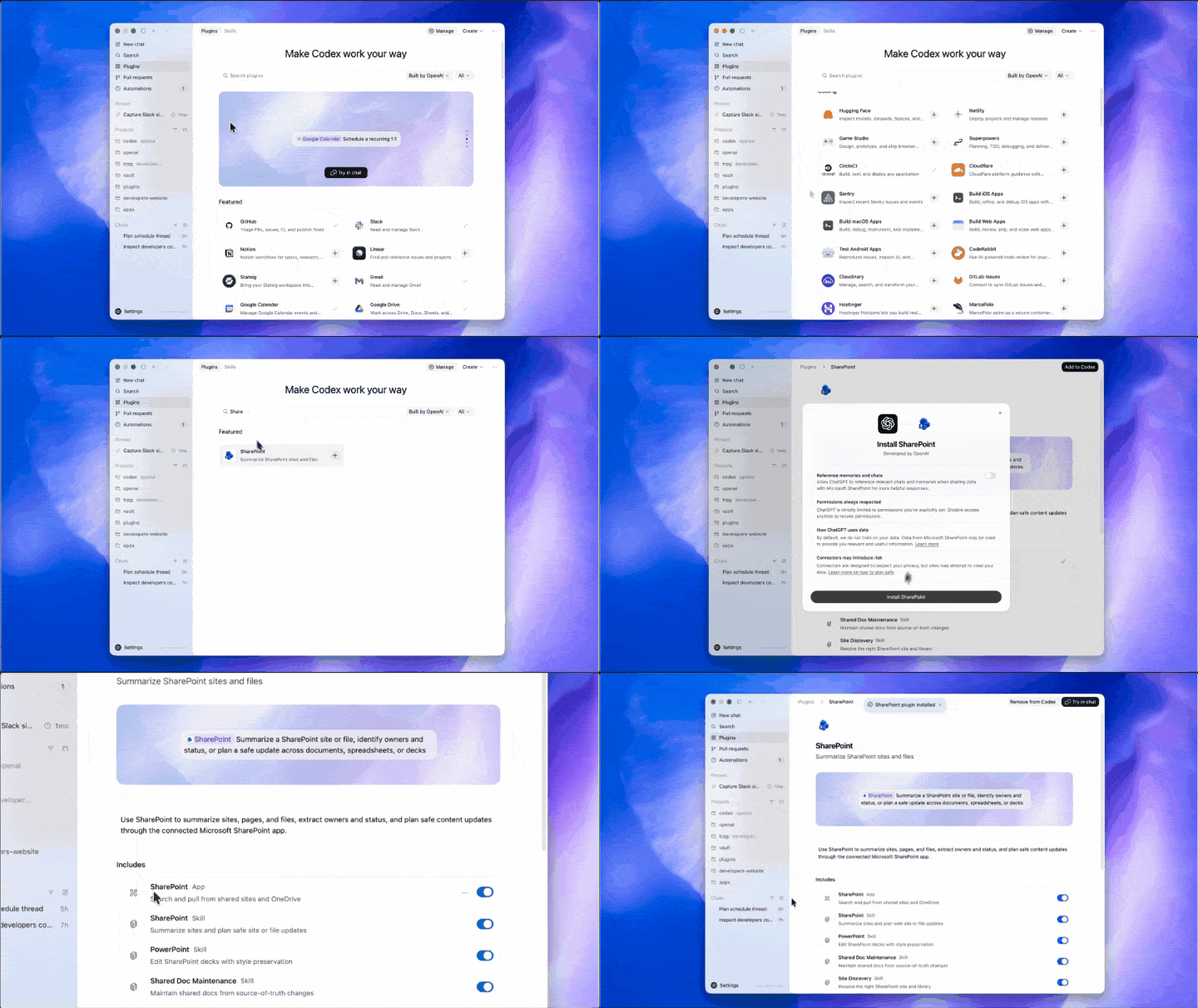
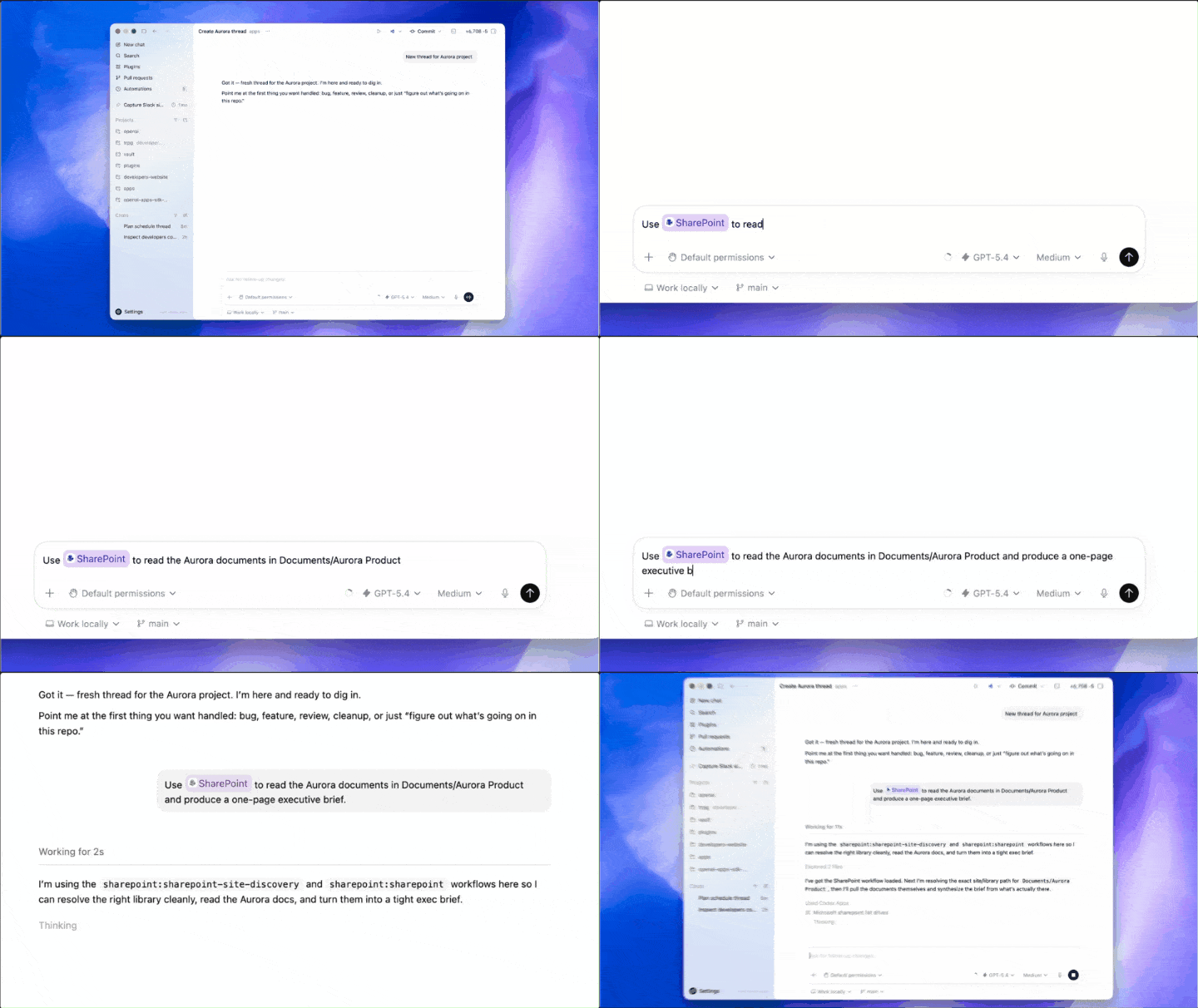
The usage is very simple. Just @ the plugin name in the input box.
For example, @SharePoint, and let Codex read the documents in the product directory and generate an executive briefing. It will automatically search the file tree, parse the documents, and extract the core information, without you having to search through various cloud drives.
Another example is @Superpowers. Let Codex come up with a functional solution in the local code directory. It will traverse your file structure, read the code and CSS, and then give implementation suggestions that match the current project architecture.
@CircleCI can help you diagnose the problem of branch build failure; @Atlassian Rovo can read the product manual on Confluence, output a summary in the specified format, and convert the feature points into standard JIRA tasks.
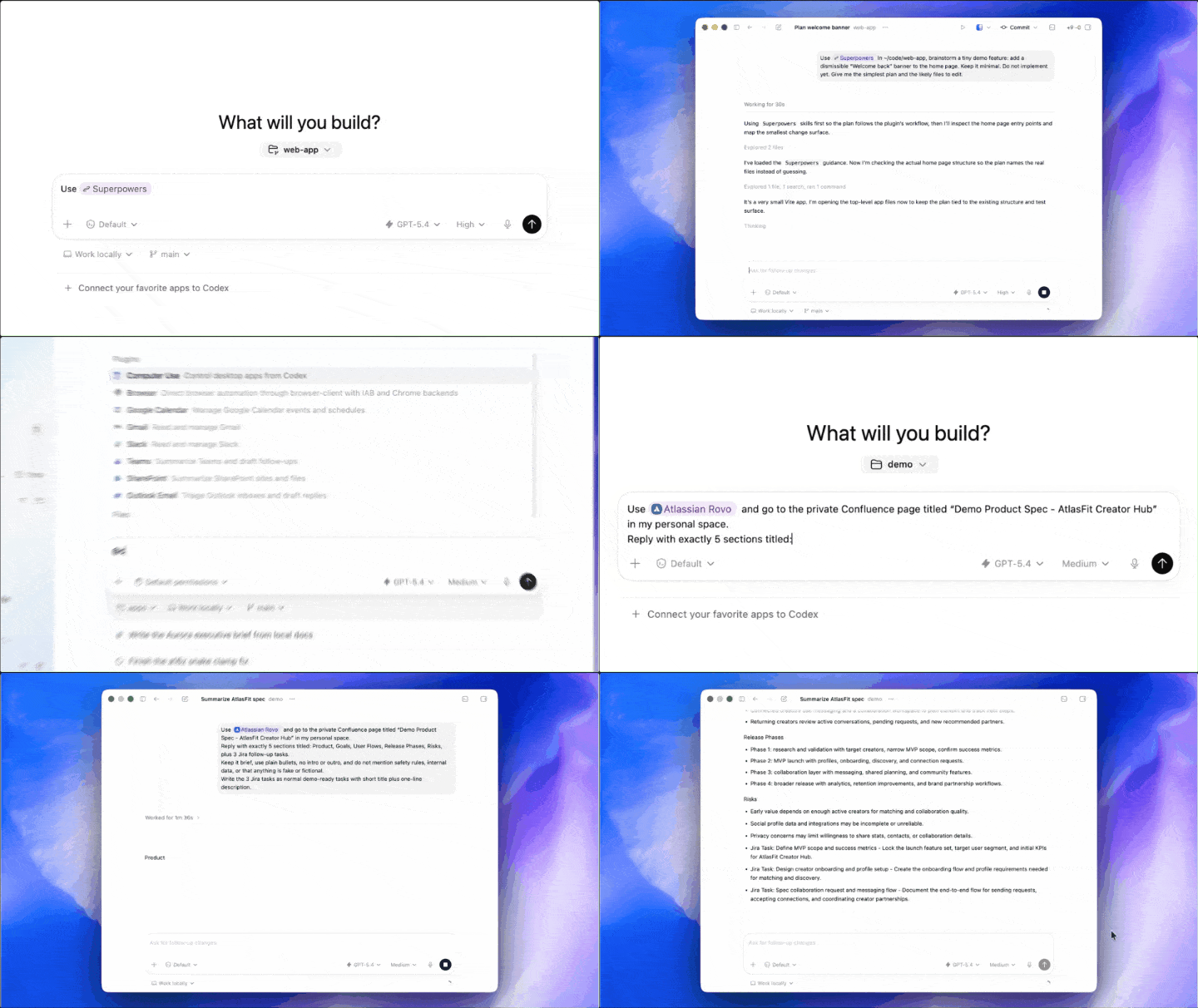
From upstream requirements to local code writing, and then to CI/CD and task management, the plugins have connected the entire process.
AI starts scheduling its own work
What's more remarkable is the newly added "heartbeat" mechanism.
Now, Codex can schedule its future work schedule. It will wake up automatically at the right time to continue working, even across days and weeks. Moreover, it can reuse the previous conversation threads, and the context accumulated last time won't be lost.
For example, users can ask Codex to check Slack, Gmail, Google Calendar, and Notion. It will collect relevant information from these four channels and present a prioritized to-do list.
The user then asks, "Can you keep an eye on it for me?"
Codex immediately sets a schedule for itself to conduct automatic inspections every hour. It will actively report important issues that need decision-making and even ask you, "Do you need me to draft a reply?"
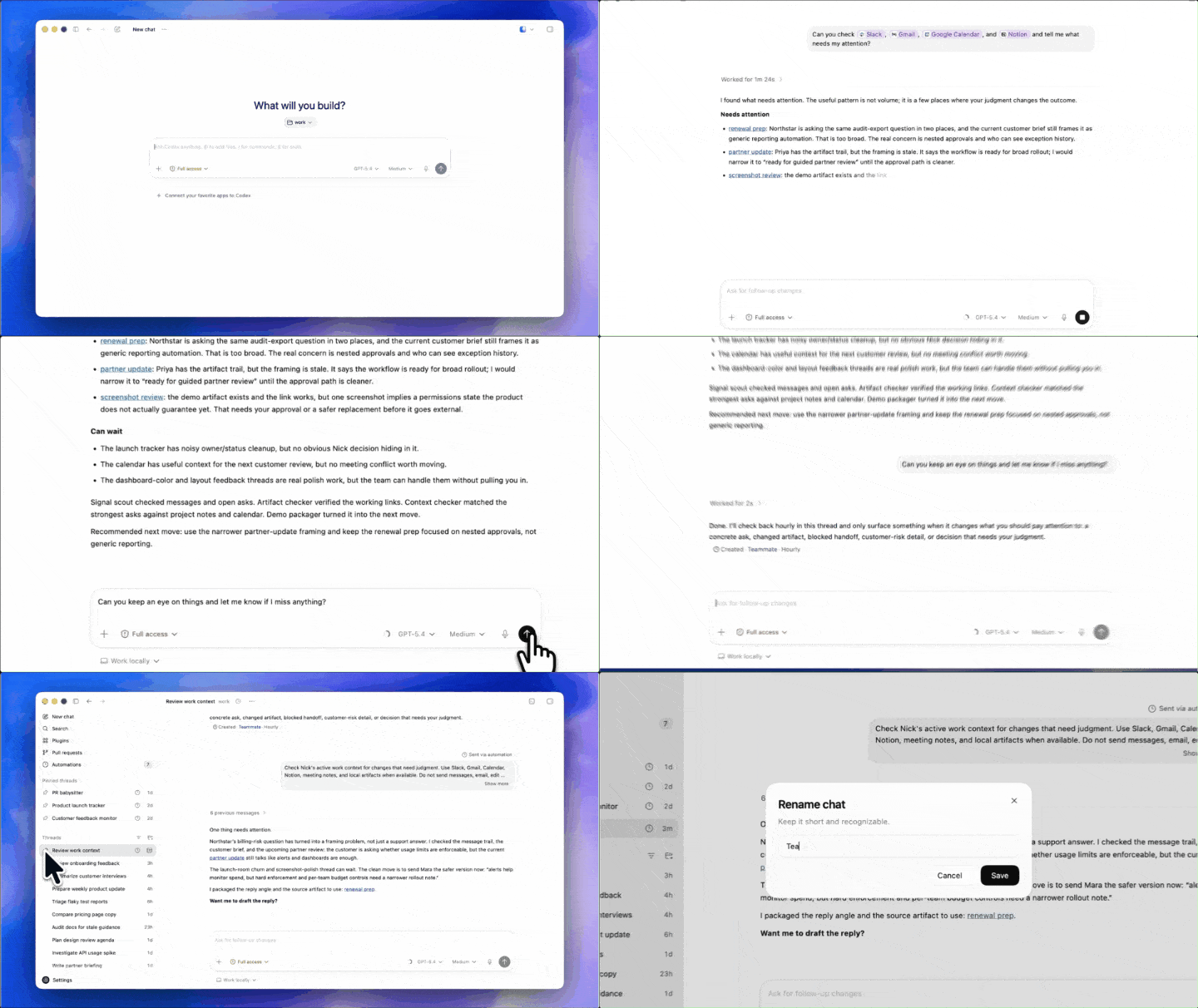
This is no longer just a tool. It's like a junior employee who never sleeps.
Coupled with the built-in image generation ability of gpt-image-1.5, product concept maps, front-end designs, and visual prototypes can all be completed in one workflow.
All daily necessities are added at once
In addition to these major features, there are also a series of upgrades in terms of user experience.
First, the preview version of the memory function is launched. Codex can remember your preferences and the places you've corrected, so you don't need to explain everything from the beginning when you start a new conversation.
Second, GitHub code review comments can now be processed in Codex.
It supports opening multiple terminal tabs simultaneously, and the function of connecting to a remote development machine via SSH is also in the internal testing phase. There is also a new summary panel to help you keep an eye on the Agent's work plan, information sources, and output files at any time.
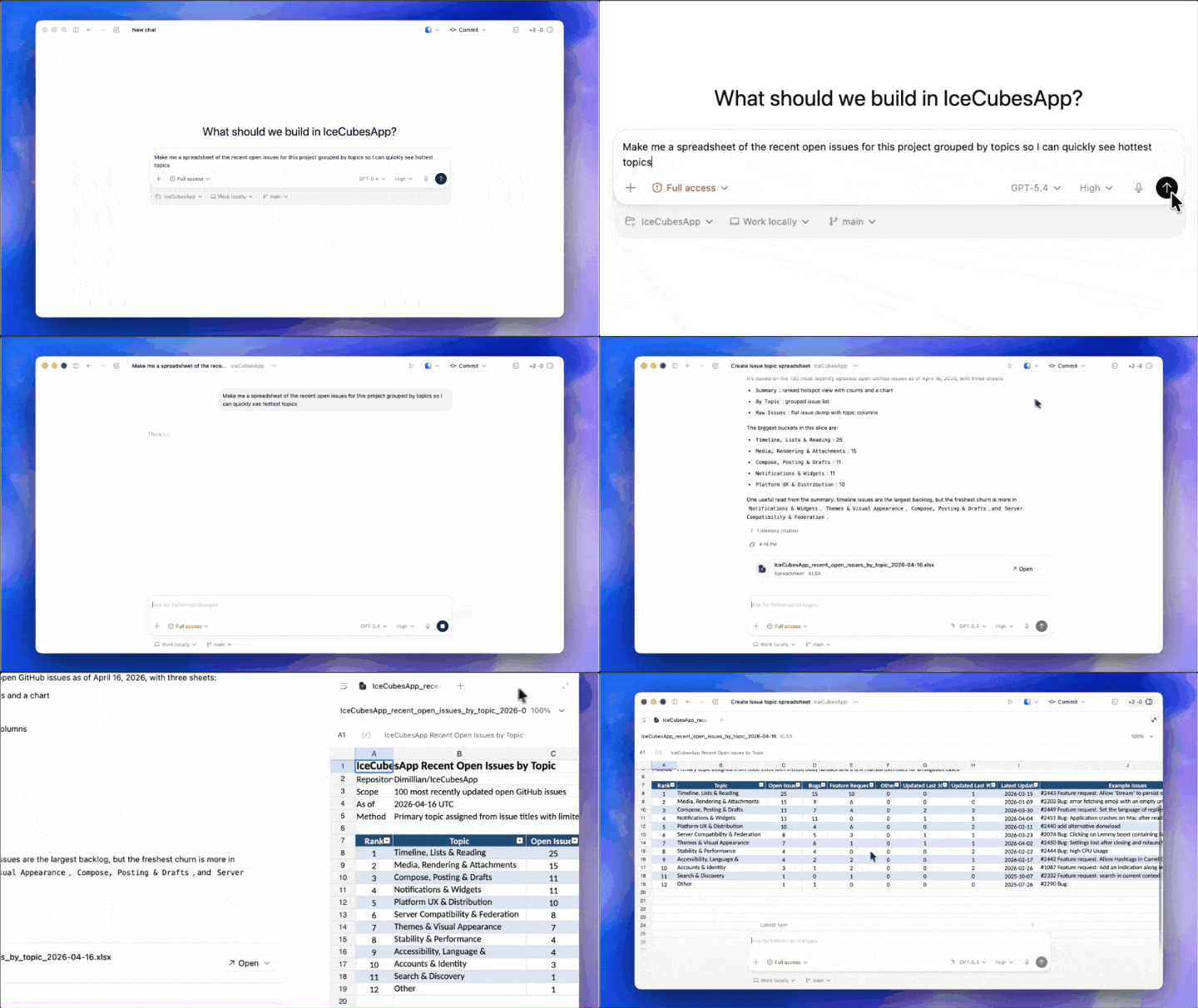
In the demonstration, the user asks Codex to organize the recent open issues of the current project and generate a table grouped by topic.
Codex then retrieves the code repository context in the background and presents a core summary a few minutes later, listing the most significant pain points of the project.
You can generate an Excel file with a single click, and you can open the full table preview in the sidebar without switching to an external software.
The same goes for PDF and PPT. All can be done within the Codex window.
The first piece of the puzzle for the super app
Looking back at the timeline, you can feel OpenAI's pace.
On March 19th, foreign media reported that OpenAI plans to merge ChatGPT, Codex, and the Atlas browser into a desktop "super app".
On March 31st, OpenAI received $122 billion in financing, with a valuation of $852 billion. Amazon, Nvidia, and SoftBank led the investment. The financing document clearly states that the funds will be used for the development and deployment of the super app.
On April 16th, this update of Codex was launched.
Another statistic is quite telling. More than 80% of OpenAI's internal employees are using Codex, and it's not just engineers.
They use it for writing weekly reports, organizing feedback, drafting product requirement documents, reviewing contracts, and sending security training reminders.
50% of Codex users are already using it for non-coding tasks.
This is not just a programming tool adding features. It's a super app using the shell of a programming tool for a soft launch.
If you can't beat them, infiltrate them. An official plugin for Anthropic is created
More interestingly, OpenAI has created an official plugin for Claude Code and actively embedded Codex into the ecosystem of its competitor.
It seems like rather than waiting for developers to switch camps, OpenAI prefers to infiltrate their workflows first.
Currently, Codex emphasizes background execution, multi-Agent parallel processing, and unattended operation; Claude Code's advantage lies in long-context reasoning and in-depth code understanding. More and more teams are choosing to use both.
However, it's obvious that OpenAI wants more than just a share of the market.
With $122 billion invested, it's not just betting on a programming tool.
Reference: https://openai.com/index/codex-for-almost-everything/
This article is from the WeChat official account "New Intelligence Yuan". Editor: So sleepy. Republished by 36Kr with permission.