In the face of the siege from Insta360, Honor, OPPO, and vivo, the former "Electronic Moutai" is increasing the quantity while reducing the price. Is DJI sacrificing profits for market share?
The DJI Pocket 4 is finally here.
At 8 p.m. on April 17th, DJI launched the new generation 1-inch pocket gimbal camera, the Pocket 4. In terms of appearance, this product is almost identical to the Pocket 3 released two and a half years ago. It's hard to tell the difference without a close look.
In terms of configuration, the Pocket 4 has been optimized in many aspects. According to official information, while continuing the portable form of its predecessor, the Pocket 4 has increased the effective pixels of its 1-inch sensor from 9.4 million to 37 million. It also supports 4K/240fps high-frame-rate shooting and 10-bit D-Log professional color, with the dynamic range increased to 14 levels. At the level of intelligent algorithms, the intelligent follow system has been upgraded to version 7.0, the focusing distance has been extended to four times that of the previous generation, and a new 2x lossless zoom function has been added.
"On the basis of inheriting the advantages of the previous generation, the Pocket 4 incorporates more professional image quality and a more intelligent shooting experience," said Zhang Xiaonan, a spokesperson for DJI.
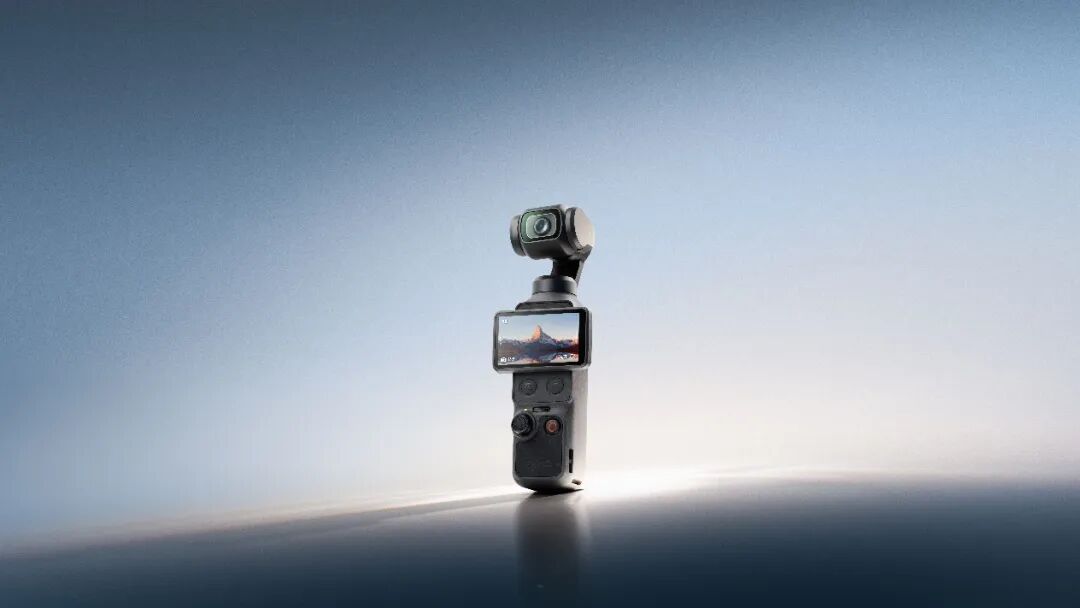
△ DJI Pocket 4. Image source: Provided by DJI
Notably, against the backdrop of the rapidly rising storage costs, DJI has rarely increased the built-in storage from 32GB to 107GB. At the same time, it has removed the mandatory dependence on microSD cards and even lowered the price instead of raising it.
The prices of the standard and all-inclusive sets of the Pocket 4 are 2,999 yuan and 3,799 yuan respectively, which are significantly lower than those of the previous generation. When the Pocket 3 was launched in 2023, the prices of the standard and all-inclusive sets were 3,499 yuan and 4,499 yuan respectively. Two years after its launch, until October 2025, the Pocket 3 series had its first price cut, with the standard and all-inclusive sets dropping to 2,799 yuan and 3,599 yuan respectively.
The price lower than market expectations has brought DJI remarkable first-sale results. The first batch of DJI Pocket 4 inventory was quickly sold out after being put on the shelves, and the official flagship stores on Taobao, JD.com and other platforms all showed out of stock. On the JD platform where sales volume and reservation numbers can be displayed, after the first batch of Pocket 4 supplies were sold out, the product reservation volume once exceeded 450,000; the second batch of inventory replenished by DJI was also quickly sold out, and the number of re-reservations exceeded 166,000. Currently, the cumulative sales volume has exceeded 50,000 units.
After the price cut, the DJI Pocket series is about to face unprecedented market competition.
The Market Defined by DJI
The market for pocket gimbal cameras is almost defined by DJI. As early as 2015, DJI engineers noticed that many users were using drones for handheld shooting and achieving anti-shake with the gimbal. Inspired by this, they added a 4K camera and a handheld grip to the drone gimbal, and used a mobile phone as the screen to launch the Osmo, which could achieve stable shooting while walking.
However, for ordinary consumers, such a device was still too bulky, so DJI continued to iterate. At the end of 2018, the first-generation Pocket was launched. DJI integrated the camera, processor, and screen into a slender body, with only a small gimbal camera module protruding. When the power button is pressed, the originally drooping lens rises into position and aims at the frame within one second, just like waking up a miniature robot.
This product form was already quite amazing, but it was only popular in a small circle of digital enthusiasts at first, and the product shipment volume was only in the millions. The real market explosion came with the launch of the Pocket 3 in 2023. In this generation of products, DJI used a 1-inch large sensor for the first time, significantly improving the image quality. At the same time, the screen was enlarged, and the user experience was also significantly optimized.
Coupled with the explosion of the demand for national video creation, the market for pocket gimbal cameras was opened up. In 2024, the Pocket 3 contributed nearly 20 billion yuan in revenue; as of the third quarter of 2025, the global cumulative sales volume exceeded 10 million units. In contrast, the global shipment volume of traditional digital cameras in 2025 was only 2.44 million units.
This was still an achievement made under the condition of insufficient production capacity. For a long time in the past, the Pocket 3 was so hard to get that it was jokingly called the "electronic Maotai", and the second-hand premium once exceeded 30%. It wasn't until DJI voluntarily cut the price in October 2025 that this hot market officially came to an end.
The Pocket has thus become an extremely important product line for DJI. When interviewed by LatePost, Wang Tao, the founder of DJI, admitted that DJI initially estimated that the market space for the Pocket series was only in the billions, but unexpectedly, it finally reached a scale of tens of billions. In the future, DJI will make the imaging line a top priority besides drones and continue to launch more important new products.
The Price War Surrounded by Competitors
However, as the market expands, challenges also follow. In China, where the 3C industry chain is highly mature, no company can rest easy with a single hit product. Continuous competition is the norm in the industry.
The potential competitors of the DJI Pocket include Insta360 (688775.SH, hereinafter referred to as "Insta360").
This intelligent imaging brand has frequently challenged DJI since 2025. Not only did it launch the panoramic drone brand "Antigravity" last year and officially enter the drone market, but it also revealed at the beginning of this year that it plans to launch the pocket gimbal camera Luna within this year. Liu Jingkang, the founder of Insta360, said bluntly that this product "is by no means another Pocket". There are reports that the Luna adopts a dual-camera and modular design and is expected to be equipped with a telephoto function.
Reporters from Time Weekly learned that DJI will launch the Pocket 4P equipped with a dual-camera imaging system within this year. Through this product form innovation, DJI aims to achieve full coverage of physical focal lengths and completely make up for the shortcoming of pocket gimbal cameras at the telephoto end, so as to resist the impact of potential competitors such as the Insta360 Luna.
Moreover, the competitors of the DJI Pocket are far from just Insta360. The rapidly growing market for pocket gimbal cameras is attracting more players to enter, especially mobile phone manufacturers that have been in fierce competition in the consumer electronics market in recent years.
Currently, vivo has officially confirmed the establishment of an independent vlog camera product project, and the product form directly targets the DJI Osmo Pocket series; according to a report by Lei Feng Network, Liu Zuohu, the chief product officer of OPPO, is also personally leading the research and development of similar products. Honor has taken a different approach and directly integrated a gimbal camera into its mobile phone. If this new form of terminal named "ROBOT PHONE" can succeed, consumers will hardly have the need to buy a Pocket camera separately.
For DJI, these mobile phone manufacturers may be more difficult opponents than Insta360. In the long-term fierce competition, Chinese mobile phone manufacturers have already honed their ultimate cost control ability, supply chain discourse power, and product iteration speed. They not only understand imaging, users, and marketing, but are also good at using the scale advantage to reduce profits, quickly penetrate the market, and subvert the survival space of a single category with the ecosystem and scenarios.
An insider from a leading mobile phone manufacturer once analyzed to reporters from Time Weekly that it is not difficult for mobile phone manufacturers to make a gimbal camera. The mature 3C supply chain is sufficient to support the product's launch, and they only need to further optimize the cost and experience. Although the Pocket has the advantages of customized components and algorithm tuning, these are essentially highly engineered problems and not insurmountable technical barriers.
"Driven by the considerable market interests, the industry is likely to form a new industrial alliance. Once suppliers and channel providers cooperate to enter the market, they will be able to break the monopoly pattern that DJI has built for a long time," said the above-mentioned insider.
This may be the deep consideration behind DJI's counter-trend price cut this time. As a pioneer in the industry, DJI has an advantage in cost control and profit space that competitors can't match for the time being. From this perspective, this price cut is not just a simple concession, but also uses the scale advantage to reduce industry profits and raise the entry threshold, so as to gain more time for its own technological upgrading and market consolidation.
This article is from the WeChat official account “Time Weekly” (ID: timeweekly), author: Xie Silin. Republished by 36Kr with permission.