20 billion yuan of hot money floods into AI toys: MOMOTOY's revenue surges by 200% in three months, and ropet's user retention rate exceeds 80% in 90 days
Recently, the AI trendy toy brand MOMOTOY received tens of millions of yuan in investment from Yipu Fund. It is reported that this round of financing will be mainly used in four core areas: AI technology iteration, the launch of high - end product matrix, global channel expansion, and the establishment of flagship stores in core business districts. After the transaction was completed, the valuation of this company, which was founded only four months ago, reached 250 million yuan.
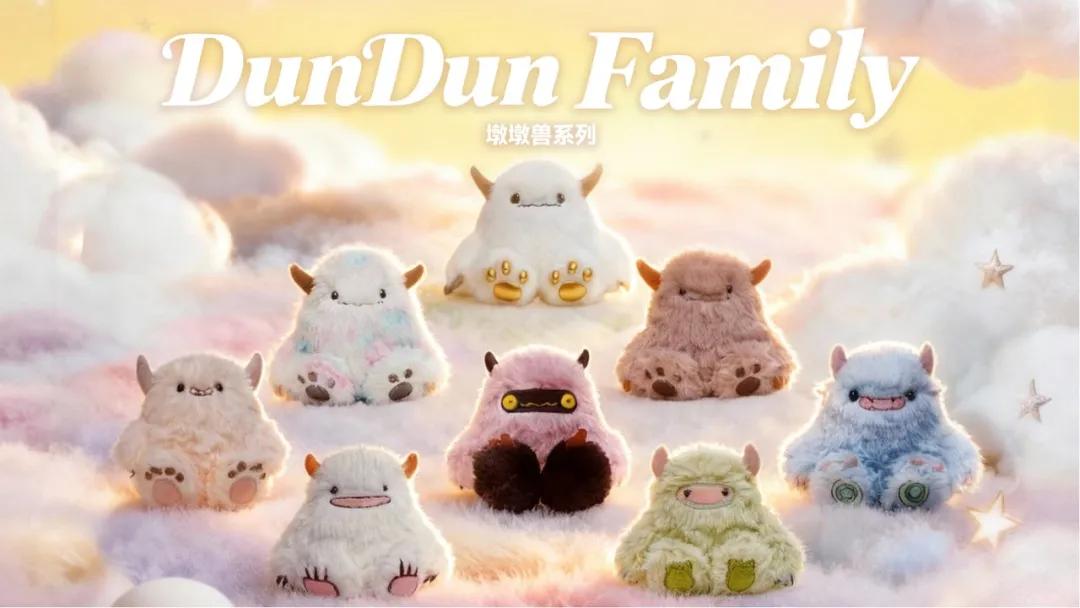
The IP Dundun Beast under MOMOTOY
On the other hand, Mengyou Intelligence, which is also in the AI toy track, recently announced a new round of financing, with a cumulative amount exceeding ten million US dollars.
The direct reason why both companies are favored by capital lies in their good commercialization capabilities. The former's revenue increased by more than 200% in three months, and the brand's total contract amount across all channels has currently reached 64.5 million yuan; since its global delivery began in September 2025, the star product ropet of the latter has shipped nearly 20,000 units, and the global return rate is less than 4%, far lower than the industry average of 30%.
More fundamentally, AI toys with interactive capabilities and companionship value have become a viable AI commercialization scenario. This hardware product that can drive emotional consumption shows remarkable commercial prospects in multiple dimensions such as trendy toys, early education, and pets. A market worth hundreds of billions is accelerating its formation.
Since 2025, the cumulative financing has exceeded 20 billion yuan. ByteDance, JD.com, Huawei and other companies are leading the race to enter the market
Many people started to pay attention to AI toys from an internal gift of ByteDance.
At that time, Volcengine, the cloud service platform under ByteDance, customized an AI plush toy "Eye - Catching Package" for its employees. Surprisingly, this product became a hit in the second - hand market due to its excellent voice interaction, and the trading premium once exceeded 200%. Later, the AI toys developed by FoloToy, the cooperation partner of the "Eye - Catching Package", were successively connected to ByteDance's Doubao large - model, and the company then entered a period of rapid development. In January this year, Xili Technology, the company to which FoloToy belongs, also announced a new round of financing of tens of millions of yuan.
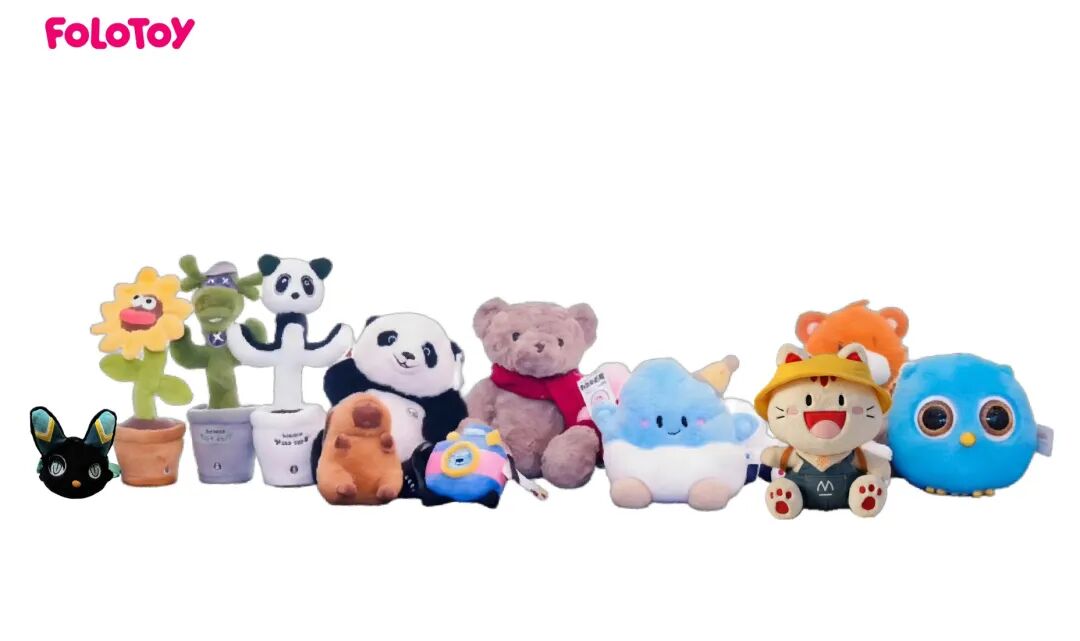
The products under FoloToy. The blue - and - white spliced doll is the "Eye - Catching Package"
In this process, ByteDance's large - model capabilities have begun to become the technical foundation for more similar enterprises such as Yueran Innovation and Jixian Technology. The traditional toy manufacturer Shifeng Culture has also accelerated its transformation into AI toys with the help of ByteDance's technical capabilities. Aofei Entertainment has established a joint venture with Yueran Innovation to promote the R & D of AI toys. According to the data of Volcengine, as of June 2025, the shipment volume of AIoT products (excluding mobile phones, cars, and computers) connected to the Doubao large - model has exceeded 1 million units, covering a variety of intelligent hardware such as AI headphones, AI toys, and AI security cameras.
Similarly, more large enterprises are accelerating their entry into the AI toy market with technological iteration.
In July 2025, the AI Toy Conference held by JD.com attracted more than 600 toy and intelligent hardware manufacturers to participate. Its self - developed AI plush toys were quickly sold out after being launched. Seizing the opportunity, the platform held a new session of the AI Toy Conference in January this year and officially released the JoyInside software - hardware integration solution. Empowering its partners with the embodied intelligence platform, self - developed products by JD Zao, a super supply chain, and all - channel advantages, it has currently connected more than 40 brands.
Huawei, which has both technological and hardware advantages, jointly developed "Intelligent Dumb" with Luobo Intelligence. This product is equipped with HarmonyOS 5.0 and the Xiaoyi model. It was first launched in November 2025, and 6,500 pieces were sold within 15 minutes after its launch. Before this, Luobo Intelligence was already a leader in the industry, having received three rounds of financing in total.
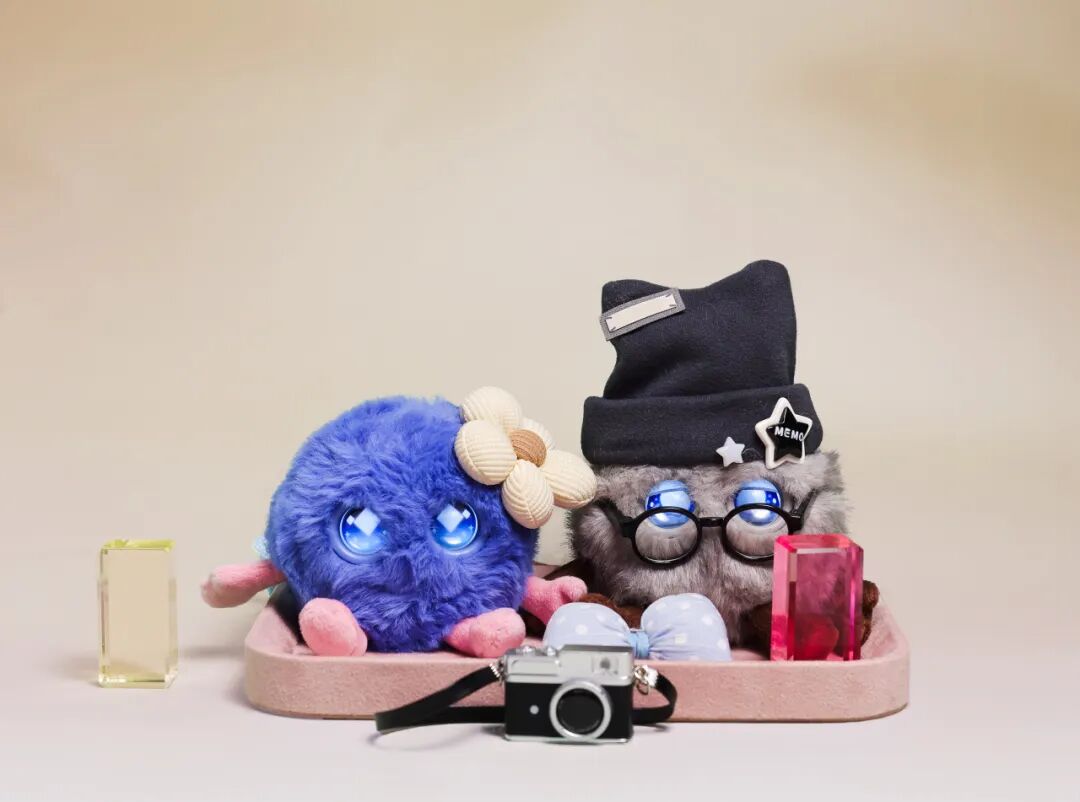
Huawei's "Intelligent Dumb"
In addition, at the Consumer Electronics Show (CES 2026) held in Las Vegas in January this year, the highly anticipated AI toys saw more players entering the market. Not only did Samsung, Panasonic, Sony, TCL, ASUS, Ecovacs and other companies bring their products, but also emerging enterprises with the background of listed companies and large enterprises, such as Yuling Unlimited invested by Xiaohongshu and Taoyun Technology incubated by iFlytek, have made arrangements in the fields of AI toys and companion robots. Behind this, the capital market has become more active.
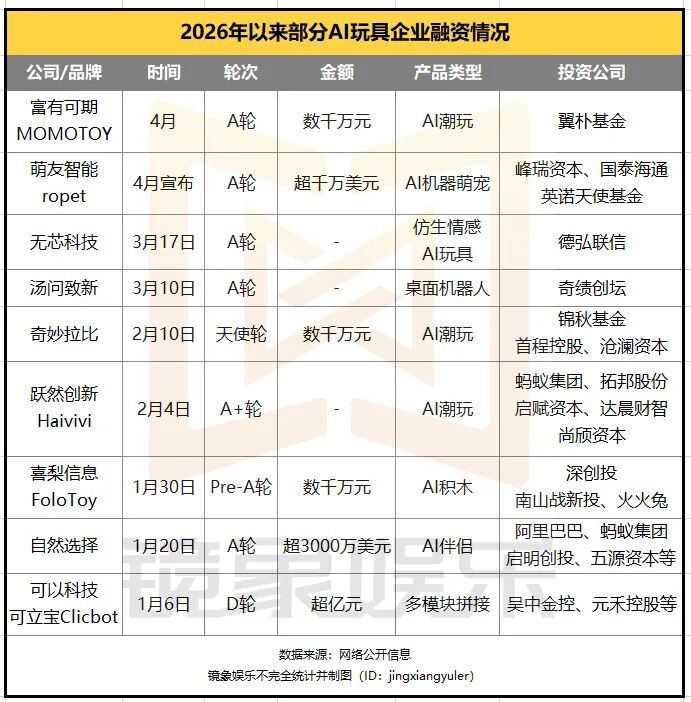
Based on the data from multiple platforms such as Qichacha, Tianyancha, and Wind, since 2025, there have been more than 50 rounds of relevant financing for AI toy companies, with a cumulative financing amount exceeding 20 billion yuan. Especially since 2026, relevant financing activities have become more frequent. Among them, the Series D financing of Keyikeji exceeded 100 million yuan, and the new round of financing of Natural Selection, in which Alibaba, Ant Group and other companies participated in the investment, also reached 30 million US dollars.
"One is sold every three minutes on average". The core of emotional consumption is to establish a relationship
Of course, capital is optimistic about the commercialization ability of the market. At present, AI toys that show faster monetization ability are concentrated in the trendy toy track. Many people even regard AI trendy toys as the future of traditional trendy toys.
Li Yong, the founder of Yueran Innovation, once said bluntly: "Yueran Innovation wants to become the Pop Mart in the AI era." The first AI toy BubblePal launched by the company has sold more than 250,000 units in 11 months since its launch. Calculated at the sales price of 399 yuan per unit, the corresponding sales volume has exceeded 100 million yuan.
MOMOTOY, whose valuation reached 250 million yuan just four months after its establishment, also follows the development path of Pop Mart. Even in its product layout, traditional blind boxes still account for a considerable proportion. For example, in addition to the AI intelligent body priced at 399 yuan, the popular IP Dundun Beast also has blind - box pendants sold at 59 yuan each. However, the design of the hidden blind - box models incorporates 999 pure gold elements. At the recent Beijing QDF exhibition, the Dundun Beast series of products were sold out as soon as they were first unveiled, with an average of one sold every three minutes.
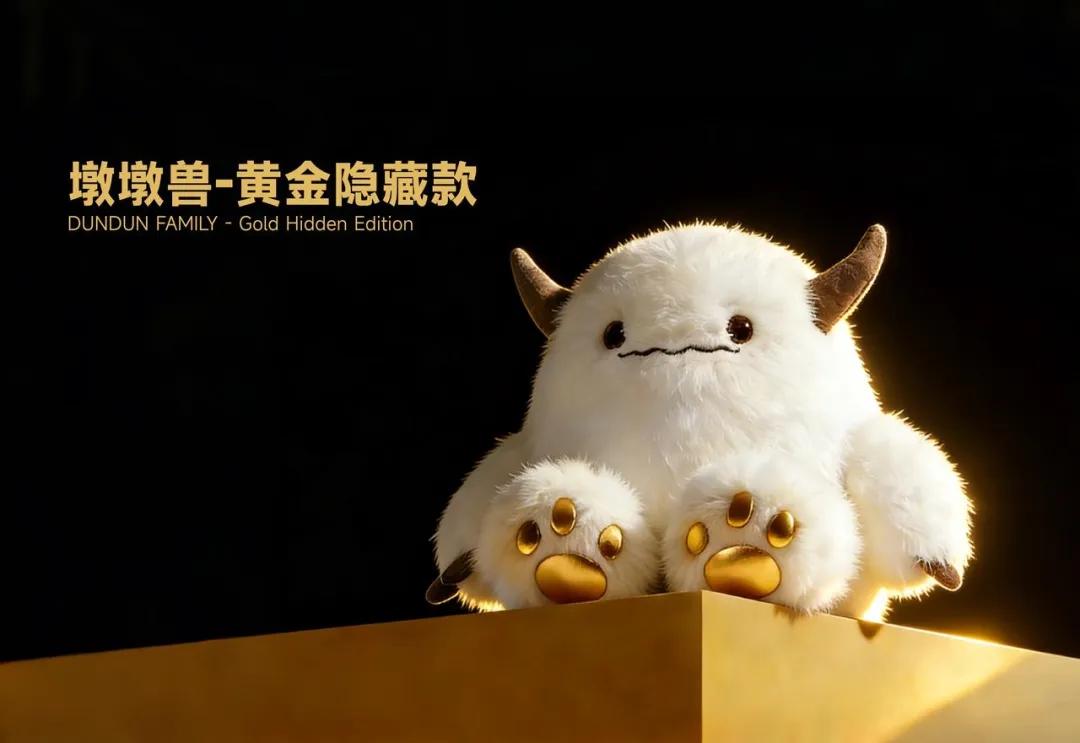
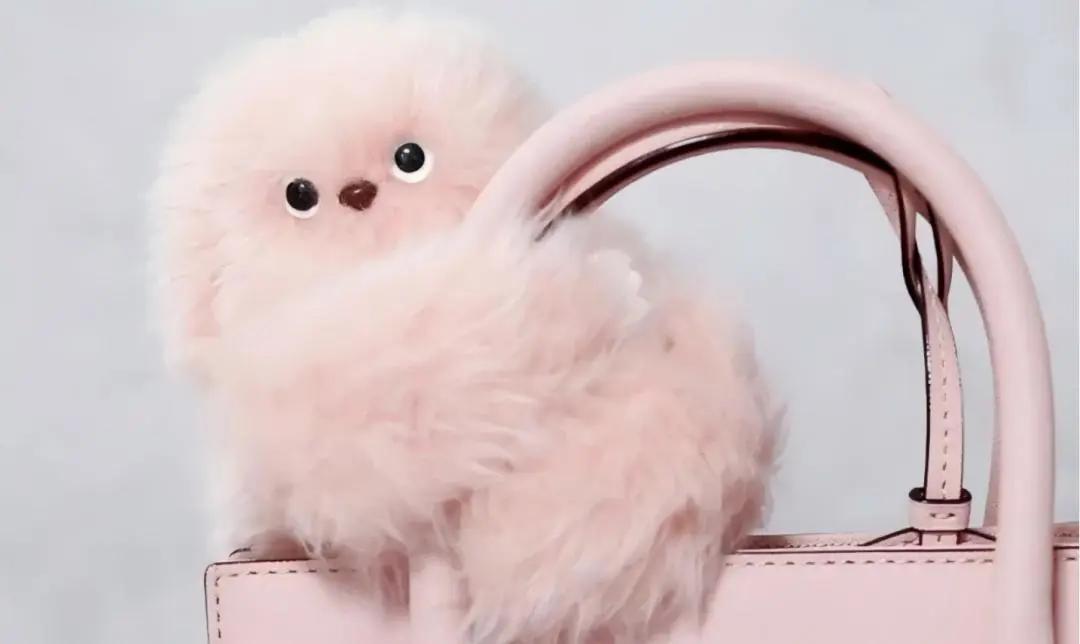
Moreover, from the current overall trend in the industry, most brands are trying to design a cute and dorky appearance for their products. Among them, the plush form similar to trendy toy products is one of the mainstream directions. This reflects a trend that AI toys are shifting from functional products to emotional products.
More and more brands are gradually realizing that what the market really needs is not a cuter and smarter "Tmall Genie" or "Xiaomi AI Speaker", but a companion that can provide emotional value.
Previously, the underlying reason for the transformation of traditional trendy toys from ornaments and collectibles in closed spaces to wearable decorations was the in - depth exploration of the need for companionship. LABUBU became a global phenomenon - level product by riding on this trend. Now, AI trendy toys also meet the need for companionship. Under this transformation, the key for AI toys to drive consumption is no longer how intelligent they are, but whether they can establish an emotional relationship with people.
Reflected at the technical level, more AI toy companies are no longer obsessed with adding as many functions as possible to their products. Instead, they start to refine the cultivation system, personality system, and memory system of AI, so that the products can be "unique to each person" in the long - term companionship with people, strengthening the exclusive value and emotional value of the products.
Therefore, we can see that around the need for companionship, AI toys are not only entering the trendy toy market, but also starting to enter more fields such as pets, partners, splicing toys, and early education based on their anthropomorphic characteristics.
Li Yong once mentioned when talking about the company's product design concept that in addition to learning and interaction abilities, AI should also have "limitations" and be able to forget some things like a human being. Some brands even start to simplify. For example, at CES 2026, the AI pet robot "mirumi" launched by the Japanese company Yukai Engineering does not have conversational interaction ability, but only retains some small - scale movements to simulate states such as curiosity, shyness, and refusal, providing a weaker form of companionship similar to that of a pet.
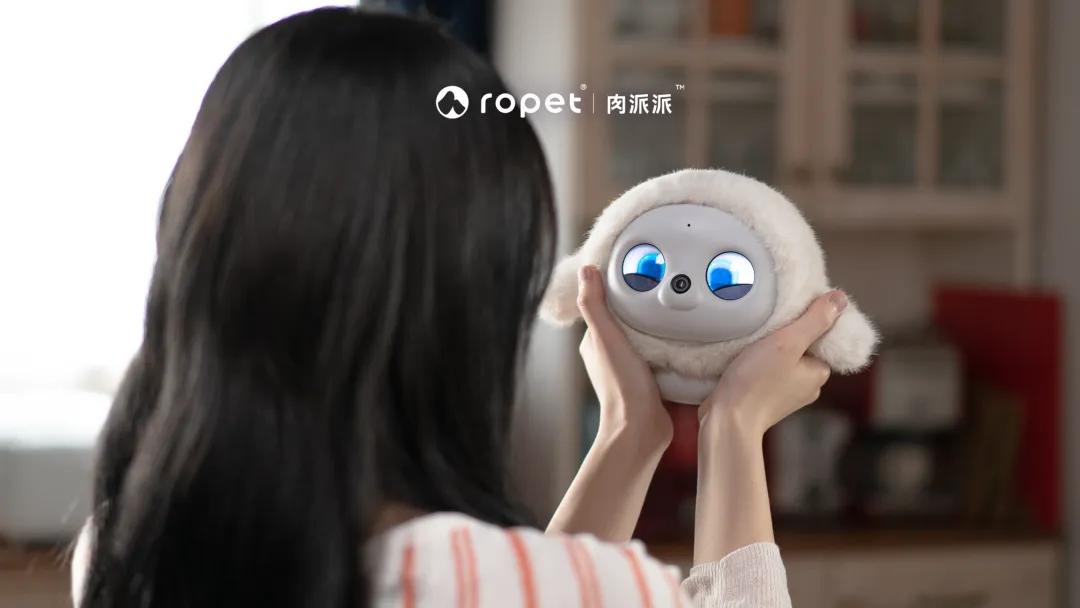
The good sales performance of ropet follows the same logic. Although it cannot speak, it can sense touch, sound, and vision, and give corresponding facial expressions and sound feedback. It can get hungry, sleepy, and lonely, and even get "jealous". These needs and feedback make people unconsciously invest and establish an emotional relationship with it. Relevant data shows that this desktop intelligent product priced at 2,000 yuan has not only sold 20,000 units with a return rate of only 4%, but also achieved an excellent performance of 80 - 90% retention rate in 90 days. The average daily boot time of its core users exceeds 20 hours, and the in - depth interaction time exceeds 2 hours.
Similarly, other tracks are also constantly exploring the implementation scenarios of AI toys. For example, Clicbot launched by Keyikeji is a multi - module splicing toy, and its Lego - style splicing gameplay is a major highlight; Natural Selection focuses on training emotional models and incubates intelligent products mainly in the form of AI partners...
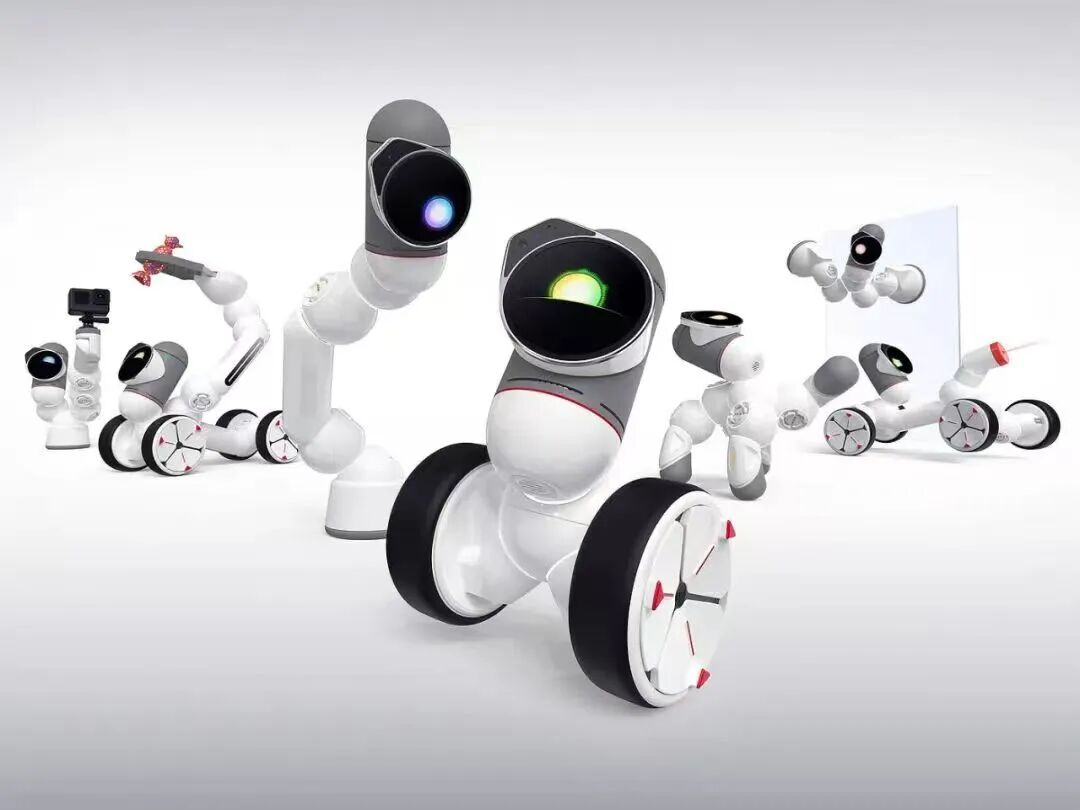
Clicbot
IP is the focus of the future, but the business model has not been fully established
Under this overall transformation, the value of IP for AI toys is even greater, because IP not only naturally has an emotional connection, but also is an effective way for AI toys to expand marginal benefits after the technology matures.
One of the reasons why MOMOTOY is favored by capital lies in its IP capabilities. The brand holds more than 50 original IPs and more than 10 top - level authorized/co - branded IPs. Traditional toy manufacturers that have transformed more quickly are mostly enterprises with top - level IPs. For example, Shifeng Culture has the IP authorizations of Nailong and Pokémon, and Aofei Entertainment has the IPs of Pleasant Goat and Big Big Wolf and Super Wings.
The new players are also accelerating their cooperation with top - level IPs to quickly increase their popularity and accelerate their market positioning. After BubblePal, Yueran Innovation's second product is a cooperation with Ultraman; recently, ropet also jointly launched a co - branded intelligent pet "Toothless" with Universal Studios, and the pre - orders exceeded 1,000 units in five days.
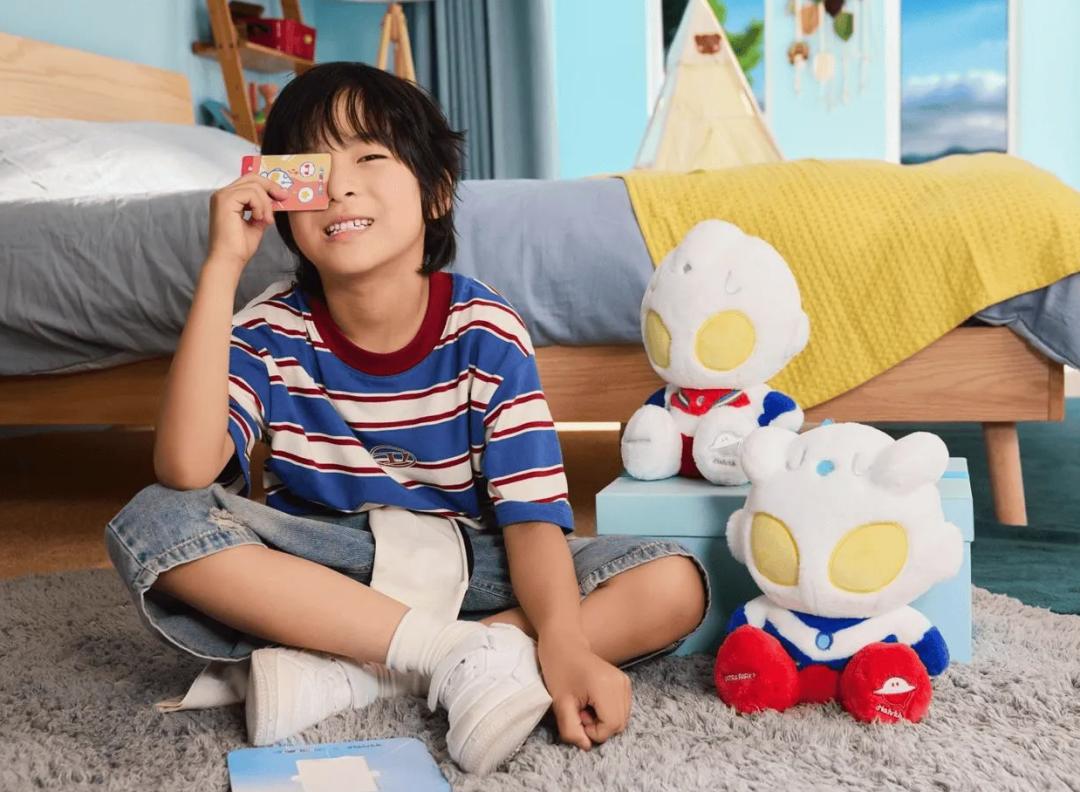
The co - branded product with Ultraman launched by Yueran Innovation
However, it should be noted that from the overall development perspective, AI toys have not been widely promoted yet. An important reason is that their business model has not been fully established, and how to drive users' continuous consumption is an urgent problem to be solved at present.
In the traditional trendy toy market, the emotional connection of IP + blind - box gameplay is the key to driving users' repeat purchases. However, after adding AI technology, this model is difficult to fully replicate. Firstly, the single price of AI toys is relatively higher. Secondly, these products require users to continuously cultivate them, and the threshold for repeat purchases is also raised accordingly.
Based on this, there are mainly two business models being explored in the industry at present. One is the "main body + subscription" model. That is, after users purchase the hardware product, they need to pay an annual fee of about 100 yuan continuously every year to keep the AI toy working. For AI products, their databases need to be updated continuously, and their interaction capabilities consume a large amount of tokens. Without users' continuous subscription fees, a company's single hardware revenue is difficult to cover the long - term computing power investment and content costs.
However, for users, although this model reduces the price of the main body, and many products have even been priced as low as dozens of yuan, the experience is not friendly. Users seem to fall into another strange circle like "smart TVs are not smart without buying a membership". Coupled with the homogeneous competition in the industry,