Wide folding: Is it Huawei's master plan or a self - rescue for foldable screens?
In April 2026, Huawei officially announced its first large-format foldable phone, the Pura X Max, claiming to have achieved breakthroughs in three core pain points: creases, durability, and bulkiness. At the same time, rumors about Apple's first foldable iPhone Fold had spread throughout the industry chain.
It is said that it will adopt a large-format folding form close to 4:3, and the starting price may exceed $2,000. Institutions such as IDC predict that it is expected to capture nearly 20% of the global foldable screen market in its first year.
For a moment, "large-format folding" became a top hot search in the foldable screen track. People's high expectations for large-format folding are matched by their low opinion of current foldable screens.
In terms of sales, although the global shipments of foldable phones in 2025 were about 19.83 million units, a year-on-year increase of 6%, doubling the 3% growth in 2024, it was still far lower than the 26% in 2023. Based on the annual shipments, the penetration rate of foldable screens in the Chinese smartphone market was only 3.52%.
What's even more embarrassing is that a Counterpoint survey shows that foldable phone users unfold the inner screen only 3.1 times a day on average, and 76% of consumers have never used the hover function. The usage frequency of split-screen operation is even lower than that of traditional tablet devices.
For a product category that has spent nearly eight years and burned tens of billions in R & D costs, but users hardly unfold it after getting it. This is probably the most expensive "ornament" in the history of consumer electronics.
Can the highly anticipated large-format folding break this deadlock?
Eight Years of Foldable Screens: Never So Embarrassed
For the past eight years, the narrative of foldable screens has almost revolved around "folding the phone" itself. But looking back at the evolution in these eight years, the real problem of foldable screens has never been about "folding".
Let's start with the price. In 2025, the price war of foldable screens reached a white-hot stage. The starting price of Honor Magic V Flip2 was 5,499 yuan, and the price of Nubia Flip even dropped to 2,999 yuan. The single-quarter price drop of Samsung Galaxy Z Fold7 and Flip7 in the third quarter of 2025 was as high as 33%. Both small and large foldable phones had a tough time.
The price has come down, but what about the sales? In the second quarter of 2025, the shipments of foldable screens in China dropped to 2.21 million units, and the year-on-year decline widened to 14%. The price dropped, but the growth rate also dropped, which shows that the problem of foldable screens is not about the price at all.
Is it the indelible crease in the middle? According to a 2025 survey by iiMedia Research, 58.75% of consumers think that foldable screens "have creases, which affect the appearance", and 43.27% complain about "short battery life".
But foldable screen manufacturers have been working hard in recent years. Honor Magic V6 uses upgraded UTG glass, which improves the crease by 44% compared with the previous generation. And it manages to fit a super-large 7,150mAh battery into a body with a folded thickness of only 8.75mm. OPPO Find N6 also has a folded thickness of 8.9mm and a built-in 5,600mAh battery.
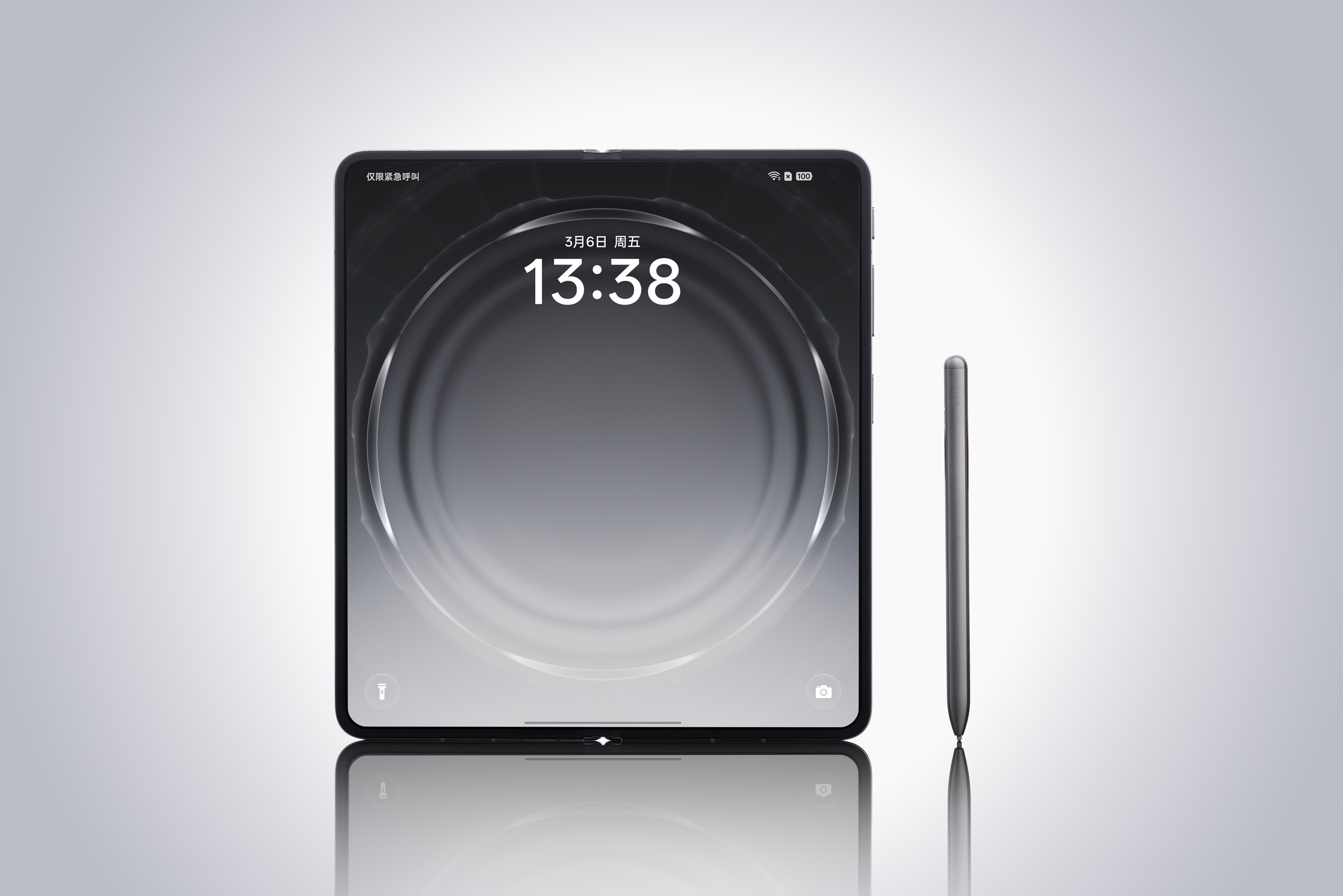
However, they are still not phenomenal foldable screens. They failed to trigger a purchasing boom and did not attract much attention.
The root cause may not lie in the hardware, but in the application ecosystem.
Currently, the application adaptation of Android foldable screens can be summarized in five words: it works, but it's uncomfortable.
Only about 300 mainstream applications in the Android camp have completed in - depth optimization for foldable screens. A large number of applications still have problems such as interface stretching and deformation, missing functions, and abnormal split - screen operation. Android manufacturers have made great efforts, but the results have always been limited.
Huawei is currently the only manufacturer that requires applications to be adapted to foldable screens. Developers who check the support for tablets must pass the UI review. This tough - handed strategy combined with the parallel view makes the foldable screen no longer a "large - sized straight - bar phone".
Samsung uses AI to make up for the lack of adaptation, but on the triple - fold screen, it has to adopt a "deceptive system" (reducing the rendering resolution of the outer screen and then up - sampling in hardware), which is a disguised admission that the Android adaptation dilemma is unsolvable.
Xiaomi follows the Google standard, giving priority to supporting Activity Embedding. OPPO proposes foldable native, self - develops application large - screen reshaping and then cooperates with third - parties for customization. Vivo develops a UI adaptive engine to automatically optimize the layout.
In addition, in June 2025, OPPO, Vivo, Xiaomi, and Lenovo also released the "White Paper on Application Adaptation for Large - Screen Devices 2.0" through the Golden Label Alliance, which is also a disguised admission that they can't solve the problem alone and must work together.
But working together can't solve the fundamental problem either.
The Android ecosystem is a "commons", and no one has absolute power to force all developers to adapt. No matter how much manufacturers invest, they can't change the reality that a large number of existing applications are not maintained and small - niche application developers have no time to adapt.
The white paper of the Golden Label Alliance is just a "suggestion", and Huawei's review only covers applications in the HarmonyOS ecosystem that are willing to check "support for tablets". No one can control those old applications that don't plan to be listed on HarmonyOS or don't update at all.
The bigger problem is that even if all the adaptation problems, crease problems, and battery life problems are solved, the foldable screen may still not be a good product.
The problem lies in the product definition.
In the past eight years, Android manufacturers' exploration of foldable screens has essentially been about making a "foldable straight - bar phone". They force the logic of a straight - bar phone into a foldable shell, using the outer screen as a straight - bar phone and the inner screen as a tablet.
But users find that the aspect ratio of the outer screen (21:9) is strange and uncomfortable to use. The inner screen is large, but most applications are not adapted, and it's just a large - sized phone version when opened.
Users spend thousands or even tens of thousands of yuan on a foldable screen, but they hardly open it. It's not that they don't want to, but there's nothing to do when opened. When watching videos, the black edges are larger than the picture. When browsing the information stream, the left half of the screen has content while the right half is blank. When using split - screen for office work, most apps don't support it at all.
This is the deep - seated dilemma of current foldable screens. Android manufacturers have taken the "hardware dimension" of folding to the extreme, but the "scenario dimension" is almost zero.
From hinges to screen materials, from thinness to waterproofing, the progress in hardware is obvious. But when users get the phone, they ask: What can I do after unfolding that I can't do with a straight - bar phone? There is no answer.
A foldable straight - bar phone in terms of hardware is still a straight - bar phone after all.
Software Leads Hardware
The large - format folding may be the first real key to solve this deadlock.
The most core design choice of the rumored iPhone Fold is not the folding method, but the screen aspect ratio - 4:3.
This is not a random number. 4:3 is the classic aspect ratio that the iPad ecosystem has adhered to for more than a decade. When the iPhone Fold is unfolded, in the coordinate system of the application ecosystem, it is not a "bigger phone", but a "smaller iPad".
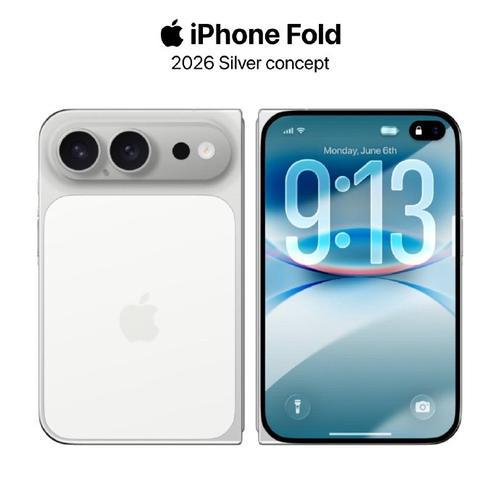
What does this mean? Apple doesn't need to beg developers to adapt to the foldable screen like Android manufacturers. Apple only needs to clarify that the unfolded iPhone Fold is an iPad mini, and all iPad - version applications are naturally compatible.
Developers don't even need to do any separate adaptation for the iPhone Fold. They just need to continue to maintain the iPad version. And maintaining the iPad version is already a mature business decision, which doesn't need the foldable screen to drive.
The market performance of Huawei's Pura X series also verifies this logic.
The shipments of Pura X exceeded 1.5 million units in its first year on the market, making it the world's first large - format foldable screen phone with sales exceeding one million. Its 16:10 wide - format inner screen can increase the display area by 60% when reading text and pictures and by 40% for short - video viewing.
But Huawei's real advantage is not just the hardware.
Huawei is currently the only manufacturer that requires applications to be adapted to foldable screens during the review process in the app store. Only a manufacturer with full - chain control from chips to the system to the app store can succeed in the large - format folding track.
Android manufacturers have been doing the hard work of adaptation for seven or eight years, while Apple hardly has to worry about this. It's not good luck, but because it laid out seven years earlier.
In 2019, Apple released SwiftUI, a development framework with the core design concept of "write once, adapt everywhere".
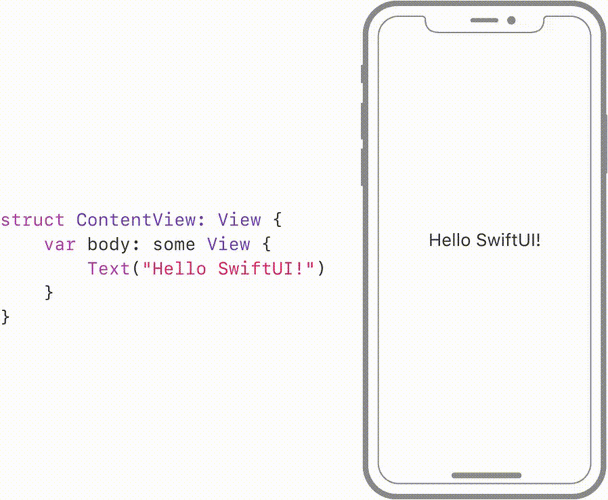
In SwiftUI, developers no longer hard - code the layout for a specific screen size, but describe the logical relationship of interface elements: this button is below the title, and that picture occupies 80% of the container width. When the application runs on devices of different sizes, SwiftUI will automatically rearrange the elements according to the available space.
Seven years later, SwiftUI has become the mainstream development method in the Apple ecosystem, and a large number of new applications are naturally capable of cross - device adaptation.
When the iPhone Fold is launched, a considerable proportion of applications will already be "adapted". It's not because developers have specifically adapted for the foldable screen, but because the SwiftUI framework has solved this problem at the bottom level.
This is a strategy of defining first. First, establish a framework that allows all applications to naturally adapt to multiple screen sizes, and then launch the hardware that requires multiple screen sizes.
Software leads hardware, and hardware becomes a natural extension of software capabilities.
In 2026, this trend is expected to accelerate. Huawei's Pura X Max and the iPhone Fold may drive the industry chain to move towards large - format folding.
Industry news shows that manufacturers such as Xiaomi, Vivo, and OPPO have planned their own large - format folding models and are expected to launch them one after another after mid - 2026. A large - format foldable phone from Samsung with a screen aspect ratio of 4:3 is said to have been exposed in the One UI 9 system animation.
The exploration of foldable screens in the past eight years has proved that the traditional long and slender folding form has reached its ceiling - the hardware has been optimized to the extreme (8.8mm, 217g), and a huge investment has been made in application adaptation, but users still don't open the inner screen.
The large - format folding directly answers the key question: What can you do after unfolding? The answer is: It becomes a small tablet, a device more suitable for reading, split - screen operation, and light - duty office work.
This answer may not be perfect, but at least it's an answer.
Eight Years of Folding: The Tipping Point is Coming
Foldable screens have survived, with annual shipments of nearly 20 million units, and the price has come down. But the penetration rate is still low, and users' usage frequency of the inner screen is extremely low.
These two facts show that it is still far from the mainstream. Android manufacturers have taken the hardware to the extreme but are trapped in the "tragedy of the commons" in the ecosystem. Apple's advantage lies in its absolute say in the ecosystem, which may be the key to breaking the deadlock.
The significance of large - format folding is to re - define the product. It is no longer a "unfoldable straight - bar phone", but a "foldable small tablet". The 4:3 aspect ratio makes it naturally compatible with the tablet ecosystem, giving users a reason to open the inner screen.
But the problem still exists: Scenarios such as reading, split - screen operation, and watching videos are not enough to make the foldable screen indispensable.
For a product category to move from the edge to the mainstream, it needs not only technological maturity but also a "must - buy" reason.
Smartphones replaced feature phones because they can access the Internet and install apps. TWS earphones replaced wired earphones because they free users from cables. What can foldable screens rely on to replace straight - bar phones? A larger screen? The coolness of being foldable? These are plus points, not must - haves.
Large - format folding may be the right path, but it has not answered the most fundamental question: What are the high - frequency scenarios for foldable screens? Before there is an answer, the eighth year of foldable screens is still a story of "surviving but not exciting enough".
This article is from the WeChat official account "Decoding NewSight", author: Yuan Xile. It is published by 36Kr with authorization.