"Token" or "Lexeme"? The Battle for Hegemony Behind AI Naming
A good name is a super symbol and intangible asset.
This holds true for individuals, brands, and trademarks, and even more so in this era of rapid emergence of new things.
Some time ago, People's Daily issued a call for suggestions: "Please come up with a good name for AI?"
The tone was sincere, even a bit urgent:
With the rapid development of AI, simply using the letters directly without Chinese characters seems straightforward and crude, and it also does not conform to the national language and writing norms. Although there is the term "artificial intelligence," it seems to lack vividness and affinity, and there is room for a more colloquial name.
Subsequently, the official used the term "Ciyuanyuan" (Token in the field of artificial intelligence) at the China Development Forum Annual Meeting.
As soon as the news came out, some people applauded, feeling that there was finally "our own word"; others thought it was unnecessary, saying, "We're used to calling it 'Token. Why bother?'"
In fact, this matter is by no means as simple as nitpicking.
This is a battle for narrative sovereignty, and narrative sovereignty is the most hidden and important battlefield in this era.
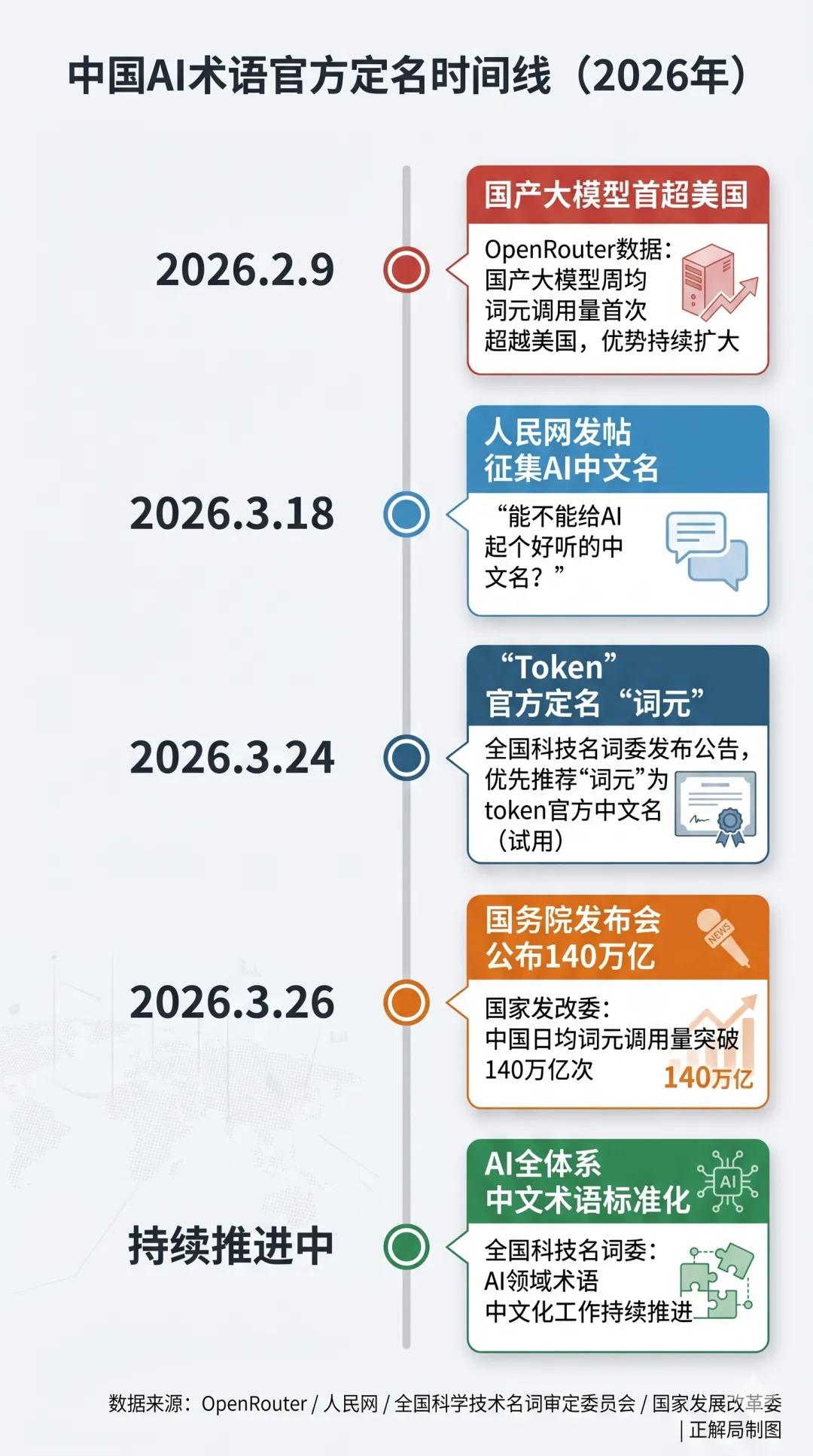
Timeline of the official naming of Chinese AI terms (March 2026)
Words are a more fundamental form of power than chips
What has been the most successful invention of the United States in the past 100 years?
Is it the atomic bomb or the space shuttle? Is it the computer or the chip?
No, it's a word called the "American Dream."
In 1931, during the Great Depression, American writer Adams coined the term "American Dream" in his book The Epic of America:
"In this land, everyone should lead a better, more prosperous, and more fulfilling life, and be able to earn everything they want through their own abilities...
The American Dream is not just about cars or high salaries. It is a social order in which all men and women can achieve their greatest potential based on their own qualities and be recognized by society, regardless of their birth, social background, or social status."
This word is amazing!
It gives hope to everyone who comes to this new North American continent to strive and climb, regardless of their origin.
Soon, this word became a beautiful "wrapper."
Civil rights leader Martin Luther King used it to build consensus among different ethnic groups. President Reagan used it to promote the implementation of major public policies. Barack Obama used it as a sign to attract new immigrants.
George W. Bush defined the American Dream as "owning a house" and promoted "zero - down payment mortgages," which directly triggered the 2008 financial crisis.
There is a video game called Grand Theft Auto IV released in 2007. Its theme is also a story about a European illegal immigrant coming to the United States to pursue the American Dream.
By the way, in the game, passers - by in Chinatown will speak to the protagonist in Cantonese, but most of the time they use vulgar language to scold the protagonist.
This is a typical example of Western narrative hegemony!

Video game Grand Theft Auto IV
It's no exaggeration to say that whoever controls the narrative controls the steering wheel of the economy.
Robert Shiller, the Nobel laureate in economics, wrote in Narrative Economics:
"Narrative is a carrier that combines history, culture, the spirit of the times, and individual choices. It is even a form of collective empathy. To some extent, it explains or illustrates the important public beliefs of a society or a period. Once these beliefs are formed, they will subtly or directly affect everyone's economic behavior."
Shiller's conclusion is that narrative is a very important mechanism for economic change and a key predictive variable.
This principle is fully demonstrated in the technology and business sectors.
In 2021, Facebook founder Mark Zuckerberg announced that the company would be renamed "Meta" and declared to the world that the era of the Metaverse had arrived.
This term comes from the 1992 science - fiction novel Snow Crash.
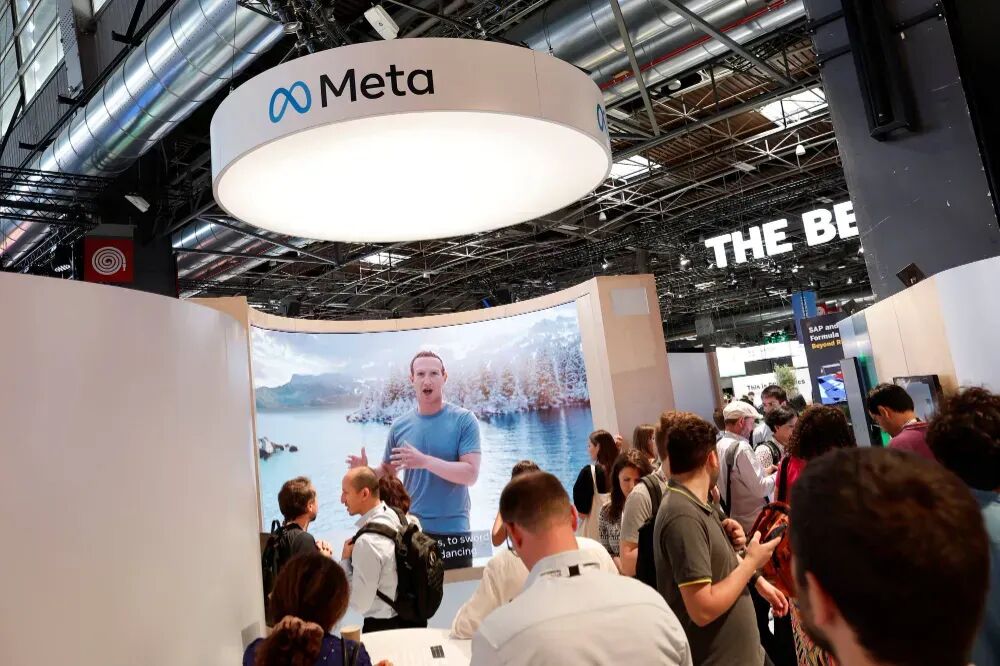
Mark Zuckerberg's virtual avatar at the Paris Expo Porte de Versailles in June 2022
Zuckerberg dug out this term, repackaged it, and invested tens of billions of dollars in "building the Metaverse."
Global technology companies responded immediately, and the stocks related to the "Metaverse" concept skyrocketed.
But two years later, the "Metaverse" concept faded. Apple released the Vision Pro and deliberately avoided using this term, instead using a brand - new concept - "Spatial Computing."
This is not Apple's modesty but a well - planned upgrade of the narrative strategy.
The "Metaverse" makes people think of escaping from reality and indulging in the virtual world; "Spatial Computing" implies a more advanced computing paradigm that integrates with reality.
It's the same thing, but with a different name, the users' perception, the market's expectation, and the flow of capital all change.
What does it mean that words shape the worldview?
This is where Western elites are amazing -
They are not only creating products; they are also very good at creating concepts and narratives.
When the whole world uses the words they invented, they are unconsciously accepting their technological architecture, business logic, and values.
To put it bluntly, this is a form of hidden semantic colonization.
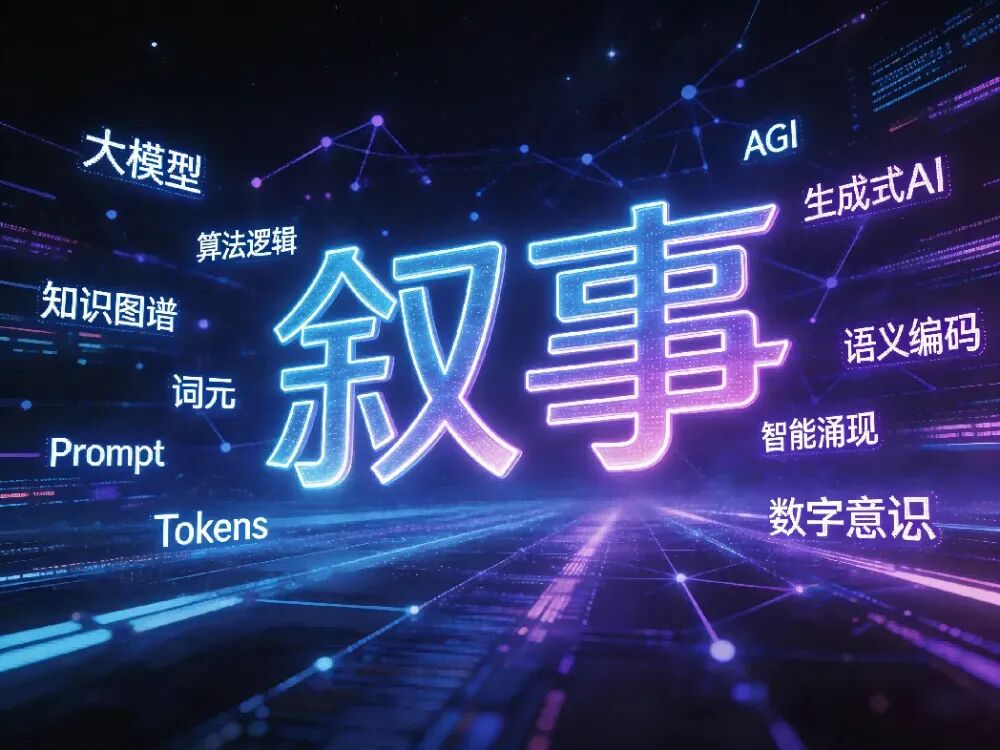
What if we lose the naming right?
Semantic colonization is not a metaphor but a real part of history.
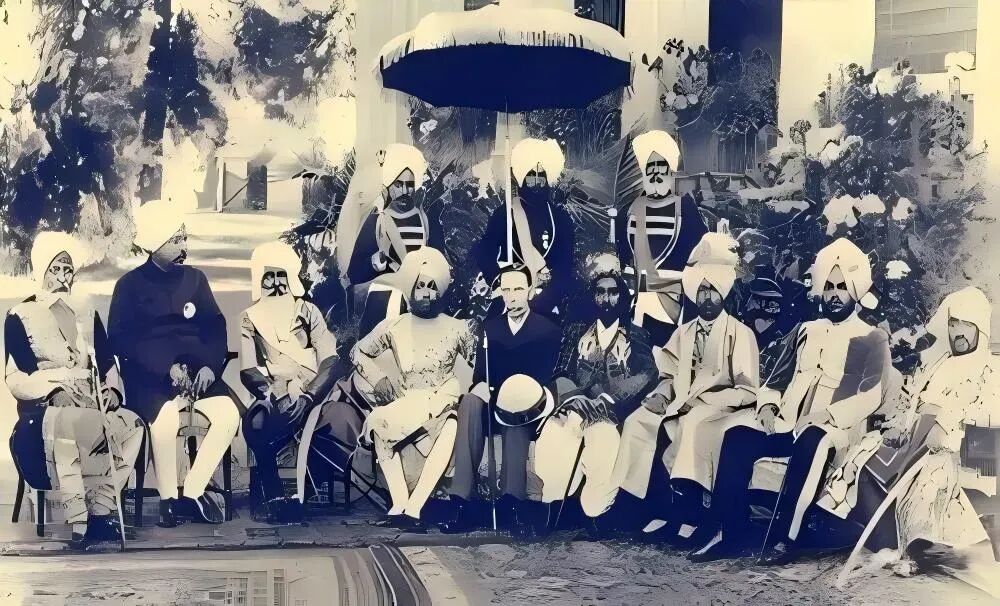
In 1835, British colonist Macaulay drafted a "Memorandum on Indian Education" in India.
This document later evolved into the law of British India and changed the fate of the entire Indian subcontinent.
Macaulay wrote in the memorandum that his goal was to cultivate an elite class "with Indian skin but British taste, morality, and intelligence."
The method was simple: replace native language education with English education.
This policy was implemented in India for nearly 200 years.
In contrast, the tradition of free - translation of scientific terms in Chinese is a unique advantage of the ideographic nature of Chinese characters. It allows us, as native Chinese speakers, to directly understand concepts through word - formation.
Let's take a word: "Photosynthesis."
When Chinese children see it, a picture immediately forms in their minds - light, synthesis, and action.
Words like "Photosynthesis," "Gene," "Cell," "Microscope," and the terms "Missile," "Aerospace," and "Spaceflight" first coined by Qian Xuesen...
They naturally have characteristics and vivid images. We know that this is science, not "science exclusive to the West."
But today, English is strongly associated with almost all medical, legal, business management, and science and engineering disciplines in India.
Native Hindi and the dialects of various states can only be used in daily life and some simple basic education.
It's very difficult for Indian children to memorize "Photosynthesis" by rote. For them, it's just a meaningless string of letters.
In India, language stratification represents opportunity stratification.
Those who are good at English can go to Silicon Valley to become senior executives and partners of multinational companies; those at the bottom who don't understand English can only be the "hands" on the assembly line and may not even be able to leave their villages.
In the most cutting - edge science and technology, it's very difficult for India to establish its own narrative, have its own technical standards, and build its own discourse system.
For someone like Zhang Xue, not being good at English doesn't prevent them from building a great motorcycle business in China, but it would be very difficult in India!

Sarcasm about the abuse of katakana in Kamen Rider Fourze
Japan's lesson is more relevant to the contemporary era.
After World War II, Japan introduced a large number of Western scientific and technological terms and directly transliterated them using katakana (similar to Chinese pinyin).
A television is called "テレビ" (Terebi), a computer is called "パソコン" (Pasokon), and the Internet is called "インターネット" (Intānetto)...
These words may be familiar to Japanese young people, but they are like a mystery to the elderly and the general public.
The large number of katakana has exacerbated the digital divide in Japanese society. This is really strange.
If a country can't even use its own language to carry new technologies, how terrible is that?
Stroke of genius in China's translation history
Anyone who has studied middle - school history can easily understand that the significance of Emperor Qin Shi Huang's "unifying the written language" is far greater than "standardizing the axle gauge."
Professor Li Yunfu, the director of the Research Center for Chinese Character Civilization at Zhengzhou University, made an accurate statement in Continuation of Essays on Chinese Characters and Chinese Language:
The cross - time and cross - space ideographic function of Chinese characters has allowed the Han nationality to maintain a common cultural foundation for a long time, consolidating national consciousness and national unity. The ethnic minorities in China generally use Chinese characters as a common written language, which promotes emotional identification and cultural communication among different ethnic groups.
Chinese characters have overcome the barriers of dialects, allowing China, a vast country with a large population, to maintain cultural unity for more than 2,000 years.
Throughout history, every imported thing or concept has regained new vitality in China's cultural melting pot.
In the late Qing Dynasty, Yan Fu translated Huxley's Evolution and Ethics and translated "Evolution" and "Natural Selection" as "Survival of the fittest through natural selection."
These eight characters are not a literal translation but a re - creation using the language logic most familiar to the Chinese people. They have also become the background of China's modern ideological enlightenment.
This is the power of "faithfulness, expressiveness, and elegance." When Liang Qichao read this book back then, he was so excited that he couldn't sleep all night.
This tradition has shone even more brightly in the information age.
"Computer" is translated as "Diannao" (computer). It clearly explains the core feature of a computer - a machine that runs on electricity and thinks like a brain.
"Mouse" is translated as "Shubiao" (mouse). It's easy to understand at a glance. It has a tail (the wire) and can move around, just like a mouse.
"Internet" is translated as "Hulianwang" (Internet). The character "Hu" points out the essence of two - way connection, and the character "Wang" outlines the form of the entire architecture.
"Byte" is translated as "Zijie" (byte). It vividly describes "the smallest unit of machine - stored information." When "ByteDance" emerged, it became the world's most valuable unicorn company.
This is not just translation; it's understanding and reinvention!
Thanks to the successful "Sinicization" of these scientific and technological terms, even a bun shop owner who has never been to college can understand and embrace the dividends of Internet technology without any obstacles.
The low - threshold penetration of new technologies is one of the important reasons why China has been able to transform from a follower to a leader in the Internet field in just two decades.
AI is different this time
The subversive significance brought by artificial intelligence today may exceed any technological change since the Industrial Revolution.
The difference is that this time, China is at the forefront, leading by a large margin.
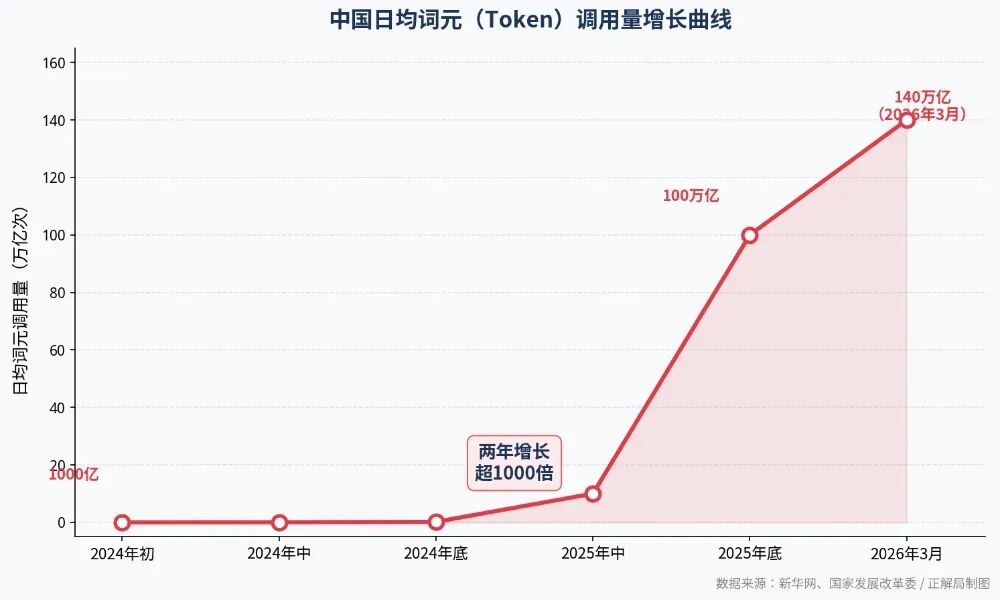
Growth curve of China's daily average Token calls. Data source: National Development and Reform Commission/Xinhua News Agency
In March this year, the official announced that China's daily average Token calls exceeded 140 trillion times.
This is the total Token calls of all AI large - scale models in China across all sectors and scenarios. This number has increased by more than 1,000 times in two years from 100 billion at the beginning of 2024. Compared with 100 trillion at the end of 2025, it has increased by more than 40% in just three months.
Meanwhile, data from the China Internet Network Information Center shows that:
As of December 2025, the number of Chinese users of generative AI reached 602 million, with a penetration rate of 42.8%, an increase of 141.7% in one year.
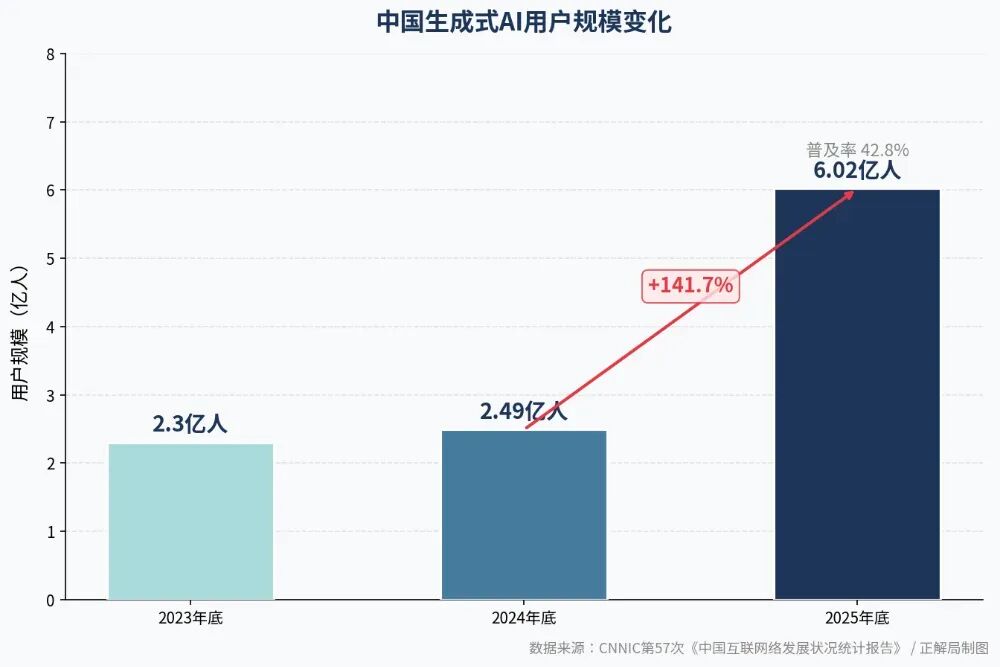
Number