36Kr Exclusive | A Professor from Shenzhen University's AI Chip Project Raises Nearly 100 Million in Another Round of Financing, with Active Cooling Microsystem Serving Transsion
Author | Ou Xue
Editor | Yuan Silai
Yingke learned that Shenzhen Ruimeng Semiconductor Co., Ltd. (hereinafter referred to as "Ruimeng Semiconductor") recently completed a nearly 100 million yuan Series A financing, led by Songhe Capital, with follow - up investments from Zhongfengtou - Huarongsheng Capital, Shenzhen Angel Mother Fund, Sihai New Materials, and listed company Feirongda. This round of financing will be mainly used for the core technology iteration of the piezoelectric active heat dissipation microsystem, the construction of the mass - production demonstration line, and the introduction of leading customers, aiming to accelerate the mass delivery in fields such as consumer electronics, AI terminals, and high - performance computing.
Ruimeng Semiconductor was founded at the end of 2020, focusing on the active heat dissipation microsystem products for AI chips. The company's founder & CEO, Li Bing, is a doctor from the Chinese University of Hong Kong, a professor at the School of Electronics and Information Engineering of Shenzhen University / the National Key Laboratory of RF Heterogeneous Integration, and a doctoral supervisor. He has nearly 20 years of research experience in fields such as piezoelectric MEMS sensors and actuator microsystem chips.
Shenzhen University, through the transformation of scientific and technological achievements, has been empowering and supporting the company's cutting - edge research as a shareholder. Recently, Professor Liu Yu, an expert in fluid and aerodynamic acoustics from Southern University of Science and Technology, joined the company as a partner and co - established a joint laboratory for fluid and aerodynamic acoustics with Southern University of Science and Technology.
Yingke learned that the company is led by a group of professor - scientists from different disciplines, achieving cross - integration and full - stack integration of cutting - edge technologies such as materials, devices, processes, fluids, chips, and algorithms.
At the product level, Ruimeng has formed a comprehensive product matrix for the active heat - dissipation scenarios on the edge and cloud sides. On the edge side, product lines include piezoelectric fans, MEMS fans, micro - pump liquid cooling, and pump - driven VCs, covering scenarios such as mobile phones, tablets, laptops, sports cameras, fast charging, smart wearables, and mobile storage. On the cloud side, product lines such as jet micro - channel cold plates, MLCP micro - channel covers, and pump - driven two - phase heterogeneous integrated heat - dissipation microsystems based on silicon - based MEMS are laid out, targeting the packaging - level heat dissipation of AI training and inference chips.
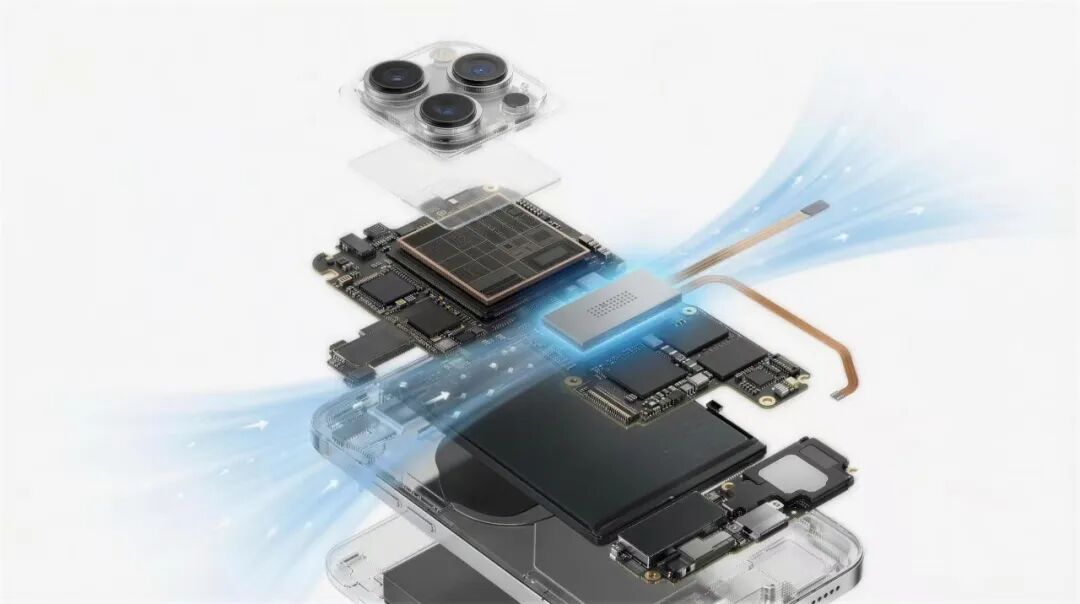
Piezoelectric fan (Source: the enterprise)
In terms of commercialization, the company jointly released the piezoelectric fan technology with Transsion at the CES in the United States in January 2026. This product uses a 0.1 - millimeter - thick vibrating plate with 25,000 pulses per second, which can be integrated into a thin and light body, significantly improving the computing performance in high - load and high - heat - flux density edge - side scenarios.
At the same time, the company reached a strategic cooperation with Feirongda, a leading listed company in the heat - dissipation field. Feirongda is not only an investor in this round of Ruimeng but also a core partner for mass production, manufacturing, and quality control. The two sides will cooperate around product lines such as micro - pump liquid cooling and piezoelectric fans and will be applied in the new - generation products of a leading customer.
"With the explosive growth of AI computing power demand on the edge and cloud sides, the market's demand for active heat - dissipation technology has been extremely urgent in the past two years. Mainstream domestic mobile phone manufacturers have successively launched models with active heat - dissipation technology. There is no need to educate customers about edge - side liquid cooling anymore, as customers will actively put forward relevant technology requirements. The key lies in the breakthroughs in product performance indicators and reliability," Li Bing told Yingke.
Yingke: What is the competitive landscape of the active heat - dissipation track? How does Ruimeng deal with the competition from large enterprises?
Li Bing: The number of new entrants has significantly increased in the past six months to a year. However, this track requires cross - disciplinary integration, and the technical barriers are extremely high. Our advantage compared with large enterprises is that we focus on a niche track, have strong cross - disciplinary R & D capabilities, and a more flexible mechanism, and have achieved leadership in core performance indicators. At the same time, we have a strategic cooperation with Feirongda in mass - production delivery, quality control, and supply - chain operation management. The two sides complement each other's advantages, accelerating the mass production of products such as micro - pump liquid cooling for leading customers.
Yingke: What will be the company's development focus after this round of financing?
Li Bing: First, increase R & D investment to continuously iterate the core performance indicators of product lines such as piezoelectric fans and micro - pump liquid cooling. Second, speed up the layout of the mass - production demonstration line and improve the large - scale high - quality delivery capacity. Third, expand the market and customer - introduction support team and distribution channels. The introduction cycle of leading customers in the consumer electronics field usually takes more than a year, requiring continuous support and strong resource investment.
Yingke: What are the future product and technology plans?
Li Bing: On the edge side, we will launch new products such as MEMS fans and pump - driven VCs to solve pain points such as air - cooling heat dissipation in ultra - small - size scenarios and the capillary force limitation of ultra - thin VCs in the passive mode. On the cloud side, we have laid out the R & D of jet micro - channel cold plates, MLCP micro - channel covers, and cutting - edge technology routes such as bonding silicon - based MEMS micro - channel two - phase cold plates with computing chips through heterogeneous integration. Relying on the platform of the National Key Laboratory of RF Heterogeneous Integration of Shenzhen University, we have also carried out pre - research on heterogeneous integrated microsystems for chip heat dissipation with ultra - high heat - flux density. The company has also co - established a joint laboratory for fluid and aerodynamic acoustics with Southern University of Science and Technology to conduct all - around industry - university - research cooperation on key technologies such as fluid and aerodynamic noise.
Views of investors:
Guo Chengcheng, Executive Partner of Changfeng Fund of Songhe Capital: Ruimeng Semiconductor is a scarce target in the wave of AI hardware innovation. Its piezoelectric MEMS technology not only solves the pain points of underlying hardware such as heat dissipation and tactile interaction but also builds a hard - to - replicate competitive barrier through full - stack self - research. We are optimistic about three major trends:
First, the miniaturization of AI terminals forces technological innovation. Traditional heat - dissipation solutions are difficult to meet the requirements of edge - side large models, while Ruimeng's piezoelectric micro - pump will promote the upgrade of the heat - dissipation system from passive to active, releasing the performance ceiling of devices.
Second, human - machine interaction evolves towards the integration of "perception - execution". The synergy between MagicTa tactile feedback and MagicEng ultrasonic motor provides a more natural interaction method for scenarios such as AR/VR and robots.
Third, the potential for technology extension is huge. From consumer electronics to automotive electronics, piezoelectric technology can be extended to scenarios such as intelligent cockpits and lidar cleaning, with a market space far exceeding 10 billion.
Songhe Capital will continue to support Ruimeng Semiconductor's breakthroughs in fields such as materials science and precision manufacturing, helping it become a global benchmark enterprise in piezoelectric microsystem technology.
Chen Xuanyu, Investment Director of Huarongsheng Capital: Against the background of the AI era, the emergence of active heat dissipation is inevitable. As a major participant in this track, Ruimeng Semiconductor's core products, piezoelectric air pumps/liquid pumps, have certain first - mover and resource advantages. As new shareholders, we are optimistic about the market prospects of active heat dissipation and are confident in the comprehensive capabilities of the Ruimeng team in tackling difficulties and commercializing core products. Huarongsheng Capital will fully mobilize industrial resources to grow together with Ruimeng.
Jiang Xiaojiao, Investment Director of Shenzhen Angel Mother Fund: Ruimeng Semiconductor is a typical example of original innovation in hard technology in Shenzhen's "20+8" industrial clusters. With the continuous increase in the computing power density of AI terminals, its piezoelectric active heat - dissipation solution directly addresses the bottleneck of traditional passive heat dissipation and has clear disruptive value. The compound background of the team, consisting of "scientists + entrepreneurs", provides double guarantees for the continuous evolution of technology. We will leverage the ecological advantages of the angel guiding fund to support Ruimeng in rooting in Shenzhen, facing the world, and growing into a benchmark enterprise in the field of piezoelectric microsystems.
Wang Xiaonan, Vice President of Sihai New Materials: Miniaturization, intensification, and low power consumption are the clear future development directions of the electronic information industry, especially in the AI era. Complex heterogeneous integration requires a complete change from materials to devices and then to modules to meet these requirements as much as possible. Ruimeng Semiconductor's profound technical strength and rich industrial experience in the field of piezoelectric ceramic materials and devices can meet the in - depth needs of leading customers in downstream industries. The company has in - depth independent capabilities, with all technologies and products based on the company's forward - looking development and independent intellectual property rights, laying a core foundation for long - term service to global customers. We believe that the company is one of the most investment - worthy innovative enterprises in the industry.
Wang Yan, General Manager of Strategic Investment of Feirongda Group: The exponential growth of AI computing power makes active heat dissipation a rigid demand in the electronic information industry. Feirongda has been deeply involved in thermal management for 30 years and is upgrading from material components to system - level and chip - level thermal management. Investing in Ruimeng is a key step in our layout of next - generation heat - dissipation technology and the improvement of the "active + passive" full - solution matrix. Ruimeng has overcome core bottlenecks such as micro - pump liquid cooling and piezoelectric fans through cross - disciplinary integration and full - stack self - research. Feirongda will empower Ruimeng through industrial investment, production - capacity collaboration, and market ecosystem to support the rapid industrialization of its technology. The joint efforts of the two sides will not only provide customers with more competitive heat - dissipation solutions but also contribute a little to enabling China to form a global leading advantage in fields such as AI chip heat dissipation.