Where is the way out for Aion? Is battery swapping its salvation?
GAC Aion, which experienced a high - opening and low - running trend, has entered an upward channel again.
In the first quarter of 2026, Aion sold a total of 75,389 vehicles, a year - on - year increase of 8.72%. In particular, the monthly sales volume in March was 38,268 vehicles, more than the sum of the previous two months.
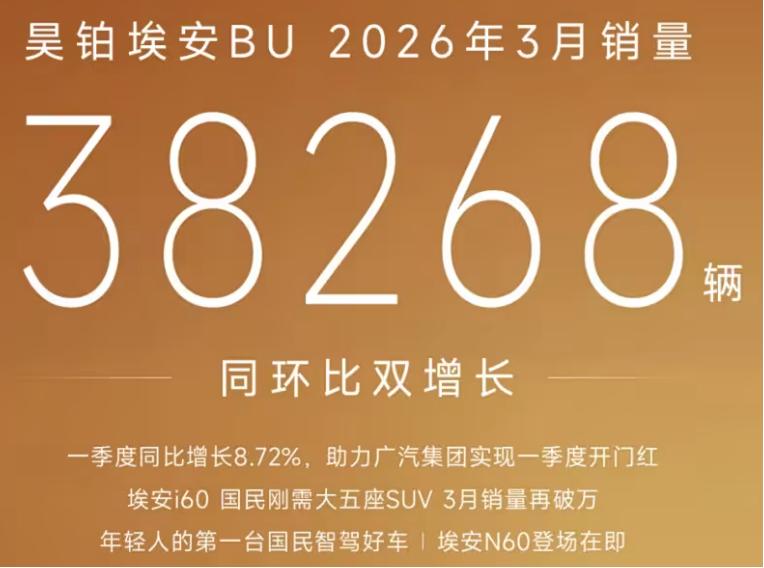
Picture/Sales source of Aion in March 2026/Screenshot from Internet, New Energy Outlook
Why is Aion's sales volume on the rise? If summarized in two words, it's "adaptability".
Previously, Aion focused on pure - electric vehicles and achieved remarkable results, with monthly sales exceeding 50,000 and annual sales exceeding 480,000. However, affected by the saturation of the ride - hailing market and the decline in product competitiveness, Aion's sales volume dropped to the bottom.
Aion's way of self - rescue is to build new energy vehicles that the public likes. So, range - extended and battery - swapping technologies have been introduced. The Aion i60 is the first key model launched after GAC Aion established the dual - power route of pure - electric and range - extended, and it is also the sales champion. The Aion UT Super is Aion's first battery - swapping model, which has attracted wide attention with a starting price of 49,900 yuan.
Recently, the Aion RT Super (battery - swapping version) was officially launched. The purchase price with battery rental is 88,800 yuan, the monthly rental is as low as 399 yuan, and the whole battery - swapping process only takes 99 seconds.
This is Aion's third battery - swapping model after the UT Super and the "Aion S Shine" battery - swapping version. Meanwhile, the fourth battery - swapping model, the Aion N60 battery - swapping version, which is positioned as a compact pure - electric SUV, has completed the declaration to the Ministry of Industry and Information Technology and is expected to be launched in the second quarter of 2026.
As the battery - swapping product matrix is being intensively expanded, a sharp question arises: Is battery - swapping Aion's salvation or a costly gamble?
From Pure - Electric Obsession to Multi - Energy Transformation
Now, Aion adopts a dual - power mode of pure - electric and range - extended, as well as a dual - energy - replenishment method of charging and battery - swapping. By integrating the advantages of various technologies, it has achieved a turnaround in sales.
But going back to 2017, at that time, Aion focused on the pure - electric technical route. Although it had its glorious moments, during the period when consumers were anxious about range and other car companies were developing range - extended technologies, it missed the incremental dividend of the household market. Its sales volume dropped from the peak of 480,000 vehicles in 2023 to less than 300,000 vehicles in 2025.
The direct reason was the halving of the sales volume of the Aion AION S and Aion AION Y, which are mainly targeted at the ride - hailing market. Public data shows that the AION S could sell 140,000 vehicles in 2024, but only 55,000 vehicles in 2025, a sharp drop of more than 60%; the AION Y dropped from 156,000 vehicles in 2024 to 78,000 vehicles in 2025.
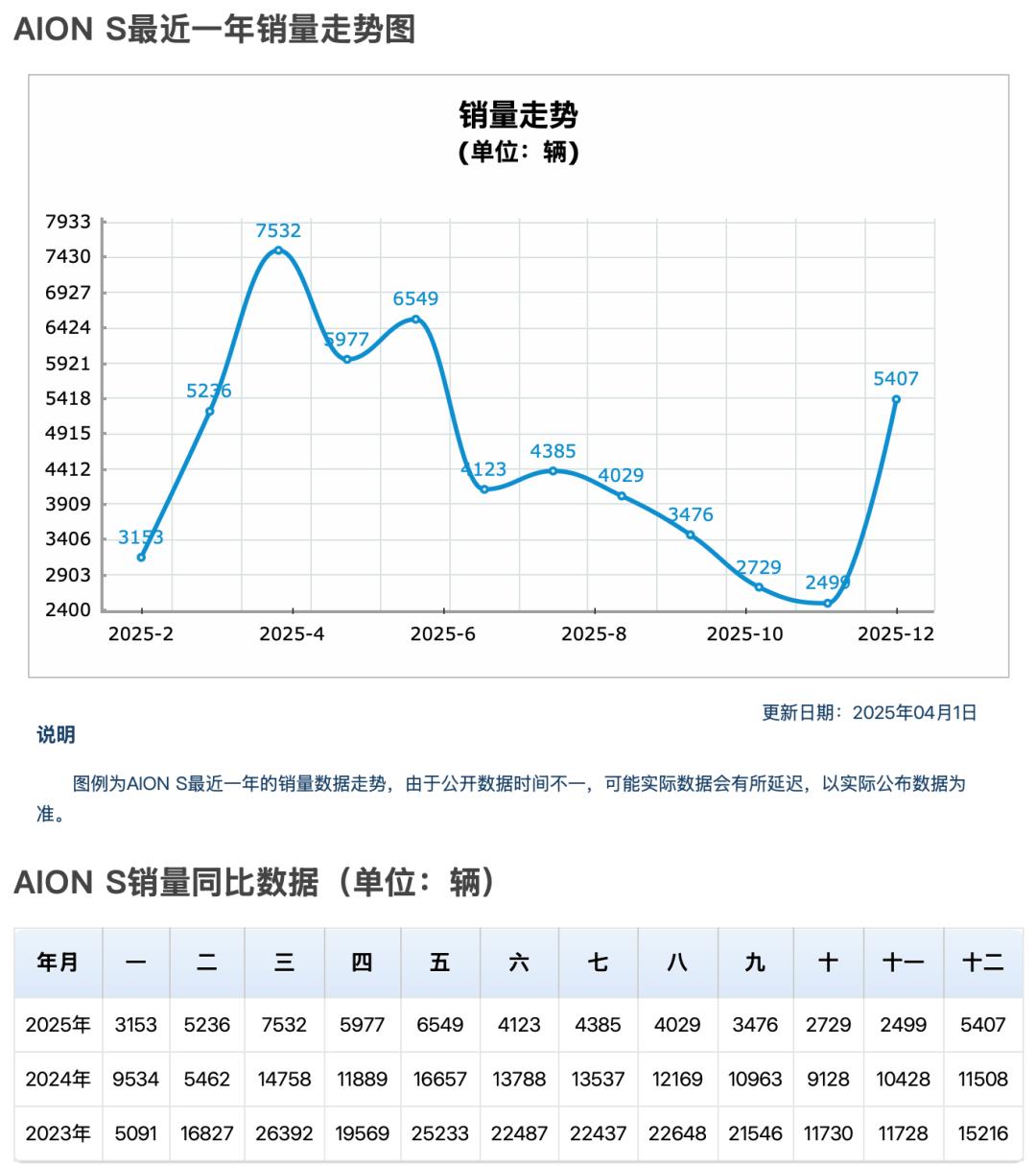
Picture/Sales trend of AION S in the past year/Screenshot from Internet, New Energy Outlook
In addition to the external reason of the saturation of the ride - hailing market, competitors of the AION S and AION Y have launched hybrid technologies, 800V high - voltage platforms, or more intelligent cockpit technologies. As a result, Aion's first - mover advantage in pure - electric vehicles has disappeared.
Moreover, due to Aion's high penetration rate in the ride - hailing market, ordinary consumers tend to choose models with a more neutral or technological brand image, which has squeezed Aion's share in the consumer market.
The direct consequence is that Aion failed to withstand the pressure to increase its sales volume to a higher level, turn losses into profits, and contribute to its parent company. Instead, it became one of the main reasons for GAC Group's shift from profit to loss.
In 2024, GAC Group's net profit attributable to the parent company was 824 million yuan, but in 2025, it plummeted to - 8.784 billion yuan.
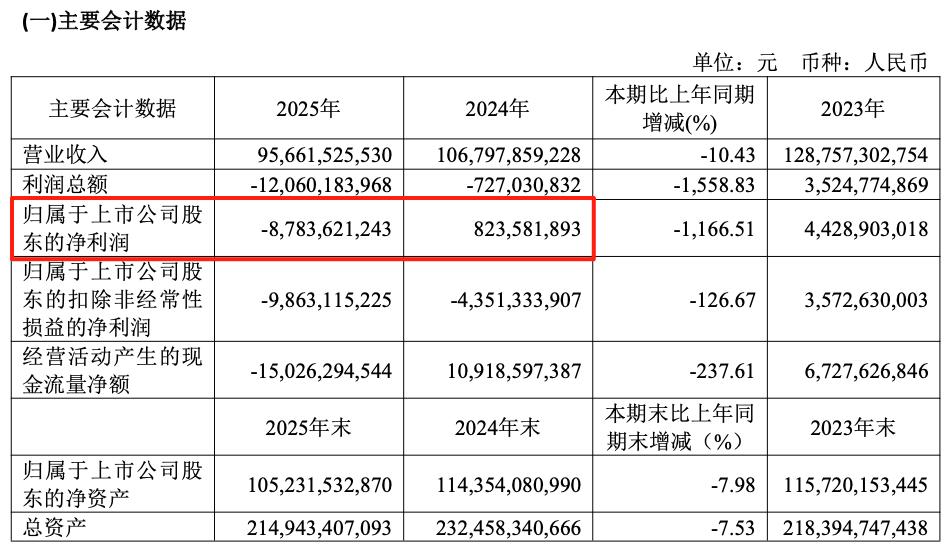
Picture/Net profit attributable to the parent company of GAC Group from 2024 to 2025/Screenshot from Internet, New Energy Outlook
Forced to make changes, Aion launched its first range - extended model, the i60, in November 2025, marking its shift from a single pure - electric route to a parallel route of "pure - electric + range - extended".
The range - extended version of the i60 is equipped with the "Xingyuan Range - Extended" technology, which achieves a pure - electric range of 210 kilometers and a comprehensive range of 1,240 kilometers. It not only solves users' range anxiety but also retains the pure - electric driving experience. Therefore, its sales volume exceeded 10,000 in the first full month after its launch.
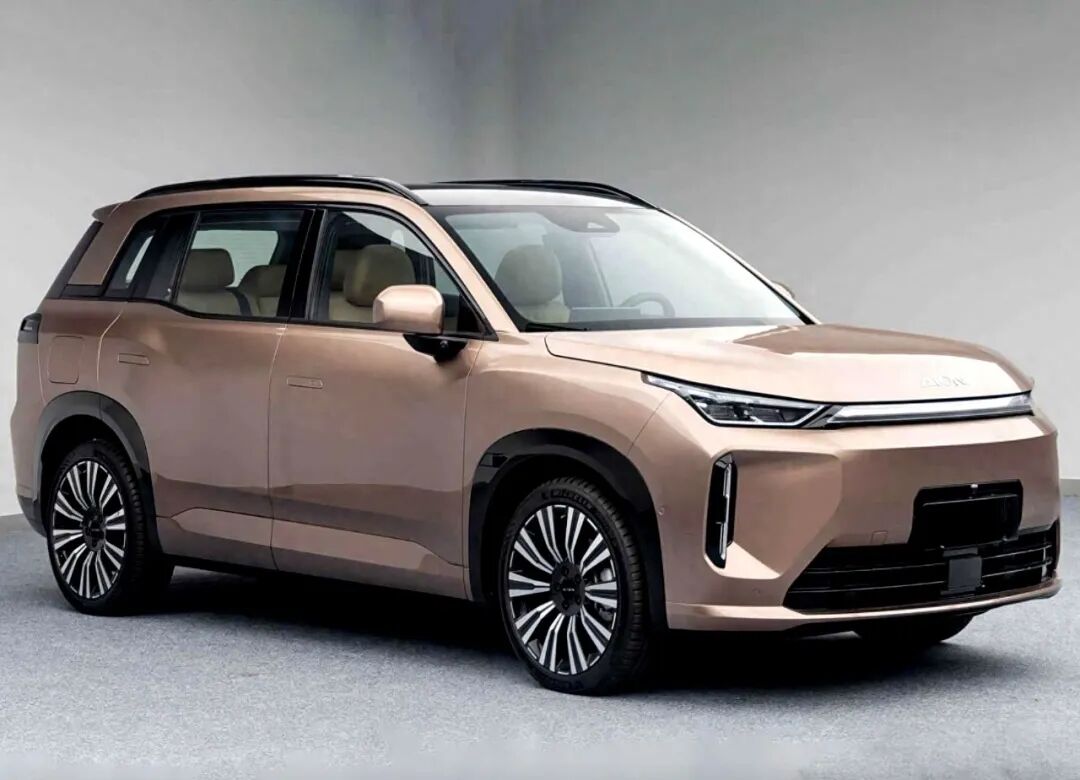
Picture/Aion i60/Screenshot from Internet, New Energy Outlook
Subsequently, the first battery - swapping model, the UT Super, was released. Through a tripartite cooperation between Aion, JD.com, and CATL, it adopted the battery - vehicle separation model, and the purchase price with battery rental dropped to 49,900 yuan, officially implementing the battery - swapping strategy.
This multi - energy layout of "pure - electric + range - extended" and "charging + battery - swapping" not only meets the needs of different user groups but also enables Aion to regain its rhythm in the highly competitive new energy market.
Feng Xingya, the general manager of GAC Group, clearly stated during the Guangzhou Auto Show that in the future, all Class A models of GAC Aion should be "chargeable and swappable".
So far, Aion has built a product system covering multiple energy routes.
Is Range - Extended for Short - Term Rescue and Battery - Swapping for Long - Term Strengthening?
Aion's transformation is not so much a clear understanding of the market reality as a last - resort measure after being beaten by the market. For a long time, although the pure - electric route represents technological ideals, users' range anxiety and inconvenient energy replenishment have always been insurmountable obstacles.
This can be clearly seen from the sales volume of range - extended vehicles, which have "no range pressure". In 2023, the sales volume of range - extended vehicles was less than 400,000. By 2024, the annual sales volume of range - extended vehicles reached 1.167 million, accounting for 9.1% of the new energy vehicle market share. Traditional car companies such as Geely, Changan, and Chery have entered the market, while GAC remained unmoved at that time.
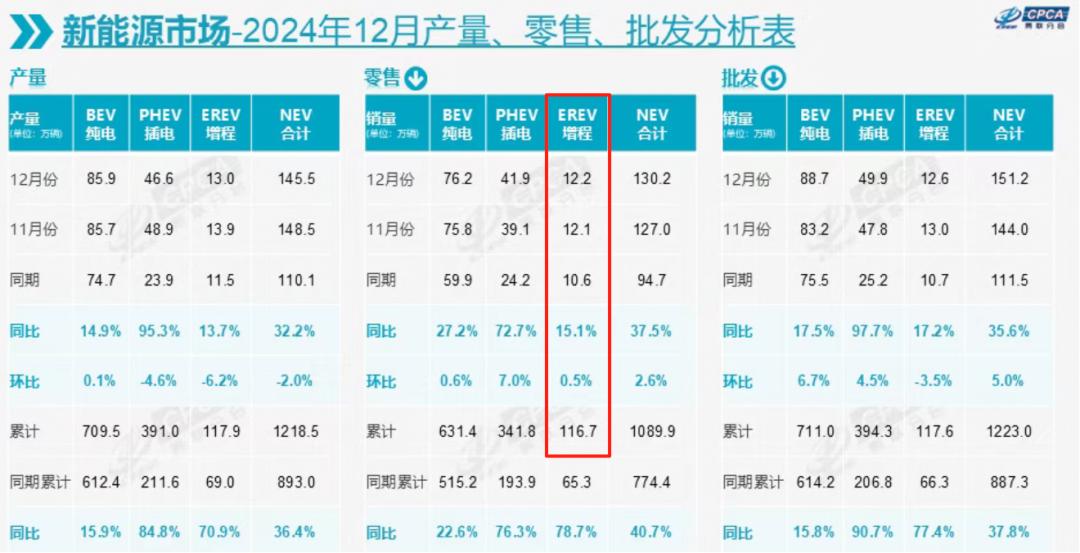
Picture/Annual sales volume of range - extended vehicles in 2024/Screenshot from Internet, New Energy Outlook
It wasn't until November 2025 that GAC Aion launched the range - extended model i60. The results were immediate. In the first full month after its launch, 10,804 units of the i60 were delivered, of which 2,642 were the range - extended version. It was this new force that directly drove Aion's overall monthly sales volume back up to over 40,000.
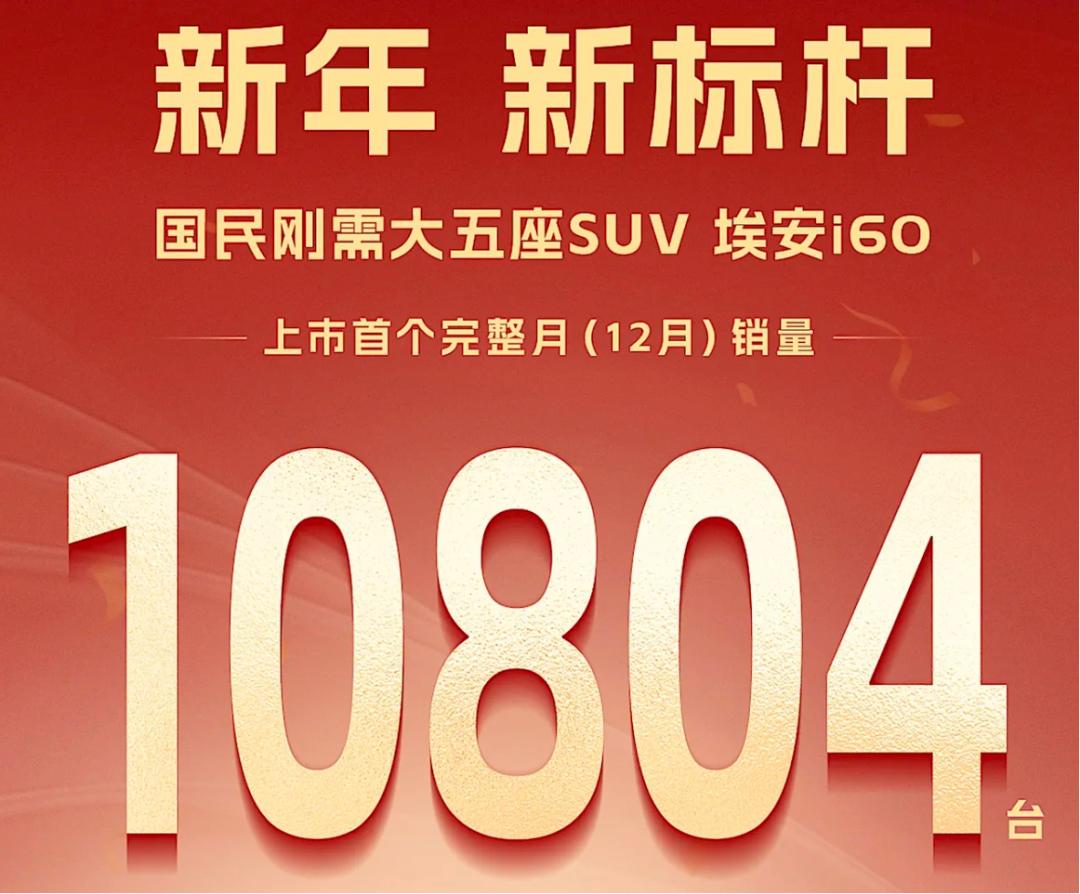
Picture/Sales volume of Aion i60 in the first month after its launch/Screenshot from Internet, New Energy Outlook
It can be said that range - extended technology has become a timely help for Aion to "survive".
In the first quarter of 2026, Aion's sales volume increased by 8.72% year - on - year. The i60's sales volume exceeded 10,000 for several consecutive months, becoming the absolute main force for the brand's growth. Behind this achievement is Aion's decisive transformation from "obsessing over pure - electric" to "embracing multi - energy".
However, for Aion, the key to "living well" must be battery - swapping. Because battery - swapping first bears the heavy responsibility of reshaping Aion's brand. The emergence of the battery - swapping model gives Aion an opportunity to demonstrate its high - end and differentiated technological strength and get rid of the old label.
Secondly, Aion has adopted a smart "light - asset" strategy in the battery - swapping track. Different from NIO's heavy burden of building its own heavy - asset battery - swapping network, Aion has laid out the battery - swapping system at a lower cost through cooperation and ecological integration to seize the first - mover advantage. One of the core reasons why Wenjie is doing well in the "Five Kingdoms" is the "first - mover advantage".
More importantly, Aion has created a flexible "chargeable and swappable" architecture - users can charge at home when they have a charging pile, swap batteries quickly when there is no charging pile, and use fast - charging for emergency energy replenishment. This trinity model has formed a unique competitiveness different from its competitors.
From the breakthrough of the i60's range - extended technology to the layout of the UT Super's battery - swapping, and then to the launch of the Aion RT Super, Aion's transformation is not simply a superposition of technologies but a deep response to users' needs. The range - extended technology has solved the short - term sales pressure, allowing the brand to "survive" in the fierce market competition; the battery - swapping ecosystem is accumulating energy for the brand to "live well" by building long - term barriers.
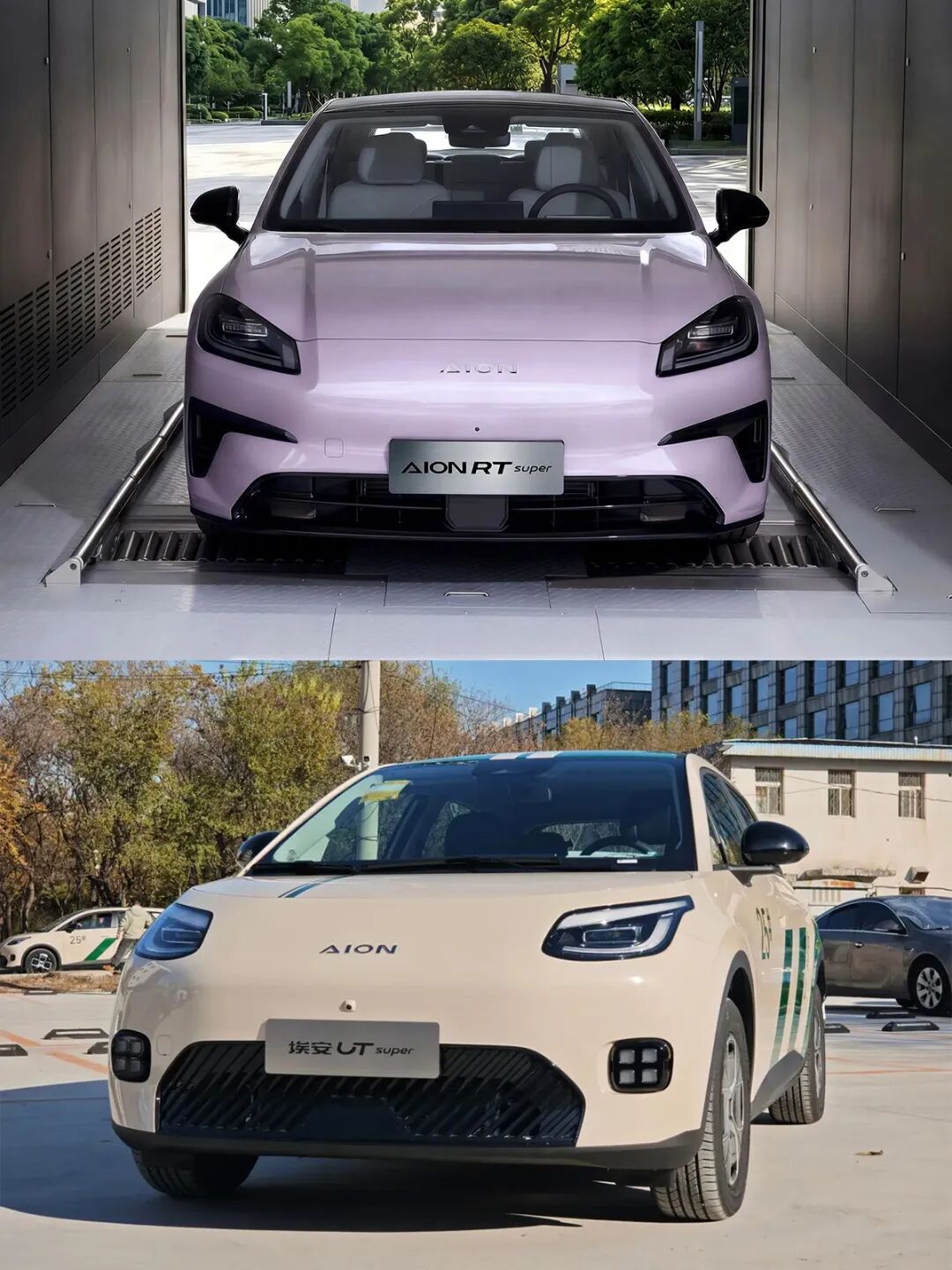
Picture/UT Super - RT Super/Screenshot from Internet, New Energy Outlook
Now, with the launch of more battery - swapping models such as the AION N60 and the continuous iteration of the Xingyuan Range - Extended technology, Aion is redefining its position in the new energy track with a "dual - wheel drive" approach.
Although the Model is Good, Aion Still Needs to "Strive for Success" Itself
But we should not forget the saying that the ideal is full, but the reality is skinny. If Aion wants to truly stand firm on these two "legs", it still has many obstacles to overcome.
Take the highly anticipated Aion UT Super as an example. This car is a tripartite cooperation among Aion, JD.com, and CATL, with each party playing to its strengths: Aion builds the car, JD.com sells the car, and CATL supplies the battery. It sounds like a perfect closed - loop. However, problems have arisen one after another before the "honeymoon" period is over.
Shortly after the launch of the UT Super, it was involved in a wave of order cancellations for various reasons - some users said that the actual vehicle did not match the poster, some complained that the battery - swapping stations were not built in time, some reported chaotic vehicle - delivery processes, and some were troubled by the unclear division of after - sales responsibilities among the three parties.
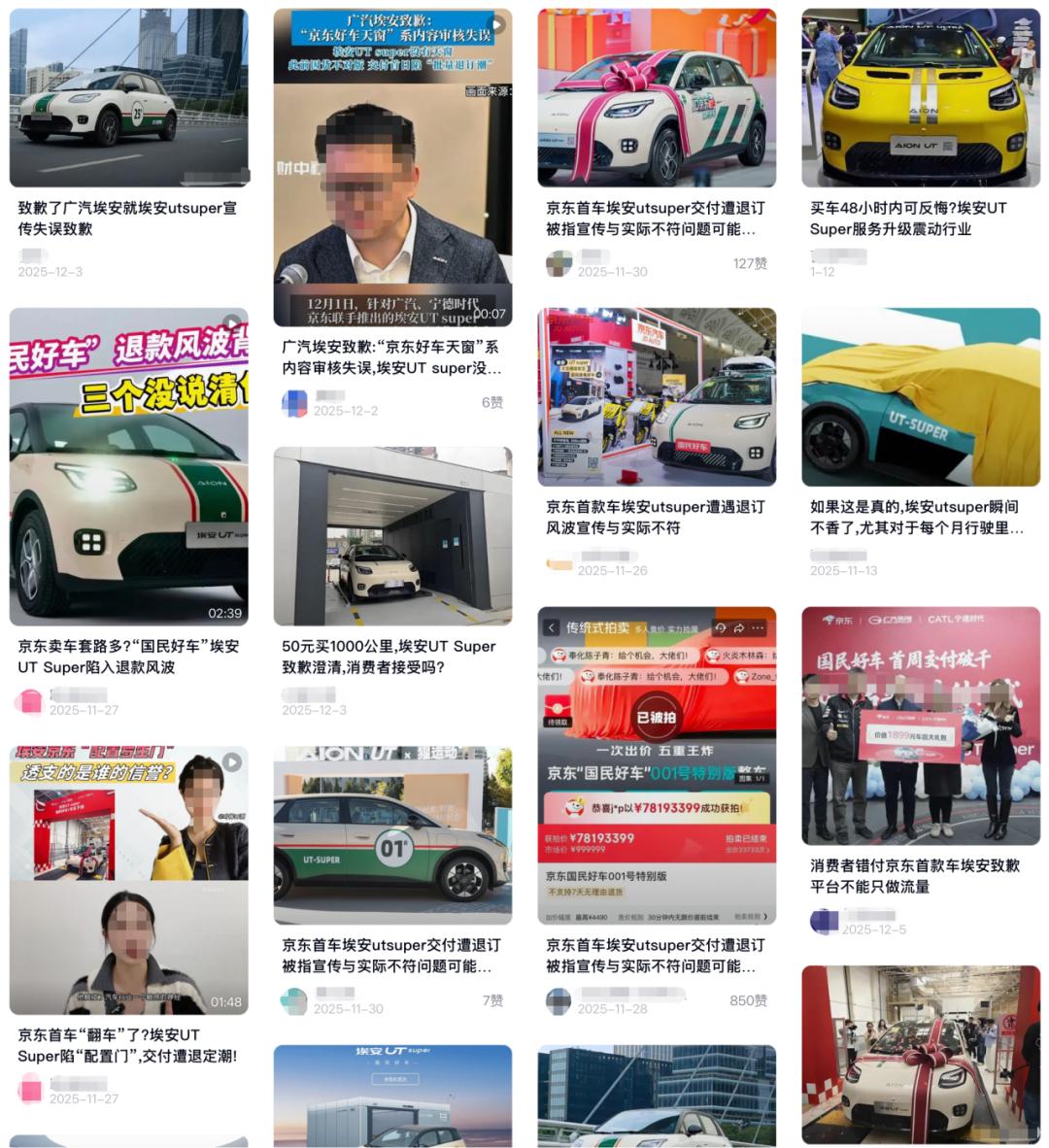
Picture/Order cancellation wave of Aion UT Super/Screenshot from Internet, New Energy Outlook
Cross - border innovation is a good thing in itself, but the degree of refinement in execution directly determines the user experience. When consumers find that the "one - click battery - swapping" they saw in the promotion is not available near their homes, or they don't know whether to turn to the car company, the e - commerce platform, or the battery factory when there is a problem, their enthusiasm for trying something new will quickly fade.
The lesson of the high - opening and low - running trend shows that when embracing new business models, we must return to the user's perspective and improve the ability to control the whole - link experience. Otherwise, no matter how good the concept is, it won't be able to retain picky consumers.
There is a deeper concern about the "chicken - and - egg" dilemma that the battery - swapping model can't avoid.
The construction of battery - swapping stations requires a huge amount of capital investment, and the premise of investment return is to have a sufficient number of users of battery - swapping vehicles. Currently, although